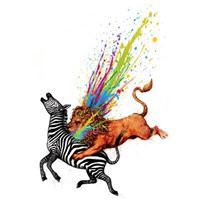
Why does our popular culture seem so consistently hostile to the values that most Americans hold dear? Why does the entertainment industry attack religion, glorify brutality, undermine the family, and deride patriotism? In this explosive book, one of the nation's best known film critics examines how Hollywood has broken faith with its public, creating movies, television, and popular music that exacerbate every serious social problem we face, from teenage pregnancies to violence in the streets. Michael Medved powerfully argues that the entertainment business follows its own dark obsessions, rather than giving the public what it In fact, the audience for feature films and network television has demonstrated its profound disillusionment in recent years, with disastrous consequences for many entertainment companies. Meanwhile, overwhelming numbers of our fellow citizens complain about the wretched quality of our popular culture--describing the offerings of the mass media as the worst ever. Medved asserts that Hollywood ignores--and assaults--the values of ordinary American families, pursuing a self-destructive and alienated ideological agenda that is harmful to the nation at large and to the industry's own interests. In hard-hitting chapters on "The Attack on Religion," "The Addiction to Violence," "Promoting Promiscuity," "The Infatuation with Foul Language," "Kids Know Best," "Motivations for Madness," and other subjects, Medved outlines the underlying themes that turn up again and again in our popular culture. He also offers conclusive evidence of the frightening real-world impact of these messages on our society and our children. Finally, Medved shows where and how Hollywood took a disastrous wrong turn toward its current crisis, and he outlines promising efforts both in and outside the industry to restore a measure of sanity and restraint to our media of mass entertainment. Sure to elicit strong response, whether it takes the form of cheers of support or howls of enraged dissent, Hollywood vs. America confronts head-on one of the most significant issues of our times.
American radio show host, author, political commentator, and film critic.
MICHAEL MEDVED’s daily three-hour radio program, The Michael Medved Show, reaches five million listeners on more than three hundred stations coast to coast.
He is the author of twelve other books, including the bestsellers The 10 Big Lies About America, Hollywood vs. America, Hospital, and What Really Happened to the Class of ’65?
He is a member of USA Today’s board of contributors, is a former chief film critic for the New York Post, and, for more than a decade, cohosted Sneak Previews, the weekly movie-review show on PBS. Medved is an honors graduate of Yale with departmental honors in American history. He lives with his family in the Seattle area.
This book was recommended to me by a friend who let me borrow it. When I actually sat down to start reading it, I knew I was in trouble seeing the ringing endorsement of Rush Limbaugh emblazoned on the cover.
Written in 1991, Michael Medved examines what he calls Hollywood's "assault" on traditional family values. While at times he tries to sound fair and balanced, his use of language shows his strong bias against any film, television show, or music that he perceives as damaging or wrong-minded by calling it "filth" and "disgusting." He's welcome to his opinion, and as a film critic and an American has the professional right to express that opinion, but his goal in this book is to convince others that Hollywood is on the attack, and they're coming for your family life, which according to Medved is fragile enough to be warped by film and television.
In order to save "traditional" values inherit in Christian and Jewish life, one suggestion made in this book includes promoting the return of the stigma towards unwed mothers, because that sounds like a good, Christian value. Medved lauds the days of the Hays Office and the Production Code, claiming that instead of censorship and the ludicrous image of married couples sleeping in twin beds, these standards helped protect the American public from "sin and depravity."
While I agree that the period Medved was writing about was not exactly a high point in film and television, it certainly had nothing to do with the "assault" on traditional family values and religion. As with most books written on subjects like this, Medved is less interested in finding solutions to the problems he states, but finding someone to lay the blame on. Typically, this is the "Hollywood elite" and the studio bosses who kowtow to their every whim, regardless of how offensive the public might find it.
If Mr. Medved was actually interested in reclaiming popular culture from the unscrupulous Hollywood rabble, then he should get more proactive and suggest that anyone who shared his values start writing, directing, and producing content that focuses on them. In the words of Lloyd Kaufman, who I'm sure Mr. Medved is not a fan of in the least, "Make Your Own Damn Movie." (and yes, Medved does mention a few groups who are doing just that, but the message is ambivalent amongst all his claims of the "celebration" of "ugliness" in film, television, and music)
Oh, THIS book, I remember this one, it's hilariously bad, containing the most laughable arguments you could imagine. There's a howler on literally every page. The kind of book so stupid you're rendered stupider just by thinking about reading it, let alone actually doing so. Reading this book is like having someone hitting you in the head with a stick. Enjoy!
كتاب ممتاز يتحدث عن اثر هوليوود الخطير في تدمير قيم المجتمع الامريكي المحافظ وتغيير سلوكيات الشباب والمجتمع داخله. لا اعلم ان كان قدهذا الكتاب قد ترجم وانصح بترجمته والعناية بذلك.
Michael Medved attacks Hollywood’s tendency to bash America, attack religion, and affront the sensibilities of average Americans. He argues the entertainment industry doesn't do so in order to make money, but in order to pursue its ideological goals. These attacks are not, however, a conspiracy, but merely the natural result of an insulated society of actors, producers, writers, and directors who are rarely, if ever, exposed to "mainstream America." For example, while religious revival was moving through America, and orthodox Christians and Jews were gaining converts, "Hollywood ignored religion altogether, or else attacked it with unprecedented ferocity." Likewise, at a time when marriage rates were increasing and divorce rates declining, "the movie business focused almost entirely on single characters and began portraying the nuclear family as an outmoded, nightmarish institution."
As an answer to the problem of an out-of-touch Hollywood, Medved does not propose censorship or even resurrecting a voluntary code. Instead, he suggests that what might "help to open their eyes" is "[s]ustained public and private pressure" such as watchdog groups and boycotts. He also suggests encouraging young religious people to pursue careers in the media.
He makes some cogent points, and the book could benefit from an updating, as there have definitely been some changes in the way movies portray religion in the past 15 years.
Medved is now known primarily as a conservative radio talk show host, but he was more of a movie critic at the time this book was written. He examines the way the media can (and often does) undermine America's moral values. Medved doesn't mince words (his examples can be offensive) but I found myself agreeing with most of his opinions. This book helped me to articulate a lot of what I intuitively knew regarding the mass media but was unable to knowledgeably express.
The only factor preventing this book from getting a five-star rating is its age. At the same time, the perspective of reading this book almost a quarter-century after it was published confirms the true prescience of the author. To truly appreciate this book, the reader should be mindful that when it was published the internet was in its infancy, or he surely would have addressed its influence as well.
Michael Medved is a thoughtful critic. He examines not only the features of the craft of film making, but who is not afraid to look at the messages of the films as well. It is not enough to ask if a film is well-made, but the question should also be asked if it is worthy of being made.
Medved does not limit himself to films, but also discusses television, looking broadly at the entertainment industry. He intelligently and carefully examines the impact of entertainment on society and expresses concern over the subtle and lasting influence such entertainment may exercise in the lives of those exposed to it. He is not afraid to question the values (?) championed in the media. He not only questions the values but very logically and systematically attacks the arguments and straw men set up by the entertainment industry to justify the presentation of morally bankrupt productions under the masks of art and courage.
The real question becomes whether the entertainment industry is holding up a mirror to society, or whether it is influencing society and permanently impacting moral judgment and perspective.
Many references in this book are now dated. This may make the book seem irrelevant to readers today. The predictive elements in the book, however, are more than vindicated when looked at from the present, and one sees how the predictions have slowly become facts.
The old story of how you boil a frog comes to mind. If you drop it into boiling water, it will immediately jump out. If you put it into water, and then gradually increase the heat, it will grow comfortable, until it is cooked, and it is too late to escape. We have too long permitted Hollywood to put out trash until now that trash has materially affected the thought patterns of our youth, as well as many older members of society.
Many people will tell you how a particular production is fine because what some may find objectionable is such a minor part. Those minor parts, however, have grown until they now frequently form the main theme of many "entertainments."
For many years I taught a class to sixth graders -- twelve year old children. I would inquire how many had already seen R-rated productions. The numbers have only increased. A very thoughtful and intelligent young girl told me how she had seen some of these movies or TV shows and couldn't see how they had deserved such ratings, because they weren't really that bad. That means only that she was already lost in the system. She was no longer capable of discerning the difference between the good and the evil that was presented to her.
The many changes in society evident today from when this book was published - the frequent violence as a reaction or justification, the Columbines and suicide attacks, and increases in violent crimes - are powerful condemnations of the practices of the entertainment industry. Life imitates art. Unless we choose our entertainments more carefully for the future, we are depriving upcoming generations of an opportunity to live peaceful and honorable lives free of fear and corruption.
A very thorough and refreshing look at the films and music that shaped those of us that came of age in the late 90s. These forms of entertainment, although seemingly mere entertainment, appear to have lead the west away from the core values that lead to it's establishment and ascension to the greatest place on earth.
Michael Medved, along with a dozen other critics, saw an advance screening of 1CThe Last Temptation of Christ 1D one summer afternoon in 1988, a couple of weeks before the film 19s release. While the nearly three-hour film was being shown, Medved says that several of his fellow critics snorted and chuckled derisively at the film 19s 1Claughable dialogue and bad acting. 1D
Afterward, a reporter asked Meved what he thought about the film, which had already inspired controversy. 1CIt is the height of irony, 1D Medved told the reporter, 1Cthat all this controversy should be generated by a film that turns out to be so breathtakingly bad, so unbearably boring. In my opinion, the controversy about this picture is a lot more interesting than the film itself. 1D (Having seen the movie, I cannot disagree with him.)
For no particular reason, I am reminded that Medved is surely the critic who said of Madonna 19s performance in the 1993 film 1CBody of Evidence 1D that she had 1Cnever been more adequate. 1D But set that aside.
Returning to 1CThe Last Temptation, 1D Medved says that one of his colleagues, who laughed at the movie during the special screening, went on to write a glowing review. When subsequently confronted, he admitted to Medved that 1Cthe picture 19s a dog, 1D but since 1Call the Christian crazies 1D were attacking the director, 1CI 19m not going to knock him in public. If I slammed the picture too hard, then people would associate me with [Rev. Jesse] Falwell 14and there 19s no way I 19m ready for that. 1D In other words, Medved is telling us, some of his fellow critics praised the movie because they were afraid and, BTW, because they lacked the integrity to stand up for their principles.
Medved wrote this book more than two decades before Mel Gibson 19s 1CThe Passion of the Christ 1D (2004), but it is instructive to look at his account of the treatment of 1CThe Last Temptation of Christ 1D and compare the two films. What critics apparently feared to say about 1CLast Temptation, 1D that it was lacking in artistic merit, was freely said about 1CThe Passion 1D even though I think that Gibson 19s film was measurably better than Scorsese 19s despite both films having plenty of shortcomings. The fact that it was politically acceptable if not de rigueur to trash Gibson 19s film made all the difference.
1CHollywood vs. America 1D is a critique of the culture of Hollywood and its craven pandering to a few fickle interest groups while biting the hand of the majority of the public, denigrating their values, and eschewing any and all objective standards. Medved gives example after example of Hollywood 19s knee-jerk attacks on family, religion and patriotism, its rejection of traditional depictions of heroism, its embrace of deviant characters and lifestyles, gratuitous violence, sex, and foul language. (I once heard a commentary on a DVD in which the director admitted that when he allowed his actors to ad lib, the profanity quotient of his movie increased dramatically.)
Medved 19s critics would be (and, indeed, have been) wrong to assume that he proposes to apply draconian measures to the problem he explores. Acknowledging the relative wholesomeness of movies made under the old Hollywood Production Code (administered by the so-called Hays Office), Medved does not advocate a return to it, recognizing the unworkability of such an attempt. But he does feel that Hollywood has swung too far in the opposite direction, to the extent that it is not merely insensitive toward the values of the majority of Americans but goes out of its way to offend the proverbial 1Cflyover people. 1D
Answering one of his own critics, he says, 1CI never claimed that Hollywood had once made movies to INSTILL these values; but I do believe that the film industry used to make movies that RESPECTED them. The distinction is a crucial one, because it is the essence of my argument that products of the popular culture should become less propagandistic, not more so. 1D This critique is given anecdotal support by the fact that when one movie that portrayed the religion of the Hopi was criticized during production, the filmmakers went to lengths to change the offending scenes to their critics 19 satisfaction, but when another director realized that his film 19s original ending would have affirmed trust in a Christian God, he went out of his way to change it so that his main character now explicitly rejects God.
Medved thought-provokingly looks at the why of moral decline in motion picture depictions of the world. It is decidedly not because of the pursuit of profit. While it is true that the replacement of the old, strict production code by the rating system in the mid-1960s was defended at the time by the suggestion that audiences would flock to see R- and X-rated movies, the reality has been quite the opposite. As Medved points out, the year after the ratings system replaced the code, movie attendance fell by more than half. He goes on to show that while, each year, fewer and fewer G- and PG-rated movies have been made and more and more R-rated ones have replaced them, the PG movies have generally topped the box office and the R movies have lost money.
Medved documents the denial of reality by film executives who apparently have forgotten everything they learned at business school about doing market research. When presented with the facts, they just recite myths about R-rated movies being a safer financial bet than G or PG ones, and they give every indication of sincerity in their profession of this belief. I am reminded of one of the few movies I have recently seen in the theater. 1CMoneyball 1D (2011) tells the true story of a baseball general manager who decides to buck the tradition of relying on seat-of-the-pants intuition in picking players for a baseball team. The manager begins using computer analysis to coolly assess the hidden strengths of under-rated players whom the financially strapped team is able to pick up for a song. But even though the team does better than ever, the baseball industry finds fault because no one likes to try something new so long as they are comfortable with the familiarity of their failures. The movie industry seems to be just like the baseball industry critiqued in this movie. The ending of the movie suggests that some baseball teams, notably the Boston Red Sox, have since adopted the analytical approach to hiring and have met with great success, but it remains to be seen whether or not the movie industry might be on the verge of learning from the reality of its box office successes and failures.
Pointing out that the majority of Hollywood movies that reject the values of most Americans tend to fail horrifically at the box office, Medved writes, 1CFor many of the most powerful people in the entertainment business, hostility toward organized religion goes so deep that they insist on expressing that hostility, even at the risk of financial disaster. When otherwise savvy producers are willing to defy logic, past experience, and commercial self-interest in order to create movies that promote antireligious stereotypes and messages, then it is clear that a powerful prejudice is at work. 1D
But Medved resists the knee-jerk explanations of Hollywood 19s immorality resorted to by some of the public. I remember being appalled when some Christians who protested 1CThe Last Temptation of Christ 1D blamed the Jewishness of the studio executive who oversaw production and distribution from afar. Never mind that the director 19s background was Roman Catholic, the screenwriter 19s was Dutch Reformed (Protestant) and the author of the source material was Greek Orthodox. Medved argues, logically, that Jews in the film industry hardly explain the decline of morals in movies. When Hollywood was actually dominated by Jewish moguls, in the 1930s and 1940s, the movies Hollywood made were most supportive of traditional American values. It has only been since most movie studios passed to the ownership of Japanese, atheist, and WASP-ridden corporations that we have seen the descent into post-modern anomie 14and worse 14on the screen. Similarly, though this time without a stake in the fight (since he is himself Jewish but not gay), Medved rejects the explanation that Hollywood 19s culture of decadence can be attributed to the presence of gays in the industry. Like Jews, gay men and women worked in Hollywood during its family-values heyday; meanwhile, many of those promoting the current descent into anti-American, anti-religion, anti-family, and anti-traditional values are as apt as not to be heterosexual WASPs.
The thrust of Medved 19s argument seems incontrovertible to me; yet I am troubled by the inaptness of several of his examples. Part of the problem, I trust, is that criticism is always subjective. What Medved interprets as a slight against traditional values in a film portrayal might not seem so to me. Critiquing Woody Allen 19s 1CRadio Days 1D (1987), for example, Medved argues that burglars, hit men and philanderers are portrayed more lovingly in Allen 19s picture than the young protagonist 19s rabbi, who is 1Cthe least attractive character in the entire film. 1D His accent is 1Cso overdone and bogus it sounds more Martian than Yiddish. This sneering, self-important authoritarian forces the boys in his Hebrew school to go begging for contributions 18to benefit Jews in Palestine 19 and after he discovers that one of his charges (Woody Allen 19s alter ego) has stolen from the pushke (collection box), he viciously smacks the boy in front of the child 19s embarrassed parents. 1D
Not for the last time, I wonder whether Medved and I have seen the same movie. For one thing, the rabbi does not smack the boy when he discovers the theft but when the boy talks back to him. The boy is being a disrespectful brat. An advocate of traditional values might well argue that the rabbi acts justifiably. Moreover, and this is where these things become particularly subjective, I do not see 1Cviciousness 1D in the rabbi 19s action. Equally, I find that Medved 19s characterization of the rabbi as a 1Csneering, self-important authoritarian 1D does not fit with my perception of a dignified, no-nonsense gentleman. And what is so bad about getting the boys to ask for contributions to a charitable fund? I mean, aside from Medved 19s use of loaded words such as 1Cforce 1D and 1Cbegging 1D?
1CLater in the same movie, 1D Medved continues, piling on to an argument that is not yet convincing, 1Canother superficially pious figure 1D 14is it established outside of Medved 19s mind that we have already met any superficially pious figures? 14 1Cthe boy 19s grossly overweight Uncle Abe.... 1D The significance of his weight soon becomes apparent as Uncle Abe goes next door to complain about the loud radio being played on a Jewish holy day in this Jewish neighborhood. Medved tells us that Abe 1Creturns an hour later, suddenly singing the praises of the enlightened people next door who have persuaded him to abandon his solemn fast by joining them in a delicious plate of pork chops. 1D Oddly, Medved avoids mentioning that the neighbors are communists who have farfetchedly converted Abe to their alternative faith in the space of the hour. Is this really a slam against religion or a sly observation about human weakness? Since when does either Judaism or Christianity say that human beings are not weak and foolish? To me the easy conversion of Uncle Abe to communism is a good if outrageous joke.
Medved also attacks 1CThe Chosen, 1D a movie about two young Jewish men, one Hasidic (sweetly played by Robby Benson), the other raised in a more liberal Jewish household. Medved describes the plight of the Hasidic youth as that of one who must 1Cescape his father 19s domination and 26 liberate himself from the restrictive bonds of a nostalgically portrayed but utterly outmoded religious tradition. 1D This is Medved 19s interpretation of what the movie is about and how the Jewish tradition is handled. It is how religion is often handled in films, but I am not sure about the accuracy of Medved 19s diagnosis in this one. To me, the Hasidic tradition seems to be treated respectfully and even sympathetically. The Hasidic boy leaves his religious career path not because it is outmoded but because it is not for him. And Medved does not note the chief irony of the plot (spoiler alert ahead), which is that while the boy who is raised from infancy to be a rabbi becomes a secular scholar instead, the one raised in a liberal household becomes a rabbi.
Medved is not above criticizing a movie he has not even seen and which apparently had not been released before his manuscript went to the printer. He can only review the 1Cpromotional material 1D for 1CA Stranger Among Us 1D (1992). True, the material should raise Medved 19s suspicions: 1CMelanie Griffith as a New York City police detective who goes undercover in a missing persons case but finds murder, jewelry thefts, and more in the Hasidic community. 1D However (spoiler alert), it turns out that, though the criminals are hiding within the community, their true identities are not known to the trusting Hasidim. The pious young rabbi here played by Eric Thal is superficially similar to Benson 19s would-be Hasidic rabbi in 1CThe Chosen, 1D but, this time, in spite a transitory crisis of faith, Thal 19s character turns out to be 26 a pious young rabbi whose faith is affirmed in the end.
When Medved grudgingly notes that a few movies do respect family and religious faith, he cannot bring himself to acknowledge that Hollywood does occasionally still allow these kinds of movies to be made; instead he argues that they are not only exceptions that prove the rule but that they have characteristics in common that make them removed from modernity and urbanization; they are 1Cmuseum pieces 1D set in the past or in small town America. But isn 19t that precisely where, according to Medved 19s thesis, we would expect the producers of movies like 1CKing David 1D (1985) to revise history, rejecting the positive influence of traditional faith, or where the makers of 1CFootloose 1D (1984--remade in 2011) would show how benighted rural fundamentalists are?
For some unfathomable reason, Medved thinks that 1CFirst Blood 1D (1982), in which Sylvester Stallone first introduced Rambo, one of his signature characters, is unsympathetic (rather than hyper-sympathetic) to veterans. Again, did Medved and I see the same film? How could it be argued that this movie portrays a veteran as a dangerous, crazed killer when, in fact, it is about a small town sheriff 19s persecution of a veteran who then goes out of his way in trying not to kill his tormentors? While it is true that the assumption of many recent war movies is that patriotism and love of country are either corrupt or insincere, the conception of the Vietnam vet as madman goes back well before the appearance of Rambo, and what Medved mistakes for more of the same is actually the beginning of a dissenting view that has crept into more recent films about veterans and the armed forces. Rambo is, in a way, the spiritual father of more recent, pro-military movies such as Mel Gibson 19s 1CWe Were Soldiers 1D (2002), which was actually written and directed by Gibson 19s friend, Randall Wallace, writer or director of several pictures that celebrate traditional heroes such as 1CBraveheart 1D (1995) and 1CSecretariat 1D (2010).
Similarly, Medved 19s assessment of 1CRunning on Empty 1D (1988) as portraying its aging 1960s radicals as 1Cmodel parents 1D is careless of the film 19s more cautionary portrait of iconoclastic parents confronting the fact that their lifestyle has ruined their children 19s lives. (Spoiler alert.) The movie ends with these fugitives turning their son over to his grandparents in order to insure his future, knowing that it might also mean never seeing him again.
Occasionally, Medved is fooled in the opposite way. He mistakenly thinks that 1CPatton 1D (1970) can be included among movies like 1CSergeant York 1D (1941), that celebrate a worthy hero to inspire us; however, the late date on 1CPatton 1D should have been Medved 19s clue that this big-screen biography is hardly undiluted hero worship. An analysis of 1CPatton 1D reveals an often blunt attack on the hero from the viewpoint of secondary character General Omar Bradley, whose critique of Patton frequently bashes Patton 19s heroic stance. In the last reel, the German officer assigned to study Patton gives a coda to the film 19s assessment of the hero: He might belong to some bygone era but not the modern world.
It is unfortunate that Medved becomes the unreliable witness in many of his examples. Where I have not seen some of the movies he criticizes, I lost trust in his judgment. Nevertheless, there are plenty of cases where his complaints are well taken. For example, 1CKing David 1D disowned David 19s faith in God for no defensible reason. One of the producers told Medved, 1CWe could have gone the easy way and played to the Bible Belt, but we wanted to make a film with guts. We wanted to do it with integrity. We don 19t see David as some Holy Joe, praise-the-Lord kind of guy. We wanted to make him a richer, deeper character. 1D Evidently, the filmmakers didn 19t think a religious person could have a rich and deep character. The fact that they ended up making an artistically weak movie speaks volumes about the assumption that if a mediocre artist offends traditional sensibilities, it automatically makes his work somehow grander, braver, more touching, and a truer work of art than one that tried to depict religious feeling, patriotism or love of family with respect. Something tells me that the alternative would not have been 1Cthe easy way 1D for the filmmakers of 1CKing David. 1D They actually compromised their art rather than tackle the challenge of exploring life in another time and place where the people had different values from the filmmakers yet could be rounded human beings.
There are also good examples of Medved 19s thesis that I am surprised that he didn 19t mention. For example, 1CMerry Christmas, Mr. Lawrence 1D (1983) is a dreadfully dull movie based on a book about a Christian who was a prisoner of the Japanese during World War II, but you would not know that Christianity was involved from watching this incomprehensible film. (Similarly, another film, 1CCity of Joy 1D (1992) 14not yet released when Medved wrote his book 14bizarrely leaves out the central character of its source novel, a compassionate Catholic priest, thus rendering a gaping hole in the now incomprehensible plot.)
Liberal moviemakers are reluctant to portray traditional values in a favorable light and would just as soon leave them out even where their inclusion is absolutely necessary to telling a coherent story. On the other hand, the nastiness with which the media frequently dismiss such values can be, as Medved suggests, breathtaking for insensitivity as well as lack of self-preservation in a marketplace where the potential audience is full of those the media go out of their way to offend. This self-destructive bias on the part of people in the media turns out to be widespread whether media people are in the news business (see Bernard Goldberg 19s 1CBias 1D) or pure entertainment.
“Hollywood Vs. America” was published in 1992. In this book Michael Medved blames the Hollywood of this era for using gratuitous sex and violence, and obscene words in order to ridicule Christianity and marriage. He also presents surveys that indicate that most Americans dislike gratuitous sex and violence, and obscene words in movies, and like Christianity and marriage.
Medved points out that while most Hollywood movies of the time were R rated, movies rated G and PG were usually more successful.
Nevertheless, the moral pollution of Hollywood seeps into the ground water of the national psyche, leading to increases in violent crime, illegitimacy, and divorce. Medved criticizes popular songs for having the same effect.
Why do Hollywood moguls do it? Medved thinks they are trying to impress each other with their daring. In addition, they want to produce literature, rather than entertainment.
I prefer literature to entertainment myself. My favorite movie is Ingmar Bergman’s “The Seventh Seal.” Nevertheless, I think literature and entertainment have obligations to promote values and behavior civilizations need in order to survive and thrive. I like positive role models. They do not need to be perfect. However, I would like for them to be vulnerable, rather than morally flawed.
Another movie I like is “High Noon,” with Gary Cooper. The protagonist of this movie shows fear, but he does what he knows is necessary, and eventually wins.
Medved blames sixty’s permissiveness for the Hollywood depravity he condemned in his book.
I think the War in Vietnam was more directly responsible. In his “Reflections on the Revolution in France,” Edmund Burke wrote, “an absurd theory on one side of a question forms no justification for alleging a false fact, or promulgating mischievous maxims on the other.”
During the late 1960’s the absurd theory on one side of a question was the message young men received that said, “Son, you have an obligation to fight in Vietnam.”
In retrospect it has become clear that Vietnam was unimportant to our security and our economy. In his Memoirs President Eisenhower estimated that as many as 80% of the Vietnamese supported Ho Chi Minh.
Unfortunately, when young people rejected the War in Vietnam many of them rejected much else that was wise and good in traditional morality.
For an additional explanation of Hollywood perversity we should go to “The Hidden Agenda of the Political Mind: How Self-Interest Shapes Our Opinions and Why We Won’t Admit It,” by Jason Weeden and Robert Kurzban.
The authors place people on a continuum with Ring Bearers at one end and Free Wheelers at the other. Ring Bearers value chaste matrimony, and have little interest in casual sex and sexual variety. Free Wheelers are the opposite. In addition, Ring Bearers like Christianity and Judaism because they condemn sex outside of marriage. Free Wheelers dislike Christianity and Judaism for the same reason.
Weeden and Kurzban estimate, “39% of American adults are Freewheelers, 34% are Ring-Bearers, and 27% are in the middle.”
For reasons I do not understand Freewheelers are more likely to be attracted to careers in Hollywood than are Ring-Bearers. Freewheelers are unlikely to create a movie that is a heartwarming romance, in which the hero and the heroine get married and live happily ever after. They would rather corrupt Ring-Bearers than instruct Freewheelers.
“Hollywood Vs. America” was researched and written three decades ago. It merits being rewritten into a new edition by Medved. Is Hollywood as licentious as it was in 1992?
I do not know. I have not seen a movie in years. When I play songs on a jukebox I select songs made during the 1960’s and 1970’s. The 1968 Supremes song “Love Child” condemned illegitimacy as a tragedy and a disgrace. The 1971 Temptations song “Just My Imagination” is a beautiful paean to unrequited love. Rap music does not deal with those themes.
I have abandoned the popular culture for high culture, spending my days listening to classical music, reading great literature, and books like “Hollywood Vs. America.”
The problem with this book is how obvious everything is. Anyone who has seen all of the movies (and many more since the publication of this book) mentioned knows there's degeneracy abounding everywhere. The theories as to why this might be happening are downplayed and treated as an unknown phenomenon. Is it money? Power? The Jews?
After watching an episode of 'What If...?', an animated show on Disney+ that's a part of the MCU (Marvel Cinematic Universe), I think I realize what's going on here. While money, power, Jews, secularists, are all aspects of Hollywood, what is happening is the belief in magic is seeing a resurgence. One of the characters in the 2nd episode of the 3rd season of What If exchanged celestial power that would force people to kneel before her and then was convinced to renege on her new power in exchange for the power of movie stardom. The argument was basically that movies are magic, influential, and create change by being adored.
While theater has been around for millennia, Hollywood is an advanced form with far more reach, and thus, power. But Hollywood is still immature as an artform, and like a child left home alone with a bunch of toys and junk food, they're going to splurge on that power and try out a bunch of things and see what happens. I believe that's what's being described in books like this one by Medved. Hollywood is a new form of power, a mass media, that like magic, can influence and change people through what are essentially fake, made-up scenarios. To focus on the lowest common denominator of sex, violence, and foul language is to miss the forest for the trees. The entire thing casts a spell over society, and it is only now being counter-spelled by the internet, by competition. I think a decade after this book is when Hollywood was at its apex and it's now slowly receding into the background, a lesser power that has already expended its greatest energies.
What will allow America to win is something Medved couldn't predict or offer: the internet. I myself would rather watch a lecture, how-to, or some normal person discussing life than see another big budget garbage spectacle for the eyes. Medved's best argument was to stop watching, and people are beginning to go there only because of good competition, not because of any virtue or values they possess.
This book was groundbreaking decades ago and it is even more true today: Hollywood's value are not the same values as everyday Americans. Most "entertainment" nowadays is derivative decadance, sauteed with huge portions of vulgarity, nudity and violence.
An interesting book that shows everything that is wrong in TV, violence, sex, idolatry, etc. The examples and the legal aspect of every situation is stimulating and clear.
Michael Medved's book was a good account of what Hollywood has done to America's values and popular culture. The basic thesis of the book is that Hollywood's values and American values are at odds with one another. This book is somewhat dated. Medved recorded it in a studio in the summer of 1992. Nevertheless the concepts reman accurate, probably more so today 18 years later than when it was first released. It used to be that Hollywood made movies based on what popular opinion was. It was not until the late 60's and early 70's that things began to change. Hollywood producers and directors wanted to see themselves as evaluated only by their art. They wanted to seem artistic and creative in the sense that they would "push the envelope and be aclaimed as courageous and visionary. Medved sites for example "Silence of the Lambs" and "The Last Temptation of Christ as examples of this. He gives even more graphic examples that I am unable to even write about and yet Hollywood still pursued and completed these projects. Medved never denies that America has her share of problems, but he sees Hollywood as exacerbating them and often to their own hurt. Medved sites for example the fact that movie attendance has gone down dramatically since the 1960's and that many movies lose millions of dollars in thier pursuit of these non crowd pleasing films. As someone who is interested in Judaism it was also interesting to know that Jews actually have less influence in Hollywood than they did in the more moralistic decades of the 1930's and 40's. Critics of movies are often also guilty of embelishing trashy movies simply for their own prestige and acceptance. One critic who initially hated the controversial "Last Temptation of Christ" changed his opinion in his newspaper review column because he did not want to be considered sympathetic to the religious "Nut jobs" who were against the film. I did not agree with everything Medved said. He criticized for example the heart warming film "Newsies". All in all thogh it was informative and interesting and I give it 3 out of 5 stars meaning overall I liked it.
This entire review has been hidden because of spoilers.
While this book may be a bit dated (written in !992) it is very informative and even frightening. I had only given passing thoughts to the violence in television, movies and music these days. When confronted by the blunt realities of lyrics, images and dialogue my eyes were truly opened. There are a lot of statistics which show Medved really did his homework. And better yet, there are actual real life recommendations on how to solve and resolve this trend in our popular culture today. All in all it was a pretty good read.
Well-researched, well-documented, well-reasoned book laying out what we probably already knew: Broadly speaking, Hollywood tends to be antagonistic toward mainstream American cultural-religious values and severely antagonistic toward most things right of center in the socio-political spectrum. Exceptions to this are easy to find, but the general trend is pretty clear. Interestingly, Medved also demonstrates that this Hollywood ideology makes less financial sense than many suppose.
Известният журналист Майкъл Медвед пише преди двайсетина години книга за Холивуд и как филмите му пропагандират леви ценности. Като цяло верни неща, макар от малко прекалено консервативна за моя вкус гледна точка, а и филмите, които цитира не са точно нови вече. Ама ако някой път сте се дразнили как във всеки комедиен сериал мъжете са изобразени като едва сричащи идиоти, а съпругите им като всезнаещи и всеможещи богини, ще ви е забавна.
I picked this up mostly because I have a good friend who just moved to L.A. to work in the entertainment industry, and I once sat next to Michael Medved in an airport. I didn't know it was Michael Medved. Nathan told me. I didn't know who Michael Medved was. Nathan told me.
book club pick for the month - sept. He had some good points and things to think about. The book was written over 10 years ago so it would be interesting to know what he thinks now and how much of what he is talking about has affected people now.
A valuable discussion of the decidant values of Hollywood and other entertainment establishments, how they are at odds with American values, and how they influence those values.
One half of the “Sneak Previews” team takes on the entertainment industry as isolated, self-serving, and basically warped in perspective. He discusses film, television, and the music industry. Had to skip over parts that were too explicit to make for pleasant reading. He makes his point emphatically.
This entire review has been hidden because of spoilers.