Año 173 d.C. El Imperio romano, regido por el emperador Marco Aurelio, se enfrenta con desafíos de una relevancia desconocida hasta entonces. Mientras, por un lado, intenta asegurar las fronteras frente a las acometidas de los bárbaros; por otro, procura establecer el orden en una capital llena de oportunidades y peligros, con una inmigración creciente y un deseo insaciable de disfrute. Cornelio, un muchacho provinciano que espera un destino en el campo de batalla; Valerio, un centurión veterano de la guerra de Partia; Rode, una esclava dedicada por su amo a la prostitución, y Arnufis, un mago egipcio que ansía triunfar, confluirán en Roma, donde sus destinos se irán entrelazando hasta culminar en un campamento militar situado a orillas del Danubio. Allí, la existencia de los cuatro se verá sometida a una prueba que escapa a la comprensión humana.
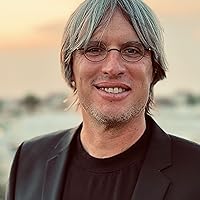
Harvey Gallagher Cox Jr., Ph.D. (History and Philosophy of Religion, Harvard University, 1963; B.D., Yale Divinity School, 1955) was Hollis Professor of Divinity at Harvard, where he had been teaching since 1965, both at HDS and in the Harvard Faculty of Arts and Sciences, until his retirement in 2009.
An American Baptist minister, he was the Protestant chaplain at Temple University and the director of religious activities at Oberlin College; an ecumenical fraternal worker in Berlin; and a professor at Andover Newton Theological School. His research and teaching interests focus on the interaction of religion, culture, and politics. Among the issues he explores are: urbanization, theological developments in world Christianity, Jewish-Christian relations, and current spiritual movements in the global setting. His most recent book is When Jesus Came to Harvard: Making Moral Decisions Today. His Secular City, published in 1965, became an international bestseller with more than 1 million copies sold. It was selected by the University of Marburg as one of the most influential books of Protestant theology in the twentieth century.
With the end of slavery in the U.S.A., most Black Christians set up their own churches, and later some of these gave birth to the massive Pentecostal movement, which deeply influenced many white churches and swept over much of the world. Cox traces this growing movement down the decades and over several continents. He deals in stories of seemingly ordinary people who caught a passion for breaking down walls between hearts. Many of these are women, such Lucy Farrow, Marie Burgess, Florence Crawford, Maria Woodworth-Etter, or Aimee Semple McPherson, who walked out of a church which could not respect her gifts, and built her independent Church of the Four Square Gospel in the 1920s, which had over 25,000 affiliated churches in 74 countries by the 1990s.
The movement Cox describes is different in spirit than fundamentalism. Though it is subject to corrupt leaders or cheap commercialization, it is also full of local heroes like evangelical politician Benedita da Silva, who stresses Jesus' promise to the slum dwellers of Rio de Janeiro: "Imagine, we will do greater things than he did" (p. 166). Overall, Cox gives a report which is properly respectful for the power and magnitude of popular religion, made down home in local people's hearts.
Some scholars have described pentecostalism as the "most important event in religious history since the reformation." Harvey Cox, Professor of Religion at Harvard, traveled the world and his own inner soul (at times) in this history of the pentecostal movement, comparing it to jazz and contrasting it to a another "millennial" historical event around the same time: The Great Columbian Exposition of 1893. While this event hosted the "Worlds Parliament of Religions," (which without trying to celebrated white America as the "new jerusalem") near the turn of the century, with a white washed plaster casted city in the heart of Chicago, a little storefront on Azusa street saw tongues of fire and a break in the racial divide. Thus began a small wave of what would eventually be the fastest growing religious movement in the 20th century.
Harvey Cox is a humble man to have written this book. He takes seriously the pentecostal movement when most of his professorial colleagues derided it. This is a must-read for anyone interested in the history of American Spirituality.
Fire from Heaven is written in response to secularization theory, which did not prove to be accurate for the American religious landscape. With worldwide membership at 410 million, Pentecostalism represents the vibrant religious life of so many with some seeing this time as another "great awakening." While many equate fundamentalists with Pentecostals, fundamentalists are suspicious of Pentecostals focus on experience (see also Blumhofer) and emotion rather than the specifics of the text. Pentecostalism began as a restorationist movement that was looking back in order to move forward. The Azusa St. revival with Seymour was something they were praying for and lasted for 3 yrs in LA, which has always been tolerant of new religion. Initially they were not self-promoters and were simply waiting in hope for the next phase. Cox claims this tradition is based in primal piety (which includes a link between spirit and body) and primal hope (which continues to be a huge part of their appeal). This tradition went beyond racial lines and its members were waiting for the next age. Their hope for a new age was increased as they felt alienated by science and modernity. Cox argues that more than a religion, Pentecostalism is a "mood". Cox agrees with Blumhofer's that music and women played an important part in the success and identity of Pents, yet they both agree that women were never treated equally to men. Also agrees with Blumhofer (in her bio of Aimee Semple Macpherson) that she represents the traditions ability to shun the world while using the tools the world offers to expand its message. Cox also agrees with Blumhofer that this tradition's focus on the people rather than the elite makes them focused on the popular opinion. Interestingly, Cox points out how while the prosperity message is often not discussed, it is implicit in their style and message. Experiential spirituality often demands practical results. The current growth of the movement is in Hispanic and Black members.
This book is a study of global Pentecostalism by a self confessed outsider (although perhaps not a total outsider), based largely on his fieldwork. The author, Harvey Cox, is a Harvard theologian. He became well known for "The Secular City", a book that sought a theology for an expected "postreligious" age. Cox began teaching a Harvard course on Pentecostalism in the early 1990s, after noticing the vitality of inner-city Pentecostal churches.
His interest is explanatory. Cox wrote the book because the secularisation hypothesis, and predictions of religious decline, proved wrong. Mainline denominations were shrinking while Pentecostal churches doubled or tripled, and he reports an estimated 410 million adherents. He travelled to four continents, visited many congregations and spoke with ministers and ordinary members. He believed that understanding Pentecostalism would explain the wider religious revival.
Cox describes Pentecostalism as a recovery of "primal spirituality" with three dimensions. These are primal speech (tongues), primal piety (the trances of "falling under the power", healing, dreams) and primal hope (millennial expectation). He presents it as part of the long history of human religiousness, not as an aberration. He also presents it as the preferred religion of the urban poor, in a time of a deficit of spiritual ecstasy.
Cox positions himself as neither an insider painting an attractive picture nor an outsider writing an exposé, and he hopes Pentecostals will recognise themselves in his account. His sympathetic distance makes it a useful, though American-centred, source. He gives little attention to British Pentecostalism. Although an outsider, he appears to have admiration and fondness for the heart of Pentecostalism, whilst taking aim at the excesses. All Pentecostals, he says, are embarrassed by the health and wealth peddlers and the likes of Bakker et al. (He may not be right that they all are, but it is an astute observation that many are).
All in all, this made a very interesting account: vivid, humane and intellectually provocative. It is also open to criticism for its broad generalisations, but all in all an excellent work.
THE HARVARD PROFESSOR OF RELIGION LOOKS AT PENTECOSTALISM
Author and theologian Harvey Cox wrote in the Preface to this 1995 book, “A few years ago the editor of a national magazine called to ask if I wanted to make a comment for an article they were preparing on the anniversary of Time magazine’s ‘Is God Dead?’ cover story. He told me that he and his colleagues were puzzled. Why did Presbyterians, Methodists, and Episcopalians seem to be losing members… while certain other churches, mainly pentecostal ones, had doubled or tripled their memberships in the same period. He had also seen reports that pentecostalism was growing very quickly in Latin America, Africa, and parts of Asia. Was there something ominous… about all this?... Nearly three decades ago I wrote a book, ‘The Secular City,’ in which I tried to work out a theology for the ‘postreligious’ age that many sociologists had confidently assured us was coming. Since then, however, religion---or at least some religions---seems to have gained a new lease on life. Today it is secularity, not spirituality, that may be headed for extinction… I decided to find out what I could about Pentecostals, not just be reading about them but by visiting their churches wherever I could and by talking with both their ministers and with ordinary members….
“[I] had become obvious that instead of the ‘death of God’ some theologians pronounced not many years ago, or the waning of religion that sociologists had extrapolated, something quite different had taken place. Perhaps I was too young and impressionable when the scholars made these sobering projections. In any case I had swallowed them all too easily… The prognosticators … insisted that religion’s days as a shaper of culture and history were over. This did not happen. Instead… a religious renaissance of sorts is under way all over the globe… We may or may not be entering a new ‘age of the Spirit’ … But we are definitely in a period of renewed religious vitality… but this time on a world scale…
“So, it became important for me to try to fathom exactly what pentecostalism is and what about it is so attractive to such a wide variety of people around the world… as I started on my project I quickly discovered that I took to it with remarkable ease… I rarely had any trouble getting pentecostals to tell me about their faith… Wherever I went pentecostal people welcomed me to their churches and invariably invited me to come back… It is my hope that this book will help people who have heard about the pentecostal movement and may be curious about it to learn something from one who is neither an insider bent on painting the most attractive picture nor an outsider determined to write an exposé. I hope that the pentecostals who read it will recognize themselves, and will find that I have been accurate in my portrayal, generous in my commendations, and fair in my criticism. I also hope that other thoughtful people who wonder what shape religion will take in the coming century will appreciate my speculations on the question as well as my intuition that a careful consideration of the pentecostal movement yields some valuable hints to its answer.”
He explains, “As I delved into the history of pentecostalism and began visiting all the pentecostal churches I could, some discoveries surprised me. The first was how MANY pentecostals there are… pentecostalism in all its varied forms already encompasses over 400 million people. It is by far the largest non-Catholic grouping…. It is also the fastest growing Christian movement on earth, increasing more rapidly than either militant Islam or the Christian fundamentalist sects… In Africa, pentecostal congregations… are quickly becoming the main expression of Christianity. Several Latin American countries are now approaching pentecostal majorities on a continent that had been dominated by Roman Catholicism for five centuries. Second, I was interested to find that the pentecostal movement worldwide is principally an urban phenomenon, and not a rustic or ‘hillbilly religion,’ as some people still believe… I also learned that it is a serious mistake to equate pentecostals with fundamentalists… Fundamentalists attach such unique authority to the letter of the verbally inspired Scripture that they are suspicious of the pentecostals’ stress on the immediate experience of the Spirit of God…while the beliefs of the fundamentalists … are enshrined in formal theological systems, those of pentecostals are imbedded in testimonies, ecstatic speech, and bodily movement… The difference is that … pentecostals have felt more at home singing their theology, or putting it in pamphlets for distribution on street corners. Only recently have they began writing books about it.” (Pg. 14-15)
He states, “When you ask pentecostals why they think their movement grew so rapidly and why it continues to expand at such speed, they have an answer: because the Spirit is in it. They may be right. But … it has occurred to me that there is also another way to think about why the movement has had such a widespread appeal. It has… spoken to the spiritual emptiness of our time by reaching beyond the levels of creed and ceremony into the core of human religiousness, into what might be called ‘primal spirituality,’ that largely unprocessed nucleus of the psyche in which the unending struggle for a sense of purpose and significance goes on.” (Pg. 81)
He reports, “In [1989-1992] … approximately 700 new pentecostal churches had opened in Rio… But, despite population increases, only one new Roman Catholic parish had been founded. The pentecostal growth is most evident among the poorer communities… pentecostal growth has now reached the proportions of a tidal wave. Besides, there are not many ‘nominal’ or ‘nonobservant’ pentecostals. Scholars now estimate that on any given Sunda morning there are probably more pentecostals at church in Brazil than there are Catholics at mass. A similar picture is emerging all over Latin America.” (Pg. 167-168)
Of Korea, he observes, “Pentecostalism has succeeded in so many places not just by being up to date, but by providing an alternative life vision, a way of living that is ‘in but not of’ the postmodern consumer world. Is Korean pentecostalism blending in so well that it will lose its power to present a different picture of what life is about?... Eventually even the most Spirit-filled religion has to organize itself in some measure, and most ultimately do. But are Koreans overdoing it?... their devotion to organizing things comes perilously close to an obsession. Does this desperate need to nail down lines of authority and responsibility arise in part for their impressive willingness to flirt with the chaos of the Spirit world, to court the ‘madness’ of shamanic flight? Is this, after all, a kind of compensation, a way of staying firmly in control of something because their worship veers into such giddy gyrations? Maybe there is a compensatory mechanism working here after all.’ (Pg. 237)
He notes, “There are many pentecostals in America today who are fascinated to the point of obsession with demonic spirits and the powers of darkness. This preoccupation has been developing for some time, but it reached a critical point in 1986 when a previously unknown writer named Frank Peretti published his novel ‘This Present Darkness.’ I had occasionally heard about this book and about the enormously wide readership it has gained, especially among a group of evangelical Christians and pentecostals who sometimes see themselves as the ‘Third Wave.’ These people see classic pentecostalism as the first modern outpouring of the Spirit; the charismatic movement in the ‘mainline’ churches as the second; and themselves as the third.” (Pg. 281)
He concludes, “Whether pentecostals will come down on the side of the fundamentalists or on the side of the experientialists is an open question… But whatever happens, given the nature of the pentecostal impulse, I doubt that it will be settled through theological debate. Pentecostal theology is found in the viscera of pentecostal spirituality. It is emotional, communal, narrational, hopeful, and radically embodied. Furthermore, whatever changes occur in pentecostalism will begin in the lives of its hundreds of thousands of congregations. Answers to the questions about what experience is and what the Spirit is doing in the world will not appear first in journals but in the ways that these little outposts of the Kingdom LIVE in a world that is both hostile and hungry. The reason I am hopeful that pentecostalism will emerge… on the side of the angels comes… from what some of these outposts… are actually doing.” (Pg. 319-320)
This book will be of great interest to those seeking historical/sociological/theological analyses of pentecostalism.
I am saying this about every book by Mr. Cox that I have read, but this book is life changing. It taught me about what I have always considered my inner Pentacostal. I am a Pentacostal at heart and now I know why. I was heartened and glad to learn that this new partnership between Pentacostals and fundamentalists is relatively new and furthermore would have been anathema to both groups back in the beginning. Fundamentalists take their stand on the inerrant infallibility of the Bible in every little detail and every questioning of any part of it is evil devil led sin. Pentacostals place more reliance on the leading of the indwelling Holy Spirit. In many ways it is like the very early New Testament days when Paul is warning against the 'dogs of the circumcision' - i.e. those who put the letter of the law over and above both humanity and the Spirit. I am now asking the Spirit to lead me to a true Pentacostal church, one not aligned with politics of any type except that of helping hurting humanity. Thank you, Mr. Cox.
This book begins with a history of Pentecostalism, and traces the movement through the present day. It ends with a survey of Pentecostal movements and churches around the world, and offers some of the author's insights on what has made Pentecosalism such a successful movement. For an academic theologian, the author is very sympathetic to his subject, and provides insight into an understudied phenomenon. However, I felt that in some instances he expressed his own views a bit too forcefully, in a way that detracted from his observations.
This was on a list by a leading Pentecostal leader. Although Cox is not Pentecostal, we writes a balanced and sympathetic critique. Enjoyed it more than I expected.
It should be noted that the book is dated (pre-21st century) and thus will not address the state of Pentecostalism over the last few decades. Having said that, I commend Cox for giving an honest and well-research presentation of Pentecostalism. He never took the plunge into Pentecostalism, but he was a fair and kindly friend.
Reading this book will give you a good grasp of the beginnings of late 19th - 20th Pentecostalism and some of his warning about Pentecostalism in the West being seduced by the desire to be mainstream and accepted at the expense of it's power and distinctiveness are disturbingly accurate.
Cox takes the reader on a journey (that he took himself) around the world explaining the different nuances of Pentecostalism as it interacts with the local culture. His explanations were interesting but I kept waiting for the ultimate explanation - that ultimately the rise of Pentecostal Spirituality was an a divine act of God.
Regrettably it never seemed to occurred to Dr. Cox that that could have been the case. But then, he's not alone. Time will tell.
As our Pentecostals pioneers would have put it: When the moon turns to blood and the skies darken and the Great Day of Lord doth come, then the Judge of all will return and clear all confusion and answer all questions.
I believe then, that those who embraced, what Dr. Cox called "Pentecostal Spirituality" will be among those on the right side of eternity and will have enjoyed the journey getting there a whole lot more than their more quiet and reserved brothers and sisters in the faith.
Had to read this for my Pentecostal Doctrine class. Very interesting and insightful! Well rounded and fully researched take on the history and future on the Pentecostal denomination.
The premise is there is a spiritual need in our modern world that traditional institutions failed to meet and Pentecostalism fills that need. The question never asked is “Is it a true "spiritual experience", or is it all in their heads? Could this all just be psychological mind games to allow people to find purpose in our fractured modern world?” So, if you have those questions in your head, this book won’t help one bit.
A very sympathetic overview of Pentecostalism from a conventional theologian/sociologist. To the point that Fox seem mostly jealous that he can’t bring himself to let go and start speaking in tongues. He is the often maligned “liberal theologian” who, while still a Christian, thinks there are genuine religious experiences outside of Christianity and I assume feels we all have more in common than we think.
The start of the modern Pentecostal movement begins in 1906 on Azuza Street in Los Angeles. Where a group of believers felt the spiritual fire from heaven come down and along with joy and love there was speaking in tongues. For the people at the time it seemed the speaking, “Glossolalia”, was the defining characteristic, it was the breakdown of racial prejudice where all races really did treat each other as brothers and sisters. They worshiped together, prayed together, and spoke in tongues together.
In retrospect THAT was the exceptional sign from above...so of course that didn’t last long and white people found that they would rather love other races from afar. So off they went to start their own churches which went on to mimic the segregated world of the first part of the 20th century.
Seymour suspected that the dispute was as much a matter of race as it was of theology…..A few years later he believed his suspicions where borne out when Durham’s disciples joined other to organize a rival Pentecostal denomination, the Assemblies of God, in which white ministers would not have to be led by blacks. The new, predominately white denomination actually was formed for other reasons as well, but it did gain a large following, especially in those parts of the country where racial separation was strongest. Pg. 62
He makes some interesting propositions, such as the spontaneous nature of a Pentecostal gathering was similar to and had the same antecedents as Jazz. The modern Pentecostal fire sprang from black churches which also laid the foundation for Jazz. With speaking in tongues being something like scat singing. Sure, why not?
When it moves to other places like Korea and later countries in Africa he connects the native shamanism to the healing and prophesying of this new Christian movement. And that sounds right to me.
And playing the philosopher, he brings Henri Bergson along for the ride with his creative Evolution and “vital impulses”. And it is this same vitality that Pentecostals tap into.
For the artist it is individual for the Pentecostal it is communal pg 100
Here are what I think are some of his other key points about the movement.
It Strikes at the core: Placing experience over theology The racial dimension: Race was at the core of the 20th century birth and growth of Pentecostalism primal connection: The anthropological observation that the charismatic gifts have been part of society for millennia shaman similarities: Pentecostalism was recognizable in those countries that still practiced some type of shamanism Stability in an unstable world: Pentecostalism grew because of modernity disrupting old ways of doing things drift to authoritarianism and conventionality: Once the movement became mainstream the traditional power structures become part of the system.
Toward the end Fox is honest about some of the failings of the movement
Jean-Pierre Bastian: He warned that Pentecostalism in the present Latin American context may be “Catholicism without priests” but it lacks the internal democracy of previous Protestant movements. He point out that it is developing an ominous authoritarian character and that is leaders, instead of helping the people nurture democratic attitudes and skills, are becoming wheeler-dealers who trade bloc of votes for spoils and patronage. Pg 182
My exposure to all of this is mostly from televangelists and the occasional friend who ran in those circles. I find it interesting, but ultimately disappointing. So what if you can speak in tongues, even heal people, if it really doesn’t change you? If you have no compassion for others? And the irony that Pentecostalism starting with the poor and oppressed but now that is has moved into megachurches the poor are the moochers taking up too much oxygen from the job creators.
Of course I say this because Pentecostalism has merged into the broader evangelical world. It is mainstream and middle class, basically, boring. And that is the core of the movement and the book. It starts out fascinating but for all the miracles ends up being a mundane method to justify modern consumerism.
An informative history of Pentecostalism from its 1906 origins in a converted warehouse in Los Angeles through its expansion across the globe, it is written by probably the best known sociologist of religion and is valuable for his thoughtful evaluation of the reasons for its astonishing growth and for his reflections on its future promise.
While Harvey Cox is not a pentecostal, he is more than respectful to this movement. He seems to be powerfully attracted by its vital spiritually, by the intensity of the personal meaning and spiritual satisfaction it evokes in its adherents, by their emotional apprehension of God, by their awareness of His real presence in their worship and lives. In his "Secular City" (published in 1965) Cox literally wrote the book on the increasing secularization of modern culture. Having expected a future of coolly rational or formalistic religiosities at best, and more likely a vast desert of secularism, he has stumbled upon a refreshing oasis of fervent spirituality. It is no wonder he is enthusiastic.
What Cox admires most is the Pentecostal orientation towards the Spirit. Admires the movement's openness to, and validation of, the direct spiritual experiences of people. The Spirit, as it makes itself known to the faithful, is the ultimate authority - not scriptures or a particular creed or a church hierarchy. Cox argues that this lack of impersonal authority constitutes the heart of Pentecostalism, is its strength. Argues that this openness to the primal spirituality innate in all human beings, is the basis for its universal appeal - that this respect for the actual experience of the individual, whatever his position in the social scale or wherever in the world he might live, enables Pentecostalism to adapt to different environments, different cultures. Freed of a defined orthodoxy, it is more respectful of, and more welcoming to, indigenous spirituality. Its trust in the workings of the Spirit enable it to incorporate a wide diversity of beliefs and practices, thus empowering a syncretism with previously existing faith traditions that encourages conversion. And its congregational structure, its lack of a central hierarchy, its organization as a loose association of churches, while having the negative effect of proliferating a host of pentecostal denominations and sub groupings, has the positive effect of enabling local churches to institutionalize their adaptations to indigenous cultures and beliefs - to create local churches that reflect local culture. This adaptability enables it to seamlessly incorporate, for examples, the shamanism of the Koreans, the mariology of the Sicilians, the liberation struggles of the Latin Americans into its faith and practices.
When this book was written in 1995, Cox was uncertain about the future of Pentecostalism. He hoped that it would preserve its Spirit orientation. He even dared to hope that as a people's religion particularly responsive to lay direction, reflecting the physical and emotional needs of common people, it might embrace the tenets of liberation theology, might join in its search for social justice. On the other hand, he feared that it would align itself with the fundamentalist churches, with their right-wing political goals, would become less free, more judgmental. He was troubled by its increasing embrace of the prosperity gospel, of the "name it and claim it" theology. He is now less hopeful. In his most recent book, "The Future of Faith", Cox relates the failure of many of his hopes for Pentecostal, and looks elsewhere to find his desired spirit orientation. Despite this subsequent evolution of the author's thought, this earlier work is still worth reading It remains a great introduction to the too little-known history of this significant religious movement. And it is both a respectful explication of its thought and practices and a still relevant analysis of its strengths and weaknesses.
As always with Harvey Cox, the man can explain Super String Theory to children using magic markers. He's a wonderful articulator to lay-women and men. "Fire from Heaven" accounts the historical origins and development of the pentacostal movement. I found this book intriguing because Cox characterizes a vastly different spirit within the pentacostal church now than was present in the beginning. For instance, we all know that pentacostals now use "speaking in tongues" as "proof" that one is truly saved. But in the beginnings of this movement in the early 1900's, the reason that speaking in tongues was so important was because that early group believed racial unification was a sign of a true Church of God. No church claiming God could be segregated, therefore the early pentacostals prayed to God that they would receive a language which allowed everyone to communicate together. This is only one example of the intrigue of "Fire from Heaven." I recommend the book to anyone who feels strongly about, has been burned by, or who belongs to pentecostal christianity. I only give it 3 stars because there's much information that I sensed he included as space-filler.
Se lee rápido, es entretenido, es interesante y puedes aprender no solo cómo era Roma en 173 d. C sino cómo eras los batallones y como vivían los romanos. Es decir, un libro con precisión histórica.
Resulta también fascinante ver el tratado de la religión y cómo fue llevado el cristianismo.
Me ha gustado. Lo recomendaría e incluso lo volvería a leer.
El único problema son los personajes. Sí, so diversos y se ve claramente mediante el narrador desde cuál estamos viendo su punto de vista, pues cada personaje tiene una voz propia. Pero la historia no los desarrolla más allá de lo que debe. No está mal, pero te sabe a poco.
I will just start studying this book and so far it could be the best Pentecostal Book, and there are not that many Books written which is ironic since there is fire from Heaven moving all over the World. Meaning mainly the people in the south are experiencing the outpouring of the Holy Spirit just before the return of the Lord.
This is really well written, and one of the better Christian books I have read. Enjoy reading as I am.
Very good intro to Pentacostalism. In spite of some tangents and the occasional bout of judgmental superiority (normal for Cox) this is an excellent book. He is very sympathetic to the movement and gives a helpful summary of its history and manifestations in different global situations. Mainliners and emergents should read this.
Some misunderstandings of the nature of global Pentecostalism and its origins, but overall a very challenging read that helped me think in a more nuanced way about my time in the movement and its importance for Christianity.
Me gusto la idea que tenían los romanos de los cristianos, como también la forma de comportarse la gente del imperio, que choca con nuestros principios y costumbres de nuestra éra.
He had some interesting insights about the first ten years of the Azusa-Topeka revival as related to race ... and their understanding of the purpose of speaking in tongues.
This book was fascinating. It's not often I pick up a school textbook and cannot put it down. Textbooks are not known for absorbing reading. That being said, this book is not for everyone. You really need to be familiar with what separates denominations, have a basic understanding of theological terms like later rain and Calvinistic and be ready to read with a Biblical mindset. This book is for someone that wants a deeper look at greater Pentecostalism around the world and where it came from. Even though this book is a more in-depth overview there are still limitations to it. There are many different flavors of Pentecostalism and this book treats them as one. This book does the same thing with Christianity as it does with Pentecostalism. Treating all flavors as one. Even with the broad brush that this book uses I still found it quite useful to read and I do recommend it.