

What do you think?
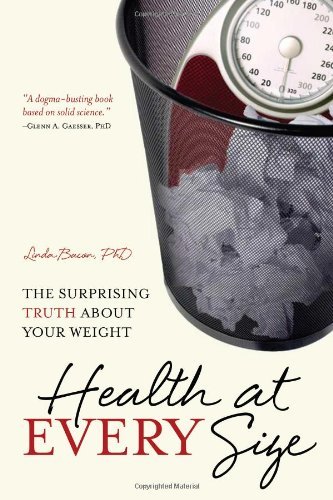
Health at Every Size: The Surprising Truth About Your Weight
Fat isn't the problem. Dieting is the problem. A society that rejects anyone whose body shape or size doesn’t match an impossible ideal is the problem. A medical establishment that equates "thin" with "healthy" is the problem. Health at Every Size: The Surprising Truth About Your Weight by Linda Bacon, PhD, presents a well-researched, healthy-living manual that debunks the weight myths and translates the latest science into practical advice to help readers forever end their battle with weight.
326 pages, Paperback
First published October 11, 2008
Ratings & Reviews
Friends & Following
Create a free account to discover what your friends think of this book!
Community Reviews
Displaying 1 - 30 of 571 reviews

April 5, 2010
First I want to say that this book is a must-read for anyone who is overweight and has ever wished they were thinner. Even if I felt the book was flawed in a few ways, I think it's still incredibly valuable.There's a whole movement started by the book and it's a really empowering, wonderful thing.
Essentially, the point of this book is that the chips are stacked against higher-weight Americans, that our senses of hunger and satiety has been manipulated for the profit of food and pharmaceutical companies, and that no conventional diet has ever proven to have consistent long-term results. She argues that we should be angry at the commodification of our hunger, and the way our bodies are viewed as vehicles for profit and consumption.
She argues that fat itself is not the cause of disease, rather the things that often correlate to fat, and yet we view fat people's health problems as self-inflicted and deserved as a way of blaming the victim. She discusses the way obesity in and of itself is NOT disease, it just often goes along with disease, so we assume the weight itself is the problem when it is not.
The book is one half an overview of the research about fat, food, lifestyle and disease; the second half is devoted to helping people let go of the obsession with their weight and instead focus on healthy choices. It is kind of written for yo-yo dieters; people who hate their bodies and have struggled with weight loss their entire lives. It has a bit of a self-helpy tone that wasn't really for me, but I appreciate it's value (and that's part of why I recommend it).
But here is where I have a problem. The most compelling chapter, in my opinion, is where she insists that obesity in and of itself is not a killer, not even bad for you at all. Her main argument is that the "fat=death, fat=disease" belief so purported by our government's health agencies and our research centers boils down to correlation, not causation, and the "obesity epidemic" is blown out of proportion and manufactured by the powers that be as a way to keep us dieting and obsessed with losing weight. And that overweight, fit people who eat relatively healthfully are actually healthier than very skinny people.
I think there is some traction to this and it's a valuable discussion. I agree that being physically fit and healthy eating are FAR more important that some number on a scale, and I know many larger people who are perfectly healthy. I agree that the correlation between obesity and disease does NOT imply causation, and people can be healthy at every size.
The discussion on type 2 diabetes was most compelling to me because of the way obese people can make the requisite changes to keep diabetes under control (or even eliminate diabetes completely!), and their doctor will say "that's great, but you still need to lose weight". That to me was really valuable, the way the medical side sees things as just weight loss and nothing else, when there is little data to support why.
However... she leaves out some very important stuff, and that made me really mad.
She argues that correlation does not equal causation, and yet, so much of her argument does EXACTLY the same thing! She cites data (cherry picked data, at that) that shows a correlative link between overweight people and health. Exactly what she says the other side is doing!! So at best, that argument proves that the data can go either way and we don't really know.
But most importantly, she cherry-picks what diseases she talks about to defend fat as not leading to disease. She says "fat does not cause any of our leading chronic diseases, except for some cancers, sleep apnea and osteoarthritis". Oh really? except for that one pesky condition, osteoarthritis? the disease you don't speak about for the rest of the book?
My biggest, biggest beef with the book is that disability is not even mentioned-- I checked the index to make sure I didn't miss it. Osteoarthritis, caused by excess weight, is the leading cause of disability in adults over 50 in the USA. Osteoarthritis is caused by obesity, because our muskeloskeletal system was not designed to bear so much pressure and impact caused by such great weight. Osteoarthritis makes it incredibly painful to even move, which leads to inactivity and thus co-morbidities.
I say this not to blame obese people. I take serious issue with the national narrative that obesity is caused by personal failure, and I think Dr. Bacon promotes a very valuable perspective on the way both the weight-loss and junk-food industries see our bodies as commodities, and we need to reject the cultural norm that extra fat is ugly/wrong and work on just living healthy lives. I agree with that one thousand percent.
I stand with the author in her fight for rights for and acceptance of fat Americans. But I'm seeing two extremes in the response to overweight America. One response is to be hateful towards fat people and think obesity is unhealthy. The other response is to be a fat activist, support overweight Americans, and argue that obesity is not unhealthy.
I really take issue with these two ways of thinking. I don't think it's mutually exclusive to fight obesity in order to prevent disability (not the obese people themselves), AND fight discrimination against obese people. and conversely, I don't think that caring about obesity as a health issue means you have to think poorly of fat people. And conversely, just because I respect fat people, think they are just as beautiful as thin people, think they should not be discriminated against etc., doesn't mean that I am OK with standing idly by while huge corporations make us fat. We can simultaneously be angry that huge corporations have stacked the chips against our health in the name of profit AND worry about our health.
What I'm saying doesn't completely go against this book- the book argues for people to make changes in their lifestyle but first they must accept and love themselves as they are. I would say about 80% of the book is completely in line with my philosophy and my work as a health professional. I just wish she hadn't completely left out the way obesity leads to disability.
February 14, 2010
Holy moley... I wish I'd read this book when I was fifteen! My entire life would have been changed with this knowledge, and possibly that of several members of my family.
If you have any issues regarding your weight or self-image, or if anyone you love has those issues, do not walk but RUN to get your hands on this book.
The research presented will knock your socks off... and change your understanding of how your body works to protect and support you. The down side is that you will forever be suspicious of any government or industry "experts"... which is probably a very healthy thing.
If you have any issues regarding your weight or self-image, or if anyone you love has those issues, do not walk but RUN to get your hands on this book.
The research presented will knock your socks off... and change your understanding of how your body works to protect and support you. The down side is that you will forever be suspicious of any government or industry "experts"... which is probably a very healthy thing.

February 24, 2010
If you have ever gone on a diet (even a "healthy eating" plan), if you have ever looked at your body and thought you were fat, if you ever have wished you were thin, if you have ever counted a calorie, you must read this book. If you're a naturally thin person who has never had to worry about food or weight, read this book!
Linda Bacon outlines all the lies we've been fed about obesity and weight loss, and she does it with impeccable science. Every time she makes a statement of fact in the book, the sentence ends with a little postscript number referring to the source in the appendix. Sometimes, factual statements are backed up by 5 or 6 or 7 references! Linda Bacon knows what she's talking about.
Yes, this book is HAES (Health at Every Size) 101 -- if you're already familiar with the fat acceptance movement, little of the information in this book will be shocking or new to you. However, Bacon has compiled and presented it in such a sensible, accessible way, with grace and conviction. This is an essential book for fat positive people to have in their libraries so they can give it to friends and family who are new to the concept that we don't have to hate our bodies!
So, in short -- if you are new to fat acceptance (FA), read this book. If you are an FA veteran, buy this book. If you have never heard of FA, read this book.
Linda Bacon outlines all the lies we've been fed about obesity and weight loss, and she does it with impeccable science. Every time she makes a statement of fact in the book, the sentence ends with a little postscript number referring to the source in the appendix. Sometimes, factual statements are backed up by 5 or 6 or 7 references! Linda Bacon knows what she's talking about.
Yes, this book is HAES (Health at Every Size) 101 -- if you're already familiar with the fat acceptance movement, little of the information in this book will be shocking or new to you. However, Bacon has compiled and presented it in such a sensible, accessible way, with grace and conviction. This is an essential book for fat positive people to have in their libraries so they can give it to friends and family who are new to the concept that we don't have to hate our bodies!
So, in short -- if you are new to fat acceptance (FA), read this book. If you are an FA veteran, buy this book. If you have never heard of FA, read this book.

September 30, 2019
I have mixed feelings after reading Health at Every Size. I have struggled for over 3 decades with eating disorders and even when my weight has been well-within "normal" ranges (i.e., a "healthy BMI") I have still felt pressure to diet, to get thinner, to generally not feel happy with who I am or how I look. Over the years I've read a variety of books on health, fitness, diet, weight and disease - including different diets such as Paleo, keto, vegetarian, vegan, Whole-30, Mediterranean, etc. and I kept seeing Health at Every Size referenced, so I thought I'd read it.
First, my key takeaway might not be what the author intended. My take is that restrictive dieting in which we listen to outside sources for guidance is the problem. When we listen to societal and cultural norms telling us what is beautiful and what is not, that's a problem. When we listen to the government telling us what is healthy or not, that's a problem. When we listen to Weight Watchers, or Jenny Craig, or Atkins, telling us what to eat, when to eat and how much to eat, that's a problem. When we listen to that doofus guy who calls you a "fat heifer" when you're 5'6, 130 lbs and a size 6, that's a problem. When you listen to the nightly news screaming about the "obesity epidemic" and blaming every condition under the sun on being overweight, that's a problem.
I'm not saying, nor do I think Linda Bacon is saying, that we should reject science and "go with only our feelings and instincts" - however - too often the news gets it wrong. As Bacon references, correlation does not equal causation. Studies may find a correlation between obesity and cancer. Does that mean obesity causes cancer? Maybe...but until we study every single variable and its effect on getting cancer, we cannot (and should not) take "obesity causes cancer" as truth. Could it be that obese people get less exercise and are less active? That they don't get proper sleep? That they do not have good, positive social networks? That they are less likely to go to a doctor when ill? That they are on more medications? Are they more likely to smoke? More likely to drink alcohol? Eat processed foods? Eat fewer vegetables and fruits? So a link exists between certain conditions and obesity, but could it be something else causing the cancer?
Equally as important, Bacon points out that when correlations are found, it's typically for individuals who are very obese (I think she wrote that it was at a BMI of 41+). So this panic that someone who is 30 lbs overweight is going to get cancer, heart disease and diabetes because of being overweight is simply wrong. Taking it further, the idea that the very institutions created to "help" us with these issues may very well be propagating this misinformation is pretty likely. Drug companies, weight loss organizations, the government, certain medical professions and the food industry have a huge stake in diet culture. How can we truly trust what they tell us?
Now, I had some issues with Health at Every Size. For a book that claims not to be a diet book, she spends an inordinate amount of time talking about what foods to eat, how much activity to get, etc. More than once, I was annoyed when I felt she fell into "dieting tips" propaganda. As someone who has spent her entire adult life on and off restrictive diets, I am sick to death of reading I should eat more fiber to feel more full, that I should park further away and walk or that I should eat more vegetables. I skimmed over pretty much all of that (and there was quite a bit).
Second, she is a big proponent of "intuitive eating" in which a person must reject diet culture and learn to listen to her own body when it comes to food. In other words, our bodies will tell us when it is hungry and if we truly listen, we will know exactly when, what and how much to eat. Perhaps she can live that way, but for someone struggling with eating disorders, it's an issue for me. Why? My intuition sucks. I've spent so many years not buying/eating certain foods that giving myself free rein is disastrous. This book and others on the topic of intuitive eating will tell you that most people gain weight when first trying to learn this way of eating and unlearn old styles. Again, speaking as someone with an eating disorder I can say - this is not good for my mental health. I gained 30 lbs over a few months and I descended into a brutal and scary depression.
And not only that - my orthopedic issues went absolutely bonkers. I was diagnosed with widespread osteoarthritis in my 20s (from my jaw and neck down to my toes) and gaining weight directly caused my feet, ankles, knees, hips and back to hurt. A lot. In fact I had to cancel a hiking holiday over Thanksgiving because my back was so acute, and I had a miserable vacation in Dubrovnik because my ankles and knees were so inflamed (no one told me Dubrovnik had 10 gabillion stairs). I simply cannot live happily gaining weight while waiting for my "intuition" to override decades of diet culture.
Even with the parts I felt were flawed, I think this is a critically important book. Many will say it's all about fat acceptance and dismiss it outright; however, I think it's more about acceptance in general and learning that the science of weight (gain and loss) is inherently flawed. Lumping all people who are outside of "healthy BMI range" (which is kind of a load of poo anyway) as fat, overweight, obese, etc. and then building a multi-billion dollar industry to all at once tear them down and try to rebuild them is a tragedy. Even worse is when we apply flawed, or fake, science to bolster these ideas. I think Bacon did a good job exposing the half-truths and outright lies, even though sometimes it felt like she went too far to the other side, but I'd still recommend the book.
First, my key takeaway might not be what the author intended. My take is that restrictive dieting in which we listen to outside sources for guidance is the problem. When we listen to societal and cultural norms telling us what is beautiful and what is not, that's a problem. When we listen to the government telling us what is healthy or not, that's a problem. When we listen to Weight Watchers, or Jenny Craig, or Atkins, telling us what to eat, when to eat and how much to eat, that's a problem. When we listen to that doofus guy who calls you a "fat heifer" when you're 5'6, 130 lbs and a size 6, that's a problem. When you listen to the nightly news screaming about the "obesity epidemic" and blaming every condition under the sun on being overweight, that's a problem.
I'm not saying, nor do I think Linda Bacon is saying, that we should reject science and "go with only our feelings and instincts" - however - too often the news gets it wrong. As Bacon references, correlation does not equal causation. Studies may find a correlation between obesity and cancer. Does that mean obesity causes cancer? Maybe...but until we study every single variable and its effect on getting cancer, we cannot (and should not) take "obesity causes cancer" as truth. Could it be that obese people get less exercise and are less active? That they don't get proper sleep? That they do not have good, positive social networks? That they are less likely to go to a doctor when ill? That they are on more medications? Are they more likely to smoke? More likely to drink alcohol? Eat processed foods? Eat fewer vegetables and fruits? So a link exists between certain conditions and obesity, but could it be something else causing the cancer?
Equally as important, Bacon points out that when correlations are found, it's typically for individuals who are very obese (I think she wrote that it was at a BMI of 41+). So this panic that someone who is 30 lbs overweight is going to get cancer, heart disease and diabetes because of being overweight is simply wrong. Taking it further, the idea that the very institutions created to "help" us with these issues may very well be propagating this misinformation is pretty likely. Drug companies, weight loss organizations, the government, certain medical professions and the food industry have a huge stake in diet culture. How can we truly trust what they tell us?
Now, I had some issues with Health at Every Size. For a book that claims not to be a diet book, she spends an inordinate amount of time talking about what foods to eat, how much activity to get, etc. More than once, I was annoyed when I felt she fell into "dieting tips" propaganda. As someone who has spent her entire adult life on and off restrictive diets, I am sick to death of reading I should eat more fiber to feel more full, that I should park further away and walk or that I should eat more vegetables. I skimmed over pretty much all of that (and there was quite a bit).
Second, she is a big proponent of "intuitive eating" in which a person must reject diet culture and learn to listen to her own body when it comes to food. In other words, our bodies will tell us when it is hungry and if we truly listen, we will know exactly when, what and how much to eat. Perhaps she can live that way, but for someone struggling with eating disorders, it's an issue for me. Why? My intuition sucks. I've spent so many years not buying/eating certain foods that giving myself free rein is disastrous. This book and others on the topic of intuitive eating will tell you that most people gain weight when first trying to learn this way of eating and unlearn old styles. Again, speaking as someone with an eating disorder I can say - this is not good for my mental health. I gained 30 lbs over a few months and I descended into a brutal and scary depression.
And not only that - my orthopedic issues went absolutely bonkers. I was diagnosed with widespread osteoarthritis in my 20s (from my jaw and neck down to my toes) and gaining weight directly caused my feet, ankles, knees, hips and back to hurt. A lot. In fact I had to cancel a hiking holiday over Thanksgiving because my back was so acute, and I had a miserable vacation in Dubrovnik because my ankles and knees were so inflamed (no one told me Dubrovnik had 10 gabillion stairs). I simply cannot live happily gaining weight while waiting for my "intuition" to override decades of diet culture.
Even with the parts I felt were flawed, I think this is a critically important book. Many will say it's all about fat acceptance and dismiss it outright; however, I think it's more about acceptance in general and learning that the science of weight (gain and loss) is inherently flawed. Lumping all people who are outside of "healthy BMI range" (which is kind of a load of poo anyway) as fat, overweight, obese, etc. and then building a multi-billion dollar industry to all at once tear them down and try to rebuild them is a tragedy. Even worse is when we apply flawed, or fake, science to bolster these ideas. I think Bacon did a good job exposing the half-truths and outright lies, even though sometimes it felt like she went too far to the other side, but I'd still recommend the book.

March 7, 2011
This is an excellent book that explains why diets don't work and THANK GOODNESS finally shifts the blame from the dieter, to the diet. THE DIET DOESN'T WORK! Stop blaming yourself for not being able to control everything. Some things are just out of your control. Let it go. Food is to be eaten for nutrients, to nourish our bodies and provide us with the energy we need to function. SO EAT FOOD. Eat a variety, and eat SLOWLY to enjoy the food. Unprocessed foods are better for you than processed foods or fast foods (Duh, but I supposed it had to be said). But if you want a twinkie, have a freaking twinkie and then move on from it. One twinkie isn't likely to kill you. But supress that craving for one twinkie and you might end up binging on an entire box or a whole tub of ice cream later when you finally cave into your craving. So don't supress you food cravings. Eat when you are hungry and stop when you are full. Sounds like common sense, but how times have you zoned out in front of the tv to find that bag of potato chips suddenly empty and you have a stomach ache? There's a decent amount of science discussed in the book and some common sense things (that have to be said because obviously people are not getting it).
P.S. I'm sick of people being on diets. Can you tell? And I have yet to see one actually work. I've only seen eating disorders develop. So stop with all the diets.
P.S. I'm sick of people being on diets. Can you tell? And I have yet to see one actually work. I've only seen eating disorders develop. So stop with all the diets.

June 5, 2017
Badly written and ends with the (not)helpful advice to stop dieting and just be happy, even if you're overweight. Ridiculous.

February 14, 2019
This is probably the most frustrating book I've ever read.
Let me preface by saying that I've struggled with my weight my whole life. I've been obese since I was young, and I've tried basically every diet/diet program/exercise program that exists. I always thought I was just "meant to be fat." I tried to accept myself. Then I learned about calories. I started counting calories and working out, and I lost weight. A lot of it. 140 pounds, to be exact.
Then I gained it all back. I told myself, again, "I'm just meant to be fat. I've tried so hard to lose weight, but it just doesn't work. Better learn to love myself where I am." And I lived like that for a while, curious how I could be SO FAT, but convinced that I was just some medical mystery.
UNTIL I HELD MYSELF ACCOUNTABLE. I started calorie counting again one day, just to see. And I counted everything. Every single morsel that went in my mouth. And you know what? It's no [redacted] wonder that I was so fat. I ate burgers and fries "because I didn't have time/money to make something healthy." (Pro tip: a salad at Walmart costs less and is already ready.) I snacked all the time. I didn't think of it because I didn't grab a bag of chips and polish them off in one sitting, but I did basically that. I would grab a handful at a time, and those REALLY added up. I grabbed a cookie just because. I drank full-sugar pops and lots of juice (it's made of fruit! It's healthy!), and I realized that just because I was sneaking food doesn't mean calories didn't count.
So I started watching my calories again. And the weight, the weight that was magically hanging onto me no matter what I did, started coming off.
A medical miracle. XD
ALL THAT TO SAY:
Linda, really?
This book has a LOT of great diet tips! Eat less, move more. Find exercise that you enjoy that doesn't FEEL like a workout. Eat mostly plants and protein. Eat less processed food. Do more throughout your day to move more.
But for some reason everyone who touts this book as gospel skips right over that part and goes right to the "being fat is healthy" and "I'm eating intuitively, and if that means I'm fat, I'm meant to be fat."
First of all, I've never seen so many scholarly gymnastics to stretch the reality that being overweight is unhealthy into oblivion. Bacon proclaims repeatedly that overweight people live longer than thin, that diabetes isn't correlated with obesity, and, mostly, that if you're fat, you're fat, and since there's nothing you can do, you'd better just accept it.
This frustrates me s o m u c h because I told myself those lies over and over again, and they're just not true. It made me feel good to say that my being fat was because of my genetics and there was nothing I could do because if I took responsibility for my size, I would have had the power to do something about it, and that would mean working hard.
Second, Bacon says over and over again that this isn't a diet book, yet she has a whole chapter of diet tips? A rose by any other name, intuitive eating is still teaching people to "diet," but I've known many people who take the "my body is craving ____" and stretch it to encompass cravings for 20 oreos. God knows I used to.
Third, the statistic I hate the most: 95% of diets don't work.
You know what? That's probably true. But that's including crash diets, diet crazes, and doing what I did: not making any permanent changes. I dieted, and I did it well, but I didn't change anything in the long run. I let myself go right back to old habits. I ate for my 250+lb body, not my 130lb body.
I could go on and on. I really could. Mostly because I'm really passionate about this. I know calories in vs calories out works. Physics isn't just NOT TRUE for some people. You burn a certain number of calories; if you want to lose weight, eat less than your body needs. You don't have to eat plain lettuce; there's actual delicious, low-cal alternatives out there. Veggie burgers, califlower rice, black bean brownies, etc. (Another thing that I used to do: eat a salad and say that since all I ate was salads, I should be dropping weight like crazy. Too bad I didn't count the 4 tbs of Caesar dressing drowning my salad. There's 500 calories I didn't account for.)
I just don't understand. Bacon gives dozens of great ways to lose weight and maintain a healthy lifestyle, but then she says that there's no way to control your weight and that you should accept your body at whatever size because apparently it's not unhealthy?
Ugh.
(Apologies for the obvious resentment. I promise I'm not usually this bitter. It's just frustrating when people take body positivity and twist it to fat acceptance that says people shouldn't try to change. It really isn't healthy. I've LOVED my life thinner. I fit in clothes. I fit in seats. I fit on amusement park rides. My back doesn't hurt. I'm not so tired. I can RUN. My knee pain is gone. I pay less for food. I can do more activities with friends. So many things. But this book wants me to believe I could have been just as happy 100 lbs ago. I've been on both sides of the spectrum, and I can tell you 100%, HAES is really preventing a lot of people from knowing how good they can feel.)
Let me preface by saying that I've struggled with my weight my whole life. I've been obese since I was young, and I've tried basically every diet/diet program/exercise program that exists. I always thought I was just "meant to be fat." I tried to accept myself. Then I learned about calories. I started counting calories and working out, and I lost weight. A lot of it. 140 pounds, to be exact.
Then I gained it all back. I told myself, again, "I'm just meant to be fat. I've tried so hard to lose weight, but it just doesn't work. Better learn to love myself where I am." And I lived like that for a while, curious how I could be SO FAT, but convinced that I was just some medical mystery.
UNTIL I HELD MYSELF ACCOUNTABLE. I started calorie counting again one day, just to see. And I counted everything. Every single morsel that went in my mouth. And you know what? It's no [redacted] wonder that I was so fat. I ate burgers and fries "because I didn't have time/money to make something healthy." (Pro tip: a salad at Walmart costs less and is already ready.) I snacked all the time. I didn't think of it because I didn't grab a bag of chips and polish them off in one sitting, but I did basically that. I would grab a handful at a time, and those REALLY added up. I grabbed a cookie just because. I drank full-sugar pops and lots of juice (it's made of fruit! It's healthy!), and I realized that just because I was sneaking food doesn't mean calories didn't count.
So I started watching my calories again. And the weight, the weight that was magically hanging onto me no matter what I did, started coming off.
A medical miracle. XD
ALL THAT TO SAY:
Linda, really?
This book has a LOT of great diet tips! Eat less, move more. Find exercise that you enjoy that doesn't FEEL like a workout. Eat mostly plants and protein. Eat less processed food. Do more throughout your day to move more.
But for some reason everyone who touts this book as gospel skips right over that part and goes right to the "being fat is healthy" and "I'm eating intuitively, and if that means I'm fat, I'm meant to be fat."
First of all, I've never seen so many scholarly gymnastics to stretch the reality that being overweight is unhealthy into oblivion. Bacon proclaims repeatedly that overweight people live longer than thin, that diabetes isn't correlated with obesity, and, mostly, that if you're fat, you're fat, and since there's nothing you can do, you'd better just accept it.
This frustrates me s o m u c h because I told myself those lies over and over again, and they're just not true. It made me feel good to say that my being fat was because of my genetics and there was nothing I could do because if I took responsibility for my size, I would have had the power to do something about it, and that would mean working hard.
Second, Bacon says over and over again that this isn't a diet book, yet she has a whole chapter of diet tips? A rose by any other name, intuitive eating is still teaching people to "diet," but I've known many people who take the "my body is craving ____" and stretch it to encompass cravings for 20 oreos. God knows I used to.
Third, the statistic I hate the most: 95% of diets don't work.
You know what? That's probably true. But that's including crash diets, diet crazes, and doing what I did: not making any permanent changes. I dieted, and I did it well, but I didn't change anything in the long run. I let myself go right back to old habits. I ate for my 250+lb body, not my 130lb body.
I could go on and on. I really could. Mostly because I'm really passionate about this. I know calories in vs calories out works. Physics isn't just NOT TRUE for some people. You burn a certain number of calories; if you want to lose weight, eat less than your body needs. You don't have to eat plain lettuce; there's actual delicious, low-cal alternatives out there. Veggie burgers, califlower rice, black bean brownies, etc. (Another thing that I used to do: eat a salad and say that since all I ate was salads, I should be dropping weight like crazy. Too bad I didn't count the 4 tbs of Caesar dressing drowning my salad. There's 500 calories I didn't account for.)
I just don't understand. Bacon gives dozens of great ways to lose weight and maintain a healthy lifestyle, but then she says that there's no way to control your weight and that you should accept your body at whatever size because apparently it's not unhealthy?
Ugh.
(Apologies for the obvious resentment. I promise I'm not usually this bitter. It's just frustrating when people take body positivity and twist it to fat acceptance that says people shouldn't try to change. It really isn't healthy. I've LOVED my life thinner. I fit in clothes. I fit in seats. I fit on amusement park rides. My back doesn't hurt. I'm not so tired. I can RUN. My knee pain is gone. I pay less for food. I can do more activities with friends. So many things. But this book wants me to believe I could have been just as happy 100 lbs ago. I've been on both sides of the spectrum, and I can tell you 100%, HAES is really preventing a lot of people from knowing how good they can feel.)
January 29, 2020
There aren’t a lot of books I would recommend to absolutely everyone.
If you have ever struggled with dieting, felt shame about your body weight, or feel like you need to lose weight, you should read this book.
If you have ever looked at someone fat and found yourself judging their weight, tried to give friends or patients advice like diet and exercise, you should read this book too.
If you have ever believed that weight is, in itself, a health hazard, and have any power to affect change in anyone’s beliefs, you should read this book.
This is half scientific look at what research actually says about body weight and health, and half rough roadmap towards self-love, self-knowledge, and becoming a healthier human being.
If you have ever struggled with dieting, felt shame about your body weight, or feel like you need to lose weight, you should read this book.
If you have ever looked at someone fat and found yourself judging their weight, tried to give friends or patients advice like diet and exercise, you should read this book too.
If you have ever believed that weight is, in itself, a health hazard, and have any power to affect change in anyone’s beliefs, you should read this book.
This is half scientific look at what research actually says about body weight and health, and half rough roadmap towards self-love, self-knowledge, and becoming a healthier human being.

Read
June 30, 2009I have been learning about Health at Every Size and the Fat Acceptance movement and am thus trying to read it's canon of literature. The basic idea is that dieting and self-loathing are equally bad for you and one can take better care of oneself by eating and exercising in ways that feel good. This book and others like it are making me more of a feminist and more compassionate to the bodies of others and to my own body.

January 12, 2013
It's flawed in parts but I got a lot out of this book overall. The core messages of this book are solid and timely; Listen to your body and eat real food that makes you feel good. Starving yourself to be thinner ends in weight gain for most of us and a raising of your set-point weight, so don’t do it. Move in ways that make you feel good without worrying about burning calories. Don’t pay attention to super-skinny ideals or weight-loss-diet-hype and just do what works for you and makes you feel healthiest. Skinniness is not the same as healthiness and it is the latter which is most important.
The writing of the book seemed clumsy at times. I feel the main points could have been put more simply and that some of the text was too long and meandering in getting to a point.
The parts on accepting and finding your set-point weight were quite good. One of the strongest parts of the book was the letters at the back of the book which were to give to family to let them know it’d be great if they made no positive or negative comments about your size changing because you’re focusing on health and not mere weight change. A letter for doctors was also included.
There are also some not-so-good parts of this book. I feel this book would have been a lot stronger if the sections on nutrition were omitted entirely and the book just made the points about health being more important than weight more clearly and powerfully. The author should focus on the topic she really knows a lot about.
The nutrition information in this book really is bad. It’s basically a description of the food pyramid. 30% of calories from fat is talked about as way too much fat - this despite the fact lipid experts such as Mary Enig PhD say that for some of us 30% is nowhere near enough dietary fat. 10% of calories from protein is said to be too high a protein intake. So what you’re left with is a diet that is probably 70% or more carbohydrate. That is a level many of us just cannot cope with and which makes us feel constantly starving hungry, ill and weak even after meals. Not to mention making us gain weight like crazy even if we’re putting everything we have into eating in a healthy way.
For some of us eating beans counts as a hungry-making starch food, not a protein food. Not telling readers that some people just can’t cope with high-carb diets and are not suited to them sets them up for failure following the HAES plan and then blaming themselves for it. The same is true for people with food allergies to common foods such as grains and soy. Eating foods you are allergic to makes you crave them, it is one of the symptoms. The concept of eating the same old junk but in moderation just doesn’t work for many of us. It sets us up to fail.
The message to enjoy junk foods and other not-so-healthy common foods in moderation is problematic. Some of us physically can’t eat these foods in moderation, that is the whole problem. They do things to our bodies which shut off our bodies natural satiety signals and make us feel unwell afterwards too – or constantly unwell if we eat them often enough. This subject is tackled brilliantly in the book ‘A Life Unburdened’ – I highly recommend it. It also explains why saturated fat is a healthy food that is good for you, along with cholesterol-containing foods! It is the new fangled unnatural fats which don’t suit us, not the ones we have been eating for tens of thousands of years such as animal fat.
There is so much wrong information in the nutritional chapters, but it’s also very badly written and constantly contradicts itself. The research quality is poor. The author says we have virtually the same genes today as our Paleolithic ancestors had so we will do best eating the same diet they did – a diet which gave animal foods very special importance. Then she says that because of industrial meat farming practices the best way to emulate a Paleo diet today is to eat a diet of mostly plants with meat there as a condiment only or avoided entirely because everyone knows meat and animal fat is unhealthy. Ummm...what?
High-fibre (highly processed) breakfast cereals are super healthy and so are highly-processed foods such as tofu says the author. The huge problems with soy as a staple food (as explained in books like ‘The Whole Soy Story’) are never mentioned. The problems with anti-nutrients in whole grains are never mentioned as of course are the ways to soak and otherwise prepare grains to reduce them. The book repeats lots of myths about fibre and omits information that explains that for some of us a lower fibre diet and fibre from vegetables and fruits only (and not grains) suits us best. No amount of fibre in your diet will make your meals satisfying to you if you aren’t eating enough fat in your diet, or protein.
Accurate information on eating what our ancestors ate and the foods our genes are best suited to is in books such as ‘Primal Body, Primal Mind.’
I’m not convinced by the ‘thrify gene’ theory this book puts so much importance in. A few good books – such as ‘Good Calories, Bad Calories’ – have done a great job debunking this myth far more convincingly. Seeing how ignorant and misled the author was on basic nutrition theory it also made it hard to have much faith in the quality of some of the more novel ideas on body chemistry and weight regulation put forth in this book.
At the end of one of the nutrition chapters the author says that if in doubt eat food that is as whole as possible and as minimally messed with as possible. That should have been the entire nutrition section really. Eating what makes you feel good makes sense but doing so when guided by a bit of basic nutrition knowledge is essential too, especially if you have any health or nutrition issues. It helps you better understand the messages your body is trying to send you.
I give the sections on focusing on health and not the scales 4.5 out of 5. I give the nutrition section 1 out of 5 so have settled on a 3 star rating overall. I’d love to see an updated edition of this book that was much shorter and sharper and that omitted all nutrition information. I’d buy several copies for friends and family. But right now I couldn’t give anyone a book with such problematic nutrition information in it.
Jodi Bassett, The Hummingbirds' Foundation for M.E. (HFME) and Health, Healing & Hummingbirds (HHH)
The writing of the book seemed clumsy at times. I feel the main points could have been put more simply and that some of the text was too long and meandering in getting to a point.
The parts on accepting and finding your set-point weight were quite good. One of the strongest parts of the book was the letters at the back of the book which were to give to family to let them know it’d be great if they made no positive or negative comments about your size changing because you’re focusing on health and not mere weight change. A letter for doctors was also included.
There are also some not-so-good parts of this book. I feel this book would have been a lot stronger if the sections on nutrition were omitted entirely and the book just made the points about health being more important than weight more clearly and powerfully. The author should focus on the topic she really knows a lot about.
The nutrition information in this book really is bad. It’s basically a description of the food pyramid. 30% of calories from fat is talked about as way too much fat - this despite the fact lipid experts such as Mary Enig PhD say that for some of us 30% is nowhere near enough dietary fat. 10% of calories from protein is said to be too high a protein intake. So what you’re left with is a diet that is probably 70% or more carbohydrate. That is a level many of us just cannot cope with and which makes us feel constantly starving hungry, ill and weak even after meals. Not to mention making us gain weight like crazy even if we’re putting everything we have into eating in a healthy way.
For some of us eating beans counts as a hungry-making starch food, not a protein food. Not telling readers that some people just can’t cope with high-carb diets and are not suited to them sets them up for failure following the HAES plan and then blaming themselves for it. The same is true for people with food allergies to common foods such as grains and soy. Eating foods you are allergic to makes you crave them, it is one of the symptoms. The concept of eating the same old junk but in moderation just doesn’t work for many of us. It sets us up to fail.
The message to enjoy junk foods and other not-so-healthy common foods in moderation is problematic. Some of us physically can’t eat these foods in moderation, that is the whole problem. They do things to our bodies which shut off our bodies natural satiety signals and make us feel unwell afterwards too – or constantly unwell if we eat them often enough. This subject is tackled brilliantly in the book ‘A Life Unburdened’ – I highly recommend it. It also explains why saturated fat is a healthy food that is good for you, along with cholesterol-containing foods! It is the new fangled unnatural fats which don’t suit us, not the ones we have been eating for tens of thousands of years such as animal fat.
There is so much wrong information in the nutritional chapters, but it’s also very badly written and constantly contradicts itself. The research quality is poor. The author says we have virtually the same genes today as our Paleolithic ancestors had so we will do best eating the same diet they did – a diet which gave animal foods very special importance. Then she says that because of industrial meat farming practices the best way to emulate a Paleo diet today is to eat a diet of mostly plants with meat there as a condiment only or avoided entirely because everyone knows meat and animal fat is unhealthy. Ummm...what?
High-fibre (highly processed) breakfast cereals are super healthy and so are highly-processed foods such as tofu says the author. The huge problems with soy as a staple food (as explained in books like ‘The Whole Soy Story’) are never mentioned. The problems with anti-nutrients in whole grains are never mentioned as of course are the ways to soak and otherwise prepare grains to reduce them. The book repeats lots of myths about fibre and omits information that explains that for some of us a lower fibre diet and fibre from vegetables and fruits only (and not grains) suits us best. No amount of fibre in your diet will make your meals satisfying to you if you aren’t eating enough fat in your diet, or protein.
Accurate information on eating what our ancestors ate and the foods our genes are best suited to is in books such as ‘Primal Body, Primal Mind.’
I’m not convinced by the ‘thrify gene’ theory this book puts so much importance in. A few good books – such as ‘Good Calories, Bad Calories’ – have done a great job debunking this myth far more convincingly. Seeing how ignorant and misled the author was on basic nutrition theory it also made it hard to have much faith in the quality of some of the more novel ideas on body chemistry and weight regulation put forth in this book.
At the end of one of the nutrition chapters the author says that if in doubt eat food that is as whole as possible and as minimally messed with as possible. That should have been the entire nutrition section really. Eating what makes you feel good makes sense but doing so when guided by a bit of basic nutrition knowledge is essential too, especially if you have any health or nutrition issues. It helps you better understand the messages your body is trying to send you.
I give the sections on focusing on health and not the scales 4.5 out of 5. I give the nutrition section 1 out of 5 so have settled on a 3 star rating overall. I’d love to see an updated edition of this book that was much shorter and sharper and that omitted all nutrition information. I’d buy several copies for friends and family. But right now I couldn’t give anyone a book with such problematic nutrition information in it.
Jodi Bassett, The Hummingbirds' Foundation for M.E. (HFME) and Health, Healing & Hummingbirds (HHH)

April 19, 2021
I've only managed to read half of this book before deciding to stop wasting my time, so I can only speak of the first half of the book.
It has been a long time since I've read such an unscientific text. The author conflates correlation and causation, ignores confounding factors that are well established in the field for some of the presented research, and promotes their views as scientific truth without any proof; even worse, with abundant proof to the contrary.
The problem is that many of the ides the author presents are true, they offer great insight into humans, and they don not reduce them to mere physical processes. Much of the time, this is what the mainstream medicine is missing, so the author definitely has me sold on much of the story about dieting not taking into account the conscious homo sapiens.
Nevertheless, I still regret the time spent on the 50% and I wish I could have it back.
It has been a long time since I've read such an unscientific text. The author conflates correlation and causation, ignores confounding factors that are well established in the field for some of the presented research, and promotes their views as scientific truth without any proof; even worse, with abundant proof to the contrary.
The problem is that many of the ides the author presents are true, they offer great insight into humans, and they don not reduce them to mere physical processes. Much of the time, this is what the mainstream medicine is missing, so the author definitely has me sold on much of the story about dieting not taking into account the conscious homo sapiens.
Nevertheless, I still regret the time spent on the 50% and I wish I could have it back.

January 24, 2018
This book wasn't perfect. However, it raises an important point, weight isn't an indication for health or lack of it. How many of the things we believe are wrong.
The first part of the book deals with the science behind this statement. It was very informative however too long and at some point I got tire and started skipping some pages.
The second part deals with how to implement the "health at every size" concept. This part was great.
The book also has an appendix which has letters to family members, health care professionals etc. I found this very helpful because I'm not the best person with coming up with statements to support my point in an argument or a disagreement.
The first part of the book deals with the science behind this statement. It was very informative however too long and at some point I got tire and started skipping some pages.
The second part deals with how to implement the "health at every size" concept. This part was great.
The book also has an appendix which has letters to family members, health care professionals etc. I found this very helpful because I'm not the best person with coming up with statements to support my point in an argument or a disagreement.

December 16, 2015
Not sure I learned anything I didn't already know from this book.
I actually felt like it was a bit of a downer -- I felt like the author was saying "there's nothing you can do about your weight, your body is predisposed to be a certain size ..." I'm not sure I agree with this entirely.
I actually felt like it was a bit of a downer -- I felt like the author was saying "there's nothing you can do about your weight, your body is predisposed to be a certain size ..." I'm not sure I agree with this entirely.

November 5, 2021
This was a fantastic read! I initially had some concerns/thoughts about some of the language, however, chatting with a friend they were able to clear it up 👍 this books offers a very different view on health and weight. Highly recommended!

November 29, 2011
Eye-opening and very empowering. To think I gave up exercise because I couldn't see the pounds coming off...Now to move joyously and start viewing myself as the wonderful, wide woman I am!

April 26, 2020
This book had a lot of good things to say about the pitfalls of dieting and how important it is for us to embrace acceptance of ourselves, no matter our shape or size. However, I found it hard to slog through and did not enjoy large doses of the author’s philosophy not backed up with science. But overall, it’s valuable and I have a lot of quotes and thoughts about what I read. “Once you know how to listen to your body’s signals, you’ll get comfortable eating amounts that satisfy you without overdoing it...So instead of focusing on taking food away, think about what you want to add for an overall nutritious diet.”
“Sound science supports that when we enjoy a variety of foods and trust our bodies, we naturally get the nutrients we need to keep us healthy.”
Unfortunately, our society buys into the myth that large people are unhealthy as a direct result of being large. “Many large people recount horror stories of physician visits. Indeed, health care practitioners are among the worst offenders of weight bias, and surveys show that most heavy people have felt shamed by their physicians.” She goes on to explain that heavy people “do not deserve to be flippantly told that your problems are due to your weight or will be solved if you only lose weight.” They have the right to sensitive, informed, and professional care, but that is hard to find.
Unfortunately, the book includes a lot of “conspiracy theory” rants based on the author’s views of politics. She undoubtably does have some basis for her views. “Indeed, my concern is that obesity researchers are highly vulnerable to accepting cultural assumptions-even more so than the general public-because their status, reputation, and livelihood are in large part determined by how well they promote the diet and pharmaceutical industries.”
I do really like this conclusion: “Let’s switch our emphasis to encouraging health-promoting behaviors for all, and let the fat fall where it may. Everyone, fat and thin, can reduce their risk for health problems by making good lifestyle choices. It’s time for a new peace movement: one that supports people in developing healthy lifestyle habits, regardless of their size.”
I really like her encouragement to accept our bodies, and ourselves, regardless of how much we weigh or how we look or what others say. We have that choice! Presenting your curvaceous self to the world with confidence and acceptance is always beautiful! “You can live proud in whatever body you have.” I like this conclusion:
Live Well Pledge
Today, I will try to feed myself when I am hungry.
Today, I will try to be attentive to how foods taste and make me feel.
Today, I will try to choose foods that I like and that make me feel good.
Today, I will honor my body’s signals of fullness.
Today, I will try to find an enjoyable way to move my body.
Today, I will try to look kindly at my body and to treat it with love and respect.
“Sound science supports that when we enjoy a variety of foods and trust our bodies, we naturally get the nutrients we need to keep us healthy.”
Unfortunately, our society buys into the myth that large people are unhealthy as a direct result of being large. “Many large people recount horror stories of physician visits. Indeed, health care practitioners are among the worst offenders of weight bias, and surveys show that most heavy people have felt shamed by their physicians.” She goes on to explain that heavy people “do not deserve to be flippantly told that your problems are due to your weight or will be solved if you only lose weight.” They have the right to sensitive, informed, and professional care, but that is hard to find.
Unfortunately, the book includes a lot of “conspiracy theory” rants based on the author’s views of politics. She undoubtably does have some basis for her views. “Indeed, my concern is that obesity researchers are highly vulnerable to accepting cultural assumptions-even more so than the general public-because their status, reputation, and livelihood are in large part determined by how well they promote the diet and pharmaceutical industries.”
I do really like this conclusion: “Let’s switch our emphasis to encouraging health-promoting behaviors for all, and let the fat fall where it may. Everyone, fat and thin, can reduce their risk for health problems by making good lifestyle choices. It’s time for a new peace movement: one that supports people in developing healthy lifestyle habits, regardless of their size.”
I really like her encouragement to accept our bodies, and ourselves, regardless of how much we weigh or how we look or what others say. We have that choice! Presenting your curvaceous self to the world with confidence and acceptance is always beautiful! “You can live proud in whatever body you have.” I like this conclusion:
Live Well Pledge
Today, I will try to feed myself when I am hungry.
Today, I will try to be attentive to how foods taste and make me feel.
Today, I will try to choose foods that I like and that make me feel good.
Today, I will honor my body’s signals of fullness.
Today, I will try to find an enjoyable way to move my body.
Today, I will try to look kindly at my body and to treat it with love and respect.

March 25, 2014
I struggled with this book and not because it was badly written (the author has a readable, non-academic style of writing). I suppose because its main premise is so far from what I've believed all my life, I found it rather difficult to accept. While I agree with the author's view that it is counterproductive to berate oneself and go into cycles of self-hate and binging on food, I perhaps still hold on to the belief that one simply needs to positively re-frame one's journey to fitness (at a normal weight) rather than accept that one is fat for life.
While I agree that it may be more physically (and emotionally) damaging for an obese person to yo-yo diet, I also continue think that an obese is likely to have more energy if they *very gradually* became fitter (and lighter). I don't think severe diets are helpful (and in fact I also think they are detrimental). I have so much more vitality when I'm lighter that it's hard for me to accept that being overweight, let alone obese, gives one a well-rounded quality of life.
I also did not dislike the book because it does promote a healthier lifestyle, a better attitude towards food and fitness and generally encourages the reader to take positive steps towards living more healthily. And there's a part of me that thinks that the book offers unhappy, disillusioned people a better perspective which in turn leads to an overall happier, fitter and more fulfilled life.
Maybe my views about fat are so ingrained that's it is going to take more than this book to be more thoroughly accepting of it. Though I can also see that it is perhaps because I've been programmed to think this way and that it is not necessarily a healthy belief.
While I agree that it may be more physically (and emotionally) damaging for an obese person to yo-yo diet, I also continue think that an obese is likely to have more energy if they *very gradually* became fitter (and lighter). I don't think severe diets are helpful (and in fact I also think they are detrimental). I have so much more vitality when I'm lighter that it's hard for me to accept that being overweight, let alone obese, gives one a well-rounded quality of life.
I also did not dislike the book because it does promote a healthier lifestyle, a better attitude towards food and fitness and generally encourages the reader to take positive steps towards living more healthily. And there's a part of me that thinks that the book offers unhappy, disillusioned people a better perspective which in turn leads to an overall happier, fitter and more fulfilled life.
Maybe my views about fat are so ingrained that's it is going to take more than this book to be more thoroughly accepting of it. Though I can also see that it is perhaps because I've been programmed to think this way and that it is not necessarily a healthy belief.

September 3, 2018
This book, along with Intuitive Eating by Evelyn Tribole and Elise Resch, has completely revolutionized the way I look at dieting. Linda Bacon uses REAL science (not speculative pseudoscience) to explain all the reasons why dieting and intentional weight loss are not the healthy, obligatory behaviors we have been lead to believe. I will NEVER go on another diet after reading this book. Instead, I am encouraged by knowing that I can engage in healthy behaviors that will increase my longevity without focusing on weight loss. Additionally, this book encouraged me to love the body I have rather than trying to strive for the body Society tells me I SHOULD have.
Health at Every Size was life changing and should be a must read for every diet addict, doctor, nurse, health teacher, dietician and therapist.
Health at Every Size was life changing and should be a must read for every diet addict, doctor, nurse, health teacher, dietician and therapist.
January 30, 2013
I had high hopes for this book when I read the introduction but found it very disappointing. I found the research behind her movement shallow and biased. As someone that's never actually been overweight, only feared becoming overweight, I found nothing inspirational or helpful in it, particularly when she accuses thin people of landing jobs that more "qualified," but overweight, people should have gotten. The closing remarks were bizarre and her "research" was not presented with enough actual data to convince me.

December 31, 2009
I read this after reading "Eat What You Love, Love What You Eat." It made me like that other book less, because this one covered all found in the other, but this one came first, and this one helped explain why there were parts of "Eat What You Love" that I found a little problematic.
This author, with her little study that proved that dropping the issue of weight, and concentrating on self-esteem, self-acceptance, and learning to trust the signals of the body and the mind actually works better than a conventional diet to improve health factors, well, this author is a David to the Goliath giant of the weight loss industry.
I've read "The Obesity Myth" and "Taking Up Space," among others. If there were one book I would recommend on getting over fat phobia and finding a true path to health, this would be it. (Though those are good to pick up too. Both are especially good for understanding how this whole fat/food issue has its roots in culture, not health.)
Recovery from the diet paradigm includes learning to listen to the body's signals of hunger and satiety, and this is covered very well. It also includes understanding the economic and the cultural forces involved in supporting the diet paradigm, and this book covers that as well. (funding and oversight of studies being heavily intertwined with the weight loss industry; agricultural subsidies driving the production of processed food)
While the author sends us to her website for further support and information, this book can truly stand alone as a guide to recovering from the damage of the diet paradigm.
This author, with her little study that proved that dropping the issue of weight, and concentrating on self-esteem, self-acceptance, and learning to trust the signals of the body and the mind actually works better than a conventional diet to improve health factors, well, this author is a David to the Goliath giant of the weight loss industry.
I've read "The Obesity Myth" and "Taking Up Space," among others. If there were one book I would recommend on getting over fat phobia and finding a true path to health, this would be it. (Though those are good to pick up too. Both are especially good for understanding how this whole fat/food issue has its roots in culture, not health.)
Recovery from the diet paradigm includes learning to listen to the body's signals of hunger and satiety, and this is covered very well. It also includes understanding the economic and the cultural forces involved in supporting the diet paradigm, and this book covers that as well. (funding and oversight of studies being heavily intertwined with the weight loss industry; agricultural subsidies driving the production of processed food)
While the author sends us to her website for further support and information, this book can truly stand alone as a guide to recovering from the damage of the diet paradigm.

September 2, 2009
Excellent information on health as it relates to size. We are told that people who are fat are likely to die sooner and have more health problems. The problem is that all evidence is based on correlation and not causation. This book tells the truth about the science and what EVERYONE needs to know to have a healthy life- whether fat or skinny or something else entirely.
It is a good read and very affirming.
It is a good read and very affirming.
October 1, 2020
I was hoping this would be a positive, uplifting, empowering read. I struggled with an eating disorder and have been around a size 14 (and very tall) throughout my adult life and this book was incredibly triggering. I couldn't get through it. Specifically, the parts about emotional eating were very counterproductive. I barely ate at all for 2 days after reading the part about emotional eating.
Tldr: not for a person recovering from an eating disorder
Tldr: not for a person recovering from an eating disorder

February 17, 2018
The main value of this book is its discussions of the food industry in the US and its comprehensive review of studies on metabolism, weight, etc. The critique of US food industry (high fructose corn syrup, subsidies for unhealthy crap, and so on) can be found in many places nowadays, and the questioning of said practices' environmental impact will also be fairly obvious to most readers.
The meat of the book is covering studies that conclude that it's very difficult to lose any significant amount of weight due to the body's drive to resist what it perceives as "starvation", and that obesity is in most cases not a driver of health problems so much as it is either benign or a symptom of another problem, like a genetic predisposition to insulin resistance. Assertions like this are bound to be contentious, so think what you may, but there's something to be said for pointing out that, say, standards for which BMI is considered "obese" are things that are arbitrarily and politically constructed more than anything. Or that obesity being one of the top causes of death in the US was a conclusion only reached by the CDC through really obscene statistical manipulation that eventually had to be retracted and revised (by the way, they desperately needed funding when that report-- which sparked the current "war on obesity"-- was released). Or that losing weight is only a temporary fix to things like high cholesterol or diabetic symptoms, which eventually make a rebound even as the person keeps off the weight.
As an academic, Bacon can let us in on the cynical side of what the public is fed as unvarnished scientific fact. And when you're told that you're disgusting, immoral, unrestrained, and probably going to die soon because you're fat, these little grains of reality scraping away the picture of your personal and cultural failure can be extremely valuable. When it comes down to it, discrimination against fat people comes down to personal disgust and a fear of becoming fat oneself more than anything else-- revulsion trumping superficial "concern". Being fat might give some people osteoarthritis, sure, but this gaslighting by the medical community, capitalist exploits, and American culture at large are the perhaps the most egregious things fat individuals must suffer in their lives. When we distill the book to its core, we see a condemnation of yet another form of cultural manipulation and oppression meant to keep individuals insecure and buying "healthy choice" meals. Oprah thanks you.
As for the dolts making the distinction that Bacon is a PhD and not an MD, and therefore a medical ignoramus: as someone with an extensive background in dietetics who has done advanced studies in metabolism... you know... you'd think she'd know what she's talking about. You know who probably doesn't? A GP with a superficial education in nutrition, basically no advanced understanding of human metabolism, and a probable lack of critical attention to medical "common knowledge." Just saying.
The meat of the book is covering studies that conclude that it's very difficult to lose any significant amount of weight due to the body's drive to resist what it perceives as "starvation", and that obesity is in most cases not a driver of health problems so much as it is either benign or a symptom of another problem, like a genetic predisposition to insulin resistance. Assertions like this are bound to be contentious, so think what you may, but there's something to be said for pointing out that, say, standards for which BMI is considered "obese" are things that are arbitrarily and politically constructed more than anything. Or that obesity being one of the top causes of death in the US was a conclusion only reached by the CDC through really obscene statistical manipulation that eventually had to be retracted and revised (by the way, they desperately needed funding when that report-- which sparked the current "war on obesity"-- was released). Or that losing weight is only a temporary fix to things like high cholesterol or diabetic symptoms, which eventually make a rebound even as the person keeps off the weight.
As an academic, Bacon can let us in on the cynical side of what the public is fed as unvarnished scientific fact. And when you're told that you're disgusting, immoral, unrestrained, and probably going to die soon because you're fat, these little grains of reality scraping away the picture of your personal and cultural failure can be extremely valuable. When it comes down to it, discrimination against fat people comes down to personal disgust and a fear of becoming fat oneself more than anything else-- revulsion trumping superficial "concern". Being fat might give some people osteoarthritis, sure, but this gaslighting by the medical community, capitalist exploits, and American culture at large are the perhaps the most egregious things fat individuals must suffer in their lives. When we distill the book to its core, we see a condemnation of yet another form of cultural manipulation and oppression meant to keep individuals insecure and buying "healthy choice" meals. Oprah thanks you.
As for the dolts making the distinction that Bacon is a PhD and not an MD, and therefore a medical ignoramus: as someone with an extensive background in dietetics who has done advanced studies in metabolism... you know... you'd think she'd know what she's talking about. You know who probably doesn't? A GP with a superficial education in nutrition, basically no advanced understanding of human metabolism, and a probable lack of critical attention to medical "common knowledge." Just saying.
March 30, 2011
First, I want to say I'm fascinated by the person here who has been vehemently defending their one-star review claiming to be speaking objective truth but also using terms like "fat ass." Yeah. I sense no emotional bias there.
This is a key work in beginning to push clinicians and medical professionals to begin reconsidering how we evaluate health, and in helping people to start looking at their own health through a different lens, one more connected to actual health, not appearance of health.
The American Medical Association came out against using BMI as a single metric for health in 2023, so there has been a lot of change since this book was published. I did feel, reading it recently, that it was a bit dated. And I think the actual guidance for developing a healthier relationship with food could be more thorough. Bacon spends a lot of time on the science of eating, weight, and health, and less on providing real, concrete help for making change. But I also get what an uphill battle it is to convince people that health and weight are not synonymous.
Hell, the person who is obsessively defending a review that makes it seem they didn't even read the book is proof enough. Sometimes I wonder why people want to cling so desperately to the narrative that fat is unhealthy, why they readily admit they will never be convinced, even when presented with systematic reviews and clinical studies. But it seems like we truly are living in an era where people can believe whatever they want because no one cares about facts or has the skill to critically evaluate research anymore.
anyway. this is a good book if this is all new to you, but I also think there are better, more current works that explore the same ideas.
This is a key work in beginning to push clinicians and medical professionals to begin reconsidering how we evaluate health, and in helping people to start looking at their own health through a different lens, one more connected to actual health, not appearance of health.
The American Medical Association came out against using BMI as a single metric for health in 2023, so there has been a lot of change since this book was published. I did feel, reading it recently, that it was a bit dated. And I think the actual guidance for developing a healthier relationship with food could be more thorough. Bacon spends a lot of time on the science of eating, weight, and health, and less on providing real, concrete help for making change. But I also get what an uphill battle it is to convince people that health and weight are not synonymous.
Hell, the person who is obsessively defending a review that makes it seem they didn't even read the book is proof enough. Sometimes I wonder why people want to cling so desperately to the narrative that fat is unhealthy, why they readily admit they will never be convinced, even when presented with systematic reviews and clinical studies. But it seems like we truly are living in an era where people can believe whatever they want because no one cares about facts or has the skill to critically evaluate research anymore.
anyway. this is a good book if this is all new to you, but I also think there are better, more current works that explore the same ideas.
April 2, 2021
This was excellent. Extremely informative to the emphasis we put on weight loss as cure alone, rather than health as the goal. And very eye opening to the fact that fat shaming and diet insistence only makes people sicker and fatter. It’s not an easy notion to accept, given that we’ve been force fed the opposite for over a century. But I would encourage anyone who wants to focus on health - not weight - to read this book. It offers excellent advice on incorporating gentle nutrition, increased exercise, and overall wellness without restricting (read: depriving) ourselves.
My only slight complaint is that I would have liked to see more citations that opposed the authors viewpoints...it’s hard not to see it as cherry picking. But not worth knocking a star off my rating.
My only slight complaint is that I would have liked to see more citations that opposed the authors viewpoints...it’s hard not to see it as cherry picking. But not worth knocking a star off my rating.

December 21, 2020
Love this book - everyone should read this book. I really enjoyed it and learned and maybe more importantly ~unlearned~ so much about how deeply diet culture is ingrained in our culture, our ways of thinking and values about ourselves and others. I loved that it explored a lot of the socioeconomic events involved in making this industry so powerful and adaptable, studies that debunk the false notion that weight loss=health as well as personal strategies for becoming an intuitive eater and crushing diet culture mentalities. Definitely will read again!
May 8, 2022
It would just be impossible to convey how nourishing this book is to me. I encourage everyone to read this book, regardless of your size. Our culture’s obsession with stigmatizing fatness hurts us all. My own personal preoccupation with getting skinny kept me trapped in extreme unhealthiness for 30+ years. I’m so grateful for the lessons and information this book provides me in my journey towards deeper, richer health which celebrates my amazing body at any size.
July 17, 2022
So. Amazing. Very informative and life changing! It has given me a lot to process in my journey to prioritize my health and love myself and my body. The science and research involved in this book were particularly helpful in helping my logic-oriented mind realize this is more than just a feel good idea. It is a legitimate, healthy lifestyle.

March 3, 2013
The information was interesting -- the writing was, I thought, exceptionally bad.
Also, I'm just not sure I buy what she's selling with this book. I did not find it helpful -- I found it depressing. But if others did find it helpful, great, more power to 'em.
Also, I'm just not sure I buy what she's selling with this book. I did not find it helpful -- I found it depressing. But if others did find it helpful, great, more power to 'em.

June 1, 2023
“The market will not save us”
This book is excellent and has done its research. It is acceptance commitment therapy aimed at our bodies and I love it. Read this book.
This book is excellent and has done its research. It is acceptance commitment therapy aimed at our bodies and I love it. Read this book.
Displaying 1 - 30 of 571 reviews