A behind-the-scenes look at the meteoric rise and stunning takedown of a nightclub empire, by the man who held the reins.
Limelight, Tunnel, Club USA, and Palladium—the cutting-edge, insanely successful, and notoriously decadent clubs that dominated New York City’s entertainment scene, their influences reverberating around the world. Across four decades, a single mysterious figure stood behind them all: Peter Gatien, the leading impresario of global nightlife. His clubs didn’t follow the trends—they created movements. They nurtured vanguard music acts that brought rock, house, grunge, hip-hop, industrial, and techno to the beautiful ones who showed up night after night to tear the roof off every party. But as Peter and his innovative team ramped up the hedonistic highs, Rudolph Giuliani was leading a major shift in the city. Under the guise of improving New York City’s “quality of life,” the club scene was targeted—and Peter Gatien’s empire became a major focus of the administration.
In this frank and gritty memoir, Peter Gatien charts the seismic changes in his personal and professional life and the targeted destruction of his nightclub empire. From Peter’s childhood in a Canadian mill town to the freedom of the 1970s, through the excesses of the 1980s and the ensuing crackdown in the 1990s, The Club King chronicles the birth and death of a cultural movement—and the life of the man who was in control of every beat.
Thank you to Netgalley, the memoirist and Little A books. This was released April 2020. I am providing an honest review.
Mr. Gatien is a good old French Canadian boy with some aboriginal heritage from Cornwall Ontario. Through chutzpah, hard work, some good instincts and a hunt for wealth and possibly fame become one of the greatest entrepreneurs of nightclubs and cultural trends in the 1980s and 1990s. He started with a club in Cornwall and then moved to Miami, Atlanta, New York, Chicago and London. He produced films and broadway shows and became wealthy and successful. He brought rap to the forefront in New York, enjoyed partying with the queers and supported those awful little club kids. He was acquaintances with Madonna, Cher, all the big name rappers and Andy Warhol. Work work work. Three wives and five kids. Homes galore. Periodic drug misuse. An insatiable hunt for more creative conquests and somebody who was bored very easily. Grandiose for sure. Morally grey perhaps. Telling the truth ? not sure but certainly knows how to weave a good yarn from growing working class poor to the heights of success and wealth.
Until Rudy Giuliani and some crooked cops brought him down. He fought those charges and won but ended up in jail for two years for tax evasion.
A well done memoir for sure. Some version of the truth. A lot of mythmaking. So much fun for the reader.
Hey babe...put on your best shoes...we going dancing !
The Club Kids scene, and the murder that came with it, has long been a fascinating topic. Therefore, when infamous club owner Peter Gatien’s autobiography was offered via Amazon First Reads, I instantly selected it.
The first half or so was an interesting look into Gatien’s successful rise, but it started to feel way too repetitive and overly self-congratulatory after that point. How many times can someone read about yet another successful new club launch where Gatien felt nervous yet managed to do exactly the right thing to bring in massive crowds from day one? It may have really happened like that, but this book makes it seem like Gatien easily succeeded at absolutely everything, which doesn’t feel at all realistic.
I also grew tired of reading about Gatien’s restlessness and how he just kept having to chase the next big thing. Sure, that was apparently true, but the point didn’t need to keep being hammered home with repetitive phrases.
Perhaps the most egregious part of the book is the extremely scant amount of text that was spent on a Michael Alig, the Club Kids, and the murder that rocked New York City’s nightlife. I understand that Gatien wanted to focus on his side of things (which made him sound like a borderline saint at times with only two notable character flaws), but how can you have a book about being the Club King of New York City during the 80s and 90s without devoting some serious time to the Club Kids?
All these complaints aside, I did mostly enjoy reading this book. I just wish it had been so much more. Instead, it felt emotionally dishonest at times, and I didn’t buy Gatien’s protests about being a completely innocent guy who got caught up in a mess of corrupt law enforcement officials. It just doesn’t jibe with what anyone else from that time period has said.
WTF. I hadn’t heard of Peter Gatien or his clubs before. I thought the book was slow to start, and was drawn in as he was growing his clubs. I didn’t mind that he was light on the personal/family insight, the motivation and how he successfully grew his clubs, the club culture and the spinning plates was intriguing. I thought that was the point and was all ready for the positive note ending.
When he recounted the smack down by Rudy Giuliani I felt sick. What a frustrating cnt of a person. That the NYC DEA would waste time on the club scene and not put efforts to cleaning up the parks or focusing on actual drug rings just seems so... opportunistic. Like a personal vendetta, fcking with peoples lives because of an inaccurate stereotype. Disgusting.
The book was well written, pacing was good (bar the beginning which was slow) and an easy read. Not my usual subject fodder, but found it interesting all the same.
"The Club King" is Peter Gatien's memoir, recounting his time at the apex of the New York club scene and his ultimate fall at the hands of Rudy Giuliani, a mayor who had made a conservative fear of others the hook that won him his election.
Gatien grew up in Cornwall, an Ontario mill town that he sought to escape as soon as he could. Starting his nightlife career with a club in his hometown, Gatien worked hard to build him empire from Miami through Atlanta and eventually to four world-renowned clubs in New York City: Limelight, Palladium, Club USA, and Tunnel. These clubs became home to those who lived on society's margins and Gatien worked hard to build his business into a multi-million dollar affair with 1000 employees. Eventually, Gatien found himself in the crosshairs of a NYC mayor (Rudy Giuliani) and a corrupt DEA that sought to end the golden era of New York nightlife by brining down it's king.
The middle third of the book is great: it recounts Gatien's time running the clubs and all of the incredible people he met and worked with. But the first third, about his childhood, is too long and drawn out and the latter third, where he recounts his side of the prosecution against him seems a bit too - unbelievable? (even though I found myself believing him).
In the end, this is a fine memoir about Gatien's life, but if you're like me and seeking a peek into 80s and 90s New York nightlife, this book will leave you wanting.
It speaks to the quality of this book that I found it fascinating even though I've never been a "clubber" or had any interest in celebrities. Peter (nee Pierre) Gatien made a fortune from the need of humans to crowd together for security and excitement. He likens it to our prehistoric ancestors huddling in caves for warmth and safety. Me, I'd fight a saber-toothed tiger for a private cave, but we introverts are always a minority.
Growing up in a working-class family in post-WWII Canada, Gatien's prospects were limited. While the U.S. enjoyed an economic boom that created a huge, prosperous middle class, Canada's economy remained sluggish. Boys in his hometown went to work in paper mills for tiny paychecks. While American postal workers benefited from a strong union, Pierre's father sorted mail for a salary that barely supported his family of five sons. Their loving mother encouraged her sons to go to college, but her middle kid was a born hustler determined to blaze his own trail.
Even at twenty-one, he showed a genius for catching and riding trends, starting a store selling blue jeans to teens. Then he took over a rough bar and turned it into a popular club, attracting break-out bands and giving small-town youngsters a chance to feel part of the Swinging Sixties. He was a success story in Cornwall, Ontario, but he craved a bigger stage.
In Miami, he opened "Limelight", which became a hugely popular disco club. Gatien freely admits that some of his success was being in the right place at the right time, but his intelligence, attention to detail, and willingness to take chances allowed him to take advantage of the breaks. While he loved rock 'n roll, he realized that disco put attention on the dancers and a DJ could be hired for a fraction of the fee of popular bands. He also learned the value of making the gay community welcome in his clubs.
Miami was an eye-opener for the former altar boy whose devout mother never stopped hoping that Liberace would find the right girl. But having suffered discrimination for being a French-Canadian Catholic, Gatien had a heart for the underdog and his open-mindedness grew his businesses. The excitement that the free-spirited gays brought to Limelight made it a stunning success.
Then he moved on to Atlanta and recreated Limelight there, taking advantage of the fact that the staid old Southern town was attracting hordes of young people and developing a vibrant gay community. Then it was on to Limelight New York. Then Limelight Chicago and then Limelight London. His specialty was unusual buildings - an abandoned NYC church, a former Chicago civic museum, an 1888 Welsh Chapel - turned into unique clubs. All were successful, but eventually the travel got to Gatien and he decided to sell his other holdings and concentrate on New York.
Keeping Limelight going, he opened Club U.S.A. and took over The Palladium and The Tunnel. Each club specialized in a different clientele, but all were successful due to Gatien's hard work and genius for spotting talent. With over 1,000 employees and thousands of regular customers, Gatien's clubs dominated New York City nightlight as no individual has done before or since. His clubs survived the AIDs epidemic and helped introduce the new genres of Hip-Hip and rap.
I know nothing about rap or hip-hop, but I was fascinated by the story of "The Tunnel" and how Gatien discovered the incredible popularity of hip-hop and harnessed it for profit. As with his gay clients in Miami, Gatien's success was based on his willingness to reach out to people who were usually rejected. When most clubs were refusing to allow hip-hop or rap because they attracted violent crowds, Gatien welcomed the artists (many of whom are famous now) and worked with them to solve the problems.
How they accomplished it was (for me) the most incredible part of an incredible book. Knowing that the music attracted men and realizing that a heavily male audience led to fights, the club let in women free early in the evening. The presence of women kept down the violence, as did searching the customers and relieving them of knives, coshes, and firearms. I don't know when I've read anything more entertaining than the story of The Tunnel's mostly female security team. No script writer could come up with anything more bizarre or funnier.
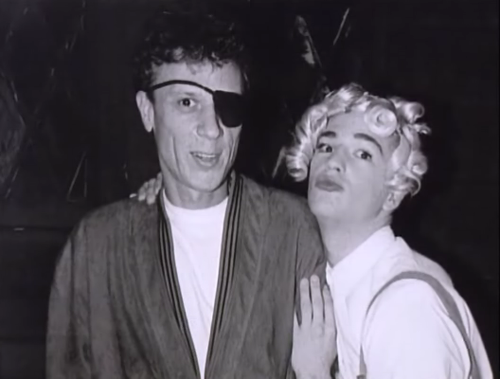
Through it all, Gatien continued to be a quiet, focused businessman who seldom mingled with his customers. His shadowy presence and the eye-patch worn because of a childhood accident earned him a sinister nickname - The Ghost. That sinister reputation worked against him when headline-grabbing Rudy Giuliani became mayor of New York City and started looking for "public enemies" to defeat.
The government vendetta against Gatien shows the obsession of Reagan-era agencies with attacking anything that threatened the squeaky-clean 1950's America they were pledged to promote. Any music club that didn't play Frank Sinatra was branded a "drug den." The suicide of a New Jersey teen was blamed on the corrupting influence of club life. Old laws were resurrected to close down clubs and no "informant" was too screwy to be believed. In the end, Gatien was absolved of all the racketeering and drug charges brought against him. He ended up serving two months on charges related to the cash-nature of his clubs and then being deported to Canada.
Ironically, the Canadian economy is now booming. Gatien lives in Toronto and owns a thriving club there. If he was starting in business today, he could build a club empire in Toronto, Vancouver, Calgary, and a dozen other prosperous Canadian cities. He was devastated to be banished from his beloved New York City, but must enjoy the irony that Canadian Immigration Service is now swamped with visa applications from Americans longing to move to that well-run country.
Much credit goes to Gil Reavill, the Ghost's ghost-writer. He took an incredible story and ran with it. I read 300+ books a year and this one is exceptional. Gatien and Reavill introduced me to a fascinating world and I'm grateful to them.
DNF. I expected something crazy about about the New York club scene but it’s just “and then I bought this place. Oh yeah, I left my wife and kids in Canada because I all I wanted was to make money.” Pretty boring honestly
This book was interesting and frustrating at the same time. It was almost more of a study of the anthropology of night clubs and what it takes for one to succeed than a memoir. Gatien does not go much below surface level in describing his personal life, so it is truly difficult to classify this as a memoir. In fact, the whole thing was surface level, really. It covers decades, so it makes sense. This is not a David McCullough deep dive, which I appreciated. He (and/or the ghostwriter) has an engaging voice and it was an easy read.
The Club King: My Rise, Reign, and Fall in New York Nightlife by Peter Gatien is a memoir of sorts by the owner of one of the most notorious nightclubs in New York City history, the Limelight. I normally don’t comment on writing style and quality early in my reviews, but The Club King is exceptionally well-written, particularly for a freshman author without a college education. Gatien exemplifies the archetype of a successful businessman: resourceful, intelligent, indefatigable and perhaps most importantly, seeming able to conjure opportunities out of thin air. Or in Gatien’s own words, “The lesson I took was that the true essence of the capitalist was the hustle, not the score.” One of the most paradoxical parts of The Club King is that Gatien, in general, abstains from the very kingdom he lords over. It is not clear if this claimed abstinence is part of a broader legal strategy or perhaps a clue into the operation of an enigmatic soul. One area where Club King could improve falls in the level of detail presented throughout the book. Too often particulars are glossed over where deeper examination was warranted. The Club King is worth a read, and in these times of social distancing, a reminder of the excitement and furor a mass of humanity brings.
5 stars go to Gatien for his side of the story of how he brought excitement to New York at at time when the world was changing and kids were looking for the freedom of choice their parents didn't have. I was a New Yorker during this time so I could totally relate to the craziness of his clubs, although they weren't all my taste, some were a little too crazy! But, that's what freedom of choice was all about. In Mayor Giuliani's defense, NYC was becoming a filthy hellhole at the time and the drug scene was out of control so the natural place to start would be the clubs. It seems that Gatien did his best to control the influx of these substances, but having so many clubs would have been difficult to say the least. The underbelly of the Feds was described and interesting to say the least. I totally enjoyed this book....not sure if it was just because I'm from New York!
The protagonist and author, Peter Gatien, starts buying old clubs and renovating them into successful, well-known establishments. He has a great work ethic, his finger on the pulse of nightlife clubbing, and a common sense that saves him from tragedy early on in his career. In the midst of his world collapsing around him, losing his first family, and doing a short prison stint, he learns from his mistakes and produces even greater success in the Nightclub scene around the world. The fall of this world-class celebrity comes at the persistence of a famous New York City prosecutor and eventual Mayor, Rudy Giuliani, who suspects Peter is involved in the drug world.
This story is a look at Gatien's humble beginnings and his catapulting fame and fortune due to his bold plunges into projects he extensively researches. He has connections with those who have connections; so, word of mouth is his main form of advertisement. The knowledge of what is cutting edge, successful, safe, and enduring make his clubs the place everybody wants to be. The big names in Hollywood, Washington D.C., London, and Paris frequent his clubs spending top dollar for top shelf bottles.
Many famous people owe much of their careers to Peter Gatien. Another impressive quality Peter shows throughout the book is his organizational skill. He is rarely caught off guard. Even at the end of his trial, he arranges a solution to live the best life possible between Canada and the USA with his present family.
I find this subject easy to relate to because it occurs during my younger days. I learn from this book background information about the music scene, the street scene, LGBTQ, and the introduction of sophisticated, potent cosmetic drugs. I do not identify with but understand the crazy characters that came out of blight and into fantasy that offers safe space for a night. Peter Gatien offers this account of his contribution to that therapeutic escape, all because he keeps his wits about him as those around him party.
I saw this book as an option for Prime First Reads, so I gave it a go as something completely off my normal reading track. I know nothing of nightclubs or Peter Gatien, but there are some qualities about him that I could admire. He seems to be a driven, creative individual. His business model of understanding personal limitations and finding experts to plug the gaps is sound. But the rest of the story just doesn't cut it for me, and Gatien sounds a bit desperate. Yes, there are moments of self-reflection, but they seem half-hearted at best. Here what I got in my own words: I was a bad father! (but I was naive and look at my poor upbringing). I was a bad husband! (but I seem to have figured it out in marriage number three). Drugs aren't that bad! (except when they are). The mafia doesn't seem so bad! (at least in my experience). Everyone should be accepted! (except anyone remotely conservative - politically or socially). Look, did Gatien get screwed over by the government? I really don't doubt it. Can I sympathize with and respect him? To a certain extent, yes. But ultimately, here are my two takeaways. Avoid nightclubs, and avoid the government. Unfortunately, one is easier to do than the other. (Maybe two stars is harsh).
I have to admit that the reason I selected this book as my Amazon First Reads was purely nostalgic, coming of age in the late seventies I was definitely familiar with some of the clubs mentioned in this book. The drinking age in Florida at that time was 18 and I wasn't quite there yet in 1977, when big hair, a little makeup and very lax ID checking requirements got me a night of dancing at the glorious Limelight in Hallandale!!!
Anyway, enough of my walk down memory lane, I enjoyed the book and chances are if you grew up around that time and loved music and dancing you're going to enjoy it too. Mr. Gatiens' "fall" made me sad and the Rudy Giuliani part was disgusting, but not surprising 😠
It's hardly an exaggeration to say that this guy has been through a long hellish experience. He and his ghost writer have produced a well written and edited autobiography. I have seldom read better written modern prose. I usually go for mystery and thrillers, but I found this book to be just as thrilling, as well as sad and frustrating. If anyone has ever experienced the inconvenience and harassment involved in the relative minor infractions of parking and moving violations, you can easily relate to this guy's massive persecution and prosecutions.
This was very well written and edited. I seldom give 5 stars to any author or book, but this one deserves it.
Good read if you were ever into the NYC club scene. Peter Gatien built an empire that is legendary so it was really interesting to read about how it started and grew. I had no idea there had been more than one Limelight or that it started all the way back in the late 70s. The live cougar under the dance floor sounds crazy.
Not being from NY, I also didn’t realize how much of a prick Rudy Giuliani has always been. Also didn’t know he represented Purdue Pharma who created the opioid epidemic. There is a special place in hell waiting for him.
This book was a journey for me - it started out so dull covering Gatien’s childhood and ended up being a riveting tale of the NYC club scene and an indictment of the US legal system by the end. The back half of the book was fascinating.
After reading this book, I have a greater appreciation for the thought and planning that goes into creating a nightlife experience and a better understanding of how various music scenes emerged in the 80s and 90s - launched by the clubs that gave rise to fans and followers.
★★★☆☆ ~ 3 Stars I picked this up as a Amazon First Reads and even though the club scene had passed me by, I remembered reading about the Club Kids especially the most notorious of them all, Michael Alig. Interesting reading regarding the Feds going after the Gatien's club and Guiliani just as slimy as always.
Fairly interesting biography of someone I’ve never heard of and events I knew nothing about. It’s likely written now (and not 5 years ago) in order to bash Rudy Giuliani (Not wrongly!). I got it free and don’t regret the hours reading it. Would make a great movie!
This guy is ambitious as fuck. Interesting story on club life in the 70s/80s/90s. I don't believe he's as innocent as he says but the cops were determined to fuck him over. Good story.
Enjoyable in learning about how Gatien rose from humble beginnings to run such a successful empire of clubs, though a little self-congratulatory (which I suppose is a part of the point, provided how his time in America ends) and repetitive at times.
perfect book to finish the year ~ has done nothing but make me want to travel back in time and experience nightlife at NYCs greatest clubs. per usual, the government will fuck it up and their relentless quest to pursue the most mundane of crimes while being corrupt themselves will end most opportunities to create real nightlife culture. f*ck nypd, f*ck ice.
I admit that I went into this hoping for all the salacious details of Gatien's clubs during their 80s and 90s reign. Famous rock stars, hip hop artists, djs, models, Andy Warhol, avant gard artists, and especially the notorious Club Kids of the 90s--all partied at Limelight, Tunnel, Club USA, and Gatien himself was mentioned by name in a rap by Fun Lovin' Criminals. Surely, with decades of wild behavior, fights, and drug use, his guests gave Gatien something to write about to titillate the average reader.
Instead, this book reminds me more of Jon Taffer's Bar Rescue book, which actually turns out to have been the far superior read. Taffer's book, while light on titillation, is engaging and interesting not just for anyone looking to open a bar, but for anyone in any industry. He had a great writing style, lots of information and detail, and tons of real life examples.
In contrast, Gatien gives us a dry recount of how he built his clubs, bookended by his boringly normal, if slightly dreary, childhood and the legal tribulations that ultimately brought him down and sent him back to Canada. Michael Alig gets a sparse paragraph, Warhol a few lines sprinkled throughout, and everyone else mentioned by name, apparently, just had a good, "exuberant," time.
What there is, in spades, is Gatien's bitterness, diluted by not a single drop of self-knowledge. He presents himself as a relentless entrepreneur, never satisfied and always looking for something bigger. But he never stops to ask why he's restless, why he isn't satisfied with his life as it is--he marries three times, has four children, clubs in three countries, and is arguably the greatest club creator ever--and reiterates how quickly he grew tired of each success without wondering why.
He also glosses over his own drug use, compares his club goers to simply "exuberant" dancers (they're always an exuberant mass seen from the edge or from a higher floor), and portrays his employees as more "family" than, well, his family. He talks up lenient and flexible work schedules and what passes for daycare (a room where, say, a security guard can stash their infant while working the door), talks about frequent loans/gifts to them, and acts as if his wives and children should be happy, since they have credit cards with no limits and private schools, while never stopping to give any real thought to how his absence is affecting them.
I worked in bars and restaurants for fifteen years, and I acknowledge the power of "found family." They can be a lifesaver for a lot of us. And of course the fast pace, cash flow, and late hours can be addicting. And I was a quasi-"club kid" during the early to mid-nineties, albeit in podunk clubs in Rhode Island. At some point, you have to ask yourself how you got in a room with people doing eight balls against a painted backdrop of characters from the Wizard of the Oz, while music pounds so loud you can't hear anyone else. (And that's all I'm willing to spill from those days--this ain't my autobio, after all) At a certain point, you either go off the deep end or you look around and realize how fake it all is--it isn't reality, these aren't meaningful interactions; it's just a chemically-protracted blip in your life, and the journey must move on from there.
Some people get stuck in that blip, thinking it is the journey. Gatien is one of those, and no matter how many clubs he opened or how massive they grew, it was all just one big blip. He never moved on, and there's no self-reflection upon those years that helps him to understand what it all meant, and who he really was and is. I'd feel bad for him, if he wasn't also arrogant and bitter.
I would've totally enjoyed this without a single name dropped, if Gatien had an ounce of humility and had gained some clarity by the end. But I got neither titillating nor a journey of self-discovery. I mean, the man has the gall to talk about politicians and superstars being sociopaths...without irony. So I'm here to save you--if you really want to know what Limelight was like, there's a documentary by that name worth watching. Of course there's the film Monster, and a book of photographs from that era by its most frequent photographer. If you're looking for a dry, serviceably written account of Gatien's life to this point, and you don't mind the bitter aftertaste, then read this.
This was an Interesting story. I enjoyed reading it. I never been to any of these clubs but it was fun hearing about them. The trial was interesting part, too.
The memoir also gave me some things to think about if my little business takes off. Try to see ahead and keep you finger on the pulse of what people like.
A very interesting read from a surprisingly down-to-earth man. He tells his story of building nightclubs, the behind the scenes drama, and his quest to give clubgoers a unique experience.
TL;DR: cursory look at the club scene, lots of opining about the criminal justice system, not much emotional depth.
There was the potential for this to be a really interesting book. (I feel a bit let down, actually.) I wasn't looking for a tell-all, but maybe a tell-something. Unfortunately, it's a bit of a polemic, and a repetitive one. The reader gets a long history of Mr. Gatien's family history and early years, but then learns nearly nothing about the rest of his family once he decamps for the US. His drug use might not have been debilitating, but it's glossed over quickly. Yes, we get it, you weren't there for your wives or children and you broke up. The really interesting part of his life--the clubs, the reason we're reading this book--is covered on a very surface basis--how many square feet of the club, the number of cash machines counting the money, the employees (some of whom sound like they could write very interesting memoirs), etc. We're told his year in Riker's Island would be enough material for another book, but maybe it would have helped this particular book along.
A Rather Self-Absorbed Book (even for an autobiography)
This book details the rise and fall of Peter Gatien, an (in)famous club owner in several cities, but most notably in New York City. Gatien dives straight into narrating his upbringing and the history behind how he came to be a powerful owner of several cubs. The pacing and style of this book is rather captivating in the first half, with a nostalgia-tinged ride into the 80s and early 90s club scene. At this point is when Gatien focuses all his efforts on his NYC clubs, and this is when the book devolves into Gatien VS. the NYC Government. If nothing else (apart from feeling somewhat sorry for Gatien’s fate) there are some v. interesting facts of about Rudy Giuliani to be found...
This book was a fascinating account of a man who created and ran several successful clubs. After detailing his Canadian small town upbringing, he decides he doesn’t want to work in the local mills or post office. After a stint in sales, he decides to open a club. It becomes successful and he works with many talented artists before they became successful. After success in Canada, he decides to try the US, a favorite place of his. His first US club in Florida becomes very successful and popular. He has a talent for what makes a club successful and popular and he works too hard, often to the detriment of his family life. He hires artists and staff and treats them well. His clubs break race and gender stereotypes and are a place for people to have fun and dance. What was interesting to me, was that despite other clubs like Studio 54, his were not drug havens. Yes, small amounts were snuck in, but they weren’t like the others, that ultimately failed. Gatien opened clubs in Atlanta, London and New York. He tried some drugs, but didn’t become an addict. What is very sad is how he was made a scapegoat by New York law enforcement and regulators, despite the fact that much of what he was charged with never happened. He was dragged through a trial and ultimately deported after a campaign against him and his clubs fed by the press. Superb narration on the audiobook by Braden Wright really brings his story alive. Gatien brought a lot of people together and many who stared in his clubs are successful now.
Another compelling title outside my typical realm of interests thanks to Amazon First Reads. I'd put this closer to a 3.5 rating.
I have no interest in clubs or the nightlife, zero knowledge of the scene, and I'm ignorant to the person of Peter Gatien. This was picked up completely on a whim. It proved to be a pretty fascinating historical flashback through the lens of the club scene throughout the 70s, 80s, and 90s. Peter Gaiten was probably the most successful club entrepreneur of the time and had a not-insignificant impact on the rise of various famous musical artists, directly or indirectly.
He certainly made himself a sympathetic character and I felt invested in the journey. However, did everything really come as easy the way he paints the picture? Until the end there was very little in terms of conflict.
While the biggest questions were answered, I believe several areas need expansion. The ending felt rushed and I wish there was more time devoted to the aftermath with specifics. Peter Gatien also mentioned several times during his reflections that his overextended working life had negative effects on his children, but then never went into *when* he had this realization, how it was rectified, etc.
More development is needed. Otherwise it's an engaging look into a cultural time I have no connection to and never would have enjoyed personally, but from afar found quite absorbing.