The New Testament is a fascinating book - the canonical root of Christian history and theology. Yet the book is also a paradox, because this single “book” is comprised of 27 different books by more than a dozen authors, each of whom has a different perspective and is responding to a different set of historical circumstances. How do you reconcile this diversity of voices into a single, unified belief system? And should you even try?
For a historian, the diversity of authors is not a challenge to be reckoned with, but rather an exciting opportunity. In the New Testament, we have 27 primary sources that offer a doorway to the extraordinary history of the early Christian communities. In these books, you can discover how:
• Christian practices developed; • Conflicts of belief were debated and addressed; • The institution of the Church evolved; and • A man named Jesus of Nazareth was transformed into the Messiah.
Join Professor David Brakke, an award-winning Professor of History at The Ohio State University, for Understanding the New Testament. In these 24 eye-opening lectures, he takes you behind the scenes to study not only the text of the New Testament, but also the authors and the world in which it was created. You will explore Jewish lives under Roman occupation, reflect on the apocalyptic mood of the first and second centuries AD, witness the early Christians’ evangelism beyond the Jewish communities, and witness the birth of a faith that continues to shape our world today.
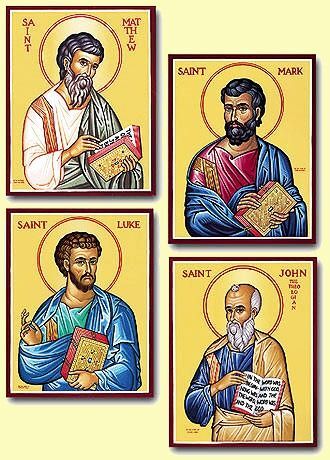
There's a lot of great information here but I particularly enjoyed listening to the breakdown of each Gospel.
This was probably the best explanation I've read so far of the similarities and differences of the Synoptic Gospels (Mark, Matthew, & Luke), and why John is so different from the other three. The Gospel of John (along with 1st, 2nd, and 3rd John) is attributed to the Johannine community of Christians who seemingly followed the teaching of the (unnamed) beloved disciple or the disciple whom Jesus loved. This might explain why Peter is noticeably lower on the totem pole in this one.
The section on the Pastoral epistles (1 Timothy, 2 Timothy, and Titus) was also very illuminating in that it explained the difference in time periods of the church as the reason the tone is not like that of the Pauline epistles. In the beginning of the church, you had Paul writing letters to groups of believers with the expectation that Jesus was coming back within the next little bit. There was no need for any real organization because the belief was that,“Truly I tell you, some who are standing here will not taste death before they see the Son of Man coming in his kingdom.” New International Version Matthew 16:28 But by the time the writer of the Pastoral epistles came along, it was evident that this wasn't the case, and by sometime in the 2nd century there was a real need for some kind of organized hierarchy in the church to combat heresy.
The letters of Paul are also always interesting. And over the years I've really grown to appreciate how maligned the poor guy has been due to some of the things attributed to him, mostly due to the Pastoral epistles. The statements that have garnered the most ire from feminists over the years don't seem to have anything to do with what he actually taught. In fact, he seemed to be quite progressive in that, while he did think women should cover their heads in church, he was fine with them holding leadership positions alongside the men.
All of this is, of course, up for debate. But I think David Brakke did an excellent job showing why a lot of critical scholars have come to these conclusions. I've listened to a couple of his other lectures (Gnosticism: From Nag Hammadi to the Gospel of Judas & The Apocryphal Jesus) and I really enjoy how thorough he is while still being accessible to the listener.
A brief introduction to modern theological and historical scholarship on the books of the New Testament (NT).
I (being of pagan descent) read the NT only recently (I finished my first reading of the NT only yesterday) at age 55.
My (in retrospect ridiculously obvious) intuition before reading the NT was that one cannot consider themselves truly educated (at least in the western tradition) without at least a basic familiarity and understanding of the Bible.
And…
Um…
Yeah!
It turns out I was ABSOLUTELY correct in that.
Who knew right?
Anyway…
I read the NT with genuine curiosity and openness. And I was (and am) authentically moved by the first part of the NT, which detailed the life and teachings of Jesus.
I was less inspired, but equally as interested in the latter books, (the letters) which are more concerned with the establishment of the church, and which have clearly left an indelible imprint on the western culture, mind and body politic (a fact that is laughably obvious to me now, but before reading, I was woefully under aware of).
Finally, after reading the NT as a whole, I was as genuinely confused by the structure of the text, and some of the apparently contradictory statements, messages and events.
This course was REALLY HELPFUL in shedding light on some of those issues. And I feel WAY more grounded in my understanding of the NT as a historical text after listening.
I would recommend this to anyone looking for further understanding of the New Testament books, their similarities and differences, parallels between the OT and NT, historical Jesus, NT churches and their complexity and more. I began reading prior to starting a New Testament Foundations class and found information here provided additional content. I now look forward to finding something similar for the Old Testament.
This course examines the books of the Christian New Testament in a historical context and gives analysis of some messages based on the manuscripts we have, what we know of the authors and the events of the time period in which the books were written, and the language used within the works. This course is not from a religious perspective, and those who believe that the books of the Bible are "infallible" and other traditions will probably not like this course, as it points out many contradictions contained from book to book and also calls into question the presumed authors of some of the books. This course is aimed more towards those who are interested in studying the New Testament as ancient literature or historical documents that grew out of a religious movement.
The course roughly follows the chronological order of when the books were written. The letters of Paul are actually considered to be the oldest of the books of the New Testament, so those are presented first before the traditional books of the Gospel. I found this course to contain a lot of interesting historical insights, many of which you'd never learn in Sunday school. Towards the end of the course, I honestly began to understand why the Roman Catholic Church was so historically resistant to lay people reading the Bible themselves--there are many contradictions in teachings that might make many question their faith. Of course, there are many throughout the hundreds of years who have tried to "harmonize" the teachings of the New Testament, of which this course also gives examples, but it is clear enough that the New Testament is certainly not an easy text to understand through reading alone unless some method of circumventing these contradictions is devised.
Personally, I come from the Roman Catholic tradition. I grew up going to church and attended Catholic schools up to the tenth grade. I learned a lot about what the Church officially taught, but not as much of what the Bible itself said. While I wouldn't recommend this course to those rocky in their faith looking to deepen it, I do recommend it to those interested in the early history of Christianity and the context behind many of the teachings and interpretations that persist today.
I have listened to a number of Great Courses and many focused on the Bible and/or theology and this is a reminder of why they can be so helpful. In half-hour lectures Brakke explores the challenge of understanding the NT as the "canonical root of Christian history and theology" yet also a paradox as a signal "book" comprised of 27 different books by more than a dozen authors with differing perspectives and contexts. Brakke does a nice job helping the listener to see how the books of the NT fit into the history of the church and its development and how their historical context likely played a role in their perspective, tone, style, theology, etc. Conservative Christians might be put off by Brakke's acceptance of historical criticism, etc. But he is a fair and insightful guide to scholarship and tradition from my perspective. Much to learn even for those whose theology is different, IMO. I used to listen to these on my commute but decided to use on my walks during this work from home time and I am glad I did.
This book gives context of what was said and how target audiences and languages need to be taken into consideration. Paul is a menace but can take criticism though. Interesting to view the NT as unfolding over time, reacting to things, rather than a static text. Mark writes during war time. he uses "Messianic Secret" Jesus was divine but never told anyone. compare to EVERY other apostle who never said it was a "secret" PARABOLES!!!!! Apostles often used as caricature, not seeing divinity, needing constant re-explaining, regular doubt, etc. Luke's main source is Mark, but apostles are not dumb, but info was hidden (by god?) until big J died at which point he came back and explained. Mark = apostles are dumb, Luke =apostles are shielded from info.
OG gospel ends with apostilles not learning, and women at cave ordered to spread good news, but they never do. Later additions retcon because " We know the Goodnews now therefore they must have learned / spoken.
Gospel according to John (written from perspective of "beloved disciple" who is unknown) might not be about/by John.
First human to call Jesus son-of-god was a Roman Centurion at the crucifixion. Hating on figs is an analogy of money changers in temple.
Anachronism is rife: Blind man is expelled from synagogue which was not a thing during Jesus' lifetime but a major issue at time of writing of Gospel according to John. John: Hard dichotomy follower of Jesus or follower of Moses (non-Christian Jews). Compare to Matthew who has Jesus as 2nd Moses and sees no conflict.
Jesus is quite different in dif. books. Mathew and Mark give different narratives regarding J stating if he was son of god (I am vs. You say I am) All gospels agree J is son of god, why conflict in J statements? interesting. Lends credence to authenticity of quotes.
Jesus is either descendant of Abraham or predated Abraham. Paul spent a lot of time rewriting Abraham to let gentiles remain uncircumcised.
Typology - everything in Old Test is alluding to New Test. (Supersessionism is extreme version which says Old Test no longer required). Book of Hebrews uses a lot of typology (note Letters to Hebrews is not a letter nor to Hebrews).
Book of James (author is not brother of Christ but might be purposely ambiguous to claim authority). Faith without Works is dead. James Faith = belief, Work = good deeds Paul Faith = TRUST in god, Work = Jewish law (circumcision, Kosher, etc) Scholars believe James is commenting on Paul, but James is likely misunderstanding Paul. Commonly seen as contradictions in later history. see Martin Luthur.
To avoid unnecessary persecution "Accept the authority of"; masters, husbands, the emperor.
Book of Jude (Judas but not Iscariot) brother of James (unspecified James) author not brother of Baptist but likely wants people to think that. Main use of Jude is to rebuke other Christians, example 2nd Peter quotes Jude
Timothy has requirements for bishops / priests / deacons and promotes patriarchy. Timothy wants silent women, but Paul has women below men but allows them to have a voice.
Revelation to John (not apostle John and author makes this clear). John was persecuted by government for his faith Roman citizens had to sacrifice, particularly to Dea Roma and the genius of emperor. Jews were exempt but when Christians no longer considered Jews they had to sacrifice. If Christians refused, they could be punished, up to and including death, making them a martyr. Revelations echos Daniel (Old Testament), but a lot of strange images that are not explained opening them up to interpretation. Lots of juxtaposition and paradox, feeling of chaos but also clearly ordered by god (precise numbers and frequent use of 7 which echos wholeness).
Paul recommends not eating meat sacrificed to idols, revelations says it is a SIN! Jezebel a prophetess says its okay to eat the meat. 144,000 male virgins will be saved (metaphor not literal) juxtaposed by jezebel fornicators (fornication is eating meat sacrificed to idols).
Historically Bible read piecemeal, so contradictions and conflicts rarely noticed, or if noticed many readers assumed that they themselves did not fully understand. Bishop Irenaeus promoted reading whole bible to understand diversity in gospels. However, he condemned heretics who exploited the difference in bible. Irenaeus teaches the rule of truth, which is the truth taught by disciples and has been handed down via the church. Irenaeus' rule of truth is predecessor to Nicaean Creed. Rule of Truth is the bridge that connects diversity within New Test as well as Old Test.
The Diatessaron is the most prominent early gospel harmony combines the four gospels into a single coherent narrative. contrast this with allegorical interpretation, differences are for education, not contradictions.
Martin Luthur - Canon within the Canon. All bible sacred but certain parts more correct. e.g. if James contradicts Paul, Paul is correct. Cannon within cannon usually are ideas rather than whole books, e.g. ignore parts that contradict preconceptions. Krister Stendahl proposes a more nuanced approach, different passages are appropriate for specific issues. e.g. Emperor appointed by god, but Rome is satanic. both are correct but at different times.
I have completed as many as a dozen great courses on the historical Bible. This is the best one on the New Testament. Honestly, it’s the best one period.
Professor Brakke is not a pot stirrer like Bart Ehrman, one of my other favorite but more controversial Bible historians . He treats the subject with complete respect and resists opportunities to poke believers.
A historical understanding of the Bible, including its contradictions and conflicting motivations does not make it wrong, it makes it rich. This course does a great job of unpacking the complexity that exists in this monumentally important book.
Fun fact. Who is the most read author in Western civilization? Ask the Internet or ChatGPT and you will be told the answer is Shakespeare. They are wrong. The most read author in Western civilization is undeniably the apostle Paul. Even if you limit Paul’s writings to the undeniable seven books (those who don’t know their history might place this number at 13) there are still as many as 10 billion Bibles that have been produced versus about 4 billion copies of Shakespeare.
Paul the apostle was a superhero. He is one of the 10 most important figures in western civilization even though he never ruled a kingdom, won a war, fought in a battle, married a woman, or sired a son. All he did was talk.
Don't get me wrong, there were certainly times where Brakke went counter to my own beliefs, or my own understanding, and it was frustrating that I could not raise my hand in class, nor ask for more information on what, for me, may have been a less than convincing statement. This brief introduction, however, did a remarkable job of condensing the New Covenant into an easily digestible overview. I appreciated the way that books were divided into lectures, and Brakke did a good job of cramming as much historical context and opposing viewpoints as he could, into each lesson.
I listened to this on Audible, and I tell you what, the subscription seems to be worth it, just for the 'Great Courses' content alone.
A clear, concise introduction to understanding how the New Testament came to be. The lectures focus on the various texts and who wrote them. Professor Brakke presents the main points of various texts (letters of Paul, for example) and how the texts either agree or disagree with each other. The course is an introduction to the history of the New Testament, not a theology course. I gained a better appreciation for the diversity within the New Testament and how one might go about trying to make sense of the overall message in light of opposing or contradictory views about various topics. I felt that it was time well spent.
David Brakke's Understanding the New Testament is an invigorating new take on a subject that is usually dominated by Bart Ehrman. I think Brakke does a good job covering a wide range of material and putting it in useful context. His lecture series are in rough chronological order, while also allowing for an exploration of theme and social history through the context of the materials in the New Testament. Its pretty nice, and well worth some time if you're interested in the critical study of religion.
This book offers a thoughtful and accessible exploration of the New Testament, perfect for those seeking a deeper understanding without any assumptions about prior knowledge. I came away with a clearer grasp of common biblical terms and references, as well as a much-improved understanding of Paul. While there’s always more to learn, this serves as an excellent starting point for further study. I look forward to returning to this resource in the future and would gladly recommend it to anyone.
Interesting, but sometimes boring book about the authors of the Bible. I checked this book out from the library, but it really should be a companion to your Bible reading. It offers background and context to different books and gives a deep dive into their importance.
Good information. Not preachy. David Brakke did a perfect job presenting, if not too perfect. The best lecturers in this series of courses open the Personality Floodgates. This lecturer kept those gates firmly locked.
A very interesting historical look at the New Testament. The audiobook lecturer was very even-handed and tried to give all points of view even when he disagreed with other historians. For me, a faith enhancing look at different perspectives on a book I consider to be scripture.
Because I enjoy art history I felt Ineeded greater understanding on the parables of the New Testament. This course provided most of what I was hoping to learn. About halfway I found a fair amount of repetitiveness so I took a break and will return to it.
This was a good lecture series with interesting lectures on specific books, or groups of books, in the New Testament. All this is done with a broader discussion on taking these sometimes conflicting books as a whole. Brakke is very clear in breaking down complicated concepts.