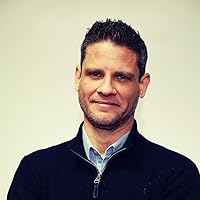
"If you had told Roger McNamee even three years ago that he would soon be devoting himself to stopping Facebook from destroying our democracy, he would have howled with laughter. He had mentored many tech leaders in his illustrious career as an investor, but few things had made him prouder, or been better for his fund's bottom line, than his early service to Mark Zuckerberg. Still a large shareholder in Facebook, he had every good reason to stay on the bright side. Until he simply couldn't. ZUCKED is McNamee's intimate reckoning with the catastrophic failure of the head of one of the world's most powerful companies to face up to the damage he is doing. It's a story that begins with a series of rude awakenings. First there is the author's dawning realization that the platform is being manipulated by some very bad actors. Then there is the even more unsettling realization that Zuckerberg and Sheryl Sandberg are unable or unwilling to share his concerns, polite as they may be to his face."
Roger McNamee is an American investor and businessman, author, and musician. Born to a businessman father Daniel, and a feminist mother, Barbara, Roger earned a BA in History at Yale University and an MBA from Dartmouth College.
Roger McNamee was a founder of the musical group Flying Other Brothers who he toured with between 1997 and 2006, then with another group called Moonalice. In 2014 he formed a duo music group called the Doobie Decibel System
He released his most popular written work, Zucked: Waking Up to the Facebook Catastrophe in 2019.
It was so AWESOME to reconnect with the friends you lost touch with, learn about their accomplishments and foibles, share memories and see how old they got.
And then everyone’s mom was on it, and you couldn’t talk about the time you took acid back in the day with your buddy because their nephew from Michigan could see the conversation, and just like that, the party was over.
Worse than that.
People started FBing you before job interviews and suddenly the whole deal was practically Orwellian.
Question: how fun is it to have a discoverable, written correspondence, with old stoner pals, collage friends and exes, that your elderly relatives, your children, your students, your colleagues, your clients, your potential employers and like literally the police can read it, for like, forever?
Answer: NOFUNATALL!!!!
I think my last post was in 2009.
I deleted my account shortly there after when I started working as a therapist.
Not really all that into people (including clients) seeing all that.
Yeah no!
Never mind the fact that they can see all this.
Anyway.
All of that seems so quaint compared to FB 2019.
FB has become the corporate death burger junk food of the mind, industrial scale purveyor of the toxic pink slime that’s killing the global body politic and the fourth estate for good measure.
Yuck!
Facebook profits from the dissemination of disinformation engineered to elicit the toxic, tribalistic, polarizing, red-truth vs blue-truth tower of babel we call contemporary political discourse.
Facebook profits from the socially reinforced virtue signaling self-righteous indignation and faux-outrage otherwise known as call-out culture.
Facebook’s algorithms are designed to promote all of the above (and more) because it’s the down and dirtiest, quick and easiest way to increase “engagement”.
Fuck them!
DJT would not have been the the 45th POS-POTS W/O FB. That alone is a good enough reason to delete your account.
But worse than all of that combined is the way FB and Google are utilizing our data against us via filter bubbles, preference bubbles, digital behavior modification and targeted advertising.
It’s as if the worst of caffeine fueled consumer capitalism married in-bread billionaire broham libertarianism, with Alex Jones officiating the wedding and Donald Trump giving away the bride.
How did we get here and how the fuck do we get out of this sad messy state?
Zucked offerers a fairly lucid account followed by a pretty dang reasonable plan.
I honestly couldn’t put this thing down.
At one point I even got so incensed that I actually switched from Google maps to Apple maps (for like 3 whole days).
Anyway.
That’s how compelling Roger McNamee’s argument is.
Did it get me flustered enough to flush my Amazon and Goodreads accounts.
No fuckin’ way!!!
Only at gun point, and even then I’d still have to think about it.
FB delivers everything I don’t want (e.g. infinite exposure to perpetual clickbait advertising and unboundaried contact with friends and family), so killing my FB account was an easy choice, and I don’t miss it even one little bit.
NOTE: actually I didn’t delete my own account because it was so fucking hard to do, I just fucking gave up after like 4 or 5 tries and finally my angelic wife mercifully agreed to do it for me. And I’m a better man because of it.
In contrast, Amazon and Goodreads deliver everything I want (e.g. literally everything in the case of Amazon, and endless one-way “conversations” about the books I read to look smart in the case of Goodreads).
I remember waking around with a paperback addition of Thus Spoke Zarathustra in my back pocket when I was In college. You know? Just incase there was an opportunity to grab a quick page or two on the bus or at the cafe?
Even at the time it was a sad and secretly humiliating transparently obvious theta-male mating strategy. Goodreads is like the digital equivalent, only without the unfortunate consequences of attracting a mate that would somehow find that compelling.
So fuck off, and you can take away my A&G when you pry them from my cold dead hands!
It’s a really good book, but it ain’t that good ;-)
Fascinating account from an insider on facebook. A few points I took away after reading this:
1. Facebook responds to every problem with a tech fix. The world is bugs to be fixed to "Zuck."
2. Facebook will sacrifice everything for increased growth and connection
3. Facebook knows their potential for harm and they seem not bothered by it
4. Facebook should not have so much power over our lives
5. This is the tip of the iceberg. We can bring down facebook thru regulation and the problem will still exist in other formats
6. The medium IS the message. Facebook radicalizes people that would not otherwise be radicalized. And there is no intent to do so. The problem is inherent to the medium. And that is not a bug--it is a feature
I know. I know. You have nothing to hide so you don't care if your personal data is collected. The benefits you believe you derive from the big three internet platforms—Facebook, Google and Amazon far outweigh the information they collect about you. Well, dream on sucker. Seriously. This book is frightening in the way it explains how our personal data is monetized, manipulated and distributed in nefarious and unscrupulous ways.
My eyes have been opened and I will never view Facebook as a benign entity that connects the world as I once did. The filter bubbles that Facebook creates with its algorithms and the personal bubbles that Facebook users create for themselves has served to drive us apart rather than bring us together in any meaningful way.
This book tackles not just the dangers of the data collecting, algorithm manipulation of what shows up in our Facebook news feeds, and the tactics that are developed and used to get us hooked to the dopamine fixes we get from our addiction to social media and devices. it also goes into great detail about the dangerous role FB played in the Russian interference in the 2016 election and the complete hubris of Mark Zuckerberg in not taking responsibility for Facebook's role—think Cambridge Analytical—and his refusal to make any serious effort to clean up the platform to deter further bad actors from interfering in future elections.
If you care about the future of democracy in the face of massive efforts to undermine it through the use of platforms like Facebook (primarily) Twitter, Instagram, etc. you owe it to yourself to read this book. I am not a really techie person but I found this book exceedingly readable even when there was tech terminology that I didn't fully understand. It is a wakeup call that we should all heed.
The book doesn't just point out the problems. It offers real solutions and the author is actively working to bring about change that will curtail the monopolistic power that these platforms have over every aspect of our internet usage. It offers solutions to consumers about how we can protect ourselves from constant data collection that reaches into every aspect of our lives.
This expose, from Frontline, is the most shocking of all the links on here. If your time is limited, this is the one to watch. They aid and abet ruthless dictators all over the world that are killing their people. And that's just the beginning.
“In 1976, Stephen King published a short story, “I Know What You Need,” about the courting of a young woman. Her suitor was a young man who could read her mind but did not tell her so. He simply appeared with what she wanted at the moment, beginning with strawberry ice cream for a study break. Step by step he changed her life, making her dependent upon him by giving her what she thought she wanted at a certain moment, before she herself had a chance to reflect. Her best friend realized that something disconcerting was happening, investigated, and learned the truth: “That is not love,” she warned. “That’s rape.” The internet is a bit like this. It knows much about us, but interacts with us without revealing that this is so. It makes us unfree by arousing our worst tribal impulses and placing them at the service of unseen others.”
"FB executives were more worried about fixing the perception that Facebook was amplifying harmful content than figuring out whether it actually was amplifying harmful content."
"Its first iteration, Facemash, invited Harvard students to compare photos of female classmates — photos Zuckerberg stole from online student housing directories — for the high cause of determining who was hotter. Yes, the world’s fourth most valuable company can trace its origins to the frustrated misogyny of an ur-incel. The moral vacuousness Zuckerberg displayed as a young adult should have told us something about how he and many other young “disrupters” intended to operate."
"Hostile foreign intelligence services also love this platform, if only because its users have proved shockingly vulnerable to social manipulation — a dark art the company itself has admitted to dabbling in. In 2014, the company set out to learn whether it could make its users sad and angry on purpose. It learned it could. When this astonishing breach of user trust became public, the company claimed it wasn’t a big deal, that many companies did similar things. It was, and they don’t."
Sidenote: a book or magazine article I'd like to write would be: "Silicon Valley: It's Better to be Lucky than Good."
There's a ludicrous degree of egotism here in SV that presumes the illusion of control. Timing and luck are everything. This has been true for a long time. The crummy IBM-PC benefited from timing. There were many more desktops that were much better, but ended up in the dustbin because they were too early to market. The cream does not necessarily rise to the top.
Let me add a more recent example, Google. They deserve credit for launching a search engine, at the right time, that was better than what came before. But for the average user that search engine is basically worthless now because of search optimization (SEO). It's just one big ad instead of the valuable tool it once was. The irony is that it's this tool that allowed Google to establish itself in the first place so it could pursue its grand plan of invading our privacy to sell us shit.
astounding amount of filler; most of the book reads like a plea from the author to be taken seriously, where this is not necessary. the content could have been condensed to 30-45 pages without losing anything. not much to think about, at least if you are already familiar with tech
I was afraid that this book would be hell-bent on showing all the evils of social media rather than a nuanced picture. I found that it is very level-headed in its criticism, and above all, frightening. Like so many, I've given up the battle for on-line privacy. I've accepted being spied upon and algorithms knowing more about me than I do myself. However, what this book shows, is worse than any individual's privacy concerns.
Social media in general and facebook in particular, is set up to be addictive. We should spend as much time on it as possible to be exposed to ads tailored specifically for us, or for the group of customers we belong to. FB also creates unique filter bubbles for each user, so that they see content that they want to see. This means that you are not exposed to other's views. You think that everyone shares your perspective - be it on religion or politics, because that is what you are led to believe. These filter bubbles are effectively used by troll factories, that cause the spread of disinformation and false news. The ultimate goal of the Russian trolls wasn't necessarily to help Trump win, but to sow discord and increase polarization. Ultimately - although I am clear that this sounds like conspiracy and it is my view, not the author's - to weaken NATO, the only force that could moderate Russia's power.
Facebook "disclosed that 126 millions users had been exposed to Russian interferences, as well as 20 million users on Instagram. Having denied any role in the Russian interference campaign for eight months, only to concede that an internal investigation had uncovered one hundred thousand dollars' worth of of Russian advertising purchases in rubles, this relevation came as a bombshell. The user number represents more than one-third of the US population, but that grossly understates its impact. The Russians did not reach a random set of 136 million people on Facebook. Their efforts were highly targeted. On the one hand, they had targeted people likely to vote for Trump with motivating messages. On the other hand, they identified subpopulations of likely Democratic voters who might be discouraged from voting. The fact that four million people who voted for Obama in 2012 did not vote for Clinton in 2016 may reflect to some degree the effectiveness of Russian interference. How many of those stayed away because of Russian disinformation about Clinton's email server, the Clinton Foundation, Pizzagate, and other issues? CNN reported that the Russians ran a number of Facebook Groups targeting people of color, including Blactivist, which gained a substantial following in the months before the election. They ran another Group called the United Muslims of America, with a similar approach to a different audience. On Twitter, the Russian ran accounts like 'staywoke88', 'BlackNewsOutlet', 'Mulsimericans' and 'BLMSolider', all designed to create the illusion that genuine activists suppoerted whatever positions the Russians promoted. In an election where only 137 million people voted, a campaign that targeted 126 millino eligible voters almos certainly had an impact."
Remember "the Truman show"? We're all living in a version of it, these days, with algorithms knowing more about us than we do ourselves.
The author's tweak to Facebook's corporate motto: "move fast, break things, apologize, repeat".
As quoted in the Guardian: "Corporations like Google, Facebook, Amazon, all of these large companies, are making tens or hundreds of billions of dollars off of monetiising people's data", Kaiser says. "I've been telling companies and governments for years that data is probably your most valuable asset. Individuals should be able to monetise their own data - that's their own human value - not to be exploited."
"The problem isn't any particular technology, but the use of technology to manipulate people, to concentrate power in a way that is so nuts and creepy that it becomes a threat to civilization". -Jaron Lanier, from chapter 7.
I am not quitting social media, but I am wary. I know what I am shown plays to my existing views and biases. I know that every like, every shared post, every comment, is recorded. I am extremely cautios of using FB to log in elsewhere, or to take dumb personality tests that steal not only my data, but the data of all my friends. I used to think tailored ads and content were great. It's not. We are being sold and manipulated at every turn.
Alright so there's a lot of important information about Facebook and the digital corporatocracy in this book and it is worth reading for that and I appreciate the author's attempt to alert people to the dangers of the big data industry and social media in particular (oh hai Goodreads).
I also get that this guy isn't an author, so some slack is due. But Jesus Christ buddy, I get it. You know Bono. You've been backstage at Grateful Dead shows. You're like, totally a normal music-loving rock and roll guy. That's great. I don't give a shit, this isn't supposed to be a biography. I get that it makes sense for the author to describe his history in tech to add credence to his criticisms. I don't need an entire chapter going over the people he knew in high school and that time he fell down once as a kid and what his favourite class was in college. You're writing a book about Facebook dude, focus god damnit.
I was also a bit annoyed by the way McNamee has a tendency to represent himself as rather visionairy for cluing into the rot in Facebook early on, since he is, after all, so in-touch with tech. Except that 2016 was pretty fucking late, actually, particularly for someone who's supposed to be an expert. The negative emotion experiments were made public in 2014, for example. People have been raising the alarm about this shit for YEARS. I'm glad that McNamee and other industry insiders have come round but you're a bit late to the party.
Those quibbles aside it's a book worth reading and I appreciate this bougie hippie-wanna-be for trying to wake people up to what's going on with these tech monopolies, even if his tone is at times utterly clueless.
Oh and by the way he's like totally friends with Bono.
I had two major problems with this book, first, it bored me to death, it compensates the lack of content and new facts to the story by repeating itself over and over.
The second one, which made me abandon the book on epilogue, was that the fact mentioned about Brazil lastest election is incorrect, that's even worse, as I started to question everything else on the book.
Anyway, very, very important message, just wait for a better book about the subject
When you hear of someone who reasserts how Russia colluded, through a social media medium, to help Trump win the presidency you question everything else that comes from their 'research'. More baseless opinion that has already been debunked than anything nuance...don't waste your time with this book unless you're an extreme left-winger who likes to be surrounded by more alternate sensationalized news.
I would recommend skipping/skimming the first two chapters... Chapter 1 is really mostly about the authors background of white privilege, comfort and wealth to explain why he is qualified to speak to the ills of Facebook. Chapter 2 is basically an explanation of how the Internet came to be. So the first chapter I didn't care to know and the second chapter I already know.
The meat starts with chapter 3 I guess, and the genesis of Facebook. But honestly most of this book is just McNamee navel gazing while periodically name dropping (Bono is his buddy apparently... He mentions it seemingly once per chapter) and plugging the rock band he plays in which you've probably never heard of.
This book doesn't cover any new ground unless you have been living in a cave. Most of the chapters are ponderous and dry. The writing is competent. If you are truly interested in this subject, I would recommend watching the two part Frontline special about Facebook. Far more interesting in its presentation, far less self adulation, and it will take only two hours.
stopped reading when it became very evident that the author is a strong believer in the Russia-Trump conspiracy and that Zuckerberg had a duty to censor/control Facebook users that disagreed with his position.
Be scared. Be very VERY scared about what Facebook (and Google and Amazon, et al.) are doing to our democracy - and our brains and how we are living our lives in general. This is one of THE scariest - and most historically important - books I've read in the last decade. I believe this book should be required reading for all Americans, though of course that'll never happen because - well, it's all explained in the book.
I've got to sit and ingest it all before I write a longer review, but I'll be back.
1-11-21 UPDATE: Given the recent attempted coup on the Capitol and the fact that Facebook (and Twitter and Parler) FINALLY took action toward removing both Trump and his violent minions from FB, this book is even more relevant today than it was 2 years ago when I read it.
There is an app called FB Purity https://www.fbpurity.com/ which lets you customise FB according to what you want it to be. Run by one hero who is taking on FB and winning, FB hates the app so much that you are not allowed to link to it. You are allowed to link, for example, to hate groups, rape groups and fuck knows what else, but not to an app that lets you customise your time on FB. That's because you can turn off 'trending news' 'ads' and all the other things Zuck wants you to see, even if you don't.
Here is the cover story I wrote about Zucked in Metro Silicon Valley: http://www.metroactive.com/features/Z... Contains an introduction and interview with the author.
So this is what, this book is all about if you read my review, you have read the book. First person pronouns refers to Mr McNamee.
Part 1- I [Mr McNamee] know Bono Bono knows me I am a techie. I am a silicon valley buff. I was an investor. I mentored Zuckerberg. I introduced sheryl to him.If you've seen Social Network movie, you know how Zuck behaves...it's all real ya know...
Then there is a a long discourse on the history of computer and internet. This is what a computer is all about, this is what internet is all about. This is what a network is all about blah blah blah. Read wiki.
Trump is bad. if it wasn't for Google and Facebook, Russia wouldn't have interfered. Trump wouldn't have won. George Sorros...you are my idol.
Part 2 Facebook is really bad..like massive bad like superbad. Our children are in danger. You are in danger we are in danger Facebook is looking at us. It is modifying our behaviour. Trump is bad. I love Sorros. Sorros invited me to write a speech for him. I felt like a newly wed bride...
We are all addicted to devices...
Part 3 like part 2
Part 4 - there are many solutions to fight Facebook, introduce anti-trust law, introduce data Bill of rights introduce laws like in Europe.
I like George soros he likes me I adore Soros he is like the astro sun god. Trump is bad. Midterm elections will be again interfered by the Russians.
Part 5 I have read all these books you may read them as well..and then figure out for yourselves
We are addicted to devices and Alexa and ecosystems.These are all listening to us gathering intelligence gathering data blah blah blah. Trump is bad.
Part 6 if citizens stand together we can fight Facebook together we can fight Google together. I love George soros. Trump is bad
Epilogue Facebook is incredibly discriminatory it's full of white employees and male employees there is no diversity in Facebook inc.
A standout eg: FB doesn't allow females to expose their nipples in FBphotos whereas Males are allowed to expose their nipples in photos. No diversity!
The end. If you have read my review you have read the book. I'm a Russian bot.
Whilst there are some interesting points in this book, the whole subject matter could have been condensed in 30 useful pages.
This entire review has been hidden because of spoilers.
An interesting book about the problems Facebook, Twitter and Google have created and how the government really needs to regulate them now. They have become so huge, that they can control the internet and buy up start ups that attempt to compete with them. Facebook owns Instagram and What's App too. Problems have been caused throughout the world such as the Royhinga in Myanmar and the presidential election in the US as well as BREXIT in the UK. This book made it clearer to me why there is concern about Facebook and other giants. He has high praise for Apple which he feels is conscientious about privacy.
I had high hopes for this book, but I should have realized after hearing the author interviewed on a few podcasts that it would be a dud. On the podcasts the author is mostly self promoting, does a lot of name dropping, comes across as pompous and omniscient. And mostly the book is the same- its a lot of story telling about the author and his friends, mini biographies of influential people and how they uncover their theories and meet with congress etc.
That said, there is some good content in here, but its suuuper repetitive, meandering, and not very well organized. It would have been much better if written by a journalist or a writer who worked with the tech entrepreneur and venture capitalist, but alas that is not the case.
About halfway through I started skimming, then flipping pages. I appreciate the general themes and the author's enthusiasm, but I didn't learn much new. A few things were new to me- the details on Cambridge Analytica, the horizontal integration of google, the true sliminess and lack of accountability in almost every tech company, a few tricks facebook has for manipulating emotions- but a lot of other things I already knew from elsewhere- the increasing extremeness of youtube videos, the Russians buying facebook ads and organizing fake events, filter bubbles. The author's recommendations for political and social action to stop facebook are pretty vague beyond "regulate more." (needed, but everyone's already said this)
The only main takeaways for my behavior are to continue moving away from facebook (it truly is evil, a wolf in sheep's clothing), stop using google maps, and put my phone on monochrome because that will help make it less addicting.
If the book had come out two years ago it might have been more novel and eye opening, but- it didn't.
I won this in a Goodreads giveaway. More proof of the damage happening via Facebook. Of course I am posting a review of a book about the dangers of social networks on a social network site. Anyway I can hope more of this information gets out in the world.
The bad: repetitive, change in tone goes from casual friend to distant tech billionaire investor, and some dings to his credibility. While McNamee comes clean about his connections, decisions and involvements without trying to ''pick a side'' per se, at the end of the day it can be hard to read this entire book and find out that not only is he still ON Facebook, he still OWNS loads of shares in Facebook.
I figured based on everything he says here, the least he could do is cash out and perhaps invest it in some direct competitors to the big giant, or at least provide extra funding to push even harder for companies such as Common Sense Media and the Center of Humane Technology - they will both need to bring in lobbying (and dollars) consistently to Washington. Anyway, I digress.
The good/great: If you aren't privy to Silicon Valley culture, this is a nice primer of how things have evolved (or devolved, in terms of user privacy). McNamee is an expert, he's well-connected, and he has a wealth of experience - enough to really bring home the points of how things have changed in an exciting, but perhaps unrestricted, fashion.
My favorite learnings provided here focused on the value of human data, data privacy, and a layman's explanation of the recent Facebook scandals, including Myanmar and Cambridge Analytica. Trust me - you really don't know the intricacies of everything that happened - McNamee walks you through EVERYTHING. It was really eye-opening.
Additionally, I respect that he offers some potential hypotheses to what future solutions could be, without being arrogant enough to claim that he has all the answers. This is an explorative book, a wake-up call to us as citizens about the importance of our digital footprint and civic engagement.
Most important I found his stance, effort and leanings on antitrust for monopolies, and introduction of tech regulation. It is to a fault that a capitalist country leans so much toward distrusting all ''federal'' government that it does not trust a core, centralized body to work hard, albeit imperfectly, at protecting human interests and rights. Regulations work in areas such as health care, communications, etc. They are not perfect, but the idea is definitely to make sure that company incentives focus on the consumer and protect the populace. Tech is not, and should not, be exempt from this - especially considering its complete immersion in our every day lives. I could talk all day on this subject, but the gist here is that it's due time for fair market competitiveness (not dominated by Amazon, Google and Facebook) and regulations to make sure that user interests and data is treated with the same consideration and sensitivity as it is in the healthcare and law arenas.
Old man yells at TV. Russians hacked democracy. We need regulation because people might read things that are bad. We also need free speech but we need it to be censored free speech because feelings could be hurt.
My opinion on Facebook has always been mixed, and erodes with each passing year. Even as a teen I saw the dark side of social media and its addictive qualities with likes, comments, tags, etc. Zuckerberg et al.’s willful blindness to how destructive and invasive their platform has become is well-documented. Suffice it to say, I do have a Facebook account - strictly to keep in contact with relatives and to sell on marketplace. However, I also have Instagram (also owned by Facebook) and the addiction is far, far worse on there. Brain rot and reels keep me hooked. Thankfully I know when to stop, as I periodically deactivate my account to regain my equilibrium (3 weeks strong, this time).
These platforms aren’t neutral. They can’t be. They sway your emotions, they personalize your views on society and the world at large. You click the wrong thing and your timeline becomes everything you try to avoid, to the point where it either brainwashes you into thinking the world is truly what they want you to see algorithmically, or you delete everything and start fresh with the risk that the cycle will repeat. It’s influenced Brexit - of which I always knew. But it’s also sowed discord across the globe with hate speech and enabling violence.
I realize I’m late to the party on reading this book. Nowadays, it’s no surprise - to anyone, I think - that Meta (Facebook) stalks everything we do online. Even Amazon, Google, Target, and whoever else gets a big piece of the pie on what we click, view, and buy - pressured, or otherwise. Ads plague YouTube videos, Facebook profiles, LinkedIn job searches, even on Goodreads banners. Everyone wants our hard-earned money to buy their mediocre slop.
My review boils down to one explicit, never-changing personal sentiment: fuck Facebook.
I bought a copy of this book ahead of an event with McNamee at the Commonwealth Club. As often happens, the book found its way to my bookshelf but not to my hands as soon as I would have liked. But I found the book available on Libby as an audiobook as read by the author, and with a few hours on a bachelor party weekend that required two five hour flights and two 2.5 hour drives in two days, I had plenty of time to plow through it.
The book is a must-read for those who care about the future of democracy, or who care about our kids and how they are affected by technology. McNamee's takedown of Facebook and its leaders is well-informed, fair, and impassioned but not overly emotional. As an insider and veteran investor, McNamee is well-placed to write this story. It's one that everyone who works at Facebook or Google must read thoughtfully. No doubt there is another side of the story, but it's hard to justify some of what has happened to our society on account of Facebook and its all-powerful leaders.
It will take many people speaking up about the importance of privacy and of our rights to self-determination for things to really change.
I love the bibliography at the end of the book, too. I started reading Franklin Foer's World without Mind right after finishing McNamee's tome. And I am in the middle of Valley of Genius, too.
There are some good things in this book. I really didn’t understand filter bubbles before, and it was revelatory. The author is clearly smart, and he seems to be the Forest Gump of technology; his fingerprints can be found all over.
Facebook is the result of the marriage of naivety, arrogance and surrounding yourself with people who think you can do no wrong. Zuckerberg has the smartest people on the planet working tirelessly to make you want to click on ads; that is where their resources were employed, and they were blindsided by bad actors who easily manipulated people.
The author made a pile on his Facebook investment, and as with many rich people, decides that what is next on his agenda is to pontificate his wisdom. The chapter where he grimly lectures his readers as to what their responsibilities are with social media is especially grating. I will give him this: If there was an Olympic event for name dropping, he would bring home the gold EVERY TIME. Count how many times he mentions Bono; it’s impressive.
He isn’t a great writer but he is pretty sure he is the greatest. That ends up being a pretty dull read which is truly a shame. Facebook is important, but this isn’t the book that it should be.
People have, at times, accused me of believing in conspiracies, or seeing patterns that do not exist, only to have the NY Times break a story, or an author publish an expose,' which inevitably explains more thoroughly what I had observed.
Roger McNamee wrote the book that explains the phenomenon of the social media effect, and gives it's history, and describes what it means to all of us. And he does so in an interesting, and although wordy, page-turning manner. I felt compelled to read this book as fast as I might, looking for hope, but that is not offered. And to be fair, it isn't promised.
This book is well-researched and documented, and takes us into the outter part of the inner circle to find out how this phenomenon came to be. How did we all become so dependent on Facebook, Google, and other Internet related experiences? How did we get seduced into giving away so much of our privacy, time, and sanity?
If you want to kick off Facebook without being all dramatic about it, do what Raphey recommends-- unfollow EVERYONE. I did this and now I never check Facebook cos there are no updates to see! You have to do it manually-- they don't allow you to unfollow in bulk, because they don't want you to do this. It took me a while. I unfollowed literally everyone, including my mom. (Don't worry Amma I still search your name once in a while to stay abreast)
FB has limited utility for sharing photos and events, but otherwise I've come around to thinking it's pernicious. It's overall a net negative for the world and our society. This book outlines the harms done but you probably know the gist of it already.
Abandoned the book at 10%. I don’t know that I have ever been so bored reading anything ever. So much talk about portfolios, investments, funds, his career path, technology and engineering jargon that I didn’t understand, etc. I’m curious about his Consumer action plan, but I’m not willing to put up with this narrative to get to that point.
"Zucked" is Roger McNamee's well researched and well thought out critique of Facebook for its existing practices in the tech industry. Google and Amazon receive their fair share of culpability too. The author does a good job of spelling out exactly how these corporate Goliaths hurt us. As someone who has always had a love-hate relationship with Facebook, for me the book reinforced my own reservations about social media.
Mr. McNamee is an investor and an industry consultant in the tech world. He was an early mentor to Mark Zuckerberg. As such, he has an awareness and expertise that most of us non-techies do not have. His is an insider's view. And now, he has become alarmed at what he is seeing.
The book covers such topics as: Facebook's behavior modifying techniques of focusing our attention so as to sell more ads and increase profits; selling our personal data without our permission; skewing our Facebook feeds through algorithms which block out dissenting views; Facebook's refusal to censor hate speech and false information; and Facebook's enabling Cambridge Analytica to have unprecedented access to the Facebook profiles of millions of American voters.
In the final chapter, the author describes what steps he himself has taken to safeguard his own personal data and privacy. I found this most helpful and would like to follow some of his suggestions. He is a strong advocate for regulating/monitoring Facebook to remedy its business practices which foster harm. The European Union has already passed the Global Data Protection Regulation act, which safeguards EU citizens' ownership of their own private data. The U.S. needs to embrace this too.
7-13-19 Update: Today I watched a fascinating TED talk by British journalist Carole Cadwalladr, which she gave in April 2019. She spoke about investigating why voters in South Wales had voted overwhelmingly against staying in the European Union in the Brexit referendum. She uncovered that their votes had been cynically manipulated by targeted ads and untruthful stories permitted to be placed in their news feeds by Facebook. Cambridge Analytica, which was working for the Leave EU campaign, was a player in this. Facebook profited from these unchecked ads and stories. To date, Mark Zuckerberg has resisted talking to British Parliament about who or what entities bought these ads. So, the Brexit Vote was manipulated. Ms Cadwalladr thinks that our free elections have been high jacked globally.
7-17-19 Update: I learned that the FTC has fined Facebook $5 billion dollars for the Cambridge Analytica scandal.
11-15-19 Update: According to writer Sidney Fussell of The Atlantic magazine, "The Wall Street Journal reported on Monday that Google had secretly harvested “tens of millions” of medical records—patient names, lab results, diagnoses, hospitalization records, and prescriptions—from more than 2,600 hospitals as part of a machine-learning project code-named Nightingale. Citing internal documents, the Journal reported that Google, in partnership with Ascension, a health-care provider operating in 20 states, was planning to build a search tool for medical professionals that would employ machine-learning algorithms to process data and make suggestions about prescriptions, diagnoses, and even which doctors to assign to, or remove from, a patient’s team.
Neither affected patients nor Ascension doctors were made aware of the project, the Journal reported. And again, all parties asserted that HIPAA, the package of privacy regulations protecting patient data, allows for its existence." As a health care professional who is sworn to uphold HIPAA, I find this very alarming.
1-26-20 Update: Shoshana Zuboff writes: "The Financial Times reported that a Microsoft facial recognition training database of 10 million images plucked from the internet without anyone’s knowledge and supposedly limited to academic research was employed by companies like IBM and state agencies that included the United States and Chinese military."
1-29-20, per the NYT: "Facebook said on Wednesday that it had agreed to pay $550 million to settle a class-action lawsuit over its use of facial recognition technology in Illinois, giving privacy groups a major victory that again raised questions about the social network’s data-mining practices.
The case stemmed from Facebook’s photo-labeling service, Tag Suggestions, which uses face-matching software to suggest the names of people in users’ photos. The suit said the Silicon Valley company violated an Illinois biometric privacy law by harvesting facial data for Tag Suggestions from the photos of millions of users in the state without their permission and without telling them how long the data would be kept."
1-31-20 Per George Soros in the NYT: "Facebook’s decision not to require fact-checking for political candidates’ advertising in 2020 has flung open the door for false, manipulated, extreme and incendiary statements."
This is my last update regarding the challenges and harm posed by Facebook and similar companies in today's world. I will still be quietly watching, but can not possibly record everything here. This is a book review site, after all.
10-4-21 As written above, I had stopped posting updates about Facebook, although continued to quietly follow them. Now a whistle blower has stepped forward. Here is the NYT article about her work to bring Facebook's internal workings to the spotlight. https://www.nytimes.com/2021/10/03/te...
The author gave himself a pretty narrow target to hit. He’s a self-reported advisor to Facebook from the early days (mid 2000s) and has, since 2016 or so, realized the error of his ways and is now speaking out against the dangers of Facebook.
I actually agree with much of the authors core points. I think he’s saying what a lot of other smart people have said and that is that social media is not a net positive for society. Facebook‘s in ability to place them self and so on and so forth, break them up anti-trust, hooray.
So, agreeing with most of the main points in the book, I thought it was really poorly written. There’s a Handful of instances where the book reeks of inauthenticity, And it’s enough of a turn off that it really works against the other points that seem to carry through.
The solutions didn’t really connect with me either. Kai-Fu Lee in AI Superpowers talks about how silicon valley is so married to the idea of universal basic income because it’s one sweeping solution to what is essentially a multi faceted problem. This author falls into the same trap. Government subsidies for “healthy social networks“ is not going to work in this or any other world that I see.
So overall, couple strong points, frustrating presentation and weak conclusion.