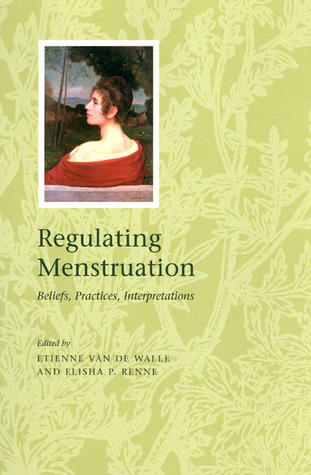
Menstruation, seen alternately as something negative—a "curse" or a failed conception—or as a positive part of the reproductive process to be celebrated as evidence of fertility, has long been a universal concern. How women interpret and react to menstruation and its absence reflects their individual needs both historically as well as in the contemporary cultural, social, economic, and political context in which they live. This unique volume considers what is known of women's options and practices used to regulate menstruation—practices used to control the periodicity, quantity, color, and even consistency of menses—in different places and times, while revealing the ambiguity that those practices present.
Originating from an Internet conference held in February 1998, this volume contains fourteen papers that have been revised and updated to cover everything from the impact of the birth control pill to contemporary views on reproduction to the pharmacological properties of various herbal substances, reflecting the historical, contemporary, and anthropological perspectives of this timely and complex issue.
This is an excellent collection of essays on the history of menstrual regulation - i.e., practices and beliefs about why periods might stop and how to restart them (including cases where women suspect they are pregnant). I appreciate that it is not limited to the US/UK and Irish context, but includes anthropological studies of practices and beliefs around the world. This collection stages a rich debate over whether we should attribute women's use of traditional remedies to restart periods to the desire for abortion and how much that attribution often relies on society's ideas about the women seeking remedies (e.g., enslaved women never given the benefit of the doubt by their enslavers versus "respectable" middle class women with large families always getting it). The most illuminating chapter is the one evaluating the effectiveness of these remedies. It would be impossible and irresponsible to undertake studies, but the historical record (including medical records) indicates that they were largely ineffective, unless taken in doses that were toxic and then there was a high risk of maternal death or damage to the fetus. Overall, this is a pretty niche study, but fascinating.
Whew this took me a second to get through but I did learn a lot on women’s health through time and in different communities, which was very interesting.