In the conclusion to the trilogy set in post-apocalyptic England, Luke returns a triumphant Prince from his expedition in the North, although he loses the three things he cares about most.
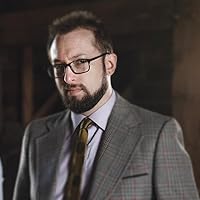
John Christopher was one of the pen names used by Sam Youd.
Sam Youd was born in Huyton, Lancashire in April 1922, during an unseasonable snowstorm.
As a boy, he was devoted to the newly emergent genre of science-fiction: ‘In the early thirties,’ he later wrote, ‘we knew just enough about the solar system for its possibilities to be a magnet to the imagination.’
Over the following decades, his imagination flowed from science-fiction into general novels, cricket novels, medical novels, gothic romances, detective thrillers, light comedies … In all he published fifty-six novels and a myriad of short stories, under his own name as well as eight different pen-names.
He is perhaps best known as John Christopher, author of the seminal work of speculative fiction, The Death of Grass (today available as a Penguin Classic), and a stream of novels in the genre he pioneered, young adult dystopian fiction, beginning with The Tripods Trilogy.
‘I read somewhere,’ Sam once said, ‘that I have been cited as the greatest serial killer in fictional history, having destroyed civilisation in so many different ways – through famine, freezing, earthquakes, feral youth combined with religious fanaticism, and progeria.’
In an interview towards the end of his life, conversation turned to a recent spate of novels set on Mars and a possible setting for a John Christopher story: strand a group of people in a remote Martian enclave and see what happens.
The Mars aspect, he felt, was irrelevant. ‘What happens between the people,’ he said, ‘that’s the thing I’m interested in.’
The last volume of John Christopher's science-fantasy trilogy pays off, with interest, the narrative promise of the first two books. Luke Perry begins SWORD OF THE SPIRITS at the summit of his ambitions, enthroned as Prince of Winchester and betrothed to Blodwen, the most beautiful woman in the known world. Christopher quickly turns this fairy-tale beginning into a dark narrative of revolution, retribution, and self-destruction. Luke provides a premonition of the coming upheaval by breaking the rules of war in order to subdue a rebellious city and consolidate his rule. He then becomes the victim of revolutionary forces when Blodwen comes to Winchester and demonstrates that, unlike other “civilized” women, she has a mind and a heart of her own; when Luke imprisons Blodwen for thwarting his will, his own captains overthrow and banish him. Cast into a hostile world but inflamed with hatred, Luke enlists the technical support of his patrons, the Seers, and the military support of his erstwhile father-in-law-to-be, King Cymru of Klan Gothlen. With their aid he assembles a high-tech army to retake the city he has lost. What follows is essentially a twentieth-century updating of the final battle scene from A CONNECTICUT YANKEE IN KING ARTHUR'S COURT. In the end, though, Luke's plans to recover his patrimony and wreak vengeance on his “betrayers” do not go quite as he expected.
One of the unusual features of this trilogy is the repugnant nature of its viewpoint character, Luke. The young prince has a great deal of courage and tactical cunning, but otherwise he is a thuggish, narcissistic lout, quick to anger, contemptuous of knowledge except when it helps him kill people, and wedded to a regressive social system. In this novel, Christopher delicately points out that Luke's opponents and foils are actually the most noble and progressive people in their society. Blodwen “betrays” Luke because she falls in love with someone else and because she never wanted to marry Prince Lout in the first place – she was betrothed to him as a prize for bravery in volume 2. The captains rebel because Luke has become a tyrant and a political liability, and in doing so they eliminate the monarchy and replace it with a (slightly) more egalitarian order. A progressive young prince, Eric of Oxford, who wanted to become Luke's friend and ally instead flees from him in disgust when he sees the bloody work Luke has done on his way back to the throne. Luke's old friend Martin quits his allegiance to the Seers, becomes a Christian, and organizes a surprising defense of Winchester because he believes there may be more important things than the Seers' scientific and technological revival (which has, after all, done little more at this point than give Luke machine guns). As for Luke himself: after he breaks with his friends, leaves his home, and becomes the Seers' destroying angel, there is nothing left of him. The forces he has helped to unleash will so profoundly change society that there will be no place in it for a violent barbarian princeling. As a teenager I found the conclusion of SWORD OF THE SPIRITS quite sad, but as an older reader I can appreciate Christopher's subtler point: in the end, the person who loses the most turns out to have been the bad guy all along.
این کتاب به نسبت دو کتاب قبلی این مجموعه با روندی سریعتر حوادث را روایت میکند و بسیار ساده و قابل فهم برای سنین پایین، جریان شکل گیری یک دیکتاتور و تقابل مذهب و علم را به تصویر میکشد. بر خلاف تصورم، کتاب واقعا لذتبخشی بود.
The final book in the tale of Luke of Winchester. His hopes and ambitions from the first two books come crashing down in a bitter and twisted finale, reminding readers of the harsh reality of the barbaric world that Luke calls home.
The whole trilogy expertly deals with themes of religion, enlightenment, deceit, chivalry, feminism and pride.
این کتابو تو دوره نوجوونی خوندم. الان بعد از ده-پونزده سال، هنوز بعضی از صحنه های کتاب تو ذهنم زنده ن. داستان یه آینده سیاه رو از بشریت نمایش می داد و شخصیت ها، در محیطی ناامن و خطرناک زندگی می کردند.
I remembered enjoying this series as a young teen in the 80s, so when I was reminded of it recently I was happy to read it again. It's an... odd series. I didn't remember much past the first book, and I can see why--young me would have been enchanted by the medieval world slowly revealed to be post-apocalyptic, and charmed by the reveal that the protagonist had been chosen by a secret cabal of scientists to bring science back to the world.
The second and third books probably would have slipped out of my memory fairly quickly, because the lad's-adventure quality of the first book gradually gives way to something much more grim, complex and tragic. During this re-read, it slowly dawned on me that Luke is really the villain of the story--realistically written, slowly sliding into villainy, but the villain nonetheless. His choices are tragically flawed, his viewpoint horribly limited. He was the worst combination of barbarian and modern--incurious but cunning, clinging to an archaic sense of "honor" until that honor would have kept him from committing war crimes, at which point he blithely jettisoned it. Neither the medieval world nor the scientific world really seems worth keeping or restoring by the end of the series, and the takeaway seems to be that humans will be terrible to each other no matter what the world is like. As a teen I probably pitied Luke, but as an adult I've seen too much of the wreckage people like him create to feel anything warm toward him.
I hope Edmund and Blodwen were able to enjoy some of their life together, though. Edmund was my favorite as a kid, and that at least did not change.
This entire review has been hidden because of spoilers.
Wow. Quite an unexpected but very good and thought provoking ending to the trilogy. Spoiler warning: DO NOT READ THE VERY LAST SENTENCE OF THE BOOK BEFORE YOU GET THERE! It'll ruin the whole experience.
When I first found Prince in Waiting, the first book of this trilogy, it was through searching for books with 'gray morality'. Now, this third and final book does not disappoint! It fully lives up to being the 'Game of Thrones for kids' that I hoped it would be.
Now that Luke, the main character, has returned from the adventure beyond the burning lands, the politicking is back in full swing. Cities need to be conquered, political enemies are waiting for a chance to strike, and Luke still doesn't have a good grip on how to play the game of thrones. Luke suffers betrayal after betrayal and plots his revenge.
The plus points in this book (the whole series actually), are that most of the character, except a few, are not evil. Even if they betray the main character, they had their reasons for doing so. And Luke himself isn't a clear cut 'good guy' either, as he goes through extreme lengths to get his revenge. Spoiler alert, but many characters die, including characters you might like. Even the innocent are not spared.
There is much question of morality in the book. The questions are ultimately never answered by the plot or the characters. They seem to do things based on their nature, and either just accept it things as the way they are or work to change them. Still character development is high in this book as many face-turn-heel and heel-turn-face events occur.
Grey morality and moral dilemmas highly intrigue me. I find them to be the most real a story can get. This series definitely pulled it off. However, it didn't exactly pull it off well, what with the passable book 2 and weirdly written book 1. This book has a pretty abrupt and absurd ending too. Still, if you are searching for a book with gray morality, then this can serve your reading itch.
One last thing. This book and series are rated as 'for children, 10-14'. I believe this is a gross miscalculation. Although this series is written for kids, the themes in it are far too mature for such an audience. At such a stage, children may not have fully developed moral compasses. If they cannot fully understand or appreciate difficult moral choices and the significance of death, they should not read this book. I should know because I study psychology at uni.
Score Breakdown: Story/Plot (50%): 5/5 Character Development (25%): 5/5 Writing style (25%): 3/5
The conclusion of the trilogy, this book...was not what I expected. Spoilers await! Well, we've been following Luke for a few books and he's the protagonist, right? He's going to win in the end, right? He's going to do the right things and be someone we like, right? As you may now be guessing, the answer to all those questions is...not exactly. Halfway through this book, I started getting the sinking feeling that perhaps Luke wasn't really the kind of guy I liked. That...perhaps he's making some very poor choices. And that perhaps this whole trilogy was in fact a tragedy. Did not see that coming! But greatly appreciated being caught off guard. And loved the fact that my favourite characters (Edmund and Blodwen forever!!) very much ended up on the opposite side from Luke. This book surprised me in the fact that the conclusion was not at all what I would have expected from a book of this type. Tragic, yes. But a story well told. And it got me thinking about the nature of power and beauty and truth and justice...and made me ponder what kind of world we really wish for. Good trilogy this, and I shall be revisiting at some point.
I will say that by far The Sword of The Spirits is the best book I have ever read but it was really kind of a hit or miss. I really love how there’s a twisted love story and unforeseen treachery involving Blodwen, Edmund (Luke’s fiance and daughter of a king), and Luke’s best friend and Luke the prince of Winchester is ironic and entrancing. Into the bargain to think that so many people were killed, so many relationships were destroyed, and also so many hopes shattered just so Luke could forge his stubbornness in a final book that has got to be one of the most distressing tomes of all time. To also think that every single thing that has been suffered is for naught is infuriating. There was something to also think that it had a very difficult ending, just the ending was a real shocker along with important things that weren’t really explained, such as not going into depth about how Luke unites the cities and people. I recommend this book to people that like science fiction, young adult, fantasy, and fiction.
It all comes together at the end. The disparate, inevitable threads, the gloomy thesis of John Christopher. I think some modern readers don't like it because of the more formal tone, it's something that we can't seem to handle any more. But Christopher's prose remains readable and direct, and so carefully controlled, up until the last gut-punching sentence.
Let's not confuse Luke's perspective with that of John Christopher. Luke is a anti-hero at this point, a despicable person deposed by his own kingdom and Christopher's only reward for him is a monkey's paw.
I love this guy's writing. I love the Tripods series more, simply because they are more relatable. The Tripod books are ultimately optimistic and the Spirits trilogy is not. Regardless of that pessimism, the Spirits trilogy ends with a stunning conclusion grounded in perfect, precise character arc.
Book 3: The Sword of the Spirits. This is the strong conclusion to what is called the Swords of the Spirits trilogy. John Christopher makes some choices most writers probably wouldn’t have made in that he takes a character who has been developed as a hero over the first two books and turns them into a villain. And yet, he manages to redeem the character at least somewhat in the last few pages. The ending chapter is full of melancholy and beauty. I don’t think it would have the same impact if you only read this one book, but at the end of the trilogy it leaves you with that feeling in your gut that you’ve lived for a while through someone else.
In this third book in the series, our protagonist turns unsympathetic. Though one can certainly see his point of view, he is not gracious or magnanimous, and a dispute over a woman destroys his three kingdoms, and he is cast out into the wastelands.
It is similar to the tale of Arthur, Guinevere, and Lancelot--only the Arthur and Guinevere of this story are betrothed but not married, so it is easy to be more sympathetic with the lovers.
A very interesting and well-told story, though it's not precisely a happy ending even though it turns away from out-and-out tragedy, as in the classic Arthurian tale.
Luke has been a hard character to sympathize with since the beginning of the series, and this book just sealed the deal that he was a blind tyrant. Just like with the other books in the series, this novel was hard to get into until the last 70 pages of the book. It was heartbreaking that Luke did not get what he wanted, but did he really deserve to have it? At the same time, maybe Christopher wanted to explore a main character who wasn't exactly a hero.
سه گانه "کوههای سفید. شهر طلا و سرب و برکه آتش" که به سه گانه "سه پایه ها " مشهورند با نام جان کریستوفر نویسنده چیره دست انگلیسی گره خورده است. سه گانه " شهریار آینده. آنسوی سرزمین های شعله ور و شمشیر ارواح " و کتابهای " نگهبانان " و " غروب شیاطین " از دیگر آثار وی هستند " کتاب شمشیر ارواح آخرین بخش از مجموعه سه گانه شهریار آینده است و پایان این رمان خواندنی
The final book of a dreadful series! Dreadful NOT in the author's writing or characters, but in the portrayal of humans as a species. I was screaming and shouting at the sheer stupidity of the protagonist and his reactions to what was happening around him. In that alone, the author was brilliant in his writing. After reading this series, I know I will avoid Dystopian stories with a vengeance.
We carry on with Luke's adventures where he now knows of technology and how it can help his and the High seers cause. He also has a visitor who turns the course of his life around. Once again a journey across the burning lands shows Luke alternative lifestyles to the accepted on in Winchester and environs. Great story telling, easy reading and imaginative topics
خیلی بد بود .آدم دلش میگیره وقتی میبینه اون دوتا جلد اون قدر خوب اما جلد سوم این قدر گند و پچگانه و ناحرفه ای نوشته شده .نویسنده نباید فقط به فکر پر کردن صفحه های کاغذش باشه . #یک-شکست
The title does not mean much, either for the book itself or for the series. The middle book ended on a sad note, but this one concludes on a tragic (or pathetic) note. Christopher does leave room for a possible fourth book, but Luke, the protagonist, has not undergone any real character development after all the ordeals in this trilogy. Now he is a young adult who has antagonized almost everyone who likes or loves him. The author seems to have painted himself into a corner and chosen an unsatisfactory denouement. Too many loose threads and unresolved themes. The entire series raises serious questios about which fate is best for mankind, but Luke (or the author) seems unable to decide. Their options:
---The Seers, with their deceit and technological trickery to stage a Machine Age Renaissance, when the national religion has banned all such inventions--many of which are as deadly in the Future as they were in the Past?
--The Christians, who preach peace, have widely diverse Bishops, and do not hesitate to act as human shields to defend their city or protect those luckless individuals condemned to the stocks?
--The Wilsh nation with their music, colorful clothing, penchant for perfumes and feasts, who both love and hate to extreme? Who place revenge and Honor above their own kin...
The genius of the Tripods series and the zest of Prince in Wiating have petered out and we are left with a disappinting read and the feeling of "is that all there is?" after an entire trilogy. Whatever will happen to Luke; alas--we don't care that much any more.
(April 24, 2010. I welcome dialogue with teachers.)
The Sword of the Spirits (Sword of the Spirits Trilogy) 0020425740 John Christopher Simon Pulse The Sword of the Spirits (Sword of the Spirits Trilogy) Books SWORD? SPIRITS? BIG DISAPPOINTMENT... The title does not mean much, either for the book itself or for the series. The middle book ended on a sad note, but this one concludes on a tragic (or pathetic) note. Christopher does leave room for a possible fourth book, but Luke, the protagonist, has not undergone any real character development after all the ordeals in this trilogy. Now he is a young adult who has antagonized almost everyone who likes or loves him. The author seems to have painted himself into a corner and chosen an unsatisfactory denouement. Too many loose threads and unresolved themes.
The entire series raises serious questios about which fate is best for mankind, but Luke (or the author) seems unable to decide. Their options:
---The Seers, with their deceit and technological trickery to stage a Machine Age Renaissance, when the national religion has banned all such inventions--many of which are as deadly in the Future as they were in the Past?
--The Christians, who preach peace, have widely diverse Bishops, and do not hesitate to act as human shields to defend their city or protect those luckless individuals condemned to the stocks?
--The Wilsh nation with their music, colorful clothing, penchant for perfumes and feasts, who both love and hate to extreme? Who place revenge and Honor above their own kin...
The genius of the Tripods series and the zest of Prince in Wiating have petered out and we are left with a disappinting read and the feeling of "is that all there is?" after an entire trilogy. Whatever will happen to Luke; we don't care that much any more. Plume45 "kitka12345" April 24, 1998 Overall: 5
This is the third and final book in Christopher’s Sword of the Spirits trilogy, and I have to say, I can’t think of any other trilogy in which the name is derived from the title of the last entry rather than the first.
Having killed his brother at the climax of Beyond The Burning Lands, Luke is now the ruler of Winchester, and is working to consolidate his power while the Seers – openly a religious order, but secretly working to restore technology to the world – assist him. Other factions, including some within Winchester, are working against him.
I wouldn’t say Luke is a well-developed character, pe se, but he is interesting in the sense that he breaks the mould of the traditional young adult protagonist. There are signs as early as the first book that he is headstrong, proud, self-important and lacks intellectual curiosity (indeed, he rarely seems more than indifferent towards the goal of the Seers). But it only becomes clear towards the end of The Sword of the Spirits that he is, in fact, the villain of the trilogy. The hero is one of his old friends, whose travels and adventures have taken place almost entirely out of the reader’s eye, but who returns at the climax to save the day in a rather unconventional way. Luke is presented with the error of his ways and is begged to reconsider, and – much like the climax of The Guardians – I was honestly uncertain which way it would go; whether he would achieve redemption or sink into tyranny. John Christopher was no George R.R. Martin, but he most definitely didn’t follow the unwritten rules of the genre. I won’t ruin the surprise, but suffice to say that even after Luke makes his choice, the novel ends on a very different note than I thought it would, with a particularly bleak final sentence.
In five years time I will have forgotten the names of all the characters and likely much of the plot as well. I will, nonetheless, remember certain events, and the overall trajectory of the novel. The Sword of the Spirits trilogy doesn’t come close to matching Christopher’s Tripods trilogy, but it’s nonetheless a step above most young adult fiction, and well worth reading if one is interested in the genre.
I started out the series expecting a somewhat straightforward YA-story about a prodigy-boy finding his feet as a wise ruler of the lands. Boy, have I been sursprised! The first book lulles you in. The second has you starting to question the motives of both Luke (the protagonist, Luke Perry to be exact ;)). Now after the third and final book, I bow my head in respect for John Christopher. Young Luke suddenly turned into a spitefull human being. Wanting revenge and going for it, he transforms into what I can only describe as a sympathetic villain. In the end it all turnes to crap, in a typically John Christopher-civilized way. And suddenly you realize that this isn't a hero's jurney, but a fullblown tragidy.
Also here is a comment on the state of fantasy and science fiction. Please all you sci-fi and fantasy authors out there, take a page out of John Christopher's books, and learn to write short and concise stories.
(Reread) Grim and tragic, but deliciously compelling. This third and final book in the series is the best of the trilogy, as we follow our protagonist/antagonist Luke down a path of triumph, tragedy, jealousy, revenge, and conquest. I’ve heard this series called “A Game of Thrones for young adults” and think it’s an appropriate moniker. Overall it has been a very enjoyable re-read that still holds up decades later.
A good conclusion to the trilogy. I found myself unable to put the book down - I really, really wanted to know what was going to happen next. The ending is excellent, and I think far better than most "children's" fantasy. Christopher is unafraid to write a protagonist with flaws or a non-fairy tale ending, and it makes the book shine. Overall, a fun series.
This is the final installment in the series of the same name, and it wrapped up well. I continue to be amazed at how packed these older novels are. In one chapter, twenty pages, Christopher does as much as would often take up half of a longer novel. Yet, it still doesn't feel skimpy or shallow. These are quick books, but quality.
I really enjoyed this book, but I hated the ending... what the hell was that about... that is not an ending... especially if there was no other book being made? come on... if i know this was going to be the ending i would have not wasted my time with this book... come on.... some one needs to write another book finishing this story....