

What do you think?

rift zone
Rift Zone, Taylor’s much-anticipated third book traces literal and metaphoric fault lines—rifts between past and present, childhood and adulthood, what is and what was. Circling Taylor’s hometown—an ordinary California suburb lying along the Hayward fault—these poems unearth strata that include a Spanish land grant, a bloody land grab, gun violence, valley girls, strip malls, redwood trees, and the painful history of Japanese internment.
Taylor’s ambitious and masterful poems read her home state’s historic violence against our world’s current unsteadinesses—mass eviction, housing crises, deportation, inequality. They also ponder what it means to try to bring up children along these rifts. What emerges is a powerful core sample of America at the brink—an American elegy equally tuned to maternal and to geologic time. At once sorrowful and furious, tender and fierce, Rift Zone is startlingly observant, relentlessly curious—a fearsome tremor of a book.
Taylor’s ambitious and masterful poems read her home state’s historic violence against our world’s current unsteadinesses—mass eviction, housing crises, deportation, inequality. They also ponder what it means to try to bring up children along these rifts. What emerges is a powerful core sample of America at the brink—an American elegy equally tuned to maternal and to geologic time. At once sorrowful and furious, tender and fierce, Rift Zone is startlingly observant, relentlessly curious—a fearsome tremor of a book.
- GenresPoetryLiterary Fiction
112 pages, Paperback
First published April 7, 2020
About the author
Tess Taylor
6 books27 followersTESS TAYLOR’s chapbook, The Misremembered World, was selected by Eavan Boland for the Poetry Society of America’s inaugural chapbook fellowship. The San Francisco Chronicle called her first book, The Forage House, “stunning” and it was a finalist for the Believer Poetry Award. Her second book is Work & Days, which Stephen Burt called “our moment’s Georgic.” Her work has appeared in The Atlantic, Boston Review, Harvard Review, The Times Literary Supplement, and other places. Taylor chairs the poetry committee of the National Book Critics Circle, is currently the on-air poetry reviewer for NPR’s All Things Considered, and was most recently visiting professor of English and creative writing at Whittier College. Taylor has received awards and fellowships from MacDowell, Headlands Center for the Arts, and The International Center for Jefferson Studies. Taylor recently was awarded a Fulbright US Scholar Award to study and lecture at Queen’s University Belfast, in Northern Ireland, for six months in 2017.
Ratings & Reviews
Friends & Following
Create a free account to discover what your friends think of this book!
Community Reviews
Displaying 1 - 15 of 15 reviews

February 1, 2021
I appreciate Taylor's message, but as poetry, the poems in the first half of this book didn't work for me. None of these verses stay with me or resonate in any special way. Maybe you need to live in California to "get it." Maybe other poets who are intimately familiar with poetic devices can appreciate these more. But I'm not in California, I'm not a poet, I don't pick up on any of the cleverness here, and these words just sort of splat at my feet.
I did appreciate the frequent use of "schist," since I'm also currently helping my 9th grader with her Earth Science project. That's not a word you see very often, and I'm seeing it a lot right now, in both these poems and in the school textbook.
The later poems in parts III & IV in which she writes about nature and her personal relationships, feel more personal, more present, and are more moving.
I did appreciate the frequent use of "schist," since I'm also currently helping my 9th grader with her Earth Science project. That's not a word you see very often, and I'm seeing it a lot right now, in both these poems and in the school textbook.
Downhill White Supremacists March on Sacramento
High in the Sierra
green summer aspen
whisper to the lake.
The snowpack glitters.
Over the passes
Winnebago thunder
out of the wide red flats of Nevada.
Huge crooked knuckles,
the dark screes loom.
Deep in the roadbeds,
the bones of the Irish
& Chinese workers
whose lives were pitted
against one another
to drive down & down
the price of their labor
—who shattered their bodies
dynamiting these crossings—
blaze in their graves.
The later poems in parts III & IV in which she writes about nature and her personal relationships, feel more personal, more present, and are more moving.
Elk at Tomales Bay
Nimble, preserved together,
milkweed-white rears upturned,
female tule elk
bowed into rustling foxtails.
Males muscled over the slopes,
jostling mantles, marking terrain.
Their antlers clambered wide,
steep as the gorges.
As they fed, those branches twitched,
sensory, delicate,
yet when one buck reared
squaring to look at us
his antlers and his gaze
held suddenly motionless.
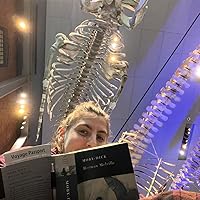
Further out, the skeleton.
The tar paper it seemed to lie on
was hide.
Vertebrae like redwood stumps—
an uneven heart-shaped cavern
where a coccyx curled to its tip.
Ribs fanned open
hollow, emptied of organs.
In the bushes its skull.
Sockets and sinuses, mandible,
its few small teeth.
All bare now except
that fur the red-brown color
of a young boy’s head and also
of wild iris stalks in winter
still clung to the drying scalp.
Below the eye’s rim sagged
flat as a bicycle tire.
The form was sinking away.
The skin loosened, becoming other,
shedding the mask that hides
but must also reveal a creature.
Off amid cliffs and hills
some unfleshed force roamed free.
In the wind, I felt
the half-life I watched watch me.
Elk, I said, I see
you abandon this life, this earth—
I stood for a time with the bones.
March 15, 2022
we are all friends here so if y’all want to read my poem that takes after miss taylor i will allow it

June 25, 2020
On opening a new volume of poetry by a poet not previously read. First, I might not have just picked this off the shelf. I read about it somewhere and added the title to my TBR. I wouldn’t normally open a book of fiction or poetry and immediately read the introduction, foreword, or preface. But I did. I wouldn’t recommend it in this particular case. I’m sure the Introduction would have made a fine Afterword. Anyway, on with the show. My usual approach, standing in a bookstore, looking over a never heard of book of poetry is to read the table of contents to see if there is a poem from which the title of the book derives and to give that one a look, maybe even a close read. Then it’s back to the first poem in the book if the two aren’t one and the same. FYI: There is no poem titled “Rift Zone” in this collection. The opening poem in the collection is entitled “Preface: Pocket Geology”. It’s seductive in its own right. One of those what I call musically arranged pieces with lots of spaces in between phrases. In this case, we might see those spaces as the rift zone, or even zones, in the poem itself. I won’t take away your pleasure of a first encounter with it by saying any more about it nor quoting from it. As I began to read sequentially into the collection, I sort of breezed through the next two poems before encountering an eight-part piece strung over as many pages. I like long poems. This particular one took me unawares. I was barely getting used to the poet when I was asked to take the deep dive. I read it through. And I will go back to it. The next poem, fourth in the TOC, is the one the poet had unwittingly set out to trap me, to make me stop and read again and again and again. “Berkeley in the Nineties”. So many hooks. Spoiler alert. First two lines:
Too late for hippie heyday
& too young to be yuppies
If the title wasn’t enough to set the stage, those first two lines do a darned good job. Even more, they ask something of us. Who was I in the nineties? Because this is a generational poem. Not centered on boomers or millennials, but subsets. Hippies were a Sixties phenomenon, following hard on the beats. Yuppies is a term coined in the early 1980s to describe a 20s-to-30s-something subset. In the Nineties, then, too late and too young tells us this is likely a description of teenagers in what was still, across a large swath of itself, the continuing academic-scholastic setting of hippiedom.
Next up on my list of catch phrases (repeating at least once) is
There was no internet yet
What was a teenager to do? Some of that has already been revealed. I’m trying not to give it all away.
We learned
the meaning of the word hegemony
but thought the word itself was hegemonic.
Okay! When did you first acquire a word as telling and compelling as “hegemony”? As “hegemonic”? Antidisestablishmentarianism was the Word of the Day in the Fifties, and that was Spelling Bee competition stuff, we barely even attempted to understand it. But to think of the word “hegemony” as itself being “hegemonic”, that’s one giant leap for [Berkeley] teenage kind, yeah?
Words: revolution, revelation. Here they come:
Bruised peaches
were our kind of revolution. There was not internet yet
Revolution reaches back to “Too late for hippie heyday” but suggests a knowledge of revolution and hegemony within a constructed world view not yet influenced by search engines.
Bodies in space were revolution.
Part of the world of “Bruised peaches”. “Bruised peaches” and “Bodies in space”. Will there be more in the series, with Oxford commas, as it were, between capitalized entities? Follow me.
Chinos were not the revolution.
Trigonometry was not the revolution.
Caps yes; Oxford comma, no, because we’ve proposed the antithesis, “not the revolution” takes us into the world of the “yuppies” who these teenagers are too young, and, well, too hip, to be.
Reindeer lichen was the revolution.
Our new breasts in rain were revolution.
We craved transcendental revelations,
the radical and burning future:
We lobbied for condoms in the high school bathrooms
even though the bathrooms needed toilet paper—
Can we justify an Oxford comma despite the break? I apologize, but not fervently, for having thrust the closing lines into your head. But they are so relevant. So, accidentally, so revolutionarily, relevant.
I’ve read this poem, like, five times now. I’ll read it again. I’ll copy the whole thing into my commonplace book. It’s that marvelous and wonderful and even historical.
Is it representative? Yes. And no. Every poem in the collection didn’t grab me so thoroughly as did this one. But I wanted, and needed, to read many of the poems over and over and over.
Too late for hippie heyday
& too young to be yuppies
If the title wasn’t enough to set the stage, those first two lines do a darned good job. Even more, they ask something of us. Who was I in the nineties? Because this is a generational poem. Not centered on boomers or millennials, but subsets. Hippies were a Sixties phenomenon, following hard on the beats. Yuppies is a term coined in the early 1980s to describe a 20s-to-30s-something subset. In the Nineties, then, too late and too young tells us this is likely a description of teenagers in what was still, across a large swath of itself, the continuing academic-scholastic setting of hippiedom.
Next up on my list of catch phrases (repeating at least once) is
There was no internet yet
What was a teenager to do? Some of that has already been revealed. I’m trying not to give it all away.
We learned
the meaning of the word hegemony
but thought the word itself was hegemonic.
Okay! When did you first acquire a word as telling and compelling as “hegemony”? As “hegemonic”? Antidisestablishmentarianism was the Word of the Day in the Fifties, and that was Spelling Bee competition stuff, we barely even attempted to understand it. But to think of the word “hegemony” as itself being “hegemonic”, that’s one giant leap for [Berkeley] teenage kind, yeah?
Words: revolution, revelation. Here they come:
Bruised peaches
were our kind of revolution. There was not internet yet
Revolution reaches back to “Too late for hippie heyday” but suggests a knowledge of revolution and hegemony within a constructed world view not yet influenced by search engines.
Bodies in space were revolution.
Part of the world of “Bruised peaches”. “Bruised peaches” and “Bodies in space”. Will there be more in the series, with Oxford commas, as it were, between capitalized entities? Follow me.
Chinos were not the revolution.
Trigonometry was not the revolution.
Caps yes; Oxford comma, no, because we’ve proposed the antithesis, “not the revolution” takes us into the world of the “yuppies” who these teenagers are too young, and, well, too hip, to be.
Reindeer lichen was the revolution.
Our new breasts in rain were revolution.
We craved transcendental revelations,
the radical and burning future:
We lobbied for condoms in the high school bathrooms
even though the bathrooms needed toilet paper—
Can we justify an Oxford comma despite the break? I apologize, but not fervently, for having thrust the closing lines into your head. But they are so relevant. So, accidentally, so revolutionarily, relevant.
I’ve read this poem, like, five times now. I’ll read it again. I’ll copy the whole thing into my commonplace book. It’s that marvelous and wonderful and even historical.
Is it representative? Yes. And no. Every poem in the collection didn’t grab me so thoroughly as did this one. But I wanted, and needed, to read many of the poems over and over and over.

March 22, 2020
Tess Taylor's imagery is shockingly simple, yet powerful. The collection itself is a master class in poetic devices. Each poem employs a new device or reuses a previous one in a different manner. Some of my favorite applications in Part I are:
— The indentations of linebreaks in "Preface: Pocket Geology" to illustrate natural fractures and movement;
— The linebreaks show the fracture of personal relationships, as well as the realization of such fissures;
— In "Song with Schist & County Line"—(a) the erasure of legal documents in part three to convey the invisibility of immigrants, (b) the indentations and dropped lines in part four to communicate both epistemological and physical changes in the landscape and its citizens, and (c) the indentations in the final part of the poem to show how [past or continuing] violence manifests itself in new, different forms;
— In "Berkeley in the Nineties," which is a list poem that uses repetition to show liberal, middle-class privilege; and
— The strikethrough of "not" of "not know" in the last line of "Three Dreams, 2018" to demonstrate epanorthosis of her knowledge of the violent history of where she lives.
Additionally, as I was born and raised in the Bay Area (and lived in Santa Cruz, which has a somewhat similar landscape to the East and North Bay, for a couple of years), I appreciated Taylor's implementation of nature poetry in Parts II to IV. The imagery was nostalgic for me, especially as I drink coffee in my LA shotgun-studio under Governor Newsom's stay-at-home order. However, Taylor's use of nature poetry via metaphors and similes also gave me, as a reader, a lot to unpack. As I sit [comfortably] in my home, Taylor's poems reeled me back to the reality of my privileges, especially when considering that the country's largest unhoused population is "just outside this room where I am writing." So if you are not equally stirred, remember that Taylor's next lines, which closes out the collection, are: "city of faultline city of water: // As much as of anywhere I am of you."
PS: I received an ARC.
— The indentations of linebreaks in "Preface: Pocket Geology" to illustrate natural fractures and movement;
— The linebreaks show the fracture of personal relationships, as well as the realization of such fissures;
— In "Song with Schist & County Line"—(a) the erasure of legal documents in part three to convey the invisibility of immigrants, (b) the indentations and dropped lines in part four to communicate both epistemological and physical changes in the landscape and its citizens, and (c) the indentations in the final part of the poem to show how [past or continuing] violence manifests itself in new, different forms;
— In "Berkeley in the Nineties," which is a list poem that uses repetition to show liberal, middle-class privilege; and
— The strikethrough of "not" of "not know" in the last line of "Three Dreams, 2018" to demonstrate epanorthosis of her knowledge of the violent history of where she lives.
Additionally, as I was born and raised in the Bay Area (and lived in Santa Cruz, which has a somewhat similar landscape to the East and North Bay, for a couple of years), I appreciated Taylor's implementation of nature poetry in Parts II to IV. The imagery was nostalgic for me, especially as I drink coffee in my LA shotgun-studio under Governor Newsom's stay-at-home order. However, Taylor's use of nature poetry via metaphors and similes also gave me, as a reader, a lot to unpack. As I sit [comfortably] in my home, Taylor's poems reeled me back to the reality of my privileges, especially when considering that the country's largest unhoused population is "just outside this room where I am writing." So if you are not equally stirred, remember that Taylor's next lines, which closes out the collection, are: "city of faultline city of water: // As much as of anywhere I am of you."
PS: I received an ARC.

August 10, 2020
Profound meditations on place — what it means to be in California especially now in the 21st century. I posted a longer reaction to this book on Medium.

January 16, 2021
“Rift Zone” by Tess Taylor, is a powerful, moving collection of poetry giving voice to the voiceless, and to those who express theirs in a whisper, a whimper, a growl, or a scream–whatever the utterance may be. These poems describe rifts in various forms–rifts in society, rifts in the earth, rifts among people and ideas, and the present and the past.
Taylor’s California hometown lies along a fault-line, so, the symbolism she uses represents an eclectic mix of events, from a Spanish land grant, to valley girls, to internment of the Japanese. Moving from past to present, her poems reflect more current issues, like housing, inequality, and deportation. Her poems are about an America cracking from so many faults, and finding love and hope, somehow, inside those cracks. These slice-of-life poems represent not just this poet, but the pain and yearning of almost everyone who has noticed.
In this volume of poetry, you’ll find a wide range of emotion, deep sensitivity, and strong reactions. In a way she speaks for those of us who speak out but are seldom heard, who don’t know what to say, or are crowded out by louder, more forceful voices. Even though the poems speak of California, the feelings are felt all around the country. Taylor verbalizes the thoughts and feelings we sometimes bury inside. She seems to get to the heart of an issue, in deep ways, and in abstract ways–both we can understand. The issues of today echoes that of the past, and whether she’s discussing climate change or motherhood or violence, you can hear truth and passion in her words.
As you read through the poems, you find yourself going on a tour of California with Taylor and get a real sense of place with her beautiful language. She paints with a wide brush, from the personal, to the historic, to the geologic, to the social, but adds details that move you closer to the heart of the meaning. For example, her imagery in the poem “SIXTH GRADE, 1988” is visceral but lyrical, and pulls at your emotions and tears; a sampling of just how lovely but targeted the art form of poetry can be. “SONG WITH WILD PLUM & THORN” and “I GAVE MY LOVE A STORY” are my personal favorites. “Rift Zone”, by Tess Taylor, is a collection of poems to enlighten, inform, and elevate the human soul and psyche.
Taylor’s California hometown lies along a fault-line, so, the symbolism she uses represents an eclectic mix of events, from a Spanish land grant, to valley girls, to internment of the Japanese. Moving from past to present, her poems reflect more current issues, like housing, inequality, and deportation. Her poems are about an America cracking from so many faults, and finding love and hope, somehow, inside those cracks. These slice-of-life poems represent not just this poet, but the pain and yearning of almost everyone who has noticed.
In this volume of poetry, you’ll find a wide range of emotion, deep sensitivity, and strong reactions. In a way she speaks for those of us who speak out but are seldom heard, who don’t know what to say, or are crowded out by louder, more forceful voices. Even though the poems speak of California, the feelings are felt all around the country. Taylor verbalizes the thoughts and feelings we sometimes bury inside. She seems to get to the heart of an issue, in deep ways, and in abstract ways–both we can understand. The issues of today echoes that of the past, and whether she’s discussing climate change or motherhood or violence, you can hear truth and passion in her words.
As you read through the poems, you find yourself going on a tour of California with Taylor and get a real sense of place with her beautiful language. She paints with a wide brush, from the personal, to the historic, to the geologic, to the social, but adds details that move you closer to the heart of the meaning. For example, her imagery in the poem “SIXTH GRADE, 1988” is visceral but lyrical, and pulls at your emotions and tears; a sampling of just how lovely but targeted the art form of poetry can be. “SONG WITH WILD PLUM & THORN” and “I GAVE MY LOVE A STORY” are my personal favorites. “Rift Zone”, by Tess Taylor, is a collection of poems to enlighten, inform, and elevate the human soul and psyche.
March 6, 2020
Many of these poems are difficult to absorb deeply without knowledge "on the ground," as in literal knowledge of the land whose history permeates these pages: El Cerrito and the Bay Area. The notes at the end were helpful, but now I must reread the poems all over again! Ha. I understood maybe an eighth of the references to past injustices and felt powerfully discomfited by the sorrow and grief and personal pain I could feel in those few connections. I know very little of poetic forms, but Tess Taylor is very precise about her forms and I think that should encourage learning about poetry. I'm more interested in the history found between the lines, however, and if she ever held a talk to bring up more of her research and why she chose these events and perspectives to connect with words and soul, I would be fascinated to hear it.

August 19, 2020
In clear, simple style, the author explores the link between living precariously on the edge of violence, division, and human connection with geological and environmental fragility.
Not all of the poetry worked for me, but a few of my favorites were: Song with Shag Rug & Wood Paneling - an interesting look at a childhood home remodeled and the effect it has as if somewhat erasing the past; Handgun & Tetherball 1990, melancholic memories of childhood tarnished with tragedy.
And the lovely Song with Wild Plum and Thorn which I found a bittersweet poem about being connected with one another on a primitive level - it balances the basic necessity of foraging with the delicate connections with one another that we too easily overlook.
Not all of the poetry worked for me, but a few of my favorites were: Song with Shag Rug & Wood Paneling - an interesting look at a childhood home remodeled and the effect it has as if somewhat erasing the past; Handgun & Tetherball 1990, melancholic memories of childhood tarnished with tragedy.
And the lovely Song with Wild Plum and Thorn which I found a bittersweet poem about being connected with one another on a primitive level - it balances the basic necessity of foraging with the delicate connections with one another that we too easily overlook.

February 18, 2025
In Rift Zone, Tess Taylor eloquently walks the reader through her life in California, particularly in her hometown of El Cerrito. Taylor goes back forth between her preteen and adolescent years during the late 1980s and the 1990s and her life as a quadragenarian during the 2020s. Whether she talks about friendships, statewide beauty, natural disasters, history, or motherhood, the author delivers powerful words to allow her readers to form mental pictures of her own. Rift Zone is composed of five sections of poetic masterpieces.
April 28, 2020
What a splendid collection. Taylor pushes into new territory with this book, in terms of formal and material experiment. At the same time, the voice is vibrantly grounded in lived experience. We learn about an era, we learn about Taylor learning about white privilege (that examination of which first so impressed me about Taylor's first book, The Forage House), and we learn about the socio-geology of CA. The poems are smart, tender, and thought-provoking.
December 31, 2020
I appreciate the dispassionate style with which Tess Taylor captures the forces of human events, personal and historic, that play out against the physical earth movements, tumultuous and ongoing. These poems of the northern San Francisco Bay Area ring true to me, a resident with roots that go back five generations. Not only do they speak to what has passed, they describe our now, what is manifesting.

September 16, 2024
This collection has grounded narratives. There's a lot of rocks and topography, which is a nice feeling because the whole collection is very nailed down in place (California) and time. I thought Taylor well captured a nostalgia memoir kind of writing about middle school and high school, while complicating it with the reality / her experience with gun violence in schools growing up. Solid set of poems.

September 2, 2021
20/31
I will take El Cerrito poetry and its reckoning with Bay Area racism and historical accounts of a land that sits on a fault line. The second half of the book warmed up a little more for me.
Some favorites:
"Song with Poppies & Reverie"
"Raw Notes for a Poem Not Yet Written"
"Song with Wild Plum & Thorn"
"Aubade with Redwood"
"Punctuations & Wind"
"Envoi: San Francisco"
I will take El Cerrito poetry and its reckoning with Bay Area racism and historical accounts of a land that sits on a fault line. The second half of the book warmed up a little more for me.
Some favorites:
"Song with Poppies & Reverie"
"Raw Notes for a Poem Not Yet Written"
"Song with Wild Plum & Thorn"
"Aubade with Redwood"
"Punctuations & Wind"
"Envoi: San Francisco"
Read
April 9, 2021Gift this to a friend from Northern California.
February 7, 2023
This collection really moved me
(The joke only works if you know this poetry collection is themed fault lines and earthquakes)
(The joke only works if you know this poetry collection is themed fault lines and earthquakes)
Displaying 1 - 15 of 15 reviews