Two sisters, lost youth, and youthful obsessions; organized by day as the family sits shiva, Evening unfolds the paradoxes of love, ambition, siblings, and the way the past continues to inflect the present, sometimes against our will.
In her thirties, Eve is summoned home by her distraught family to mourn the premature death of her sister, Tam, a return that becomes an unexpected encounter with the past. Eve bears the burden of a secret: Two weeks before Tam died, Eve and Tam argued so vehemently that they did not speak again. Her sister was famous, acclaimed for her career as a TV journalist and her devoted marriage. But Tam, too, had a secret, revealed the day after the funeral, one that inverts the story Eve has told herself since their childhood. In the aftermath, Eve is forced to revise her version of her fractured family, her sister’s accomplishments and vaunted marriage, and her own impeded ambition in work and love.
Day by day as the family sits shiva, the stories unfold, illuminating the past to shape the present. Evening explores the dissonant love between sisters, the body in longing, the pride we take in sustaining our illusions, and the redemption that is possible only when they are dispelled.
Eve and her older sister Tam grew up in a Jewish family in Toronto Canada. Tam stayed in Toronto and lived near her family. She was married - two children and was a well-known successful TV anchor woman in Canada.
Eve, took a different path in life. Considered a semi rebel - with a bohemian side.... she moved to New York for college - and stayed. At age 35, she was working on a dissertation about British women during the interwar, and teaching adult education classes. Not married. No children. A ‘sorta’ boyfriend.
Eve loved them all - parents, Nana, and most: her sister. But.... during Eve’s last visit With Tam, they had a terrible fight from Tam’s hospital bed. Tam was dying of cancer. The fight resolved around a secret. Then.... Tam died....before the sisters had a resolution-conversation.
Eve returns home for the funeral with her family - and sits shiva with them for 7 days. Another secret was discovered, the day after the funeral.
Tam left Eve a card asking for forgiveness. Plus a video.
Revealing Conversations - stories - and memories-(summers on Lake Ontario) - unfold with family members and childhood friends. Love- interests too.
With much reflection, we are are privy to Eve’s most inner thoughts and feelings, around guilt, loss, grief, competitiveness, forgiveness, understandings, sisterly bonds, and love.
I liked this book— its crafting—it’s storytelling— the dialogue was fresh, endearing, with a wonderful supportive cast.
Shiva, means 7. Nessa took us through each of the seven days. One of the purposes of Shiva in the Jewish faith is to demystify the impact on death and morning.... and help the grieving immediate family members cope with loss.
A lovely slim book — pulled on my heartstrings without being overly sad - with a satisfying ending.
Evening brilliantly unfolds the paradoxes of love, ambition, and siblings. Its lyrical prose and exploration of family illuminates the way the past continues to inflect the present, sometimes against our will.
Just did not enjoy this book as I expected to. Unfortunately the story felt bogged down by verbiage, figurative modifiers and phrases that are piled on but add nothing to the understanding of characters or plot. I found myself rereading passages to glean their significance, only to find they added none. Chapter 10 has one exceptional example of this, with a sentence of 115 word - “Then, for a brief wonder, we raise our heads, skulls lolling on our backs as if pleading for mercy, permitted to see the tips of firs and cedars and, over them, a sky so passionately blue we are convinced: we can again survive this underworld so that for scant moments every year, we can emerge into magnificent summer light, a light that transforms the towns and villages far from Toronto, grants them a condensed eternity as we make our way here, she’d our winter skins to return to the children we were, the air whose purity revives our shrunken lungs-all the way back until death is merely the season’s turning, inevitable, innocuous, almost affirming.” Whew. Unfortunately, the prose writing here weighs the characterizations and the story down, making them secondary to the presentation.
This was one of those random library selections that may have worked possibly for a different mood, but in the end turned out to be just….insufficient. It’s a story of a family, Jewish Canadian family specifically, sitting shiva for their eldest daughter, told from the perspective of the youngest daughter over the course of seven days. Theirs was an uneasy sibling relationship, paralleled in the novel to the relationship between their grandmother and her sister. Eve, the narrator, is the gorgeous free spirited sexpot, while her sister as always the sedate responsible one, great career, happily married with children, etc. Which was obviously the cause for some rivalry. But now that her sister is gone, Eve is reevaluating her choices, romantic and professional, while rekindling an affair with a childhood love, conveniently still in the neighborhood. And that’s pretty much all there’s too it. Just a slow and measured family drama, which somewhat heavyhandedly at times attempts to convey traditional values as the only means to satisfying life of meaning. If Eve was to abandon her wanton ways and wed her cerebral casual boyfriend she’d apparently be a much more admirable individual. Things like that. Many reviews have praised the language as poetic and it is indeed. It isn’t necessarily my favorite thing, but then again it isn’t offputtingly overdone. It’s just…grandiloquent by design. Especially during the endless discussions of Eve’s sexuality…all that density of desire and velocity of lust. Yeah, yeah, Eve has a sexual appetite, got it, ok, fine, good for her. So anyway, nothing wrong with the book per se, especially if you’re after a family drama, especially for people with sisters and the writing is fairly good overall and the novel speeds by (surprisingly so, considering the presumptive heavy matters it tackles), but for me it didn’t quite work. Either I wasn’t in the mood for it. Or I didn’t find it relatable. Or I didn’t care for the characters. Or the message of imposed conventionality as a roadmap for success. Or the overdrawn linguistic labors of concupiscence. Or maybe I just prefer more plot driven stories. it was fine, literally fine, nothing objectionably wrong about it, very readable, etc. it went by very quickly, it had some nice language, you were definitely aware the entire time that this is a work of literary fiction...and that’s about it. User mileage may vary.
Rapport is a lovely writer - what I mean is that her prose is both delightful and fresh. What I also mean it is compelling and deep especially when she is writing about family and relationships. We see a complicated family, Jewish and grieving, portrayed as they sit shiva for Tam, a young and accomplished woman who died too soon and her sister, Eva, our protagonist whose guilt is palatable. I could not help but enter in. The story was constructed around unmasking secrets. That was intriguing, but Rapport’s depiction of relationships and inner dialogue was the spark that kept me reading.
What an enjoyable and thought provoking book. I was immediately drawn into Eve's world of family, childhood memories, and loss. Over the period of sitting shiva the story and the family secrets unfold in a lyrical and arresting way and I stayed up reading late into the night until I'd reached the end. The writing is exceptional. Nessa Rapoport is an author who knows the value of words and uses them lovingly and intelligently. I recommend this book highly, you won't be disappointed.
I felt disoriented reading this novel in a bad way. Half of the story was told in flashback and it was without a timeline. Events were melodramatic and the prose was overwritten. The forced suspense under the insane premise of the novel was stupid. There was so much drama and procrastination over a predictable ending making the whole novel a bore. And my biggest complaint is - why does a woman need to marry and have children to be whole? FU, author.
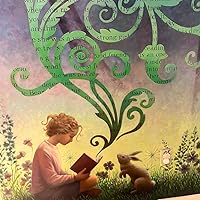
A story as beautiful as its cover. The subject matter is my real-life worst case scenario, but the novel is brimming with humor and sex appeal (don't get me wrong, I also cried a lot). As soon as I finished reading, I turned back to the first page to start again. It might land on my favorites list, TBD! Read this book, it is wonderful. :)
This is such a beautiful book, and I loved it. The writing style is so poetic and lyrical. There were a couple of lovely passages that stood out to me.
When Eve was at Tam's funeral and saying her final goodbyes: "People are starting to go, but I cannot turn away from my sister. As if departing from a king, I walk backward from the grave, a solider and an honor guard whose watch is over but who will not relinquish her duties."
The other passage I loved is when Eve and Laurie had their long-distance relationship back in the day before reuniting at the funeral, which was very juicy: "During Laurie's high school trip to Europe, I was a beggar at the den window pleading with the smug despot of impeded love for the mailman to appear. Only when I gave up did he manifest himself, a potentate in his authority to grant or withhold. However disciplined I tried to be, I could not wait until the letters fell, but opened the door, hand thrust out, speechless."
Evening, Nessa Rapoport’s astonishing novel, portrays the complex relationship between sisters and their quest for fulfillment—emotional, intellectual, professional, and sexual. The setting is the return of Eve, a bohemian New Yorker, to her childhood home in Toronto to mourn the untimely death of her accomplished news anchor sister, Tam. With lush language and crisp dialogue, Evening moves fluidly between resonant scenes of the sisters’ childhood, the sisters’ last painful fight, and the shattering present of loss. Eve’s handsome old flame turns up to add a provocative current. Evening is beautifully sensual and the descriptions of Eve’s sexuality are among the most vivid passages in the book. I couldn’t put this gorgeous novel down.
This book is written beautifully. Eve returns to her childhood home in Toronto to sit shiva for her sister Tam, who has sadly died. I was hooked on the third page when Eve says, do ‘all human beings want to live four blocks from their parents so they can eat together every Sunday night at the Bagel King?’ As the family sits together for the seven days of Shiva, stories are slowly revealed about the relationship between Eve and Tam, about Nana, about their divorced parents, and Eve’s relationship with her current boyfriend.
Didn't like at first; felt the writing was a bit pretentious and use of some words/descriptions a little off... In the end, this story of 2 sisters which evolves over the days of Shiva, kept me interested. A rather short book (large print and wide margins) contrasts the lives of these two sisters reminding us to not take for granted things just below the surface of our own sibling relationships....
A little confusing to start, as we are thrown straight into the story and all the characters, combined with flashbacks, and the narrator Eve sparring with her dead sister in her imagination. Once I got used to it, it worked well. Eve and her sister Tam were close growing up and in later life, on the same wavelength in many things. In their life choices however they were polar opposites, and this is the source of friction and envy between them
A family sits shiva after the death of a sister, beautiful, successful, married. The other sister, a more carefree, bohemian type is caught up in the fog of grief, family secrets and feelings of personal failure. Beautifully written, but was slow and plodding in a couple of places.
I had to look up approximately 3 words in the first few pages. There's a poetic element to this book which I enjoyed and makes me feel like I probably missed things and could reread it.
Boring. I had to force myself to finish but luckily it was short. I seem to be in the minority but I didn’t care and didn’t particularly like the main character Eve. In the midst of a horrible family tragedy, she is utterly self absorbed, ruminating endlessly about her relationship with her dead sister, her divorced parents, her ex boyfriend and current boyfriend, even her aunt and uncle. I certainly didn’t care about the dead writer who was the subject of her long unfinished dissertation. I did of course feel sympathy for the dead sister and her motherless small children but the big reveal about the sister was no big deal. A disappointment.
Indescribably intimate; pulls apart your soul and lays out the pieces to be delicately examined. I think this book does a beautiful job at portraying the complexity of having a sister, and the unavoidable grief that comes along with embodying that role. I just adored this.
I read this book at a friend's recommendation. She loved the book, thought it was beautifully written, and wanted to hear what I thought of it.
Let me start by saying, I know the author's husband somewhat as he was a teacher of mine in HS before he met and married the author - and to be fair, I haven't seen him since then (more than 30 years ago). I am also Jewish, so there were ideas, observances and themes I recognized easily in the book, which may not be as easily recognizable for some readers.
The book takes place over the week of shiva. It is a story of love, loss, discovery, grief, regret and redemption in some small measure. I almost put the book down at the end of the second chapter as I can't stand it when a writer uses language in a way to prove to the readers that the writer is really smart and can use language - often uncommon words - well. That just smacks of not using them well. But because my friend raved about the book and wanted my opinion, I persevered, and I'm glad I did.
I found this book annoying and deeply moving in equal measure, and was surprised to find myself crying at the end of it. While it took me less than 24 hours to read, it took me a while to sit with it and reflect upon it.
Why do I recommend this book? It is well written and it sneaks up on the reader. I did not expect to care as much about the character as I did, and while she is a deeply flawed and human individual, she is still lovable if not wholly likable. That in itself is a true literary feat. I have now recommended this book to my synagogue book club, and it is our selection for May. I believe it will provide for a really thought-provoking and interesting discussion.
I had almost decided on rating this mediocre novel with three stars until I had read its last section. The melodrama had depended on contrived and obvious developments that I had figured out as early in the novel as Tam had left behind the alarming clue to a secret for her younger sister, Eve, to discover after her death. This revelation would change Eve's perspective on her favoured sister and move her to reconsider the love and loyalty between them. Besides the predictability of the plot, the author’s choice of language was often cumbersome.
Rapoport chose the initial seven-day Jewish period of mourning, shiva, as the backdrop to the revelations that emerged regarding the relationship between the two sisters. Tam had just died after a bout with cancer. Also featured were the family members most closely connected with them: Eve’s grandmother, divorced parents, Tam’s grieving husband and young children, and the shadows of the men in Eve’s romantic life. I remained unconnected to the characters and, therefore, distant from the grief Rapoport portrayed.
Nothing about this book's narrative would have led me to believe I would read it, let alone enjoy it as much as I did. I cannot even remember why I decided to get it, to be honest. And even while disliking the characters for much of the novel, I still could not stop reading. I would guess the writing was the biggest reason, considering the rest, and what amazingly deft writing. I find it hard to explain what it is about the style that I found so wonderful so you'll have to decide for yourself. I can say I found a lot of myself in Eve's character, which probably goes some way in explaining my necessity in finding out how the tale concludes. I was surprised how much the ending ruined the book for me, but it did not ruin the book. The ending is perfectly fitting and not even unexpected, just not what I would have wished for Eve. An excellently crafted novel that poses a lot of questions that readers will have to answer for themselves. Or hold off deciding, until they know everything.
Evening is both particular and universal. The particular story of Eve and her sister Tam tells the universal tale of sibling love intertwined with sibling rivalry set against the backdrop of a Jewish Shiva. It also tells the tale of the tension between those who leave the ‘straight and narrow’ and those who stay behind to carry on the torch. There are many expressions to this concept across cultures and religions, but the core is the same everywhere: no matter what one chooses, there’s continued dialogue with the alternative: It’s hard to stay; it’s hard to leave.
Although many elements of the story translate well across cultures, I appreciated some of the particulars – there was just enough peppered in the book about Toronto life for me to get a very small sense of it, and of course, the familiar backdrop of Shiva and Jewish life in general gave the book a comfortable feel for me.
This novel worked well as an audio book with the narrator using different voices for the characters. The plot follows a familiar trope with each section being another day of shiva. The dialogue was natural and drew me into the story. When I read that the author took over twenty years to complete the novel, I felt sure that the main character, Eve, must be her alter ego. The various relatives in the story were arch types. Nevertheless, the theme of mourning the death of a sister and the unresolved issues when a sibling dies young will likely resonant with most readers. Not everyone will like the tidy ending.
Got this from a friend, who won it on a Goodreads Giveaway.
This is the first book I have read by this author. It was just okay to me. I really thought there would be something mysterious or a huge emphony, but there wasn't. I also figured out the person before hand.
Eve goes home to Toronto, after a decade away, to bury her sister, Tam. They had a fight right before Tam died and Eve never got the chance to make amends. While home, she is given a letter from Tam, that makes her question all she thought a and knew about her older sister. Could what she finds out, change her whole outlook on life?
So hard to imagine losing your sibling too young. Eve has come home for the funeral and to sit shiva with her family for her sister Tam. Eve thinks Tam is the favorite child, growing up and following the accepted model, marriage , children and successful career. Eve had run away to NYC toe scape the close watch of the family as she pursued a career but not marriage. But sometimes all is not what it seems on the surface and their are family secrets that even those you are closest to have not revealed. A touching story of family dynamics. Sometimes what you find out can surprise you.,
I would ordinarily run in the opposite direction from the “dysfunctional family at shiva” type book but this one is extraordinary written. Her writing redeems the theme and the characters are non-stereotypes- what a relief! Luminous writing and complex characters made this book a swift read-thru. Very worthwhile!
I really wanted to love this book, but it was just way too predictable. If it hadn't been structured so much around the mystery of Tam's secret, it wouldn't have felt like as much of a let down when the secret turned out to be exactly what I'd anticipated.
This entire review has been hidden because of spoilers.
This well written story about the competition between sisters and how profound the loss of your only sibling at a relatively young age can be. Set during the family's shiva for the sister, all sorts of family history and secrets are revealed during the seven days in close quarters.