Jump to ratings and reviews
Rate this book

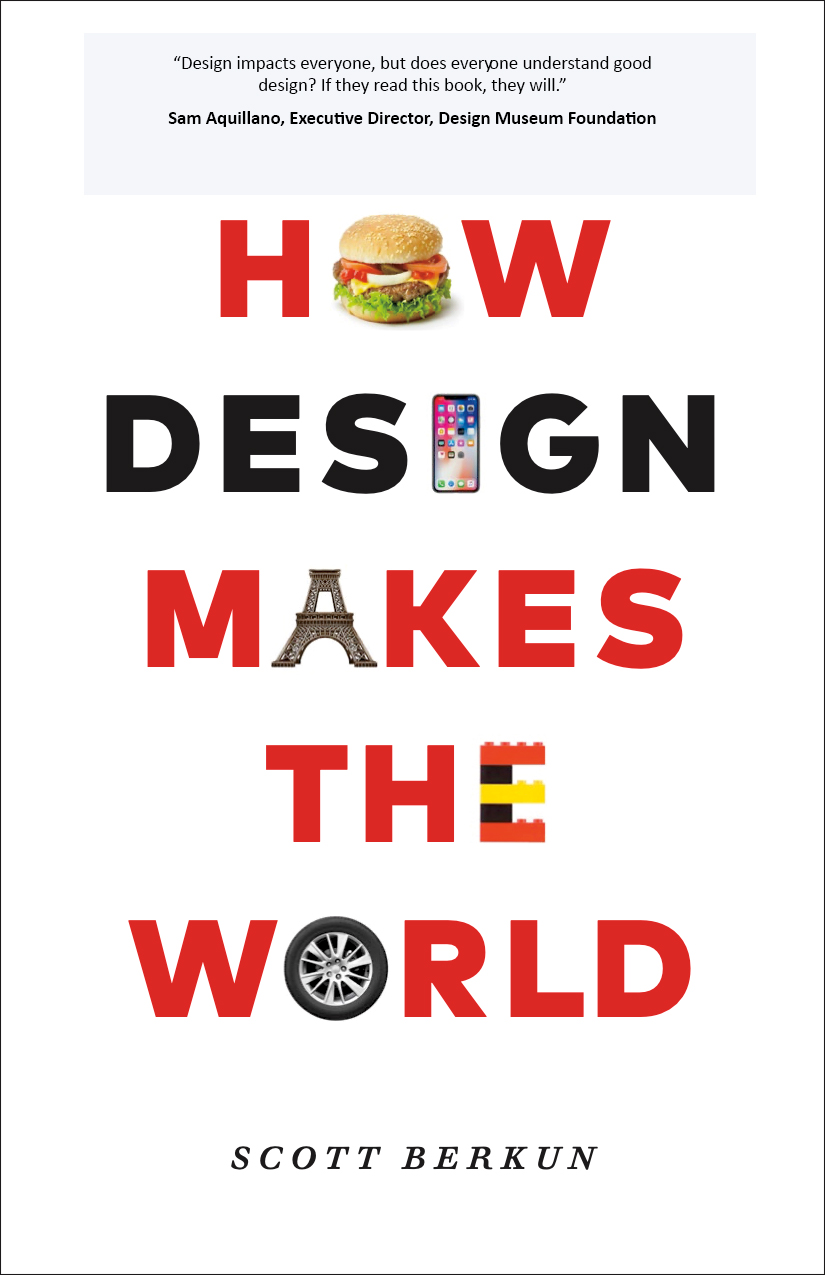
How Design Makes the World

Rate this book
Everything we use, from social media, to our homes, to our highways, was designed by someone. But how did they decide on what was good for the rest of us? What did they get right and where have they let us down? And what can we learn from the way these experts think that can help us in how we make decisions in our own lives?

In How Design Makes The World, bestselling author and designer Scott Berkun takes readers on a journey exploring how designers of all kinds, from software engineers, to urban planners, have succeeded and failed us. By examining daily experiences like going to work, shopping for food, or even just using social media on their phones, readers will learn to see the world in a new and powerful way. They'll ask better questions of the things they buy, use, and make, and discover how easy it is to use ideas from great designers to improve their everyday lives.

224 pages, Hardcover

Published May 5, 2020

130 people are currently reading
1376 people want to read

About the author

Scott Berkun

23 books318 followers
Scott Berkun is the author of four popular books, Making Things Happen, The Myths of Innovation, Confessions of a Public Speaker and Mindfire: Big Ideas for Curious Minds. His work as a writer and speaker have appeared in the The Washington Post, the New York Times, Wired, the Economist, Fast Company, Forbes, CNBC, MSNBC, CNN, National Public Radio and other media. His many popular essays and entertaining lectures can be found for free on his blog at http://www.scottberkun.com, and he tweets at https://twitter.com/berkun.

Ratings & Reviews

What do you think?
Rate this book

Friends & Following

Create a free account to discover what your friends think of this book!

Community Reviews

5 stars
163 (31%)
4 stars
229 (44%)
3 stars
100 (19%)
2 stars
16 (3%)
1 star
6 (1%)
Displaying 1 - 30 of 81 reviews
Profile Image for Roman.
28 reviews2 followers
November 30, 2021
Небольшая, но довольно познавательная книга о том, как получается хороший дизайн и какие могут быть причины и последствия у неудачных решений. Много любопытных фактов (почему у авиабилетов стремный дизайн, почему кнопка закрытия дверей в лифтах работает не сразу итд) добавляют интереса при прочтении. Книга явно нацелена на широкую аудиторию, заслуживает внимания.
Profile Image for Steve Portigal.
Author 3 books151 followers
May 16, 2020
An easy-to-read jaunt through design from multiple facets that continually delights by going deep

This book is a quick read, and an easy read, but it's never fluff. Scott Berkun is a really strong writer, with a clear voice and just the right amount of humor (too little can be too dry, too much can be self-indulgent and distracting). Reading the book brings a real pleasure in coming across many stories and examples that I know about (of course there are tons of stories, and examples that I hadn't heard about before), it's so well-researched and reported that these examples are fleshed out with details and new context.

Berkun integrates an enormous number of examples, many from the work of others, of course, but again this is where the mastery comes in, because unlike some books which are merely a compilation of other examples and writing, this truly is a synthesis, creating new knowledge and guidance from these sources, woven together elegantly.
Profile Image for Burcu.
19 reviews9 followers
May 27, 2021
This book brilliantly explains the broader context of design including multiple dimensions (business, politics, human, technical, environmental,... ), stakeholders (and how each one of them are decision makers), with emphasis on ethical concerns. Papanek's work is finally remembered while discussing good design. A must read for all design students, designers, non-designers - whomever who wants to truly understand what design actually entails.
Profile Image for Dmitry.
1,267 reviews98 followers
October 8, 2023
(The English review is placed beneath the Russian one)

Эта книга не для дизайнеров и даже не для обычных людей интересующихся дизайном. Это великолепная книга, которая способна объяснить, что такое дизайн и, самое главное, зачем он на самом деле нужен.

Я бы сказал, что это обучающая бизнес-литература. Плюс, я считаю её обязательной для всех тех, кто только начинает изучать, как работает бизнес в целом и маркетинг в частности. Хоть в книгах и по бизнесу и в книгах по маркетингу мы практически никогда не находим глав посвящённых дизайну, на самом деле дизайн товаров, и кейс Apple это отлично показывает, играют наиважнейшую роль в бизнесе. Другими словами дизайн товаров ведёт либо к рыночному успеху, либо к рыночному провалу. Хороший дизайн стоит за многими успешными товарами, взять хотя бы дизайн автомобилей или смартфонов. Ведь по существу люди выбирают «то, что нравится» и лишь потом, смотрят на его характеристики. Тут нужно отметить, что книга не рассказывает, какой дизайн необходим, чтобы товар стал бестселлером или хотя бы безубыточным. В книге не рассказывают, как создать товар с хорошим дизайном. В книге говорится, почему дизайн так важен и почему дизайнеры, т.е. хорошие дизайнеры, получают или должны получать очень хорошие деньги за свою работу. Это первое заблуждение – дизайн вторичен – которое развенчивает автор. Остальные заблуждения, не менее серьёзны, хотя и не настолько важные как основное понимание роли дизайна в бизнесе.

Вторым важным моментом, является понимание того, что дизайн товара создаётся для кого-то (клиента), а не для себя, т.е. не для предпринимателя или команды сотрудников предприятия занятых разработкой продукта. Дизайн создаётся под группу людей, которые будут пользоваться товаром и данным дизайном, а значит, нужно, как бы влезть в шкуру клиента, понять, как отнесётся целевая аудитория к товару с данным дизайном. Удобен ли товар с таким дизайном? Обеспечивает ли дизайн понимание того как пользоваться товаром? Насколько просто пользоваться товаром с таким дизайном? Как пишет автор книги, многие товары выпускались с идеей «я думаю, это великолепная вещь, пользоваться которой очень просто». Примерно это говорят себе (и другим сотрудникам компании) разработчик товара, не понимая, что они несколько лет работали над этим товаром, а значит: 1. Влюбились в своё детище и 2. Наизусть изучили его работу. Но клиенты-то, которые увидят в магазине этот товар впервые, ничего этого не знают и никаких эмоций к нему не испытывают! К сожалению, и это отмечали многие маркетологи в своих книгах ещё в XX веке, сотрудники корпораций забывают, что клиентам всё это неведомо. И главное, им может быть вообще не нужен этот продукт…даже по сниженной цене.

Ещё одним плюсом, почему я дал книге наивысшую оценку и почему я считаю, её настолько важной, что внёс в свой список лучших книг по маркетингу «Понимая маркетинг», помимо вышеназванных причин, является небольшой формат. Книга довольно небольшая и прочитать её можно за один-два дня. Это очень хорошо, ибо эта тема не сказать что очень сложная. Однако тут нужно отдать должное автору, он снабжает книгу прекрасными примерами того, почему не только дизайн важен для бизнеса, но и то, что нас окружает дизайн повсюду, даже в космосе мы можем найти его (космическая станция). Так что эта та книга, которая обязательна для тех, кто только приступает к изучению маркетинга или просто хочет узнать, как работает бизнес, а также как построить успешный бизнес. В принципе, даже архитекторам её можно посоветовать, ведь один из примеров из книги является как раз дизайн городов.

This book is not for designers or ordinary people interested in design. It is a great book that can explain what design is and, most importantly, why it is important (for business).

I would say it's educational business literature. Plus, I consider it a must for anyone who is just starting to learn how business in general and marketing in particular works. Although we almost never find chapters on design in both business and marketing books, product design, and the Apple case demonstrates this perfectly, plays a crucial role in business. In other words, product design leads to either market success or market failure. Good design is behind many successful products, such as the design of cars or smartphones. In essence, people choose "what they like" and only then look at its characteristics. It should be noted here that the book does not tell you what kind of design is needed to make a product a bestseller or at least break even. The book does not tell you how to create a product with a good design. The book explains why design is so important and why designers, i.e., good designers, are or should be paid very good money for their work. This is the first misconception - design is secondary - that the author debunks. The other misconceptions are just as serious, though not as important as the primary understanding of the role of design in business.

The second important point is to understand that the design of the product is created for someone (the client), not for yourself, i.e., not for the entrepreneur or the team of employees of the enterprise engaged in the development of the product. Design is created for a group of people who will use the product (and design), which means that it is necessary to get into the skin of the client, to understand how the target audience will relate to the product with this design. Is the product with this design convenient? Does the design provide an understanding of how to use the product? How easy is it to use the product with this design? As the author writes, many products have been produced with the idea that "I think this is a great thing that is very easy to use." This is roughly what the product developer says to themselves (and other employees of the company), not realizing that they have been working on this product for several years, which means: 1. They fell in love with their product and 2. Have learned its workings by heart. But the customers who will see this product for the first time in the shop do not know any of this and do not feel any emotions towards it! Unfortunately, and it was noted by many marketers in their books in the XX century, employees of corporations forget that customers do not know all this. And most importantly, they may not need the product at all...even at a reduced price.

Another plus why I gave the book the highest rating and why I think it is so important that I put it on my list of the best marketing books "Understanding Marketing", in addition to the above reasons, is the small format. The book is quite small and can be read in one or two days. This is a very good thing, for this topic is not to say that it is very complicated. However, you have to give credit to the author here, he supplies the book with great examples of why not only design is important for business, but that we are surrounded by design everywhere, even in space we can find it (space station). So this is the kind of book that is a must for those who are just starting to learn about marketing or just want to learn how business works, as well as how to build a successful business. In principle, it can even be recommended to architects because one of the examples in the book is just the design of cities.
Profile Image for La Lena.
194 reviews5 followers
September 20, 2023
Здавалось би, мене вже не здивуєш гарною книжкою про дизайн всього, але! Це хороша книжка, а що її робить іще дуже цінною так це 100500 пунктів в списку рекомендованої літератури по дизайну.

Шкода, звісно, що ця книжка не допоможе мені знайти роботу, але вона реально цікава і корисна
Profile Image for stuBlog.
3 reviews3 followers
Read
October 14, 2024
SON DOKUNUŞ

''Şimdi sen okulu bitirince ne olacaksın?'' sorusuyla siz de sık sık karşılaşıyor musunuz? İşte bu kitap, tam da bu soruya cevap niteliğinde! Tasarım ve tasarımcı nedir, ne değildir; zaten üretim varken tasarımcıya para vermeye ne lüzum var, bir bakalım!

Şu an düşündüğümüzde, dünya üzerinde tasarlanmamış herhangi bir ürün olduğunu iddia etmek pek de mümkün değildir. Doğal olarak bulunmayan ve insanlığın doğuşundan beri keşfedilip gelişerek günümüze gelen her şeyin bir tasarım çıktısı olduğunu söyleyebiliriz. Çünkü iyi ya da kötü, her ürün bir deneme, yanılma, analiz etme, inceleme ve sorgulama sürecinden geçer. Kitapta da söylendiği gibi: Tasarım kaçınılmazdır. İyi tasarımın karşıtı kötü tasarımdır, hiç tasarımsız olmak değildir. İyi ya da kötü, başarılı ya da başarısız her ürün bir tasarım süreci çıktısıdır. Ancak, tasarım��n kalitesi bu sürecin ve yönetiminin niteliğine bağlıdır. Peki, iyi tasarımın ne olabileceğine dair bir fikir edinebilir miyiz?

En nihayetinde, tasarım insan tarafından, insan için yapılır. İyi tasarım birçok faktör ve gereklilikle açıklanabilir; ancak bir noktada, tasarımın iyiliğinin, kullanıcıya ulaşan en iyi hâli olduğu söylenebilir.

Estetik, işlevsellik, üretim, hammadde, sürdürülebilirlik, kullanıcı deneyimi ve pazarlama gibi unsurları gözeterek kullanıcıya en iyi versiyonu sunmak, tasarımcının rollerinden biridir. Tasarımcının bu süreçteki yegâne amacı, kullanıcı deneyimini iyileştirmek ve ihtiyaçlarını en iyi şekilde karşılamaktır. Bütün bu unsurlar gözetilse de iyi tasarım ve tasarım süreci, tasarımın sınırları olmadığı takdirde pek mümkün değildir. Bu sınırları çizmek için sorulacak iki soru da kitapta yer almaktadır: Ne geliştirmeye çalışıyorsunuz? ve Kimin için geliştirmeye çalışıyorsunuz?

Amacı ya da hedef kitlesi olmayan bir tasarım süreci, pusulasız ve gözleri bağlı yolculuğa çıkmak gibidir; göz bağını çıkarmadan doğru hedefe ulaşmak ya da ulaşılan hedefin doğru olup olmadığını anlamak oldukça güçtür.

İyi bir tasarıma ulaşma serüveni, amaç ve hedef kitlesi belirlendiğinde bile bitmez. Bahsedilen iki sorunun cevabı aslında tasarımcılarda değil, kullanıcılardadır. Tasarımcının tahminleri veya varsayımları değil, pazarın ve kullanıcının gerçek deneyimleri bu sorulara yanıt verir. Bu yüzden tasarımcılar, her taşın altına bakar; var olan ürünleri ve hizmetleri didik didik eder. Kullanıcı neyi kullanmış, neyi sevmiş ve nerede zorlanmış, buna bakarlar. Kullanıcının pazarda mevcut ürün ve hizmetlerle olan etkileşimini izlemek ve analiz etmek, daha iyi deneyim ve senaryoların kurgulanmasına olanak tanır. Ayrıca, potansiyel hedef kitleyle birebir iletişim, tasarımcıya kullanıcının ihtiyaçlarını, arzularını ve hayal kırıklıklarını gösterir.

Bu soruları sormak ve cevaplara ulaşmak, ne yazık ki süreci sonlandırmaya yaklaştırmaz. Hatta tasarımcının asıl eylemi burada başlar diyebiliriz. Ellerinde, kullanıcıların ihtiyaçlarını, isteklerini ve hayal kırıklıklarını içeren yüzlerce cevap vardır ve bu cevaplarla yapılacak şey tasarımcıya kalmıştır. Yazarın da kitapta söylediği gibi: İyi problem çözmek, teşhis gerektirir. Sorulan tüm soruları ve verilen tüm cevapları anlamlandırmak, ilerletmek, derinleştirmek ve çözüm yoluna sokmak tasarım sürecinin bir parçasıdır. Bu noktada öğrendiğimiz temel iki soruya bir tanesi daha eklenir: Doğru insanlar için doğru şeyi geliştirmek isterken proje boyunca başarılı olduğunuzu nasıl anlarsınız?

Bu sorunun cevabı aslında diğer iki soruya dönmekten geçer. Cevaplar bir döngü şeklinde gelir. Bir soru bir cevabı, bir cevap başka bir soruyu doğurur ve süreç, döngü içinde tekrar tekrar sorular sorarak ve cevap bulmaya çalışarak ilerler. İyi tasarımdan ziyade, tasarım sürecinin kendisi aramaktır diyebiliriz. Tasarımcı her soruda yepyeni bir soruyu arar. Sorulardan doğan cevaplar ve cevaplardan doğan sorular, problemin katmanlanarak tanımlanmasına yardımcı olabilir. Tasarım sürecinde problemin tanımlanması en az problemi çözmek kadar önemlidir. Yazarın da metinde dediği gibi: Sorunun nasıl tanımlandığına dair nüans, ne tür çözümleri düşünebileceğinizi de belirler ve bu da sorunları tanımlama becerisinin, çözüm bulmak kadar önemli olduğu anlamına gelir. Buna problemi çerçevelemek denir.

Tasarımcı tüm bu zorlu süreçlerden geçtikten; sınırları çizdikten, her taşın altına baktıktan, tüm soruları sorduktan, soruların doğurduğu tüm diğer sorulara cevap bulduktan sonra bile tasarımın önünde hâlâ engeller olabilir. Tasarımların gerçekleşmesi ve benimsenmesi, sadece tasarımcının sorunu çözme becerisine bağlı değildir. Scott Berkun’un da dediği gibi: Sanılanın aksine, fikir sahibi insanların başarıları, tarihin tüm dönemlerinde yalnızca yaratıcılık ya da yeteneğe değil, ikna beceresine de bağlı oldu.

İyi bir fikri hayata geçirmek kadar, bu fikrin kabul görmesini sağlamak da bir o kadar zordur. "Gece gece icat çıkarmayın''lar, "aman tadımız kaçmasın"lar en bilindik ve en şöhretli sektörlerden biri olan otomotiv sektöründe bile yerini bulmuştur. Günümüze çok uzakmış gibi görünmesine rağmen, 1984’e kadar arabalarda emniyet kemeri zorunluluğu bile yoktu. Hatta o yıl getirilen bu zorunluluk da yalnızca sürücüler içindi. Günümüzde kullandığımız üç noktalı emniyet kemerinin gerekliliği su götürmez bir gerçekken, bundan 40 yıl önce bunun için savaş veren insanlar vardı. Bu yüzden, aslında zor olan iyi tasarım yapmaktan çok, iyi fikirlere sahip insanlara yatırım yapmaya istekli kişileri bulmaktır. Bu yüzden iyi bir tasarımcı sadece yaratıcı değil, aynı zamanda stratejik düşünebilmeli ve tasarımını doğru şekilde sunabilmelidir. Sonuç olarak, tasarım süreci yalnızca yaratıcılıkla sınırlı değildir; aynı zamanda ikna, uyum ve hedef kitlenin ihtiyaçlarını anlamayı gerektirir.

Tüm bu süreçler ve verilen mücadelelerden çıkarabileceğimiz sonuçlardan biri, tasarımın kullanıcıya ulaşacak ve çeşitli mühendislik süreçlerinden geçmiş bir ürüne son olarak estetik bir dokunuş yapmak olmadığıdır.

Tasarımın kendisi, görünüşü ve stili hiçbir zaman pastanın üstüne eklenen o son kiraz değildir. Tasarımcının işi de bitmiş bir mühendislik ürününü daha estetik ya da daha arzulanır hâle getirmek değildir. Bir pastadan örnek verecek olursak, birçok kişi sağlıksız, zehirli, bozulmuş ya da küflenmiş gibi görünen bir pastayı almaktan kaçınır. Keki, kreması ya da iç dolgusu ne kadar lezzetli ya da başarılı olursa olsun; şekli, duruşu, kaplaması, rengi ve hatta kokusu bile lezzetli olduğu mesajını veremeyen bir pasta, tercih edilmeyebilir. Bu özelliklerin hiçbiri, kötü bir pasta üzerine konulan bir kirazla daha arzu edilir hâle gelmez. Bu nedenle, Scott Berkun’un da dediği gibi: Bu bizlere, eğer önemseniyorsa, stilin hiçbir zaman sürecin son halkası olmaması gerektiğini söyler. Aynı zamanda tasarımın en iyi hâliyle işbirliği gerektirdiği anlamına gelir. Tasarımın stili; markanın tasarım çizgisi, var olan pazar ürünleri, savunduğu etik ilkeleri, hitap ettiği hedef kitlesi, üretim kapasitesi ve hammadde yeterlilikleri gibi birçok faktöre dayanabilir. Bir ürünün kimliği; fonksiyonunun, inovasyonunun, verdiği hizmetin, kullanıcıya yaşattığı deneyim ve hissiyatın ve aynı zamanda üreticinin ve satıcının mesajını taşır. İnsanlar duygusal varlıklardır. Kullanıcının arzularının, yalnızca ihtiyaçları göz önüne alınarak ve minimum stil ve estetik düzeyle tasarlanarak bir kenara atılmaması gerekir.

Bütün halkaları, yolları, adımları ve iniş çıkışlarıyla tasarım koskoca, bütün bir sistemdir. Her bir aşama, bir başkasını besleyen ve başka boyutlara kapı açan canlı bir etkileşimdir. Sorular cevap, cevaplar yeni sorular doğururken; adımlar adımları, yöntemler yeni yöntemleri ve bir süreç başka bir yenisini doğurur. Tasarımcılar tek bir yegâne cevap aramaz, çoğu zaman bulduklarıyla yetinmez ve hep bir adım ileri gitmeye çalışırlar. Tasarım, yalnızca bir sonuç değil, sürekli bir keşif ve iletişim sürecidir.

------------

CHERRY ON TOP

Do you also frequently encounter the question, "So, what will you become once you finish school?" Well, this book and essay is precisely an answer to that question! What is design and who is a designer; and with production already in place, why is there a need to pay a designer? Let's see!

In today’s world, it is hard to imagine any product that hasn’t been designed in some way. Everything that wasn’t naturally present and has been discovered and developed throughout human history can be considered a product of design. This is because every product, whether it is good or bad, goes through a process of trial, failure, analysis, review, and examination. Just like mentioned in the book: Design is inevitable. The alternative to good design is bad design, not no design at all. Good or bad, successful or unsuccessful, every product is an outcome of a design process. The quality of design depends simply on the qualification of the management of that process. So, can we form an idea of what might good design be?

Ultimately, design is creation by a human being for a human being. Good design can be explained by several factors and necessities; however, it can be argued that the goodness of design is defined by the version that best reaches the user.

One of the designer's roles is to offer the best version while considering aesthetics, functionality, production, sustainability, user experience, and marketing. The designer's sole goal in this process is to enhance the user experience and meet the user's needs. However, good design and the design process are impossible without design limitations. The two questions to ask to draw those lines are mentioned by Berkun: What are you trying to improve? and Who are you trying to improve for?

A design process without a goal or a target audience is like embarking on a blindfolded journey without a compass; it is extremely difficult to determine whether the aim has been achieved or if the goal reached is correct without removing the blindfold.

The adventure of achieving good design is not complete, even when the goal and the target audience are defined. The answers to the mentioned questions do not lie with the designers but with the users. The market and the user’s experience will provide the answers, not the designers’ estimations and assumptions. For this reason, designers look under every rock. They go over every existing product and services with a fine-tooth comb. They look into what have the user used, what did they like, what did they struggle with. Tracking and analysing the interaction between the user and existing products and services enables designers to build better experiences and scenarios. Besides, direct communication with the potential target group reveals the user’s needs, desires, and disappointments to the designer.

Unfortunately, asking these questions and arriving at the answers does not bring the designer any closer to the finished product. In fact, one can say that the real work of the designer begins at this point. The designer is now equipped with hundreds of answers about the user’s needs, desires and disappointments, and it is up to the designer what to do with them. Just like the author says: All good problem solving involves diagnosis. Interpreting, improving, deepening, and working towards solutions for all those questions and answers are part of the design process. At this point, one more question is added to the two fundamental questions we have learned. “How do you ensure you are successful, throughout the entire project, at improving the right thing for the right people?”

The answer to this question lies in going back to the other two questions. Answers leads us to a cycle. One question leads to an answer, which in turn leads to another question, and the process proceeds in a cycle where questions are repeatedly asked to find an answer. One could say that the design process itself is about searching, rather than just creating good design. The designer seeks a completely new question in every question. Answers that arise from questions and questions that arise from answers help define the problem in a deeper sense. In the design process, defining the problem is as important as solving it. Just like Berkun mentioned in the book: The nuance of how the problem is described transforms what kinds of solutions you’re likely to consider, which means there is a craft to defining problems that’s as important as designing solutions. This is called framing the problem.

There can still be obstacles even if the designer has gone through the difficult period, drawn the lines, looked under every rock, asked all the questions, and answered all the other questions that have arisen. Actualizing and accepting the design don’t depend on designer’s ability to solve a problem. As Scott Berkun also said: The success of people with ideas has always depended not on their creative talents alone but on their ability to persuade.

Implementing a good idea is as hard as making it accepted. Even one of the most familiar and famous sectors, the automotive sector, has faced comments like "Don’t come up with crazy ideas this late at night" or "Let’s keep things as they are." It may feel like a long time ago, but there was no obligation to use seatbelts in cars until 1984. In fact, that year, the requirement was enforced only for drivers. Today, using the three-point seatbelt is considered an indisputable necessity; however, just 40 years ago, people had to fight for this requirement. Therefore, what is actually harder than creating a good design is finding people willing to fund those with good ideas. For this reason, a good designer is not only creative but also should be able to think strategically and present their designs in the right way. Consequently, the design process is not limited only to the creativity; it also involves persuasion, compatibility, and understanding the target users’ needs.

The moral of the story is that the role of the designer is not just to add the final touches to a product that has been engineered and will reach the end user.

The design itself, along with its look and style, is never just a cherry on top. Also, the role of the designer is not making an engineered product more aesthetical or desirable. If an example of a cake is given, many people would avoid buying a cake that seems unhealthy, poisonous, spoiled, or moldy, even if the cake layers, frosting, or fillings are actually delicious. It would not be appealing if its shape, presentation, aroma, color, and even smell do not convey the message of a delicious cake. No amount of a shiny cherry on top will make up for these shortcomings, literally or figuratively. That’s why, as Scott Berkun said: … style can’t be a last thought, unless style is important. It also means that design, at its best, is a collaborative process.

The style of a design is influenced by many factors such as the brand itself, its existing products, ethical values, target group, capacity of production, and raw material qualification and so on. The identity of a product conveys a message about its function, innovation, service attributes, user experience, essence, as well as the reputation of its manufacturer and retailer. Humans are emotional creatures. User desires should not be overlooked by focusing solely on their needs and adopting a minimalist style and aesthetics in design.

With its ups and downs, paths and circles; design is a whole system. Every phase is an alive interaction that leads to another and opens up new doors to different dimensions. While questions lead to answers, answers lead to new questions, steps lead to further steps, methods lead to new methods, and one process leads to another. Designers don’t seek for only one sole answer, hardly be contented with what they found, and always try to proceed forwards. Design is not only one answer but a constant discovery and a communication process.


Profile Image for John Stepper.
624 reviews27 followers
November 26, 2021
Made me more curious about design and think about it in a more comprehensive way. I loved the broad range of everyday examples and the stories behind everyday objects: from toasters to USB adapters to alarms in medical devices. And a great bibliography at the end is a nice bonus.
Profile Image for Carrie.
244 reviews5 followers
January 21, 2021
Had to read this for grad school - it was okay. Definitely quick and learned lots of fun facts I didn’t know!
Profile Image for Thomas.
Author 1 book59 followers
January 28, 2022
I'm almost tempted to rate this three stars if for no other reason than that Berkun repeats that awful, debunked story about the tritone being "banned" in the middle-ages. For anyone wanting a thorough skewering of this ridiculous idea, go watch this excellent video from Adam Neely: https://youtu.be/3MhwGnq4N9o.

Other than that, this is a great overview of how design impacts the world we live in, both in good and, of course, bad ways.
Profile Image for Pranjali.
116 reviews
May 21, 2021
What a quick, funny and fascinating read :D
Profile Image for Simon Tan.
40 reviews
May 24, 2020
The book excels at being accessible, modern, and applicable.

First, the book is delightfully accessible yet surprisingly thorough. It is a light read that can easily be completed in a day or two, but is worth having on your bookshelf for years due to its broad coverage of design philosophies, principles, and methodologies. Berkun peppers the text with many relatable examples (from Norman doors to airport wayfinding to toasters) to make the concepts easy to grasp for literally anyone, not just existing students of design. While there’s no room to go exceedingly deep into any one concept, that also seems to be by design – this book best serves as a quick guide to all the facets of modern design thinking in one place.

The contemporary nature of the book is also quite refreshing. While one could read the classics like The Design of Everyday Things or Don’t Make Me Think (and Berkun does recommend these for additional context), the value of this book lies heavily in its synthesis of decades of evolution in the design space. Berkun walks the reader through developments in systems thinking, designing for inclusion, and even design ethics – calling out some of the recent unintended consequences from tech industry actions, which I appreciate. The result is that the book becomes a highly relevant read for anyone wanting to evaluate design work in the modern era, as well as an invaluable handbook to avoid pitfalls of design from the past.

The book is also resolutely and immediately applicable by designers and non-designers alike. (Though Berkun does fairly argue that everyone is a designer in some sense.) For those who call design their craft: Berkun challenges you to up your game by asking the right questions, considering your designs in the context of your organization, and expanding your view of who you design for and who you bring along your journey. For everyone else, you’re invited to demand more from your products and experiences. You’re given the tools and the language to critically evaluate everything around you and understand how they might have come to be. Hence, this book strives to make progress towards a better designed world for all.

Overall, the book was a wonderful refresher of concepts from my own background in software and human-computer interaction as well as an inspiring reminder to always seek continuous improvement (and understanding!) in the experiences of daily life. I highly recommend it for anyone working in any creative industry but also for anyone interested in deepening their understanding of design in general.
Profile Image for Sheena P.
37 reviews14 followers
September 1, 2022
It offers a lot of good and bad examples of design. It was an enjoyable read. There's also a rich list of related resources at the end of the book.
Profile Image for Ron Scheese.
Author 1 book5 followers
November 28, 2020
Well researched. Excellent read

am a big fan of Scott Berkun's writing and research when it comes to technology. His latest, "How Design Makes the World" is a fascinating examination of the approaches and impact of different design techniques and mindsets. He uses real-world examples and stories to bring comprehension to the design concepts and process which make the book enjoyable to the lay person.

Not just focused on technology, there are plenty of civil and process examples from airports to bathrooms to toasters to elevator buttons to make you go Hmmm.

I would highly recommend as an interesting look at life. Perhaps you can even apply the principles to reduce or eliminate those nagging routines and issues that bug you. If not, you might at least appreciate them through the eyes of the designer.

A 5 star read - check it out.
Profile Image for Moe El hussainy.
7 reviews1 follower
May 31, 2020
Brilliant book. Highly recommend it for both designers and non designers.
Profile Image for Nurdan.
26 reviews
January 27, 2021
This was a pleasant, quick read, but the title is really audacious for what it offers. Perhaps it’s a better match for readers who know absolutely nothing about design.
Profile Image for Michiel.
813 reviews
April 27, 2021
Nice, readable short book on design and its importance. Even a short discussion on ethics, which is a plus. Nothing really new.
Profile Image for Noah.
32 reviews18 followers
May 14, 2020
What is good design?

It’s a simple question that demands not-so-simple answers.

To answer it in the most basic way, you have to clarify at least two more basic questions:

* What is “good”?
* And what is “design”?

Only when you get down to the basics may you realize that, sometimes seemingly simple things can be very hard to explain—at least to do it successfully.

Fortunately, Scott Berkun, the author universally recognized for explaining complex things (innovation, project management, public speaking, and remote work) in stylishly concise and universally comprehensible ways, decided to take on the task of explaining good design to everyone.

And he has succeeded wonderfully.

Here’s why.

#1 CONCISE IN WORDS, RICH IN MEANING

It’s short, in a “so good you feel the cool breeze in summer” way.

While the twenty chapters of the book go a long way from explaining the concept of design to making a better world with design, each chapter is merely a few-minute read.

Now here’s something you might have learned from a writing course: it’s very hard to be concise in words AND rich in meaning.

Scott did that in this book, as well as in his previous books, particularly the equally wonderful “The Dance of the Possible: The Mostly Honest Completely Irreverent Guide to Creativity”.

A fast reader might finish the book in under 60 minutes, while there’s a lot to taste, chew on, and think further.

Reading this book, you learn something fast and frequent. And you keep thinking about the implications long after.

#2 EXPLAIN BY EXAMPLE, ARGUE WITH EVIDENCE

Out of twenty chapters, nineteen are topic based, each driven by stories.

From the fire of Notre-Dame cathedral in chapter 1, to “alarm fatigue” in medical facilities in chapter 19, the author makes every one of his key points by immersing you in real histories and backing up with concrete evidence.

It’s easy to understand and remember, and even easier to provoke your thoughts.

#3 BROAD PERSPECTIVES, SHARP FOCUS

From the universal idea of design to the societal impact of design solutions, the author covers a lot of topics in twenty short chapters.

Every chapter builds up your mental muscle towards a deeper understanding of design and its practitioners.

All that you need to see the world through the lens of design, and to act accordingly.

IS THIS A BOOK FOR YOU?

For Everyone:

According to the author himself, this book helps you understand design, while it doesn’t teach you how to be a designer.

It’s the first step to approach design, regardless of your bigger goal.

As a designer I earned my understanding of design over the years, by making embarrassing mistakes and pissing off executives.

I was on the verge of writing such a book myself.

Now I don’t have to. I simply point to /How Design Makes the World/ for anyone in need.

This is the book I absolutely wish I could have read long before my design career.

For Designers and Stakeholders:

This book is a very useful rhetorical weapon for designers, or anyone who wants to make a case for design.

Dozens of memorable stories and thought-provoking examples throughout the book feed you the leverage to propose, argue, defend, or convince around the topic of design.

WHAT’S NEXT?

Chapter 20 gives you a check list to apply what you’ve learned in life, work, and everything in between.

And more! The author has also created a website for all of us to take action, to continue our conversations and learnings.

At the end of day, taking action with what we’ve learned is perhaps the biggest gift this book delivers.

Five star and highly recommended!
Profile Image for Dave.
197 reviews
June 29, 2020
Simple, clear, and concise: it's a wide-ranging survey that covers the essence of what it means to design and why that's important, level-headed stances on current debates within the design professions, systems-level view of what goes wrong (and how) in failures of design, and a simple checklist for anyone to take a more "designerly" approach to their work.

While promoting design, the book is not pandering surface-level "design thinking." The author puts design thinking into clear perspective with the simple metaphor of surgery:
The term design thinking has risen in popularity as a label for the set of steps that describes how good designers work. It’s often taught to businesspeople and young students as a way to approach and solve different kinds of problems, which is good. The challenge is that learning a set of steps is easily confused by the uninitiated as being the hard part. We could invent the term surgeon thinking and offer a set of steps that brain surgeons follow, but, unlike with design thinking, few would believe that knowing the steps alone gives you the abilities of a surgeon. We should not make the same mistake about design. Understanding design thinking isn’t the same as being good at design doing, but it can help people on their way.


There is no hubris here, just a simple, helpful, and hopeful message. It will be my first-choice recommendation for any non-designers who might be wondering "how do I start think about design?" and a strong recommendation for those who haven't realized that design is something they can (and probably should) be aware of.

Disclosure: The author sent me a Kindle copy of this book to review.
6 reviews14 followers
August 5, 2021
Worum geht es?
Fast alles das uns im Alltag umgibt wurde von jemanden gestaltet. Sei dies der Stuhl auf dem ihr aktuell gerade sitzt oder das Gerät auf dem ihr den Text lest. Gut gestaltete Objekte sind einfach und intuitiv nutzbar. Sie helfen uns unsere Ziele zu erreichen, häufig sogar ohne gross darüber nachzudenken. Das Buch ist ein guter Überblick über aktuelle Fragen zur Rolle von “Design” in unserer Gesellschaft. Es stellt klar, dass es um das gestalten von Lösungen für Menschen geht und nicht nur um das Bauen von technischen Objekten. Es erklärt an konkreten Fällen, was gutes Design heissen kann. Die visuelle Darstellung ist dabei nur ein Aspekt. Vielmehr geht es darum etwas für jemanden zu verbessern. Dazu wird ein tiefes Verständnis der unterschiedlichen Denkweisen, Fähigkeiten und kulturellen Verständnissen benötigt. Gutes Design benötigt auch ein gutes Verständnis der Rahmenbedingungen, sei dies technische Limitierungen, darunterliegende Geschäftsmodelle oder interne organisatorische Entscheidungsprozesse. Gerade deshalb reicht es nicht, einfach die Profession der Designer in Verantwortung zu setzen, sondern gesamtheitlich ein Umfeld zu kreieren, welches gutes Design fördert. Gedanken dazu liefert das Buch.

Warum empfehlen wir es?
Scott geht tiefer als die übliche Aufforderung einen “Customer Centric” Mindset zu haben und dadurch nur ein “Design Theater” zu veranstalten. Scotts Beispiele zeigen immer wieder, wie wichtig es ist eine offene, fragende und sich selbst hinterfragende Haltung an den Tag zu legen. Er hält uns an nicht nur über schlecht gestaltete Lösungen zu jammern, sondern nachzugehen warum und unter welchen Bedingungen die Lösung entstanden ist. Nur so können wir lernen, verbessern und eine inklusivere Welt gestalten.
1 review1 follower
May 5, 2020
If you are willing to pursue a career in design, learn about design thinking, or just wonder why some things in our life work wonderfully well while some others are just a nuisance, this book is for you. In no time you will grasp the key concepts of design (what it is, why it's so hard to do well, what compromises need to be made in the design process, its impact now and in the future, conflict vs. flow, the importance of diversity-centric design). You will learn through examples, good and bad, and you will finish your day both wiser and entertained: Berkun's prose is catchy and it's difficult to put this little wonder down.

With the COVID19 pandemic, many aspects of our lives are being redesigned as I type this review. It's important that we all have the elements to assess them so that we can think about their implications and, if needed, raise our voices now. So this book comes exactly at the right time to help us shape this new world.
Profile Image for Eric.
154 reviews1 follower
January 1, 2021
This is an introduction to design in the very broadest sense. There are a bunch of interesting examples of good and bad design, as well as questions to ask when creating a new design. There are lots of good insights -- for example, "The nuance of how the problem is described transforms what kinds of solutions you’re likely to consider." I've found that to be so true. Also, bad designs aren't necessarily because the designer was incompetent -- there may be constraining factors that aren't immediately obvious.

Things that made me give less than a 5 star rating:

- The Kindle version's photographs were too small to fully appreciate
- I may not really be in the target audience since I've read several of the cited books
- My reading was a bit disjoint -- so not the book's fault, and maybe I'd like it better reading through more directly
Profile Image for Marcus Szymanski.
13 reviews
August 21, 2020
Design aus der Helikopterperspektive.

Berkun geht nicht darauf ein, wie Dinge konkret im Detail designt werden. Er schaut auf Designprozesse vieler verschiedener Gebiete und leitet allgemeine Prinzipien ab, die überall Gültigkeit besitzen.

Sehr spannend für jeden der regelmäßig damit konfrontiert ist etwas zu entwerfen, sei es privat oder beruflich. Mir hat es sehr wertvolle Lektionen im Bereich des Software-/UX-Design mitgegeben die ich zukünftig in den Prozess der Entwicklung einfließen lassen werden.

Berkuns jahrelange Erfahrung im Design äußert sich in den sehr auf den Punkt gebrachten Formulierungen und ausgezeichneten Beispielen die er anbringt. Ich kann das Buch nur wärmstens empfehlen. Es verändert den Blick auf die Dinge die uns jeden Tag umgeben.
Profile Image for Azjargal (Azaa) Gankhuyag.
74 reviews
May 7, 2023
Interesting little book about Design affecting daily life. It is short read than I expected and clear message, good amount of chapters. As I don’t have design background, it shares interesting ideas about how simple things affect from mobile phones to urban environments etc

Author maybe wanted to just give brief explanations about his perspective on Design principles, and shares good list of resources and references which I think nice to dive more in.

If you are from non-design backgrounds, maybe it is something interesting and new read, otherwise you might find it obvious.

Another thing I like about this book is leave you bunch of questions to ask from your surroundings in order to measure its design whether well intended or not.
1 review
April 30, 2020
I’ve read a number of Scott’s books and like this one because it made me think about the world around me and the designs I don’t pay much attention to - ever. Though I read the eBook version, I still took notes in a separate document rather than on PostIt’s I could use to find the most useful ideas. This is one I will come back to on a regular basis, especially as I am trying to find a way to restart a novel. Design might have a bigger influence on the main character and the world she inhabits. Maybe this is one of those titles I buy a copy of after it is published so I have those PostIt’s to remind me of the best ideas that inspired me.
Author 1 book3 followers
May 7, 2020
I'm a professional designer. I've done many of the things described in this book. But now, I can explain it to others in a way that's more concise and more understandable. I'll be reviewing this book, and the countless passages I highlighted within in, every few months.
Beyond teaching me to communicate better, "How Design Makes the World" has made me a better designer. The author goes beyond the basics to explain why having too few cooks during the design process is just as bad as having too many cooks, why product demos don't showcase how well designed a product is, and why the craft of defining problems is as important as designing solutions. This is the best design book since "Don't Make Me Think."
Profile Image for Ashleigh Axios.
3 reviews4 followers
March 7, 2020
I had the opportunity to read this book pre-release. It's an insightful and compelling primer that can help anyone understand the designed world and how it came to be. It even offers some prompts to help the daring readers use their new understanding to analyze and improve their own worlds. I highly recommend it for those considering studying or practicing design, those just entering the study/practice, and those outside the field who simply want to know more about design and the designed world.
Profile Image for Robin Kwong.
3 reviews10 followers
May 13, 2020
I thoroughly enjoyed Scott Berkun's latest book. As promised in the introduction, it's a fast, engaging and informative survey through the world of design that shows how the impact of design choices shows up in unexpected places. It's the best attempt I've seen so far of demystifying Design Thinking, and explaining to a layperson the craft, mindset and process of what designers do.

The book is also filled with fascinating examples and anecdotes, from the Jolly Roger pirate flag to the one about the toasters. Highly recommended!
17 reviews
May 17, 2020
I loved this book, it has great historic insides of why things are like they are. Why we should not always blame the designer for design faults. Good design is hard but not impossible. This book was carefully written, it has great stories about objects we use every day, explains why systems fail, and why some things are hard and almost impossible to change. In the end, gives some guidelines on how to improve the design by asking the right questions.
I found it very helpful and I think it's a book to always have on hand and to be re-read when it's needed.
Profile Image for Tóra.
165 reviews17 followers
October 5, 2020
Perfect for people just starting in the design industry to gain insight to the power of design, and helpful for existing designers to remind themselves the value design can offer, and the responsibility, designers have to design ethically.

I enjoyed this book! It didn't feel like I learned much new, but this might be due to recently graduating uni, and these topics were covered and discussed on a weekly basis. However, it is easy to forget when starting to create on a daily basis. A good reminder that design is solving problems (compared to art for art's sake).
Profile Image for Vaclav Kocian.
414 reviews7 followers
November 8, 2020
O designu všech věcí, které nás obklopují v každodenním životě.
Scott Berkun patří mezi spisovatele, od kterých čtu téměř všechny knihy, které vyjdou. Ať už zrovna píše o řízení projektů, práci na dálku, inovacích či mluvení na veřejnosti, knihy jsou skvělé. Takže na Scottovu nejnovější knihu jsem se opravdu těšil a po přečtení mohu potvrdit, že splnila očekávání!
Výborná kniha pro všechny, kteří se chtějí zabývat jednoduchou otázkou - co je to dobrý design? Ovšem odpověď není snadná...mnoho jich ale najdete v této knize.
#designmtw
Displaying 1 - 30 of 81 reviews

Can't find what you're looking for?

Get help and learn more about the design.