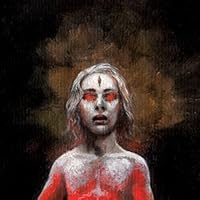
Hanns Heinz Ewers (3-11-1871–12-6-1943) fue un actor, poeta, filósofo y escritor alemán. Ewers escribió sobre muchos diferentes temas, aunque es mejor conocido por sus obras de horror, especialmente su trilogía de novelas sobre las aventuras de Frank Braun, que es un carácter basado en sí mismo. Esta es la primera traducción al español de la novela inicial de su trilogía: El aprendiz de brujo o Los cazadores de demonios. Esta obra toca temas controversiales, como racismo, manipulación psicológica del más débil y abuso de la mujer. En su momento (fue publicada en 1910) también fue criticada por su visión desencantada de la fe cristiana, que muestra sus limitaciones y aberraciones. El protagonista, Frank Braun, es un hombre educado, que añora la fe cristiana que perdió y que está escapando de algo en su pasado, que lo atormenta. En cierta forma es un superhombre con pies de barro; él busca superarse a sí mismo, sin ninguna consideración para con los demás, para recaer, una y otra vez, en el barro del que está formado. Frank Braun decide hacer un audaz experimento en un remoto pueblito del Tirol. Él considera a los aldeanos prácticamente como una especie inferior, aunque también envidia la fe que tienen, lo que no le impedirá manipularlos a su antojo, a través de su pastor para conseguir, en sus propias palabras, la unificación de todos los aldeanos en un "animal que muerda", una masa unificada por el fanatismo religioso, la embriaguez, el éxtasis y el sentimiento dionisíaco. Como su título bien lo indica, este plan no resulta bien, los aprendices de brujo nunca pueden controlar las fuerzas que ellos mismos desatan. El plácido pueblito montañés se convertirá en un caldero infernal donde, en el nombre de Dios, y para exorcizar al demonio, se cometerán actos terribles, como flagelación, infanticidio, y una crucifixión. El aprendiz de brujo... muestra las contradicciones entre lo apolíneo y lo dionisíaco, la aspiraciones y la realidad, y muestra el triste resultado de intentar superar los propios límites, sin tomar en consideraciones los sentimientos, tanto propios como ajenos.Aunque el siguiente título de la trilogía de Frank Braun, Mandrágora, es más conocido, esta obra es imprescindible para entender la evolución del carácter del protagonista de esta trilogía, además también nos ofrece un apasionante vistazo al desarrollo del fanatismo religioso y el éxtasis.
Hanns Heinz Ewers was a German actor, poet, philosopher, and writer of short stories and novels. While he wrote on a wide range of subjects, he is today known chiefly for his works of horror, particularly his trilogy of novels centered around the adventures of Frank Braun, a character modeled not too loosely on himself.
One of the most interesting and controversial writers on these lists has to be Hanns Ewers. A brilliant writer in the early 20th century, he turned to Nazism in the late 20's. But by the time Hitler and Co. had consolidated power in 1933, Ewers was proscribed and his writings were confiscated. He died in poverty during the next decade. As Karl Wagner said: "The question of who is the victim and the master was is a recurrent dilemma in Ewers' work, one which the Nazis finally solved for him." Ewers' novels are difficult to find in English editions. I've been lucky to either find them in older libraries or reprints. This one was richly illustrated by Mahlon Blaine. His decedent style fits the book perfectly. The Sorcerer's Apprentice is about Frank Braun, probably an alto ego for Ewers himself. He's a sophisticated German who travels the world, witnessing some of the most bizarre things imaginable. In Alraune, he's there for the birth of a woman without a soul, who causes damage to everyone around her. The Vampire finds him stuck in a hostile America during WW1. Here he decides to take a sabbatical to an isolated Italian mountain village to write. But the village is teeming with religious frenzy. Braun arrives to this little collection of scrabble farmers to encounter a man who has recently returned from the United States after winning a big sum in a lottery. It seems "The American" had immigrated to the USA from the village of Val di Scodra thirty years previously. While in the States, he joined a Pentecostal church and became quite active in it. Now he's back in town again with plenty of money to finance his missionary activities. The villagers have abandoned the local catholic church and are now attending The American's frequent revivals. The catholic bishop for the area has decided to ignore the situation, least he create a bunch of martyrs. Frank Braun finds this whole situation amusing. The only people who will have anything to do with him are the innkeeper, Raimondi, the local frontier guard, Aloys Drecker, Ramondi's daughter Teresa, and a hired-hand named Angelo. In the first week, Braun has his way with Teresa, whose father just adds her to the bill. Soon, Braun is using his elementary knowledge of psychology and hypnotism to bend both Teresa and The American to his will. He conveniences The American that he's the prophet Elijah reborn. And just for kicks he then preaches to the man about the power of self-flagellation. Naturally, The American soon has his entire flock whipping themselves into a mass of blood to chase the devil out. Very pleased with himself, Braun reflects on how he'll sell the mountain village as a holy spot for all the religious suckers in the world. It seems a good way to make money, so why shouldn't he get in on it? Besides, these rubes will do anything he says. Teresa he even adopts as a pet. But one day Braun gets lost traveling through the mountains and doesn't return to the village for several weeks. When he shows up at the inn, he discovers Teresa is being worshiped as a saint by the villagers. She's received the stigmata and they are sure the Kingdom of Heaven is upon them. When Braun tries to excert his power over Teresa, he finds it useless. Now Teresa in in charge and she's not about to let Braun leave the village. The book ends with a description of a blood ritual straight out of Leatherface Central. To go into it further would spoil the ending. Just let me say this is not a book to conclude on a full stomach. However, it is an excellent novel about the power of mass hysteria.
Una obra enorme, inclasificable, erudita y filosófica. Hay ecos de Sade, Kafka, Kubin... Solo puedo decir que Hanns Heinz Ewers es un verdadero maestro del género fantástico, y esta novela obligatoria para entender la literatura decadente de comienzos del 1900. Sadismo, masoquismo y degeneración, todo tamizado por una prosa bellísima, rica y exuberante, de una fineza extravagante. Un libro impublicable hoy, por lo siniestro de sus terribles escenas, vívidas y horrorosas como la vida misma.
Frank Braun, a devilish man with a highly ambiguous morality, learns of an Evangelical cult that has recently taken root in a small village and decides to visit the area. There, by a combination of force of will, cruelty, and charisma, he tries to make the whole village (including the cult) dance to his whims; yet, the thing backfires in a disturbing and fatal way, leaving him deeply rattled.
Frank Braun, a specimen of the modern man, a paragon of rationality, comes into violent contact and conflict with a pre-modern (occasionally pre-conscious) aspect of the world. The protagonist is introduced as a clear-cut villain, yet as the narration progresses we see the revelation of rich layers and aspects of his being.
The Sorcerer’s Apprentice, first of the Frank Braun trilogy, is a book about power and domination, decisions and their consequences; consciousness and the divine, the individual versus the communal; rationality and its chains, and its highly unstable foundations; a study in the character of religiosity and individuality, and the quest for bliss in a rationalized worldview. Faith is the core star around which the book revolves, perception and truth being its smaller siblings. Bordering on the philosophical without being weighted down by pretentious language and writing, the book is a literary masterpiece as well as a page-turner.
Spanish Review "El aprendiz de brujo" es la primera parte de la trilogía de Frank Braum, personaje creado por Hanns Heinz Ewers. En esta novela Frank Braum, una especie de mago hipnotizador llevará al pequeño pueblo de Val di Scodra al desastre. Creyéndose moralmente superior se aprovechará de las creencias religiosas de los habitantes del pueblo para llevarles a un paroxismo religioso convirtiéndoles en una especie de secta que repetirá los martirios de cristo literalmente, lo que incluye el flagelo e incluso la crucifixión. El personaje de Braum es odioso pero él mismo se horrorizará al ver lo que ha creado y como se le ha ido de las manos. El autor utiliza esta novela para criticar los extremismos religiosos y este autor fué perseguido en su época, supongo que esta obra tiene parte de culpa. El libro es grotesco como los relatos de Ewers, pero estos últimos me gustaron más por no contener tantas referencias bíblicas, ya que aquí se ahonda en materia religiosa a menudo. El final me ha dejado con ganas de ver que le sucede a Braun en "La mandrágora". Tanto "Mandrágora" como "Vampiro", la segunda y tercer parte estan publicadas por Valdemar en España y pueden leerse a parte de este libro, como obras autoconclusivas.
English review
"The Sorcerer's Apprentice" is the first part of the trilogy by Frank Braum, a character created by Hanns Heinz Ewers. In this novel, Frank Braum, a kind of hypnotist magician will take the small town of Val di Scodra to disaster. Believing himself morally superior, he will take advantage of the religious beliefs of the villagers to lead them to a religious paroxysm, turning them into a kind of sect that will repeat the martyrdoms of Christ literally, which includes the scourge and even the crucifixion. The character of Braum is hateful but he himself will be horrified to see what he has created and how it has gotten out of hand. The author uses this novel to criticize religious extremism and this author was persecuted in his time, I guess this work is partly to blame. The book is grotesque like the stories of Ewers, but I liked more the latter ones for not containing so many biblical references, since here one often delves into religious matters. The ending has left me wanting to see what happens to Braun in "Alraune".
This is a creepy tale, and now for the first time translated to Swedish. A German jack of all trades named Frank Braun visits a small Italian village in the hope for some peace and quiet so that he can get some work done. Soon he finds out that an evangelical cult has formed in the village, and he takes it upon himself to find some amusement in toying with the superstitious villagers.
Of course this backfires. Braun uses hypnosis and suggestion to influence the villagers in their quest for purity and fending of the devil, and the consequences are dire and horrible for just about everyone.
Braun is not a character that evokes liking or sympathies - he is however fascinating. If you prefer character driven plots and need to like your characters, put this book down immediately. You will not find that here.
However, the descriptions of the environment are wonderful, the village in itself with its strange villagers is compelling, the plot highly engaging and eerie. It really contains many of the philosophical ideas and themes during the late 1900th/early 2000th century - psychology, biology, religion. I can really see how modern filmmakers (and authors) in the horror genre have been influenced by Hanns Heinz Ewers work. A strange and spooky read I will take with me, and I will gladly read the rest of the trilogy.
Prätentiös-verquaster Scheißdreck, so unvorstellbar, dass ich meine Erstlektüre komplett verdrängt hatte. Frank Braun, eine Art weltenbummelnder Psycho-Faust und Proto-Nazi zieht sich in ein Bergdorf zurück, um dort ein Rassekunde-Buch voller Tiefsinnigkeiten zu Papier zu bringen. Bis vor kurzem war das Kaff ein sündiges Dorf, doch derzeit grassiert religiöse Hysterie, die den Deutschen in Experimentierstimmung versetzt. Dabei setzt der vermeintliche Übermensch Prozesse in Gang, deren Kontrolle ihm mehr und mehr entgleiten, daher der Titel Zauberlehrling oder die Teufelsjäger.
Mentalitätsgeschichtlich sicherlich eine Trouvaille oder, von mir aus, auch ein Juwel. Als Lesevergnügen so lecker wie umgekippter Wein. Da Braun in Alraune ebenfalls die männliche Hauptrolle spielt, konnte ich mir dieses Wiederlesen nicht ersparen.
The story is bizarre and engaging, however the main character, Frank Braun, is a racist bully rapist, making it impossible to find him sympathetic in any way. And the writing is somewhat overwrought at times, as Ewers doubts his abilities to make you believe in his elitist, upper-crust German ubermensche.
Publicada en 1909, “El aprendiz de brujo o Los cazadores de demonios” de Hanns Heinz da inicio a la Trilogía de Frank Braun. Aunque los títulos son independientes es recomendable seguir el orden para conocer y comprender la evolución del personaje.
Una historia muy interesante, controvertida e incómoda de leer en muchos momentos, por su crudeza. A lo largo de la novela plantea temas como la manipulación psicológica, el desencanto de la fe cristiana con sus limitaciones y aberraciones debido a la locura del fanatismo religioso así como sus teorías raciales.
Un autor que según voy descubriendo su obra más me fascina.
3.5★ Hanns Heinz Ewers construye una novela oscura y extravagante que combina ocultismo, violencia y elementos sobrenaturales en una historia cargada de excesos. La ambientación tiene un tinte decadente muy propio de la literatura fantástica de comienzos del siglo XX, y Ewers consigue crear escenas inquietantes gracias a su fascinación por lo macabro y lo prohibido.
Sin embargo, la novela también resulta bastante irregular. La narración se dispersa en algunos momentos y el gusto del autor por la provocación puede hacer que ciertas situaciones parezcan más efectistas que relevantes para la historia. A pesar de ello, hay suficiente imaginación y atmósfera para hacer de la obra una lectura interesante, especialmente para quienes disfrutan del terror clásico y macabro.
Frank Braun is a very interesting character, unfortunately his being a rapist and bully makes it hard for me to sympathize with him. It was still an entertaining read
The author: The author Ewers is controversial due to his connection with nazi Germany, and you sense the ”Übermensch” mentality proliferating throughout the story. The main character, Frank Braun, is one himself and feels like an author insert. He has seen a lot, is wise and learned, and compared to the animal-like peasants in the small mountain village he is like a God. And that's how he acts. Plays with them as it's his own little ant house; and also does this despite knowing how it hurts them. And the main theme is religiosity, but also the lack of it, and what that might mean to a man. And how those strengths applies. Frank states at one point that he is immune to belief, and he wishes for nothing more than to be freed from that… You feel that Ewers have pondered these feelings a lot. I wish I've read Nietzsche's Thus Spoke Zarathustra beforehand, but you still get the sense that Frank struggles with grasping on to the philosophy of nihilism, as well as grasping the weak straw of faith (in that philosophy), which seems to be what has saved him. ”Grown strong.” Is it enough? And how to test it?
I get the sense that the story actually tries to test those two strengths against each other; the strength of faith, and that which might be called existentialism. And power in this story is gained through your mental fortitude.
The text: The text is classically told from the POV of Frank, but switches briefly sometimes to give alternative views. Alot of it is inner monologues, or external ones, and religious texts. To me it was surprisingly modern and fearlessly written. The author doesn't fear exploring his characters minds and his affinities for (or maybe more exercises in) malevolent acts.
The characters: The protagonist Frank Braun is an Übermensch. Stronger, smarter, more charming, than everyone else. And he sings better, plays better music, and drinks better too! And he uses this to play with the other characters, which are rather bland and indistinct. Theresa is a female he gets involved with (in several ways) and she becomes central to the plot; despite her understanding more than she lets on… However, the first priest we meet is also a strong character and also (we think at least) warns Frank (and us) what will be the result of his little visit to Val di Scodra…
The description: He is good at describing locations and landscapes, but characters comes off as less distinct to me; in the same way, possibly, that Frank seems to be uninterested in the inhabitants of the village he visits… Not sure if that is a chosen portrayal by Ewers, or simply a mixture of Braun and Ewers… The initial landscape description of the village in the vale is great though!
The scenes: The scenes in this book stands out! Some of them are among the strongest I've read, and really visceral. The scenes makes this book, and I think they are very precisely placed. Few have shown me the wonders of religious beliefs as Ewers. Some that stands out is the scene in which Theresa and Frank gets intimately intertwined (and its horridness), the introduction to the prophet Elias, the first session by holy Elias and his sect and of its miraculous curing of a lowly woman, and of course the crescendo on a certain mountain peak… I've probably missed some, but the fanatism in many of his scenes are radiant!
My experience: I enjoyed the book, especially as it built towards the end, but it felt slightly too long for me. The last page(s) was less effectful than what I think Ewers intended. I doubt I'd read it again, but possibly for inspiration on religious fervor! Id rate it a 6/10.
The Sorcerer's Apprentice begins with German doctor Frank Braun arriving in Italy and chatting up a Catholic priest he'd meet on the trip over. The priest tells him about a mountain village filled with easily-manipulated backwater idiots that often throw themselves into one cult-like religious fervor or another. The church no longer intercedes in these harmless events, as they tend to blow over on their own. Braun is very interested in this village, and not just because he's looking for a quiet place to write for a few months.
Frank Braun is an abusive bastard and is immediately hard to sympathize with, but he is also quirky enough to be strangely compelling. His morality is ambiguous and seems to change from one moment to the next. He views the people around him as toys for his amusement, free to be manipulated as he pleases. He feels that he towers above the villagers, a learned intellectual amongst fools, but he also envies their ignorance and the happiness it affords them—happiness he can't feel. He is equal parts arrogance and self-loathing; he is the modern civilized man and the villagers are the primitive roots of humanity.
The book starts out very tame, even boring. It doesn't stay that way, it's a quiet ride on a country road on a soft summer day. Mild storm clouds are on the horizon and before you know it that road leads you right into hell. I already knew how nasty Ewers can get but I haven't had the build up in those short stories that I got here. For a 100+ year old book this pulls few punches and, once it got crazy, I was squirming and yelling while I read. Ewers is one of the few writers that I think can still contend with modern horror and its penchant for cheap and amply-distributed nastiness. The conclusion is as disturbing as it is explosive, and piles on the horrors in layers. If the horror genre is a great, many-branched tree than Ewers is one of its forgotten, twisted roots. And he's worth the deep digging for.
Este libro es el que más he disfrutado este año. El hechizo de la novela es tan grande que ha habido capítulos en los que leía con el ceño fruncido y los dientes prietos, pero pasando hoja tras hoja sin poder parar.
Al parecer, la novela estuvo muchos años sin ser reeditada, y no me extrañaría que fuese por censura. El protagonista es un ser despreciable que hace el mal por el mal, o tal vez por su fascinación de estudiar la condición humana. Pero es que llega un punto en que la situación se le va tanto de las manos que casi hasta da pena.
Con un estilo crudo y muy directo, al autor le basta con la potencia de las imágenes no para provocar miedo, sino para descolocarnos y enseñarnos cuán peligrosas son las ideas más radicales y cómo de bajo puede caer el ser humano cuando las pone en práctica.
Recomiendo la novela encarecidamente a los lectores con estómagos fuertes y que no se ofendan fácilmente.
La historia trata de un pueblo perdido en los montes en Italia, donde un personaje, estudiante de algo, hipnotizador, decide experimentar sobre la secta religiosa predominante en el pueblo, las consecuencias bastante trágicas. El relato se hace interesante pero el protagonista a menudo odioso por su visión, no sé si tanto racista (probablemente si) como elitista. En mi opinión deja algunos cabos sueltos en la trama.
Brutal, oscura y tremenda, no se me ocurren mejores adjetivos. El inicio de la trilogía de Frank Braun. Para mí, la mejor historia de Hanns Heinz Ewers. Merece su lugar en la colección Gótica de Valdemar.
I first read THE SORCERER’S APPRENTICE way back in the 70s and I've been itching to reread it for a while now. October seems like a perfect time. THE SORCERER's APPRENTICE is the first book in a trilogy by German writer Hanns Heinz Ewers, obscure in the US but better known, at least in Germany, for the second book in the trilogy, ALRAUNE, a 1911 novel filmed at least four times in Europe.
THE SORCERER’S APPRENTICE is no Mickey Mouse story. Ewers’ trilogy stars Frank Braun, a Faustian character whose misadventures generally lead to his own undoing. The plot of this book takes young Frank Braun to a remote Swiss village, where a local fellow, returned wealthy from America and full of fundamentalist religious spirit, has begun introducing the peasants to “charismatic” evangelism. As an experiment, Braun manipulates the preacher into believing he can cure illness and seduces, corrupts, and hypnotizes a girl into becoming a “saint” at the center of the worst sort of religious madness. The situation quickly gets away from Braun and all sorts of really awful things happen, including stigmata, mass flagellation, crucifixions, murders . . . all the things that make religion special. The Apprentice’s Nietzschean illusions of himself are shattered and he barely escapes with his life. This bare description doesn’t do justice to the decadence and depravity of the text.
Someone really should film this book. Its message is timeless if disquieting. In some alternate timeline there’s probably a 1924 Expressionist version and one from the 1970s New German Cinema crowd. Unfortunately, Ewers himself became a sort of Sorcerer’s Apprentice by snuggling up to the Nazis in the 20s. Predictably his new friends turned on him like rabid brooms once they actually read his work and he died mostly unmourned in the 40s. Thanks to Side Real and a couple of other small presses, his work is slowly creeping back into print and is well worth seeking out by anyone who likes disturbing, decadent prose.