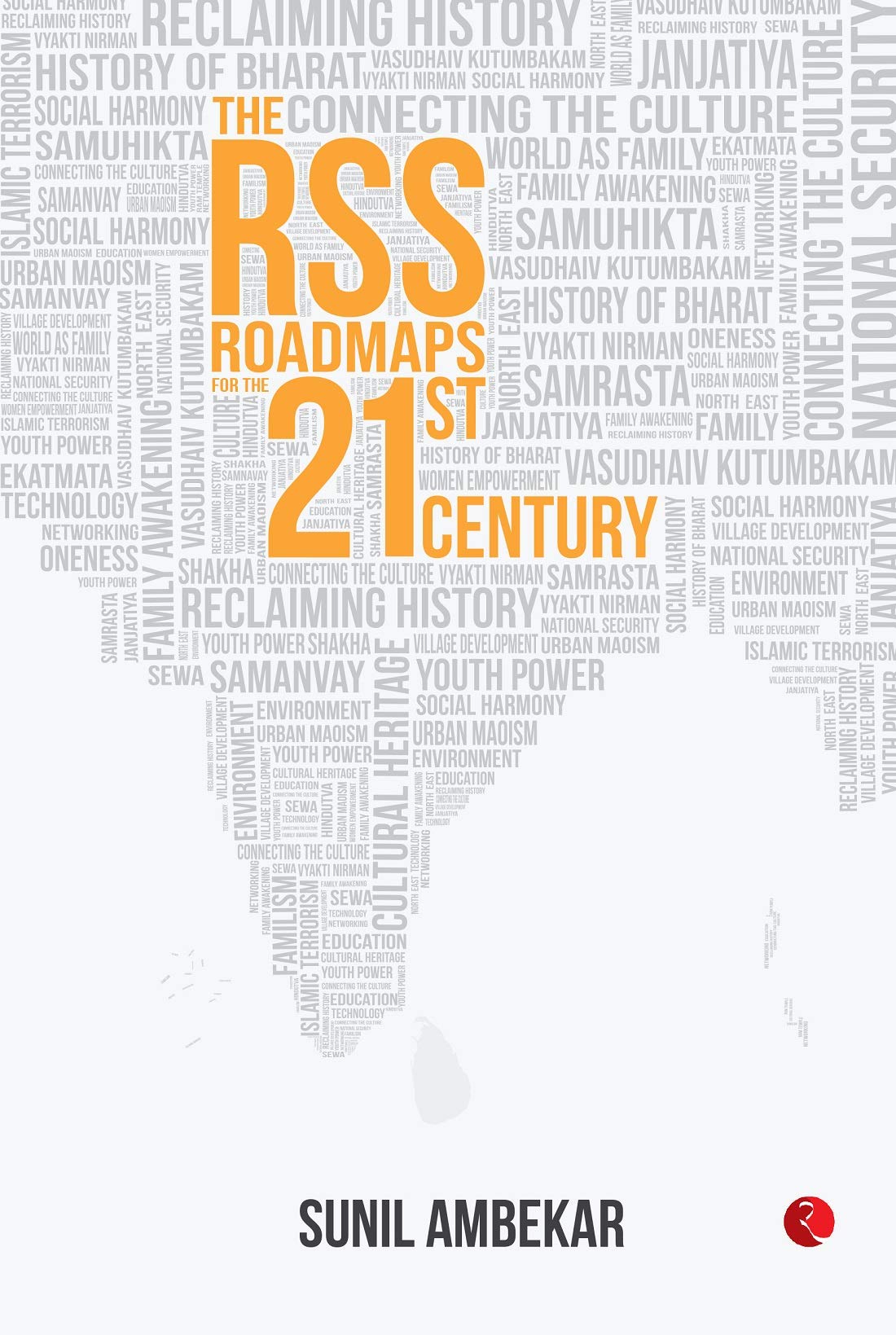
Book Review: The RSS Roadmaps for the 21st Century
Author: Sunil Ambekar
Publishers:
Points:8/10
“Namastey sada vatsale matribhumey, twaya Hindubhumey sukham vardhitoham”
This book discusses about the roadmaps of Rastriya Swayamsevak Sangh. In 2007, the golden anniversary of India’s freedom movement, the author thought what the roadmaps for India’s future would be and what would be the role of the RSS to lead it towards a glorious future. The idea of this book stemmed from this thought.
As said before, this book discusses the roadmaps of RSS, it means what RSS would do for India’s glorious future and how much it did. So, starting from the origin, it describes the life of the founder of Sangh, patriot freedom fighter Keshav Baliram Hedgewar. These led to why RSS was founded and what were the roadmaps of RSS from the start of journey. This book takes us to the initial journey of Sangh for betterment of society and also, India’s freedom struggle. Yes, this book debunks the claims of RSS being inactive in India’s freedom struggle myth with sufficient proves. This book debunked many allegations against the RSS one by one.
The first target of the Sangh presented in this book is reclaiming India’s history and destroying the Leftist and Macaulayist colonial history, which have snatched away India’s glorious culture and civilization from its history. This book also debunks the colonialist claims of Aryan invasion theory. Author have described what the RSS did to fulfill this target and what it would do.
The left wing always says that RSS is a communal body. But author debunked this claim and proved that RSS believes India’s “Ekatmata” and “samrasta”, which are the soul of India’s cultural secularism. But RSS will not abandon Hindu rights and the “Hinduness” of India in sake of secularism and it would not tolerate appeasement politics in the name of secularism.
The anti-RSS gang always present RSS as casteist but author have debunked this myth also and presented it’s fight against casteism. The book takes us to the root of Jati-Varna and caste in India and presents its colonial origin. Sangh’s cordial relationship with Dr. B.R. Ambedkar is also explained here. This book has a claim that Dr. Ambedkar choose Buddhism because he found Sangh’s fight against casteism long-time consuming.
This book also explains features and functions of the bodies of the Sangh Parivar and it’s fight for saving the environment, uplifting women, social justice and betterment of Indian people. The book again and again explains that the Sangh is not a political organization, but a social-cultural organization and it’s not bound to any political party. But, Sangh is not apolitical as it permits it’s swayamsevaks to participate in politics without the banner of RSS. At the last, the author called many youths who want to do something for their beloved nation to join or help the Sangh Parivar.
As the author is a Swayamsevak himself, many can accuse this book for hegemony. But there are many fiction books which spread misconceptions to vilify the RSS. So, a non-fiction with proves is better than these non-sense fictions with the other side theory. So, I am requesting everyone, in spite of their opinion about RSS to give a try to this book before making any opinion about the Sangh.