The definitive, character-driven history of CIA covert operations and U.S. government-sponsored assassinations, from the author of the Pulitzer Prize finalist The Pentagon's Brain Since 1947, domestic and foreign assassinations have been executed under the CIA-led covert action operations team. Before that time, responsibility for taking out America's enemies abroad was even more shrouded in mystery. Despite Hollywood notions of last-minute rogue-operations and external secret hires, covert action is actually a cog in a colossal foreign policy machine, moving through, among others, the Bureau of Intelligence and Research, the House and Senate Select Committees. At the end of the day, it is the President, not the CIA, who is singularly in charge.
When diplomacy fails and overt military action is not feasible, the President often calls on the Special Activities Division, the most secretive and lowest-profile branch of the CIA. It is this paramilitary team that undertakes dramatic and little-known assignments: hostage rescues, sabotage, and, of course, assassinations.
For the first time, Pulitzer Prize finalist and New York Times bestselling author Annie Jacobsen takes us deep inside this top-secret history. With unparalleled access to former operatives, ambassadors, and even past directors of the Secret Service and CIA operations, Jacobsen reveals the inner workings of these teams, and just how far a U.S. president may go, covertly but lawfully, to pursue the nation's interests.
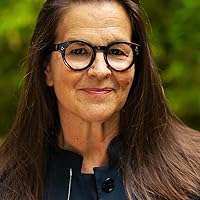
ANNIE JACOBSEN is a Pulitzer Prize finalist and New York Times bestselling author. Her books include: AREA 51; OPERATION PAPERCLIP; THE PENTAGON’S BRAIN; PHENOMENA; SURPRISE, KILL VANISH; and FIRST PLATOON.
Her last book, NUCLEAR WAR: A SCENARIO, is an international bestseller. Her newest book, BIOLOGICAL WAR: A SCENARIO, hits bookstores everywhere on July 28.
Jacobsen’s books have been named Best of the Year and Most Anticipated by outlets including The Washington Post, USA Today, The Boston Globe, Vanity Fair, Apple, and Amazon. She has appeared on countless TV programs and media platforms—from PBS Newshour to Joe Rogan—discussing war, weapons, government secrecy, and national security.
She also writes and produces TV, including Tom Clancy’s JACK RYAN.
Jacobsen graduated from Princeton University where she was Captain of the Women’s Ice Hockey Team. She lives in Los Angeles with her husband Kevin and their two sons.
When diplomacy fails and war is not or is no longer - an option, the president can exercise the third option, the CIA's hidden hand.
If you're interested in CIA and its Ground Branch operations, I recommend this book. It is packed with information and operations of real life Mitch Rapps and Court Gentrys.
A fascinating, compelling look into how American politics has evolved in its effectiveness in fighting the war on terror.
Author Annie Jacobsen's novel, 'Surprise, Kill, Vanish,' covers how America fought clandestine, behind-the-lines, covert, and tackling the delicate issue of assassination, all under the order of 'plausible deniability' in order to prevent World War III.
From the 'Jedburgh' teams dropped into Occupied France during WWII when the Office of Strategic Services was born, to today's CIA Special Activities Division taking on America's most lethal enemies, this book is an eye-opener.
American involvement in WWII required a special breed of men and women to fight Hitler's Europe, and volunteers signed up for training which took them to the heart of the enemy. Our men and women needed to fight Nazis in a way never fully understood.... Until now. Jacobsen tackles the delicate issue our leaders faced when fighting an enemy. Even discussing the assassination of a tyrant like Adolf Hitler meant opening a 'Pandora's Box' that left our leaders second-guessing themselves. Killing the head's of state meant our own leaders were subject to equal threats from a determined foe. Legalities of such action also comes to mind. When politics fail to bring peace, and a declaration of war is not an option....Plausible Deniability is the only course of action our American President has with which to keep our enemies at bay.
In forefront of Jacobsen's powerful books is Billy Waugh, a veteran soldier and CIA operative, this man has done and seen it all. From the battlefields of Korea and Vietnam, and to the Middle East, Africa, and God only knows where else, this man has done so much for his country it's practically a crying shame he is not a household name.
Jacobsen's book educates the reader on how war has evolved from presidents declaring war, to plausible deniability (meaning, we can neither verify nor deny any and such action).
I'm a veteran myself, having served in the 82nd Airborne Division '84'-'87, and as a kid I admired some of the persons mentioned in Jacobsen's novel. I dreamed of being and doing what they did. Alas, that was not to be. But I do not have regrets. I've lived a good life. And I, and many of us, owe thanks to people like Billy Waugh and many others mentioned in Jacobsen's book for that. This book reads like an action novel, but it is in fact historically true. The author's research educates us as to how and why we are in a state of war in unprecedented terms. As I write this review, I have family celebrating a niece's 6th birthday, all the while there are men and women serving our nation abroad, fighting in a war our government neither acknowledges nor denies, so that I can be here safely with my family and friends.
Parts most precious in this novel to me were her details of Vietnam, Laos, and the Ho Chi Minh Trail. My father served in the United States Air Force for 23 years and was assigned to Communications Intelligence. Part of his tour was in Laos, at a time when our president denied we had troops there. They wore civilian clothes and set up communications in the jungles for SOG. He never got any awards or recognition for this part of his service because we weren't supposed to be there. Had he been caught he could have been shot as a spy! I think my father would like reading this book, and so will you. It is insightful, historical, and offers readers the ability to see for themselves how the war on terror has made us fight in a way we never imagined.
The CIA has a really bad habit of recruiting double agents. It's shocking how many operations went awry because of spies we mistakenly thought were working for us.
This is the fifth book I've read by Annie Jacobsen. The common theme among all of them is they are based on recently declassified information, shedding new light on stories I'm already familiar with from various history classes. This new release covers the topic of assassination and paramilitary operations from WWII to present. The narrative primarily focuses on Billy Waugh who was involved in roughly 60 years worth of operations. The Waugh narrative makes most of the book read like an action oriented spy novel. We get to see all the sketchy stuff the U.S. was involved with in Germany, Korea, Vietnam, Central America, Cuba, Vietnam, Egypt, the Sudan, Afghanistan, and Iraq. The stories cover everything from the Kennedy assassination (weeks after Kennedy approved assassination as a political tool) to the assassinations of Che Guevara, and countless terrorists in the Middle East and Afghanistan.
There's also a focus on the morality issues. What methods of murder are more acceptable than others? Is it wrong to assassinate someone at close range with a knife, but okay to take out the same person along with 50 civilian casualties with a 2,000 lbs bomb? The morality issues border on the surreal.
I've read plenty of books on these topics before but this was mostly new material for me because of the recently declassified information. I think of it as "new" history. I recommend skipping your next spy novel and grabbing this instead. It's so much crazier than fiction. You won't be bored.
I received a free ARC from Goodreads. This is my second ARC in a row for Jacobsen's books and I'm hoping the publisher sends me the next one, whatever it is, whenever it is released.
'Surprise, Kill, Vanish' is very very fun book to read. It is not a high brow history book but rather a popular history of the CIA paramilitary and assassination operations. These type of operations were seen as a third option available to US Presidents (the other two being diplomacy and war).
The title of the book is a bit misleading as this is less of a complete history but rather more of a quasi-biographical account of several CIA operators that the author interviewed and researched. It is clear that the author did a huge amount of research and travel in order to gather all of the information presented in the book.
The book is generally structured around the adventures and operations of famous special force troopers William (Billy) D Vaugh and Lewis C. Merletti. There are some chapters, especially the early chapters which do not focus on these two operatives and there are some chapters that deal with the investigative committees and how the US government policies on assassinations changed throughout time.
Billy Vaugh is one of the longest serving CIA operatives in history, he fought in combat operations and special forces operations in Korea and Vietnam and was part of the famous MACV-SOG. After this he was involved in operations in Libya training Gaddafi's troops but also spying on the Libyans, in the Marshall Islands defending against Soviet Spetsnatz small boat teams trying to steal US secrets, in Sudan tracking down Carlos the Jackal and Osama bin Laden and then in the Afghanistan war and Iraq war. He was also involved with experimental parachute jumps with small tactical nuclear warheads. Allegedly, his last CIA mission was in Libya after the fall of Gaddafi at the age of 82.
Lou Merletti served in the special forces in Vietnam and then went on to serve as part of the US Secret Service protecting Presidents Gerald Ford, Jimmy Carter, Ronald Reagan, George H. W. Bush, and Bill Clinton. He was also in charge of supervising security arrangements for Presidential visits to dangerous high security environments including Israel, Syria, Kuwait, and Saudi Arabia during Operation Desert Shield.
The main theaters of operations covered in the book include:
- World War II - the Korean War - Cuba (attempted assassinations of Fidel Castro and Bay of Pigs) - the Vietnam War (including the South Vietnamese coup) - the Dominican Republic (the assassinations of Rafael Trujillo) - Guatemala (coup to replace the left-wing government of Arbenz with Carlos Armas) - Iran (coup to replace Prime Minister Mohammad Mosaddegh in favor of the monarchical rule of the Shah, Mohammad Reza Pahlavi) - Libya (covert training of Gaddafi's troops and spying of the Libyan forces) - Sudan (tracking of Carlos the Jackal and Osama bin Laden) - the Iraq War - the Afghanistan War
The epilogue of the book is quite interesting as the author travelled to Billy Waugh to Cuba and Vietnam to meet his former foes, including the son of the famous Vietnamese general Giap.
Due to the nature of the book it feels that some areas or conflict zones received a lot more attention than others. The conflict zones that receives the highest amount of attention are the wars in Iraq and Afghanistan. However for example, there is very little mention of the heavy CIA involvement in Nicaragua where the CIA trained the Contra militias. There are lots and lots of countries such as Burma, Indonesia and so on which were not mentioned. For a book that advertises itself as the 'definitive' history of CIA covert operations it definitely misses a lot.
All in all 'Surprise, Kill, Vanish' is a fun book for anyone interested in the history of US special operations, although as mentioned it does feel incomplete.
This provocative book could have been entitled "Hubris, or, How Government Does Things Forbidden to Everyone Else." I've been reading a lot of books lately about cyber security and warfare as well as a couple related to diplomacy and the discussions that go on behind the scenes in making difficult decisions. Jacobsen adds another thought-provoking element to the discussion. Just what should be the role of secrecy and unaccountability in actions taken by government in a democracy where citizens are expected to play a role in decisions of consequence. Do a few people have the right to make decisions of extraordinary consequence that involve killing without better oversight. All of our previous presidents have had to make decisions that could result in the death(s) of people whose innocence or guilt is determined by just a few others.
In the fifties and early sixties, the United States had an inadvertent shadow government consisting of the Dulles Brothers, Allen and John Foster, Director of the CIA and Secretary of State respectively. (See The Brothers by Stephen Kinzer for more detail.) Couple their antagonism and paranoia of perceived Soviet aggression, particularly in Central America with power, and you have a recipe for covert U.S. intervention to prevent the rise of nationalist states or any hint of revolutionary behavior that might disrupt the status quo, i.e. dictatorial governments favorable to U.S. interests. Democratically elected governments were anathema given their messy nature and tendency to support their electors rather than the U.S.
In one of her presentations on YouTube, Jacobsen tells the story of a visit she received from one of her sources who had been in Afghanistan and elsewhere. He showed her sons (with her permission) his scoped rifle which, when they looked through it, revealed the veins on leaves across the valley. In another case, that he did not open for her boys, he showed her the contents: a very large knife with a serrated edge, the purpose, he explained, was for when quiet was required. Her reverence was palpable.
One of the covert operatives she reports on was Larry Thorne, recipient of the Finnish equivalent to the U.S. Medal of Honor, but also the only member of the Waffen SS to serve in the U.S. military. By all accounts he was an extraordinary individual who, I would guess, would have languished had he lived to see retirement (he was killed in a copter crash in Vietnam.) Thorne took a covert team into Iran to recover material from a U.S. plane that had crashed in Iranian mountains. They were never detected.
The CIA operated as a virtual shadow government with little, if any, oversight, often with future unintended consequences. The failure of the French at Dien Bien Phu in 1954, was not just because the U.S. failed to come to the aid of the French, but also thanks to the superior guerrilla tactics of Ho Chi Minh and General Giap who had been taught the techniques by the OSS, precursor to the CIA, to use against the Japanese.
The title comes from the motto of the OSS, the covert operations group during WW II. It was "Surprise, Kill, Vanish." In a world filled with euphemisms (Reagan's name for the "kill list committee" (those targeted for assassination) was "preemptive neutralization" , Eisenhower's was "the Health Alteration Committee." The committee's role was to provide authorization for the assassinations.) The euphemisms were to hide the information. Jacobsen maintains in a democracy information must not be buried. The rules of engagement differ from the military to the CIA. The Seals who killed Bin Laden were enrolled for the day(s) in the CIA because the CIA can operate in a country with whom we are not at war. We have teams in 134 countries performing covert actions. Completely at the sole direction of the President.
The Bay of Pigs calamity was to have long-term implications for the CIA. Kennedy was so upset with their failure that he reorganized it and placed it in the military structure. This meant that the military would now be in charge of para-military operations. The man he placed in charge of the covert operations was Victor Krulak*, leader of the Marines he had rescued during WW II. (Jacobsen makes the mistake here of assigning the rank of Lt. Colonel to Kennedy when he was in reality a Navy Lieutenant (equal to the Marine rank of Captain). at the time. It was Krulak who was the Lt. Colonel. This change meant that during Vietnam, covert operatives had access to unlimited supplies of materiel that could be dropped to them using the endless resources of the military.
As the author gets closer to the present, the descriptions and details get longer, not a bad thing and certainly fascinating, but the book loses sight of the forest for the trees. The recounting of the debacle at Oscar 8, for example. The CIA had developed intelligence that General Giap would be at a certain location at a certain time on the Ho Che Ming Trail. A plan was created to kill or capture him, which, if successful, was certain to shorten the war. SOG (Special Operations Group forces) men would be inserted following carpet bombing of the area by B-52s. Description of the scene was provided by the observer watching from above in a Cessna who desperately tried to warn off the approaching troop helicopters after they realized the bombing hadn't diminished NVA anti-aircraft at all. Unable to warn them off, the observer and his pilot, watched as each chopper was shot down as were 100% of the support aircraft. Only about 25 survived in a huge bomb crater, so it was now a rescue operation.
I'm not smart or well-read enough to know the veracity of many of the stories Jacobsen recounts. Kai Bird, an author, for whom I have great respect, and who wrote about the CIA, doesn't think much of her book, complaining she relies to much on Billy Waugh's account of things and that her focus is often conspiratorial and silly witness her book on Area 15 and the one on paranormal phenomena. (https://tinyurl.com/2kdau6ec) I have read enough to know that many of the CIA's activities were rogue operations and of questionable long-term value with innumerable unintended consequences, often getting their presidents in trouble.
The question I think Jacobsen should have asked is whether this kind of activity is better than war. Good question.
*Krulak was an interesting character. It was he who, after seeing the unique designs of Japanese landing craft, that had a ramp in front which could be lowered, as a Lt. had proposed something similar to the Navy brass. His proposal was shelved and marked as the ravings of some lunatic. Unwilling to give up on the idea, he worked with boat designer Higgins to create the iconic landing craft used throughout the war, and without which, most beach landings could not have been accomplished. See Robert Coram's biography of Krulak. [https://tinyurl.com/y2h8zr8e]
So I picked this book up hoping to learn more about the CIA and its crimes, and expecting the book to be an honest and earnest reflection on the many many many horrific things the CIA has done throughout the world. While some of those stories are detailed in this book (with many of the most egregious examples excluded), the author's intentional self insertion to repeatedly defend the actions of the CIA as they murdered foreign leaders, overthrew governments, tortured people, firebombed villages, and committed all manners of crimes throughout the Global South, was truly horrifying. I suppose this book is a good view into how centrists and liberals can contort themselves into knots justifying crimes against humanity if its in the name of "murica".
Surprise, Kill, Vanish By Annie Jacobsen This is absolutely packed with harrowing information about CIA missions, assassinations, and covert operations most of us have never heard about. Fascinating and horrifying in equal measure. I was never bored. I have seen this author on YouTube interviews and have been very impressed with her knowledge. This is going in my favorites folder!
Surprise, Kill, Vanish chronicles a selection of government sanctioned assassinations from the late 1940s to the present. Jacobsen focuses on US authorized killings, but also includes some examples of Soviet and Israeli efforts. The work seems to contain a disproportionate number of botched undertakings, but perhaps this is because more of the failures are known to the public. In any event, SKV is an interesting read that presents some fascinating insights on how the individuals who carry out these missions operate.
This is hardly the definitive story of CIA special operations. Rather, it discusses the activities of regular military special forces as well as comparable activities by agents of foreign powers. What seems to have occurred is that Jacobsen became close to a couple of guys who did work for the CIA and who served as her primary informants for some accounts ranging from WWII until the ongoing 'war on terror'. It is, in my opinion, a rather lazy, but still engrossing, book.
A fast moving, absorbing, highly detailed account of America's hidden hand. The world of espionage, assassinations and covert operations. What strikes one when reading this is how many of the operations went wrong. And the amount of resources that were/are used. The personality of the president of the United States is also a crucial component. I'm sure there's some Congressional oversight, but it seems the rules governing covert operations are determined by the - conscience? whim? circumstances? - of whoever was president at the time. Carter and Clinton outlawed targeted killings, Bush (Jr.) and Obama permitted them. What doesn't change are the personalities of those on the ground. Determined, forceful, courageous, they inhabit a world of such danger - the William Francis Buckley story will haunt me for a long time - that you must be - or you become - slightly crazy. Jacobsen has a fluent, thriller-writer's style. Even when the narrative becomes bogged down by too much detail, the story still flows. She does mention when things go wrong. But this book isn't a critique, it's a chronicle. You can feel her excitement leaping off the page. Some may criticise her for enjoying her subject too much. But it makes for a great read.
The book is certainly well researched, but its not exactly a neutral look at the CIA and the violence it visits on countries around the world. According to the author when other countries lie and use espionage, it is from a lack of honour, but when Americans do it, its for self-defence. The book is overly forgiving about Americans overthrowing democratically elected governments, starting wars, or destabilizing entire reasons, and instead, reads as a glorification of the key informants that the author used for the book.
America's conflicted attitude toward assassination as national policy; a most readable history
There are hundreds of books on America's secret armies, CIA hit men and clandestine operations but never one with a focus quite like this. "Surprise, Kill, Vanish" is journalist Annie Jacobsen's very people-oriented history of a most unlikely topic: America's conflicted attitude toward assassination as a policy option and/or military weapon for accomplishing national strategic goals. The sub-title is somewhat misleading. "The Secret History of CIA paramilitary Armies, Operators, and Assassins" suggests another comprehensive look at a subject other writers have already covered well (such as "Killer Elite : The Inside Story of America's Most Secret Special Operations Team" by Michael Smith, one of my favorites; or Jacobsen's own "The Pentagon's Brain" or "Operation Paperclip" also about CIA secrets). But "Surprise, Kill, Vanish" is a much more personable and readable book. It traces the history of the CIA clandestine/paramilitary service back to familiar territory -- the WWII OSS and the establishment of the Green Berets in 1952. But then only follows those aspects related to the specific "assassination as national policy" issue and how US Presidents and their executive agents in the CIA and DoD addressed it. Issues both organizational and legal are covered. Two Green Berets, Billy Waugh and Lew Merletti, become unwitting pawns of this national confliction. Waugh, an early Green Beret, becomes one of the CIA clandestine service's most seasoned operators (and the oldest to deploy to Afghanistan post 9-11). Merletti, a Vietnam Era Green Beret, joins the Secret Service and his career path charts the difficult path of protecting US Presidents against foreign entities intent on employing assassination to further their own objectives. Eventually the book follows three trajectories -- one being the history of America's assassination policy in practice; one the CIA Operator implementing it; and one the Secret Service Agent protecting the President from the consequences of assassination used against the US. Along the way, many US operations in Central America, the Middle East and Africa get their due coverage. There are better and more detailed books on some of these operations but Jacobsen's forte is personalizing the story by following characters like Waugh and Merletti (among others); gleaning from her sources new, previously classified details; and then, by book's conclusion, interjecting herself into the story as she follows Billy Waugh to Vietnam and Cuba where he meets with the children of his former battlefield enemies, General Vo Nguyen Giap and Che Guevara. It's readable, entertaining history about a very serious and important topic. And through it all, Jacobsen maintains her trademark objectivity. As a know-it-all military guy, I did notice a few minor technical details that needed tweaking (RPG and RPK are confused in one Billy Waugh story). But Jacobsen is a strong writer who knows how to get her subjects to open up and share with her. This might annoy those who prefer their history dry and "the facts only, ma'am" but that wouldn't be Annie Jacobsen. "Surprise, Kill, Vanish" is comparable to Ronan Bergman's "Rise and Kill First" in terms of content (there is even an overlapping story involving CIA and Mossad cooperation) but while Bergman's book is bleak -- a straight up description of nationally sanctioned killing repeated ad nauseum -- "Surprise, Kill, Vanish" is upbeat. Assassination may be a necessary evil. But the people involved are not necessarily evil. They are simply willing to go to any length to protect America. Highly recommended. Especially for readers of intelligence operations, military history, 20th Century history, national policy matters and military personalities. Although a verified purchaser, I did obtain an advanced copy. Reviewer opinions are my own.
Could not stop, once I started this book. Recommended to me by a friend and former CIA employee, this book delivered 100% on expectation. I can see why it has captured curious outside readers like me while also satisfying readers from the inside who would certainly absorb these stories through different goggles that allow them to see many subtle layers. The author walks the reader through the history of the CIA from inception to modern day, hitting all of the main events you have heard about while providing considerable backdrop and additional detail to those events that the average person would have previously had no awareness of. The account uses names, dates, and locations whenever available, possible, and accurate. Full disclosure is given to clarify sources and accuracy assessment.
This book prepares you for more thoughtfully arriving at your own conclusions and boundaries with many sensitive subjects and behavior lines, for example assassination and its related terminologies and distinctions. You will find greater clarity in your own definitions of amoral and immoral behaviors in war and special operations. If you choose to pause and ponder as you read, you will get the most out of this book.
Funny, that the more I learn about our government and agencies like the CIA the more I am torn between two feelings. On one hand, it's all much more simple and tangible than I imagined as a child. These are real people working on real problems in the midst of complex conditions, no more or less. Frankly it is at times shocking to field the impression that many of them, largely in the political sector and executive branch, are woefully under-qualified for the task at hand and that far too much action is selfishly motivated. On the other hand, I am blown away by the impressive depth of training, bravery, and field judgement that occurs in order to preserve our relative peace and American freedoms. The game is complex and fast-paced. The historical and current work of our special opps people and the men and women of the CIA can not be commended enough. We sleep well because they do not.
A readable, mostly well-researched history of America’s use of assassination in foreign policy, both in wartime and in covert action.
Jacobsen’s narrative is engaging and crafted around people. She covers the origins and history of the CIA’s paramilitary branch (often using Billy Waugh’s Special Forces and CIA career to flesh it out), and the US government’s search for the best way to protect the president from assassination (using Lew Merletti’s Special Forces and Secret Service career to add the human dimension)
Jacobsen covers a lot of the Agency’s paramilitary operations here, and, unfortunately, her treatment is often somewhat cursory (there’s more in-depth works available for almost all of these) but, again, she does do a good job with the human element. The writing is lively and almost upbeat.
There are few errors and typos here and there in my advance copy: at one point JFK is called a “lieutenant colonel” during World War II, and the Army’s Robert Marasco is called a CIA officer, and she mentions RPGs with “green tracers.” Elsewhere she claims that Ali Salameh became a CIA asset as a result of a deal between Kissinger and Arafat (huh?), and that the US was willing to use nuclear weapons in Vietnam (really?) She also writes of “F-47” planes. Bill Buckley is called “Bill Casey” at one point. Speaking of Casey, Jacobsen calls him the head of OSS Special Operations in Europe during World War II, even though he headed an OSS outfit called Secret Intelligence. She writes of SOE being a part of MI6. For some reason there is no coverage of the Phoenix program. When mentioning Mike Spann's death, she attributes it to to mistakes made both in the field and at Langley (how?) Also, it seems like she tries too hard to make Billy Waugh central to the story, even though he only pops up a few times. The writing can also get a bit breathless at times (Jacobsen happens to be a screenwriter, which might explain it)
A good work overall, strong and thoughtful at times, sometimes not so much.
A remarkable narrative on the history of the CIA with numerous interviews, first hand accounts and a bibliography filling several pages. If you seek an unbiased account of the shadowy world of espionage in the United States, this book delivers. Without bias or blame, the political aspect is acknowledged and given its place in the hidden hand operations of the CIA. Being a consumer of numerous spy & action books & movies, this true history of America's secret organization is remarkable and fascinating. Given the subject matter, I was not surprised to shelve this one for adult readers. The content discusses killings, both the methods and actual events, as well as the sexual proclivities and cultural norms of many Middle Eastern men. Suffice it to say this is a mature audience book.
*I received a free proof of this book from Goodreads giveaways*
I received this book as a free give-a-way from Goodreads Giveaways. I have never been disappointed by Jacobsen's writings, and this one does did not disappoint. This read was one that was hard to put down. If you're interested in paramilitary/special ops history, this book is for you!
A few years ago I visited the memorial and what is currently occupying the small village of Lidice in the Czech Republic and learned the horrific details of an assassination of a Nazi general during WWII. Then, on another vacation trip, I visited Guatemala and our guide recounted the story of CIA action in that country during the '50s and how its resulting consequences are still being felt today. Both of these events and many others are related in this fascinating book. It finally has begun to sink in that those action/espionage/terrorist thrillers that I read have basis in fact. This country is engaged in complex, dangerous and subversive missions that create international outcomes with soul-searching ramifications. This is a long, well- written and well-documented read that has some fascinating historical stories and information about the dark world of black operations. If you are interested in the shady world of covert actions, you will be captivated by this book. If you are not, you might find your interest grows as you read this one. I won a copy of this book in a Goodreads giveaway for this honest review.
First time reading an Annie Jacobsen book. Quite the surprise considering I thought the length alone would deter me. One of the rare finds where I only meant to read a chapter or two a day, and ended up with six or more. Her research, access and ability to write a thorough and, dare I say, entertaining book without the need for sensationalism was a breath of fresh air. I must admit my bias, coming from the ranks of the formally uniformed, I tend to lean to these type of topics. I am adding the rest of her books to my reading list.
I had high expectations for this book and was not disappointed. As all of Annie Jacobsen’s books, Surprise, Kill, Vanish was spectacularly well-researched and provided a good history of long-suppressed CIA operations. One can only imagine what has been left classified.
Another outstanding, "unputdownable" Annie Jacobsen book. The author's depth of research-driven detail is outstanding. This is my fourth Jacobsen read, and she never disappoints. I've read Nuclear War, Project Paperclip, Area 51, and now, Surprise, Kill, Vanish. I can't wait for Biological War, coming out this summer. I highly recommend Surprise, Kill Vanish.
There was some good info in this book and it was engagingly written. It was a little too "USA propaganda" and deifying people who are essentially "extra legal" murderers, but a fun enough read
This is a book about the CIA and its history of meddling in other countries, often steering the political landscape of these countries toward something more favourable to the US and its allies. Events of this magnitude usually end up as spectacular successes or failures.
Many of these stories have been retold countless times; the overthrow of Arbenz in Guatemala, Mossadegh in Iran, attempts to bring down Castro and his regime. The book focuses much more on the operational and tactical approach, and does a good job of discussing the contemporary context of how the CIA generally believed they were acting for the greater good. Generally speaking the author casts the CIA in a positive light, not in an ethical sense, but in terms of their capability to achieve what they set out to do. This is an interesting perspective after having recently read the Legacy of Ashes History of the CIA by Tim Weiner (a must-read) which strongly argues that the CIA is an organization that has historically abused its power and acted with almost complete incompetence.
This book is commendable for not digressing too much into the wider political ramifications, a topic which is undoubtedly more interesting but not within the scope of the subject. These events are the manifestation of American foreign policy and their success, failure and discretion is what determined the US's entire network of allies, enemies as well as its legitimacy as the worlds hegemon. In the vein of ethics, the CIA was never acting with total knowledge of a situation, and as mentioned above, they often took great gambles based on their limited information. A priori it is unethical to intervene in the politics of a sovereign nation, but the long term outcomes for better or worse are arguably what determines the story and record of the CIA's contribution to world history, regardless of original intention.
For these reasons, the book is extremely entertaining and enlightening. One choice anecdote comes from a press conference with Gerald Ford, who must be a contender for least intelligent president of all time. When reporters asked him about his administrations knowledge and complicity in classified CIA actions overseas. Ford responds, "...disclosing these things could get the government in a great deal of hot water and possibly bring down the office of the president." Reporter: "Like what kinds of things Mr President?", Ford: "..like assassinations...". This was a turning point in the general publics' view of their own government and the role of the CIA as the furthest reaching arm of their taxpayer dollars.
Many failed operations are discussed, one of the most staggering was the mission to drop tactical nukes into Laos to cut off the Ho Chi Minh Trail (the North Vietnamese supply line into the south). This mission was in the last stages of the training and execution phase when it was called off in the final hour. It is mind-blowing to read this, and it must be one of histories great 'what-ifs'. How could the US even consider the possibility of discarding the relative peace that was brought on by the realization that a nuclear war meant mutually assured destruction (MAD) for everyone. This great standoff is one of the main reasons the Cold War didn't turn into another world war. What is clear is that the architects of this plan had almost no understanding of what seems to us to have been obvious to everyone during the Cold War.
One last thing that needs to be mentioned is the story of Billy Waugh, which is threaded throughout the book. This is a man who needs an entire book written of his exploits, if only we were able to know everything that he had done. He was involved in so many episodes in the history of the 20th Century that he comes across like the Forrest Gump of clandestine operations. On top of all the events covered in the book he was almost certainly involved in countless other classified operations, including assassinations and other things that are so sensitive that they will never be declassified. Billy Waugh is still alive (age 90 in 2020), and the things he knows would apparently re-write our understanding of history.
Overall, this is a great and well written book. I recommend it completely, especially in conjunction with the book Legacy of Ashes by Tim Weiner which provides a totally different perspective in every way. Two thumbs up
Let me begin by saying that while most of the reviews of this book on Goodreads are positive, if you hop on over to Amazon, you'll see some very negative reviews in the mix. Let me start by addressing those. This is not, strictly speaking, a biography, or as a couple Amazon reviewers noted, a "poorly written/poorly researched biography". Jacobsen does not call it a biography; her publisher didn't market it as a biography; my local library didn't catalog it as a biography. If it's a biography, then George Crile's "Charlie Wilson's War" is a biography. Charlie Wilson's War revealed the CIA's hidden hand in the defeat of Russia in Afghanistan, but focused on the roles of two lesser-known characters, Texas Congressman Charlie Wilson and the CIA's Gust Avrakotos.
In Jacobsen's book, she charts the history of the USA's use of assassination, regime change and the like primarily by the CIA. She also spins her narrative around two lesser-knowns: Billy Waugh, who was her primary source, and Lew Merletti.
Is everything in this book true? Probably not. There are a couple glaring, cringeworthy errors, which Jacobsen is no doubt sick of hearing about, so I'll just let you find them; but also because a lot of the book is recollections, many years after the events under discussion, and memory is both fallible and malleable. Jacobsen also leaves plenty of space for the reader to draw their own conclusions. No preaching here.
My honest opinion? The first half of the book is great — five star material. The second half reads more like a collection of war stories — three stars. Have you heard it all before, as some have said? No. Probably not. Unless you've been living under a rock, you've heard SOME of it before, perhaps even most of it. But you haven't heard it told like this.
i thought this book was well-written, well-researched, and engaging thought it was convoluted a certain points (specifically the chapters on the middle east). i enjoyed reading it but it definitely frustrated me. i wasn’t a fan of how the author never properly explained the repercussions of cia actions for people in non-western countries. the analysis of events in the book tended to be quite shallow and forgiving of the cia/usa. the biggest problem i had with this book is the discussion of rape within the afghan troops. the author makes it seem like this is solely an afghan problem and us soldiers are too principled to take part in this sort of behaviour. the author portrays cia agents/us soldiers with a holier-than-thou compared to the non-white fighters they were training. there was barely any mention of us soldiers committing war crimes in the middle east, nor any talk of how citizens of these countries were affected by the presence of americans.
I was looking for a more balanced view of the history of the CIA after reading A Legacy of Ashes. This gave a more personal account as the author spent hours upon hours with former CIA operatives, notably Billy Waugh. I don’t think an accurate history can ever be written. But this was informative and showed the bravery and courage of many of the men while still grappling with the questionable nature of what they are asked to do.
While the writing was decent, I was dissatisfied with the book. It’s essentially a recounting of many “hidden hand “operations. I think I was dissatisfied because I want to understand the value or lack of value in these operations more so than what took place. And of course, the book focused on what took place, not on the value and outcomes of the operations.