

What do you think?

The Hungry Road
The No.1 bestselling novel of the Great Irish Famine from one of Ireland's most beloved writersIreland's hopes for freedom are dashed with the arrival of a deadly potato blight that strikes terror in the heart of its people.1845. Seamstress Mary Sullivan's dreams of a better future are shattered as she looks out over their ruined crop. Refusing to give in to despair, she must use every ounce of courage and strength to protect her family as they fight to survive.Dr Dan Donovan is Medical Officer to the Skibbereen Union. The arrival of 'The Hunger' soon brings starving men, women and children crowding into the town and the workhouse, desperate for assistance.Fr John Fitzpatrick's faith is tested by the suffering that surrounds him as his pleas for help fall on deaf ears.Inspired by true Irish heroes, The Hungry Road is the heartbreaking story of the Great Irish Famine told by one of Ireland's best loved writers.__________'Compelling ... An essential book' Sunday Times'Heartbreaking and powerful' Her.ie'Gripping' Business Post'Captivating' Sunday Independent'Powerful ... illustrate[s] the enormity of the tragedy' Irish Independent
337 pages, Kindle Edition
First published January 1, 2020
About the author
Marita Conlon-McKenna
31 books228 followersBorn in Dublin in 1956 and brought up in Goatstown, Marita went to school at the Convent of the Sacred Heart, Mount Anville, later working in the family business, the bank, and a travel agency. She has four children with her husband James, and they live in the Stillorgan area of Dublin.
Marita was always fascinated by the Famine period in Irish history and read everything available on the subject. When she heard a radio report of an unmarked children's grave from the Famine period being found under a hawthorn tree, she decided to write her first book, Under the Hawthorn Tree.
Published in May 1990, the book was an immediate success and become a classic. It has been translated into over a dozen languages, including Arabic, Bahasa, French, Dutch, German, Swedish, Italian, Japanese and Irish. The book has been read on RTÉ Radio and is very popular in schools, both with teachers and pupils. It has been made a supplementary curriculum reader in many schools and is also used by schools in Northern Ireland for EMU (Education through Mutual Understanding) projects. It was also filmed by Young Irish Film Makers, in association with RTÉ and Channel 4. This is available as a DVD.
Marita has written more books for children which were also very well received. The Blue Horse reached No. 1 on the Bestseller List and won the BISTO BOOK OF THE YEAR Award. No Goodbye, which tells of the heartbreak of a young family when their mother leaves home, was recommended by Book Trust in their guide for One Parent Families. Safe Harbour is the story of two English children evacuated from London during World War ll to live with their grandfather in Greystones, Co Wicklow and was shortlisted for the BISTO Book of the Year Award. A Girl Called Blue follows the life of an orphan, trying to find who she really is in a cold and strict orphanage. Marita has also explored the world of fantasy with her book In Deep Dark Wood.
Marita has won several awards, including the International Reading Association Award, the Osterreichischer Kinder und Jugendbuchpreis, the Reading Association of Ireland Award and the Bisto Book of the Year Award.
Marita was always fascinated by the Famine period in Irish history and read everything available on the subject. When she heard a radio report of an unmarked children's grave from the Famine period being found under a hawthorn tree, she decided to write her first book, Under the Hawthorn Tree.
Published in May 1990, the book was an immediate success and become a classic. It has been translated into over a dozen languages, including Arabic, Bahasa, French, Dutch, German, Swedish, Italian, Japanese and Irish. The book has been read on RTÉ Radio and is very popular in schools, both with teachers and pupils. It has been made a supplementary curriculum reader in many schools and is also used by schools in Northern Ireland for EMU (Education through Mutual Understanding) projects. It was also filmed by Young Irish Film Makers, in association with RTÉ and Channel 4. This is available as a DVD.
Marita has written more books for children which were also very well received. The Blue Horse reached No. 1 on the Bestseller List and won the BISTO BOOK OF THE YEAR Award. No Goodbye, which tells of the heartbreak of a young family when their mother leaves home, was recommended by Book Trust in their guide for One Parent Families. Safe Harbour is the story of two English children evacuated from London during World War ll to live with their grandfather in Greystones, Co Wicklow and was shortlisted for the BISTO Book of the Year Award. A Girl Called Blue follows the life of an orphan, trying to find who she really is in a cold and strict orphanage. Marita has also explored the world of fantasy with her book In Deep Dark Wood.
Marita has won several awards, including the International Reading Association Award, the Osterreichischer Kinder und Jugendbuchpreis, the Reading Association of Ireland Award and the Bisto Book of the Year Award.
Ratings & Reviews
Friends & Following
Create a free account to discover what your friends think of this book!
Community Reviews
Displaying 1 - 30 of 255 reviews

February 19, 2020
A heartbreaking and educational read about a tragic time that changed the physical and cultural landscape of Ireland.
An event that many people in England, Canada, America and Australia can trace their ancestors back to.
The Great Famine was a disaster that hit Ireland between 1845 and about 1851, causing the deaths of about 1 million people and the flight or emigration of up to 2.5 million more over the course of about six years.
The short term cause of the Great Famine was the failure of the potato crop, especially in 1845 and 1846, as a result of the attack of the fungus known as the potato blight.
The Hungry Road is an historical fiction read based on true events with real and imagined characters that bring life to a very harrowing story. Short chapters and simple but effective prose works well in this novel. We get a sense of time and place and life in Ireland in the mid 1800s.
image: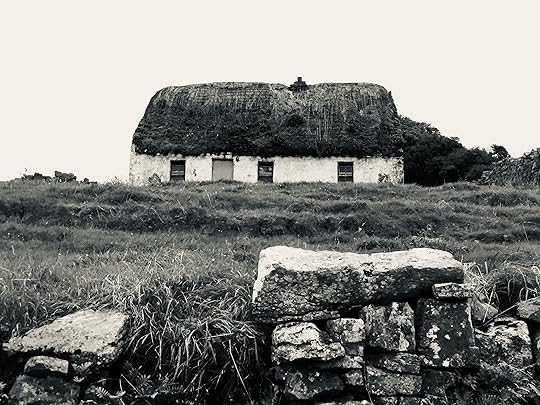
The British government's efforts to relieve the famine were inadequate and this is well handled within the story. The author wasn’t afraid to document the harrowing and dark element of the story and yet the book never came across as depressing. There seemed to be hope and goodness in even the most dire situations. This is the author’s second fiction novel on the famine having written the children’s novel Under the Hawthorn Tree some years ago. She was inspired by old abandoned Irish cottages and the the real life diaries of one of the books character’s Dr Dan Donovan, a heroic figure in Skibbereen at the time of the famine.
image:
An enjoyable and educational read and while not one for my 5 star shelf, its a book that brings history to life and for me that’s a book worth reading.
An event that many people in England, Canada, America and Australia can trace their ancestors back to.
The Great Famine was a disaster that hit Ireland between 1845 and about 1851, causing the deaths of about 1 million people and the flight or emigration of up to 2.5 million more over the course of about six years.
The short term cause of the Great Famine was the failure of the potato crop, especially in 1845 and 1846, as a result of the attack of the fungus known as the potato blight.
The Hungry Road is an historical fiction read based on true events with real and imagined characters that bring life to a very harrowing story. Short chapters and simple but effective prose works well in this novel. We get a sense of time and place and life in Ireland in the mid 1800s.
image:
The British government's efforts to relieve the famine were inadequate and this is well handled within the story. The author wasn’t afraid to document the harrowing and dark element of the story and yet the book never came across as depressing. There seemed to be hope and goodness in even the most dire situations. This is the author’s second fiction novel on the famine having written the children’s novel Under the Hawthorn Tree some years ago. She was inspired by old abandoned Irish cottages and the the real life diaries of one of the books character’s Dr Dan Donovan, a heroic figure in Skibbereen at the time of the famine.
image:
An enjoyable and educational read and while not one for my 5 star shelf, its a book that brings history to life and for me that’s a book worth reading.

April 23, 2026
Why I chose to read this book:
1. a GR friend gave it a positive review;
2. I wanted to learn more about the Great Irish Potato Famine; and,
3. April 2026 is my "G and H Titles" Month!
Praises:
1. I did get a better sense of:
- how, for several years, a deadly blight specifically affected Ireland's potato crops (yet other crops had no such issues);
- how people tried to get money in order to buy food;
- how soup kitchens were organized;
- how the Board of Work "hired" men to build useless projects, often not paying these workers, allowing them to weaken and eventually starve to death;
- that although the Famine occurred across Ireland, certain areas were more severely affected than others;
- how relations between England and Ireland made matters worse for the Irish;
- that many landlords dispossessed poverty-stricken people of their homes when they failed to pay rent, immediately destroying their houses;
- how destitute so many people were, leading not only to starvation, but also contracting various diseases like typhus and smallpox;
- how at least a million Irish emigrated to North America during this time (if they were fortunate enough to get the required funds); and,
- real-life people like Dr. Dan Donovan and Fr. John Fitzpatrick, and how they interacted with the locals.
Niggles:
1. author Marita Conlon-McKenna uses a simplistic writing style; with very little depth to her characters and storyline, and little use of figurative language - more "tell" than "show";
2. the timeline races by and the plot jumps around;
3. some wording and use of specific punctuation marks were troubling and/or unwarranted;
4. coincidences are needed in fiction, but not too many convenient ones;
5. a map detailing the specific region described in this book would have been helpful; and,
6. during the mid-19th century, the majority of Irish possessed a strong Catholic faith and many had superstitious beliefs in " the good people" (e.g. fairies), yet I was surprised that there is little to no mention of these, positively or negatively.
Overall Thoughts:
Two stars ( ⭐⭐) = an okay read for me.
In my opinion, I think this book should have been marketed towards juvenile, even YA readers. Although I learned some new things about this piece of microhistory, the writing was quite matter-of-fact. It didn't move me like I hoped it would.
1. a GR friend gave it a positive review;
2. I wanted to learn more about the Great Irish Potato Famine; and,
3. April 2026 is my "G and H Titles" Month!
Praises:
1. I did get a better sense of:
- how, for several years, a deadly blight specifically affected Ireland's potato crops (yet other crops had no such issues);
- how people tried to get money in order to buy food;
- how soup kitchens were organized;
- how the Board of Work "hired" men to build useless projects, often not paying these workers, allowing them to weaken and eventually starve to death;
- that although the Famine occurred across Ireland, certain areas were more severely affected than others;
- how relations between England and Ireland made matters worse for the Irish;
- that many landlords dispossessed poverty-stricken people of their homes when they failed to pay rent, immediately destroying their houses;
- how destitute so many people were, leading not only to starvation, but also contracting various diseases like typhus and smallpox;
- how at least a million Irish emigrated to North America during this time (if they were fortunate enough to get the required funds); and,
- real-life people like Dr. Dan Donovan and Fr. John Fitzpatrick, and how they interacted with the locals.
Niggles:
1. author Marita Conlon-McKenna uses a simplistic writing style; with very little depth to her characters and storyline, and little use of figurative language - more "tell" than "show";
2. the timeline races by and the plot jumps around;
3. some wording and use of specific punctuation marks were troubling and/or unwarranted;
4. coincidences are needed in fiction, but not too many convenient ones;
5. a map detailing the specific region described in this book would have been helpful; and,
6. during the mid-19th century, the majority of Irish possessed a strong Catholic faith and many had superstitious beliefs in " the good people" (e.g. fairies), yet I was surprised that there is little to no mention of these, positively or negatively.
Overall Thoughts:
Two stars ( ⭐⭐) = an okay read for me.
In my opinion, I think this book should have been marketed towards juvenile, even YA readers. Although I learned some new things about this piece of microhistory, the writing was quite matter-of-fact. It didn't move me like I hoped it would.

February 27, 2020
Wow! What a read!
I have read this author's books before and enjoyed them but this is in a class of it's own. I was emotionally wrung out when I finished it. This is not an easy read.
The Famine in Ireland is a well known and shameful episode in Irish history. It also didn't need to happen. All it would have taken was for the English, who owned Ireland at the time, to put their hands in their pockets and give some assistance to the people until the potato disease was eradicated. Instead they turned a blind eye and accused the Irish of being lazy and wanting things for nothing.
Even though I learned about this in school, reading it here made my blood boil and it's easy to see why there has been such hatred of the English by the Irish over the years.
I'd recommend this read to anyone who likes historical fiction but it's a read that sits uneasily in the mind.
I have read this author's books before and enjoyed them but this is in a class of it's own. I was emotionally wrung out when I finished it. This is not an easy read.
The Famine in Ireland is a well known and shameful episode in Irish history. It also didn't need to happen. All it would have taken was for the English, who owned Ireland at the time, to put their hands in their pockets and give some assistance to the people until the potato disease was eradicated. Instead they turned a blind eye and accused the Irish of being lazy and wanting things for nothing.
Even though I learned about this in school, reading it here made my blood boil and it's easy to see why there has been such hatred of the English by the Irish over the years.
I'd recommend this read to anyone who likes historical fiction but it's a read that sits uneasily in the mind.

June 29, 2020
The book was good but I was disappointed that it was so simply written. In moving for children/young adult to adult fiction, I was expecting that Marita Conlon-McKenna would have expanded on the historical background and that there would be more depth to the characters and the storyline.

August 9, 2020
The Hungry Road starts off in the 1840s, as the potato blight strikes Ireland and Irish people, particularly poorer tenants living off the land found themselves without any food to eat, and no words or acts of kindness by their English and Anglo-Irish landlords. What came next was mass starvation, resulting in hundreds of thousands of Irish people dying - in their beds, on roadsides, in workhouses, as well as mass emigration to England and America. Ireland's population fell from 8.5 million to 6.6 million.
In The Hungry Road, we follow Mary - a young mother desperate to keep herself and her children alive, as well as her husband. Dr Dan, a young doctor in Skibbereen who despite doing his best to help the starving, can only watch the sick die as little to no help comes from the higher authorities and then Fr John Fitzpatrick who can only pray for the sick as they reach out to God to help them.
This book is definitely a good one to read if you liked Marita Conlon-McKenna's previous book on the famine, Under the Hawthorn Tree. In The Hungry Road, we are following adult characters but the level of horror and destruction was the same in this book as MCM didn't hold back in her children's novels about the terrible state of Ireland at the time.
There's a lot of hopelessness in this book, and the journey of the characters and the plight they had to go through was really what hooked me in this book. The characters themselves were extremely simple, and there wasn't a lot of nuance to them and there were certainly no big plot twists or surprises with the characters either. But it was the Famine coming to life that hooked me, and the years of wasting away, and of struggle and the absolute cruelty and uncaring showed to the people by their landlords. How they still asked for rent when people didn't have food to eat, let alone sell, and then decided to evict everyone near the end and force them on a book to England and America, even if the people didn't necessarily want to go. They didn't really have a choice. It broke my heart.
I think this book would be a good starting point, as well as Under the Hawthorn Tree, for adult readers looking to expand their knowledge on the Famine era (and understand why some Irish people are still bitter about it, and reject to the insults that people throw about Irish people being 'potato eaters'). I think it's so important for people in England to really understand their country's role in Ireland during the time, and the lack of care that was shown to the Irish people and how millions were left to suffer and die. Children became skin and bone while Irish grain and livestock was exported to England. How does that ever make sense? It never will. I'm not saying something wasn't done to try and make things better, but certainly not enough.
I think Mary's story in this book was most interesting, and she certainly was the most to suffer and lost the most. I preferred her struggle and her strength over the story of Dr Dan and Fr John. I think the latter two were good to have for a simple comparison between the classes of people in the town - Mary had to kill a dog that attacked her, and in desperation used its meat to feed her family, while Dr Dan came home to a bowl of beef stew and dumplings, and often had dessert. Fr John always has something nice to eat thanks to his housekeeper while his parish starved outside his door. Fr John's POV didn't really bring much to the story at all, and if it had been removed wouldn't have made a difference.
I really felt Mary's homesickness and grief for Ireland when she is forced to emigrate. Her family's time in New York certainly seemed to be much easier, and possibly slightly unrealistic but also there were people who thrived so maybe not. Again, the description of the coffin ships - similar to Wildflower Girl - really upset me and thinking about the people who died in terrible conditions when they thought they were on the way to a better life is just heartbreaking.
This story is a simple one. It's a novel of hunger, and fight and survival. But it still gripped me and I wanted the Sullivans to survive, to fight their hunger and overcome. For the story itself, I would probably give a 3-stars but because of the extra emotion I felt, I bumped my rating to a 4-star.
In The Hungry Road, we follow Mary - a young mother desperate to keep herself and her children alive, as well as her husband. Dr Dan, a young doctor in Skibbereen who despite doing his best to help the starving, can only watch the sick die as little to no help comes from the higher authorities and then Fr John Fitzpatrick who can only pray for the sick as they reach out to God to help them.
This book is definitely a good one to read if you liked Marita Conlon-McKenna's previous book on the famine, Under the Hawthorn Tree. In The Hungry Road, we are following adult characters but the level of horror and destruction was the same in this book as MCM didn't hold back in her children's novels about the terrible state of Ireland at the time.
There's a lot of hopelessness in this book, and the journey of the characters and the plight they had to go through was really what hooked me in this book. The characters themselves were extremely simple, and there wasn't a lot of nuance to them and there were certainly no big plot twists or surprises with the characters either. But it was the Famine coming to life that hooked me, and the years of wasting away, and of struggle and the absolute cruelty and uncaring showed to the people by their landlords. How they still asked for rent when people didn't have food to eat, let alone sell, and then decided to evict everyone near the end and force them on a book to England and America, even if the people didn't necessarily want to go. They didn't really have a choice. It broke my heart.
I think this book would be a good starting point, as well as Under the Hawthorn Tree, for adult readers looking to expand their knowledge on the Famine era (and understand why some Irish people are still bitter about it, and reject to the insults that people throw about Irish people being 'potato eaters'). I think it's so important for people in England to really understand their country's role in Ireland during the time, and the lack of care that was shown to the Irish people and how millions were left to suffer and die. Children became skin and bone while Irish grain and livestock was exported to England. How does that ever make sense? It never will. I'm not saying something wasn't done to try and make things better, but certainly not enough.
I think Mary's story in this book was most interesting, and she certainly was the most to suffer and lost the most. I preferred her struggle and her strength over the story of Dr Dan and Fr John. I think the latter two were good to have for a simple comparison between the classes of people in the town - Mary had to kill a dog that attacked her, and in desperation used its meat to feed her family, while Dr Dan came home to a bowl of beef stew and dumplings, and often had dessert. Fr John always has something nice to eat thanks to his housekeeper while his parish starved outside his door. Fr John's POV didn't really bring much to the story at all, and if it had been removed wouldn't have made a difference.
I really felt Mary's homesickness and grief for Ireland when she is forced to emigrate. Her family's time in New York certainly seemed to be much easier, and possibly slightly unrealistic but also there were people who thrived so maybe not. Again, the description of the coffin ships - similar to Wildflower Girl - really upset me and thinking about the people who died in terrible conditions when they thought they were on the way to a better life is just heartbreaking.
This story is a simple one. It's a novel of hunger, and fight and survival. But it still gripped me and I wanted the Sullivans to survive, to fight their hunger and overcome. For the story itself, I would probably give a 3-stars but because of the extra emotion I felt, I bumped my rating to a 4-star.

August 16, 2020
This is a really easy to read look at the devastating Irish potato famine - easy to read due to good writing, interesting characters, first class research, and lots of historical detail - not so easy to read due to the horrors and suffering of the Irish people during the awful years of the Great Hunger.
I learned so much without knowing it and the story spurred me on to look up some of the real characters weaved into the story - hallmarks of good historical fiction. Recommeded.
I learned so much without knowing it and the story spurred me on to look up some of the real characters weaved into the story - hallmarks of good historical fiction. Recommeded.

June 27, 2020
Should have been sub-titled 'A Beginner's Guide to the Famine'. Suitable for a young adult or someone who has limited knowledge of Irish History....a very simple read.

February 24, 2020
The Hungry Road by Marita Conlon McKenna
I absolutely loved every single page of this book. It is so well written. It felt so real, the devastation comes through the pages. I felt so much for the characters, and their awful plight. The characters are so well written I had to remind myself this book was fiction, although The Great Irish Famine was very real.
I loved the characters of Mary and Dr Dan, how they battled so hard to survive, but also to help others.
As I write this review my 10 year old is in the national opera house watching the show, Under The Hawthorn Tree, also written by this author, her school principal had read the book to her class. I am looking forward to chatting to her later to hear all about it. I will give her this book to read at some stage too, I think she will enjoy it.
On the second last page there was a sentence that made me smile, then suddenly I had tears in my eyes, this book is one I will be talking about for a long time. I am going to have a massive book hangover with this one.
I absolutely loved every single page of this book. It is so well written. It felt so real, the devastation comes through the pages. I felt so much for the characters, and their awful plight. The characters are so well written I had to remind myself this book was fiction, although The Great Irish Famine was very real.
I loved the characters of Mary and Dr Dan, how they battled so hard to survive, but also to help others.
As I write this review my 10 year old is in the national opera house watching the show, Under The Hawthorn Tree, also written by this author, her school principal had read the book to her class. I am looking forward to chatting to her later to hear all about it. I will give her this book to read at some stage too, I think she will enjoy it.
On the second last page there was a sentence that made me smile, then suddenly I had tears in my eyes, this book is one I will be talking about for a long time. I am going to have a massive book hangover with this one.

June 28, 2020
Very similar to previous books for young adults. I would have liked it to have been grittier and more harrowing.
March 25, 2020
Easy to read and potential to be a very good and interesting book. While it did give an insight to the trials of the people living through the Irish famine I would have liked it to have let us get a bit closer to some of the characters. I felt that now it was just scratching the surface. I am a little but disappointed actually since the tag line made it sound a lot more promising.

April 8, 2020
What can I say other than I loved this book. It's the kind of book you cant wait to get to the end to see what happens but dont want it to ever end. Such a beautiful and endearing tale of triumph over the harsh realities that were Ireland in the 1840's. The characters are so well developed you feel like you know them. You feel their sorrow and loss along with their pride and success. A well detailed and moving story of triumph over adversity

November 20, 2020
Best book ever
This book definitely makes you stop and be very humble and thankful for everything you have. We cannot in our wildest ever know or think we could live through something like this. I held on to this book and couldn’t put it down! We should all be proud to be an American! Great read!!
This book definitely makes you stop and be very humble and thankful for everything you have. We cannot in our wildest ever know or think we could live through something like this. I held on to this book and couldn’t put it down! We should all be proud to be an American! Great read!!

August 27, 2023
This was such a badly-written book, which waa surprising because I remember Conlon-McKenna's famine trilogy for children being really engaging and full of believable characters. The characters in this book were almost caricatures and the style of writing was not good at all. So many chapters ended with an ellipsis- why?! Just quite a dull slog.

February 4, 2020
Fantastic read! Despite how shocking parts of the story are keep in mind that these were real people, real places and a real story and should never be forgotten!
December 28, 2020
Best described as Desperate Housewives meets the Famine

March 22, 2023
This book was incredible - honestly one of the best books I have read in a long time! Living in Northern Ireland, we were taught the famine in school, but as school is excellent at doing, it was presented in a boring, dry way that we could not connect with at all.
This is the book everyone should read to understand the personal and emotional turmoil of the famine. Although it is fictional, the 'facts' in the book are true, policies and politicians etc.
I borrowed this from the library but purchased a copy to have on our bookshelves. Beautifully written. The chapters are short and jumps from character to character, but you in no way get lost.
This is the book everyone should read to understand the personal and emotional turmoil of the famine. Although it is fictional, the 'facts' in the book are true, policies and politicians etc.
I borrowed this from the library but purchased a copy to have on our bookshelves. Beautifully written. The chapters are short and jumps from character to character, but you in no way get lost.

March 9, 2026
3.75 ⭐️
December 11, 2025
This book brought the Irish Famine more alive to me. But. It did not have the historical depth nor character development as I hoped for, despite that the book definitely has all the potential for both in a similar fashion as the books from Ken Follet or Edward Rutherfurd. However, somehow the story stays superficial. The end was also a bit too cheesy for me.
Nevertheless, enjoyed reading this book. It has short chapters and it's pleasantly written, making it surprisingly light reading for such a heavy topic.
Nevertheless, enjoyed reading this book. It has short chapters and it's pleasantly written, making it surprisingly light reading for such a heavy topic.
This entire review has been hidden because of spoilers.

March 2, 2020
A book about a terrible period in Irish history told through three stories. It opened my eyes to how the failure of the potato crop was only the beginning of the story.
August 5, 2023
This book was good but having read the Under the Hawthorn Tree series as a child, I was a little bit disappointed. The series was much more vivid and the characters had more dimension. I found the writing in this book quite simplistic and the characters lacked dimension or nuance - it read more like a history textbook than a novel. The story was good though and I wanted to see how the Sullivan family ended up. If you want information about the Irish famine, this was detailed and accurate, but if you’re looking for a vivid story that brings the characters to life, stick with the Under the Hawthorn Tree series.
August 15, 2020
Having spent much of Summer '20 in West Cork and a visit to Skibbereen's Heritage Museum, this book woke up my interest in Ireland's 19th Century History.
This book shows evidence of detailed research yet is written beautifully as a piece of fiction.
I will be gushing to everyone about it.... wow
This book shows evidence of detailed research yet is written beautifully as a piece of fiction.
I will be gushing to everyone about it.... wow
December 9, 2023
Depressing and not well written.
I hoped to learn the history of Ireland’s potato famine, but that was not the case. I was horrified at the descriptions of people dying of starvation and rampant disease, but that does not make for a satisfying read.
I hoped to learn the history of Ireland’s potato famine, but that was not the case. I was horrified at the descriptions of people dying of starvation and rampant disease, but that does not make for a satisfying read.

November 2, 2020
Disappointing--both in the lack of character development and story development. It could have been so much better. Perhaps this book was written for young adults?

September 14, 2021
An outstanding book. Took me to a time in history that I knew little about. Fascinating and very readable.
October 13, 2021
WOW! What an impact this book has, it’s a harrowing and emotional read. This one will stay with me for some time.
1845, the potato blight hits Ireland, not just one harvest, it goes on for years!
Amongst the suffering we meet some of Ireland’s heroes.
I had the 🎧audiobook version. The narrator is excellent. I love the accent. The feeling and mood is excellently captured.
The main characters are Mary Sullivan whose dreams of a better future are shattered when their crops are ruined by a fungus known as blight she must use all her wits to protect her family.
Dr Dan Donovan is the medical officer to the Skibbereen union as everyone floods the towns and cities with further problems of disease.
Fr John Fitzpatrick’s faith is tested by both the suffering he witnessed and his pleas for help are ignored.
The heroes are amazing with their herculean effects to get the help that was needed.
It is heart breaking reading. The plight of the people is very real and visceral. It had me in tears.
There were some beautiful tender caring scenes. It is beautifully written. The characters are so well crafted and depicted.
The public relief work schemes, the British government’s contribution were horrendous more like barbaric hard labour camps for a pittance in pay.
It’s a difficult read for much of the story, being very bleak and emotional. It is balanced with hope and positivity.
I would highly recommend this book.

June 25, 2023
An unsettling, educational, and heartbreaking historical fiction that really brings you into the Great Famine in Ireland. The multiple perspectives really helped paint a fuller picture of how bleak things were for so many and how those with nothing still tried to help others. I do wish there had been an Authors Note at the end with more information about the famine and its ending.

May 8, 2022
I can’t say I enjoyed reading The Hungry Road because it’s so harrowing, but a really great book. I’ve read Under the Hawthorn Tree and its sequels but as they’re children’s books, this was so much more hard hitting. I really recommend it.
May 9, 2024
A harrowing read about the Irish famine of the 1840's. Terrible conditions that these poor people had to endure. Having travelled round some of these places it gives a better understanding of the number of derelict farm cottages that we saw.
March 2, 2025
What an emotional rollercoaster! You could tell the author had done her research and cared about the topic. I cried on several occasions and my heart broke over and over. I’m thankful people like Marita Conlon-McKenna write these stories to keep the past alive.
Displaying 1 - 30 of 255 reviews