

What do you think?
Write Faster, Write Smarter #7
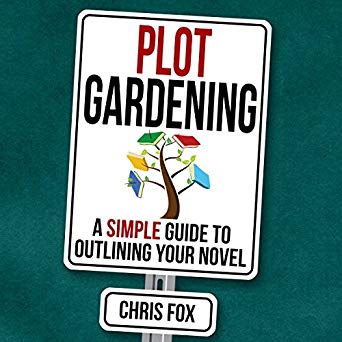
Plot Gardening:
Learn to Plot without sacrificing Creativity
What separates great novels from mediocre ones? Story. Authors that master this vital skill keep their readers up at night, and suffer the deluge of 'when is the next book coming out' emails.
Whether you are a first time novelist, or a seasoned author Plot Gardening will teach you the fundamentals of storytelling, delivered in a practical way. Through exercises at the end of each chapter you will build your own outline, and you'll do it without sacrificing the creativity that is so vital to telling great stories.
In this book you'll learn:
-The basics of story structure, and how they are used
-How and why worldbuilding are important, and how to do your own worldbuilding
-The components of great characters, and how you can bring yours to life
-How to create a living outline that will change and adapt as your characters come to life
What separates great novels from mediocre ones? Story. Authors that master this vital skill keep their readers up at night, and suffer the deluge of 'when is the next book coming out' emails.
Whether you are a first time novelist, or a seasoned author Plot Gardening will teach you the fundamentals of storytelling, delivered in a practical way. Through exercises at the end of each chapter you will build your own outline, and you'll do it without sacrificing the creativity that is so vital to telling great stories.
In this book you'll learn:
-The basics of story structure, and how they are used
-How and why worldbuilding are important, and how to do your own worldbuilding
-The components of great characters, and how you can bring yours to life
-How to create a living outline that will change and adapt as your characters come to life
Audible Audio
First published April 21, 2018
About the author
Chris Fox
87 books681 followersBy day I am an iPhone developer architecting the app used to scope Stephen Colbert’s ear. By night I am Batman. Ok maybe not. One can dream though, right?
I’ve been writing since I was six years old and started inflicting my work on others at age 18. By age 24 people stopped running away when I approached them with a new story and shortly thereafter I published my first one in the Rifter.
Wait you’re still reading?
Ok, the facts I’m supposed to list in a bio. As of this writing I’m 38 years old and live just north of the Golden Gate Bridge in the beautiful town of Mill Valley. If you’re unsure how to find it just follow the smell of self-entitlement. Once you see the teens driving Teslas you’ll know you’re in the right place.
I live in a tiny studio that I can cross in (literally) five steps and don’t own an oven. But you know what? It’s worth it. I love developing iPhone apps and if you want to work in San Francisco you accept that rent for a tiny place costs more than most people’s mortgage.
If you and about 2 million other people start buying my books I promise to move out of Marin to a house in the redwoods up in Guerneville. No pressure. Wait that’s a lie. Pressure.
I’ve been writing since I was six years old and started inflicting my work on others at age 18. By age 24 people stopped running away when I approached them with a new story and shortly thereafter I published my first one in the Rifter.
Wait you’re still reading?
Ok, the facts I’m supposed to list in a bio. As of this writing I’m 38 years old and live just north of the Golden Gate Bridge in the beautiful town of Mill Valley. If you’re unsure how to find it just follow the smell of self-entitlement. Once you see the teens driving Teslas you’ll know you’re in the right place.
I live in a tiny studio that I can cross in (literally) five steps and don’t own an oven. But you know what? It’s worth it. I love developing iPhone apps and if you want to work in San Francisco you accept that rent for a tiny place costs more than most people’s mortgage.
If you and about 2 million other people start buying my books I promise to move out of Marin to a house in the redwoods up in Guerneville. No pressure. Wait that’s a lie. Pressure.
Ratings & Reviews
Friends & Following
Create a free account to discover what your friends think of this book!
Community Reviews
Displaying 1 - 30 of 73 reviews

December 8, 2020
Trash! Feels like this guy has not read a book in his life. The example novel he walks us through the process of outlining is literally sickening.

September 4, 2021
Might be useful to some writers, but only held some tipps for me. Maybe I've done too much writing to try new things when I've already found my prefered mode of creating.
On a side note: In one example from a film 4 people are listed. The 3 male ones are called by their name and nothing else and the only female one is stripped of her name and given a description of her looks and a "sexy" feature. So, basically she is a nameless, sexy female body and reduced to her looks (in this book, not in the film). Not valid as a person. As a human being. This is sexism. This is misogyny. That is something I do not tolerate and makes me think twice to read more books in this series which I liked so far.
On a side note: In one example from a film 4 people are listed. The 3 male ones are called by their name and nothing else and the only female one is stripped of her name and given a description of her looks and a "sexy" feature. So, basically she is a nameless, sexy female body and reduced to her looks (in this book, not in the film). Not valid as a person. As a human being. This is sexism. This is misogyny. That is something I do not tolerate and makes me think twice to read more books in this series which I liked so far.

December 31, 2025
How-to books, you are my comfort reads and my delight. This one is jollier than most, written in Chris Fox's trademark no-nonsense and diffident style. This is much appreciated, given that the how-to genre is prone to pontification of the 'my way is the right way and the only way' dictat variety. Fox doesn't do that, and includes many practical exercises which, of course, I have yet to do because I read how-to books not in order actually to 'do' anything but in order to be entertained and comforted. They are like cozies to me! (Addendum: I do actually and ultimately follow a lot of how-to advice.)
Some initial take-aways:
• Combo of pantsing and plotting, with the weight on plotting.
• Types of conflict: physical (action), moral (choice), psychological (arising from self). It's best to mix all three.
• He calls 'beats' 'pulse-points'.
• A pov character is the one with most to lose in a scene.
• What scene to add? Always choose the ones that makes things worse.
• Four categories of flaw: moral, psychological (emotional baggage, skeletons in closet), physical, social (what prevents them from fitting in?).
• Worldbuilding: family trees, timelines, random poetry written from pov of protagonist are all worldbuilding. Know the things your characters would know.
• Two structures: three-act structure (best for static characters) and Dan Harmon's story circle (best for characters who grow).
• As so many other authors, Fox celebrates the 'hero's journey' unthinkingly. Sigh. The masculinist diagram chosen to illustrate this tiresome analogy shows, of course, a man with a knapsack. At least, Fox explains it quite well.
• In story circle, the protagonist sacrifices something to get something. Fox calls this 'Take & Pay'.
• Types of scene: action, surprise / revelation, need / question (protagonist needs to obtain an object or info), reversal (near the end; rather Aristotelian -- this is a peripeteia).
• Most new authors tend to go with our first idea. 'Resist that impulse.'
• Why do how-to authors always appeal to a 'survival instinct' from our time 'on the plains of Africa over a hundred millennia ago'. Please. Anthropologists, archaeologists, linguists, any academic researcher at all will refute this with evidence.
• Bad characters will seem likeable by comparison with even badder characters.
• When characters won't behave. Character bloat (too many of them --merge some.)
• Google artwork to represent characters visually to yourself.
• Obstacles? Look for resources to overcome them (a book, a video, a convo with an author).
Some initial take-aways:
• Combo of pantsing and plotting, with the weight on plotting.
• Types of conflict: physical (action), moral (choice), psychological (arising from self). It's best to mix all three.
• He calls 'beats' 'pulse-points'.
• A pov character is the one with most to lose in a scene.
• What scene to add? Always choose the ones that makes things worse.
• Four categories of flaw: moral, psychological (emotional baggage, skeletons in closet), physical, social (what prevents them from fitting in?).
• Worldbuilding: family trees, timelines, random poetry written from pov of protagonist are all worldbuilding. Know the things your characters would know.
• Two structures: three-act structure (best for static characters) and Dan Harmon's story circle (best for characters who grow).
• As so many other authors, Fox celebrates the 'hero's journey' unthinkingly. Sigh. The masculinist diagram chosen to illustrate this tiresome analogy shows, of course, a man with a knapsack. At least, Fox explains it quite well.
• In story circle, the protagonist sacrifices something to get something. Fox calls this 'Take & Pay'.
• Types of scene: action, surprise / revelation, need / question (protagonist needs to obtain an object or info), reversal (near the end; rather Aristotelian -- this is a peripeteia).
• Most new authors tend to go with our first idea. 'Resist that impulse.'
• Why do how-to authors always appeal to a 'survival instinct' from our time 'on the plains of Africa over a hundred millennia ago'. Please. Anthropologists, archaeologists, linguists, any academic researcher at all will refute this with evidence.
• Bad characters will seem likeable by comparison with even badder characters.
• When characters won't behave. Character bloat (too many of them --merge some.)
• Google artwork to represent characters visually to yourself.
• Obstacles? Look for resources to overcome them (a book, a video, a convo with an author).

August 15, 2020
As a pantser, I was hoping this would help me become a plotter, but this is not the first book that has failed to make that click for me. I've pretty much come to the conclusion that plotting just isn't for me. My brain doesn't work that way. The book explains plot points, story circles, and plot elements your story needs. I think it would be good for those starting out as plotters to help them organize, but there's been nothing inside that has been new for me after reading so many plotting books and looking up different plotting methods.

July 2, 2020
While not super deep dives, I find Chris Fox's books on self publishing helpful and encouraging. "Write to Market" was probably the most influential to me, but this one was also useful. I plan on skimming back through and compiling notes.
June 19, 2019
Chris Fox began writing sci-fi novels in his 30s after a background in software development and has made a science out of self-publishing his novels on Amazon. He also has a popular YouTube video series that has become his 'Write Faster, Write Smarter' series of writing advice books. As you might expect, he has a very systematic approach to writing and has books in his series for writing faster (5000 Words Per Hour), launching your book (Launch to Market), and several other topics.
Plot Gardening is his book on outlining your story. The title refers to a compromise between the classic writer paradigms of a planner (one who outlines their entire book in advance of writing) and a pantser (also called Discovery Writing: one who plans very little and writes "by the seat of their pants") that others before Fox had termed Plot Gardening. The analogy is that you create a planter (plan out the structure of your book), plant seeds (work on story basics like Lead character, Antagonist, Setting, Enciting Incidents, and Resolutions) and then fertilize and weed your book as it grows. It's a bit of a hybrid approach and one that really resonates with me.
Along the way he also gives the basics of the traditional Three-act Structure and devotes roughly a third of the book to the exploration of Dan Harmon's Story Circle narrative technique that combines the Campbellian monomyth with the three-act structure–an important evolution of narrative technique, in my opinion.
I'm using the Plot Gardening method to outline my next WIP, and after five exercises, I'm starting to see my plot garden bear fruit. It's a great introduction to outlining and gives you a systematic approach that is eminently actionable. I highly recommend this book to anyone who needs plotting advice.
Plot Gardening is his book on outlining your story. The title refers to a compromise between the classic writer paradigms of a planner (one who outlines their entire book in advance of writing) and a pantser (also called Discovery Writing: one who plans very little and writes "by the seat of their pants") that others before Fox had termed Plot Gardening. The analogy is that you create a planter (plan out the structure of your book), plant seeds (work on story basics like Lead character, Antagonist, Setting, Enciting Incidents, and Resolutions) and then fertilize and weed your book as it grows. It's a bit of a hybrid approach and one that really resonates with me.
Along the way he also gives the basics of the traditional Three-act Structure and devotes roughly a third of the book to the exploration of Dan Harmon's Story Circle narrative technique that combines the Campbellian monomyth with the three-act structure–an important evolution of narrative technique, in my opinion.
I'm using the Plot Gardening method to outline my next WIP, and after five exercises, I'm starting to see my plot garden bear fruit. It's a great introduction to outlining and gives you a systematic approach that is eminently actionable. I highly recommend this book to anyone who needs plotting advice.

June 25, 2019
This book contains a lot of great information on how to develop a novel plot and outline together with characters arcs. Much of it isn't new, per se, three act structure etc. But the two points it addresses which I have not seen mentioned elsewhere are dealing with multiple pov novels and dealing with series. Very useful and neatly condensed book.

May 4, 2019
This review was inspired by my annotations. To view all my detailed annotations you are welcome to join my Patreon page (John Lawchamp). For $0.99 you can read my favorite lines and excerpts from the book with additional personal thoughts. The annotations are released once the review of that book has been posted on Goodreads. Why spend $15.00 on a book you are not invested in when you can explore the main topics for a fraction of the price? Visit Patreon: https://www.patreon.com/Lawchamp
John Lawchamp’s Review:
Plot Gardening is a mixture or combo of plotting and the pantsing style.
The book is short and has great information for those looking to plot their story. I noticed that Chris Fox uses a lot of reference to other author and what they have contributed, which leads to me to say that perhaps you would be better off learning from those authors or "writing mentors."
Blake Snyder is mentioned for Save the Cat
Joseph Campbell, as well, for Myth and The Hero with a Thousand Faces
John Truby
Dan Harmon and others
However, I don't think anyone would want to read all these separate works, and thus you have the "goods" all in this short course, where Chris Fox walks you through plotting.
I have a Creative Writing Degree, but I read books like this to further study the magic of story telling. There is a method to the madness, but overall, you have to find that method out yourself, through practice and hard work with persistence and determination.
Good luck, to all you future writers.
John Lawchamp’s Review:
Plot Gardening is a mixture or combo of plotting and the pantsing style.
The book is short and has great information for those looking to plot their story. I noticed that Chris Fox uses a lot of reference to other author and what they have contributed, which leads to me to say that perhaps you would be better off learning from those authors or "writing mentors."
Blake Snyder is mentioned for Save the Cat
Joseph Campbell, as well, for Myth and The Hero with a Thousand Faces
John Truby
Dan Harmon and others
However, I don't think anyone would want to read all these separate works, and thus you have the "goods" all in this short course, where Chris Fox walks you through plotting.
I have a Creative Writing Degree, but I read books like this to further study the magic of story telling. There is a method to the madness, but overall, you have to find that method out yourself, through practice and hard work with persistence and determination.
Good luck, to all you future writers.

September 3, 2018
This is a perfectly cromulent book on outlining a novel and Fox goes into detail on two popular methods, the traditional three-act approach and the perhaps less-familiar story circle.
Running with the gardening metaphor, Fox provides step-by-step instructions and illustrates them with examples from several popular movies (relying primarily on Star Wars) and also drawing from his own work--including examples where he failed, and then learned from the failure.
Each chapter has exercises to follow at the end and Fox knows a lot of people will just read straight through, so he has thoughtfully included all exercises again at the end of the book.
Overall, there's not much more you could ask for in a book about outlining a novel. Fox explains everything in a clear manner, provides examples, and even throws in a bit of neuroscience here and there. Despite all this, I never found the book overly engaging, perhaps because I've always resisted outlining my stories--and I can't claim they've been better for this lack, either.
Still, don't let my own indifference sway you--this is a well-constructed template on how to outline a novel and would serve any new novel writer well.
Running with the gardening metaphor, Fox provides step-by-step instructions and illustrates them with examples from several popular movies (relying primarily on Star Wars) and also drawing from his own work--including examples where he failed, and then learned from the failure.
Each chapter has exercises to follow at the end and Fox knows a lot of people will just read straight through, so he has thoughtfully included all exercises again at the end of the book.
Overall, there's not much more you could ask for in a book about outlining a novel. Fox explains everything in a clear manner, provides examples, and even throws in a bit of neuroscience here and there. Despite all this, I never found the book overly engaging, perhaps because I've always resisted outlining my stories--and I can't claim they've been better for this lack, either.
Still, don't let my own indifference sway you--this is a well-constructed template on how to outline a novel and would serve any new novel writer well.
April 28, 2018
Definitely useful. Implementing this book's ideas has helped me immensely already. I've typed out 903 words of plotting and notes for one WIP and I'm sure more will come later.
I've called myself a "plantser" for a while (combo of planner and pantser) but to be honest, that entailed a lot of flailing and "I DON'T KNOW WHAT I'M DOING HELP". This book gave me some tools to actually plants efficiently, which I'm excited about.
If you consider yourself in between a planner and a pantser and also feel lost when it comes to actually plotting out your books, you might want to check this book out.
I've called myself a "plantser" for a while (combo of planner and pantser) but to be honest, that entailed a lot of flailing and "I DON'T KNOW WHAT I'M DOING HELP". This book gave me some tools to actually plants efficiently, which I'm excited about.
If you consider yourself in between a planner and a pantser and also feel lost when it comes to actually plotting out your books, you might want to check this book out.
May 27, 2018
I just reread this as I'm preparing to outline my newest book and have found it to be extremely practical. The LAYER method Chris advocates to begin the planning of a book really helped me out a lot in getting a jump-start on what to do.
In my writing, like many I've often found act two to be a struggle. But Chris' way of breaking down act two made it feel a lot less vast and wide as opposed to other guides. Now no longer am I struggling to think of what to add in the second act, but I'm actually starting to wonder if I have too many ideas to fit in.
Definitely a worthwhile read.
In my writing, like many I've often found act two to be a struggle. But Chris' way of breaking down act two made it feel a lot less vast and wide as opposed to other guides. Now no longer am I struggling to think of what to add in the second act, but I'm actually starting to wonder if I have too many ideas to fit in.
Definitely a worthwhile read.
June 8, 2019
I can finally see right through (almost) everything I've read so far. Every story, character and setting down to their primal compounds. This book teaches plot pattern and structure by following examples from the Matrix, Game of Thrones and Star Wars . The exercises on this one are slightly more demanding but I'm sure they're worth the time.
Where'd that one star go: okay, the aforementioned examples may end up being 60% of the book.
Where'd that one star go: okay, the aforementioned examples may end up being 60% of the book.

April 13, 2020
While I have no intention of writing a book something about this non-fiction book had me curious. And then I was thinking even if it won't apply it, I could still read it because I find it informative. So I ended up buying and reading this book and I thought this was a great informative read about plotting or plot gardening as the author names it. The author has assembled a method he calls plot gardening to plot your novel and explains the various steps you have to go through to create an outline for your book.
I like this author's writing style. It's very to the point, but also has enough examples so you really get what he's talking about. I thought the book was easy to follow and the examples helped make his points even clearer. There are also exercises at the end of each chapter to apply the knowledge you learned in that chapter and at the end of the book all the exercises are collected in one chapter, which I think is great. If you already read the book and just want to see the exercises you can just check that last chapter.
I learned a lot about story structure in this book and it's interesting looking at books and seeing some of those concepts back in it and also realizing what is missing in some books. It sure gave me some additional perspective and I think for authors who want to know more about plotting this definitely is a great book to pick up if you want to know more about plotting and outlining your book.
My favorite parts of the book were the parts about world building and characters and flaws. Which coincidentally are also two things I love in books as well. I think the technique of layering flaws was very interesting and a good way to make sure your character doesn't feel too perfect and have flaws in multiple areas. There were some great questions about world building and ways to think about your world to make it come alive. The parts about set-up and pay-off and different types of scenes and the role of those was great too. I definitely could see the role those things play in a novel.
The part that I found less interesting was the three story act and the heroes journey. I get the significance and the way this can serve as a guideline, but at the same time it almost felt too rigid? Or almost too easy/ same-y that every book in essence has the same build-up. I think it's important for me to remember that not every writer follows or has to follow those structures exactly and that different genres indeed call for different structures. And I kinda like books that defer from the standard build-up at times, although I can see how it's an effective tool to help plot your books. I just personally found it less interesting.
To summarize: This was a great book about plotting your novel. Even though I have no intention of writing a book I really enjoyed this one and thought it was an interesting read. It gave me a better understanding of story structure and realize what goes into plotting and building a story. It's well written in an easy to follow tone. The book is very to the point, but also has plenty of examples to illustrate the points. There also are exercises at the end of each chapter and a chapter at the end that combines all exercises. One of my favorite parts were the parts about characters and world building and set-up and payoff. The three story act and heroes journey part I personally found less interesting, but I can see the value in it and how it can help plot your book. I would definitely recommended this one to writers who want to know more about plotting, outlining your book and story structure.
I like this author's writing style. It's very to the point, but also has enough examples so you really get what he's talking about. I thought the book was easy to follow and the examples helped make his points even clearer. There are also exercises at the end of each chapter to apply the knowledge you learned in that chapter and at the end of the book all the exercises are collected in one chapter, which I think is great. If you already read the book and just want to see the exercises you can just check that last chapter.
I learned a lot about story structure in this book and it's interesting looking at books and seeing some of those concepts back in it and also realizing what is missing in some books. It sure gave me some additional perspective and I think for authors who want to know more about plotting this definitely is a great book to pick up if you want to know more about plotting and outlining your book.
My favorite parts of the book were the parts about world building and characters and flaws. Which coincidentally are also two things I love in books as well. I think the technique of layering flaws was very interesting and a good way to make sure your character doesn't feel too perfect and have flaws in multiple areas. There were some great questions about world building and ways to think about your world to make it come alive. The parts about set-up and pay-off and different types of scenes and the role of those was great too. I definitely could see the role those things play in a novel.
The part that I found less interesting was the three story act and the heroes journey. I get the significance and the way this can serve as a guideline, but at the same time it almost felt too rigid? Or almost too easy/ same-y that every book in essence has the same build-up. I think it's important for me to remember that not every writer follows or has to follow those structures exactly and that different genres indeed call for different structures. And I kinda like books that defer from the standard build-up at times, although I can see how it's an effective tool to help plot your books. I just personally found it less interesting.
To summarize: This was a great book about plotting your novel. Even though I have no intention of writing a book I really enjoyed this one and thought it was an interesting read. It gave me a better understanding of story structure and realize what goes into plotting and building a story. It's well written in an easy to follow tone. The book is very to the point, but also has plenty of examples to illustrate the points. There also are exercises at the end of each chapter and a chapter at the end that combines all exercises. One of my favorite parts were the parts about characters and world building and set-up and payoff. The three story act and heroes journey part I personally found less interesting, but I can see the value in it and how it can help plot your book. I would definitely recommended this one to writers who want to know more about plotting, outlining your book and story structure.

April 29, 2018
For plotters and pantsers alike
This book does a wonderful job breaking down several great outlining techniques but it also addresses storytelling in a way pantsers wanting to do a little plotting will find useful.
This book does a wonderful job breaking down several great outlining techniques but it also addresses storytelling in a way pantsers wanting to do a little plotting will find useful.
January 16, 2019
The one idea I really took from this: a plot is a series of set-ups and pay-offs. Never thought of it that way!

August 13, 2023
Maybe it's unfair of me to rate this since I didn't actually use it to write a novel, but I'll base this off of what I *think* would be helpful. Fox's books take a lot of the intimidation out of writing and answer the "yeah, but HOW do I do that?" type questions for folks trying to get into outlining. His style of outlining is definitely formulaic, but when stories are reduced to their basic bones...they are pretty formulaic. They still work for us, though, and we still love hearing them, when they're told with realistic, intriguing characters, an engaging style, and a creative world. As he says, you don't have to follow the provided structures; they're just a jumping-off place to get you thinking in terms of character and plot arcs, and they help steer you away from plot holes, characters without motivation, and unsatisfying endings. Not perfect, but it'll get you headed in the right direction. I would take issue with some of his views on character (assigning them a few memorable labels, viewing secondary characters as tools to an end) since I think if you go by that, you'll end up with some very flat and uninteresting people indeed, but since this book is about how to outline rather than how to create characters with depth, I can let that slide.

May 22, 2018
Great addition to the series!
UPDATE: Just finished the Audio-book version and enjoyed it very much.
Very useful and practical addition to the series.
UPDATE: Just finished the Audio-book version and enjoyed it very much.
Very useful and practical addition to the series.

August 29, 2018
Hello lovelies!!
I've been wanting to read all the books in this series...since I first found Chris Fox on YouTube!! And with payday just yesterday, I thought I'd make it a priority the same way I'm trying to make my writing a priority this year!
Where I'm at with my writing though, I thought that a book on outlining would be the most helpful. I have the first draft, I have the words. What I don't have is an understanding of exactly where I'm wanting everything to fit. I have so many ideas and so many wants that I just haven't put into the novel that would make it just so much better, that I just wanted to get some clarity. So I picked up this book, and I was not disappointed.
Getting into the stars, first star is readability.
I've read a lot of books on writing and reading more every day. But readability is a big thing for me because sometimes in these books it takes days and days just to get through a chapter. Sometimes, I quit trying to get through them because at that point they're really not helpful.
That said, this book was like having a conversation with Chris. It felt like a more in depth, readable version of his YouTube videos. Where each chapter is a video that ends with a task to complete and bonus tasks too. I picked it up last night and finished it before bed, that's how easy to understand and read it was.
If you can't tell though, this got a full star for readability.
Next three stars cover helpful or useful.
Which, let's be real, is the most important part about these books. Something between the covers needs to be useful in whatever way it's suppose to in order for it to be worth it. And, the whole idea of plot gardening has been super helpful to me. I still need to sit down and to all the exercises (because I'm one of those people that likes to read through a whole book before doing tasks), but I had so many break through moments with this book.
If you're stuck on exactly how to structure you novel, this book is super helpful. Reading through the three act structure I was a little concerned that my book didn't fit, and I was having some real concerns about the plot in my story. Until I read the following chapter about the story circle, and it just fit my story so well (with a couple missing pieces). It felt like the best moment I've had in awhile, so much that at 1 am I went to bed thinking about where everything fits on that circle.
Aside from that, I love all the steps that lead up to that. I've been pantsing hard core since I started writing, and lately I've been thinking that to get to that next level (to publish a book) I needed to figure out an outline. But this book gives me an option that marries both of them together in a way that just feels right to me and I can't wait to put it into action.
In case you're wondering, that is a three star rating!!
And the last star cover recommendation.
Would I recommend this book to a friend who is writing a book? Would I recommend it to anyone writing a book? Yes! I would recommend this book to any writer, especially if you are a pantser that wants to try something new. I love pantsing...but I also knew that something about it wasn't fully working for me when it came to the end game.
So, full star here....
Which means....five out of five stars!!
I've been wanting to read all the books in this series...since I first found Chris Fox on YouTube!! And with payday just yesterday, I thought I'd make it a priority the same way I'm trying to make my writing a priority this year!
Where I'm at with my writing though, I thought that a book on outlining would be the most helpful. I have the first draft, I have the words. What I don't have is an understanding of exactly where I'm wanting everything to fit. I have so many ideas and so many wants that I just haven't put into the novel that would make it just so much better, that I just wanted to get some clarity. So I picked up this book, and I was not disappointed.
Getting into the stars, first star is readability.
I've read a lot of books on writing and reading more every day. But readability is a big thing for me because sometimes in these books it takes days and days just to get through a chapter. Sometimes, I quit trying to get through them because at that point they're really not helpful.
That said, this book was like having a conversation with Chris. It felt like a more in depth, readable version of his YouTube videos. Where each chapter is a video that ends with a task to complete and bonus tasks too. I picked it up last night and finished it before bed, that's how easy to understand and read it was.
If you can't tell though, this got a full star for readability.
Next three stars cover helpful or useful.
Which, let's be real, is the most important part about these books. Something between the covers needs to be useful in whatever way it's suppose to in order for it to be worth it. And, the whole idea of plot gardening has been super helpful to me. I still need to sit down and to all the exercises (because I'm one of those people that likes to read through a whole book before doing tasks), but I had so many break through moments with this book.
If you're stuck on exactly how to structure you novel, this book is super helpful. Reading through the three act structure I was a little concerned that my book didn't fit, and I was having some real concerns about the plot in my story. Until I read the following chapter about the story circle, and it just fit my story so well (with a couple missing pieces). It felt like the best moment I've had in awhile, so much that at 1 am I went to bed thinking about where everything fits on that circle.
Aside from that, I love all the steps that lead up to that. I've been pantsing hard core since I started writing, and lately I've been thinking that to get to that next level (to publish a book) I needed to figure out an outline. But this book gives me an option that marries both of them together in a way that just feels right to me and I can't wait to put it into action.
In case you're wondering, that is a three star rating!!
And the last star cover recommendation.
Would I recommend this book to a friend who is writing a book? Would I recommend it to anyone writing a book? Yes! I would recommend this book to any writer, especially if you are a pantser that wants to try something new. I love pantsing...but I also knew that something about it wasn't fully working for me when it came to the end game.
So, full star here....
Which means....five out of five stars!!

May 2, 2018
Fantastic
I am biased. I've watched Chris' videos on YouTube and gained a tremendous respect for how much pertinent information he gives in each. I've become a fan of his approach and manner over time, and also am grateful that all his videos are completely free to watch over and over again. No subscription required nor do I have to mortgage a body organ to join a course to gain access... No. They're just out there to help fellow authors develop and master the craft.
He has studied and learnt the lessons, and now gives back to the community that educated him by providing fledgling authors with amazing tomes of knowledge to draw upon in their own journey.
This book is no different. If I were to pick holes, there is one instance he refers to one of Agatha Christie's characters as Ms. Marples. No Chris... Miss Marple. Is that being too petty? Well, it's the only gripe I had through the entire text!!!!
The whole book leads you casually along the path of setting out your planter and preparing the soil before paying the seeds to give your story the best chance to grow. In itself, this book is like baby bio... A wonder plant food to help you achieve much more vibrant and luscious blossoms.
I've read so many titles on story, structure, character, plot... But to read Chris' offering is a pleasant addition to them all. Not only are his points clearly made, they are reinforced with examples from Star Wars, The Matrix and other films / books. It helps tremendously when conveying the true essence of his guidance along the path of crafting a story which readers will invest their time in.
With my obvious disclaimer out there, as being a fan of Chris' work for quite some time now, I shall end with a huge recommendation for this title.
If you want to write, and wish to do it well, you owe it to yourself to grab a copy of this and let Chris guide your creative genius. Simple as that.
I am biased. I've watched Chris' videos on YouTube and gained a tremendous respect for how much pertinent information he gives in each. I've become a fan of his approach and manner over time, and also am grateful that all his videos are completely free to watch over and over again. No subscription required nor do I have to mortgage a body organ to join a course to gain access... No. They're just out there to help fellow authors develop and master the craft.
He has studied and learnt the lessons, and now gives back to the community that educated him by providing fledgling authors with amazing tomes of knowledge to draw upon in their own journey.
This book is no different. If I were to pick holes, there is one instance he refers to one of Agatha Christie's characters as Ms. Marples. No Chris... Miss Marple. Is that being too petty? Well, it's the only gripe I had through the entire text!!!!
The whole book leads you casually along the path of setting out your planter and preparing the soil before paying the seeds to give your story the best chance to grow. In itself, this book is like baby bio... A wonder plant food to help you achieve much more vibrant and luscious blossoms.
I've read so many titles on story, structure, character, plot... But to read Chris' offering is a pleasant addition to them all. Not only are his points clearly made, they are reinforced with examples from Star Wars, The Matrix and other films / books. It helps tremendously when conveying the true essence of his guidance along the path of crafting a story which readers will invest their time in.
With my obvious disclaimer out there, as being a fan of Chris' work for quite some time now, I shall end with a huge recommendation for this title.
If you want to write, and wish to do it well, you owe it to yourself to grab a copy of this and let Chris guide your creative genius. Simple as that.

March 26, 2020
Not for a pantser like me...
I've read Chris Fox's "Write to Market" and "Six Figure Author", which are books 3 and 5 in his series on writing. I gave them both five stars.
Maybe this is a personal pet peeve of mine, but I struggled to read this book. Right from the beginning, I felt Chris Fox relied too much on the gardening analogy.
He started by talking about why we like stories and society as a whole, and I felt like I didn't need to know that information.
Chris Fox describes himself as something between a plotter and a pantser, and while I lean more toward being a pantser and do a tiny bit of plotting, I felt this book was dry in comparison to his other books.
I stopped reading after he talked about story structure. I would have been more interested in learning how Chris Fox plots and writes, rather than read about different theories on stories and plot structure. When I got to the part about "life, order, the conscious mind, chaos, disorder, and subconscious," it felt like I was reading a psychology textbook.
I only read 56%, and I will not be finishing this book.
If you're more of a plotter than me (if you can plot more than one chapter in advance) and like reading theories on plotting, this book is for you. Otherwise, skip this book and read Chris Fox's other books on writing instead.
I've read Chris Fox's "Write to Market" and "Six Figure Author", which are books 3 and 5 in his series on writing. I gave them both five stars.
Maybe this is a personal pet peeve of mine, but I struggled to read this book. Right from the beginning, I felt Chris Fox relied too much on the gardening analogy.
He started by talking about why we like stories and society as a whole, and I felt like I didn't need to know that information.
Chris Fox describes himself as something between a plotter and a pantser, and while I lean more toward being a pantser and do a tiny bit of plotting, I felt this book was dry in comparison to his other books.
I stopped reading after he talked about story structure. I would have been more interested in learning how Chris Fox plots and writes, rather than read about different theories on stories and plot structure. When I got to the part about "life, order, the conscious mind, chaos, disorder, and subconscious," it felt like I was reading a psychology textbook.
I only read 56%, and I will not be finishing this book.
If you're more of a plotter than me (if you can plot more than one chapter in advance) and like reading theories on plotting, this book is for you. Otherwise, skip this book and read Chris Fox's other books on writing instead.

August 6, 2020
Interesting ideas, but needed better examples for me.
I am not a GoT fan. I got halfway through the first GoT book and binned it. I detest the tv show too.
Chris loves it. That’s where the disconnect is happening. A lot of this book has Chris gushing about GoT, the characters, the plots, etc., and I just don’t get it.
I love fantasy novels, everything from Lewis and Tolkien to Butcher and Gemmell, just not GoT.
The brief summary of the 3 act structure is handy if you don’t want to google it. The Story Circle idea is okay, and will work for some people. I am just not a fan of applying TV/Movie based structures to books. You can try to shoehorn books into them, but ‘structure’ is more complex than that, less rigid, in good novels.
There’s a reason a famous author once said that when Hollywood wants to film your novel, you take the paycheck, toss the book over the fence to them, and run like hell, never looking back.
This is not a bad book, that’s why it gets three stars, but my brain isn’t wired like Chris’. There is good advice in here and some interesting exercises. Make your own mind up.
I am not a GoT fan. I got halfway through the first GoT book and binned it. I detest the tv show too.
Chris loves it. That’s where the disconnect is happening. A lot of this book has Chris gushing about GoT, the characters, the plots, etc., and I just don’t get it.
I love fantasy novels, everything from Lewis and Tolkien to Butcher and Gemmell, just not GoT.
The brief summary of the 3 act structure is handy if you don’t want to google it. The Story Circle idea is okay, and will work for some people. I am just not a fan of applying TV/Movie based structures to books. You can try to shoehorn books into them, but ‘structure’ is more complex than that, less rigid, in good novels.
There’s a reason a famous author once said that when Hollywood wants to film your novel, you take the paycheck, toss the book over the fence to them, and run like hell, never looking back.
This is not a bad book, that’s why it gets three stars, but my brain isn’t wired like Chris’. There is good advice in here and some interesting exercises. Make your own mind up.
January 14, 2020
I really like Chris Fox’s books a lot. I’m a huge fan of Lifelong Writing Habits and assign that to my students every semester. And I really like a lot of the ideas in this book as well. I am going to try it as a way to flesh out a novel idea I need to work on. The main reason it is a four and not a five is because there are a handful of areas that feel too vague, or where there’s too big a jump without enough discussion about how to make the jump. The specific moment I can think of right now is when he asks you to know the ending of your piece towards the beginning of the process. I can see why that’s important, but that’s also hard to do without a lot of intermediary work. Obviously Fox’s book is a short summary of the topic, and there are books that could be written about each of the chapters in this book, but I’ll be interested to see whether each step works on its own. Either way, keep up the good work, Mr. Fox.

April 2, 2020
My favorite book on outlining
I've read a number of craft books on outline, structure, and plot, and usually come out the other side feeling overwhelmed and a bit confused. All the pages of notes I've made and lists and mind maps don't help me get a cohesive outline together. This book is the opposite. As I read it, I worked through the exercises and now have two outlines ready to go. Best of all, I don't feel pressured to get the whole story clear in one session. This process is gradual and organic, allowing time for me to get to know my characters and their flaws and desires, and what plot events will bring those out to greatest effect. I'm so happy I bought this book. It will be a lifetime reference, I'm certain.
I've read a number of craft books on outline, structure, and plot, and usually come out the other side feeling overwhelmed and a bit confused. All the pages of notes I've made and lists and mind maps don't help me get a cohesive outline together. This book is the opposite. As I read it, I worked through the exercises and now have two outlines ready to go. Best of all, I don't feel pressured to get the whole story clear in one session. This process is gradual and organic, allowing time for me to get to know my characters and their flaws and desires, and what plot events will bring those out to greatest effect. I'm so happy I bought this book. It will be a lifetime reference, I'm certain.

February 4, 2023
A big help
Though I have previously published the books with a small press, I'm now venturing into the world of self-publishing. I also want to always be improving my craft. I learned about Chris Fox through a podcast and finally decided to check him out. I started with 5,000 WORDS AN HOUR and then moved in to this one in plot gardening, a subject be talks about in his videos. I wanted to learn more because I want to move from panther to plotter, but need a method that's more organic than most of those I see out there. PLOT GARDENING seemed the answer, and it doesn't disappoint.
In short, if you're looking for something that doesn't seem as strict as many of the other methods, pick up this book. It's a quick read, and it sticks to the point.
Though I have previously published the books with a small press, I'm now venturing into the world of self-publishing. I also want to always be improving my craft. I learned about Chris Fox through a podcast and finally decided to check him out. I started with 5,000 WORDS AN HOUR and then moved in to this one in plot gardening, a subject be talks about in his videos. I wanted to learn more because I want to move from panther to plotter, but need a method that's more organic than most of those I see out there. PLOT GARDENING seemed the answer, and it doesn't disappoint.
In short, if you're looking for something that doesn't seem as strict as many of the other methods, pick up this book. It's a quick read, and it sticks to the point.

February 19, 2022
Another great add to the series
Chris did it again, this time by being extremely generous with sharing his writing process, and by presenting nuggets of knowledge he mastered in years of doing the author gig for a living.
I have learned many things, and this is the best praise I can give to a book about writing craft. I have read similar books, but Chris has something special going for him: true passion.
Chris knows what he is talking about, and he shares his knowledge like a rockstar.
If you want to make your reader ‘feel’ your story, Plot Gardening belongs to your bookshelf.
Chris did it again, this time by being extremely generous with sharing his writing process, and by presenting nuggets of knowledge he mastered in years of doing the author gig for a living.
I have learned many things, and this is the best praise I can give to a book about writing craft. I have read similar books, but Chris has something special going for him: true passion.
Chris knows what he is talking about, and he shares his knowledge like a rockstar.
If you want to make your reader ‘feel’ your story, Plot Gardening belongs to your bookshelf.

April 8, 2018
This was a great book, with a new approach to gathering information to begin your book. Plot Gardening, is a little different than a full outline. It's gathering all the information you need, and trimming the hedges. I learned many new approaches to getting your writing down, but I hoped it would have been a little longer, with a little more detail on how he organizes everything. However, an excellent book, as are all of Chris' non-fiction pieces on writing.

May 27, 2018
I've really enjoyed Chris' nonfiction book series so far, and this installment is certainly no exception. He does a great job of presenting a lot of different options when it comes to considering how to plot a story, and backs it up and examples from well known works of fiction that the reader will easily understand (or can easily get access to). Even for longtime writers like me, Chris was able to present new information to consider in my own writing disciplines.
June 17, 2018
Some excellent nuggets of wisdom here! Thanks Chris! 😊
Good look at how Chris sets up his story. While I giggled at the garden analogy it makes sense. Always useful information in a no nonsense way. Chris's style is relaxed and easy. This book would be good for both brand new writers and seasoned. Anyone interested in story structure will take something away from this book.
Good look at how Chris sets up his story. While I giggled at the garden analogy it makes sense. Always useful information in a no nonsense way. Chris's style is relaxed and easy. This book would be good for both brand new writers and seasoned. Anyone interested in story structure will take something away from this book.
June 28, 2018
Edward Hudson
Plot Gardening is clear, concise, and straight to the point. You won't find any new plotting formulas here, just a well packaged breakdown of a few existing plot systems. Chris has a way of taking this daunting subject and making it very accessible.
Just remember to do the exercises. ;)
Plot Gardening is clear, concise, and straight to the point. You won't find any new plotting formulas here, just a well packaged breakdown of a few existing plot systems. Chris has a way of taking this daunting subject and making it very accessible.
Just remember to do the exercises. ;)

September 15, 2018
Not what I thought it was.
This book wasn't quite what I was looking for. I was looking for a book that focused on how to organise yourself when writing your novel, not an analysis of story structure or a breakdown of how to write a novel. This would be a good book for novice writers. I need more on planning.
This book wasn't quite what I was looking for. I was looking for a book that focused on how to organise yourself when writing your novel, not an analysis of story structure or a breakdown of how to write a novel. This would be a good book for novice writers. I need more on planning.
Displaying 1 - 30 of 73 reviews