

What do you think?

Vision or Mirage: Saudi Arabia at the Crossroads
'Clear-eyed and illuminating.'
Henry Kissinger, former Secretary of State and National Security Advisor
' A rich, superbly researched, balanced history of the modern Kingdom of Saudi Arabia.'
General David Petraeus, former Commander U.S. Central Command and Director of the Central Intelligence Agency
'Destined to be the best single volume on the Kingdom.'
Ambassador Chas Freeman, former U.S. Ambassador to Saudi Arabia and Assistant Secretary of Defense
'Should be prescribed reading for a new generation of political leaders.'
Sir Richard Dearlove, former Chief of H.M. Secret Intelligence Service (MI6) and Master of Pembroke College, Cambridge.
Something extraordinary is happening in Saudi Arabia. A traditional, tribal society once known for its lack of tolerance is rapidly implementing significant economic and social reforms. An army of foreign consultants is rewriting the social contract, King Salman has cracked down hard on corruption, and his dynamic though inexperienced son, the Crown Prince Mohammad bin Salman, is promoting a more tolerant Islam. But is all this a new vision for Saudi Arabia or merely a mirage likely to dissolve into Iranian-style revolution?
David Rundell - one of America's foremost experts on Saudi Arabia - explains how the country has been stable for so long, why it is less so today, and what is most likely to happen in the future. The book is based on the author's close contacts and intimate knowledge of the country where he spent 15 years living and working as a diplomat. Vision or Mirage demystifies one of the most powerful, but least understood, states in the Middle East and is essential reading for anyone interested in the power dynamics and politics of the Arab World.
Henry Kissinger, former Secretary of State and National Security Advisor
' A rich, superbly researched, balanced history of the modern Kingdom of Saudi Arabia.'
General David Petraeus, former Commander U.S. Central Command and Director of the Central Intelligence Agency
'Destined to be the best single volume on the Kingdom.'
Ambassador Chas Freeman, former U.S. Ambassador to Saudi Arabia and Assistant Secretary of Defense
'Should be prescribed reading for a new generation of political leaders.'
Sir Richard Dearlove, former Chief of H.M. Secret Intelligence Service (MI6) and Master of Pembroke College, Cambridge.
Something extraordinary is happening in Saudi Arabia. A traditional, tribal society once known for its lack of tolerance is rapidly implementing significant economic and social reforms. An army of foreign consultants is rewriting the social contract, King Salman has cracked down hard on corruption, and his dynamic though inexperienced son, the Crown Prince Mohammad bin Salman, is promoting a more tolerant Islam. But is all this a new vision for Saudi Arabia or merely a mirage likely to dissolve into Iranian-style revolution?
David Rundell - one of America's foremost experts on Saudi Arabia - explains how the country has been stable for so long, why it is less so today, and what is most likely to happen in the future. The book is based on the author's close contacts and intimate knowledge of the country where he spent 15 years living and working as a diplomat. Vision or Mirage demystifies one of the most powerful, but least understood, states in the Middle East and is essential reading for anyone interested in the power dynamics and politics of the Arab World.
336 pages, Hardcover
First published January 1, 2020
Ratings & Reviews
Friends & Following
Create a free account to discover what your friends think of this book!
Community Reviews
Displaying 1 - 30 of 66 reviews

January 14, 2022
Page xiv (preface)
Unlike many Muslim countries, there is no talk in Saudi Arabia of reintroducing Islamic law because it never disappeared.
The author spent many years as a diplomat in Saudi Arabia. The book has an awkward structure. It is not chronological. It is organized by subject matter – like economy, the Royal Family, tribes, clerics, security, oil – and Islam - which is part of anything and everything in Saudi Arabia.
There are many interesting points brought up, more so in the second half of the book. Here is an interesting fact on oil production:
Page 183
Most estimates put average costs between U.S. 3$ and 5$ a barrel [for Saudi Arabia]. The average cost of production in the United States, including shale and offshore wells is roughly $40 a barrel; and Canadian oil-sands production costs are closer to $100 a barrel.
A tribal culture still exists in Saudi Arabia, but with the advent of urbanization, travel, and more education it has less of an impact. This tribalism is in conflict with the Wahhabi fundamentalists. For example, the Wahhabis oppose tribal laws and customs – for them Islam is the only law.
The Wahhabi clerics work hand-in-hand with the government. Both want stability and security – and overall, they have given that to the people of Saudi Arabia since the 1930s. When compared to other Arab states, the Saudi people have not had to deal with multiple uprisings and changes of government. Also, most Saudis do not fear their government – except until 2015 when Mohammed Bin Salman took over (more on this later).
The author high-lights the differences between Saudi Arabia from the rest of the Arab world – and its unique relation to the rest of the world (more so the United States). Obviously much of this has to do with oil.
Page 190
In 1962 Crown Prince Faisal unequivocally deployed religion against the secular socialist ideology of Nasser and the Ba’ath Party of Iraq and Syria.
There were times in the book where the author almost seemed apologetic of the Saudi regime. For example, the author mentions that Saudi Arabia’s Wahhabis exported for decades a fundamentalist and hateful type of Islam (which included vicious anti-Semitic propaganda) to mosques and madrassas across the world. Supposedly some of this has changed, but how much? Has any work been done to undo this hatefulness?
While the author may be correct in saying that some aspects of life in Saudi Arabia are better than other Arab countries – this is not saying a great deal. The author also brings up gender differences in this extreme patriarchal society. In Saudi Arabia the military is controlled by the government – not vice versa.
Page 96
The Quran is the Saudi constitution and enforcing Sharia law is an important government function.
Page 151
Unlike the rulers of Algeria, Egypt, Iran, Iraq, Libya or Syria the Saudi government did not turn the army on its people… In a deeply religious society, Al Qaeda was delegitimized in religious terms by respected theologians.
Portions of the book were awkward to read. Names kept popping up that were likely never referenced again. The author had the habit of listing everyone belonging to a family, an organization, or a government group. This just created a blur.
Mohammed Bin Salman has changed the equation for Saudi Arabia. He has removed some gender restrictions, some of the guardianship rules for women are now “liberalized”, there are cinemas, some performance artists can visit – and music is permitted – imagine that! But as the author states Mohammed Bin Salman is a fearful person. Jamal Khashoggi is but one victim. The “Virtue and Vice” police do not have the power they once had; however, surveillance is extensive and people limit what they say online for fear of reprisal and arrest. Iran is now the number one enemy with a proxy war being fought in Yemen. Mohammed Bin Salman has cracked down on corruption and has a massive modernizing project underway – Vision 2030. He realizes that Saudi Arabia can no longer operate in its bubble. The upcoming years will be critical.
Unlike many Muslim countries, there is no talk in Saudi Arabia of reintroducing Islamic law because it never disappeared.
The author spent many years as a diplomat in Saudi Arabia. The book has an awkward structure. It is not chronological. It is organized by subject matter – like economy, the Royal Family, tribes, clerics, security, oil – and Islam - which is part of anything and everything in Saudi Arabia.
There are many interesting points brought up, more so in the second half of the book. Here is an interesting fact on oil production:
Page 183
Most estimates put average costs between U.S. 3$ and 5$ a barrel [for Saudi Arabia]. The average cost of production in the United States, including shale and offshore wells is roughly $40 a barrel; and Canadian oil-sands production costs are closer to $100 a barrel.
A tribal culture still exists in Saudi Arabia, but with the advent of urbanization, travel, and more education it has less of an impact. This tribalism is in conflict with the Wahhabi fundamentalists. For example, the Wahhabis oppose tribal laws and customs – for them Islam is the only law.
The Wahhabi clerics work hand-in-hand with the government. Both want stability and security – and overall, they have given that to the people of Saudi Arabia since the 1930s. When compared to other Arab states, the Saudi people have not had to deal with multiple uprisings and changes of government. Also, most Saudis do not fear their government – except until 2015 when Mohammed Bin Salman took over (more on this later).
The author high-lights the differences between Saudi Arabia from the rest of the Arab world – and its unique relation to the rest of the world (more so the United States). Obviously much of this has to do with oil.
Page 190
In 1962 Crown Prince Faisal unequivocally deployed religion against the secular socialist ideology of Nasser and the Ba’ath Party of Iraq and Syria.
There were times in the book where the author almost seemed apologetic of the Saudi regime. For example, the author mentions that Saudi Arabia’s Wahhabis exported for decades a fundamentalist and hateful type of Islam (which included vicious anti-Semitic propaganda) to mosques and madrassas across the world. Supposedly some of this has changed, but how much? Has any work been done to undo this hatefulness?
While the author may be correct in saying that some aspects of life in Saudi Arabia are better than other Arab countries – this is not saying a great deal. The author also brings up gender differences in this extreme patriarchal society. In Saudi Arabia the military is controlled by the government – not vice versa.
Page 96
The Quran is the Saudi constitution and enforcing Sharia law is an important government function.
Page 151
Unlike the rulers of Algeria, Egypt, Iran, Iraq, Libya or Syria the Saudi government did not turn the army on its people… In a deeply religious society, Al Qaeda was delegitimized in religious terms by respected theologians.
Portions of the book were awkward to read. Names kept popping up that were likely never referenced again. The author had the habit of listing everyone belonging to a family, an organization, or a government group. This just created a blur.
Mohammed Bin Salman has changed the equation for Saudi Arabia. He has removed some gender restrictions, some of the guardianship rules for women are now “liberalized”, there are cinemas, some performance artists can visit – and music is permitted – imagine that! But as the author states Mohammed Bin Salman is a fearful person. Jamal Khashoggi is but one victim. The “Virtue and Vice” police do not have the power they once had; however, surveillance is extensive and people limit what they say online for fear of reprisal and arrest. Iran is now the number one enemy with a proxy war being fought in Yemen. Mohammed Bin Salman has cracked down on corruption and has a massive modernizing project underway – Vision 2030. He realizes that Saudi Arabia can no longer operate in its bubble. The upcoming years will be critical.
September 21, 2020
When hearing the terms “women’s rights” or “corruption crackdown”, most people won’t think of Saudi Arabia. However, change is the only constant and that truism currently holds in the world’s sole theocratic monarchy. The main catalyst for this recent change is Vision or Mirage: Saudi Arabia at the Crossroads’ bearded cover model, Crown Prince Mohammed Bin Salman (MBS), under the guidance of his 84-year old father, King Salman.
However, author David Rundell spends much of the book relating the formative years of Saudi Arabia, to establish the parameters for judging the kingdom today. Vision or Mirage relates in captivating detail how Abdulaziz ibn Abdul Rahman (aka Ibn Saud) used a combination of piety, pragmatism, brute strength, mercy, charisma, diplomacy with the US and UK, and foresight to unite most of central Arabia’s nomadic tribes and coastal cities into a nation named after him. One of the key alliances he made were with the Wahhabi (fundamentalist Sunni sect from central Saudi Arabia) ulama. The ulama-adjacent Ikhwan militia gave Ibn Saud the muscle to win battles across central Arabia and thus unite the land. Ironically, the Ikhwan’s puritanical absolutism led the Ikhwan to become bloodthirsty to the extent that Ibn Saud had to eventually destroy them to restore order, at the Battle of Sabillah in 1929. The Sauds’ having to face a fundamentalist Frankenstein of their own making would become a recurring theme in history.
Ibn Saud was far more agreeable than the Ikhwan and used his diplomatic skills to win new tribal allies and placate tribes that he had defeated, forming an eventually nation-scale tribal alliance. David Rundell notes that, “This explicit avoidance of promoting one dominant tribe distinguishes modern Saudi Arabia from many postcolonial African and Middle Eastern states in which tribal or sectarian affiliations still dominate politics.” He was a believer in giving second chances and the sacred bond of oral agreements, to the extent of potentially endangering his power. This included negotiations with the British Empire, who very early on saw the benefits of supporting Ibn Saud, so as to sabotage the waning Ottoman Empire and bring stability to a traditionally lawless region. Luckily, his optimism gamble paid off and the united nation of Saudi Arabia was founded on Sep 23, 1932.
The pragmatism of Ibn Saud continued once he had become a head of state. He deftly juggled the pious demands of the ulama with the need to import modern technological and governmental innovations. As a man ruling a land with a long history of clan-based nepotism, he allowed his underling relatives to establish patronage networks, but also made sure not to let the corruption reach the dangerous level that it did in other oil fiefdoms, like Nigeria and Angola. Likewise, Ibn Saud instilled a culture of cohesion and meritocracy in the royal family by establishing an agreeable hierarchy, which included a succession system that factored in competence, instead of just blanket primogeniture. Lastly, he copied his British alliance ploy with the United States in a famous meeting with President Roosevelt on a US warship at Great Bitter Lake, as America was steamrolling towards global supremacy at the tail-end of WWII. The Saudi-US alliance, which has subsequently become very controversial in the latter nation and which was considered heretical by the “anti-Western infidel” Saudi ulama at the time, has lasted nearly a century and played a key role in the meteoric rise of the Saudi dynasty.
Vision or Mirage then documents the reigns of Ibn Saud’s successors: Saud, Faisal, Khalid, Fahd, Abdullah and Salman. The latter sections of the book are dedicated to the rapid changes wrought by the currently reigning King Salman and how they will affect the short- to mid-term future of the country. Most notably, he allowed his unaccomplished young son Mohammed (MBS), to leapfrog over many more senior and experienced royals into the position of Crown Prince. This is part of a wider process of wrangling the royals. King Salman has rapidly scaled back privileges for the tens (possibly hundreds) of thousands of great-grandchildren and great-nephews of King Abdelaziz. Their stipends have been greatly shrunk and they have had reduced their lucrative construction contracts, legal privileges and government positions. In regards to the latter, King Salman replaced nearly every minister and military service chief from a prince to a technocrat. The princes who’ve been allowed to keep their jobs have disproportionately been those most closely related to Salman.
King Salman and MBS have been similarly disruptive in terms of social reform. MBS has repeatedly lamented how the 1979 seizure of the Grand Mosque by armed fundamentalist-Muslim cult members resulted in a vast increase in conservatism in Saudi Arabia. The current regime has substantially curtailed the authority of the religious police, allowed the opening of previously banned public entertainment venues like movie theaters, increased the opportunities for public participation by women (including by building the all-female Princess Noura University) and reduced restrictions on non-Wahhabi citizens. Take for instance this factoid: “In 1960 girls could not go to elementary school, yet in 2020 they comprise 60% of university graduates.” However, Rundell isn’t blindly cheerleading for MBS; he also points out instances of where human rights in S.A. have stagnated or even regressed, including, most starkly, mass executions of peaceful activists.
Economic reforms are also put under the microscope. The millennial MBS is dreaming big in many ways, including by sketching out plans for a futuristic smart-city called NEOM, and by privatizing parts of the economy (which has faced some quiet criticism from the technocrat class). Oil has obviously been the predominant fuel for the Saudi economy for most of its history. This commodity has also given S.A. a role in the global economy vastly disproportionate to its population. Saudi Arabia has the unique ability to drastically increase oil production to sink oil prices, due to its massive reserves; though in the 1973 Arab Oil Embargo, it did the opposite. Thus, he who controls Saudi’s Aramco national oil company has the potential to extort energy importers, punish oil-producing competitors who act out of line, and shape trends in energy consumption. In general, the Saudis prefer to keep oil reasonably priced, for extended periods of high oil prices encourage consumers and industrialists to make more environmentally friendly choices that would hurt oil’s long-term viability. Being so reliant on oil for revenue makes Saudi Arabia vulnerable to global swings in oil prices; as the book notes: “Between 2007 and 2011 oil prices doubled, halved, and doubled again in four years.” MBS has put forth an economic diversification plan in his Vision 2030 Initiative. Rundell explores the potential, pitfalls and implications of the plan. Worth noting is that the Saudi currency is pegged to the USD. Unless that practice is ended, Saudi Arabia won’t be able to control its monetary policy.
Many other fascinating tidbits about Saudi Arabia are shared in the book. For instance, Saudi Arabia has no legislative branch, for the law of the land is God’s Law (the Sharia). Terrorism and counterterrorism are discussed. The theological roots of anti-Shia sentiment and their results on Saudi-Shia relations are explored. This schism has global geopolitical resonance, with the Saudi’s proxy war with Shia Iran in Yemen.
Vision or Mirage: Saudi Arabia at the Crossroads is a book that will prove incredibly illuminating to the average Westerner, who probably only thinks of sexism, theocracy and oil when he thinks about Saudi Arabia. Rundell uses history, theology, politics, economics and sociology to explain the current complexities and challenges of the Arabian Peninsula’s most dominant nation. We, the Western reader, learn to empathize with people with a vastly different way of life than our own. The book also contains some helpful maps and photos capturing snapshots of Saudi cultural history. My only criticism is that the book is too flippant in dismissing the extensive evidence connecting the Saudi government to the 9/11 attacks… Most notably multiple links pointing to Prince Turki al-Faisal, who was head of the country’s intelligence agency for 22 years, before retiring 10 days before 9/11. Instead, the author merely points to the heavily redacted 9/11 Commission Report, which was excoriated by Democrats and Republicans alike for the extent and nature of the material that was censored, and moves on to another subject. With that caveat stated, I would recommend this book to anyone who wants to learn about Middle Eastern history, or who wants a rubric for thinking about its economic and political future.
However, author David Rundell spends much of the book relating the formative years of Saudi Arabia, to establish the parameters for judging the kingdom today. Vision or Mirage relates in captivating detail how Abdulaziz ibn Abdul Rahman (aka Ibn Saud) used a combination of piety, pragmatism, brute strength, mercy, charisma, diplomacy with the US and UK, and foresight to unite most of central Arabia’s nomadic tribes and coastal cities into a nation named after him. One of the key alliances he made were with the Wahhabi (fundamentalist Sunni sect from central Saudi Arabia) ulama. The ulama-adjacent Ikhwan militia gave Ibn Saud the muscle to win battles across central Arabia and thus unite the land. Ironically, the Ikhwan’s puritanical absolutism led the Ikhwan to become bloodthirsty to the extent that Ibn Saud had to eventually destroy them to restore order, at the Battle of Sabillah in 1929. The Sauds’ having to face a fundamentalist Frankenstein of their own making would become a recurring theme in history.
Ibn Saud was far more agreeable than the Ikhwan and used his diplomatic skills to win new tribal allies and placate tribes that he had defeated, forming an eventually nation-scale tribal alliance. David Rundell notes that, “This explicit avoidance of promoting one dominant tribe distinguishes modern Saudi Arabia from many postcolonial African and Middle Eastern states in which tribal or sectarian affiliations still dominate politics.” He was a believer in giving second chances and the sacred bond of oral agreements, to the extent of potentially endangering his power. This included negotiations with the British Empire, who very early on saw the benefits of supporting Ibn Saud, so as to sabotage the waning Ottoman Empire and bring stability to a traditionally lawless region. Luckily, his optimism gamble paid off and the united nation of Saudi Arabia was founded on Sep 23, 1932.
The pragmatism of Ibn Saud continued once he had become a head of state. He deftly juggled the pious demands of the ulama with the need to import modern technological and governmental innovations. As a man ruling a land with a long history of clan-based nepotism, he allowed his underling relatives to establish patronage networks, but also made sure not to let the corruption reach the dangerous level that it did in other oil fiefdoms, like Nigeria and Angola. Likewise, Ibn Saud instilled a culture of cohesion and meritocracy in the royal family by establishing an agreeable hierarchy, which included a succession system that factored in competence, instead of just blanket primogeniture. Lastly, he copied his British alliance ploy with the United States in a famous meeting with President Roosevelt on a US warship at Great Bitter Lake, as America was steamrolling towards global supremacy at the tail-end of WWII. The Saudi-US alliance, which has subsequently become very controversial in the latter nation and which was considered heretical by the “anti-Western infidel” Saudi ulama at the time, has lasted nearly a century and played a key role in the meteoric rise of the Saudi dynasty.
Vision or Mirage then documents the reigns of Ibn Saud’s successors: Saud, Faisal, Khalid, Fahd, Abdullah and Salman. The latter sections of the book are dedicated to the rapid changes wrought by the currently reigning King Salman and how they will affect the short- to mid-term future of the country. Most notably, he allowed his unaccomplished young son Mohammed (MBS), to leapfrog over many more senior and experienced royals into the position of Crown Prince. This is part of a wider process of wrangling the royals. King Salman has rapidly scaled back privileges for the tens (possibly hundreds) of thousands of great-grandchildren and great-nephews of King Abdelaziz. Their stipends have been greatly shrunk and they have had reduced their lucrative construction contracts, legal privileges and government positions. In regards to the latter, King Salman replaced nearly every minister and military service chief from a prince to a technocrat. The princes who’ve been allowed to keep their jobs have disproportionately been those most closely related to Salman.
King Salman and MBS have been similarly disruptive in terms of social reform. MBS has repeatedly lamented how the 1979 seizure of the Grand Mosque by armed fundamentalist-Muslim cult members resulted in a vast increase in conservatism in Saudi Arabia. The current regime has substantially curtailed the authority of the religious police, allowed the opening of previously banned public entertainment venues like movie theaters, increased the opportunities for public participation by women (including by building the all-female Princess Noura University) and reduced restrictions on non-Wahhabi citizens. Take for instance this factoid: “In 1960 girls could not go to elementary school, yet in 2020 they comprise 60% of university graduates.” However, Rundell isn’t blindly cheerleading for MBS; he also points out instances of where human rights in S.A. have stagnated or even regressed, including, most starkly, mass executions of peaceful activists.
Economic reforms are also put under the microscope. The millennial MBS is dreaming big in many ways, including by sketching out plans for a futuristic smart-city called NEOM, and by privatizing parts of the economy (which has faced some quiet criticism from the technocrat class). Oil has obviously been the predominant fuel for the Saudi economy for most of its history. This commodity has also given S.A. a role in the global economy vastly disproportionate to its population. Saudi Arabia has the unique ability to drastically increase oil production to sink oil prices, due to its massive reserves; though in the 1973 Arab Oil Embargo, it did the opposite. Thus, he who controls Saudi’s Aramco national oil company has the potential to extort energy importers, punish oil-producing competitors who act out of line, and shape trends in energy consumption. In general, the Saudis prefer to keep oil reasonably priced, for extended periods of high oil prices encourage consumers and industrialists to make more environmentally friendly choices that would hurt oil’s long-term viability. Being so reliant on oil for revenue makes Saudi Arabia vulnerable to global swings in oil prices; as the book notes: “Between 2007 and 2011 oil prices doubled, halved, and doubled again in four years.” MBS has put forth an economic diversification plan in his Vision 2030 Initiative. Rundell explores the potential, pitfalls and implications of the plan. Worth noting is that the Saudi currency is pegged to the USD. Unless that practice is ended, Saudi Arabia won’t be able to control its monetary policy.
Many other fascinating tidbits about Saudi Arabia are shared in the book. For instance, Saudi Arabia has no legislative branch, for the law of the land is God’s Law (the Sharia). Terrorism and counterterrorism are discussed. The theological roots of anti-Shia sentiment and their results on Saudi-Shia relations are explored. This schism has global geopolitical resonance, with the Saudi’s proxy war with Shia Iran in Yemen.
Vision or Mirage: Saudi Arabia at the Crossroads is a book that will prove incredibly illuminating to the average Westerner, who probably only thinks of sexism, theocracy and oil when he thinks about Saudi Arabia. Rundell uses history, theology, politics, economics and sociology to explain the current complexities and challenges of the Arabian Peninsula’s most dominant nation. We, the Western reader, learn to empathize with people with a vastly different way of life than our own. The book also contains some helpful maps and photos capturing snapshots of Saudi cultural history. My only criticism is that the book is too flippant in dismissing the extensive evidence connecting the Saudi government to the 9/11 attacks… Most notably multiple links pointing to Prince Turki al-Faisal, who was head of the country’s intelligence agency for 22 years, before retiring 10 days before 9/11. Instead, the author merely points to the heavily redacted 9/11 Commission Report, which was excoriated by Democrats and Republicans alike for the extent and nature of the material that was censored, and moves on to another subject. With that caveat stated, I would recommend this book to anyone who wants to learn about Middle Eastern history, or who wants a rubric for thinking about its economic and political future.

November 12, 2020
Hands down the best book on Saudi politics that gives the reader both a firm understanding of the historical context of modern Saudi society and very lucidly lays out the major political challenges facing the country today. The single best read for anyone who wants to get spun up on Saudi politics as quickly as possible.

September 18, 2021
"The king and his son are not trying to make Saudi Arabia more democratic, but they are trying to make it more stable, prosperous, and religiously tolerant.
They have a vision, but will it prove to be a mirage?
Should the West shun them or seek to help them—and, if so, how? To answer these questions, one needs first to understand the legacy of dynastic power, religious reform, and national unification that the king and his son are trying to preserve. The Al Saud have two-and-a-half centuries of local history behind them. That history provides the foundation of the dynasty’s legitimacy and a starting point for understanding Saudi Arabia..."
Vision or Mirage is a comprehensive guide to the Kingdom of Saudi Arabia. The author drops the above quote in the book's intro.
Author David Rundell is widely regarded as one of America's foremost experts on Saudi Arabia. After studying Arabic at Oxford, he served as an American diplomat for thirty years in Washington, Bahrain, Saudi Arabia, Syria, Tunisia and the United Arab Emirates. Over those three decades he spent fifteen years in Saudi Arabia working at the Embassy in Riyadh as well as the Consulates in Jeddah and Dhahran.
David Rundell:
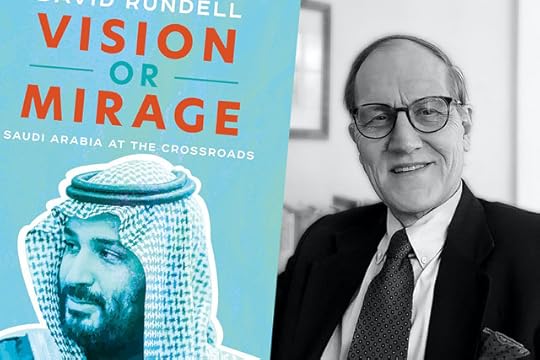
Rundell opens the book with a well-written preface and intro. The rest of the book was well-written, as well. Rundell pulls off some engaging and interesting prose, ensuring that the average reader will be able to follow the plot. Good stuff.
He also lays out the scope of the book early on:
The book then lays out a history of the country; going back a few hundred years, giving the reader some historical context for this broader story. Again, Rundell covers this material in an effective and engaging manner. The rest of the book moves forward in a somewhat chronological fashion.
Rundell also details the tribal nature of much of the Saudi society; a throwback to a time before a nation-state was established there. He mentions that this tribal organization is largely responsible for Saudi's "honour culture," which includes things like honour killings, revenge attacks, and other cultural imports from the country's tribal history.
Some more of what is covered here includes:
• Saudi Aramco; it's complicated past, including American interests.
• Al-Qaeda and terrorism inside the kingdom; "reforming" jihadists.
• The complex historical relationship between the US and Saudi Arabia; The 1945 Bitter Lake meeting aboard the USS Quincy is mentioned, as is President Trump's 2017 visit.
• Saudi Arabia's economy; visions for reshaping the oil kingdom.
• The killing of Jamal Khashoggi.
• Sunni/Shia tensions in the Eastern province.
• Mohammed bin Salman's November 2017 detainment of nearly 400 of Saudi Arabia’s most powerful people in the Ritz-Carlton hotel as part of "anti-corruption" measures.
• Further purges that carried on until 2019.
Rundell wraps up the book with some final thoughts, tying a knot in the writing:
**********************
David Rundell has put together quite a comprehensive guide to the Kingdom of Saudi Arabia with Vision or Mirage. The book is a one-stop shop for all things Saudi.
While I have read a handful of other books about the Kingdom, this one ties it all together.
He did a great job in this presentation.
4.5 stars.
They have a vision, but will it prove to be a mirage?
Should the West shun them or seek to help them—and, if so, how? To answer these questions, one needs first to understand the legacy of dynastic power, religious reform, and national unification that the king and his son are trying to preserve. The Al Saud have two-and-a-half centuries of local history behind them. That history provides the foundation of the dynasty’s legitimacy and a starting point for understanding Saudi Arabia..."
Vision or Mirage is a comprehensive guide to the Kingdom of Saudi Arabia. The author drops the above quote in the book's intro.
Author David Rundell is widely regarded as one of America's foremost experts on Saudi Arabia. After studying Arabic at Oxford, he served as an American diplomat for thirty years in Washington, Bahrain, Saudi Arabia, Syria, Tunisia and the United Arab Emirates. Over those three decades he spent fifteen years in Saudi Arabia working at the Embassy in Riyadh as well as the Consulates in Jeddah and Dhahran.
David Rundell:
Rundell opens the book with a well-written preface and intro. The rest of the book was well-written, as well. Rundell pulls off some engaging and interesting prose, ensuring that the average reader will be able to follow the plot. Good stuff.
He also lays out the scope of the book early on:
"The first question to ask about Saudi Arabia is not when will its government collapse, but why is it still here? Only if we understand how an absolute monarchy survived into the twenty- first century can we reasonably assess how long it will continue. A second question to ask is: Does Saudi Arabia still matter to a world awash in shale oil—and, if it does, how might the West best encourage positive change without compromising Saudi stability? To answer these two questions, the framework of Vision or Mirage is divided into five parts each dealing with one of the pillars of Saudi stability. They are: “Creating a New Nation,” “Managing Succession,” “Balancing Stakeholders,” “Delivering Competent Government,” and “Meeting New Challenges.”
The book then lays out a history of the country; going back a few hundred years, giving the reader some historical context for this broader story. Again, Rundell covers this material in an effective and engaging manner. The rest of the book moves forward in a somewhat chronological fashion.
Rundell also details the tribal nature of much of the Saudi society; a throwback to a time before a nation-state was established there. He mentions that this tribal organization is largely responsible for Saudi's "honour culture," which includes things like honour killings, revenge attacks, and other cultural imports from the country's tribal history.
Some more of what is covered here includes:
• Saudi Aramco; it's complicated past, including American interests.
• Al-Qaeda and terrorism inside the kingdom; "reforming" jihadists.
• The complex historical relationship between the US and Saudi Arabia; The 1945 Bitter Lake meeting aboard the USS Quincy is mentioned, as is President Trump's 2017 visit.
• Saudi Arabia's economy; visions for reshaping the oil kingdom.
• The killing of Jamal Khashoggi.
• Sunni/Shia tensions in the Eastern province.
• Mohammed bin Salman's November 2017 detainment of nearly 400 of Saudi Arabia’s most powerful people in the Ritz-Carlton hotel as part of "anti-corruption" measures.
• Further purges that carried on until 2019.
Rundell wraps up the book with some final thoughts, tying a knot in the writing:
"Several factors offer a possible foundation from which Saudi Arabia might evolve into a more liberal rather than a more repressive country. Unlike every other Arab nation, the kingdom’s indigenous institutions were not uprooted and modernized by colonial administrators. Saudi institutions have evolved organically, producing a long-established government with deep local roots and widespread popular legitimacy. It remains the only nation with a recognizable version of the classic Islamic constitutional order in which religious scholars counterbalanced executive authority. Compared with other Arab countries, its judiciary is relatively independent. 14 Saudi Arabia’s military is firmly under civilian control; its fledging, appointed parliament is an established, if weak, part of the political system; it has a large number of Western-educated English speaking technocrats, the world’s most profitable oil company, and the funds to pay some of the world’s best consultants to help devise coherent development plans.
Ultimately, the kingdom is passing through a disruptive and potentially destabilizing period of transition, the outcome of which remains very uncertain. What is clear is that in responding to Saudi reforms, the West faces a dilemma. It cannot ignore the assassination of Jamal Khashoggi, the detention of political activists or the war in Yemen—yet it should not let these events overshadow the genuine improvements taking place. The success of these reform efforts is very much in our interest, since Saudi Arabia’s political stability, economic development and social liberalization are intertwined; each supportive of and dependent on the others.
We in Western democracies cannot influence how Saudi Arabia evolves unless we are involved in the process. It remains important to set boundaries of behavior that must not be crossed again and encourage compromise solutions to Saudi disputes with Yemen and Qatar. It is equally important to recognize the limitations of outside efforts to accelerate reform. Intimidating or humiliating Saudi Arabia with public shaming and economic sanctions is unlikely to modify the behavior of a people who believe themselves the founders of a great religion and know themselves to be vital to global prosperity. In fact, a shunned or frightened monarchy is one that is more likely to discontinue reform and seek autocratic allies. Ostracizing Saudi Arabia only makes reform more difficult and instability more likely. Encouraging Saudi Arabia’s political evolution towards a more accountable, less coercive government will require positive, practical engagement with its monarchy; including firm, sustained support for courts dedicated to the rule of law, universities promoting academic freedom, uncensored media outlets, empowered representative bodies, and independent civic organizations.
These efforts will certainly be more successful if they push with the grain of Saudi culture and history rather than against it..."
**********************
David Rundell has put together quite a comprehensive guide to the Kingdom of Saudi Arabia with Vision or Mirage. The book is a one-stop shop for all things Saudi.
While I have read a handful of other books about the Kingdom, this one ties it all together.
He did a great job in this presentation.
4.5 stars.
November 22, 2020
Saudi Arabia a key country for our world. This book unlocks it. Rundell has a deep, personal understanding that he matches with the history of the country. I do think if you read this book, you will better understand why MBS and Al-Saud do what they do. This is a unique country with limited similarity to other nations, but also one that by accident of geography sits on an enormous percentage of the world's energy. What happens in Saudi Arabia affects the entire world. Reading this book will help you understand it much better.

March 25, 2023
This book was an academic challenge. It explains the current geopolitical situation of Saudi Arabia, as well as how it became the nation it is today. Very interesting and well written. Would recommend for anyone looking to learn more about another part of the world and think deeply about international relations!!
December 12, 2022
It's very hard to find good writing on Saudi Arabia or any of the GCC states for that matter. People either write how unabashedly evil they are or write in such glowing terms that their work almost reads like a letter from a star-crossed lover. This book falls into the latter category. While the initial chapter on the history of the formation of the Saudi Arabia under Abdulaziz was interesting and filled plenty of gaps in my knowledge, the rest of the book gives a superficial overview of the various key segments in Saudi society and the challenges facing that country. Perhaps useful for someone completely new to the subject but adds very little for anyone even a little familiar with the Middle East. Even then, it reads like a puff piece on the House of Saud, so definitely seek corroborating sources, preferably skeptical ones. After all, given the book describes essentially 100 years of unbroken success for Saudi followed by sweeping fundamental reforms initiated by King Salman and the Crown Prince, one must wonder why all the reform on the back of all the triumphs?
October 12, 2020
This book presents an excellent view of Saudi Arabia that clarifies so many news stories. The Mid East is impossible to understand without the back story. This writer has it. The more I understand about the Mid East the more fascinating it becomes.

June 17, 2021
Definitely a 5-star. Author was American diplomat in Riyadh and other places in Middle East for 30 years. Clear, well-organized, easy to follow coverage of history of creation of Saudi Arabia, only country named for a family, one that still has an iron grip on the kingdom amid economic, political, religious, and social challenges that could easily bring it down. Brains, daring, luck, and oil have made the country. It's teetering. This is an astonishingly easy read for a book that packs as many facts and as much trenchant analysis as this does. Will help you understand the news if nothing else.
November 20, 2020
Excellent book !
At this point I have read a whole shelf of books about KSA.
“Vision and Mirage” is by far the best out of all of them.
David Rundell is a New York Yankee and after studying Arabic at Oxford, he served as an American diplomat in the Middle East for thirty years. He had a front row seat at all of the major developments in the country and does a masterful job placing everything into context. I was barely able to put the book down once I started reading it and I loved all of the fresh perspectives that he unveils.
At this point I have read a whole shelf of books about KSA.
“Vision and Mirage” is by far the best out of all of them.
David Rundell is a New York Yankee and after studying Arabic at Oxford, he served as an American diplomat in the Middle East for thirty years. He had a front row seat at all of the major developments in the country and does a masterful job placing everything into context. I was barely able to put the book down once I started reading it and I loved all of the fresh perspectives that he unveils.
July 15, 2022
كتاب اكثر من رائع يسرد قصة تأسيس الدولة الحديثة في السعودية وأبرز مراحل تأسيسها وعناصر التوازن القائم في المجتمع السعودي
November 1, 2020
A fascinating history of the making of modern Saudi Arabia
This is an outstanding, as much as dispassionate, history of modern Saudi Arabia by an author steeped in the region as much as the the country. It is enthralling as much as it is well written.
This is an outstanding, as much as dispassionate, history of modern Saudi Arabia by an author steeped in the region as much as the the country. It is enthralling as much as it is well written.

February 11, 2022
DO NOT READ THIS BOOK
I feel so stupid. It took me until near the end of the book when he dismisses the Jamal Khashoggi murder as the result of a family squabble to be sure this book funded by Saudi Arabia, and most likely written by the famously bad acting firm of Mckinsey & Company. Apparently Mckinsey & Company and a bunch of other american Consulting" firms are trying to put over this Vision 20/30 which is some buzz word for the Saudi's plans to make even more money by liberalizing whatever ways will bring in more cash and taking away as much cash as possible from the average person in Saudi Arabia so they will get a smaller share of the wealth going forward. This is written from a right wing, Neoliberal, Israel supporting, Trump accepting, US military loving point of view masquerading as an evenhanded account of the history and present of Saudi Arabia. It is a piece of sophistry the world does not need.
I feel so stupid. It took me until near the end of the book when he dismisses the Jamal Khashoggi murder as the result of a family squabble to be sure this book funded by Saudi Arabia, and most likely written by the famously bad acting firm of Mckinsey & Company. Apparently Mckinsey & Company and a bunch of other american Consulting" firms are trying to put over this Vision 20/30 which is some buzz word for the Saudi's plans to make even more money by liberalizing whatever ways will bring in more cash and taking away as much cash as possible from the average person in Saudi Arabia so they will get a smaller share of the wealth going forward. This is written from a right wing, Neoliberal, Israel supporting, Trump accepting, US military loving point of view masquerading as an evenhanded account of the history and present of Saudi Arabia. It is a piece of sophistry the world does not need.

October 4, 2022
Rundell explains Saudi stability. He does it in a very intelligent and considered way. The shallow answer is that Saudi received American military aid and could buy-off its population with oil revenues, meanwhile its neighbours went through various crises and regime changes.
But actually Rundell digs into subtleties. The population is far from homogenous. The Saudi family operating out of Nejid has managed to win and hold the holy sites, sideline the initially more prosperous Jeddah, domesticate the roaming Beduin tribes, rule over the Shias in the East, and triangulate between America's western norms and a Salafi/Wahabi brand of Islam. Meanwhile the potential for revolution within the Royal Family is huge, there has been many successions and yet they have not opted for formalistic primogeniture but instead established a somewhat more meritocratic consensus.
I was absolutely blown away by the subtleties and complexities of Saudi history. There are many lessons in statecraft, especially humility. The house of Saud have relied on American military support without becoming a vassal, they rebelled in many ways including the 1973 oil Embargo but also came closer in other ways like recognising Israel. They have leaned into religious zeal at some times (e.g. after the Mecca terrorist attack) but also reigned it in at others (e.g. with recent reforms and older reforms like opening education to women). They both fanned and successfully contained an Al Qaeda insurgency ffs.
This all sets the scene for the coming of Mohammed bin Salman. He represents a serious step-change in how the Saudis have ruled. He has launched attacks within the royal family, stripping privileges and land and titles and more, most famously in the Ritz Hotel hold-up. The economic forms are incredibly ambitious, but the social reforms are likely more contentious. He is moving fast and definitely breaking things. This is perhaps most clear in an up tick in repressive attacks on both progressive voices and religious conservatives. For comparison, think about how much more gentle Saudi were in bringing Al Qaeda under control, who were waging open war on the state. His foreign policy is increasingly assertive, as exemplified by the recent announcement of OPEC oil cuts, which will burn a lot of political capital in Europe and North America, not to mention all of the regimes who are facing fuel riots.
Rundell is too diplomatic to say it, but MBS represents a structural break from how the Al Saud family have governed. The statecraft is gone and the sharp elbows are out.
I loved this book so, so much. It is comparatively easy to write an interesting book about revolutionary times, but to write an insightful book about a stable regime requires deep understanding. Well done.
But actually Rundell digs into subtleties. The population is far from homogenous. The Saudi family operating out of Nejid has managed to win and hold the holy sites, sideline the initially more prosperous Jeddah, domesticate the roaming Beduin tribes, rule over the Shias in the East, and triangulate between America's western norms and a Salafi/Wahabi brand of Islam. Meanwhile the potential for revolution within the Royal Family is huge, there has been many successions and yet they have not opted for formalistic primogeniture but instead established a somewhat more meritocratic consensus.
I was absolutely blown away by the subtleties and complexities of Saudi history. There are many lessons in statecraft, especially humility. The house of Saud have relied on American military support without becoming a vassal, they rebelled in many ways including the 1973 oil Embargo but also came closer in other ways like recognising Israel. They have leaned into religious zeal at some times (e.g. after the Mecca terrorist attack) but also reigned it in at others (e.g. with recent reforms and older reforms like opening education to women). They both fanned and successfully contained an Al Qaeda insurgency ffs.
This all sets the scene for the coming of Mohammed bin Salman. He represents a serious step-change in how the Saudis have ruled. He has launched attacks within the royal family, stripping privileges and land and titles and more, most famously in the Ritz Hotel hold-up. The economic forms are incredibly ambitious, but the social reforms are likely more contentious. He is moving fast and definitely breaking things. This is perhaps most clear in an up tick in repressive attacks on both progressive voices and religious conservatives. For comparison, think about how much more gentle Saudi were in bringing Al Qaeda under control, who were waging open war on the state. His foreign policy is increasingly assertive, as exemplified by the recent announcement of OPEC oil cuts, which will burn a lot of political capital in Europe and North America, not to mention all of the regimes who are facing fuel riots.
Rundell is too diplomatic to say it, but MBS represents a structural break from how the Al Saud family have governed. The statecraft is gone and the sharp elbows are out.
I loved this book so, so much. It is comparatively easy to write an interesting book about revolutionary times, but to write an insightful book about a stable regime requires deep understanding. Well done.
May 22, 2024
I have always held strident views about Saudi Arabia, not least for its stance on women's rights and its role in the spread of Islamic fundamentalism around the world. But my current work project compelled me to see past my stubborn refutal of Saudi and make at least an effort to understand it better. Vision and Mirage was a great place to start my journey. It's a well balanced narrative of Saudi's history from the first Saudi State in 1727 all the way to the third Saudi State formed by Ibn Saud in 1932 and continues through King Salman and MBS.
I come away from this book with respect for the geopolitical and administrative acumen of the Al Saud monarchy and a deeper understanding of the Saudi society. I still don't agree with most of Saudi's policies and actions but I now better understand what drives them and the terrible geopolitical and religious realities which will continue to suppress gender rights, civil liberty and religious freedom in the country. To those of us who keep hoping that the current sweeping cultural, social and economic changes ushered by MBS will one day make Saudi more open and democratic, the book offers some brilliant insights to help us see the daylight.
"Two core Wahhabi beliefs—a willingness to declare other Muslims nonbelievers and a deep, religiously based loyalty to the existing political order—were central to the creation of the Saudi state."
"The protection and promotion of Islam is a core value that provides part of the Saudi government’s legitimacy, much as the promotion of democracy and human rights does in the West."
"Although King Abdullah allowed limited press liberalization, his successor, King Salman, has reversed that trend. Charmed by rock concerts, women driving, and new movie theaters, some have overlooked the fact that under King Salman freedom of speech and freedom of the press has declined. There is less scope for constructive criticism; and editorial policy, like everything else in the kingdom, has become more centralized and controlled."
"Economic and social reform is happening in Saudi Arabia—but its direction, pace, and means of implementation are not open for debate. Controversy is now avoided, active support for Vision 2030 is mandatory, and social media is closely monitored by the Ministry of the Interior for political dissent as well as terrorist threats. No criticism of Mohammed bin Salman is tolerated. Punishments have become harsher".
I come away from this book with respect for the geopolitical and administrative acumen of the Al Saud monarchy and a deeper understanding of the Saudi society. I still don't agree with most of Saudi's policies and actions but I now better understand what drives them and the terrible geopolitical and religious realities which will continue to suppress gender rights, civil liberty and religious freedom in the country. To those of us who keep hoping that the current sweeping cultural, social and economic changes ushered by MBS will one day make Saudi more open and democratic, the book offers some brilliant insights to help us see the daylight.
"Two core Wahhabi beliefs—a willingness to declare other Muslims nonbelievers and a deep, religiously based loyalty to the existing political order—were central to the creation of the Saudi state."
"The protection and promotion of Islam is a core value that provides part of the Saudi government’s legitimacy, much as the promotion of democracy and human rights does in the West."
"Although King Abdullah allowed limited press liberalization, his successor, King Salman, has reversed that trend. Charmed by rock concerts, women driving, and new movie theaters, some have overlooked the fact that under King Salman freedom of speech and freedom of the press has declined. There is less scope for constructive criticism; and editorial policy, like everything else in the kingdom, has become more centralized and controlled."
"Economic and social reform is happening in Saudi Arabia—but its direction, pace, and means of implementation are not open for debate. Controversy is now avoided, active support for Vision 2030 is mandatory, and social media is closely monitored by the Ministry of the Interior for political dissent as well as terrorist threats. No criticism of Mohammed bin Salman is tolerated. Punishments have become harsher".

February 16, 2026
I picked this book up because I've long been curious about what goes on within the House of Saud, and why it keeps spinning off global warfare, and while the book doesn't deal with the second part of that directly, it was very helpful.
It took me a couple of years to get around to reading it, and as of this writing the edition I have is five years old, which already makes it slightly dated. However, for a solid understanding of the history of Saudi Arabia and the forces moving within it, this is an excellent assessment. The author does not seem to be a big fan of monarchy, but he has taken on the job of analyzing why this one seems to be working, and how likely that is to continue. He tries for objectivity and dispassionate assessment (I see that detractors of the book wanted it to be a polemic, instead), which is what I was looking for.
One huge issue in the continuation of the current state is the sheer size of the royal family. Since princes can have many wives, and thus many children, the House of Saud is enormous, around 100,000. Tens of thousands of princes, who feel entitled to privilege, who have been getting their cut of the oil revenue, and who, inevitably, have a shrinking share of the pie, no matter how enormous that pie may be.
Since the current king and his crown prince have decided to redirect revenue into building a diverse economy, unhappiness within the royal family is inevitable. The anti-corruption campaign bites on the princes, too.
I learned quite a great deal from this volume, and it lists the various trends to keep an eye on. Rundell seems skeptical about the monarchy's future, despite its great resources. He notes that number of stakeholders who are losing their leverage in MBS's increasingly authoritarian regime.
An excellent primer on KSA.
It took me a couple of years to get around to reading it, and as of this writing the edition I have is five years old, which already makes it slightly dated. However, for a solid understanding of the history of Saudi Arabia and the forces moving within it, this is an excellent assessment. The author does not seem to be a big fan of monarchy, but he has taken on the job of analyzing why this one seems to be working, and how likely that is to continue. He tries for objectivity and dispassionate assessment (I see that detractors of the book wanted it to be a polemic, instead), which is what I was looking for.
One huge issue in the continuation of the current state is the sheer size of the royal family. Since princes can have many wives, and thus many children, the House of Saud is enormous, around 100,000. Tens of thousands of princes, who feel entitled to privilege, who have been getting their cut of the oil revenue, and who, inevitably, have a shrinking share of the pie, no matter how enormous that pie may be.
Since the current king and his crown prince have decided to redirect revenue into building a diverse economy, unhappiness within the royal family is inevitable. The anti-corruption campaign bites on the princes, too.
I learned quite a great deal from this volume, and it lists the various trends to keep an eye on. Rundell seems skeptical about the monarchy's future, despite its great resources. He notes that number of stakeholders who are losing their leverage in MBS's increasingly authoritarian regime.
An excellent primer on KSA.

January 2, 2024
The quote on the cover summarizes this quite well “a book of staggering breadth and depth” - WSJ
David Rundell has spent almost 40 years in the Middle East primarily in Saudi Arabia. For two years he spent 10 days a month traveling around Saudi Arabia. He has been in Saudi Arabia throughout notable events like Desert Storm, 9/11, and the 2003-2007 al-Qaeda in the country.
His background and understanding of Saudi Arabia is incredible, and through the book his depth of knowledge about Saudi history, politics and the current landscape is evident.
Couple things I was surprised to learn:
1. Saudi Arabia ran a very effective counter terrorism campaign against al-Qaeda in the 2000s
2. The government of Saudi Arabia is essentially a large social services program.
3. I had followed MBS, but I did not realize the extent of power he had seized.
4. The government has been aligned with the British and American governments since the early 1900s.
5. The Saudis gave the Soviets $2.5b to look the other way on the UN Security Council vote on Kuwait.
This book exposed to a lot of nuances of their government. The history is quite fascinating (the King basically consolidated rule by using roving bands and directing them outward by channeling religious rulings and sentiments) and very interesting to see how much security over anything else is prioritized for the citizens.
I would highly recommend a read.
David Rundell has spent almost 40 years in the Middle East primarily in Saudi Arabia. For two years he spent 10 days a month traveling around Saudi Arabia. He has been in Saudi Arabia throughout notable events like Desert Storm, 9/11, and the 2003-2007 al-Qaeda in the country.
His background and understanding of Saudi Arabia is incredible, and through the book his depth of knowledge about Saudi history, politics and the current landscape is evident.
Couple things I was surprised to learn:
1. Saudi Arabia ran a very effective counter terrorism campaign against al-Qaeda in the 2000s
2. The government of Saudi Arabia is essentially a large social services program.
3. I had followed MBS, but I did not realize the extent of power he had seized.
4. The government has been aligned with the British and American governments since the early 1900s.
5. The Saudis gave the Soviets $2.5b to look the other way on the UN Security Council vote on Kuwait.
This book exposed to a lot of nuances of their government. The history is quite fascinating (the King basically consolidated rule by using roving bands and directing them outward by channeling religious rulings and sentiments) and very interesting to see how much security over anything else is prioritized for the citizens.
I would highly recommend a read.

December 23, 2025
Meski covernya MBS, buku ini panjang membahas sejarah Arab Saudi sejak terbentuk. Penulis tidak tendensi pro atau kontra. Dengan segala pengalaman pembentukan, penyatuan suku-suku, kompromi berbagai macam aspek, hingga kondisi terkini, penulis memberikan judul yang sangat pas: Arab Saudi memiliki banyak keuntungan dengan kondisi yang mereka miliki, namun disertai juga dengan risiko atas masalah besar yang kapan saja dapat terjadi. Pada situasi saat ini, cenderung kita lihat bahwa Vision (visi nyata terwujud) lebih dominan daripada Mirage (fatamorgana yang menghilang), setidaknya sampai dengan sekarang.
Buku ini terdiri atas beberapa bagian: Historic Legitimacy, Managing Succession, Balancing Stakeholders, Delivering/Providing Competent Government, Adapting/Meeting New Challenges. Awalnya agak bingung karena bolak-balik, namun saya cukup mengerti jika penulis ingin memberikan pemahaman menyeluruh ketika menyampaikan sebuah topik per bagian. Tipe penulisan cara baru menurut saya, jadinya tidak semembosankan dan bikin penasaran seperti buku sejarah pada umumnya, walaupun bikin kurang nyaman.
Buku ini terdiri atas beberapa bagian: Historic Legitimacy, Managing Succession, Balancing Stakeholders, Delivering/Providing Competent Government, Adapting/Meeting New Challenges. Awalnya agak bingung karena bolak-balik, namun saya cukup mengerti jika penulis ingin memberikan pemahaman menyeluruh ketika menyampaikan sebuah topik per bagian. Tipe penulisan cara baru menurut saya, jadinya tidak semembosankan dan bikin penasaran seperti buku sejarah pada umumnya, walaupun bikin kurang nyaman.

November 30, 2020
Excellent reference book I intend to acquire for myself to have on hand to look up points when necessary. est book I have ever read on the family of Saud that went on to create the kingdom. It give major insight in the Wahabi form of Islam how it came to be as well as Bedouin in general [which are not like the plains tribes in anything more than willing fight to protect themselves, the rest of their mindsets are much different in thoughts & actions though they are the true Indigenous peoples of that area from all I have seen, been around or heard] He naturally comes at this from a political western view but he was honest in history over the level of exploitive intent by Euro & US forces in manipulating & using the peoples of that area. This especially by the UK. Really think this book is a must read before anyone even tries to open their mouth on the subject of country or family
Read
February 9, 2025Great introduction to Saudi Arabia. I learned a lot. I think the pacing was a strength. The material was explained fully but it did not drag on like some political books. The author definitely holds some bias towards the Saudi regime. A lot of what you read culturally about Saudi Arabia end of being a criticism of its conservative (some would say regressive value). This book does not criticize and sometimes even lauds the Saudi culture. However, I believe this strengthens rather than weakens the book. It is important to understand the history and context behind a place and this book does a much better job than pieces that fail to look fully at the cultural context because of western values of progress.

January 22, 2021
I read this one on Kindle through Libby and the SF Public Library.
For anyone interested in the role Saudi Arabia plays in the geopolitical landscape today, or anyone planning to do business in the Middle East, or anyone who is just interested in places that are very different from the US but whose interests intertwine with ours, this is a fantastic book.
Rundell knows KSA better than almost anyone else in the world. His grasp of the history, the key players, the dynamics between the key players, and all the levers driving facts on the ground, is unparalleled.
I was a little skeptical early on in the book, since it starts with an outline that could have come straight from a PowerPoint deck. But once I was into the meat of the work, I was mesmerized. Rundell does a reasonable job taking a fact-based, realpolitik lens while reasonably applying modern standards and norms to what is a very different place to the Western world on some key moral, ethical, and cultural dimensions.
I've had the chance to work in Saudi on a couple different occasions. It's a consequential place we should all care about and cheer for its success overall, while holding it to the standards of modern sensibilities.
For anyone interested in the role Saudi Arabia plays in the geopolitical landscape today, or anyone planning to do business in the Middle East, or anyone who is just interested in places that are very different from the US but whose interests intertwine with ours, this is a fantastic book.
Rundell knows KSA better than almost anyone else in the world. His grasp of the history, the key players, the dynamics between the key players, and all the levers driving facts on the ground, is unparalleled.
I was a little skeptical early on in the book, since it starts with an outline that could have come straight from a PowerPoint deck. But once I was into the meat of the work, I was mesmerized. Rundell does a reasonable job taking a fact-based, realpolitik lens while reasonably applying modern standards and norms to what is a very different place to the Western world on some key moral, ethical, and cultural dimensions.
I've had the chance to work in Saudi on a couple different occasions. It's a consequential place we should all care about and cheer for its success overall, while holding it to the standards of modern sensibilities.

June 12, 2021
Outstanding Work
This volume and author stands, along with Lacey's work, as preeminent in the field of Saudi Arabian scholarship. It is well organized, well researched, analytical, non-biased, and current. The background provided early in the work lays the foundation for the discussion of the current state of Saudi Arabia, its challenges, and successes. I can not stress the balanced nature of the work, its critical eye. In particular, it put MBS and his actions/philosophy in perspective. No scholar of the Middle East or its socio and geopolitical environment feel they have done due diligence if they have not read this book.
This volume and author stands, along with Lacey's work, as preeminent in the field of Saudi Arabian scholarship. It is well organized, well researched, analytical, non-biased, and current. The background provided early in the work lays the foundation for the discussion of the current state of Saudi Arabia, its challenges, and successes. I can not stress the balanced nature of the work, its critical eye. In particular, it put MBS and his actions/philosophy in perspective. No scholar of the Middle East or its socio and geopolitical environment feel they have done due diligence if they have not read this book.

January 12, 2025
Vision or Mirage by David Rundell is a masterful exploration of Saudi Arabia’s transformation. Drawing from decades of experience, Rundell unravels the kingdom’s socio-political evolution, offering a nuanced view of its reforms under Vision 2030. He balances history, culture, and politics, revealing the intricate interplay of modernization and tradition. The book challenges simplistic narratives, making it an essential read for anyone seeking to understand the complexities of Saudi Arabia’s past, present, and future. However, the author’s background in government positions lends the writing a somewhat biased tone.
August 27, 2025
A detailed overview of the Saudi government attempts at upholding power in the Arab world and as leaders of the Muslim world. The transformation of Saudi Arabia as a modern society is interesting as problems such as corruption are being reduced but internal Saud family unity, succession issues with upcoming rivals of Crown Prince Mohammed Bin Salman, the threat of Iranian power, the instability in Saudi as foreign countries become less reliant on Saudi oil, despite being the largest oil exporter, and the struggle to achieve influence in the region by balancing Arab and western interests remains.

January 24, 2021
David Rundell served as a diplomat for 15 years in Saudi Arabia, as well as having postings in other countries in the region. His account of how Saudi Arabia got where it is with King Salman and Mohammed bin Salman firmly in charge is well-argued and documented, the analyses shrewd and thought-provoking. He wisely does not speculate too much on the future. Perhaps even MBS can't do that with any certainty.

August 20, 2025
The author is most insightful when discussing small details he has picked up from living in the country. He is his most readable when recounting military history (though I question applying Roman conquest of Felix Arabia aka Yemen to real world problems and most clueless when answering theological questions. A solid introduction to Saudi history and those curious about the country's future direction -- should look elsewhere.
January 7, 2021
Excellent description of the history of Saudi Arabia and the current situation that it faces. The last chapters offer the author’s ideas about how Saudi Arabia can continue successfully. Many good photographs accompany this book. If one wants to be current about Saudi Arabia‘s role in the world this is a good place to start.
February 6, 2021
The most informative and objective opinion on Saudi Arabia
I read a few books on Saudi Arabia, but this book is the most informative and subjective one with love and realistic suggestion to Saudis and the people of the world. I agree with the opinion of the author. It’s worth reading.
I read a few books on Saudi Arabia, but this book is the most informative and subjective one with love and realistic suggestion to Saudis and the people of the world. I agree with the opinion of the author. It’s worth reading.

February 13, 2021
Dnf because I think this is another of the agenda to manipulate the system. The book had one pint of view, glorifying the rivals of Saudi Kingdom and presenting the royals as luxury hunters. I don’t really understand the purpose of the book. There were less facts more than conflicting paras and lengthen talk.

January 17, 2022
I found Mr. Rundell's analysis and commentary on Saudi Arabia very helpful. The situation in the Middle East changes rapidly and it's often difficult for non-experts even to follow current events. Vision or Mirage: Saudi Arabia at the Crossroads gives those interested in knowing more a good place to start in trying to understand this volatile region.
Displaying 1 - 30 of 66 reviews