Jump to ratings and reviews
Rate this book
Rate this book
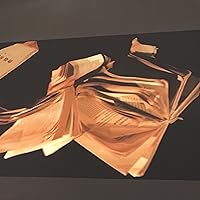
Winner of the inaugural Interim 2018 Test Site Poetry Series Prize, Refugia is a bright and hopeful voice in the current conversation about climate change. Kyce Bello’s stunning debut ponders what it means to inhabit a particular place at a time of enormous disruption, witnessing a beloved landscape as it gives way to, as Bello writes, “something other and unknown, growing beyond us.” Ultimately an exploration of resilience, Refugia brings to life the author’s home ground in Northern New Mexico and carefully observes the seasons in parallel with personal cycles of renewal and loss. These vivid poems touch upon history, inheritance, drought, and most of all, trees—be they Western conifers succumbing to warming temperatures, ramshackle orchards along the Rio Grande, or family trees reaching simultaneously into the past and future.

Like any wilderness, Refugia creates a terrain that is grounded in image and yet many-layered and complex. These poems write us back into an ecological language of place crucial to our survival in this time of environmental crisis.


ebook

Published September 1, 2019

3 people are currently reading
48 people want to read

About the author

Kyce Bello

3 books8 followers

Ratings & Reviews

What do you think?
Rate this book

Friends & Following

Create a free account to discover what your friends think of this book!

Community Reviews

5 stars
25 (53%)
4 stars
14 (29%)
3 stars
6 (12%)
2 stars
1 (2%)
1 star
1 (2%)
Displaying 1 - 9 of 9 reviews
Profile Image for Isabella.
311 reviews12 followers
May 3, 2020
This book has everything that I long for when I read poetry: some poems spoke to me so completely that I felt as if Bello lived bits of my life while others were so elusive that I felt I didn't fully know my own language. Bello's poems throughout Refugia are all tied together by their connection to the natural world (and Bello's obvious deep knowledge and appreciation for it) and their reckoning with family, time, and personal history. Bello's poems reveal her to be incredibly observant, very present in the world she lives in, and strikingly intelligent. I loved both the imagery throughout Refugia and the fact that I had to pause to look up some words, being rewarded with Greek mythology and literary devices along the way.

I found myself particularly fond of the following poems: Paper Trail, Equinox, In the Air Before Easter, Gazing on the Midmorning in an Expression of Solidarity, Field Notes, Rinconada, Our Names Unfurl Across Winter, and Refugia (8). However, I have the feeling that as I reread these poems, different ones will resonate with me as the contexts of my own life change.

This is modern poetry that makes you both think and feel. It would not be well-served compressed into an Instagram post and, in fact, would probably be best read in the middle of some quiet, wild place, straight out of the book. This poetry dares to demand attention and energy from the reader in a way that the poems of many modern and pop culture poets does not.
Profile Image for Kelsey  May.
160 reviews22 followers
January 3, 2021
"Every day I wake up and wonder
if I should trouble myself with belief,

and if so, in what. The world green
and long-legged out the window,

runoff guttering to the creek."

"What we know of heat is the understory
of summer: waxy-leaved junipers
preserve moisture by not breathing.
Curious waves of light. July and the morning
is a retreat of lilac bushes, shock of gray
sticks between here and--"

"Refugia" by Kyce Bello is full of beautiful poems. They muse, they sprawl, they reclaim, and they advocate. The word "refugia" is plural for "refugium," which means a place where organisms can survive and endure unfavorable conditions, such as forest fires. These poems center on places and moments and are personal and familial. 5 ⭐s!
Profile Image for Kathryn.
Author 3 books25 followers
March 22, 2020
Exquisite exquisite exquisite
Profile Image for Zee.
966 reviews31 followers
July 26, 2019
Note: I received this as an ARC from working at Copperfish Books.

Refugia is an absolute work of art. I'm blown away by the crisp imagery, the powerful messages, and the austere simplicity of the poetry. Bello slices to the bone. If you're a poetry person, this is an absolute must-read. Wow.
Profile Image for Jen.
298 reviews27 followers
March 23, 2025
Understanding the title term is important for this volume and the Merriam-Webster version is provided before the table of contents:
Refugia are areas of relatively unaltered climate that are inhabited by plants and animals during a period of continental climactic change . . . and remain as a center of relict forms from which a new dispersion and speciation may take place after climactic readjustment.

A few things took a while to sink in for me with this volume. One was the tone of grief regarding the changes to our planet, though she rarely speaks so broadly in her poems, which are mostly intimate observations of place. I would say the grief is not heavy but rather cumulative or more persistent as the poems progress.

The other thing that slowly crept up on me is that the concept of refugia subtly expands into language and culture as well as biology. As a whole this volume questions what we can and can't preserve, whether refugia is an ideal that is never truly accomplished. Even if pockets of non-change or limited change are possible, does that negate mourning the loss we see all around us?

Since I'm on Christmas vacation and have an easy way to keep the book open at present, I'm going to indulge in a long sample poem. Some of the spacing and line breaks are different from the original because of limitations within goodreads and my uncertainty about the intentions of some hanging indents in the poem.

The Carp Pond

*
I'm listening for bells, and the sound
of people spilling towards burial,

but all I hear are my children humming as they mound sand
on the gouge we call riverbed,

brightly hatted heads bent together
like two nodding tulips.

The sound of spring is so slight,

the water so scant and temporary
its first days are the same as its last.

What does this have to do with death?

I'm just telling a story about what happens
when rivers are held back.

The way willows green, slowly, and water flows, barely.

*
One hundred and fifty years ago, springs filled
the carp pond in the Archbishop's garden.

Behind the cathedral,
in the lot where everyone parked
at this morning's wake,
the pond
was a golden catch of sunlight,

the river held water, the water held
a wetland, thick with warblers
and soft-leaved herbs.

I know one young mother who,
like everything else,
is underground
and gone.

This should be the river singing to you,
but how, I ask, could she?

*
Thirteen people gather to mix the waters
of the world into a bowl.

Here is the Amazon River, here a spring on Crete, here
a cupful of our river drawn from the tap
of my kitchen sink.

Summer 1883, the river rose above its banks, flooded
the dirt streets of the plaza, dragged
cottonwood logs downstream.

At the archive, I trace the river's dry line
through a folder
fat with obituaries for its water.

Marshes, trout, floodplains that once spread like pearls
on a necklace worn by the woman
dressed in blue,

her song rustling willow, the shuish shuish
of a plastic bag caught on a water-
worn branch.

*
The carp pond was hung in willows
whose catkins beckoned bees,

laced in cattails with floating star-seeds.

Ponds are where water stares back at you,
rising from the dark below.

It's harder to miss a funeral than to go.

How else can the world come back to life?

Rise and whir of dragonflies
through the green-fringed door.

How full our wells once were.


This is a book that bears re-reading to get everything out of but I confess as a recreational poetry reader I am not gripped enough by her style to do that re-reading. However, if I were teaching a class in poetry in which I chose books for study, this might be one of them. For example, there are nine poems throughout the volume titled Refugia. How are they related? Do they represent a progression, etc? Is the number nine significant (the final number before returning to the cycle of 1)? Worthwhile questions that I'm not going to pursue because of my lazy recreational status and desire to simply move on--but I certainly encourage others in a more robust phase of their poetry engagement to do so.
Profile Image for nat.
164 reviews
September 23, 2020
This is a lovely collection. It weaves together landscapes and lineages, exploring mythologies and geographies of the self and one's relationship to place and people in gorgeous lyricality. All the while, it is deliberate in its consideration of our changing climate, managing to explore crises of the planet and the self. I especially loved the way domesticity and domestic memory are linked to these; the mythic explorations of the last section, in particular, were really grabbing, though I wasn't entirely sure why that wasn't as present in the first half (though maybe it was, and I'm sure I will find more threads to follow upon re-reading.)
Profile Image for tonia peckover.
782 reviews22 followers
May 7, 2020
Refugia are habitats of retreat, where organisms and ecosystems go to try and survive. Kyce Bello takes that idea and explores what it means to be alive now, in a world that is changing, where much of what we love is dying. What does it mean to be a mother now? A child? How do you make plans to survive? How do you bear the weight of guilt? What will carry on? What will be left behind?

An absolutely beautiful and timely collection that has held my hand through all these early pandemic days and will go on and on with me through the years ahead.
Displaying 1 - 9 of 9 reviews

Can't find what you're looking for?

Get help and learn more about the design.