

What do you think?

Night As It Falls
Paul, a student who works as a night guard in a hotel to make ends meet, falls under the spell of Amelia, the young woman who rents room 313. Everything about her is a mystery: where she goes, what she does - and where she comes from.
Paul and Amelia enter into a love affair, but it is ill-fated and even perverse, and one day Amelia suddenly disappears. Unknown to Paul, she has travelled to Sarajevo in search of her mother and to attempt to uncover the links that connect her personal history to the last civil war to have torn Europe apart.
In this passionate, incandescent novel, Jakuta Alikavazovic delivers a work rich in thoughts on class, urban architecture and contemporary fears. it's an inescapably seductive novel - written on a knife's edge - that establishes the arrival of a virtuoso and blazing literary talent.
Paul and Amelia enter into a love affair, but it is ill-fated and even perverse, and one day Amelia suddenly disappears. Unknown to Paul, she has travelled to Sarajevo in search of her mother and to attempt to uncover the links that connect her personal history to the last civil war to have torn Europe apart.
In this passionate, incandescent novel, Jakuta Alikavazovic delivers a work rich in thoughts on class, urban architecture and contemporary fears. it's an inescapably seductive novel - written on a knife's edge - that establishes the arrival of a virtuoso and blazing literary talent.
275 pages, Hardcover
Published September 3, 2020
About the author
Jakuta Alikavazovic
42 books19 followersJakuta Alikavazovic est née en 1979 à Paris. Lauréate de la Bourse « écrivain » de la Fondation Lagardère en 2007 et du prix Goncourt du premier roman en 2008, elle a publié aux éditions de l’Olivier Histoires contre nature (2006), Corps volatils (2007, Points 2010) et Le Londres-Louxor (2010, Points 2012).
Ratings & Reviews
Friends & Following
Create a free account to discover what your friends think of this book!
Community Reviews
Displaying 1 - 20 of 20 reviews
June 26, 2024
Elegant writing, first love and its vestiges reverberating through life, bringing the impossibility to safe a loved one from herself. A story, when it is impossible to have but not to hold, where loyalty to someone is a betrayal of something bigger or someone else; when a war never becomes peace, just shapeshifting and moves into different dimensions.
On sideline, the book has articulated for me an aspirational but never-achievable ideal how to write all these reviews: "with a few well-chosen, charming lines that gave to everyone the desire to read the book there and then as well as the impression, somehow, of having already read it."
On sideline, the book has articulated for me an aspirational but never-achievable ideal how to write all these reviews: "with a few well-chosen, charming lines that gave to everyone the desire to read the book there and then as well as the impression, somehow, of having already read it."
June 15, 2024
I struggled with this one - the first part, in particular. Whilst it (sort of) made sense by the end and featured some gorgeous quotes, the rest made my brain swirl. Safe to say: not for me.

July 4, 2021
*Disclaimer: I was kindly gifted a copy of this book by Jonathan Ball Publishers in exchange for an honest review.
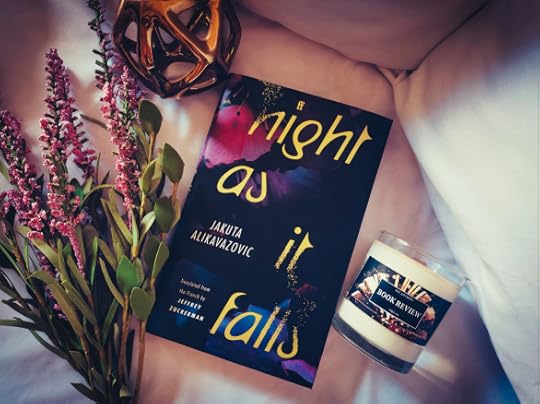
"He would become the architect of nights, of their light. His life's work would amount to a footnote, an appendix to his professor's missing thesis: he would shed light on the night. He would enshrine the night, and the night, he realised, would enshrine him in turn."
Night As it Falls is a story about Paul, who by day is a student and by night a night guard at the Elisse Hotel. Amelia is a student by day and by night an enigma. Their paths cross, but not at the university both are attending, but at the hotel where Amelia occupies room 313.
They start to spend time together and Paul realises Amelia is different; she is complicated but beautiful. He struggles to understand her, but yet he falls in love with her.
Paul and Amelia share a passion for the teachings of Anton (previously known as Antonia) Albers and signs up for her seminars at the university. Anton's teachings are different in the way that it borders philosophy and Paul and Amelia with their uncanny personalities understands it.
One day, without warning, Paul discovers that Amelia disappeared. As it turns out she went in search of her mother in Sarajevo. Her mother was obsessed with writing documentary poetry about the war but was later driven mad by her failure to capture the reality of the war in words.
A thread ties Paul and Amelia together and her name is Louise. Paul tries his best to shield Louise from Amelia, but the inevitable happens.
At first, I found the story a bit confusing but then I got used to the narrative. I don't usually read Literary Fiction, so this book was quite different to what I'm used to reading. It is an interesting read with a sombre mood, but please keep in mind that this book is translated from French by Jeffrey Zuckerman. When a book is translated it reads a bit differently. This book might not be for everyone, but people who prefer Literary Fiction will find it interesting.
While reading this book, it reminded me of reading a poem. On the surface, you don't grasp the full meaning, but as you leave the words to marinate in your soul then comes an understanding especially about the topic 'night'.
This review is posted on my blog:
https://willowscornerbook.wordpress.c...
"He would become the architect of nights, of their light. His life's work would amount to a footnote, an appendix to his professor's missing thesis: he would shed light on the night. He would enshrine the night, and the night, he realised, would enshrine him in turn."
Night As it Falls is a story about Paul, who by day is a student and by night a night guard at the Elisse Hotel. Amelia is a student by day and by night an enigma. Their paths cross, but not at the university both are attending, but at the hotel where Amelia occupies room 313.
They start to spend time together and Paul realises Amelia is different; she is complicated but beautiful. He struggles to understand her, but yet he falls in love with her.
Paul and Amelia share a passion for the teachings of Anton (previously known as Antonia) Albers and signs up for her seminars at the university. Anton's teachings are different in the way that it borders philosophy and Paul and Amelia with their uncanny personalities understands it.
One day, without warning, Paul discovers that Amelia disappeared. As it turns out she went in search of her mother in Sarajevo. Her mother was obsessed with writing documentary poetry about the war but was later driven mad by her failure to capture the reality of the war in words.
A thread ties Paul and Amelia together and her name is Louise. Paul tries his best to shield Louise from Amelia, but the inevitable happens.
At first, I found the story a bit confusing but then I got used to the narrative. I don't usually read Literary Fiction, so this book was quite different to what I'm used to reading. It is an interesting read with a sombre mood, but please keep in mind that this book is translated from French by Jeffrey Zuckerman. When a book is translated it reads a bit differently. This book might not be for everyone, but people who prefer Literary Fiction will find it interesting.
While reading this book, it reminded me of reading a poem. On the surface, you don't grasp the full meaning, but as you leave the words to marinate in your soul then comes an understanding especially about the topic 'night'.
This review is posted on my blog:
https://willowscornerbook.wordpress.c...

March 7, 2021
Not much of a review writer, so consider this more of a journal entry. This book grew on me page by page. The book’s style is very challenging. My experience was initially one of disorientation - I would say it was (at the beginning) confusing and utterly baffling in places (pronouns changing, identities / objects shifting, punctuation, timelines blurring). At some point, I either “caught on” or it “eased up” - I don’t know! All I know is that, at about the halfway mark, I was obsessed with this book and couldn’t put it down. The last chapters are absolutely unforgettable. I loved it.

September 4, 2023
SEMIOTIKA NOĆI: SVJETLA I TMINE ATAVIZMA (O ROMANU KAKO NOĆ ODMIČE JAKUTE ALIKAVAZOVIĆ)
Roman Kako noć odmiče Jakute Alikavazović opskurno je i frenetično književno djelo koje čitaoca uvlači u vrtlog atavističkih repeticija provodeći ga kroz vrijeme i prostor premrežavajući cijeli toman troslojnom semantičkom glazurom ispod koje se pomaljaju ključni pojmovi straha, ljubavi i noći tj. tame i mraka. Mrak i noć u ovom romanu fungiraju polisemno, označavajući kako one doslovne prirodne datosti, tako i one metaforičke - noć koja dopušta sigurnost, mir i skrovište; tama koja je odsustvo svakog svjetla, svjetla koje zaprječava snovima da se uozbilje do kraja. Pored toga što se očigledno nadaje već nekako iz samog naziva knjige, ono što ga čini poetskom i lirskom rijekom sa svekolikim rukavcima su filosofsko-refleksivni iskazi i ekskursi o fenomenologiji straha usko povezanog sa noću i njenom semiotikom. No, redom.
Za ovaj roman karakteristično je ponavljanje cijelih blokova priče, a to je ono što je u svojim pisanjima upražnjavao i Thomas Mann – lajtmotiv. Ponavljajući ove blokove u različitim kontekstima, tako postiže muzički efekat koji je u kompoziciju unio Wagner koji je bio jedan od uzora i hipostasa Thomasa Manna pored Goethea, Nietzschea i Schopenhauera.
Semiotika noći
Žarišna tačka koja je ujedno i stjecište narativa romana kojim se bavimo zrcali se u fenomenologiji noći, „u lucidnosti onih retrospekcija koje prošlost pretvaraju u hrpu pepela“, riječima jednog lika iz romana. Na semantičkom obzorju, noć je moguće motriti kao nedostatak dana, kao period koji se rasteže do novog početka, kao tmica koja guta sve tragove svjetla, kao potpuno prisustvo tišine. Kada se ova značenja prevedu i artikuliraju kao neprestana semioza koja se proteže kroz cijeli roman, dobija se slika beskrajne mreže značenja upletenih u tkivo samog sižejnog osnova. Uvijek trebamo imati na umu da se semioza odnosi se neprekidno prevođenje jednoga znakovnog sistema u drugi.
Taj sižejni osnov čini nekoliko stvari. Paul, student, koji noću radi u hotelu kao recepcioner dežurajući nad ekranom ispunjenim kockama snimki nadzornih kamera, upoznaje Ameliju koja živi u hotelu u kojem on radi i pohađa isti studij kao i on pri čemu ih upravo predavanja kod Albersove, revolucionarne, drugačije, vizionarske profesorice, i spajaju; njih troje činit će okosnicu diskursa. Vidimo kako oni najljepše vrijeme provode noću, kako tada dijele čase intime, tihane razgovore i plahovite, uzvišene ideje. Nakon zbližavanja koje je trebalo biti opečaćeno obostranom ljubavlju, ona nestaje. Odlazi u potragu za svojom majkom Nadijom koja je također misteriozno nestala, negdje, u Sarajevu, u ratu, želeći da čini dobro svijetu i da se tom istom svijetu nekako oduži.
Vrijeme prolazi, Paulova ljubav za Ameliju se gasi a njegovi materijalistički apetiti rastu i on dospijeva u milje ljudi lišenih osjećaja za estetsko i duhovno no istodobno vrlo imućnih i dobrostojećih. Amelija se pojavljuje da uzburka živote, no ona nije u stanju više ni svoj da uzburka i jedino čime drži Paula „privezanog“ da na silu pruža ljubav jeste dijete, kćerka, prema kojoj on preusmjerava ljubav koju je nekad gajio za Ameliju. I jedna i druga, i treće (Nadia, njena majka) konstantno sežu u mrak, kroče u noć, u značenju: odlaze od same sebe, napuštaju one koje vole u potrazi za svojevrsnim smislom u svijetu označenom besmislom.
Slovo o strahu
Njemu, za kojeg su rizik i strah u određenoj mjeri činili sastavni dio odrastanja, trebalo je neko vrijeme da shvati da ga strah ovdje zapravo inspiriše.
Kako ne bismo zalazili u samu priču narušavajući njenu notu dojmljivosti, dodajmo i to da je u značajnom segmentu ovog romana kao podtekst ugraviran pojam straha. Onog straha o kojem i Karahasan pisao, strah koji determinira identitet osobe, od kojeg je svako pojedinačno biće satkano i koji definira naš odnos prema sebi i prema svijetu, prema gradu u kojem se živi.
Tako, govoreći o Paulu koji ne nalazi način da se izbori sa jednim dijelom sebe koji ni sam nije mogao prenebregnuti a koji se ukotvio u njegovoj prošlosti, Alikavazović kaže:
Previše se držao svog straha, ili se njegov strah previše držao njega.
Ovdje se aludira na to da su strah i ontološko u čovjeku neodvojivi jedno od drugog, da se strah, poput Venoma iz popularnog stripa i filma, nastanjuje u čovjeku kao parazit u tijelu domaćina a onda naseljuje i njegove misli, i njegove ideje, i sadašnjost i prošlost pretvarajući budućnost u strepnju i neizvjesnost.
Ljubav i atavizam
Objasniti ljubav kao temu u ovome romanu bilo bi veliki poduhvat. To bi značilo tražiti one skrivene, lepršave, prozračne i providne nijanse opisa iz kojih se uistinu pomalja nekovrsna ljubav. No, obzirom da Kako noć odmiče ponajmanje govori o zdravim odnosima i ljubavima, kako onim roditelja prema djeci, između muškarca i žene, između patronke (zaštitnice) i njenih štićenika i miljenika, teško je reći šta je to ljubav u nekom normalnom kontekstu određujući se prema ovoj knjizi. Ljubav biva, kao što kaže Meša Selimović, i to je najjednostavnije objašnjenje. I ujedno najkompleksnije. Međutim, postoji još jedna nit koja ovu knjigu čini subverzivnom za običnog čitatelja. To je atavistička linija u kojoj su žene doslovni, izravni odrazi jedne drugima. Doduše, možda jedna rečenica objašnjava zašto atavizam ne smije biti jedini faktor pri takvome zaključku:
Na sve moguće načine pokušavao je od nje napraviti majku.
Iako i nana i majka i kćerka proživljavaju doslovno iste sudbine, stasavaju u iste žene pronalazeći uvijek slične muškarce, možda su upravo ti slični muškarci pomogli u takvom definiranju sebe spram svijeta i svoje vizije i zamisli svoje ultimativne svrhe u svijetu.
Svjetla i tmine (Identitet omeđen ruinama)
Ovakva svakodnevna iskustva – snajperski hici, granatiranje, nestanci struje, suhe slavine – takva se iskustva na neobičan način prenose s koljena na koljeno.
Ono što je kataliziralo nestanak i odsustvo svih žena koje ovom romanu udišu život, jeste upravo odlazak, boravak i susret sa Sarajevom u ratu. Kao što citat iz knjige iznad implicira, i nasljedni element i ratno iskustvo prepliću se međusobno u vrtlogu koji pokazuje kako je biti dijelom svijeta koji nestaje kako bi na njegovom mjestu mogao nastati novi. Međutim:
Roman Kako noć odmiče Jakute Alikavazović opskurno je i frenetično književno djelo koje čitaoca uvlači u vrtlog atavističkih repeticija provodeći ga kroz vrijeme i prostor premrežavajući cijeli toman troslojnom semantičkom glazurom ispod koje se pomaljaju ključni pojmovi straha, ljubavi i noći tj. tame i mraka. Mrak i noć u ovom romanu fungiraju polisemno, označavajući kako one doslovne prirodne datosti, tako i one metaforičke - noć koja dopušta sigurnost, mir i skrovište; tama koja je odsustvo svakog svjetla, svjetla koje zaprječava snovima da se uozbilje do kraja. Pored toga što se očigledno nadaje već nekako iz samog naziva knjige, ono što ga čini poetskom i lirskom rijekom sa svekolikim rukavcima su filosofsko-refleksivni iskazi i ekskursi o fenomenologiji straha usko povezanog sa noću i njenom semiotikom. No, redom.
Za ovaj roman karakteristično je ponavljanje cijelih blokova priče, a to je ono što je u svojim pisanjima upražnjavao i Thomas Mann – lajtmotiv. Ponavljajući ove blokove u različitim kontekstima, tako postiže muzički efekat koji je u kompoziciju unio Wagner koji je bio jedan od uzora i hipostasa Thomasa Manna pored Goethea, Nietzschea i Schopenhauera.
Semiotika noći
Žarišna tačka koja je ujedno i stjecište narativa romana kojim se bavimo zrcali se u fenomenologiji noći, „u lucidnosti onih retrospekcija koje prošlost pretvaraju u hrpu pepela“, riječima jednog lika iz romana. Na semantičkom obzorju, noć je moguće motriti kao nedostatak dana, kao period koji se rasteže do novog početka, kao tmica koja guta sve tragove svjetla, kao potpuno prisustvo tišine. Kada se ova značenja prevedu i artikuliraju kao neprestana semioza koja se proteže kroz cijeli roman, dobija se slika beskrajne mreže značenja upletenih u tkivo samog sižejnog osnova. Uvijek trebamo imati na umu da se semioza odnosi se neprekidno prevođenje jednoga znakovnog sistema u drugi.
Taj sižejni osnov čini nekoliko stvari. Paul, student, koji noću radi u hotelu kao recepcioner dežurajući nad ekranom ispunjenim kockama snimki nadzornih kamera, upoznaje Ameliju koja živi u hotelu u kojem on radi i pohađa isti studij kao i on pri čemu ih upravo predavanja kod Albersove, revolucionarne, drugačije, vizionarske profesorice, i spajaju; njih troje činit će okosnicu diskursa. Vidimo kako oni najljepše vrijeme provode noću, kako tada dijele čase intime, tihane razgovore i plahovite, uzvišene ideje. Nakon zbližavanja koje je trebalo biti opečaćeno obostranom ljubavlju, ona nestaje. Odlazi u potragu za svojom majkom Nadijom koja je također misteriozno nestala, negdje, u Sarajevu, u ratu, želeći da čini dobro svijetu i da se tom istom svijetu nekako oduži.
Vrijeme prolazi, Paulova ljubav za Ameliju se gasi a njegovi materijalistički apetiti rastu i on dospijeva u milje ljudi lišenih osjećaja za estetsko i duhovno no istodobno vrlo imućnih i dobrostojećih. Amelija se pojavljuje da uzburka živote, no ona nije u stanju više ni svoj da uzburka i jedino čime drži Paula „privezanog“ da na silu pruža ljubav jeste dijete, kćerka, prema kojoj on preusmjerava ljubav koju je nekad gajio za Ameliju. I jedna i druga, i treće (Nadia, njena majka) konstantno sežu u mrak, kroče u noć, u značenju: odlaze od same sebe, napuštaju one koje vole u potrazi za svojevrsnim smislom u svijetu označenom besmislom.
Slovo o strahu
Njemu, za kojeg su rizik i strah u određenoj mjeri činili sastavni dio odrastanja, trebalo je neko vrijeme da shvati da ga strah ovdje zapravo inspiriše.
Kako ne bismo zalazili u samu priču narušavajući njenu notu dojmljivosti, dodajmo i to da je u značajnom segmentu ovog romana kao podtekst ugraviran pojam straha. Onog straha o kojem i Karahasan pisao, strah koji determinira identitet osobe, od kojeg je svako pojedinačno biće satkano i koji definira naš odnos prema sebi i prema svijetu, prema gradu u kojem se živi.
... Strah proširuje grad. Udvostručuje ga...
Tako, govoreći o Paulu koji ne nalazi način da se izbori sa jednim dijelom sebe koji ni sam nije mogao prenebregnuti a koji se ukotvio u njegovoj prošlosti, Alikavazović kaže:
Previše se držao svog straha, ili se njegov strah previše držao njega.
Ovdje se aludira na to da su strah i ontološko u čovjeku neodvojivi jedno od drugog, da se strah, poput Venoma iz popularnog stripa i filma, nastanjuje u čovjeku kao parazit u tijelu domaćina a onda naseljuje i njegove misli, i njegove ideje, i sadašnjost i prošlost pretvarajući budućnost u strepnju i neizvjesnost.
Ljubav i atavizam
Povezani smo na najčudnije načine i koliko god svijet bio velik, iz njega se ne može pobjeći.
Objasniti ljubav kao temu u ovome romanu bilo bi veliki poduhvat. To bi značilo tražiti one skrivene, lepršave, prozračne i providne nijanse opisa iz kojih se uistinu pomalja nekovrsna ljubav. No, obzirom da Kako noć odmiče ponajmanje govori o zdravim odnosima i ljubavima, kako onim roditelja prema djeci, između muškarca i žene, između patronke (zaštitnice) i njenih štićenika i miljenika, teško je reći šta je to ljubav u nekom normalnom kontekstu određujući se prema ovoj knjizi. Ljubav biva, kao što kaže Meša Selimović, i to je najjednostavnije objašnjenje. I ujedno najkompleksnije. Međutim, postoji još jedna nit koja ovu knjigu čini subverzivnom za običnog čitatelja. To je atavistička linija u kojoj su žene doslovni, izravni odrazi jedne drugima. Doduše, možda jedna rečenica objašnjava zašto atavizam ne smije biti jedini faktor pri takvome zaključku:
Na sve moguće načine pokušavao je od nje napraviti majku.
Iako i nana i majka i kćerka proživljavaju doslovno iste sudbine, stasavaju u iste žene pronalazeći uvijek slične muškarce, možda su upravo ti slični muškarci pomogli u takvom definiranju sebe spram svijeta i svoje vizije i zamisli svoje ultimativne svrhe u svijetu.
Svjetla i tmine (Identitet omeđen ruinama)
Ovakva svakodnevna iskustva – snajperski hici, granatiranje, nestanci struje, suhe slavine – takva se iskustva na neobičan način prenose s koljena na koljeno.
Ono što je kataliziralo nestanak i odsustvo svih žena koje ovom romanu udišu život, jeste upravo odlazak, boravak i susret sa Sarajevom u ratu. Kao što citat iz knjige iznad implicira, i nasljedni element i ratno iskustvo prepliću se međusobno u vrtlogu koji pokazuje kako je biti dijelom svijeta koji nestaje kako bi na njegovom mjestu mogao nastati novi. Međutim:
Historija nastoji utvrditi činjenice kasnije – kada više nema života koji se mogu spasiti.

December 20, 2024
Je ne sais pas si le fait que j'ai aimé cette histoire est une bonne nouvelle pour ma santé mentale. Cinq étoiles parce que je ne mets jamais cinq, mais le livre part dans beaucoup de directions pour que tout puisse vraiment plaire
Read
September 28, 2025abandoned

December 4, 2017
Ce n'est pas le genre de roman que je lis d'habitude, je l'ai pris car il était recommandé dans une mailing list sur des livres écrits par des femmes. Et finalement la prose est travaillée, beaucoup de sentiments et réactions contradictoires et tellement humaines passent. On s'attache aux personnages, on laisse l'histoire se dérouler devant nous, notant la complexité des relations, des choix et de la vie. Le passé influe sur nos vies et on fait avec ou en opposition, toujours à se rechercher et chercher une place. Suivre des vies sur leur entièreté apporte un regard déstabilisant car il semble dépasser de notre réalité et aller vers un futur qu'on redoute.
November 22, 2025
from my literature teacher, Ms Solah. thank you for getting me my first, very pretty, hardcover novel.
this took me like 6 weeks to read lol it's not like 300 pages it felt like 400 cus of the very literature wordings and stuff. but I read most of it within the past week was just a slowwwww start.
anyways long review cus I can't sleep now how could I after reading such a big chunck of this book lol
honestly I didn't expect to like it as much as I did when I finished it (that was such a bittersweet ending I rlly paused for like a whole minute). there were so many rlly nice words, phrases and thoughts in this book.
the main couple...wow...*spoilers btw* there was a quote I rlly liked when amelia went "you saved something in me that didn't deserve to be saved; I destroyed something in you that didn't deserve to be destroyed" like 3 ouch TT-TT no like it was so sad but beautiful but realistic and especially with their child near the end and the fact that even through their "abandonment" and "seperation" cus of everything they still loved eachother (nah when they said at the same time that they were glad their daughter looked like the other TT-TT) BUT HE DIDN'T REALISE HOW MUCH SHE REALLY LOVED HIM TILL SHE PASSED WHAT THE HELLLLLL 😭😭😭 (the girlie is kinda crazy and when she gave birth she couldnt recognise her man's and her daughter and he thought she was finally insane and felt sad and that when she was really hoping that that was her family even though she thought she was unworthy TT-TT)
anyways the girl kinda reminds me of me and is like a reminder to not be like that ig? (self destructiveness) cus this book was more bitter than sweet ngl
i did end up liking this book and way more than I thought I would...TT-TT
this took me like 6 weeks to read lol it's not like 300 pages it felt like 400 cus of the very literature wordings and stuff. but I read most of it within the past week was just a slowwwww start.
anyways long review cus I can't sleep now how could I after reading such a big chunck of this book lol
honestly I didn't expect to like it as much as I did when I finished it (that was such a bittersweet ending I rlly paused for like a whole minute). there were so many rlly nice words, phrases and thoughts in this book.
the main couple...wow...*spoilers btw* there was a quote I rlly liked when amelia went "you saved something in me that didn't deserve to be saved; I destroyed something in you that didn't deserve to be destroyed" like 3 ouch TT-TT no like it was so sad but beautiful but realistic and especially with their child near the end and the fact that even through their "abandonment" and "seperation" cus of everything they still loved eachother (nah when they said at the same time that they were glad their daughter looked like the other TT-TT) BUT HE DIDN'T REALISE HOW MUCH SHE REALLY LOVED HIM TILL SHE PASSED WHAT THE HELLLLLL 😭😭😭 (the girlie is kinda crazy and when she gave birth she couldnt recognise her man's and her daughter and he thought she was finally insane and felt sad and that when she was really hoping that that was her family even though she thought she was unworthy TT-TT)
anyways the girl kinda reminds me of me and is like a reminder to not be like that ig? (self destructiveness) cus this book was more bitter than sweet ngl
i did end up liking this book and way more than I thought I would...TT-TT
This entire review has been hidden because of spoilers.
March 12, 2022
Qu'est-ce que c'est beau et qu'est-ce que ça fait du bien de lire une œuvre qui semble revenir à son point de départ pour boucler la boucle. On découvre un récit décousu, quelque chose de flou, comme de vieilles archives mal rangées que notre protagoniste Amélia aurait pu découvrir lors de sa quête. Tout est incertain dans cette intrigue, et pourtant tout est visible, et même parfois prévisible si l'on fait attention à certains schémas qui se répètent au fil du récit.
La mémoire et les remords sont au cœur de ce roman, que l'on se situe dans le présent, le passé ou bien dans le futur. C'est un livre qui décrit de multiples ravages : les ravages d'un vécu personnel, les ravages d'un passé, les ravages d'une histoire d'amour qui n'a pas lieu au bon moment, les ravages d'une nostalgie maladive.
En tant que personne qui a une histoire personnelle reliée à la Bosnie j'ai été à la fois soulagée et peinée de retrouver ce sentiment de mélancolie presque inexplicable ancrée dans mon identité à travers le personnage d'Amélia. C'est précieux tout en étant douloureux, c'est un sentiment qui donne l'impression de garder une image indélébile d'un pays qui ne pourra plus jamais être ce qu'il a été. Alors merci à Jakuta Alikavazovic d'avoir si bien décrit cela. J'ai également beaucoup apprécié le développement de Paul, notamment dans la troisième partie du roman où le temps semble lui permettre d'ouvrir les yeux. Et puis ces personnages féminins inoubliables : Amélia, Albers, Nadia Dehr et même Louise, qui sont des œuvres en elles-mêmes, des femmes qui rayonnent par leurs convictions souvent mal comprises.
C'était beau, c'était flou mais c'était intense.
La mémoire et les remords sont au cœur de ce roman, que l'on se situe dans le présent, le passé ou bien dans le futur. C'est un livre qui décrit de multiples ravages : les ravages d'un vécu personnel, les ravages d'un passé, les ravages d'une histoire d'amour qui n'a pas lieu au bon moment, les ravages d'une nostalgie maladive.
En tant que personne qui a une histoire personnelle reliée à la Bosnie j'ai été à la fois soulagée et peinée de retrouver ce sentiment de mélancolie presque inexplicable ancrée dans mon identité à travers le personnage d'Amélia. C'est précieux tout en étant douloureux, c'est un sentiment qui donne l'impression de garder une image indélébile d'un pays qui ne pourra plus jamais être ce qu'il a été. Alors merci à Jakuta Alikavazovic d'avoir si bien décrit cela. J'ai également beaucoup apprécié le développement de Paul, notamment dans la troisième partie du roman où le temps semble lui permettre d'ouvrir les yeux. Et puis ces personnages féminins inoubliables : Amélia, Albers, Nadia Dehr et même Louise, qui sont des œuvres en elles-mêmes, des femmes qui rayonnent par leurs convictions souvent mal comprises.
C'était beau, c'était flou mais c'était intense.
July 6, 2025
I loved the writing and the story but at some point I kind of lost what it was supposed to be about. The first part was very nice. the beginning of their love story but at some point I kind of lost the plot and where the story was supposed to go. the end got me back on track but because I felt that the narrator was unreliable I'm not really sure what some parts of the story were meant to be about. it's all gorgeously written and the different storylines (past, present) were nice but it sometimes didn't feel very cohesive. And maybe like a bit much of different ingredients to tell the story.
December 29, 2018
Des personnages aussi intéressants qu’attachants, des failles et le poids de l’histoire, ne serait-ce que de famille. Trente ans d’amour et de passions sur toile de sciences humaines et sociales distillées au long du livre. Le style décousu façon cascade de pensées peut beaucoup plaire au début mais tendrait à lasser sur la fin.
October 26, 2022
Le destin tumultueux d'un couple improbable, Paul, étudiant au chemin plutôt tracé, gardien de nuit pour payer ses études et Amélia, issue d'une union elle-même tumultueuse, fragile de ses manques, forte de sa construction; sur fond parisien mais aussi de la guerre de Sarajevo. Surprenant, prenant

December 20, 2023
I found the French pretty challenging to read but kept with it because of how original, poetic, and thought provoking the story is. Slow in sections but worth it.
July 18, 2024
I liked this book but in some parts I found myself bored wanting/tempted to skip a paragraph or 2.

January 20, 2025
This was so strange. I didn’t enjoy it.
February 2, 2025
This book was so strange. I didn’t enjoy it.


February 16, 2024
Rounded up.
October 3, 2025
3.5
слабые, глуповатые первые две части. с проблесками прекрасных формулировок. политические тейки устарели ещё в момент написания. много женского самолюбования через воображаемый взгляд мужчины.
а потом внезапно очень хорошая последняя часть, за исключением небольших отрывков, где видимо вклинивается субличность автора, писавшая бурду на первых двухстах страницах.
сцена в руинах отеля в пустыне огонь
угадала ли она будущее — конечно нет, даже близко. конечно, угадала
слабые, глуповатые первые две части. с проблесками прекрасных формулировок. политические тейки устарели ещё в момент написания. много женского самолюбования через воображаемый взгляд мужчины.
а потом внезапно очень хорошая последняя часть, за исключением небольших отрывков, где видимо вклинивается субличность автора, писавшая бурду на первых двухстах страницах.
сцена в руинах отеля в пустыне огонь
угадала ли она будущее — конечно нет, даже близко. конечно, угадала
Displaying 1 - 20 of 20 reviews