From the New York Times bestselling author of The Good Lord Bird, winner of the 2013 National Book Award for Fiction.
In the days before the Civil War, a runaway slave named Liz Spocott breaks free from her captors and escapes into the labyrinthine swamps of Maryland’s eastern shore, setting loose a drama of violence and hope among slave catchers, plantation owners, watermen, runaway slaves, and free blacks. Liz is near death, wracked by disturbing visions of the future, and armed with “the Code,” a fiercely guarded cryptic means of communication for slaves on the run. Liz’s flight and her dreams of tomorrow will thrust all those near her toward a mysterious, redemptive fate.
Filled with rich, true details—much of the story is drawn from historical events—and told in McBride’s signature lyrical style, Song Yet Sung is a story of tragic triumph, violent decisions, and unexpected kindness.
James McBride is a native New Yorker and a graduate of New York City public schools. He studied composition at The Oberlin Conservatory of Music in Ohio and received his Masters in Journalism from Columbia University in New York at age 22. He holds several honorary doctorates and is currently a Distinguished Writer in Residence at New York University. He is married with three children. He lives in Pennsylvania and New York.
James McBride is a former staff writer for The Washington Post, People Magazine, and The Boston Globe. His work has also appeared in Essence, Rolling Stone, and The New York Times. His April, 2007 National Geographic story entitled “Hip Hop Planet” is considered a respected treatise on African American music and culture.
As a musician, he has written songs (music and lyrics) for Anita Baker, Grover Washington Jr., and Gary Burton, among others. He served as a tenor saxophone sideman for jazz legend Little Jimmy Scott. He is the recipient of several awards for his work as a composer in musical theater including the Stephen Sondheim Award and the Richard Rodgers Foundation Horizon Award. His “Riffin’ and Pontificatin’ ” Tour, a nationwide tour of high schools and colleges promoting reading through jazz, was captured in a 2003 Comcast documentary. He has been featured on national radio and television programs in America, Europe, Australia and New Zealand.
I'll be honest, after Barack Obama won the election on 11/4/08 the LAST thing I wanted to do was read a book about the antebellum South. But alas, Song Yet Sung was the next reading in my African American women's bookclub. However I am so incredibly happy I read this book. The story is nothing short of captivating. It is extremely thought provoking.
Author James McBride does an amazing job of illustrating the complexities of slavery. By the end of the book I couldn't hate the slave owners or the slave hunters. Like the slaves, they were caught in a system that was far greater and far more powerful than any of them. Granted there is an obvious right and wrong - black and white (no pun intended) - when it comes to denying freedom to a race of people and treating them as animals, servants, and commodity. Slavery WAS an economic reality in the South (that also drove the economy in the North but he doesn't go there) that took nothing short of a war to end.
McBride doesn't let anyone off the hook. This isn't the story of evil White people. Slaves were slave hunters as well. McBride shows us how easily Blacks along with Whites believed a brazen lie: that it was ok to enslave a race of people because they WERE "less than" in every way.
...he also shows us how clearly that was far from truth. For anyone let alone hundreds of slaves to escape took courage, strength, wisdom, and strategy beyond comprehension. I don't want to give too much away but whether or not there really was a "code" we know some covert mode of communication existed that was created and carried out by cunning and ingenious souls.
The story itself is wonderfully told. Once you get to the chase it's hard to put the book down. McBride is a musician and that's obvious. Through McBride's descriptions I can only imagine the beauty of Maryland's Eastern Shore juxtaposed the ugliness and brutality slavery.
Liz's visions show us that we need to be ever vigilant. Just as slavery was an insidious cancerous epidemic way back when, so are poverty, racism, violence, and illiteracy today.
My only issue is that the story is tough to follow sometimes. The vernacular isn't from 2008 (understandably so) and McBride doesn't believe in quotation marks. The latter forced me to read back every now and again to catch who was saying what.
I was very satisfied with the emotional and mental ride of this tale about a runaway woman slave in eastern Maryland. It features a nice ensemble of interesting characters with intersecting agendas and dreams, and it highlights the strange social circumstances in a slave state bordering non-slave states and the creative efforts of people who supported the “Underground Railroad” for runaways to reach safety in the northern states or Canada. The first two lines reveal a critical magical realism element of the story, the ability of the lead character to see scenes from the future in her dreams:
On a grey morning in March 1850, a colored slave named Liz Spocott dreamed of the future. And it was not pleasant. She dreamed of Negroes driving horseless carriages on shiny rubber wheels with music booming throughout, and fat black children who smoked odd-smelling cigars and walked around with pistols in their pockets and murder in their eyes.
Liz wakes up in an attic chained to other runaways in the clutches of a disreputable merchant in caught or stolen slaves named Patty Cannon. Liz is recovering from a musket shot to the head, which makes her dreams even more powerful than when she first developed the talent (or curse) when whacked as a child. A fellow prisoner known as The Woman with No Name tunes her into mysteries of the coded communications she can use to find people who help runaways should she get loose again:
Scratch a line in the dirt to make a friend. Always a crooked line, ‘cause evil travels in straight lines. Use double wedding rings when you marry. Tie the wedding knot five times. And remember, it’s not the song but the singer of it. You got to sing the second part twice—if you know it. Don’t nobody know it yet, by the way. … And it ain’t the song, it’s the singer of it. It’s got to be sung twice, y’know, the song. That’s the song yet sung.
And loose she gets again, as she is very desperate not to the sent back. She has run away from a plantation owner in Virginia, the “Captain”, who has raped her and wants her for an easy concubine. Besides Patty and her gang of thugs, an expert slave catcher, Denwood, has been hired to track her down too, lured from his current profession as an oysterman by money. He has growing moral reservations about such work and is in a detached state from grief over loss of a son. Liz is helped by several fascinating characters, including a teenaged slave boy named Amber who serves a kindly widow, a white blacksmith, and a very large and mysterious black man called the Woolman, who has hidden deep in the swamps for years with his son. The initially simple story of escape becomes a rich and complex drama when the Woolman’s son becomes seriously injured and ends up in the hands of authorities, and he takes some drastic actions in response.
I feel McBride is masterful in the way he makes his main characters evolve. Each is challenged by fate and choice. Freedom is revealed as more than the circumstances of being born a slave or not. Liz herself struggles over the hatred she feels for whites as a whole (“his children, his dreams, his lies, his world”; “they are raised to evil”), but her uncle has counseled her that their conception of blacks as inferior makes their hatred understandable and that she must rise above that:
That’s why you got to leave yourself to God’s will. Chance belong to God. It’s an instrument of God. …Captain ain’t got nothing to do with that. He can’t touch it.
Later an old man who helps her casts some light on the dark future her visions portend for her race:
They ain’t no different than the folks around here. Some is up to the job of being decent, and some ain’t. …It don’t matter whether it’s now or a hundred years from now, or a hundred years past. Whatever it is, you got to live in a place where you can at least make a choice in them things.
In addition to the great drama and overlay of ideas in this story, McBride does well to evoke a keen sense of place and the power of connection to the natural environment:
Several times she stared at the water of the inlet and considered drowning herself in it. But each time she considered it, something attracted her attention. The ticking of a belted kingfisher . The scow call of a green heron. The odd coloring of a marsh hibiscus. She had the strangest feeling ever since leaving Patty Cannon’s attic, a kind of awareness that seems to lay new discoveries at her feet at the oddest moments. Her head, which had acquainted a familiar dull throb since she’d been wounded, had developed a different kind of pain, an inner one, as if something had come unsprung. She felt as if air were blowing through an open window in her head somewhere. It hurt surely. Yet, because of that new pain, or perhaps because of it, she began to feel a light-headed sense of discovery, as if every plant, every breeze, every single swish of leaf and cry of passing bird, contained a message.
This book holds up well amid what seems to be a plethora of recent books that focus on the careers of slaves (for me they include novels by Edward Jones, David Fuller, and Toni Morrison). As with great books that encompass the subject of war, the “purpose” of such books and benefits of their reading has less to do with their conveying of history than using the extreme circumstances as a lens to explore the best and worst in human nature. After great enjoyment of this novel and McBride’s memoir, “The Color of Water”, I look forward to his recent “The Good Lord Bird”.
McBride is best known for his memoir The Color of Water. Here he turns his talents to an historical novel based on the true story of Harriet Tubman and the Underground Railroad that brought so many slaves to freedom in the North.
Liz Spocott, a house slave and mistress to her master, is struck on the head and afterwards can see the future in her dreams. The book opens with Liz in captivity in the attic of a tavern, run by the notorious Patty Cannon and her band of slave stealers (they capture slaves they find alone, hold them until a broker comes to town, ship them south and sell them). She is chained to an elderly “woman without a name,” who recognizes Liz’s gift and tries to impart to Liz the secret code of slaves on the freedom train. The lesson is incredibly brief, and Liz is badly wounded (she’s been shot in the head, though the musket ball hasn’t penetrated her skull) and half delirious. But still she remembers just enough so that when the opportunity presents itself Liz manages to get free (and also free the 13 other slaves in the attic with her).
Of course this means that Patty and her gang will stop at nothing to find Liz. As if that weren’t enough, her master has also hired a well-known slave catcher, The Gimp, to bring Liz back to him. The other slaves are afraid of her because of her perceived powers. The rumor mill is alive with stories about The Dreamer and her magic. So Liz is all alone, ill, and barely knows a few key parts of the code.
The entire novel takes place in the swamps, marshes, inlets, and woods of Maryland’s Chesapeake Bay shore area (Dorchester County to be exact) in about 10 days’ time. It’s remote and unforgiving. But Liz finds help … first from The Woolman (a former slave who has been raised in the backwoods and swamps) and then from Amber (the slave of Missus Kathleen Sullivan, whose husband, along with Amber’s brother died oystering six months previously).
I thought it was a compelling read, and I learned much about the Underground Railroad and life in pre-Civil War Maryland. I was immediately drawn into the story and stayed up way too late trying to finish it.
When I originally read the book in April 2010, I rated this 4.5 stars because I was not sure it would appeal to everyone. But the more I thought about this book, and the more I talked about this book with other readers, the more I came to realize that I was unfairly down-grading the book. It is a FIVE-STAR book without question.
UPDATE Jan 2011 – I listened to the audio book, narrated by Leslie Uggams. She does a fine job, but there’s something about her voice that just isn’t quite right. I think her pitch is too high; a man’s voice might have been better.
I just re-"read" this for a group read--the first time I read it in print; this time I listened to the audiobook, which made it a different experience, but no less powerful or better/worse. This is the first book I ever read by McBride and it remains my favourite one--I wasn't sure if I would find it as good and powerful the second time or if I'd been partly just in the mood to read a good, new writer, but it is brilliant.
The last time I wrote that the characters were well done--to be fair, this was the year I read 400 books and reviewed all of them since it was during Covid shut down year. Also, I am not at all consistent in how well or thoroughly I write reviews. After reading most of his books it is apparent that McBride is brilliant at creating very real, very human characters and showing the complex thoughts and feelings that many can go through. He has a great deal of insight in this area. For example, he manages to clearly show the complex emotions and relationships that developed in some slave/master situations from more than one POV. Another example is that he has at least one character who is pure evil but is still well drawn out and not a convenient stereotype.
Original Review: This is a powerful novel that arrived at my library the week before the tragedy of last weekend. This book was a 4.5 star book for me, but it would have been just as powerful even without this past weekend. I am not giving you a blurb or a summary, but suffice it to say it involves slaves who have run away, people who are hunting them, and others who are doing neither, but who are important.
I have read quite a number of novels about American slavery, escape, etc, over the years (not all shown on my GR page) and also the American civil rights movement. This one is a cut above many of them. This doesn't follow any formula or hit certain bases. McBride has done his homework, but then he uses his imagination in writing this (he discusses this in the afterward.) Most of the characters were very well developed, and some were quite complex, which is difficult to do well when writing and also make it believable. The dialogue was impressive.
I am still reeling a bit from finishing this earlier this evening and am at a bit of a loss to really describe this well.
This novel tells the story of a runaway slave and the impact she has on an entire community. Overall, James McBride enlarges on the many kinds of slavery that exist. The runaway slave, Liz Spocott, a dreamer, sees visions of the future. Strange tales reverberate throughout the community and soon everyone is looking for her. Who can she trust?
Quotes that illustrate the lovely descriptive writing and caused me to think:
Patty Cannon on slaves: “They were like dogs, loyal, easy to train, unless of course they learned to read, which made them useless.” The skill of being able to read opens the doors to a world of learning.
An experience leads to wisdom after the fact: “He made a pact with himself to curry and season his thoughts inside his head before opening his mouth to utter them.”
Rumors abound: “That’s just your cousin roasting ear worms, gossiping about nothing.”
Denwood fights for his life as he grapples with the Woolman, “he felt as if he were wrestling the entire eastern shore and slavery itself, boiled into the broth of this man’s smooth chocolate skinned face and steel like arms which gripped him with a cold bloodedness he’d never known before, equal, he guessed to his own when he, too, was a slave: to money, to power, to drink, and to the ideas that others more powerful than he was.”
“The two grappled like savages, up close, a white man bent on freedom within, and a colored bent on freedom without.”
Mr. McBride, I assume that you regularly check out goodreads.com to see what the readership is saying about your work. I'm sure every criticism lobbed against your books stings you to your very core.
No doubt as you are trying to drift off to sleep you do so only after darkly pondering, "what did Barbara from Dallas mean when she said that I used chocolate as an adjective too many times. And, man, should I really listen to Trevor S. and censor my use of the n-word?"
I'm also certain that you love all the positive feedback, so I'll start with that. Sir, you tell a good tale. I thoroughly enjoyed the story. I loved the magic realism, I loved the dreams, and I thought the dialogue was generally quite good. I especially enjoyed the portrayal of the secret communication among the black Americans.
I do have a minor quibble, though.
Mr. McBride, you need to work on your similes.
There, I said it.
There are two in particular that stick out in my mind - "her face was as smooth as ice cream." This one isn't so bad. I see that you tried to avoid the cliché "as smooth as cream" but you still managed to leave me confused. Were you saying that her face was smooth, creamy and cold? Just how smooth was ice cream in Antebellum Maryland? Was her face a little bit sticky? What flavour are we talking here? Alright, I admit I overthought this one so you can get away with it, I guess.
This next one, though, you're not getting away with - "as silent as a summer's night." Mr. McBride, I like alliteration as next as the next man but, for goodness sakes, summer nights are not silent at all. Between the frogs, the crickets, the raccoons, and the drunken college students, summer nights are quite noisy. Winter's nights, on the other hand, are usually rather quiet, especially if there's fresh snow. In future editions you might want to change this one to "as silent as a snowy night." That one's free. I admit it's not very good, but it's still better than the one you used.
To conclude, Mr. McBride, you can just message me if you need any help with your similes in future books.
The beginning of the story was promising. A chase begins and you start to hope people escape. The chase goes on, and on, and on....and I hate to say it but I was bored. The ending was anticlimactic for me. I really had to push myself to finish this one.
I've been a fan of this author for years and had put off reading this for a variety of reasons and it appears I'd made the right decision.
Set in Maryland in the 1860s when slavery was common, we meet a Liz Spocott, a young black girl most refer to as the Dreamer. Liz possesses the ability to see the future through her dreams and in all cases it's accurate. When she bands together with 14 other slaves owned by Patty Cannon and liberates them, the plot shifts to a long drawn out chase that drags on forever. The other contributing factor was the continual reference to 'the code' but somehow its impact on the plot gets lost in the chase malaise which is unfortunate since the title is linked to it..or maybe I missed the point?
As compared to his others, this was deeply disappointing due to the overuse of dialog and lackluster characters.
What began as a unique plot became nothing more than a chase story packed with white people using the N word.
Set near the coast in Maryland in the 1850s, Liz is an escaped slave. She is captured by a gang led by a woman out to sell them South for financial gain. During her time as a captive by the gang, she meets an elderly woman who teacher her a code, which slaves use to communicate with each other. She escapes again and must flee from both the gang and a slave catcher hired by her owner. She comes to the aid of a boy in the woods, the son of Woolman, a huge man who lives in the marshes. He leaves her a bundle of supplies in gratitude. Liz becomes known as “the Dreamer.” She experiences visions of the future, where there are no masters or slaves, and blacks are free but still oppressed. The storyline follows Liz’s journey toward the Gospel Train (Underground Railroad) and the people she meets along the way.
Ther novel contains a wide variety of characters – enslaved blacks, free blacks, poor whites, slave catchers, a kindly widow, farmers, and watermen. Each primary character is drawn with a complex and nuanced personality. The descriptions provide a vivid sense of place. There is plenty of drama in this novel, with episodes of violence, sadness, and compassion. It is well-written and a worthy entry into the canon of slave narratives, exposing the dehumanizing effect on everyone who touched it and (through Liz’s visions) the lingering impact on our current society.
I was absorbed in this book from start to finish. The storyline is superb and the characters are complex. It weaves gender, race, class, and geography to create a very real and moving portrait of what is must have been like to live during this time in eastern Maryland. McBride does an excellent job in the "gray" areas of the last 13 years of slavery. You really see how the institution dehumanized everyone, even the so called "civilized" people.
The book does an excellent job in dealing with questions such as
What does it mean to be free? What does it mean to be human? What does it mean to own another person? What are people willing to do for money? What does it mean to be loyal? Who is an ally? Enemy?
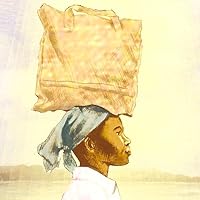
A final note: I am not sure I would have read it as soon as I did but I was attracted to the book by it's hauntingly beautiful cover when I was at my local bookstore.
I listened to this audio CD while commuting to and from work and I was captivated at every sitting. The richness of the characters with their strengths, flaws, pride and foibles, the brutality and terror that was predominant during that period, the mysterious, spiritual and clairvoyant aspects of the slaves' inner world all engaged me deeply in this superbly written novel about the hunt for a beautiful escaped female slave on Maryland's eastern shore a decade before the Civil War and how she is protected by a network of slaves who all abide by "the code" . James McBride's lush and detailed descriptions of the scenery and terrain drew me completely into setting; his chalky, accented, gruff slang of the period made the character's and their stories feel uniquely realistic and I loved how he developed each character in a multi-layered fashion; drawing out their humanity and emotions at just the right moments in the story. The plot twisted and turned so much that I was always on the edge of my seat!
The topic of escaped slaves, and their harrowing, highly-risky journeys to freedom and the vicious greed of slave hunters who are determined to outwit them and break them down, and their courageous protectors' psychology, is one that is rarely discussed in the mainstream, when thinking about America's historical past. The interweaving of relationships between black and white, is much more intimate and complex than the master vs. slave framework and McBride's novel is a testament to how closely interwoven their relationships are. I was also very pleased to see how McBride brought out the African values of the slaves - values of loyalty, belief in God and the ability to emphasize the good in others, that I experienced when I lived in Africa.
I thought this book was absolutely ingenious. It's easy to read and yet it's content is complex. It captured my attention at the very beginning and demanded its own quiet time. It's not the typical slave story, which is one thing that grabbed me and held me. Liz is "the Dreamer", who has a hand in helping free the slaves, no one knows how she fits into the scheme of things, they just know she's a part of the process. She is told the Code the slaves use to make their way to freedom by an elderly woman she meets while in the captivity of a slave catcher. Liz doesn't understand the Code but gains some understanding along the way.
Liz's dreams allowed her to see our present. I've often wondered what the slaves would think if they could see us now. It was Liz's dreams, the telling of her dreams, and the reactions to her dreams that was most significant for me in this novel. I think McBride effectively showed how complicated the relationships were as well as the inner turmoil many probably felt at the time. He did a good job of setting the scenes and injecting the history of the watermen and the slave catchers.
Liz Spocott is a runaway slave in 1850 Maryland. She is shot in the head and captured by slave traders, when she manages to escape, setting free the other captures slaves at the same time. In McBride's novel, we are brought into the heart of slavery, and see it in total truth. We see that blacks could be loyal to their masters and not want to leave, and white owners who didn't always feel as if their slaves were merely property. McBride isn't saying that slavery wasn't bad, but that it's effect on everyone wasn't clear-cut, as we might view it today.
The character Liz Spocott is given visions (much like Harriet Tubman), but in her visions, she sees images of the future. Just like a 21st century person seeing images of slavery, Liz cannot fully process what she is seeing, and becomes convinced that the future will be terrible for people of color. I thought the author's play on time and context to be especially astute as he attempts to take an honest look at slavery.
This is one of those books that I will have to go back and read again at some point. The author weaves actual historical persons within his narrative, presenting a tale that is as colorful as it is thought-provoking. It is one of those novels that you appreciate even more once you've had a chance to digest it. 4 1/2 stars.
READ THIS BOOK! So damn good. Thought provoking, well written story with complex characters and situations. 1850, Maryland: Liz is a slave who is captured in a house with fourteen other slaves. She’s known as the dreamer because she has dreams and premonitions of the future. Within her dreams she learns of “the code” in which slaves use to secretly communicate with one another. Another dream being the “gospel train”. Liz and the group kill their black guard and escape. The journey is to protect the Dreamer and to get her to the gospel train. Throughout we meet with other characters both white and black, slave or capturer. James does an excellent job describing both the characters and the setting. He made me feel for both the slave owners as well as the slaves. This is a memorable, unputdownable book that I highly recommend.
Set on the east coast of Maryland, in the mid 1800s, Song Yet Sung's main character is Liz Spocott a runaway slave, running away from the attentions of her sexually abusive master. When we first meet her, she's been shot, and ends up chained in an attic of a tavern belonging to Miss Patty Cannon, a notorious slave stealer who also picks up runaways and sells them to slaveowners in the south. (as an aside, Miss Patty was a real person.) Liz comes to be known as "the dreamer," because she has prophetic visions of the future. While in the attic, an older slave woman tells her bits and pieces of "the code," an intricate set of signals and words by which slaves can communicate and which also may offer the way to freedom. Eventually, all of the captives break away from the attic, and Patty Cannon decides to go after them to recoup her monetary losses. But there's also another person who is hired by Liz's owner to track her down, so the stakes become higher for Liz and for the slaves that help her after her escape. It is only while she is on the run that she begins to understand the code, and she realizes, with the help of her dreams (visions of what freedom - or the lack of it - means in the future for slavery's descendants) that it is not yet complete.
What really sticks out in this novel is the notion that no one even remotely connected with slavery was free. For example, Denwood, the white slave tracker hired by Liz's owner has his own reasons for doing what he does; Miss Kathleen, the owner of slaves that help Liz is tied to her land and wholly dependent on her slaves after the death of her husband; even the villainous Miss Patty is dependent on slavery to make her living.
Overall, this was a fine novel, one that I can definitely recommend. I stayed up pretty much through the night to finish it, so that tells you something.
I picked this one up at a local used bookstore awhile ago and tried to read it but just couldn't get into it. Then, I saw a few goodreads friends had read it and enjoyed it so I decided to give it another chance. And, I'm soooo glad that I did. I think I just wasn't in the right place to read it earlier.
But, this read was wonderful! I really enjoyed the book - the writing alone is outstanding. I was amazed at the luscious writing ... the descriptions of time and place were just amazingly well written. The author was able to describe the place in a way that just made me feel that I was there, experiencing every single, beautiful word. And, then, by putting that beautiful place up against the brutal and ugly world of slavery, McBride was able bring that time in our history alive for me.
The story is focused on the complexities of slavery - the system, the brutality. And it really brings all of it to life. And I was glad that McBride seemed to bring to focus the fact that no one was able to break the chains of the system - white or black. This was not a book focused on the evil of the white man - it was focused on the evil of SLAVERY itself. No blame really - just a exploration of the system and its complexities. That was quite refreshing and gave me a different perspective that usually seen in books about this time in history.
One element that I really found interesting was how McBride gave the reader a view modern-day African American society through the eyes of a slave. Those passages were fascinating to me. Those visions haunted me and gave me so much to think about.
I really enjoyed this book - very compelling and interesting. I definitely recommend it!
After the 1oth or so page, i flipped to the back of the book to see how long it was and said "thank god, another 340 pages....". Yes, it is that good. This book is filled with rich history and much of the story is drawn from historical events (The story of Harriett Tubman).Song Yet Sung brings into full view a world long misunderstood in American fiction: how slavery worked, and the haunting, moral choices that lived beneath the surface, pressing both whites and blacks to search for relief in a world where both seemed to lose their moral compass. This is a story of tragic triumph, violent decisions, and unexpected kindness.
I had to put this book down because of the racist and unbalanced views of black people today. Every thing the protagonist dreamed about black was negative, even when she imagined MLK. So offensive. I am surprised that more Good Readers didn't comment on that.
Wow! What a wonderful book. I feel as if it should be called “The Tale” of The Song Yet Sung because it is told like a story that has been passed down for ages. If it isn’t a real account in any way, it is another testament to the brilliance of author James McBride’s imagination. There must have been a great deal of research done to bring to life these characters and the scenery of slavery times. I think the author did a great job engrossing the reader in the story. My emotions were definitely peaked toward all of the characters, cheering for the innocent and damning the villains. This story is full of action. One of my favorite things and astonishments was the attention to detail that the author gave to the symbolism of “the code”. Most of us have some knowledge of how those enslaved used a type of secret code to communicate with each other about freedom or any other knowledge. (If this is news to you, please read this book and some history ASAP!) It was phenomenal how the author put life to this secret language that we have only heard or read about. It was so amazing to think about how complicated it seems to me now as a person of the year 2025 that ancestors had their own system by memory and secret connections to communicate. The author did a great job bringing that across.
The dreamer, what interesting dreams. I have a lot of thoughts about the subject of dreams that I won’t share in a review. However, it was not surprising and very familiar the subject of Liz dreaming the future. In fact, I think the Old woman with no name and the Woolman were also dreamers. All cultures must have a history of dreaming and dreamers that is very spiritual and feels other worldly. The history of Black Americans is no different. This knowing spirituality has been mentioned numerous times in literature. There is a history of it in our songs and poems. Many of us have ancestors, family members or even ourselves dream or have this strange spiritual sight or knowing. I could write a book myself on these stories and experiences. I loved how the author gave a peek into this piece of our culture.
Now, I wanted so badly to give this a perfect score but alas, I have some opinions.
I know this book took place in slavery times and the Caucasian characters were a part of the slave trade. But, as a reader in current times I feel there was an over use of that disgusting “N” word used too freely. I get authenticity but we are still reading this in the 2000’s and not the 1800’s and it bothered me. On the one had that could be good, that it bothered me which means I’m not immune to the disgust I feel when it is used unlike some who still use it now. I digress. I didn’t like its over use. Secondly, I would say that there was a lot of dragging until maybe a quarter in. By the halfway point it had picked up tremendously and I was hooked. But at the very beginning it didn’t come in like gang busters and you had to stick with it a little bit to let it pick up. And it does pick, way up!
Lastly, which should have been firstly. As I always say, when reading/listening to audiobooks the narrator can make or break the production. This book was read by the incomparable Leslie Uggems! She was phenomenal. She brought the story right to life as if she was doing her own one woman Broadway production. Amazing. I would recommend the listening of this book. Except.. those N words really grated nails on the chalkboard for me.
Last comment… what the true dreamer dreamed… I hope it never goes away. (If you read the book, you’ll catch that.)
4 1/2 stars in the best way! James McBride has done it again.
Song Yet Sung by James McBride has everything I love in a book, a wonderful and exciting story, great characters, compassion and understanding and excellent writing. Once I opened the book up and began the first paragraph, I couldn’t put it down.
Liz Spocott is a two headed, one who sees visions and dreams, slave of 1850 Maryland, who is attempting to escape to the North. She is shot in the head and captured by some illegal slave traders who capture freemen or steal slaves and sell them in the deep south. After she escapes a second time release the fourteen others who were captured with her, the great adventure begins unleashing forces throughout Maryland in attempting to find her. She becomes somewhat of a legend and is known as The Dreamer.
McBride is so adept at dialogue that it makes it a great pleasure to read:
--Devil stole Jeff Boy! she said. --Who’s Jeff Boy? --Miss Kathleen’s son. From out Joya’s Neck. --Boyd Sullivan’s widow? Herbie asked --Yes, sir. Devil stole him. --Dead? Herbie asked --No, sir. I just told you, sir, she said. Boy went out to the grove. A hole opened up and the Devil came out and snatched him! --Speak sense woman! Herbie snapped. --I am, sir, she sputtered. He was taken down. Taken down, sir. He went out to the grove. Out back behind the cornfield. Ground opened up and the Devil popped out and snatched him down the hole. --What hole? --The hole from hell he popped out of.
It is such a real and dynamic dialogue that the reader can hear it being said. Also the setting of 1850’s Maryland on the eastern shore of the Chesapeake bay is so well described. One can feel the sudden squalls which come out of the bay, picture the eerie swamps and understand the crusty oyster man who resent the plantation owners.
It is a beautiful and action packed book which I would not hesitate to recommend. I am looking forward to reading other books by James McBride.
While I thought it was a heart wrenching depiction of a sad time in our nation 's history , I felt that Liz was not developed enough as a character . I just never really felt like I knew much about her . An ok read , not what I was expecting from some of the glowing reviews.
I thought that a book inspired by Harriet Tubman and a secret code that enslaved Africans used to gain their freedom would be a rich and exciting book. I was dissapointed. The book is well written and keeps your attention, but the leading character, the Dreamer, Liz is not an inspiring character. I understand that the author was trying to make a statement about today, but to have someone enslaved dream that freedom was so bad in the future that you have no drive to free yourself today is a stretch.
The code was the best part of the book. The author's notes say that so historians do not believe there was a code but we know that there was a language, like spirituals that was used to convey messages so why not a code. I enjoyed reading about the subtle ways we could use to communicate.
I thought the book was overly violent. I had the impression that maybe the writer was making the book easy to convert to a screenplay. The most developed character was Denwood, the "Gimp" who was a slave catcher. It would have been a good book for high schoolers if it weren't so violent.
There was good imagery of the beauty of the Eastern Shore in Maryland. I found the fact that for these people, freedom was only 80 miles away but the difficulty of the journey making it so much more, fasinating. The book also highlighted the watermen on Eastern shore and how slavery worked in that industry.
This was a hard one to rate. I would have given it a five if not for the violence and language. But it's hard because that graphic detail was a big part of what made the book what it is. I was really intrigued by so much of this book--the "code" the author comes up with as part of the Underground Railroad. I appreciated that it didn't divide by race who was good and who was bad. My favorite lines of the book: ---But I don't know who I am. ---Well, there it is, he said ruefully. That's a problem, ain't it. If you don't know who you are, child, I'll tell you: you's a child of God. ---With all I seen, I don't know that I believe in God anymore, she said. ---Don't matter, the old man said. He believes in you.
The writing is beautiful, and I loved how it put together ideas of race, religion, freedom, and identity. I just wish McBride could have done it without all that other stuff.
It sure starts out with a bang and closes with many bangs. Excellent thought provoking book. This book is an important work of Black Literature. It was hard to put down at times and then it was hard to pick back up at times. I highly recommend this one.
My second reading was in October, 2022 and the book is still as powerful as it was the first time I read it six years ago. It should be required reading for all students in middle and or high school. It is a major piece of writing.
I think my reading month might be cursed, I’ve read so many 2 or 3 star books! I was hoping this would be the book to turn it around, but unfortunately Song Yet Sung was difficult to follow and tended to drag. There is a large cast of characters with no one standing out as a ‘main’ character. I really wished I had enjoyed this one more, but onto the next.
Song Yet Sung is about Liz, a runaway slave who has visions of a future for Black people that don't really seem that great. Her escape sends a black market (heh) slave catcher and a bounty hunter after her and she learns about the code of the Freedom train.
A mastery in storytelling. This story rises right out of the Eastern Shore wetlands and sweeps the reader into not only the maze of creeks and swamps but also immerses the reader into the complexities of a system that takes so much more to escape than simply running. The main character is powerful but the stories of the characters she encounters are just as meaningful and developed. The world is populated by complex and intriguing characters around every bend. It seamlessly weaves in and out of action, mystery, and history. The setting shares a soul with the characters themselves. The writing is engaging and immersion and feels more like oral history storytelling than simply book reading.
Definitely, on my classics lists of books will be revisiting just to enjoy the experience of reading it.
A unique look at slavery and greed and introspection. The use of a dreamer to give the reader an opportunity to put current times in contrast to those in the story and slavery in general was unexpected and made this book more than just a story.