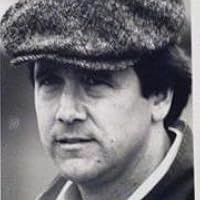
Late in life, writing his memoirs, John Bell Hood wrote, no man is justly entitled to be considered a great General, unless he has won his spurs. Hood did not explain how an officer earned his spurs, but he didn't need to. One may assume that such an accomplishment came about when a soldier conscientiously performed his duty, and gave his all in attempting to meet his country's expectations of him. In this work, the first of two volumes, Hood's rise in rank is chronicled. In three years, 1861-1864, Hood rose from lieutenant to full general in the Confederate army. Davis emphasizes Hood's fatal flaw: ambition. Hood constantly sought promotion, even after he had found his highest level of competence as division commander in Robert E. Lee's army. As corps commander in the Army of Tennessee, his performance was good, but no better. Promoted to succeed Johnston, Hood did his utmost to defend Atlanta against Sherman.
Stephen Davis is the author of more than a hundred articles in such scholarly and popular publications as Civil War Times Illustrated and the Georgia Historical Quarterly, and writes a regular column, “Critic’s Corner,” on Civil War bibliography, for Civil War News.
Librarians note: There is more than one author in the Goodreads database with this name.
Assessing Texas Brigadier is a difficult task. I could write two reviews. In one I could confidently give it a high rating, yet another equally sincere and accurate review could be highly critical. There is much good and some not so good. The massive size and content (and it's only the first of two volumes) will appeal to some, but will be headache-inducing for others. Civil War experts will comfortably immerse themselves in its detail, while casual or neophyte Civil War enthusiasts will drown in it. Including the extensive footnote narratives (which are often quite interesting) and back matter, the 440-page book is a tome to be reckoned with that likely exceeds 200,000 words. I believe the second volume is of similar size. If so, author Steve Davis has written something approaching a half-million words on the life, battles, and campaigns of John Bell Hood.
One of my primary concerns is the abrupt U-turn Steve has taken in recent years regarding his interpretation and opinion of the personal character of John Bell Hood. Formerly a fearless Hood defender, in only the past few years he has morphed into a Hood detractor like those he used to publicly challenge in both word and in print. The first time I met Steve Davis was in the early 2000s during an Atlanta Campaign tour and he was defiantly wearing a John Bell Hood tee-shirt. His earlier books on Hood (Atlanta Will Fall, What the Yankees Did to Us, All the Fighting They Want, and A Long and Bloody Task) are devoid of any harsh attacks on Hood’s character. This is not the case in Texas Brigadier, and there are no new substantive discoveries that explain the change.
The most revealing illustration of Steve’s sudden transformation is that he wrote the Preface for my award-winning book John Bell Hood: The Rise, Fall, and Resurrection of a Confederate General (Savas Beatie, 2013). In his Preface Steve refers to earlier critical books on Hood, and concludes:
“Sam Hood addresses this trendy literature here, commendably pointing out ‘factual errors, inaccurate and misleading paraphrasing of primary sources, and apparent concealment of historical facts.’ On the other hand, in the past few decades there has appeared at least a small bookshelf which might be called ‘Hood’s scholarly rehabilitation/work in progress.’ Whether Sam’s keen eye and sharper pen leads to a better shake for Hood at the bar of history will be anyone’s guess. For now, I invite you to join Sam in taking a fresh look at John Bell Hood’s historical record.”
Why and how Steve Davis reversed course in some of his views on John Bell Hood in the last year is perplexing.
As for the content of Texas Brigadier, as a distant relative of the general I have studied and written extensively on John Bell Hood for 25 years. Just about everything I have ever read or seen on Hood’s pre-October 1864 life is included in this book; some material and information that I deemed too insignificant to publish. None of the new material contains substantive information, but it does further corroborate most of what was already known about Hood.
This book—the first volume—covers most of the known prewar biographical information on Hood, and also provides details of his battles and campaigns. Steve presents all of Hood’s battles—major or minor—in some degree of detail.
In addition to presenting documented details of virtually all the events in Hood’s prewar and Civil War life through the fall of Atlanta, Steve also includes his own opinions, analyses, and interpretations. Opinions are proffered on virtually every major event (and even some non-events). They are often not just Steve's, but opinions and interpretations by other authors and scholars as well. Some readers will like this treatment, while others will be overwhelmed by having to read what several scholars thought of the same subject.
I am a John Bell Hood biographer of sorts, and I proudly defend the twice-severely wounded man who died young and is unable to defend himself. To be sure, there is balance in Texas Brigadier—significantly more than in some of the earlier polemics that focused their bias on Hood. I could challenge Steve’s presentation of a few of the controversial events covered in Texas Brigadier. For example, he spends several pages presenting the numerous letters written between and among senior Army of Tennessee commanders and Richmond authorities complaining about Joe Johnston’s retreating tactics. Steve then accuses Hood of scheming to replace Johnston as army commander, citing his letters. Seemingly everyone corresponded with Richmond but, according to Steve, only Hood had ulterior motives. Another example is Steve condemning Hood for criticizing the effort of the army at Jonesboro, citing Hood’s official report of the battle. The fact is that Hood was not at Jonesboro; he remained inside the Atlanta fortifications with Cheatham’s Corps, and sent Hardee’s and S.D. Lee’s corps to Jonesboro with Hardee in overall command. Jonesboro was lost and Atlanta’s fate was sealed. Hardee abruptly resigned, left the army, and did not submit an after-action report to Hood. S.D. Lee did submit a report that was highly critical of the effort of the troops, and Hood, in his official report, simply repeated what Lee reported—almost verbatim. Yet Steve calls Hood (not Lee) heartless and dishonest for his criticism of the troops at Jonesboro. Those who are interested in these and other specific controversies regarding John Bell Hood can easily find my two books that present his side of the story. One book contains his long-lost personal papers that put many of these and other major issues surrounding Hood to rest.
Another puzzlement is Steve’s inclusion of Hood’s Richmond courtship of Sally “Buck Preston in the book, as their off-an-on relationship had nothing to do with the Atlanta Campaign. Steve heavily cites previous authors Richard O’Connor, Stanley Horn, Thomas Connelly, John Dyer, and others, yet these famous scholars either totally excluded Preston from their books, or made only passing mention of her. Only Wiley Sword in his now widely discredited The Confederacy’s Last Hurrah created a dramatic side story around Preston and Hood. In fact, Steve makes no mention of Sally Preston in his own book Atlanta Will Fall.
Texas Brigadier was tenaciously researched and brilliantly written—Steve Davis can wield a pen like few others. Had the author’s newly developed predisposition against John Bell Hood not diluted some portions of the book, and had a careful editor culled from the manuscript some of the excessive material, this book could have been the premier work on Hood's early battles and certainly on the 1864 Atlanta Campaign. Even still, it should be ranked among the best.
Despite its shortcomings, it will surely earn its place as one of the best books that considers John Bell Hood’s tenure with the Army of Tennessee.
I was initially dissuaded from reading this book because a reviewer alleged unfair treatment of Hood. I found that not to be the case. This is an in depth study of Hood’s generalship up to the fall of Atlanta and is, in general, highly favorable of Hood. The only negative attributes of Hood that the author provides have to do with his personality: his ambition and his occasional unfair bad mouthing of the performance of his troops.
Writing an evaluation of Hood’s generalship in 2019 necessitates historiographical discussion which I found fascinating. Davis is constantly comparing earlier writings of the events and revising them or debunking myths. Some of the most important revisions included: the highly exaggerated casualties that Hood supposedly incurred during his three battles for Atlanta (they were not vastly higher than Sherman’s and well within the normal proportion for an attacking army); Hood’s strenuous efforts to fill his ranks by forcing back echelon soldiers into the ranks; and the fact that Hood was not “fooled” at Jonesboro but simply unable to defend the extended line against Sherman’s much greater numbers.