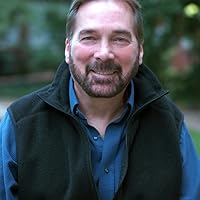
Norman Dubie is the author of over eighteen books, often assuming historical personae in his works. A recipient of numerous fellowships and awards (including the NEA, Guggenheim, and the Ingram Merrill Foundation), Dubie is a graduate of the Iowa Writer's Workshop. He teaches in the graduate Creative Writing Program at Arizona State University, in Tempe, AZ, where he is Regents Professor of English.
Today I needed to write a poem. I also needed some inspiration. So I dipped into this book again, which I like to do a lot. It worked. Here are some of my favorite places in the book:
" The bird climbed, climbed Slowly then dissolved
Like smoke from some lonley howitzer Blossoming out over the bubbling bone pits of lye, over The large sunken eyes of horticulture."
"Speed and sleep have overlapped. My body,
Sack for eternity."
"Grandmother whispered, 'This is a bad sign in any religion.'"
"By sunrise we had all died in the war. What's more We always knew it was possible."
Norman Dubie's Groom Falconer is one of the few poetry collections I read over and over--it is a kind of perfection. It has been a tremendous influence on my own writing, and I frequently give the book to my own students for the benefit of their writing as well. Along with the entire trilogy that includes Springhouse and Radio Sky, this collection is one of the most important books ever written by an American poet.
Dubie is one of my top 5 favorite contemporary poets, maybe poets of all time. He has a unique gift for lyric narrative, he always seems to speak from deep within his subject. And unlike 95% of the poetry I read, Dubie's poetry actually teaches me things beyond the poet himself -- things about the world, history, etc. Great line breaks too.
Dubie's work haunts. He begins the poem entitled Ars Poetica, with the line, "It was polio season," and brings the reader to the finish with the line: "Twice is too often/ Considering how beautiful she was."
Some excellent dramatic monologues. Rich poems that you can get something new out of with each reading. I also enjoy the way he uses history as a subject.