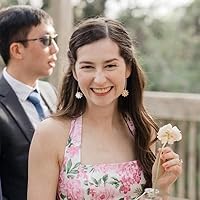
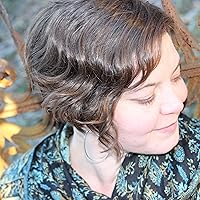
Beginning with a harrowing account of her childhood in a Belgian convent, where she was placed at the age of four, Laure-Anne Bosselaar shows us how early emotional and physical deprivation can be overcome by intelligence, humor, curiosity, and determination. Although many of her poems are overtly autobiographical, they are never merely personal.
Pulitzer Prize-winning poet Stephen Dunn wrote of A New Hunger: “There's a time in the life of a poet as a maker of poems, if she or he is going to become more than just good, when the voice of one's second self fully emerges, distilling and orchestrating the poet's concerns, while simultaneously infusing them with an inner melody—a music that reaches and satisfies both ear and mind. This is to say that Laure-Anne Bosselaar, with her wonderful third book, A New Hunger, has become more than just good. It's an occasion to mark and to celebrate.”
The acclaimed author of two previous collections (The Hour Between Dog and Wolf and Small Gods of Grief, which won the 2001 Isabella Stewart Gardner Prize), Laure-Anne Bosselaar grew up in Belgium, where she worked as a talk show host, commentator, and voiceover for Belgian radio and television. Fluent in four languages, she moved to the United States in 1987.
Laure-Anne Bosselaar grew up in Belgium, and moved to the United Statesin 1987. Fluent in four languages, she has also published poems in French and Flemish. She is the author of The Hour Between Dog and Wolf (with an introduction by Charles Simic), and of Small Gods of Grief, which won the Isabella Gardner Prize for Poetry for 2001. Her third book, A New Hunger, was selected as an ALA Notable Book in 2008. Among other publications, her poems have appeared in Ploughshares, The Washington Post, AGNI, Georgia Review and Harvard Review as well as in numerous anthologies. One of her poems won the National Poetry Contest, sponsored by I.E. magazine. She is also the recipient of a Pushcart Prize. Laure-Anne is the editor of four anthologies: Night Out: Poems about Hotels, Motels, Restaurants and Bars; Outsiders, Poems About Rebels Exiles and Renegades; Urban Nature: Poems about Wildlife in the City; and Never Before: Poems about First Experiences. She and her husband, poet Kurt Brown, translated the work of Flemish poet Herman de Coninck: The Plural of Happiness (Field Translations Series). She was awarded a Fellowship at the Breadloaf Writers’ Conference, was a Writer in Residence at Hamilton College and at the Vermont Studio Center, and was awarded the McEver Chair in Poetry at Georgia Tech in 2008. She teaches at Sarah Lawrence College and at the Low Residency MFA Program at Pine Manor College. She lives in New York City.
Laure-Anne Bosselaar’s poems point out, direct, goad, ask questions of themselves, argue, accuse, alive within the lines. Form and repetition both reshape meaning and with each repeat gain emotional depth and strength. Like in “Birthday,” where reading the line “when the last leaves let go, let go,/have all let go…” you truly get the sense of leaves falling in bunches until the last leave gives, she takes daring chances throughout “A New Hunger,” stretching language, never taking the easy route to the core of an image, but also never making the reader struggle; the poems have an ease, and effortlessness that belies their potency, their seriousness of purpose and execution.
She writes from deep inside the poems. For instance near the end of “The River’s Mouth, The Boat, The Undertow,” we are “in the stoop’s cracks,” not on the stoop, sitting idly by as events take shape around us, but deeply engaged, whether we want to be or not, in that which is pulling us.
There is the vividness of longing, of regret, rooted to the physical; our own senses and our sense of place, of belonging to somewhere or someone. The images in her poems connect--if there is a song, we are clear what kind of song it is; she helps us hear the music, sad or not.
Her poems communicate the indelibility of experience; how hurts in the past echo even today, how suffering is shared, yet always intensely private and personal, and how, we all, though older than the child from the poem “Counted” have “already have lived long/enough for shadows to pencil [us] in…”
The long poems, in particular, that start off this book are quite potent. Bosselaar does great work with the fanciful exploration of a detail or image, winding out and coming back, to make every moment we live a culmination of every other moment we've lived, so our joys and regrets and terrors all subsist within the same moment of time.
I grabbed this off the library shelf because it was short and because Tuesdays are for poetry. Half way through I was in love, but then something happened. Maybe the tone changed or the I got confused but I stopped feeling it as much. Poetry demands to be felt so this was disastrous.
Very much swept in by the first long sequence. Love the peopled trains and serious study of us. There's something daringly plain in the poems in the last half that scares me (which is fascinating), and a sadness that I can feel. Thank you.
This is the first book of poems by Laure-Anne Bosselaar that I have read - but it will not be my last. I really liked it. Talk about self-aware poems - WOW.
Laure-Anne's latest book of poems. Another keeper- that will last. I bow down to the altar of her books! These are the kinds of poems I long to read again and again. The kind of poems that I long to write.