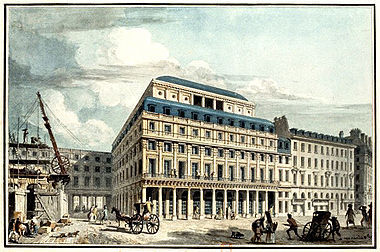
L’École des femmes est une comédie en cinq actes et en vers.
La comédie de Molière L'École des femmes est considéré par les critiques pour être parmi ses plus beaux travaux. L'histoire d'un homme qui est tellement obsédé par l'infidélité féminine qu'il projette d'épouser sa jeune pupille naïve, qu'il a formé pour être la femme parfaite, est un exemple classique du style comique de Molière.
Ce livre est une oeuvre du domaine public éditée au format numérique par Norph-Nop. L’achat de l’édition Kindle inclut le téléchargement via un réseau sans fil sur votre liseuse et vos applications de lecture Kindle
French literary figures, including Molière and Jean de la Fontaine, gathered at Auteuil, a favorite place.
People know and consider Molière, stage of Jean-Baptiste Poquelin, also an actor of the greatest masters in western literature. People best know l'Ecole des femmes (The School for Wives), l'Avare ou l'École du mensonge (The Miser), and le Malade imaginaire (The Imaginary Invalid) among dramas of Molière.
From a prosperous family, Molière studied at the Jesuit Clermont college (now lycée Louis-le-Grand) and well suited to begin a life in the theater. While 13 years as an itinerant actor helped to polish his abilities, he also began to combine the more refined elements with ccommedia dell'arte.
Through the patronage of the brother of Louis XIV and a few aristocrats, Molière procured a command performance before the king at the Louvre. Molière performed a classic of [authore:Pierre Corneille] and le Docteur amoureux (The Doctor in Love), a farce of his own; people granted him the use of Salle du Petit-Bourbon, a spacious room, appointed for theater at the Louvre. Later, people granted the use of the Palais-Royal to Molière. In both locations, he found success among the Parisians with les Précieuses ridicules (The Affected Ladies), l'École des maris</i> (<i>The School for Husbands</i>), and <i>[book:l'École des femmes (The School for Wives). This royal favor brought a pension and the title "Troupe du Roi" (the troupe of the king). Molière continued as the official author of court entertainments.
Molière received the adulation of the court and Parisians, but from moralists and the Church, his satires attracted criticisms. From the Church, his attack on religious hypocrisy roundly received condemnations, while people banned performance of Don Juan. From the stage, hard work of Molière in so many theatrical capacities began to take its toll on his health and forced him to take a break before 1667.
From pulmonary tuberculosis, Molière suffered. In 1673 during his final production of le Malade imaginaire (The Imaginary Invalid), a coughing fit and a haemorrhage seized him as Argan, the hypochondriac. He finished the performance but collapsed again quickly and died a few hours later. In time in Paris, Molière completely reformed.
What is Comedy? What makes us laugh in theatre? A great deal has been written about this and this review could not do the concept justice. But reading and watching recently a performance of Molière’s L’École des Femmes raised the matter in front of my eyes.
In this play, which as most of Molière’s plays, belongs to the subgenre of a comedy of manners, there are many of the elements that one would expect in funny plays. There are stock characters –following the tradition of the Commedia dell’Arte; there is a great deal of “double entendre”, often through parallel dialogues on the stage and which Marcel Proust could not fail to notice; there is a critique to popularly unpopular professions, such as notaries and other representatives of the law; the plot revolves around the universally farcical figure of the cuckold or “cocu”; there are surprising and magic solutions to tangled up problems that will draw out a smile; there is a bit of slapstick and “coups de bâton” in a purely guignol tradition. All these elements are in the text and the staging can supplement them with mimicry, ridiculous clothing, and doll-like movements.
As was the tradition in seventeenth century French drama, the play is written in Alexandrines and follows the three Aristotelian units of plot, time and place --athough in this play the time unit is as flexible as Dali’s clock. It also follows the more French concepts of “vraisemblance” and "bienséance" (which would have banned Shakespeare) as even the he guignolian coups have to happen off the stage.
This is, and was from its first performance in 1662 onwards, one of the most successful plays by Molière (Jean-Baptiste Poquelin, 1622-1673). At its première it already pleased the King, Louis XIV, gaining his support which later became crucial. L’Ecole des Femmes followed L’Ecole des Maris by one year, and it continued the very popular themes of cheated husbands and of the education of women. It was also successful because it was controversial, highly controversial in fact. And this was easily the best thing for its ticket-office.
Apart from some “sous-entendres” or “equivoques” which at the time seemed to border obscenity too closely (and therefore violating the “bienséance” rule) the play also raised debates on the role and education of women at a time when women were very actively engaging in their literary and intellectual Salons (les Précieuses ridicules). A “querelle” ensued for which the best ghostly protection came from the royal benefactor. Molière replied to the criticisms with another play, La Critique de l’Ecole des Femmes in which a woman and a muse discuss the previous play. Within a few months from the first staging, the two plays were subsequently performed together.
The performance.
I had read this play years ago, but I reread it recently because I was going to attend, two weeks ago, to a performance at the Comédie Française. The theatre founded by Louis XIV, the ghostly patron of significant presence, in 1680.
The mise-en-scène on the 3rd of July at the Comédie Française was by Jacques Lassalle and the two main actors were the formidable Thierry Hancisse (Arnolphe) and the angelical Adeline d’Hermy (Agnès).
I extract no joy in summarizing the story of a novel or play in my reviews, although I am interested in plot dynamics. In this text, the main character, Arnolphe, begins with great confidence on himself and on his aims, but gradually loses control of the situation he himself has created and falls prey in his own net. This turn around constitutes part of the comic (or the tragic?), and follows the tradition of the “Burlador burlado”, a stock figure which originated in the “Don Juan” from early seventeenth century Spanish drama (Tirso de Molina’s “El Burlador de Sevilla”). A superficial reading therefore could take us along a well trodden path of plot and charcter development.
With Lasalle’s interpretation--accompanied by a flawless rendition of the two actors, however, the easy understanding of the play was turned upside down for me.
The Arnolphe I saw turned through the long monologues into the tragic figure of a man who desperately loses his love precisely during the process in which this love captivates him more and more. His obsession in controlling a woman, to the point that he is willing to marry someone ugly and stupid, becomes his undoing precisely because the chosen lady is neither dumb nor hideous. The actor looked exhausted after wrenching out so much anguish out of his text.
But if the above distressing Arnolphe could be extracted from Molière’s text (and he himself was its first actor), we see in Lasalle’s Agnès not just the one that Molière concocted, who rebelled against the string of the puritanical moral laws and who was willing to take risks in order to reject her unsuitable suitor, but one who will also show disdain at her silly and weak beau when he proved not to have her courage.
If you are low-spirited and feel like you cannot indulge in serious reading, try Molière. He will certainly uplift you with one of his comedies. They are full of satire though at times far-fetched and absurd; nevertheless, you'll be thoroughly entertained with a good dose of laughter, and that's guaranteed. This is my fourth work by him, and I can honestly say that it is a pure delight to read him.
L'École des Femmes is Molière's first verse comedy and with it, he has set the stage for his later much-admired work. When a work is one's debut, it may lack the polished charisma that is founded in later works, but I didn't feel any novelty on the part of Molière; he has displayed equal confidence here to that of his more talked about works. Molière's works are not deep in plot, but there is meaning in them, more than that meets the eye, through his satire.
This play is a fun comedy that tells the hopelessness of self-calculation. The hero is a man of forty-two who plans his marriage to his ward - a young ignorant girl whom he has raised from infancy with a view of marrying. But his much carefully calculated plan goes awry when the girl falls in love with a youth, and no matter what precaution he takes, he is thwarted in his plans at every end. Molière seems to be telling us that life in itself is full of surprises and thus, one shouldn't have too fixed expectations on future events. "The best planned marriages have gone awry" seems to justice to the play. :)
I've become a huge fan of Molière's. To me, he is the best entertaining playwright that I've come across. All I can say is that, je t'aime, Molière. C'est toujours un plaisir de te lire.
P.S. One word must be said about my choice of translation. After reading the first Act in both English and French, I decided to go with Richard Wilbur's translation (as I've done so far with all Molière's plays). I found the rhyming verses of Wilbur's translation more to my taste than my own. :) :)
We love Molière for his flair and wit And laugh out loud while the rest just sit.
I saw L’Ecole des Femmes performed at the Comédie-Française in Paris two weeks ago in the company of a little group of women friends. It was a hugely enjoyable experience for many reasons but mainly because we found the play so funny, laughing more frequently than the other patrons of the theatre who seemed to be a very sober lot indeed. It helped that we’d all looked over the play recently - I had read half of it, hoping to keep a little of the suspense intact - and so we were able to follow the dialogue easily and knew where the funny bits were. But I think we laughed as much at the wonderfully dramatic performances of the actors as at the lines themselves. All the performers were engaging but the actor who played the main character, Arnolphe, and who is on stage practically the entire time, was superb. Objectively viewed, the character of Arnolphe lurches between ridiculously comic and morally reprehensible but the actor who played him managed to engage our sympathy for his predicament in spite of our better judgement.
I finished reading the play today and was surprised to see that the ending of the original was slightly different to the staged version. I had applauded Molière’s foresight and wisdom in granting the main female character, Agnès, a say in her own destiny in the final scene of the play. However, I was a little previous with my applause. It would seem that the director, Jacques Lassalle created a slightly more nuanced ending while the original ending is more in keeping with the times: Agnès’s destiny is decided entirely by the men in her family. Molière did give Agnès some great lines though, words which shine with perfect simplicity and truth but which are subtly clever as well.
Horace: J’en suis assez pressé par ma flame amoreuse Agnes: Quand je ne vous vois point, je ne suis point joyeuse Horace: Hors de votre présence, on me voit triste aussi Agnes: Hélas! s’il était vrai, vous resteriez ici
Agnès learns some harsh lessons at the Ecole des Femmes but she manages to turn them to her advantage more often than not. For a character created in 1662, she sometimes sounds surprisingly modern. Bravo, Molière.
"Digan lo que quieran, el cornudismo se considera fácilmente bajo un aspecto menos horroroso, y, toda la habilidad consiste en saber tomarlo por el lado bueno"
Quizás debería traducirse mejor como "La escuela de las esposas". Esta comedia empieza cuando Arnulfo, quien gusta lo llamen Señor De la Souche (será importante en los enredos de la pieza teatral) conversa con su amigo Crisaldo sobre su opinión de lo que debería ser una esposa. Refiere que es una cosa terrible el ser cornudo (su mismo nombre es un juego de palabras con ello), aquí su amigo juega en la obra un papel en contra, alegando que el ser cornudo no es lo peor del mundo y que se puede ser cornudo y feliz hasta cierto punto. Arnulfo le habla de su modo de ver las cosas sobre la que debe ser su esposa. En su opinión, no importa para nada que sea instruida o sepa escribir incluso (me gustó la referencia a las grandes escritoras francesas de la época de Molière, él siempre daba en sus comedias temas muy actuales) sino que sea una esposa sumisa e incluso necia. Pues los conocimientos acercan al libertinaje y la ignorancia permite el control absoluto. Y él encontró en Inés, una joven que fue cuidada por él a la candidata perfecta. Me había olvidado de este tema que lo he visto poco, pero recuerdo haber leído en otras comedias. En la época, personas mayores se casaban con mujeres jóvenes en una tradición muy extendida, por la cual el hombre era encargado de proteger e instruir de alguna manera a la mujer. Pero en este caso la relación va más allá pues Arnulfo realmente ha criado a Inés (abandonada por sus padres) y quiere tomarla por esposa. Frente a esto está el personaje joven antagonista clásico de las comedias que es Horacio. Éste conoce recién a Inés y empezará el conjunto de enredos en los cuales se puede apreciar cierto "despertar" de la joven pero que en realidad es parte de las cosas más simples de la vida. Es de lo que habla en parte la obra del despertar de la ignorancia, también de los modelos de mujer de la época y la emancipación de la tutela tradicional. Se menciona que este último punto aunque nos pareciera muy obvio fue un poco repudiada en la época por los sectores más tradicionales. Me gustó también la presencia de los dos criados de rnulfo Alán y Georgina que es algo que no había visto creo antes, dos personajes de la misma posición pero de diferentes sexos que parecen rivalizar entre ellos. En general, no me pareció tan gracioso como otras comedias de Molière y más bien son exposiciones sobre lo que piensan los personajes es el ideal del amor, matrimonio o infidelidad. De aquí se desprenden algunos comentarios mordaces o risibles pero nada más. Ni los enredos ni la parte romántica me llegaron a encantar por lo que la obra en general me queda un poco en debe.
"Los hombres de vuestra apostura son más eficaces que los escudos, y sois de un temple para hacer cornudos"
After reading this, it comes as a surprise that people in 17th century France did not conduct all their business in alexandrine rhyming couplets, it all seems to come so natural, like.
Molière, je t'adore.
(All rights reserved: this is one of my own photos from a recent trek round Paris. Truly a trek, on foot. In silly shoes. I am still paying the price.)
Je me demande souvent si l'on peut parler de la comique de Molière, ou de sa tragédie. Qui aurait une conscience intense et lucide du tragique de la condition humaine, ne rirait peut-être jamais. Admettre le rire, c'est l'accepter pour ce qu'il est : une manifestation spontanée, impliquant une optique qui lui est propre et se situant à un certain étage du jugement. Dépasser le rire, c'est l'abolir, la méditation tue le rire. La réflexion peut procéder du rire , mais on ne rit pas communément à la reflexion. Molière sait arrêter à temps la stylisation comique. Il ne réduit jamais ses personnages principaux à l'état de fantoches, il se refuse à sacrifier leur consistance et leur réalité pour s'assurer des rires faciles. Par consequent, vous pouvez ou non rire, mais clairement vous aurez du mal à délimiter la ligne fine entre comique et tragique.
In 1662, many critics, and some bishops, attacked this play for: 1) Moliere's realism in certain scenes and even in certain words; 2) the character M played, Arnolphe who parodies the Ten Commandments (here, of marriage); and 3) the impiety of Arnolphe's sermon to his pupil, whom he's trying to raise as a chaste woman, not a runaround. Performed 31 times between Boxing Day 1662 and Mar 9,1663, when the playwright had been married a year, its success resulted in the Sun King Louis XIV granting Poquelin/ Moliere a pension of £1000 not as comédien, but as excellent poète (Maynial intro to Hachette Molière Théâtre, tome II, p.40). Maynial argues that this, Moliere's most "modern" play, where a debate has social implications. In the first scene, Arnolphe's friend tries to talk him out of marriage, not to be made a "sot," a cuckold. But Arnolphe has a plan to avoid the social sophisticate and her gallants, or the chaste wife who spends all their money or the one buying expensive hats, or who expects them as gifts. Arnolphe plans to marry a simpleton, who only knows one poem, a riddle, "Même ne sache pas ce que c'est qu'une rime"(43). One who knows only what is necessary, "De savoir prier Dieu, m'aimer, coudre et filer," To pray to God, to love me, to spin and sew.
Moliere delights in every scene, descending from discussion of women and society to the proud Arnolphe's arrival home, where his untrained peasant-servants don't know how to serve. When he knocks, the married couple fight over who will go downstais to open the door; when their master threatens to starve whoever does not open it, they battle to prevent the other. Meanwhile the handsome young son of his friend has visited his house daily while he was away, and fallen for Arnolphe's protected, childlike student Agnes. The male servant explains jealousy, wouldn't his wife be jealous if someone dipped a finger to taste her soup? Well, "La femme est en effet le potage de l'homme," almost a proverb. When a man sees another dip his finger, "tremper les doigts dans sa soupe," he flies into a rage. (57)
Moliere's genius at character then brings on stage the beloved simpleton Agnes, whom Arnolphe asks, "Did a young man visit while I was away?" Honestly, she recounts minutely how each greeted the other, bowed, she from her balcony sewing, he out front, and each time each bowed, she enumerates. Same thing with her Petrarchan instruction by the servant woman Georgette, how her eyes have "blessé", wounded someone to die in two days...but she can also cure him with her eyes. Agnes is astonished, wants to heal the wound she caused. (60) Again, her simplicity causes her a detailed recitation of exactly what she was told, and did. The simple person's inability to summarize and analyze thus prolongs the torture of her recounting details. (II.v.) To Arnolphe's questioning what the young Horace did: give her a box with a jewel, give the servants money, and tickle her backside. The "teacher" wants to ask if the lad touched or took anything, she says, Well, he did, but you'll get mad if I tell you. Repeating both sides for two pages, Agnes finally relents and says, "Il m'a pris le ruban que vous m'avis donné," He took the ribbon you gave me. Naive, she thinks he'll be so mad about the ribbon, though he really fears her being "felt up" [350 years before our Harasser in Chief].
In Act III.ii, Arnolphe cites his ten commandments, Maxims of Marriage. He introduces with admonitions of male superiority--she should only think of "ma bonté" in raising her status. "The bearded are the bosses," women should submit as to a governor, or a soldier to his superior, or a valet to his master, a child to his father. The Ten Maxims forbid women all they love: to dress only as the husband allows, little to no make-up, no expensive hats (or expecting such from husband), no cards or gambling, no visitors but those invited by hubby, no women's groups. Most surprising to me, no writing desk, nor paper, pen and ink (70). Arnolphe has changed his last name to Stump, De la Souche. When young Horace confides in Arnolphe, not knowing the older man has forbidden him, the delicious irony of the youth and Agnes's confidences, including a letter where Agnes says she wants to be with him, Arnolphe warns how love changes men, even to their complete opposite: a hoarder into a benefactor, "Un vaillant d'un poltron, un civil d'un brutal"(74).
In Act IV.ii the Notary arrives to do the marriage ordered for the evening, before Agnes's letter raises doubts. Arnolphe doesn't see the Notaire enter, but does comment on the letter. The Notary thinks he's criticizing him to "guarantee no surprises," or "this news won't be spread in society." Arnolphe, unaware the Notary's heard it all, asks, "Who said anything against you?" "Vous, qui me prétendez faire passer pour un sot"(80).
In the final Act we learn a preposterous fact, reminding us that marriage in the West 350 years ago was closer to ancient norms, family arrangements: Horace's father Oronte arrives in haste, an overnight coach, though he'd not even written his son a letter to inform his altered life: "C'est qu'il m'a marié sans m'en récrire rien"(99). Horace implores Arnolphe, best friends with Oronte, to intercede on his behalf. Of course, Arnolfe does exactly the opposite, reflecting the patriarchal norms, "Quoi? se laissera-t-il gouverner par son fils?" The plot/"intrigue" concludes by the fruits of a secret marriage and a twist I shall not spoil, but Agnes turns out to be Angélique, the daughter of a military hero who's been abroad. The play ends, "Et rendre grâce au Ciel qui fait tout pour le mieux." I say, "Non! Non! Grâce au Moliére, qui fait la intrigue," made the plot (104).
See Moliere's sequel and defense, La Critique de L'Ecole des Femmes, which I am reading now, will post review in a day or two.
[Bought mine outdoors on the banks of the Seine in 1968]
Four years in studying French and the French culture, yet I still cannot understand how they possibly can make such meaningless and boring books and plays. And even movies. Moliere, I feel, had something he wanted to say but did not know how to say it. Or had nothing at all on his mind, so he made his thoughts up as he wrote. It is such a shame that writers in his time were more worried about the sound, the cohesion, and the public acceptance of their works more than the reason for writing something. His work is like a mute song; you can hear the melody but it cannot say anything for the life of it.
This rhyming play with wicked humor explores the double dealings and double standards of Arnolphe, an insecure man who contrives to show the world how to rig an infallible alliance by marrying his young ward, Agnès. Arnolphe is obsessed with the fear of being made a cuckold so he has raised Agnès for 13 years in hopes to mold her to his liking. Enter young Horace and what could go wrong?! **wink**wink**
Beni okurken Moliere kadar güldüren bir oyun yazarı yok sanırım. Bu kitabını da yüzümde gülümseme ile okudum. Kadınlar konusunda bazı yargılarını kabul etmem elbette mümkün değil; ancak dönem itibariyle anlayabiliyorum diyelim. Yine de dediğim gibi çok eğlendim. Yakın bir zamanda sahnede de bir Moliere oyununa denk gelebilmem dileğiyle!
Isınamadım ben Moliere'e, belki de Shakespeare'in laneti bilemiyorum. Basit buldum. Güzel başlıyor oyunlar, tempolu, keyifli, insan bir merak ediyor neler olacak ama o ölçüde hayal kırıklığı ile tamamlanıyor. Beklentim mi fazla acaba?
Oyuna dair şunu diyebilirim: Arnolphe, senin için çok yumuşak bir son bu ya, ciğerim hala sıcak. (Moliere'in tarzı bu demek ki) Örümcek kafalı manyak seni !! (tespit, tespit kesinlikle hakaret yok)
Moliere tecrübem “Kibarlık Budalası” ve bu kitapla sınırlı. Belki diğer eserleriyle değişebilir kanım ama yakın gelecekte okuyacağımı sanmıyorum. Ben gidip bir iki doz Shakespeare alayım da ağzımın tadı yerine gelsin :)
I had never read Moliere before though he has been on my list for a long while but after reading Balzac's "A Daughter of Eve" with the passage below I had to read Moliere's "The School of Wives".
"Yet the vast majority of men who are not so old as Arnolphe, prefer a religious Agnes to a budding Celimene."
After reading this play I know about Arnolphe and his "religious Agnes", trying to keep this innocent girl for a wife at all cost. In Balzac's "A Daughter of Eve", Angelique comes not from a convent but a home just the like. Her older husband finds a similar circumstance in a younger man trying for his wife but though kind of familiar, quite different in the whole to this play but I understand what Balzac was saying.
Moliere's play is a fun play that I can see all the humor which an audience would enjoy. Though the females are viewed quite different in that epoch in times, I take that all for the times and just enjoy these insults to women in that perspective. I have read I am thinking about both Henry James' "Watch and Ward" and Edith Wharton's "Summer", which have older men grooming younger girls so they can marry them, always a young man in the shadows.
I was looking up Moliere and found he was a bit like Arnolphe, see below from Wikipedia.
"Molière directed her education and she grew up under his eye. Armande married Molière in 1662, when he was 40 and she 17. Together, they had three children: Louis (19 January – 11 November 1664), Marie Madeleine Esprit (3 August 1665 – 23 May 1723) and Pierre Jean-Baptiste Armand (15 September – 11 October 1672)."
The play in short- Arnolphe wants not to be the dupe of a wife, so he finds a young girl to be brought up in a convent until he can marry her, he wants her stupid and not smart enough to fool him.
Arnolphe finds he has been duped nonetheless. He is the fool in so many ways. Arnolphe is in his forties and looks to marry a young innocent, not too smart girl that he chose at 4 years old and raised in a convent. His friend Chrysalde thinks he is making a mistake, a stupid girl might be worse than an intelligent one. Arnolphe changes his name to M. de la Souche. Horace has meet Agnes not to Arnolphe's liking and Horace is unaware of him being the keeper of this young girl. Arnophle tries to find out what Horace plans with regards to Agnes. Arnolphe finds out that Horace has been kissing Agnes' arm and he tries to find out more which it seems they did not do. Arnophle says it is better if they were married but she thinks that he means her and Horace. Agnes throws a rock at Horace because Arnophle told her to do so. Horace tells of the rock throwing and Agnes writing him a letter which vexs Arnolphe. Arnolphe is upset but still wants her. Horace tells Arnolphe about him seeing Agnes and when the gentleman returned going into the wardrobe to hide. He tells of the secret meeting at night. Arnolphe tells his servants to beat Horace on the head when he tries to come into Agnes' room and it seems they killed him. Horace tells that he faked death after falling and Agnes has come to his aid and he wants Arnolphe to help him to keep Agnes in house under his protection while he prepares his father. Horace gives Agnes to Arnolphe but she is afraid not knowing him. He shows himself and she wonders why he says what he says. She does not like the way he talks of marriage but loves Horace. He says he will do anything for her but she does not want to marry him. Off to convent she will go. Horace's father has a match for him but he wants his father's friend, Arnolphe to help him prevent the match and hears the name Souche and finds out he us the man keeping Agnes. Agnes was intended for Horace since Enrique the father had a secret marriage with his wife when having to leave the country, they had given their daughter to a woman who had given Agnes to Arnolphe for money. Enrique's wife has died. Arnolphe leaves mad and Horace tells Agnes is the one he loves. Crysalde says lets show Arnolphe of his good he did, knowing his friend's behavior indeed. I was glad Horace and Agnes are together. and Arnolphe would never be happy in marriage.
Das Ende ist nicht wirklich überraschend, aber ist halt doch das Highlight irgendwie. Hat ein paar klassische Zitate ("Die Frau von Geist kann ihre Pflicht vergessen; Doch weiss sie wenigstens, warum sie's tut. Die Dummheit überliefert sich der Sünde, Nicht, ahnend, was sie will und was sie wagt" / "Statt sich zu grämen, sei'n Sie doch erfreut! Das Schicksal meint's mit ihnen gnädig: Wenn man sich so vorm Hörnerertragen scheut, Dann gibt's nur einen Rat: man bleibe ledig!") darunter, aber mehrheitlich ist das Theaterstück schon sehr repetitiv. Eindeutig kein neuer Liebling von Molière.
Głównym bohaterem tej komedii jest Arnolf. W dzisiejszych czasach można go określić jako pana z kryzysem wieku średniego. Szykuje się on do ożenku, ale ma dziwne wymagania względem swojej partnerki - ma być ona głupia. W jego oczach im kobieta mądrzejsza, tym jest bardziej niebezpieczna, zdradliwa oraz czyhająca na majątek. Postanowił ożenić się ze swoją wychowanicą, którą od lat cały czas pilnował, żeby była głupia i nie myślała o innych mężczyznach.
W zasadzie nie mam zbyt wiele do powiedzenia, a to zwykle jest dobrym znakiem. Bardzo podobał mi się ten utwór i chciałabym go kiedyś zobaczyć na teatralnych deskach. "Szkoła żon" jest napisana w sposób rymowany, więc czytanie jest łatwiejsze i można to robić w stałym rytmie. Pomimo, że dzieło zostało napisane w XVII wieku to niektóre elementy nie zestarzały się ani trochę. Jedynie brakowało mi na końcu jakiejś wisienki na torcie, która by zakończyła tę komedię z przytupem.
*إذا اقترنت بحمقاء، لا سمح الله، فهذا ليس بدليل علي أني أحمق مثلها، وفي اعتقادي أني حريص علي اختيار فتاة عاقلة رصينة لأن المرأة الحاذقة قد تسبب المشاكل.
ارنولف وحلمه انه يفصل زوجة كما يريد إلا انه يصطدم باغني ومشاعرها 😂
*هكذا يجب عليك أن تعرفي أن المرأة هي حساء الرجل.
*نحن الآن نشكل نصفين يتحدان ليكونا شخصاً واحداً، النصف الاول رفيع المستوى قوي، والنصف الآخر ضعيف يزعن له برضوخ ويمتثل لارادته المحقة، كما يطيع الجندي أوامر ضابطه..... فعليك أن تنتمي إلي فئة المتمسكين بواجب الليونة والانقياد والتواضع والاحترام لان الزوج هو رب الأسرة وسيدها ورئيسها ومعلمها ومولاها المطاع، فبمجرد القائه نظرة عابسة يحتم علي زوجته أن تخفض نظرها الي الارض والا ترفع عيونها الا لاظهار خضوعها لمشيئته.
« Si n’être point cocu vous semble un si grand bien, Ne vous point marier en est le vrai moyen » A tous les gens qui crèvent de jalousie de peur d’être trompé par leur copain/copine, mes reufs, il faut écouter Molière; ne vous mettez pas en couple 🤷♀️
Najlepšia komédia, čo som za posledné roky čítala. Veľmi vtipné (toto bolo moje najobľúbenejšie: a viem, že musím zhynúť ako hladná hnida), príbeh bol zábavný a čítanie ma naozaj bavilo. Odporúčam.
FRANÇAIS: Une jeune fille a été élevée dans la plus grande innocence par un homme qui veut l'épouser. Mais le fils d'une de ses amies l'a vue et tombe amoureux d'elle. Son précepteur la fait avouer tout, en toute innocence. La conversation entre les deux dans le deuxième acte est hilarante. Il est très drôle que le jeune homme amoureux d'Agnès trahisse continuellement ses plans, car il ne sait pas que l'ami de son père est le tuteur d'Agnès. La fin de cette comédie, bien que prévisible, est très opportune.
ESPAÑOL: Una chica joven ha sido educada en la mayor inocencia por un hombre que quiere casarse con ella. Pero el hijo de uno de sus amigos la ha visto y se enamora de ella. Su tutor la sonsaca, y ella le confiesa todo, con toda inocencia. La conversación entre ambos en el segundo acto es desternillante. Es muy divertido que el joven enamorado de Inés delate continuamente sus planes, porque no sabe que el amigo de su padre es el tutor de Inés. El final de esta comedia de enredo, aunque predecible, es muy oportuno.
ENGLISH: A young girl has been brought up in the utmost innocence by a man who wants to marry her. But the son of one of his friends has seen her and fell in love with her. Her tutor draws her out, and she confesses everything, in all innocence. The conversation between the two in the second act is hilarious. It is very funny that the young man in love with Agnes continually betrays his plans, because he does not know that his father's friend is Agnes's tutor. The end of this comedy, although predictable, is very appropriate.
The story is slightly crazy and the twist at the end was unexpected! But after reading two classics with all this flowery speech, where making it short means ten instead of twenty pages of explanations, I’ll be glad to read something modern soon.
The characters were nice, and I was quite amused by their actions, though things could have been prevented if they talked to each other properly!
"Aşk büyük bir hoca doğrusu, insana ömründe yapmadığı şeyleri yapmayı öğretiyor." ------- Her ne kadar kitaplarının başında Moliere oyunları okunmak için değil seyretmek içindir yazsa da, bu ince zeka ürünü eser okurken bile başka bir keyif veriyordu.
"L'École des femmes" est une comédie de Molière qui a été publiée en 1662. L'histoire suit Arnolphe, un homme plus âgé qui a éduqué une jeune fille nommée Agnès dans l'ignorance pour s'assurer qu'elle lui sera fidèle. Cependant, Agnès tombe amoureuse d'un jeune homme nommé Horace, et Arnolphe doit faire face à un dilemme.
***
En ce qui concerne la qualité de la pièce, je dois admettre que je l'ai lue pour le lycée, donc il est difficile pour moi de donner une opinion objective. Comme beaucoup de gens, je trouve qu'il est difficile d'apprécier un livre qui nous a été imposé. Cependant, je peux dire que la pièce est bien écrite, avec des personnages intéressants et des dialogues amusants. Molière aborde des thèmes importants tels que l'amour, le mariage, la fidélité et la manipulation, tout en gardant un ton comique et léger qui rend la lecture agréable.
Je pense qu'il convient de noter que certains des thèmes abordés dans la pièce peuvent sembler dépassés, et que les attitudes des personnages envers les femmes peuvent être dérangeantes pour les "lecteurs contemporains". On s'y attendait bien, toutefois certains des jeux de mots et des références peuvent être difficiles à comprendre pour un lecteur "moderne" également.
Dans l'ensemble, je suppose qu'il s'agit d'une pièce de théâtre classique qui mérite d'être lue pour sa valeur historique et littéraire. Après il faut prendre en compte que l'appréciation d'une œuvre littéraire est souvent influencée par des facteurs personnels, tels que les circonstances dans lesquelles nous l'avons lue. Je penses que beaucoup l'ont lu par obligation scolaire, alors sûrement que la note moyenne de cette pièce ne lui rend pas justice, mais ça c'est à vous d'en juger.
Naturellement, j'aurais tendance à penser que c'est le cas.
Arnolphe, veut à tout prix trouver son bonheur conjugal, cela dit, il a peur d'être trompé, donc il ne veut pas d'une femme "d'esprit", mais plutôt un être stupide, sans cervelle, qui passe ses journées à coudre et qui réfléchira trois jours avant de répondre bonjour. Il voit les femmes comme des êtres dépendants et dénués de tout bon sens. Arnolphe repère Agnès lorsqu'elle est encore une enfant et la place dans un couvent afin qu'elle garde toute son innocence et son ignorance, qui pour lui est la raison principale de cet acte, de tout ce qui pourrait se rallier aux relations amoureuses. Il voulait l'éduquer et la modeler comme bon lui semble, pour faire d'elle la femme soumises et stupide qu'il rêve tant d'avoir. Mais tout ne se passe pas comme prévu quand Agnès fut éprise du jeune Horace, à cause de, ou grâce à, son innocence qui n'avait n'avait vu venir, Horrace l'aimait et la comblait de compliments au lieu de lui dicter comment une femme devrait s'effacer en présence de son maître, le mari.
L'œuvre est une comédie/satire normalement, et je ne vous cache pas que j'ai souri voir ri à certains passages, et je ne sais pas si parce que c'était drôle ou à cause des propos d'Arnolphe, qui au final, ce qu'il voulait le plus dans une femme est ce qui a mis fin à ses plans de mariage🤣 And I wanna say, lgaa