

What do you think?

Styrbiorn the Strong
E. R. Eddison’s classic saga novel now in paperback—includes for the first time Eddison’s remarkable letter of introduction and his unabridged closing note Styrbiorn the Strong tells the grand tale of Styrbiorn Olafsson, heir to the Swedish throne and known both for his impressive size and strength and his unruly, quarrelsome nature. Denied his birthright and exiled from Sweden, Styrbiorn becomes the leader of the Jomsvikings and sets out to reclaim the Swedish throne in the epic Battle of Fýrisvellir. A rediscovered classic, Styrbiorn the Strong is a tale reminiscent of the Old Norse sagas, a historical novel from one of the twentieth century’s most influential masters of fantasy.
256 pages, Hardcover
First published January 1, 1926
About the author
E.R. Eddison
25 books198 followersEric Rücker Eddison was an English civil servant and author, writing under the name "E.R. Eddison."
Ratings & Reviews
Friends & Following
Create a free account to discover what your friends think of this book!
Community Reviews
Displaying 1 - 19 of 19 reviews

January 16, 2021
I was drawn to this book by reading the reviews and knowing that it was the first time that the life of Styrbjorn Olafsson, written in 1926 by Eric Rucker Eddison, member of the glorious Viking Society for Northern Reasearch, was translated into Italian. The premises of a great book were therefore all there, but I must admit I was a little disappointed. This book tells the life of Styrbjorn, the great Viking of Jomsborg, heir to the Swedish throne and known for his huge size and his animal aggressiveness. Styrbjorn, after various events, becomes leader of the Vikings of Jomsborg and attempts to take the Swedish throne in the epic battle of Fyrisvellir. Throughout the book I have been waiting for this epic battle but unfortunately I have found nothing epic. I don't mean that Eddison is a poor writer, but the description of the battle that should be the focus of this book is very poor indeed. I didn't even get a thrill and the prose also seemed pretty poor to me. The characters of the protagonists are flat and the reader cannot identify the passionate vein that cannot be missing in the Viking sagas. Even the descriptions of the habits of the Vikings of the time are treated very superficially and the whole story is reduced to a series of events, and that’s it. I give 3 stars only because giving 2 would be too unkind.

July 10, 2025
4.5/5
This book pairs well with Haggard's Eric Brighteyes, and indeed Haggard encouraged Eddison to write a story similar to his own. Whereas Haggard set out to write an adventurous romance with the dress and spirit of the sagas, Eddison sought to use the saga style as the format and genre of the narrative. Eddison does a phenomenal job of this, writing what could almost have been an actual saga. He matches the impersonal narration of the sagas to a T, and weaves a tragic story befitting the best of the Icelandic sagas. I really appreciated the ways Eddison worked in references to other sagas and stories, particularly in the Feast in Upsala chapter. At the same time, Eddison does not hide his idolization of a neopagan Nietzschean ubermensch. This is best illustrated in the chapter Yule in Denmark and the Cowing of the King. Styrbiorn is the pagan superman who will make the weak bow to him. It is not difficult to see how this fits in well with much of the content of the sagas, but I feel like Eddison puts more explicit moral weight behind the might of Styrbiorn. Nevertheless, it was a great read, especially for anyone interested in or familiar with the sagas.
This book pairs well with Haggard's Eric Brighteyes, and indeed Haggard encouraged Eddison to write a story similar to his own. Whereas Haggard set out to write an adventurous romance with the dress and spirit of the sagas, Eddison sought to use the saga style as the format and genre of the narrative. Eddison does a phenomenal job of this, writing what could almost have been an actual saga. He matches the impersonal narration of the sagas to a T, and weaves a tragic story befitting the best of the Icelandic sagas. I really appreciated the ways Eddison worked in references to other sagas and stories, particularly in the Feast in Upsala chapter. At the same time, Eddison does not hide his idolization of a neopagan Nietzschean ubermensch. This is best illustrated in the chapter Yule in Denmark and the Cowing of the King. Styrbiorn is the pagan superman who will make the weak bow to him. It is not difficult to see how this fits in well with much of the content of the sagas, but I feel like Eddison puts more explicit moral weight behind the might of Styrbiorn. Nevertheless, it was a great read, especially for anyone interested in or familiar with the sagas.
December 3, 2021
Una storia che parla di conquiste.

November 13, 2020
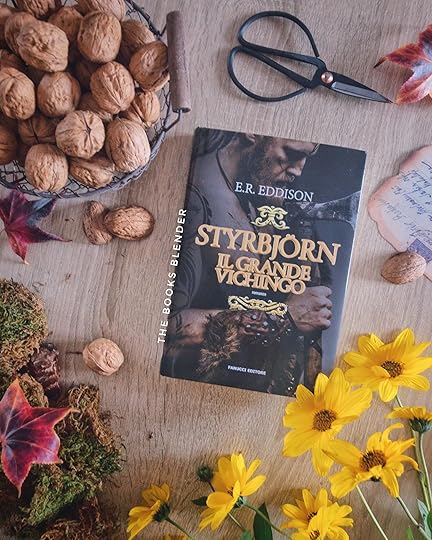
Recensione completa -> https://thebooksblender.altervista.or...

January 17, 2017
This novel is about the semi-legendary Viking prince from the 10th century. Named Bjorn at his birth, his quarrelsome nature caused others to add the first syllable “styr-“ to his name; we might say “bothersome Bjorn.” The name was expanded again in his youth by the addition of the epithet “sterki,” the strong; it certainly referred to his prodigious physical strength, but probably his stubborn temperament as well.
In writing it, Eddison, better remembered today as an author of fantasy literature, acquainted with Tolkein, adapted an ancient saga detailing this hero’s exploits. In keeping with the saga tradition, there is little interior reflection, and almost no intrusion of an omniscient author. Instead, the narrative is propulsed by the words and even more the deeds of the characters. Eddison adds to the flavor by use of archaic vocabulary (for instance, the use of “weird” as a noun, meaning fate) and kennings, metaphors composed by joining two words (sea-deer for ship, for example).
The adventures make a good tale, but the final chapter gave me pause. Despite the lack of authorial editorializing, the events recounted were enough to establish the character of the hero as badly-flawed. As powerful in body and winning in personality as he was, his haughty disregard of others, especially the thralls he and his uncle ruled over, brought unnecessary suffering and death to hordes. Yet when his lifeless corpse (sorry, forgot to signal a spoiler alert) is carried to Valhalla by the Valkyrie Skogul, her reproach to Odin is answered “I chose him first I loved the best.” So that’s the standard of quality: to be the strongest?
In writing it, Eddison, better remembered today as an author of fantasy literature, acquainted with Tolkein, adapted an ancient saga detailing this hero’s exploits. In keeping with the saga tradition, there is little interior reflection, and almost no intrusion of an omniscient author. Instead, the narrative is propulsed by the words and even more the deeds of the characters. Eddison adds to the flavor by use of archaic vocabulary (for instance, the use of “weird” as a noun, meaning fate) and kennings, metaphors composed by joining two words (sea-deer for ship, for example).
The adventures make a good tale, but the final chapter gave me pause. Despite the lack of authorial editorializing, the events recounted were enough to establish the character of the hero as badly-flawed. As powerful in body and winning in personality as he was, his haughty disregard of others, especially the thralls he and his uncle ruled over, brought unnecessary suffering and death to hordes. Yet when his lifeless corpse (sorry, forgot to signal a spoiler alert) is carried to Valhalla by the Valkyrie Skogul, her reproach to Odin is answered “I chose him first I loved the best.” So that’s the standard of quality: to be the strongest?

Read
June 19, 2013If you love tales of the lands on the shores of the North Atlantic of old then here is a satisfying one: Styrbiorn the Strong by E.R. Eddison. It was his first novel, apparently, and he himself was dissatisfied with the way it ended, though I was not. I think the ending does not deliver actually what it suggests, but the suggestion was enough for me.
It ends in Valhalla itself.
This novel is in the archaic style and with archaic language (to Eddison none compares for sustained and glorious usage of archaic diction–I must have read most of the book aloud, it is just hard not to listen to it), is taken from some scraps of history in the sagas, and reconstructs the story of the central figure. It is full of the north, of the ways of the Swedes at the end of the first millennium, of the Danes, the intermingled Icelanders, Jutlanders and Jomsburgers, and all their viking ways. The book is leaner than The Worm; the chapters go very swiftly but with purpose, and Eddison’s admirable gift for revealing the situations the characters face one of the best things. He was enviably good at his characters (and they come alive in the medium of Eddison’s language), his lawgivers and counselors, brash young warriors, shrewd kings, cowardly kings and dastards, and, of course, the women.
It ends in Valhalla itself.
This novel is in the archaic style and with archaic language (to Eddison none compares for sustained and glorious usage of archaic diction–I must have read most of the book aloud, it is just hard not to listen to it), is taken from some scraps of history in the sagas, and reconstructs the story of the central figure. It is full of the north, of the ways of the Swedes at the end of the first millennium, of the Danes, the intermingled Icelanders, Jutlanders and Jomsburgers, and all their viking ways. The book is leaner than The Worm; the chapters go very swiftly but with purpose, and Eddison’s admirable gift for revealing the situations the characters face one of the best things. He was enviably good at his characters (and they come alive in the medium of Eddison’s language), his lawgivers and counselors, brash young warriors, shrewd kings, cowardly kings and dastards, and, of course, the women.
October 29, 2023
Prima di tutto credo che sia doveroso specificare che questo non è scritto come un romanzo storico. Non che me lo aspettassi. È più che altro simile a una saga nordica e ne ha tutta la poesia. Non conoscevo la vicenda prima di tuffarmi in questo libro (so meno di quanto vorrei di storia evenemenziale scandinava), e comunque ha del leggendario, ma sono rimasta stregata dal modo in cui è stata trasposta. È un libro breve e tragico, e ho percepito fin troppo bene tutto ciò che veniva raccontato, come se lo avessi avuto davanti agli occhi, fino allo straziante finale. Lo stile, che trattandosi di Eddison non poteva che essere sublime, è veramente perfetto per la materia, potrebbe effettivamente essere uscito da una saga, e traccia vividamente tutti i dettagli e le emozioni dei personaggi. Non è una lettura per tutti, ma è sicuramente un'opera d'arte.

March 29, 2024
How do you rate a book that certainly would not be published today, by today's standards? Though Eddison stated his "story is not an imitation of a saga," it very much comes across as such. When I began to read Styrbiorn, I had a tremor of dread... will I actually get through this? It feels a lot like homework rather than entertainment. But I was soon hooked and didn't want to put it down. Sure, the characters are flat. You will need to look up words now and then. The details of scene are vague or absent. But there is magic to a story that is just story. Like with the sagas, you are left to fill in the details with your own imagination, and sometimes that is not such a bad thing.

November 3, 2024
Styrbiorn the Strong
by ER Eddison
Half of Sweden Styrbiorn’s bequeathed,
But Eric holds it back ’gainst his maturity.
Though Styrbiorn killed kingsman while he seethed,
He bears his master’s promise for a surety.
Yet disputatious factions soon endanger
The lordlings’ steadfast fealty to the King.
For peace then Styrbiorn must be a stranger:
Fresh power will his three-year voyage bring.
This Viking tale is torn by flush flirtation,
The lofty lords by love and lust laid low.
The drama draws no dictates in narration,
Whose grace is to but let the story flow.
The saga, like its hero, bold and strong,
Weaves tragedy, in high and splendid tongue.
by ER Eddison
Half of Sweden Styrbiorn’s bequeathed,
But Eric holds it back ’gainst his maturity.
Though Styrbiorn killed kingsman while he seethed,
He bears his master’s promise for a surety.
Yet disputatious factions soon endanger
The lordlings’ steadfast fealty to the King.
For peace then Styrbiorn must be a stranger:
Fresh power will his three-year voyage bring.
This Viking tale is torn by flush flirtation,
The lofty lords by love and lust laid low.
The drama draws no dictates in narration,
Whose grace is to but let the story flow.
The saga, like its hero, bold and strong,
Weaves tragedy, in high and splendid tongue.

December 30, 2020
[Qui la recensione completa: https://4muses.blogspot.com/2021/01/r...]
Nell’opera di Eddison, ci troviamo davanti ad un revival delle grandi gesta eroiche del popolo vichingo, senza alcun abbellimento, senza nessuna scena di romanticismo forzata che di solito accompagnano opere di questo tipo. L’intento dello scrittore era quello di trasmettere al lettore non una saga “migliorata”, quanto un tener vivo lo spirito delle saghe norrene, raccontando la storia a modo suo. Nonostante fosse un’impresa ardua, Eddison c’è riuscito. Il libro si appoggia a fonti storiche, infatti lo stesso protagonista è presente della "Eyrbyggja Saga" (Saga degli uomini di Eyr) del XIII secolo con il nome di “Styrbjörn il Forte”.
Nell’opera di Eddison, ci troviamo davanti ad un revival delle grandi gesta eroiche del popolo vichingo, senza alcun abbellimento, senza nessuna scena di romanticismo forzata che di solito accompagnano opere di questo tipo. L’intento dello scrittore era quello di trasmettere al lettore non una saga “migliorata”, quanto un tener vivo lo spirito delle saghe norrene, raccontando la storia a modo suo. Nonostante fosse un’impresa ardua, Eddison c’è riuscito. Il libro si appoggia a fonti storiche, infatti lo stesso protagonista è presente della "Eyrbyggja Saga" (Saga degli uomini di Eyr) del XIII secolo con il nome di “Styrbjörn il Forte”.

July 4, 2022
Battle of Fyrisfield. 983.
Sigrid the Haughty.
Moldi.
Sigrid the Haughty.
Moldi.
March 29, 2017
This book was a slow read because of the density of the language. It's written in an archaic style that echoes Nordic poems. There were some sentences which I googled and found them line for line in translations of Eddic poems (such as "The Great Lacuna"). Sentences such as "Whet me or let me - the damage is done." Which is a great line and an unusual usage for the word "whet". I recall Bill Shakespeare using a similar line in Julius Caesar "Since Cassius first did whet me against Caesar I have not slept." This line slowed me down because it was unusual and interesting to read. But I didn't really have to struggle to understand it. Other lines such as "Thou dost jest with us. This is but to try us. Come, I'll go with thee. He shall find he hath laid for a pickrell and caught a fire-drake. And I'll ask no guerdon but this that I may lay in the first brand at the burning of Upsala." I know from Tolkein that a fire-drake is a dragon. More broadly I think that a "drake" is a type of fish, which would complete the pun. But its actually really hard to research anything about a drake that isn't the rapper. If you google drake (fish) you get lots of news about how Drake cancelled a show because of some fish that was off. Shakespeare used the term guerdon a few times too - it means reward. So the point is Eddison is both pulling in cliches from existing translations of Eddic poems and leaning heavily on archaic English in an attempt to make the book read a certain way. He's successful and consistent through the book. I would say that this type of classically learned approach to language usage and tone in a fantasy novel is out of fashion nowadays, but I think it just requires a rare skillset that few have ever had.

August 12, 2012
Eddison is fully enamored with the saga style and setting but his work is not merely a telling of a Scandinavian story in saga form but an exploration of the saga form from a more modern (note: not Modern) perspective. The characterization in particular is extremely compelling; Styrbiorn and Sigrid in particular are characters that develop in fascinating ways and have given me a great deal of thought, particularly as they are likened to Sigurd and Brunhild of the Volsunga Saga. Their character, though, and the themes of the book are very subtle, and I wonder if they are directly approachable without having read or understood much about Norse culture and aesthetic. As for Eddison's particular style I found his prose a little less beautiful than in The Worm Ouroborous (although still very fine) and his dialogue extremely wanting (I was often confused by the diction). In all a really enjoyable book for anyone interested in the vikings or their reception at the earlier part of the last century.

December 26, 2013
Eddison's mastery of the language really wowed me in the Worm Oroborus, despite the somewhat juvenile plot and characters. His follow up -- a sort of reconstruction of a saga that should have been, in more poetic language than the usual Icelandic saga, but keeping with the impartial and entirely non-introspective viewpoint of the sagas -- is really excellent. You won't like Styrbiorn all that much, but you'll still be gripped by his tragic saga. Eddison's prose is nothing short of amazing, and he shows a lot more restraint than he did in the Worm, keeping this down to about 250 pages and only a handful of main characters, including a very strong female role. The University of Minnesota Press edition includes a great afterword by the foremost Eddison scholar and the unexpurgated foreword and afterword by Eddison, giving some more context to what Eddison meant to accomplish with this book.
March 10, 2016
I am really digging these turn of the century writers who unearth the amazing Nordic tales- some of the most kick ass stories relayed with the most exquisite composition I have ever read. Styrbiorn the Strong is an amazing character. I encourage anyone with the slightest interest to chew on some of these masters of the tale telling. We need Styrbiorn the Strong in America.

September 12, 2021
Molta attenzione alla tradizione delle saghe e allo studio dei dettagli dei personaggi.
Dò 3 stelle perché la prima parte e un po' lenta, la lettura si fa più avvincente a metà libro.
Comunque consigliato per chi cerca un libro stile saga ammodernata nello stile di scrittura
Dò 3 stelle perché la prima parte e un po' lenta, la lettura si fa più avvincente a metà libro.
Comunque consigliato per chi cerca un libro stile saga ammodernata nello stile di scrittura

January 13, 2011
More powerful writing from Eddison.

November 26, 2015
Nordic Deliciousness! Need to track down a copy of the U of Minn. reprint.

April 25, 2017
The language was interesting but it didn't really transport me to another time as the Tolkien blurb suggested. I guess historical fiction has come a long way since then because I didn't get much of a sense of culture, character, place. The plot didn't even really grab me. One of the rare books I didn't even finish.
Displaying 1 - 19 of 19 reviews