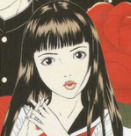
La începutul secolului XX, Ryūnosuke Akutagawa uimește întreaga lume artistică japoneză cu imensul său talent literar. Pentru mulți dintre iubitorii culturii japoneze, Akutagawa rămâne unul dintre autorii de seamă ai perioadei interbelice, care a reușit să-și extragă inspirația pentru scrierile sale din tradiții literare diverse. În volumul de față se întâlnesc povestiri autentic japoneze (Câmpuri veștede, Paravanul-Iad), însă, pe lângă acestea, există și inserții literare care explorează valențele occidentale creștine din perioada misionarismului iezuit (Diavolul și tutunul, Surâsul zeilor, Memoriul doctorului Ōgata Ryōsai) sau care sondează valorile culturale chineze (Tu Tze-Chun, Toamna în munți). Akutagawa reușește să creeze microcapodopere de vastă amplitudine cronologică, invitând cititorul să pășească într-o Japonie medievală (Prințesa Roku no Miya, Kesa și Moritō, Nasul) sau în perioada Restaurației Meiji, în care Orientul întâlnește Occidentul (Balul) și, nu în ultimul rând, în Japonia contemporană scriitorului (Roți zimțate, O poveste ciudată).
Akutagawa Ryūnosuke (芥川 龍之介) was one of the first prewar Japanese writers to achieve a wide foreign readership, partly because of his technical virtuosity, partly because his work seemed to represent imaginative fiction as opposed to the mundane accounts of the I-novelists of the time, partly because of his brilliant joining of traditional material to a modern sensibility, and partly because of film director Kurosawa Akira's masterful adaptation of two of his short stories for the screen.
Akutagawa was born in the Kyōbashi district Tokyo as the eldest son of a dairy operator named Shinbara Toshizō and his wife Fuku. He was named "Ryūnosuke" ("Dragon Offshoot") because he was born in the Year of the Dragon, in the Month of the Dragon, on the Day of the Dragon, and at the Hour of the Dragon (8 a.m.). Seven months after Akutagawa's birth, his mother went insane and he was adopted by her older brother, taking the Akutagawa family name. Despite the shadow this experience cast over Akutagawa's life, he benefited from the traditional literary atmosphere of his uncle's home, located in what had been the "downtown" section of Edo.
At school Akutagawa was an outstanding student, excelling in the Chinese classics. He entered the First High School in 1910, striking up relationships with such classmates as Kikuchi Kan, Kume Masao, Yamamoto Yūzō, and Tsuchiya Bunmei. Immersing himself in Western literature, he increasingly came to look for meaning in art rather than in life. In 1913, he entered Tokyo Imperial University, majoring in English literature. The next year, Akutagawa and his former high school friends revived the journal Shinshichō (New Currents of Thought), publishing translations of William Butler Yeats and Anatole France along with original works of their own. Akutagawa published the story Rashōmon in the magazine Teikoku bungaku (Imperial Literature) in 1915. The story, which went largely unnoticed, grew out of the egoism Akutagawa confronted after experiencing disappointment in love. The same year, Akutagawa started going to the meetings held every Thursday at the house of Natsume Sōseki, and thereafter considered himself Sōseki's disciple.
The lapsed Shinshichō was revived yet again in 1916, and Sōseki lavished praise on Akutagawa's story Hana (The Nose) when it appeared in the first issue of that magazine. After graduating from Tokyo University, Akutagawa earned a reputation as a highly skilled stylist whose stories reinterpreted classical works and historical incidents from a distinctly modern standpoint. His overriding themes became the ugliness of human egoism and the value of art, themes that received expression in a number of brilliant, tightly organized short stories conventionally categorized as Edo-mono (stories set in the Edo period), ōchō-mono (stories set in the Heian period), Kirishitan-mono (stories dealing with premodern Christians in Japan), and kaika-mono (stories of the early Meiji period). The Edo-mono include Gesaku zanmai (A Life Devoted to Gesaku, 1917) and Kareno-shō (Gleanings from a Withered Field, 1918); the ōchō-mono are perhaps best represented by Jigoku hen (Hell Screen, 1918); the Kirishitan-mono include Hokōnin no shi (The Death of a Christian, 1918), and kaika-mono include Butōkai(The Ball, 1920).
Akutagawa married Tsukamoto Fumiko in 1918 and the following year left his post as English instructor at the naval academy in Yokosuka, becoming an employee of the Mainichi Shinbun. This period was a productive one, as has already been noted, and the success of stories like Mikan (Mandarin Oranges, 1919) and Aki (Autumn, 1920) prompted him to turn his attention increasingly to modern materials. This, along with the introspection occasioned by growing health and nervous problems, resulted in a series of autobiographically-based stories known as Yasukichi-mono, after the name of the main character. Works such as Daidōji Shinsuke no hansei(The Early Life of
O colecție de proză scurtă ce debutează în forță cu povestirea omonimă Paravanul-Iad, despre artă și despre ceea ce ar putea trece drept nebunie sau pasiune, care uneori sunt unul și același lucru.
Sunt genul de povestiri care-ți rămân în minte mult timp după lectură, căci fiecare are acel "je ne sais quoi" ce te uimește, intrigă sau emoționează.
Ele lasă în urmă și un strop de mister, provocând astfel cititorul să completeze povestea după bunul plac. Imaginația zburdă pe “câmpuri veștede”, e provocată de un misterios hamal cu chipiu roșu ubicuu, rescrie poate legenda tutunului, croșetează posibile scenarii despre puterile statuetei din abanos a Mariei, Fecioara în straie negre.
Farmecul este potențat și de inserțiile fantastice și miraculoase, un soi de realism magic à la japonaise.
O carte care l-a plasat pe Akutagawa în topul scriitorilor mei japonezi preferați, alături de Kazuo Ishiguro, Junichiro Tanizaki sau Yasunari Kawabata.
“Inima oamenilor e o nesfârșită noapte/ Iar viața un foc mistuitor de patimi vremelnice”
Sunt liberă să cad la învoială cu zeii sau cu însuși diavolul, dacă trebuie. Povestiri fantastice, simboliste, unele mai de groază, altele doar hilare. Ar fi trebuit să-l descopăr mai devreme pe Ryunosuke Akutagawa, părintele prozei scurte japoneze. Talentul său literar străbate aproape un secol de modernitate literară. Ryunosuke este un model de verticalitate și impozanța. artistică și scriitoricesca. Aflate mereu sub un soclu mitologic ca sub o cupolă sticloasa, toate poveștile din carte te atrag într-un fel anume, te suprimă. Trebuie recitita cândva.
În ultimii ani am început să apreciez din ce în ce mai mult proza scurtă de calitate. Am mai spus-o și o repet, e nevoie de mult talent pentru a reuși să încarci fiecare povestire sau nuvelă cu doza perfectă de înțeles și de stil, pentru a face din fiecare ceva complet, chiar dacă la scară mai mică decât romanul. Nu citisem încă povestiri din literatura japoneză, așadar m-a intrigat mult acest volum de Ryūnosuke Akutagawa, "Paravanul-Iad și alte povestiri". Volumul cuprinde o colecție de douăzeci de povestiri, plasate de-a lungul mai multor perioade ale istoriei japoneze: majoritatea medievale, dar și din epoca modernă sau contemporană. Trebuie spus că autorul avea o natură plină de angoase, obsesii și teama de a nu fi moștenit problemele psihice ale mamei. Scrierile sale denotă însă și o cultură vastă, atât orientală cât și occidentală. Acest volum de povestiri transportă cititorul atât în perioade diferite, cât și în contexte diferite, stimulând atât imaginația cât și rațiunea. Un amestec de simplitate și complexitate, scrierile lui Akutagawa sunt foarte bine alcătuite și fac dovada unei vii inteligențe, pe lângă spiritul neliniștit de care vă vorbeam. Printre ironie, povestiri fantastice și spirite, orice cititor va găsi în mod sigur cel puțin o povestire care să îi vorbească într-o limbă subtilă, ca vântul foșnind printre pini.
Povestiri care te poartă prin cultura japoneză, din evul mediu până în prezent. Fiecare povestire este o lecție despre viață, împlinire, destin, oameni, credințe, iar tâlcul povestirilor se dezvăluie simbolic și misterios. Natura este omniprezentă și reflectă trăirile personajelor, adesea având un rol important în perpetuarea unui mesaj peste timp sau peste spațiu. Deși temele poveștilor sunt diverse, impresia unitară pe care o lasă cartea este a relativității zbuciumului omenesc, în contextul mai amplu al unei realități universale care trece peste generații, a priori și a posteriori momentului aici-acum.
As always, Akutagawa's stories touch many subjects, varying from history and imagining how the people involved in the scenario had acted and felt, to religious symbolism, to stories that resemble fairy tales, legends and myths, to dealing with grief and even to the author's mental health decline. A beautiful and interesting collection of stories indeed!
N-am să iert cei care au alcătuit volumul ăsta că au pus povestea cu puricele apoi cea cu părintele Organtino atât de aproape una de cealaltă. how will i ever recover. oricum rămas bun, părinte Organtino, de la templul Barbarilor de Sud.
I felt like the stories weren’t consistent enough, but there were some that were really good.
The collection’s title story, The Hell Screen is definitely the best in the collection; I’ve already read it a couple of years ago, but I still liked it on a second reading. A tale of artistic obsession, honor and the role of women during medieval Japan, the Hell Screen truly tells a fascinating and shocking story.
From the total of twenty short stories, of course I liked more those that explore more in the realm of fantasy and horror. One of my favorite - Mother Mary dressed in black, about a supposedly cursed porcelain statue of Maria Kannon, that fulfills an old woman’s prayer, when one of her grandchildren falls ill. *** stars
I gave a 3 star because i had a hard time finishing the book. There was something about the book, about the style that did not captivate my attention. Maybe other readers will find it more appealing.