

What do you think?

Gaea #1
Titan
When Cirrocco Jones, captain of the spaceship Ringmaster, and her crew are captured by Gaea, a planet-sized creature that orbits around Saturn, they find themselves inside a bizarre world inhabited by centaurs, harpies, and constantly shifting environments.
309 pages, Paperback
First published March 1, 1979
About the author
John Varley
234 books623 followersFull name: John Herbert Varley.
John Varley was born in Austin, Texas. He grew up in Fort Worth, Texas, moved to Port Arthur in 1957, and graduated from Nederland High School. He went to Michigan State University.
He wrote several novels and numerous short stories. He received both the Hugo and Nebula awards.
John Varley was born in Austin, Texas. He grew up in Fort Worth, Texas, moved to Port Arthur in 1957, and graduated from Nederland High School. He went to Michigan State University.
He wrote several novels and numerous short stories. He received both the Hugo and Nebula awards.
Ratings & Reviews
Friends & Following
Create a free account to discover what your friends think of this book!
Community Reviews
Displaying 1 - 30 of 474 reviews

September 21, 2026
Titan is a pretentious and ostentatious space opera… It is rich in preposterous quests and short in credibility… It reads as if it was written by some adolescent full of naive sexual fixations…
A huge spacecraft orbiting Saturn was discovered…
They were trying to find a way of docking… But instead they were literally grabbed out of space… Passing through nightmarish ordeals they managed to survive… The world within the torus turned out to be unpredictable… They meet an intelligent living zeppelin…
Some knowledge about the place was telepathically put into a physician’s consciousness… They find each other and start adventuring inside this enigmatic construction… The captain thinks about escape…
They go down the river in a shell of a giant tree seed which they named Titanic… Women find themselves pregnant… And their simultaneous conceptions look somewhat immaculate… Then these intrepid explorers meet centaurs…
Fantasies of the ancients still keep nourishing modern minds.
A huge spacecraft orbiting Saturn was discovered…
The wheel analogy was almost literally true, except for the heating or cooling fins Gaby had indicated. There was a hub in the center, and it had a hole which could have taken an axle if Themis had actually been a wagon wheel. Radiating from the hub were six thick spokes which flared gradually just before joining the outer portion of the wheel. Between each pair of spokes was one of the bright, square areas.
They were trying to find a way of docking… But instead they were literally grabbed out of space… Passing through nightmarish ordeals they managed to survive… The world within the torus turned out to be unpredictable… They meet an intelligent living zeppelin…
There was a blue-gray wall in front of her. She had no idea what it might be. The crunching came again, louder, slightly above her. A tuft of broken branches moved in front of her and out of sight. Then, with no warning, the eye appeared.
“Wow!” she yelped, before she could get her mouth shut. Without quite recalling how she got to be there she was three meters back, bouncing with the motion of the tree and staring transfixed at the monstrous eye. It was as wide as her outstretched arms, glistening with moisture, and astonishingly human.
Some knowledge about the place was telepathically put into a physician’s consciousness… They find each other and start adventuring inside this enigmatic construction… The captain thinks about escape…
She explained her thinking about the hub, the fact that if there was a central technological control for this vast construct, it would be up there.
“I don’t know what we’d find. Maybe nothing but cobwebs and dust, and everything down here is still going by sheer inertia. Or maybe the Captain and a crew waiting to blow us to pieces for invading their ship. But we have to look.”
They go down the river in a shell of a giant tree seed which they named Titanic… Women find themselves pregnant… And their simultaneous conceptions look somewhat immaculate… Then these intrepid explorers meet centaurs…
They wore necklaces and bracelets, stuck baubles in holes pierced through noses and ears, tied chains of brass links and colored stones or ropes of flowers around their legs. Each had a musical instrument slung over the shoulder or protruding from the pouch, made of wood or animal horn or seashell or brass.
They each had three sex organs.
Fantasies of the ancients still keep nourishing modern minds.

August 4, 2011
*** 2025 reread -
As I type this in January of 2025, Goodreads tells me that I've read over 2000 books. Of these, I've read about 60 at least twice - the Discworld books, the Dune books, some others.
Of these books, I've only read a handful three times or more. This is now one of them. I read this last year and then I read this with my book club.
This is one of the great fantasies of the last 50 years. Varley's writing is inspired and his world building is first rate.
Cirocco Jones is one of the great SF characters and this time I also paid closer attention to other member of the Ringmaster, consigned to Titan, especially April Polo, who becomes April the Swift.
Great fantasy, highly, highly recommended.
*** 2024 reread -
First read in HS so this is about a 40 year gap between readings. If anything, this is much more enjoyable the second time around.
I’ve read lots of fantasy writing over the past 40 years and I’m up here on my magic mushroom to state emphatically that Varley’s world building here is some of the best in this genre.
To sum up the surface story: a ragtag crew is out by Saturn, investigating what was thought to be a moon, because its that big, but its some kind of construct (reminiscent of Clarke’s Rama) and then they are attacked by the thing and then they are off on a WILD adventure inside the construct which is several powers of MASSIVE and there are also different kinds of sentient lifeforms, and some of the crew can mysteriously communicate with the beings, and then there is a meeting with a very mysterious entity, really very very cool fantasy.
The Hugo award voters considered this one and the sequel, Wizard, for the best novel award and I really enjoy his writing as well. He’s got PKD level imagination but without the over the top schizophrenia or amphetamines crazed urgency. What my man Varley lays down is a smooth high fantasy but grounded in level headed approach.
We also see some exceptional dialogue and characterization, focused mainly on our protagonist Cirocco Jones. Varley describes her as a larger than life adventure hog but also demonstrating real leadership qualities. The interactions between the earthlings and the Titan creatures was maybe the best thing about this, besides just the sheer imaginative AWESOMENESS.
Highly recommended for fantasy readers; though we notice some 70s disco sensibilities, this has actually aged rather well.

As I type this in January of 2025, Goodreads tells me that I've read over 2000 books. Of these, I've read about 60 at least twice - the Discworld books, the Dune books, some others.
Of these books, I've only read a handful three times or more. This is now one of them. I read this last year and then I read this with my book club.
This is one of the great fantasies of the last 50 years. Varley's writing is inspired and his world building is first rate.
Cirocco Jones is one of the great SF characters and this time I also paid closer attention to other member of the Ringmaster, consigned to Titan, especially April Polo, who becomes April the Swift.
Great fantasy, highly, highly recommended.
*** 2024 reread -
First read in HS so this is about a 40 year gap between readings. If anything, this is much more enjoyable the second time around.
I’ve read lots of fantasy writing over the past 40 years and I’m up here on my magic mushroom to state emphatically that Varley’s world building here is some of the best in this genre.
To sum up the surface story: a ragtag crew is out by Saturn, investigating what was thought to be a moon, because its that big, but its some kind of construct (reminiscent of Clarke’s Rama) and then they are attacked by the thing and then they are off on a WILD adventure inside the construct which is several powers of MASSIVE and there are also different kinds of sentient lifeforms, and some of the crew can mysteriously communicate with the beings, and then there is a meeting with a very mysterious entity, really very very cool fantasy.
The Hugo award voters considered this one and the sequel, Wizard, for the best novel award and I really enjoy his writing as well. He’s got PKD level imagination but without the over the top schizophrenia or amphetamines crazed urgency. What my man Varley lays down is a smooth high fantasy but grounded in level headed approach.
We also see some exceptional dialogue and characterization, focused mainly on our protagonist Cirocco Jones. Varley describes her as a larger than life adventure hog but also demonstrating real leadership qualities. The interactions between the earthlings and the Titan creatures was maybe the best thing about this, besides just the sheer imaginative AWESOMENESS.
Highly recommended for fantasy readers; though we notice some 70s disco sensibilities, this has actually aged rather well.

July 15, 2016
Titan is a rather surprising and accomplished find among ANY SF collection. There's a lot of imagination and world-building stuffed in these pages. I'd say it's better than Farmer's Riverworld series, but since I hadn't read them all, I can't say for sure.
Here are the really cool bits: Varley literally builds a world with a vast intelligence playing god within it. I was reminded of Bear's Eon at first until I realized that Titan came first and the whole tunnel of alternate dimensions doesn't show in Titan, either. :)
BUT when it comes to sheer adventure and exploration and learning about the modified intelligent creatures within it, Titan wins the contest hands down. I was already hooked by the Saturn expedition even with the whole 70's sex focus (which got old pretty quick), but everything else surrounding it, even the cocaine addiction, did wonders for getting my interest high. Cirocco Jones is a rather interesting female captain. After things go to hell and the strangeness begins, I'm all behind the rest of the novel.
Except.
I'm of two minds about the end. One part of me was all nuts over the SF and Fantasy homages. I really got all giddy over the way Varley incorporated everything and the twist at the end were just so delicious that it turned this damn solid worldbuilding hard-SF novel into a popcorn read.
And the very same twist and incorporation of nerdiness kinda threw me for a loop.
I almost wanted more mystery and a much more complicated reveal rather than a gimmie *oh that's cool* crowdpleaser. There was already so much going on. It almost feels cheap.
And yet, I loved it and it makes me yearn for the next book! Oh, the conflict.
Even so, everything about this was pretty jaw-dropping and gorgeous and the whole idea is made all the more delicious because it's fully realized and focused. It has more reveals than Rama, more intelligent life than Eon, and enough nerdy entertainment to fill three books of lesser quality. :)
Here are the really cool bits: Varley literally builds a world with a vast intelligence playing god within it. I was reminded of Bear's Eon at first until I realized that Titan came first and the whole tunnel of alternate dimensions doesn't show in Titan, either. :)
BUT when it comes to sheer adventure and exploration and learning about the modified intelligent creatures within it, Titan wins the contest hands down. I was already hooked by the Saturn expedition even with the whole 70's sex focus (which got old pretty quick), but everything else surrounding it, even the cocaine addiction, did wonders for getting my interest high. Cirocco Jones is a rather interesting female captain. After things go to hell and the strangeness begins, I'm all behind the rest of the novel.
Except.
I'm of two minds about the end. One part of me was all nuts over the SF and Fantasy homages. I really got all giddy over the way Varley incorporated everything and the twist at the end were just so delicious that it turned this damn solid worldbuilding hard-SF novel into a popcorn read.
And the very same twist and incorporation of nerdiness kinda threw me for a loop.
I almost wanted more mystery and a much more complicated reveal rather than a gimmie *oh that's cool* crowdpleaser. There was already so much going on. It almost feels cheap.
And yet, I loved it and it makes me yearn for the next book! Oh, the conflict.
Even so, everything about this was pretty jaw-dropping and gorgeous and the whole idea is made all the more delicious because it's fully realized and focused. It has more reveals than Rama, more intelligent life than Eon, and enough nerdy entertainment to fill three books of lesser quality. :)

May 8, 2012

Christmas 2010: I realised that I had got stuck in a rut. I was re-reading old favourites again and again, waiting for a few trusted authors to release new works. Something had to be done.
On the spur of the moment I set myself a challenge, to read every book to have won the Locus Sci-Fi award. That’s 35 books, 6 of which I’d previously read, leaving 29 titles by 14 authors who were new to me.
While working through this reading list I got married, went on my honeymoon, switched career and became a father. As such these stories became imprinted on my memory as the soundtrack to the happiest period in my life (so far).
I wish that Amazon’s look-inside feature used the edition of this book that I have. When you flip open my version, the inside of the cover has a brilliant colour picture of a naked woman riding a centaur through a lush alien landscape with a whale-like blimp-creature floating in the sky.
Before you’ve read a single page it lets you know (ho-ho-ho) we’re in for THAT kind of ride.
Titan won the Locus Sci-Fi award in 1980 (ahead of Pohl’s Jem and Clarke’s The Fountains of Paradise – which won the Hugo award that year).
The story is a classic example of the Big Dumb Object sci-fi trope. Under-prepared explorers encounter a big mysterious object (in this case an alien habitat orbiting Saturn) and are overwhelmed when they try to investigate. So-far so-standard.
Titan then takes a splendidly silly tangent by populating said space station with a war between centaurs and angels (watched over by sentient blimps). Wonderful!
To quote the magical maestro, Mr Miéville: “Part of the appeal of the fantastic is taking ridiculous ideas very seriously and pretending they're not absurd.”
This is a story that treads the borderline between sci-fi and fantasy, pick’n’mixing conventions to suit – all with deadpan seriousness.
I didn’t know that this was the beginning of The Gaea Trilogy – I knew nothing except that it won the Locus SF in ’80 – and based on the inside-cover pic my expectations weren’t exactly stratospheric. But I found myself pleasantly surprised and enjoying it.
None of the human characters left much of an impact on me and the overall explanation is ridiculous verging on absurd, but the overall experience is imaginative, playful a bit sexy and a lot of fun!
I’m somewhat bemused when I read reviews that rate this up amongst the greats – perhaps the trilogy as a whole is more effective than Titan as a standalone? I am tempted to read Wizard and Demon , but there are so many good books out there that they’re pretty low priority at the moment.
I definitely enjoyed the read – but have too many reservations to recommend whole-heartedly. If you spot a copy at a garage/boot sale it's worth a few pennies.

April 4, 2022
Comienzo clásico: nave con 7 científicos que va hacia Júpiter y se encuentra con un cuerpo extraño orbitando a Titán, uno de los satélites de Saturno. Se acercan y resulta ser artificial, un toroide de mil trescientos de kilómetros de anchura. ¿Es un vehículo interestelar tipo nave generacional?¿Quién lo ha colocado en órbita?¿Hay vida en su interior?
Vale, eso es lo de siempre (los forofos pensarán en Rama o Mundoanillo. Luego la cosa se anima, poque el worldbuilding del interior de Temis (así lo llaman al comienzo) es animadito. No os cuento nada por eso de los spoilers, pero hay varias “razas” y animales curiosos. Esto y el final es lo mejor de la novela, para mí con diferencia,
La cosa empeora con los personajes principales: nada empáticos, me daba igual lo que les pasara. Pero los secundarios están bastante logrados con cuatro pinceladas.
La trama sorprende cuando mete datos del interior de Temis y aburre a las ovejas en el largo tramo donde describe cierta ascensión.
Y el final muy bueno. Lástima que solo dure un 12% de la novela. Fantasía que incluye paja mental en la resolución de los enigmas pero muy bien traída.
La cosa cierra temas pero queda abierta para el segundo libro de la saga, Hechicera, que curiosamente lo leí en 1993 y me encantó, y eso que este no lo había leído (casi tardo 30 años en leer esta primera parte)
Por último decir que tiene varias escenas de sexo que allá por el 79 que se escribió he leído que fueron escandalosas pero que hoy son más inocentes que Heidi.
Resumen: buen worldbuilding, buen “sense of wonder” (usease, “sentido de la maravilla), pero no mucho más. No llega a las 4 estrellas.
Vale, eso es lo de siempre (los forofos pensarán en Rama o Mundoanillo. Luego la cosa se anima, poque el worldbuilding del interior de Temis (así lo llaman al comienzo) es animadito. No os cuento nada por eso de los spoilers, pero hay varias “razas” y animales curiosos. Esto y el final es lo mejor de la novela, para mí con diferencia,
La cosa empeora con los personajes principales: nada empáticos, me daba igual lo que les pasara. Pero los secundarios están bastante logrados con cuatro pinceladas.
La trama sorprende cuando mete datos del interior de Temis y aburre a las ovejas en el largo tramo donde describe cierta ascensión.
Y el final muy bueno. Lástima que solo dure un 12% de la novela. Fantasía que incluye paja mental en la resolución de los enigmas pero muy bien traída.
La cosa cierra temas pero queda abierta para el segundo libro de la saga, Hechicera, que curiosamente lo leí en 1993 y me encantó, y eso que este no lo había leído (casi tardo 30 años en leer esta primera parte)
Por último decir que tiene varias escenas de sexo que allá por el 79 que se escribió he leído que fueron escandalosas pero que hoy son más inocentes que Heidi.
Resumen: buen worldbuilding, buen “sense of wonder” (usease, “sentido de la maravilla), pero no mucho más. No llega a las 4 estrellas.

March 7, 2011
Spoiler Alert!
Titan, by John Varley, is an amazing science fiction book, the first one in the Gaea Trilogy, and it deserves a place among the 100 best science fiction books of all time.
John Varley has had my attention ever since I ran into The Persistence of Vision many years ago. In that collection of short stories, I was awestruck with his creativity and unique approach to science fiction. Each story was challenging, innovative and showed new ways of thinking about old problems.
Although Titan isn’t so much a cutting-edge work as some of his more whimsical short stories, it definitely has moments when you have to slam the book closed, stand up, and walk around in a circle laughing. It is part science fiction, part comedy, part fantasy and part homage to great and not-so-great science fiction of the past.
The book is set in the not-too-distant future of the next few hundred years. It tells the story of the Deep Space Vehicle Ringmaster and her crew while on a mission to Saturn.
The captain is a woman named Cirocco “Rocky” Jones (an homage to the old serial “Rocky Jones”) who was born in a wandering family that travelled the globe at the beck and call of the corporations who actually run Earth. Brought up by her mother, Jones always wanted to be an adventurer and ended up becoming an astronaut so that she could – hopefully – see things no one had seen before.
Her navigator is Gaby Plauget, a small woman who has been fascinated with space since childhood and really cares for nothing else. Other crewmembers include a doctor, engineer and pilot (males) and two cloned sisters. Sex is a rather open prospect on a deep space vessel, both hetero and homo and Rocky and Gaby have slept with all of the men. The Polo sisters, the clones, are Lesbian.
Upon approaching Saturn, they discover a rather large space object that they at first think is a rogue moon, but when they get closer, the object appears to have been built by intelligence. They scrap their mission in order to investigate this phenomena. In form, the object is like a huge ring with spokes attaching to a hub, but literally hundreds of kilometers in circumference and doing one full rotation per day as it makes its way around Saturn.
Before they can figure out an approach to the object, they are grabbed and the Ringmaster is pulled toward the object, smashing apart in the process. The crew is absorbed into the soil, kept alive, but with intense sensory deprivation, for months before they are finally coughed up from the ground onto the surface of the ring. The great hub rotates hundreds of kilometers above them. Rocky finds Gaby and eventually the others. The wheel is full of bizarre life forms, such as an intelligent blimp-like creature that floats through the skies and a species of Centaurs called the Titanides, (half-human, half-equine), intelligent, musical and obviously created to look like humans from the torso upwards. The crew begins to name features of the lands around them using Greek mythology, especially derived from the Titan myths. Ultimately, they decide to call the “planet” or “object” Gaea.
Rocky decides that she must travel to the hub to discover if there are any builders alive or if there is a radio so she can contact Earth. The novel becomes picaresque as Gaby travels with her on a torturous journey up the strands of cable that hold Gaea together, discovering along the way that the object is actually a living creature, both goddess and planet at once.
I won’t divulge what happens when they reach the hub – it must be savored by the reader when they actually reach that point. Let’s just say that it is one of those moments when you must slam the book closed, stand up, and walk around in a circle laughing.
But I do give the warning that this book is for mature readers only. It contains a lot of descriptive sexual relationships, including a detailed description of the Titanides’ sexual construction and the many ways that they may enjoy sex.
I highly recommend this novel to those with open minds and who appreciate creative and whimsical writing. If you’ve ever wanted to jump into something that will surprise and amaze you with its creativity, this is a book you will want to look into. And it’s hard to put down once you get started.
Titan, by John Varley, is an amazing science fiction book, the first one in the Gaea Trilogy, and it deserves a place among the 100 best science fiction books of all time.
John Varley has had my attention ever since I ran into The Persistence of Vision many years ago. In that collection of short stories, I was awestruck with his creativity and unique approach to science fiction. Each story was challenging, innovative and showed new ways of thinking about old problems.
Although Titan isn’t so much a cutting-edge work as some of his more whimsical short stories, it definitely has moments when you have to slam the book closed, stand up, and walk around in a circle laughing. It is part science fiction, part comedy, part fantasy and part homage to great and not-so-great science fiction of the past.
The book is set in the not-too-distant future of the next few hundred years. It tells the story of the Deep Space Vehicle Ringmaster and her crew while on a mission to Saturn.
The captain is a woman named Cirocco “Rocky” Jones (an homage to the old serial “Rocky Jones”) who was born in a wandering family that travelled the globe at the beck and call of the corporations who actually run Earth. Brought up by her mother, Jones always wanted to be an adventurer and ended up becoming an astronaut so that she could – hopefully – see things no one had seen before.
Her navigator is Gaby Plauget, a small woman who has been fascinated with space since childhood and really cares for nothing else. Other crewmembers include a doctor, engineer and pilot (males) and two cloned sisters. Sex is a rather open prospect on a deep space vessel, both hetero and homo and Rocky and Gaby have slept with all of the men. The Polo sisters, the clones, are Lesbian.
Upon approaching Saturn, they discover a rather large space object that they at first think is a rogue moon, but when they get closer, the object appears to have been built by intelligence. They scrap their mission in order to investigate this phenomena. In form, the object is like a huge ring with spokes attaching to a hub, but literally hundreds of kilometers in circumference and doing one full rotation per day as it makes its way around Saturn.
Before they can figure out an approach to the object, they are grabbed and the Ringmaster is pulled toward the object, smashing apart in the process. The crew is absorbed into the soil, kept alive, but with intense sensory deprivation, for months before they are finally coughed up from the ground onto the surface of the ring. The great hub rotates hundreds of kilometers above them. Rocky finds Gaby and eventually the others. The wheel is full of bizarre life forms, such as an intelligent blimp-like creature that floats through the skies and a species of Centaurs called the Titanides, (half-human, half-equine), intelligent, musical and obviously created to look like humans from the torso upwards. The crew begins to name features of the lands around them using Greek mythology, especially derived from the Titan myths. Ultimately, they decide to call the “planet” or “object” Gaea.
Rocky decides that she must travel to the hub to discover if there are any builders alive or if there is a radio so she can contact Earth. The novel becomes picaresque as Gaby travels with her on a torturous journey up the strands of cable that hold Gaea together, discovering along the way that the object is actually a living creature, both goddess and planet at once.
I won’t divulge what happens when they reach the hub – it must be savored by the reader when they actually reach that point. Let’s just say that it is one of those moments when you must slam the book closed, stand up, and walk around in a circle laughing.
But I do give the warning that this book is for mature readers only. It contains a lot of descriptive sexual relationships, including a detailed description of the Titanides’ sexual construction and the many ways that they may enjoy sex.
I highly recommend this novel to those with open minds and who appreciate creative and whimsical writing. If you’ve ever wanted to jump into something that will surprise and amaze you with its creativity, this is a book you will want to look into. And it’s hard to put down once you get started.

February 16, 2011
A fantastic book that should not be judged until all three books in the trilogy have been digested. This book lays the foundation for the two to come. This epic trilogy was the first thing I thought of when I saw the previews to the movie Avatar and I was so bummed when I realized that I was not looking at the broad face of a Titanide, but another creature from another story. If this trilogy is ever put on the big screen, I hope they stay true to the tone of the books, dont remove or dumb down aspects that fly in the face of puritanical thinking, and bring fully to life a 50 foot Monroe world-god punt kicking an elephant in a fit of temper. A quote from Demon will give you an idea of what you can look forward to:
"Whoever or whatever you may be," she sang, "you might want to take these departed human souls to your breast. I dont know anything about them except one was very young. The others were, for a time, zombies in the service of Luther, and evil thing, no longer human. No matter what they may have done in life, they must have started out innocent, as do we all, so dont be too hard on them. It is your fault for making them human, which was a dirty trick. If you are out there somewhere, you ought to be ashamed of yourself." She had no expected an answer and did not get one.
"Whoever or whatever you may be," she sang, "you might want to take these departed human souls to your breast. I dont know anything about them except one was very young. The others were, for a time, zombies in the service of Luther, and evil thing, no longer human. No matter what they may have done in life, they must have started out innocent, as do we all, so dont be too hard on them. It is your fault for making them human, which was a dirty trick. If you are out there somewhere, you ought to be ashamed of yourself." She had no expected an answer and did not get one.

June 6, 2008
While it's true that I have plenty of never-before-read fiction on the To Read shelf, I've been hankering recently to reread this series, one of my favorites.
Not only does it have one of my favorite characters - Cirocco Jones, subsequently the Wizard of Gaea - but also one of my favorite alien races - the Titanides:
(Which image I've hidden in a spoiler because some readers might find Titanide dressing conventions pornographic.)
See my review of the entire trilogy (posted 3/13/12): http://www.goodreads.com/review/show/...
Not only does it have one of my favorite characters - Cirocco Jones, subsequently the Wizard of Gaea - but also one of my favorite alien races - the Titanides:
(Which image I've hidden in a spoiler because some readers might find Titanide dressing conventions pornographic.)
See my review of the entire trilogy (posted 3/13/12): http://www.goodreads.com/review/show/...

September 4, 2024
I’m a sucker for the “big, dumb object” trope in science fiction; two of the first science fiction novels I read as a kid were rendezvous with Rama and ringworld. This being written less than ten years after them gave me some expectations.
There’s a lot to like about this book and while I definitely enjoyed it, there were some things that diminished the overall experience.
The set up is great, a mission to Saturn discovers this structure and gets forcibly taken into it. Once the crew is inside, some aspects of the book reminded me a lot of Phillip Jose Farmer’s book: to your scattered bodies go, which I did not like. These people wake up inside the structure, naked and changed in some ways. There’s a real over emphasis on sex that seemed unnecessary, and continued to the point of graphic sexual violence. I’m not clutching pearls about it, it just didn’t seem to make a lot of sense to the overall story.
The world building was interesting, there was a fever dream/fantasy aspect to it that was enjoyable. What I really liked was the quest undertaken by the main character: captain cirocco “rocky” jones and her lesbian simp sidekick.
She is determined to get to the control centre of the structure; a long and dangerous journey.
Maybe if I’d read this when I was younger I’d appreciate it more but I think the main thing I liked about Rama and ringworld was that they end the books with huge questions intentionally unanswered. They make you think about all the possibilities for different kinds of life. In the conclusion of titan, many of the mysteries of the book are answered in an imaginative but expository way that I’m accustomed to reading in more current science fiction.
So, I’m on the fence about this one; overall I liked it, but I’m not sure I’m going to read the sequels.

September 28, 2025
Somewhere between Piers Anthony's batshit ORN series and Clarke's straightforward RAMA novels, TITAN is an entertaining mess. The snark quotient in the dialogue between Cirocco 'Rocky' Jones and her polyamorous crew mates may drive more traditionalist SF readers to guffaw and eye-roll. All the boundless allusions to Greek and Roman myths may feel like a cop-out to some (who knew Centaurs had two penises and one vagina), and some of the more fine-tuned scholarly pedigree may equate the science in Varley's Gaea to one getting their proper intake of Vitamin C by drinking an Orange Fanta. Sprinkle in more sex, drugs, centaurs vs. emo angels, lesbian incest, crumbling crystal palaces, giant tentacles dismantling space wheels, TV transmissions lost in space, and a memorable scene where our heroes battle a giant mudskipper, this is 300 pages of bewildering candy.
No bones about it, this is not high SF literature, but a way to escape the doldrums of the everyday grind, and in that, it succeeds like taking the right pill. Of course there's quite a shocking scene that comes from leftfield and seems like a cruel afterthought -- Deliverance along Saturn's rim with an unhealthy dose of misogyny? And then once things ratchet up as Cirocco and her astronomer Gaby ascend miles and miles of city-sized cables (complete with forests growing on them), some may feel the climactic moment dissolves like a Wizard of Oz parody - who knew that the Overlords of the Universe were really Jewish grandmothers wearing a mumu house dresses and cutting lines of cocaine). Strangely, I read this and kept thinking about Laverne and Shirley in Space - just replace Milwaukee with a BDO, Big Dumb Object planetoid. Take that for all it's worth.
No bones about it, this is not high SF literature, but a way to escape the doldrums of the everyday grind, and in that, it succeeds like taking the right pill. Of course there's quite a shocking scene that comes from leftfield and seems like a cruel afterthought -- Deliverance along Saturn's rim with an unhealthy dose of misogyny? And then once things ratchet up as Cirocco and her astronomer Gaby ascend miles and miles of city-sized cables (complete with forests growing on them), some may feel the climactic moment dissolves like a Wizard of Oz parody - who knew that the Overlords of the Universe were really Jewish grandmothers wearing a mumu house dresses and cutting lines of cocaine). Strangely, I read this and kept thinking about Laverne and Shirley in Space - just replace Milwaukee with a BDO, Big Dumb Object planetoid. Take that for all it's worth.
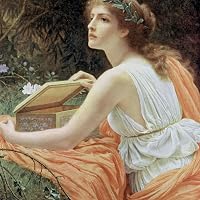
June 19, 2016
Check out that crazy dreamy cover by someone named Freff from 1979. I guess I could have read this when it was new, if I weren't still enjoying children's books as a teen, and if my small-town library had it. Well, better late than never... hope it lives up to its reputation....
-----------
The interior illustrations are pretty cool, too. And it's not all that crazy; it's actually pretty accurate. Varley explores a lot of ideas here, about feminism, and free love, and quests, and aliens, and gods.... And the addition of Xena the Warrior Princess (Captain Cirocco Jones) and her sidekick Gaby is an interesting touch. (Were the creators of the tv series inspired by this team of strong women?)
But. Well. It feels like it's a mock-up. Even with the help of a couple of 'maps', I couldn't follow along on the geography. And yet there are so. many. words. describing everything. Sure, Varley needed to know all that stuff, but imo he didn't need to leave all that development in the book. And the characters are under-developed, more iconographic representations of types than real people. The plot itself if basically just a quest. The sex is excessive, but, then, this was published in the late 70s, so, yeah.
All in all it's much like much other SF from its era. Not my favorite era, pretty weak book. Sorry.
-----------
The interior illustrations are pretty cool, too. And it's not all that crazy; it's actually pretty accurate. Varley explores a lot of ideas here, about feminism, and free love, and quests, and aliens, and gods.... And the addition of Xena the Warrior Princess (Captain Cirocco Jones) and her sidekick Gaby is an interesting touch. (Were the creators of the tv series inspired by this team of strong women?)
But. Well. It feels like it's a mock-up. Even with the help of a couple of 'maps', I couldn't follow along on the geography. And yet there are so. many. words. describing everything. Sure, Varley needed to know all that stuff, but imo he didn't need to leave all that development in the book. And the characters are under-developed, more iconographic representations of types than real people. The plot itself if basically just a quest. The sex is excessive, but, then, this was published in the late 70s, so, yeah.
All in all it's much like much other SF from its era. Not my favorite era, pretty weak book. Sorry.

April 12, 2010
Books like this are why sci-fi rides the short bus of literary culture. It has some great ideas and is in a way a tremendous "page turner", but ultimately fails thanks to weak writing and weaker characters. This was the first time in a LONG while I've though "why the hell am I reading this" as I plowed through a book.
For the most part I love all kinds of entertainment (from RPGs to movies) with the detailed underpinnings of top notch world building. I've seen Varley's Gaea books referenced number of times with respect to great works of "world building"- like Dune, Middle Earth, etc., hence my interest. So imagine my suprise when in the end it's revealed that all the creatures in the book just pop into being because the god/creature/spaceship likes greek mythology and war movies. Something with the potential to be truly alien and amazing was instantly rendered... silly.
Could go on and on about the thin characters and weird alien abortion scenes, but I think I've said my peace on the matter.
For the most part I love all kinds of entertainment (from RPGs to movies) with the detailed underpinnings of top notch world building. I've seen Varley's Gaea books referenced number of times with respect to great works of "world building"- like Dune, Middle Earth, etc., hence my interest. So imagine my suprise when in the end it's revealed that all the creatures in the book just pop into being because the god/creature/spaceship likes greek mythology and war movies. Something with the potential to be truly alien and amazing was instantly rendered... silly.
Could go on and on about the thin characters and weird alien abortion scenes, but I think I've said my peace on the matter.

August 20, 2023
This book was written back in 1979 when the border between fantasy and sci-fi was still rather fluid and it mashes both of these up in a strange way. I was not able to completely immerse myself in this weird Saturn with a conscience named Gaea, and I have to admit being put off by the almost obligatory rape scene. What was it with authors in the 70s and their rape fantasies? Seriously, it was a pointless diversion. I admit that Varley demonstrates an incredible amount of creativity in this world-building, but maybe it was the antiquated writing style that hasn't aged, but this book just did not reach out and grab me like so many other sci-fi books have over the last 18 months.

October 13, 2024
3.5/5
A lovely read. Interesting and entertaining, with realistic characters, and with a subtle exploration of meta-fiction done exactly the way I like it -- not too bluntly and without ruining immersion.
The illustrations were both interesting and helpful, as the world is filled with strange creatures. For example:
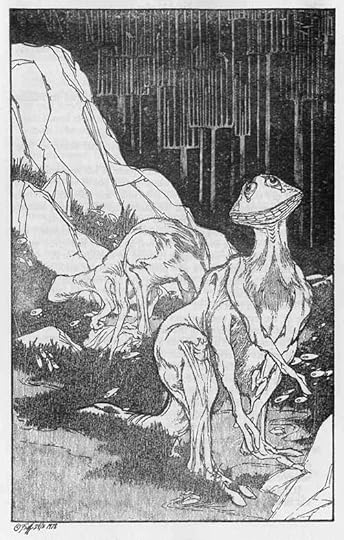
A lovely read. Interesting and entertaining, with realistic characters, and with a subtle exploration of meta-fiction done exactly the way I like it -- not too bluntly and without ruining immersion.
The illustrations were both interesting and helpful, as the world is filled with strange creatures. For example:

January 13, 2009
This was a bit of a disappointment after Varley's Ophiuchi Hotline. However, if you like a quest theme like that of Farmer's Riverworld series, then you may like this novel and the two which follow. I enjoyed the originality of this, the first, but found the latter two increasingly tedious.

September 22, 2008
Generally considered SF, this book has a lot of fantasy in it. It's full of interesting ideas and well written. Definitely worth the read.

September 14, 2025
I had heard of John Varley’s Titan through word of mouth online in some book discussions and book tube type channels and platforms promoting interesting science fiction novels that were set in the year 2025. So, what better year than this year to try to read this one ?
While there are some thought-provoking concepts explored via some strong world building at points in Titan, there are also some glaring issues I had with this novel that rendered this novel only a three-star experience.
Cirocco (Rocky) Jones is the captain of Ringmaster, a spaceship that is traversing through space and approaching Saturn. Ultimately, the ship is captured by an unknown entity, and rendered unconscious. After regaining consciousness, she and the other members of the crew, who are split up, must figure out and explore this unknown place to understand what it is and how to get back. One of the problems initially are the odd manifestations and thoughts experienced by Cirocco and others.
Even though the books are very different, certain aspects early on reminded me a little of VanderMeer’s Annihilation. The crew not only is disoriented, but experience strange thoughts, as this entity can seemingly tap into their conscience. It is difficult for the crew to try to wrap their brains around what is taking place, so they set off to explore and discover. We mostly follow Cirocco during this exploration of the area.
I felt like the world building and the exploration of the region, and just the science part of the novel, was very fascinating. They come to find that there are several creatures that inhibit the area. One of the more unique parts of the novel is when they encounter a centaur-like alien known as Titanides and realize they can communicate with them via singing. There are also “angels” , human-like creatures who often battle with the Titanides. So, the science aspects of the novel were interesting.
All this said, I had some issues with elements of the book. The characters are serviceable, but mostly generic and bland, and interchangeable. Some parts of the dialogue and exchanges were lackluster and cringe too. There was also an overemphasis and a fixation with giving us a behind-the-scenes look at the physical relationships between characters and all the drama about it, and this just seemed so out of place and unnecessary. I found it quite jarring that only a few pages in and having that the focus of the novel. It was a big distraction, and gave the novel a cheesy feel to it.
And the ending really fell flat too. All this intrigue for the big reveal only to have it end that way. Suffice to say, the ending certainly was a letdown.
So, if you can get past the cringe and ridiculous and unnecessary parts of the book, what is left is a pretty interesting world-building experience. There are two more books in Gaea series, but I’m not that anxious to continue on.
While there are some thought-provoking concepts explored via some strong world building at points in Titan, there are also some glaring issues I had with this novel that rendered this novel only a three-star experience.
Cirocco (Rocky) Jones is the captain of Ringmaster, a spaceship that is traversing through space and approaching Saturn. Ultimately, the ship is captured by an unknown entity, and rendered unconscious. After regaining consciousness, she and the other members of the crew, who are split up, must figure out and explore this unknown place to understand what it is and how to get back. One of the problems initially are the odd manifestations and thoughts experienced by Cirocco and others.
Even though the books are very different, certain aspects early on reminded me a little of VanderMeer’s Annihilation. The crew not only is disoriented, but experience strange thoughts, as this entity can seemingly tap into their conscience. It is difficult for the crew to try to wrap their brains around what is taking place, so they set off to explore and discover. We mostly follow Cirocco during this exploration of the area.
I felt like the world building and the exploration of the region, and just the science part of the novel, was very fascinating. They come to find that there are several creatures that inhibit the area. One of the more unique parts of the novel is when they encounter a centaur-like alien known as Titanides and realize they can communicate with them via singing. There are also “angels” , human-like creatures who often battle with the Titanides. So, the science aspects of the novel were interesting.
All this said, I had some issues with elements of the book. The characters are serviceable, but mostly generic and bland, and interchangeable. Some parts of the dialogue and exchanges were lackluster and cringe too. There was also an overemphasis and a fixation with giving us a behind-the-scenes look at the physical relationships between characters and all the drama about it, and this just seemed so out of place and unnecessary. I found it quite jarring that only a few pages in and having that the focus of the novel. It was a big distraction, and gave the novel a cheesy feel to it.
And the ending really fell flat too. All this intrigue for the big reveal only to have it end that way. Suffice to say, the ending certainly was a letdown.
So, if you can get past the cringe and ridiculous and unnecessary parts of the book, what is left is a pretty interesting world-building experience. There are two more books in Gaea series, but I’m not that anxious to continue on.

January 24, 2017
I try to avoid writing negative reviews. However this book seems more an attempt by the author to explore his own sexual fantasies than an attempt to tell a SciFi story. Yet that isn't the most ridiculous part of this story. How many pages are devoted to Centaurs' genitalia isn't even the most ridiculous part. No the most ridiculous part is: NO ONE IS EXCITED THAT THEY ENCOUNTERED ALIENS. To each their own. I'll say that Rocky was a cool character, but this book overall was a disappointment.
But for real when was the last time you heard of a story about First Contact where no one was excited about the aliens?
Ok you don't believe me that this is a pervy weird disappointment of a story. Then go ahead and read it and see how you like the climax. This is a silly and creepy book. Glad it's over.
But for real when was the last time you heard of a story about First Contact where no one was excited about the aliens?
Ok you don't believe me that this is a pervy weird disappointment of a story. Then go ahead and read it and see how you like the climax. This is a silly and creepy book. Glad it's over.

November 27, 2010
1.5 stars. An okay story but after reading Varley's Ophiuchi Hotline, this was a big let down. Definitely a product of the 70's and I found the "free love" aspect of the novel a bit tedious. I will say that the concept of Gaia was very interesting and some of the alien characters original. The problem for me was that I found all of the human characters boring.
Nominee: Hugo Award Best Science Fiction Novel (1980)
Nominee: Nebula Award Best Science Fiction Novel (1980)
Winner: Locus Award Best Science Fiction Novel (1980)
Merged review:
1.5 stars. An okay story but after reading Varley's Ophiuchi Hotline, this was a big let down. Definitely a product of the 70's and I found the "free love" aspect of the novel a bit tedious. I will say that the concept of Gaia was very interesting and some of the alien characters original. The problem for me was that I found all of the human characters boring.
Nominee: Hugo Award Best Science Fiction Novel (1980)
Nominee: Nebula Award Best Science Fiction Novel (1980)
Winner: Locus Award Best Science Fiction Novel (1980) (less)
Nominee: Hugo Award Best Science Fiction Novel (1980)
Nominee: Nebula Award Best Science Fiction Novel (1980)
Winner: Locus Award Best Science Fiction Novel (1980)
Merged review:
1.5 stars. An okay story but after reading Varley's Ophiuchi Hotline, this was a big let down. Definitely a product of the 70's and I found the "free love" aspect of the novel a bit tedious. I will say that the concept of Gaia was very interesting and some of the alien characters original. The problem for me was that I found all of the human characters boring.
Nominee: Hugo Award Best Science Fiction Novel (1980)
Nominee: Nebula Award Best Science Fiction Novel (1980)
Winner: Locus Award Best Science Fiction Novel (1980) (less)

November 30, 2008
This is book 1 of one of my very favorite sci-fi trilogies. Once I discovered them, in about 1980, I devoured them as quickly as possible, losing sleep so that I could keep reading. I went on to read everything else written by John Varley, and have never been disappointed. If you want a quick idea of what his writing is like without committing to a trilogy, try "The Barbie Murders" or "The Persistence of Vision" -- these are short stories.

June 5, 2012
"A scientific expedition to the planet Saturn in 2025, aboard the ship Ringmaster, discovers a strange satellite in orbit around the planet. Commanding the ship is Cirocco Jones, a tall NASA career woman, aided by astronomer Gaby Plauget, the clone twin physicists April and August Polo, pilot Eugene Springfield, physician Calvin Greene and engineer Bill (whose last name is never given).
As they reach the satellite they realize it is a huge hollow torus habitat. Before they can report this the ship is entangled in cables from the object. The crew is rendered unconscious and later wake up inside the habitat. Initially separated, Cirroco and Gaby find each other and travel together through the world inside the torus to find the rest of the crew."
As I got started on Titan, I had two thoughts: this reminds me of Arthur C. Clarke’s 2001, a Space Odyssey as well as Rendezvous with Rama. A ship from Earth is exploring the outer solar system when they spot something mysterious and as they get closer it is unmistakably an artificial structure. As they get closer and start to describe it, I thought Ringworld (not one of my favourites). But Varley manages to distinguish his story from those, even while I think deliberately invoking the comparisons. He is far and away better at characterization than Clarke or Niven and writes female characters quite well.
I raised an eyebrow when the water seemed to be drinkable and all the berries, animals, etc., seemed to be edible. How likely is that? But necessary for the story, I guess (I had the same reaction to C.S. Lewis’ Out of the Silent Planet).
One of the male characters, Bill, is a reader of sci-fi and Cirocco Jones, the main character, is a film buff, so many pop culture references are made to earlier (pre-1979) works. They are scattered through the work like so many Easter eggs.
Exploration of a new “world” seems to equal self-exploration for Jones, who discovers that maybe she’s not all that into being the Captain, trying to maintain control/discipline, and generally being responsible for everyone. [I completely understand—I maintain that it’s all I can do to be responsible for myself, I don’t have what it takes to manage employees or to parent children].
Although the book starts as if it is going to be a hard science fiction work, it soon turns into a fantasy and commentary on social issues, primarily the relationship between the sexes and the issues of sexuality which some people today are still struggling with, accepting that each person is individual and that there is a sliding scale from heterosexuality to homosexuality, with each person finding their own spot along that continuum.
More like 3.5 stars, really.
As they reach the satellite they realize it is a huge hollow torus habitat. Before they can report this the ship is entangled in cables from the object. The crew is rendered unconscious and later wake up inside the habitat. Initially separated, Cirroco and Gaby find each other and travel together through the world inside the torus to find the rest of the crew."
As I got started on Titan, I had two thoughts: this reminds me of Arthur C. Clarke’s 2001, a Space Odyssey as well as Rendezvous with Rama. A ship from Earth is exploring the outer solar system when they spot something mysterious and as they get closer it is unmistakably an artificial structure. As they get closer and start to describe it, I thought Ringworld (not one of my favourites). But Varley manages to distinguish his story from those, even while I think deliberately invoking the comparisons. He is far and away better at characterization than Clarke or Niven and writes female characters quite well.
I raised an eyebrow when the water seemed to be drinkable and all the berries, animals, etc., seemed to be edible. How likely is that? But necessary for the story, I guess (I had the same reaction to C.S. Lewis’ Out of the Silent Planet).
One of the male characters, Bill, is a reader of sci-fi and Cirocco Jones, the main character, is a film buff, so many pop culture references are made to earlier (pre-1979) works. They are scattered through the work like so many Easter eggs.
Exploration of a new “world” seems to equal self-exploration for Jones, who discovers that maybe she’s not all that into being the Captain, trying to maintain control/discipline, and generally being responsible for everyone. [I completely understand—I maintain that it’s all I can do to be responsible for myself, I don’t have what it takes to manage employees or to parent children].
Although the book starts as if it is going to be a hard science fiction work, it soon turns into a fantasy and commentary on social issues, primarily the relationship between the sexes and the issues of sexuality which some people today are still struggling with, accepting that each person is individual and that there is a sliding scale from heterosexuality to homosexuality, with each person finding their own spot along that continuum.
More like 3.5 stars, really.

May 14, 2012
This book is GOOD! I love it. I need to read it again!
And so I did. It's still good. This book is full of strong, interesting female characters. Sex. Fascinating aliens.
The Titanides are awesome. I don't think I'd mind being one. They sing a lot and have several genitals which is pretty cool. Their names are chords. There's blimps and angels. Nothing is as you totally expect it to be. It takes a while for it to go from space ship lingo to, whoa. WTF? How interesting!
This guy goes well with Octavia Butler and Wraethlu. It's super imaginative.
12/26/18
I still love this book. It's got strong female characters and diversity. And not the shitty kind you get in an Orson Scott Card book where every character is a boring political puppet and not a person. They are genuinely strong and diverse.
There is a scene of sexual assault later in the book by the way so skip that.
Cirocco is just so badass. I also love Gaby too. The next book is even better because you get to see more of their relationship and more Titanides. It takes so long for them to appear in this book.
And so I did. It's still good. This book is full of strong, interesting female characters. Sex. Fascinating aliens.
The Titanides are awesome. I don't think I'd mind being one. They sing a lot and have several genitals which is pretty cool. Their names are chords. There's blimps and angels. Nothing is as you totally expect it to be. It takes a while for it to go from space ship lingo to, whoa. WTF? How interesting!
This guy goes well with Octavia Butler and Wraethlu. It's super imaginative.
12/26/18
I still love this book. It's got strong female characters and diversity. And not the shitty kind you get in an Orson Scott Card book where every character is a boring political puppet and not a person. They are genuinely strong and diverse.
There is a scene of sexual assault later in the book by the way so skip that.
Cirocco is just so badass. I also love Gaby too. The next book is even better because you get to see more of their relationship and more Titanides. It takes so long for them to appear in this book.

February 1, 2009
This book didn't grab me: I was about 100 pages from the end and realized that I honestly didn't care what happened. Part of the problem was that I had already pigeonholed it as sort of a Rendezvous with Rama or Ringworld (exploration of a Big Dumb Object by an underprepared away team) by way of Philip José Farmer. Once it was categorized, all the magic was gone.
I didn't particularly hate it, but felt that finishing it was pointless. I was not enthralled by the characters, the exploration of the alien biology, or the mystery of Gaea itself.
I didn't particularly hate it, but felt that finishing it was pointless. I was not enthralled by the characters, the exploration of the alien biology, or the mystery of Gaea itself.

September 13, 2022
I'm still about 75 pages from the end, but I'm giving this one star because the protagonist gets raped *twice*, and the second time, she lets the rapist get away because she feels sorry for him. For 1979, Cirocco Jones was considered a progressive female protagonist, but that just shows that at the time, science fiction readers had extremely low standards for female representation.
Beyond that, I was going to give the book two stars because the Gaea setting is interesting. However, this book has a severe lack of plot or thematic unity, the dialogue sucks, and the characters are all one-dimensional. They each have a single dominant character trait (e.g. Gaby's codependency) but are otherwise impossible to tell apart. If Varley was considered the new Heinlein, then the old Heinlein was better.
EDIT: Book now finished. My opinion didn’t change.
Beyond that, I was going to give the book two stars because the Gaea setting is interesting. However, this book has a severe lack of plot or thematic unity, the dialogue sucks, and the characters are all one-dimensional. They each have a single dominant character trait (e.g. Gaby's codependency) but are otherwise impossible to tell apart. If Varley was considered the new Heinlein, then the old Heinlein was better.
EDIT: Book now finished. My opinion didn’t change.
This entire review has been hidden because of spoilers.

January 25, 2011
Началото на поредицата „Гея” започва с откриването на неизвестно космическо тяло близо до един от спътниците на Сатурн. Огромният мастилено-черен тороид, останал години наред незабелязан за Земята, внезапно напада кораба „Рингмастър”, а екипажът му е погълнат от чудовищно огромното същество-спътник.
След прекараните в полусън месеци капитан Чироко Джоунс се събужда във вътрешността на тороида – сама, изцяло обезкосмена и докарана до нервен срив от времето, което е трябвало да преживее, без да използва сетивата си. Мястото е странно – въздушната среда и четвърт g гравитация са подходящи за хората, но пространството е ограничено, макар и потискащо с мащабите си – гигантските кабели, прозорци и клапи създават впечатлението за изкуствено творение. И все пак то е живо. Постепенно намирайки се един друг, членовете на екипажа ще открият, че психологическите травми от нападението са почти съизмерими с физиологичните промени, които всеки един от тях е претърпял. Защото създанието, наречено Гея, има свои планове за тях, а децентрализираните мозъци на Гея – съвсем различни. А по пътя си към небесата, където ще потърсят управляващите, хората ще се сблъскат с разумните обитатели на този свят-колело. Същества извън границите на въображението и на ръба на възможното.
„Титан” не звучи особено оригинално в идейно отношение – когато бива публикувана през 1979 година, Лари Нивън вече е издал „Пръстенов свят”, а две години по-рано Артър Кларк е отнесъл „Хюго” и „Небюла” за „Среща с Рама”. Не напразно сравнявам трите произведения – те са удивително еднакви в много елементи – светът с несферична форма, неравностойната борба на хората срещу огромно и могъщо същество и личната драма на героите, поставени във враждебна среда. Но „Титан” се отличава със своето динамично действие, чудноватост на обстановката и по-достоверната човещина на действащите лица. Мотивите им не са подробно описани, но въпреки това създават усещане за автентичност. По мое мнение Варли е намерил идеалната комбинация от динамичност, краткост и детайлност, без да задълбава в излишни описания и психоанализа.
След прекараните в полусън месеци капитан Чироко Джоунс се събужда във вътрешността на тороида – сама, изцяло обезкосмена и докарана до нервен срив от времето, което е трябвало да преживее, без да използва сетивата си. Мястото е странно – въздушната среда и четвърт g гравитация са подходящи за хората, но пространството е ограничено, макар и потискащо с мащабите си – гигантските кабели, прозорци и клапи създават впечатлението за изкуствено творение. И все пак то е живо. Постепенно намирайки се един друг, членовете на екипажа ще открият, че психологическите травми от нападението са почти съизмерими с физиологичните промени, които всеки един от тях е претърпял. Защото създанието, наречено Гея, има свои планове за тях, а децентрализираните мозъци на Гея – съвсем различни. А по пътя си към небесата, където ще потърсят управляващите, хората ще се сблъскат с разумните обитатели на този свят-колело. Същества извън границите на въображението и на ръба на възможното.
„Титан” не звучи особено оригинално в идейно отношение – когато бива публикувана през 1979 година, Лари Нивън вече е издал „Пръстенов свят”, а две години по-рано Артър Кларк е отнесъл „Хюго” и „Небюла” за „Среща с Рама”. Не напразно сравнявам трите произведения – те са удивително еднакви в много елементи – светът с несферична форма, неравностойната борба на хората срещу огромно и могъщо същество и личната драма на героите, поставени във враждебна среда. Но „Титан” се отличава със своето динамично действие, чудноватост на обстановката и по-достоверната човещина на действащите лица. Мотивите им не са подробно описани, но въпреки това създават усещане за автентичност. По мое мнение Варли е намерил идеалната комбинация от динамичност, краткост и детайлност, без да задълбава в излишни описания и психоанализа.

March 5, 2017
Strange how a preconceived idea of what a book is about can influence the reading experience.
For a long time i thought this was a "Big-Dumb-Object" book like Rendezvous with Rama and fully expected detailed (and understandable) descriptions of how Gaea worked and I was somewhat disappointed and underwhelmed.
Half way through I realized that this was more an adventure of a quest like Riverworld: To Your Scattered Bodies Go/The Fabulous Riverboat and i began to enjoy the story somewhat.
We are following the Female! captain of a exploration spaceship that's captured by the artificial world Gaea and follow her and her companions eksploration though the hollow world though some interesting and at times outright silly surroundings.
There a fair bit of sex in the story, but kudos for giving our Female captain a lesbian love interest and limit the male characters to adolescent acting minor figures.
After reading this i realized that it's part 1 of a trilogy, but i will not be reading the rest.
For a long time i thought this was a "Big-Dumb-Object" book like Rendezvous with Rama and fully expected detailed (and understandable) descriptions of how Gaea worked and I was somewhat disappointed and underwhelmed.
Half way through I realized that this was more an adventure of a quest like Riverworld: To Your Scattered Bodies Go/The Fabulous Riverboat and i began to enjoy the story somewhat.
We are following the Female! captain of a exploration spaceship that's captured by the artificial world Gaea and follow her and her companions eksploration though the hollow world though some interesting and at times outright silly surroundings.
There a fair bit of sex in the story, but kudos for giving our Female captain a lesbian love interest and limit the male characters to adolescent acting minor figures.
After reading this i realized that it's part 1 of a trilogy, but i will not be reading the rest.

August 19, 2009
This is exactly the sort of book that turns new readers of science fiction away from the genre.
Is it a bad book? No, absolutely not. The issue is that it's got a relatively large number of pages devoted to the description of the rotation of a space ship and the angle of approach to a nearby object. Combining that description with sex might work for some, but I suspect that readers that don't already have a decent grounding in science fiction will turn away.
I found the characters very difficult to relate to. I *deeply* didn't care which of the crew slept with the others - it was a distraction. I found the emotional contact between most of the characters to be superficial - almost as if the relationships were being set forth as a problem in logic or logistics rather than emotional connections.
Having said all that - the creation of all the species of the world, the journey and the mechnics of the world's function were really imaginative. The amount of thought into how the whole system worked together was really well thought out and explained.
Overall - if you like "hard SF" then this is your kind of book. If you're new to the genre, I might recommend something lighter to start with and get around to this one later in your reading list.
Is it a bad book? No, absolutely not. The issue is that it's got a relatively large number of pages devoted to the description of the rotation of a space ship and the angle of approach to a nearby object. Combining that description with sex might work for some, but I suspect that readers that don't already have a decent grounding in science fiction will turn away.
I found the characters very difficult to relate to. I *deeply* didn't care which of the crew slept with the others - it was a distraction. I found the emotional contact between most of the characters to be superficial - almost as if the relationships were being set forth as a problem in logic or logistics rather than emotional connections.
Having said all that - the creation of all the species of the world, the journey and the mechnics of the world's function were really imaginative. The amount of thought into how the whole system worked together was really well thought out and explained.
Overall - if you like "hard SF" then this is your kind of book. If you're new to the genre, I might recommend something lighter to start with and get around to this one later in your reading list.

August 16, 2019
This is one of those books I read back when it came out and then let sit on my shelf for a couple of decades.
I did the same thing with Dune, Silverberg’s Majipoor
Chronicles, and other books of that era.
There were somethings I remember, like the centaur-like Titanides, And a lot of stuff I didn’t.
It’s a good book, and I’m interested in reading the next two novels if they ever come out cheap on the Kindle. I’m pretty sure I’ve tossed the old paperbacks I owned.
Good classic Sci-Fi. It hasn’t aged terribly poorly.
I did the same thing with Dune, Silverberg’s Majipoor
Chronicles, and other books of that era.
There were somethings I remember, like the centaur-like Titanides, And a lot of stuff I didn’t.
It’s a good book, and I’m interested in reading the next two novels if they ever come out cheap on the Kindle. I’m pretty sure I’ve tossed the old paperbacks I owned.
Good classic Sci-Fi. It hasn’t aged terribly poorly.

July 29, 2021
The first manned expedition to Saturn discovers a new moon, but closer examination reveals it to be a huge space station.
Wait. What?
All kidding aside, the station is in the shape of a Stanford torus, albeit a thousand times larger. Attempts to dock with the station go horribly wrong for Captain Cirocco Jones and her crew. Stranded on the station, they have no choice but to find who's in charge in hopes of finding a way back to Earth.
Titan was published in 1979 and is the first book in John Varley's Gaea trilogy. I didn't find out that this was a series until after I'd read the third book, Demon. During the 80s, I'd joined a science fiction book club that sold hardcovers for paperback prices. Demon was one of the books I bought along with Varley's standalone Millennium. I enjoyed both, but I didn't find my way back to this series until recently when I'd heard that Varley was having heart surgery. But I digress.
At first blush, Varley's space station comes across as another Big Dumb Object (BDO). I admit to being a sucker for this type of story. Ringworld, Rama, the Halo videogame, etc. In BDO stories, exploration of the BDO is often the story itself. Cirocco's search for her crew runs parallel to her exploration of this strange new, and manufactured, world. But Varley's BDO has more going on that just a bunch of humans poking around in a sterile alien vessel or the ruins of an advanced civilization. Fantastic alien creatures are met. The sentient ones have a unique culture and speak of Gaea, the entity in charge. And so, Cirocco sets off on a quest to find Gaea, whether Gaea is an alien, a committee, or computer.
Varley was one of the few men in sci-fi that wrote strong female protagonists in the 70s. Cirocco Jones is the first woman to command a NASA mission, and the pressure of it weighs on her, though I wish that it had been explored a bit further. Instead, Varley explores sexual freedom among his characters. Bearing in mind that this was written in the 70s, Varley imagines that on long space missions, the crew will likely pursue sexual relationships because that's what people do. Details are light, just enough to give the reader an idea of what's going on. Once on the space station, Varley takes things a step further, not just among the crew but the aliens as well. With regards to the crew, non-binary relationships are explored. Among the aliens, the titanides have multiple sex organs, so keeping their genders sorted out would probably require a spreadsheet.
Personal transformation is another theme explored by Varley. Each of the crew go through some sort of change once they're on the station. While some changes are benign, like suddenly knowing how to communicate with the various alien species, others are darker. Certain aspects of one's personality are magnified. A loner finds herself transformed into one of the alien species who lead a solitary, predatory existence. Another finds his toxic masculinity magnified. No one in the crew is untouched, and how they respond to adversity under these circumstances is itself a transformative event.
Titan is all about discovery: a new world to explore, new life forms to interact with, self-discovery among the characters. I'll admit that sometimes the story bogs down in the space station details. I felt that Varley had to satisfy the gearheads by throwing out specifications about the place to justify how and why it works. While the place is wondrous, sometimes the wonder wore off with the minutiae. And the quest itself seemed rather long with rather little to offer the reader between momentous encounters. But the payoff in the end was worth it. What Jones discovers about Gaea is far from expected for just a BDO.
3.5 stars rounded up to 4 because of the ending.
Wait. What?
All kidding aside, the station is in the shape of a Stanford torus, albeit a thousand times larger. Attempts to dock with the station go horribly wrong for Captain Cirocco Jones and her crew. Stranded on the station, they have no choice but to find who's in charge in hopes of finding a way back to Earth.
Titan was published in 1979 and is the first book in John Varley's Gaea trilogy. I didn't find out that this was a series until after I'd read the third book, Demon. During the 80s, I'd joined a science fiction book club that sold hardcovers for paperback prices. Demon was one of the books I bought along with Varley's standalone Millennium. I enjoyed both, but I didn't find my way back to this series until recently when I'd heard that Varley was having heart surgery. But I digress.
At first blush, Varley's space station comes across as another Big Dumb Object (BDO). I admit to being a sucker for this type of story. Ringworld, Rama, the Halo videogame, etc. In BDO stories, exploration of the BDO is often the story itself. Cirocco's search for her crew runs parallel to her exploration of this strange new, and manufactured, world. But Varley's BDO has more going on that just a bunch of humans poking around in a sterile alien vessel or the ruins of an advanced civilization. Fantastic alien creatures are met. The sentient ones have a unique culture and speak of Gaea, the entity in charge. And so, Cirocco sets off on a quest to find Gaea, whether Gaea is an alien, a committee, or computer.
Varley was one of the few men in sci-fi that wrote strong female protagonists in the 70s. Cirocco Jones is the first woman to command a NASA mission, and the pressure of it weighs on her, though I wish that it had been explored a bit further. Instead, Varley explores sexual freedom among his characters. Bearing in mind that this was written in the 70s, Varley imagines that on long space missions, the crew will likely pursue sexual relationships because that's what people do. Details are light, just enough to give the reader an idea of what's going on. Once on the space station, Varley takes things a step further, not just among the crew but the aliens as well. With regards to the crew, non-binary relationships are explored. Among the aliens, the titanides have multiple sex organs, so keeping their genders sorted out would probably require a spreadsheet.
Personal transformation is another theme explored by Varley. Each of the crew go through some sort of change once they're on the station. While some changes are benign, like suddenly knowing how to communicate with the various alien species, others are darker. Certain aspects of one's personality are magnified. A loner finds herself transformed into one of the alien species who lead a solitary, predatory existence. Another finds his toxic masculinity magnified. No one in the crew is untouched, and how they respond to adversity under these circumstances is itself a transformative event.
Titan is all about discovery: a new world to explore, new life forms to interact with, self-discovery among the characters. I'll admit that sometimes the story bogs down in the space station details. I felt that Varley had to satisfy the gearheads by throwing out specifications about the place to justify how and why it works. While the place is wondrous, sometimes the wonder wore off with the minutiae. And the quest itself seemed rather long with rather little to offer the reader between momentous encounters. But the payoff in the end was worth it. What Jones discovers about Gaea is far from expected for just a BDO.
3.5 stars rounded up to 4 because of the ending.

February 11, 2012
4 stars, Metaphorosis reviews
Summary
On their way to explore Saturn's moon Iapetus, a small crew encounter an unexpected object that looks to be a huge, complex spaceship. And then it grabs them.
Review
I remember Titan and its sequels (when I read them as a teen) as slow-moving, philosophical, and a bit disordered. I was therefore very surprised, this time around, to find a pretty straightforward adventure story – albeit one with more sex and drugs than I was probably used to at the time (though it’s from the 70s, so maybe not). Equally surprising was that it has a pretty rocky start. Until the crew actually reaches the world/object they’ve found, it’s unclear an not really very appealing.
Once they arrive, though, Varley finds his footing and plunges ahead. He name checks any number of SF classics, including a Dune movie that never got made (presumably Jodorowsky’s intended film), which is kind of fun, though he never mentions Rendezvous with Rama, with which Titan has a lot in common. Maybe he felt a reference to (in my copy), 2000 [sic]: a Space Odyssey was enough (some commonality there too).
In any event, the book’s nowhere near as weird as I remember, but it does have the centaurs. And much less concern for the team’s environment than I’d thought; they kind of slash and burn their way through in typical human fashion without much thought for consequences.
Despite its somewhat derivative feel, the story works because a) the world is interesting, and b) the characters are fairly strong and engaging. If you haven’t read it, it’s not quite the classic I recall, but it is a fun read.
Summary
On their way to explore Saturn's moon Iapetus, a small crew encounter an unexpected object that looks to be a huge, complex spaceship. And then it grabs them.
Review
I remember Titan and its sequels (when I read them as a teen) as slow-moving, philosophical, and a bit disordered. I was therefore very surprised, this time around, to find a pretty straightforward adventure story – albeit one with more sex and drugs than I was probably used to at the time (though it’s from the 70s, so maybe not). Equally surprising was that it has a pretty rocky start. Until the crew actually reaches the world/object they’ve found, it’s unclear an not really very appealing.
Once they arrive, though, Varley finds his footing and plunges ahead. He name checks any number of SF classics, including a Dune movie that never got made (presumably Jodorowsky’s intended film), which is kind of fun, though he never mentions Rendezvous with Rama, with which Titan has a lot in common. Maybe he felt a reference to (in my copy), 2000 [sic]: a Space Odyssey was enough (some commonality there too).
In any event, the book’s nowhere near as weird as I remember, but it does have the centaurs. And much less concern for the team’s environment than I’d thought; they kind of slash and burn their way through in typical human fashion without much thought for consequences.
Despite its somewhat derivative feel, the story works because a) the world is interesting, and b) the characters are fairly strong and engaging. If you haven’t read it, it’s not quite the classic I recall, but it is a fun read.
Displaying 1 - 30 of 474 reviews