Jump to ratings and reviews
Rate this book

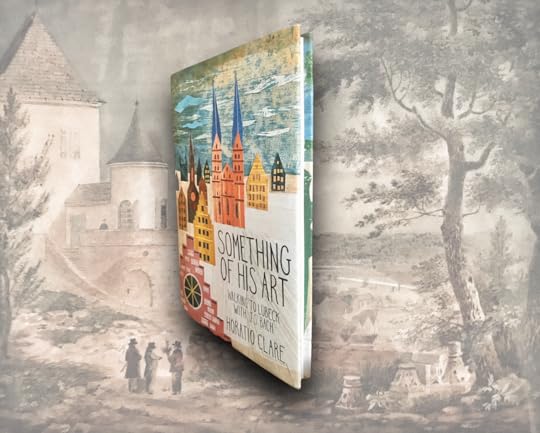
Something Of His Art: Walking to Lübeck with J. S. Bach

Rate this book
In the depths of winter in 1705 the young Johann Sebastian Bach, then unknown as a composer and earning a modest living as a teacher and organist, set off on a long journey by foot to Lübeck to visit the composer Dieterich Buxterhude, a distance of more than 250 miles. This journey and its destination were a pivotal point in the life of arguably the greatest composer the world has yet seen. Lübeck was Bach’s moment, when a young teacher with a reputation for intolerance of his pupils’ failings began his journey to become the master of the Baroque.

104 pages, Paperback

First published January 1, 2018

6 people are currently reading
209 people want to read

About the author

Horatio Clare

36 books99 followers
Horatio Clare (b. 1973) is a writer, radio producer and journalist. Born in London, he and his brother Alexander grew up on a hill farm in the Black Mountains of south Wales. Clare describes the experience in his first book Running for the Hills (John Murray 2006) in which he sets out to trace the course and causes of his parents divorce, and recalls the eccentric, romantic and often harsh conditions of his childhood. The book was widely and favourably reviewed in the UK, where it became a bestseller, as in the US.

Running for the Hills was nominated for the Guardian First Book Award and shortlisted for the Sunday Times Young Writer of the Year Award. Horatio has written about Ethiopia, Namibia and Morocco, and now divides his time between South Wales, Lancashire and London. He was awarded a Somerset Maugham Award for the writing of A Single Swallow (Chatto and Windus, 2009).

Ratings & Reviews

What do you think?
Rate this book

Friends & Following

Create a free account to discover what your friends think of this book!

Community Reviews

5 stars
40 (27%)
4 stars
68 (45%)
3 stars
30 (20%)
2 stars
8 (5%)
1 star
2 (1%)
Displaying 1 - 30 of 36 reviews
Profile Image for Left Coast Justin.
613 reviews199 followers
December 12, 2025
This is a short little book -- I think I read it in five or six hours.

Mr. Clare really nails what it feels like to be young and ambitious and why road trips (which, back in Bach's day, were made on foot) are so appealing. In this age, where people completely freak out if they're separated from their cell phones for two hours, the idea of walking away from your job/friends/family for four months and telling them you'll see them when you get back in the indeterminate future is indeed exciting.

I learned quite a bit about Bach, too. I imagine those people familiar with his works, many of which are cited throughout the text, would enjoy this book even more.

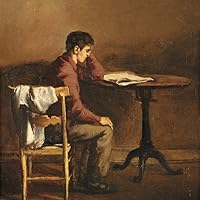
I really like the cover, too.
Profile Image for Paul.
2,230 reviews
November 7, 2018
In the winter of 1705, a young organist set off to walk from Arnstadt to Lübeck to visit the organist and composer Dieterich Buxtehude. This 250-mile journey was to become pivotal for this teacher and as yet unknown composer, Johann Sebastian Bach. He had got permission for four weeks leave, but his visit ended up taking more than four months which upset his current employers at New Church, Arnstadt. It wasn’t a pilgrimage in the usual sense, rather he was continuing the long tradition of being a wandering scholar. He would pass through a series of cities, duchies and mini-states, would be a transformative moment in his career.

Three centuries later Horatio Clare set off on the same journey, to follow in his footsteps immerse himself in the landscape and perhaps gain some insight and understanding to the great man. Clare was not alone like Bach though, nor was he armed like Bach almost certainly was, instead, he was accompanied by Richard who was recording the journey and Lindsey who was producing it for BBC Radio 3.

It is though a sky cannot be quite large enough to contain the gentle venerations of the cello.

Some of the noises that they encounter would have been the same as Bach encountered on his walk, the burble of the river, bird calls and songs and the wind rustling through the trees, but compared to those days when working on the land was essential to survival, they encounter almost no one on parts of their walk. There would be no drone of traffic, rather Bach would have heard the squeak of cartwheels behind the heavy breathing of horses. As Clare emerges from the paths into the cities, he knows he is treading the same cobbles that Bach will have walked upon too.

The sun goes down leaving crimson scripts and a huge flourish of flared cloud above pine forestry.

Clare’s describes his walk as being close on the heels of Bach’s ghost, and as they arrive in Lubeck the anticipation is electric. Entering the church send shivers up his spine, It is not the same building, having been rebuilt after World War 2, but Bach’s still presence permeates the space. There is something deeper going on here too, the music that Bach wrote stemmed from what he learnt and mastered here in the freedom that Lübeck allowed. Something of his Art is a well researched and passionate about its subject, however, it is the quality of Clare’s writing and his keen eye describing the places they walk through make this a special book to read.
Profile Image for Karen Mace.
2,384 reviews87 followers
November 7, 2018
I found this to be the perfect Sunday afternoon read - whilst listening to Bach! I have to admit to knowing very little about him, or classical music in general other than listening to Classic FM to chill out, before I picked this book up but the way the author tied in his walk following in the footsteps of Bach, who made the journey to Lubeck in 1705, alongside his observations of the wildlife and changes in the scenery over the years was totally absorbing and has made me want to learn more about the composer.

The author went on this walk for a series that Radio 3 were putting together and this book helps you enjoy the journey with him - retracing the steps that the young Bach took in 1705 when he was disenchanted with the restraints placed on him when he was playing at his local church, so he set off to visit another composer in Lubeck to help him learn more. His family were all musicians but were happy to play by the rules - Bach wasn't!!

It gives time to look back at his childhood and the things he faced during his life - the good and the bad!

The author also adds so much to the journey with his insights on the wildlife of Germany and how the sights have changed since the journey of Bach and some staggering statistics on the loss of wildlife in the area. The author also shares why Bach means so much to him in relation to his battle against depression and to get that background makes the journey even more poignant.

A truly fascinating read.
Profile Image for Matt Hodson.
73 reviews
March 4, 2019
Nicely written short haunt but very light to be a book. It’s essentially an extended article. I confess to finding the subject matter a bit dull hence three stars rather than the four that the prose might have deserved.
Profile Image for Chris.
946 reviews115 followers
November 30, 2021
October 1705. Bach, at just 20 years a church organist in Arnstadt, applies to his superiors for a month’s leave to hear the music of Dietrich Buxtehude in Lübeck, 250 miles (400 km) to the north. His purpose, he told them, was “to comprehend one thing and another about his [Buxtehude’s] art”.

One autumn three centuries later the writer Horatio Clare followed some of Bach’s footsteps for a BBC Radio 3 series called Bach Walks (first broadcast as five programmes in 2017), this time to “learn something” of Bach, the man and his art. In company with a producer-director and a sound recordist he attempted to catch a flavour of what it must have been like for the energetic and ambitious young composer travelling on foot up the Old Salt Road, moving from south of the Harz Mountains northwards to near the Baltic Sea.

Two artists, then, one taking as close as was possible to the other’s path from one rather conservative culture to a more cosmopolitan environment: would it be possible for Clare to learn something more than the bald facts of Bach’s going and for the listener (and, now, reader) to learn from the writer’s experience?

Something of His Art is based on five days Clare spent walking sections of what is surmised to be Sebastian Bach’s route, the audio from each day of providing the basis for five separate 30-minute programmes wedded to the concept of ‘slow radio’. The six chapters largely parallel those walks as the trio travel through fields and woods, cross the Harz highlands via the Brocken summit, and pass through settlements and towns.

By degrees a nature walk, retailings of historical snippets, speculations on Bach’s experiences, hopes and musical lessons, and reflections of Clare’s responses to Bach’s compositions, this nonfiction novella — just a hundred pages in the paperback edition — is the literary equivalent of that slow-radio series. By recording all that he sees, hears, feels, smells and, at times, tastes, Clare invites the reader to be his surrogate and, by extention, to get a feel of what the composer may have experienced.

Reading this, as I did, during the same month Bach and Clare journeyed through the same countryside, being alert myself to similar birdsong and some of the same scents, listening to recordings Bach’s music as I often do, and rehearsing, playing and singing Baroque music in the run-up to seasonal concerts, gave Something of His Art even more relevance, especially knowing that Bach was intending to enjoy the Advent services and concerts Buxtehude was wont to put on in Lübeck.

I personally found this a delight on so many levels. Clare is a prose poet, and his descriptions of his surroundings vividly conveyed the physicality of the walks in sensitive and evocative language. He also anchored us to the present, drawing comparisons with life three centuries ago and throwing in anecdotes about the companionship the writer, the director and the sound engineer enjoyed. The notion of their having a foot in both the past and the present was echoed in many ways, not least in the physical representations of the composer they encounter at journey’s start and end: the jaunty statue of a relaxed young Bach in Arnstadt and the modern plaque in Lübeck’s rebuilt Marienkirche depicting Dietrich Buxtehude and his acolyte in symbolic form.

And, because this slim volume has the composer as focus, there is discussion of Bach’s actual music — his organ pieces, cantatas, chorales, instrumental works and more — presented by an author who, though coming relatively late to the classical repertoire, had found the cello suites in particular of profound comfort whenever depression visited him:
The music seems by turn wise and melancholy, ruefully amused sometimes, and philosophical, both accepting and longing. […] Something like a breeze moves the listener, a breeze both invisible and tangible, like the white space between the black printed words of a poem, where all the truth and certainty lie, in convictions which we hold and know but can never fully express.
It seems very appropriate that the man who wrote such wonderful music should be celebrated by another individual who not only appreciated the music but found it echoed in the sights, sounds, textures, scents and food of the landscape the musician travelled through — the music of the senses, as it were.
Profile Image for Andy.
1,176 reviews223 followers
May 31, 2025
I rate this a 4.5 star read. It did for JS Bach, what Tracy Chevalier’s The Girl with the Pearl Earring - humanising and explaining, creating depth, colour and understanding. It’s a gentle tale, gently told. The prose is beautiful, measured.

I always find writing about music fascinating. It has to be poetic, or at least lyrical. It requires flights and digressions, and almost jazz like a riffing on an idea. Horatio Clare does this exceptionally well.

Profile Image for Andrew H.
581 reviews27 followers
October 19, 2021
Started off well, but the style is reminiscent of a marshmallow. A bit of nature writing, a touch of music criticism, an element of travel writing, and in the end I found I was spotting styles rather than taking any firm interest in Bach or the memory walk. It felt like Sebald on a happy day -- if he had any happy days!
Profile Image for Suzanne.
134 reviews6 followers
January 26, 2020
Charming but slight.

And I learned the origin of the term Brocken spectre. I’ve seen one before, in the Tetons, and someone else taught me the term, but it didn’t know it was named for a peak in Germany.

Coleridge wanted to see a Brocken spectre, says Clare, and ascended Brocken three times trying. Coleridge never saw one, but claimed that he was consoled by another weird sight: while hiking Brocken, a wild boar ran past him, and stuck to the boar’s butt and tail were masses of dangling glow-worms!
Profile Image for Ashley.
153 reviews1 follower
July 10, 2021
Horatio Clare follows in the footsteps of J.S.Bach by walking from Arnstadt to Lubeck, about 250 miles. I think this is Clare at his best, walking. observing and writing about one of the greatest composers to have lived.
Profile Image for Tripfiction.
2,045 reviews216 followers
April 12, 2019
In the footsteps of J S Bach - GERMANY


This area of Germany is not a natural draw for tourists and walkers (though there are many beautiful things to see). Something of his Art is inspired by a trip that J S Bach undertook back in 1705 to visit composer Dieterich Buxtehude. Horatio Clare and his team in present day decide to follow in Bach’s footsteps from Arnstadt to Lübeck. The book follows on from an original documentary series for Radio 3.

This is a ramble (a collection of ‘field notes’) through the different landscapes, cities and villages of this area of Germany. There is chat along the way, with observations and musings, peppered with musical themes. Essentially this group of hikers is channelling Bach. There is ribaldry and discussion of what Bach might have seen when he undertook his challenge 300 years ago – when covering such distances on foot was quite the norm. Whom might he have met along the way? Where might he have stayed? Did he walk up through the Harz Mountains or skirt them West or East?

This is a very short book of 90 pages or so that is beautifully presented. It is informative and well written. Take for example the case in Lüneburg where a wild boar was shot and its body found to have been caked in salt. This led to the discovery of a salt mound and the establishment of a principle north/south trade route for the commodity. The present day journeymen find themselves on this historically very important road. The excavations for salt long ago however caused many buildings to fall down and consequently in Lüneburg, there are many crooked and sagging houses, which of course makes it very picturesque for visitors today.

As they continue north towards Lübeck, they ponder the natural environment that Bach might have seen, the oak trees they pass probably mere saplings in his day, the pines a recent addition to the scene. And there is an upbeat tone as they pass through the Holstentor in Lübeck, once again imagining Bach passing through, all those centuries ago.

The premise of the book is a nice idea but perhaps the link to Bach is a little tenuous at times. For me it was a delightful, short read but perhaps needed a bit more substance.
Profile Image for James.
439 reviews
January 30, 2023
How strange that Bach might have walked through this place with all this ahead of him. Three centuries later, the deaths of children he would have and a woman he was yet to wed would suffuse a piece of his which would reach beyond the walls he passed under and make a foreigner from the future cry. We seem to be venturing through nets of time so close together and far about that they defy dimensions and our capacities to model them. In his fugues, Bach manipulates linear time so apparently effortlessly that it seems a plaything, an explanation given to a child on the understanding that at some future point the full mystery will make itself understood.

It was while reading Steve Brusatte's The Rise and Fall of the Dinosaurs that my girlfriend coined the term "T-Rex fanfiction" to describe Brusatte's habit of excessively dramatising the lives of dinosaurs to the extent where it just became creative writing. There's a sense of that here, with Clare's approach to Bach, whom he frequently writes "must" have done something or other. He MUST have eaten some soup. He MUST have thought this. He MUST have walked this road, or leaned on a bit of wood, or whatever. Like, I don't know, did he? I get that it's a device, but it felt jarring and a bit excessive. The history stuff was really interesting, but the intense overidentification with the subject matter did tip over into "T-Rex fanfiction" at points.
Profile Image for Paul.
272 reviews5 followers
December 30, 2022
This is a little gem. If you love Bach, Germany, walking, nature or the joy of life this is the book for you. Probably best read interspersed with listening to Bach.
Profile Image for Krista.
4 reviews
October 10, 2021
I do love a walking book. This one had a very natural pace with observations and descriptions teased out of the landscape, out of period of time. I'm afraid I don't come from a place of knowing Bach very well, but I imagine those who do would enjoy the contemplations about what he may have seen and smelled and heard during this jaunt away from home.
21 reviews
March 28, 2020
Lured in the bookshop by the attractive cover, there were some interesting observtions on places in Germany like the Harz mountains, but rather too little about Bach, and a lot of conjecture and dull personal stuff.
330 reviews30 followers
October 22, 2018
This short book (96 pages) is based on the BBC Radio Three programmes when writer Horatio Clare retraced the 250 mile walk by the young and then unknown Johann Sebastian Bach. Something of his Art (Little Toller) recounts the authors walk in J.S. Bach’s footsteps.

The walk in 1705 from Arnstadt to Lübeck took place during the winter at a time when Bach was earning a living as a teacher and organist. Still yet to be discovered as a composer. A defining moment in the young life of Bach.
The walk by Horatio Clare is not just a walk covering the same route as J.S. Bach it is a walk that talks of the landscapes and the wildlife of the journey today and what it would have been in Bach’s day as he walked the German countryside.

For someone like me who has loved classical music since my childhood, this was a real insight to the composer’s early days and Clare tells of Bach’s drinking and also the fights. The evocative writing by Horatio Clare really makes you walk each step with him just as the author must have thought Bach was walking with him as well. The sheer quality of the writing is a shining example to the research for both this book and also the BBC Radio Three programmes.

Just a words on the cover design, it is in itself a real work of art and Little Toller need to be congratulated. I cannot rate Something of his Art high enough. This is sheer quality. I have a feeling I will be returning this fabulous book again in the near future.

Profile Image for Mary Warnement.
702 reviews13 followers
October 7, 2019
Clare prepared this book after creating a radio show in which he walked in Bach's footsteps, recreating a journey the young composer undertook in 1705 from Arnstadt to Lubeck to visit Buxtehude (whose name, I confess, had been unknown to me). The commentary of that talking (printed by Little Toller in pretty package) is littered with unfactual generalities that niggle at my historian's preference for precision, although I concede that a slavish adherence to precision would prevent much being said ever. I'm curious to hear the BBC radio 3 shows, although perhaps not enough to listen. I've had Bach's passacaglia and fugue in C, which features in the commentary. I prefer Handel's passacaglia, reworked by Halvorsen. (Maybe I simply prefer violin and cello to organ.) I have no doubt that I would have enjoyed chatting with Clare on a 5-day walk through German countryside, and my nit-picking aside, I enjoyed his musings in company of his producer Lindsay and sound engineer Richard. His insights into the production were refreshing too. Mentioning dinner, flying out of Hamburg. Those facts grounded me, I guess.
Profile Image for Annikky.
610 reviews317 followers
January 5, 2019
4+ So who knew that the thing I needed to read right now was about Johann Sebastian Bach walking from Arnstadt to Lübeck in 1705? And birds, lots of different German birds. It is a delightful little book, a hybrid of nature and travel writing, biography and thoughts on music, based on the BBC Radio 3 programme Bach Walks. The premise - following in Bach’s footsteps about 300 years later - is interesting (if maybe a bit gimmicky), but the book would be nothing without the wonderful voice of Horatio Clare. He is just a pleasure to read, with his lyrical but non-pretentious style and gentle wit. It is not a trendy book; if you start from, say, My Year of Rest and Relaxation and walk the literary road as far as you can, this is what you’ll reach. If you love Bach or music or nature or just want your faith in humanity restored, I recommend you read this.
Profile Image for Margaret.
787 reviews15 followers
February 10, 2021
Horatio Clare recreates the long walk that J. S. Bach, in the beginning of his career, undertook from Arnstadt to Lübeck, across northern Germany, just to meet a composer he admired.

The author is very detailed in his journey, giving the reader a good glimpse into the natural landscape and the small cities he passes through. Besides describing his surroundings, Horatio Clare retells Bach’s earlier days and associates his music with the walk, creating a true soundtrack for the book.

A very lovely and elegant read. Just a pity it was too short; I would have loved more pages!
Profile Image for Sophy H.
1,902 reviews110 followers
October 21, 2021
An interesting tale based on a documentary series of Radio 3 broadcasts that Horatio Clare was asked to do.

The description of the landscape here is evocative and Horatio Clare has an amusing way of describing people and setting.

It is quite absorbing to imagine how different things would have been in Bach's day when he was undertaking the same journey.

All in all a good read but probably one I wouldn't necessarily return to, I think it would be more stimulating to listen to the original radio broadcasts.
Profile Image for John Riselvato.
Author 17 books4 followers
April 9, 2022
In this case, the destination was well worth the journey. The writing is dry and uninteresting until the last 15 pages or so, then we get to understand who Clare is and what brought them to Bach's path to Lubeck. If you love the BBC Radio 3 program you'll probably love this too, but I hadn't heard it yet, so it felt like a journey about the process just wasn't lined up for my reading wants. Still, the ending was heartfelt and inspiring, so as short as it is, read it if you have the afternoon to do so.
Profile Image for Diane.
653 reviews9 followers
December 15, 2020
The story of Clare retracing a journey that J S Bach made from Arnstadt to Lubeck (250miles) in 1705. He walks most of the route that Bach took and a lot of the commentary is comparing what Bach would have seen with the 21stC journey. Some of the landscape is still the same, some altered beyond recognition. Also there are interesting discussions of Bach's life, his journey, hismusic. I am definitely going to find the Cello suites to listen to. A lovely read.
Profile Image for Helen.
Author 6 books6 followers
December 31, 2018
Clare links his own walk with Bach's very successfully. He tells Bach's story with a writer's skill and he has clearly researched thoroughly - but the research comes through rather than any strong personal connection to Bach. It is his descriptions of the German landscape that stays with me rather than the music.
Profile Image for Sarah.
45 reviews
February 25, 2019
Horatio Clare is one of the best writers around at the moment. This is a deeply moving book about the journey JS Bach took in 1705 to Lubbeck. It's a short book but contains so much. It has one of the best descriptions of depression written in 2 pages.
As all Little Toller books are it's also beautifully presented.
Profile Image for Sue Franklin.
1 review1 follower
January 6, 2020
Beautifully written! I read this on a lazy Sunday afternoon and listened to Bach in the background as I read. At times I could imagine the dampness of the woods, the mossy trees, and the chattering birds in the branches as they trekked that 250 mile pilgrimage. Being the artist that he was, I’m sure Bach noticed and appreciated this trip as much as the author and crew did.
43 reviews
August 15, 2020
Delightful book. Based on a walk Clare did for the BBC. Beautifully written, he describes his appreciation of the natural world that Bach would have seen on his walk all those years ago. He intersperses this with views about Bach and in one chapter how Bach's music helped him through depression. Thoughtful and brave.
I will look for more.
Profile Image for Gemma.
339 reviews22 followers
November 23, 2021
I really enjoyed this. Was particularly grateful for the passages on pilgrimage, walking in high autumn, and the challenge of meeting one's artistic heroes - how to say to someone you do not actually know how much they mean to you, how they in many ways kept you alive?

The book makes me want to go on a long walk through Germany...
Profile Image for SophieJaneK.
103 reviews
March 15, 2024
Beautifully perceptive and wonderfully written. This is not just an account of a walk by JS Bach but an intimate observation of surroundings through all the senses, a connection wth times past, and a beautiful presentation of the way in which walking, nature and music can be both melody and harmony for the soul.
Profile Image for Eleanor.
1,131 reviews233 followers
November 27, 2018
This is based on a "slow radio" series that Horatio Clare presented on Radio 3. I'm new to the concept of slow radio, but it seems not unlike slow television, a broadcasting trend that seeks to reverse frenetic media consumption and bring us all back to the important things in life, like watching seven hours' worth of Norwegian train journey. Clare's programs sought to follow in the footsteps of Johann Sebastian Bach, who as a young man walked from Arnstadt to Lubeck in order to hear Dietrich Buxtehude's organ playing. (Buxtehude was sort of the Bach of his day. The only excuse Bach ever gave his employers for disappearing for four months was that he wished to learn "something of his art". Because the record we have is in the third person, it's unclear whether Bach means his art, or Buxtehude's, or - more pleasingly - both.) Unsurprisingly, I wanted more Bach and less birdsong, but Horatio Clare is really a travel writer so this seems a slightly unfair demand. He also hints at some truly interesting moments - there's an especially surreal dinner in a German mountain canteen that used to be a Cold War militarized zone - of which the brevity of this format and project doesn't allow elaboration. Terribly atmospheric anyway, though.
Profile Image for Bill Lawrence.
390 reviews6 followers
December 31, 2018
An enjoyable read and full of atmosphere. Builds to a wonderful celebration of the cello suites and arrival in Lubbock. A book to return to.
Displaying 1 - 30 of 36 reviews

Can't find what you're looking for?

Get help and learn more about the design.