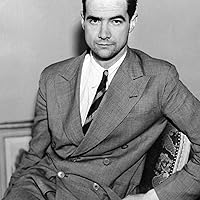
Kōtarō Isaka (伊坂幸太郎, Isaka Koutarou) is a Japanese author of mystery fiction.
Isaka was born in Matsudo City, Chiba Prefecture, Japan. After graduating from the law faculty of Tohoku University, he worked as a system engineer. Isaka quit his company job and focused on writing after hearing Kazuyoshi Saito's 1997 song "Kōfuku na Chōshoku Taikutsu na Yūshoku", and the two have collaborated several times. In 2000, Isaka won the Shincho Mystery Club Prize for his debut novel Ōdyubon no Inori, after which he became a full-time writer. In 2002, Isaka's novel Lush Life gained much critical acclaim, but it was his Naoki Prize-nominated work Jūryoku Piero (2003) that brought him popular success. His following work Ahiru to Kamo no Koin Rokkā won the 25th Yoshikawa Eiji Prize for New Writers. Jūryoku Piero (2003), Children (2004), Grasshopper (2004), Shinigami no Seido (2005) and Sabaku (2006) were all nominated for the Naoki Prize. Isaka was the only author in Japan to be nominated for the Hon'ya Taishō in each of the award's first four years, finally winning in 2008 with Golden Slumber. The same work also won the 21st Yamamoto Shūgorō Prize.
Strange for a book with such workmanlike prose to feel so long-winded, but there you have it. Seesaw Monster is two novellas and one chore.
In the first story, a young wife (and retired secret agent) spends many chapters wondering what the hell is up with her grating mother-in-law. She, her husband, and the MIL, putter about a shoestring-thin plot until there's a slight burst of action. If only this ex-spy could clock that she’s clearly in a spy thriller!
In the second story, set in an AI-powered Japan of the future, a courier stumbles into a mild cat-and-mouse chase to capture some kind of McGuffin Tech before it's "too late" (consequences vague). The future is so haphazardly outlined you'll long for the superior world-building of William Gibson's Johnny Mnemonic. Now there was a delivery man who got the job done.
Back to the long-windedness and puttering; unnecessary padding bloats most paragraphs. At one point a middle-aged character is described as reminding the narrator of a “surly kid” because of his “long hair and impolite way of speaking.” Fair enough.
In case the point hadn’t been made, Isaka goes on: “His age made him an adult member of society, but everything that came out of his mouth sounded so flippant”. Ok yeah, we understood what you just said in the previous sentence.
I don’t even know what to say about the plot contrivance that reveals: Oh, by the way! Hospitals are implanting cameras in some people's eyes without their knowledge! So, let's go access that eyeball footage to solve the mystery ...
... You know, just because the genre is science fiction doesn’t mean you can insert magical plot twists because “it's the future.”
The whole book is like this. Easy to read, easy to forget!
Overall 4.5/5 stars, rounded up. This story is the first that I have read by Kotaro Isaka, although I have seen the movie based on Bullet Train. I was expecting something different from this author than what I read, but I was very pleasantly surprised. The prose is wonderful. I attribute this to both Isaka’s writing and Sam Malissa’s translation.
Seesaw Monster covers many thematic elements. It delves into personal relationships and the mystical connections among people and events, it has elements of science fiction - an AI potentially gone bad, and includes thriller aspects that keep the action moving along. The story is told in two distinct parts in two different time periods with (mostly) different characters, but keeps the reader entertained and invested throughout both parts. There are hints throughout the story that leads the reader to various possible conclusions before the ultimate ending that is left partially unsolved.
This will certainly not be the last Kotara Isaka book that I read and I highly recommend that everyone read this book. It has something to offer for all readers, but especially those who enjoy a good thriller with personal interactions and character development.
The first part had me wondering where Isaka was going with this. It was good but seemed sort of rushed. After reading the second part though it all came together. I still feel like both stories could've been elaborated, but thought it was a cool idea to have one complete story lead into another that takes it up a notch.
I'm gutted I didn't enjoy this one more. Snapped up from Waterstones from the new releases. Interesting book. Two stories. Seesaw monster on one side, on the flip side Spin monster. The story went over my head. Kept pushing the sea and mountain people, the ones that just can't get along. The first duo was painful together, felt sorry for the husband being stuck between his mother and wife. The secret agent thing was interesting and I did like them when they joined together.
The other story is set further on and does have the wife from the first in it. This one was out there with the hidden camera in the eye. Again it pushed the sea and mountain people, but this one felt like forced prophecy. I didn't like the neutral mediator. I'm curious if anything changed when the guy woke up. Took a few stop and starts. Preferred the second story.
This entire review has been hidden because of spoilers.
Kotaro Isaka carefully interlaces long threads of intrigue, adventure, and drama to create a unique pattern of excitement that is nearly impossible to resist. What are the odds that a simple, unsuspecting man would marry a woman whose ancestors had been warring against his mother's? Both women are skilled assassins who simply can't stand each other. Of course, he dismisses their angry comments as commonplace bickering between a wife and mother-in-law. That is, until he is kidnapped and the two women are forced to join forces to rescue him. Meanwhile, in the future, only the written word is safe from scrutiny, as the watchful eyes of technology never tire.
Leaving The Bullet Train behind, Isaka sets his sights on a story that is equal parts comedy, family drama, and science fiction. His signature style shines even brighter while tackling the impossible.
This book is a must for Isaka fans looking for an adventure spanning the ages. I can't recommend it enough!
I have mixed feelings about this book, which started out at a fairly high pace despite the cliché (hatred between mother-in-law and daughter-in-law); the pace, however, then dropped and I struggled to disentangle the various points of view that changed abruptly throughout the story. I have read better things from this author.
Ho dei sentimenti contrastanti riguardo questo libro, che é partito con un ritmo abbastanza alto nonostante il cliché (odio tra suocera e nuora); il ritmo peró poi é sceso ed ho fatto fatica a districarmi tra i vari punti di vista che cambiavano repentinamente nel corso della storia. Ho letto cose migliori da questo autore.
I received from the Publisher a complimentary digital advanced review copy of the book in exchange for a honest review.
This is the first book by Kotaro Isaka I've read, but if this book is any indication of the quality of his writing (and translations), it won't be the last. The first half, the title novella of the book, is a story about the rocky relationship between a wife and her mother-in-law that quickly turns into a mystery and thriller, as the wife is a retired spy who finds she must get to the bottom of this conflict. The second half, Spin Monster, is a near-future tech thriller about a courier that gets caught up in a race against an AI that has become malevolent and finds himself repeatedly up against an old classmate he has a history with. Weaving between the two are some characters and a theme of eternal conflict as explained by a fable, the latter of which seems incongruous in Seesaw Monster until it is fully expanded upon in Spin Monster but ultimately comes full-circle in a mostly satisfying way. A very good read, highly recommend.
Thank you so much to NetGalley and Kotaro Isaka for providing me with a complimentary digital ARC for Seesaw Monster coming out July 15, 2025. The honest opinions expressed in this review are my own.
I really enjoyed other books by this author! I love Japanese novels. I’m not sure about this book. I didn’t like it as much as other books I’ve read by him. It wasn’t like Bullet Train. I think I wanted more mystery and suspense. The first half was better than the second. I would check out other books by this author.
I love Kotaro Isaka, but this one seemed to be too slow and having too much details and could be shorter. The first part „Seesaw Monster“ was pretty much ok and I enjoyed it. Although it could seem to be a bit slow for a western reader, it was a pleasant read. Unfortunately the „Spin Monster“, part 2, despite of an original and modern plot, dragged into nowhere and I was skimming it just to finish at last. Nevertheless there are plenty of valuable insights and philosophical passages.
Kotaro Isaka has built his reputation on a foundation of kinetic action, darkly comic dialogue, and labyrinthine plots that converge with mathematical precision. From the international success of Bullet Train to the philosophical violence of Three Assassins, Isaka's works consistently blend high-octane thrills with deeper meditations on fate, conflict, and human nature. In Seesaw Monster, translated with nuanced precision by Sam Malissa, Isaka attempts his most ambitious narrative structure yet: a dual-timeline exploration that spans decades while examining the eternal nature of human discord.
The result is both his most intellectually challenging work and, paradoxically, one that occasionally struggles under the weight of its own mythological ambitions.
Two Eras, One Ancient War
Seesaw Monster operates across two distinct time periods, connected by the enigmatic concept of an ancestral feud between "Sea People" and "Mountain People." In 1980s Japan, pharmaceutical salesman Naoto finds himself caught between his feuding wife Miyako and mother, whose animosity seems to transcend ordinary family tension. When a mysterious insurance salesman named Ichio Ishiguro introduces the mythology of ancient bloodline conflicts, their domestic warfare takes on cosmic proportions.
Decades later, in a near-future Japan dominated by surveillance technology and facial recognition systems, courier Naomasa Mito navigates a world where paper documents have become the only truly secure medium for sensitive information. When Mito encounters his childhood nemesis Kagetora Hiyama—now a police detective—on a routine delivery, both men are drawn into a conspiracy that echoes the ancient patterns of conflict their predecessors experienced.
Isaka's decision to structure the narrative as parallel stories rather than a straightforward chronological progression demonstrates his continued evolution as a storyteller. The 1980s timeline captures the economic optimism of Japan's bubble era while exploring intimate family dynamics, while the future timeline presents a techno-thriller examining privacy, surveillance, and the persistence of human nature in an increasingly digital world.
The Mythology of Inherited Conflict
At the heart of Seesaw Monster lies Isaka's most philosophically ambitious concept: the idea that some conflicts are not personal but archetypal, passed down through bloodlines like genetic predispositions. The Sea People versus Mountain People mythology functions as both plot device and thematic framework, suggesting that certain antagonisms are as inevitable as gravity.
This concept works most effectively in the 1980s storyline, where Miyako and her mother-in-law's relationship provides concrete emotional grounding for abstract mythological concepts. Their collaboration on the children's book "I Am Mai-Mai"—featuring a snail with the Lance of Longinus—becomes a poignant metaphor for finding creative solutions to seemingly irreconcilable differences. Isaka demonstrates particular skill in depicting how two people can simultaneously despise and depend on each other, creating something beautiful through their very opposition.
The future timeline's exploration of this theme proves more problematic. While Mito and Hiyama's mutual revulsion is viscerally portrayed, their connection feels more manufactured than mythic. The revelation of their shared trauma from a childhood car accident provides psychological justification for their antagonism, but undermines the supposedly supernatural nature of their conflict. Isaka seems uncertain whether he's writing science fiction, mythology, or psychological realism, and the narrative suffers from this indecision.
Technical Mastery Meets Conceptual Ambition
Sam Malissa's translation deserves particular recognition for maintaining Isaka's distinctive voice while navigating complex temporal shifts and mythological concepts. The dialogue crackles with Isaka's characteristic wit, particularly in exchanges between Chusonji and Mito, where philosophical concepts are debated with the casual intensity of discussing baseball statistics. Malissa captures the subtle differences in language between eras without resorting to heavy-handed period markers.
Isaka's world-building in the future timeline demonstrates impressive attention to detail. The society where digital information is inherently insecure, making analog couriers essential, feels both plausible and satirical. The author's background in mystery writing serves him well in constructing the surveillance apparatus that drives the plot, creating genuine tension as Mito attempts to navigate a world where every movement is monitored.
However, the novel's pacing suffers from its structural ambitions. While individual scenes maintain Isaka's trademark momentum, the constant temporal shifts disrupt narrative flow. Readers invest emotionally in one timeline only to be abruptly transported to another, creating a sense of narrative whiplash that undermines both storylines' effectiveness.
Character Development and Emotional Resonance
Isaka's characterization shows notable growth in complexity compared to his earlier works. Miyako emerges as the novel's most fully realized character, a woman whose sharp wit masks profound loneliness and whose creative collaboration with her enemy reveals unexpected depths of empathy. Her evolution from antagonistic daughter-in-law to elderly sage provides the novel's emotional anchor.
Naomasa Mito represents Isaka's attempt to create a more introspective protagonist than his usual action heroes. Mito's car phobia and trauma-induced memory distortions add psychological complexity, but sometimes feel like authorial mechanics rather than organic character development. His relationship with girlfriend Hinata provides necessary emotional grounding, though she occasionally serves more as philosophical mouthpiece than fully realized character.
The supporting cast maintains Isaka's talent for creating memorable eccentrics. Atsushi Chusonji, the tech-savvy fugitive who becomes Mito's reluctant ally, delivers some of the novel's funniest lines while serving as exposition machine for the technological aspects of the plot. Detective Hiyama's rigid adherence to rules provides effective contrast to Mito's growing flexibility, though his character feels somewhat schematic.
Thematic Richness and Philosophical Depth
Seesaw Monster succeeds most completely in its exploration of how conflict can be simultaneously destructive and creative. The children's book collaboration between Miyako and her mother-in-law suggests that opposition itself can generate beauty, while the technological cat-and-mouse game in the future timeline demonstrates how conflict drives innovation and adaptation.
Isaka's meditation on memory and truth proves particularly compelling. Mito's discovery that his memories of the childhood accident may be fundamentally distorted raises questions about the nature of identity and responsibility. If our understanding of formative events is unreliable, how do we construct meaning from our experiences? The novel's suggestion that multiple versions of reality can coexist simultaneously feels both philosophically sophisticated and dramatically satisfying.
The surveillance theme resonates powerfully in our current moment, though Isaka avoids heavy-handed commentary. Instead, he focuses on how constant monitoring changes human behavior and relationships. The world where only handwritten messages provide privacy feels like logical extrapolation rather than dystopian warning.
Literary Ambitions Versus Genre Expectations
Seesaw Monster represents Isaka's most literary work, prioritizing thematic development over pure entertainment value. This shift will likely divide readers familiar with his more straightforward action novels. The philosophical weight occasionally threatens to overwhelm the narrative momentum that made works like Bullet Train so compulsively readable.
The novel's exploration of mythological themes positions it more clearly within the tradition of contemporary Japanese literature that blends realism with supernatural elements. Authors like Haruki Murakami and Banana Yoshimoto have explored similar territory, though Isaka's approach feels more systematic and less dreamlike than his literary compatriots.
Minor Flaws in Major Ambitions
Despite its considerable strengths, Seesaw Monster suffers from several structural and conceptual problems. The dual timeline structure, while thematically appropriate, creates pacing issues that prevent full emotional investment in either storyline. The mythological elements, while fascinating, never quite achieve the resonance that would elevate them from clever plot device to profound truth.
The novel's ending, while providing narrative closure, feels somewhat anticlimactic given the build-up of ancient conflicts and technological conspiracies. Isaka seems more interested in exploring his concepts than in providing the explosive resolution his previous works have delivered.
Some supporting characters feel underdeveloped, particularly in the future timeline where the conspiracy elements sometimes overwhelm character development. The balance between action and reflection that Isaka has mastered in previous works occasionally tips too far toward contemplation.
Final Assessment
Seesaw Monster stands as Kotaro Isaka's most ambitious and uneven work. While it doesn't achieve the perfect balance of entertainment and depth that characterizes his best novels, it succeeds in expanding his thematic range and demonstrating his continued growth as a writer. The novel's exploration of inherited conflict, technological surveillance, and the creative potential of opposition provides rich material for contemplation, even when the execution doesn't quite match the conception.
Sam Malissa's translation ensures that English-speaking readers can fully appreciate both Isaka's linguistic playfulness and his philosophical seriousness. Despite its flaws, Seesaw Monster confirms Isaka's position as one of contemporary crime fiction's most intellectually adventurous practitioners.
In an era where genre boundaries continue to blur, Seesaw Monster represents a meaningful contribution to the conversation about how popular fiction can address serious themes without sacrificing its essential entertainment value. While not entirely successful in its ambitious goals, it suggests fascinating directions for Isaka's future work and provides plenty of material for readers willing to engage with its complex ideas.
I didn’t get along with the writing style of these monster novellas. The alternating first-person perspectives should have been exciting, except all the telling made them very dry. Seesaw Monster’s Miyako annoyed me with all her agency training bragging, so I didn’t enjoy the spy aspect as much as I usually do. I wasn’t interested in her marriage or her issues with her mother-in-law. Spin Monster was slightly more appealing because it was prescient and addressed autonomous technologies, data privacy, and information engineering. I’m not one to scoff at connections and interrelated elements, though here I think the recurring theme of conflict would have been stronger if it had been mentioned less frequently and if the reader had been allowed to notice the motif on their own.
I found these two stories (which did end up being semi-connected) kind of frustrating. Maybe I just didn't care for the style, but it seemed like the stories very desperately wanted to go on a more metaphysical direction, but always seemed to pull back or not connect to that overall idea of the nature of conflict. The stories were very readable and clear, with some very interesting worldbuilding, but they never seemed to reach satisfying conclusions - mind you, said conclusions didn't need to be positive in any way or even spell everything out for you.
This book is two books in one which StoryGraph does not say but alas, technically they connect but they still exist on their own as well!!!
The first half of this review is for SeeSaw monster.
Great book as always from Kotaro Isaka! It was actually a very refreshing change. I feel as though with “The mantis” it lacked something, the family angle wasn’t as good as it is in this one. The mother in law and the wife being in a dispute, the political comparisons etc to describe their relationship, all very good! The whole added part of the wife’s former career as an agent was amazing, I really adored the way in which her story was told. The twist with the mum was unexpected! I really enjoyed that angle. I like that their bond remained distant afterwards, one similar former career did not make them best friends and I really really appreciated that as that can tend to happen in books. I really enjoyed the husbands plot as well, it really had me at the edge of my seat! It was a rather unexpected twist, the suicide scene felt reminiscent of “Three Assassins” particularly the storyline of “The Whale” and I enjoyed all of it. Overall, another great read. Perfectly paced and I could not put it down!
Next review is for Spin Monster:
I won’t lie, this one may be one of my favourite pieces by kotaro isaka. It’s truly an amazing piece, it’s better than Seesaw Monster yet they work well together. Imagine my shock when I’m halfway through Spin Monster and realise that the books are like intertwined! Good lord! Spin Monster set far after Seesaw monster of course, given that the wife from Seesaw monster is the author of the snail book in Spin Monster. Wow. The mention of the mountain and sea people, the insurance man etc. such fun touches, so subtle yet it works. I read SeeSaw Monster first and then Spin monster, I feel like this order is best as to enjoy it more! I really truly loved Spin monster. It’s a masterpiece, I really didn’t expect what was coming and the writing was amazing as always. The slow subtle hints at the reveals worked very well, it felt maybe a bit empty towards the end yet it still worked. The unreliable narrator part with Mito worked very well like, I’m unsure if it’s even really unreliable narrator or what but it’s well done. The use of AI as a “spin monster”, falsifying so much. Not being used as world building but as this man made horror or whatever, it’s really something unique. Usually it’s simplified down to a device for world building but that is certainly not the case here, anti-ai is very strong.
Seesaw monster referenced “going to japans tomorrow” or something similar, similarly to in spin monster when someone references “going to japans future” whilst on the train. Small little connections like this throughout the book really helped to connect the books together. The mountain and sea people etc. I really enjoyed them.
Overall, I feel like this may be one of my favourite Kotaro Isaka books. It truly had me gripped from the start, it’s a refreshing read? It’s something far different from his other ones yet it’s still his amazing book! Wow! I really recommend this one, it’s an amazing read and stands separate from the assassins series. It’s brilliant, I really enjoyed it and I hope he creates more books set in a sci-fi future. God damn I love his books. “The future isn’t built on facts and data alone. There’s also human emotion”.
Seesaw Monster is what happens when Kotaro Isaka takes one look at domestic drama and goes, “Needs more espionage.” And somehow, it works. I was expecting a slightly spicy family feud, not a whole mythological beef between Sea People and Mountain People turning your in-laws into Cold War assassins. But here we are.
The first half is peak '80s Japan, capitalism chic with a side of slow emotional death. Poor Naoto is just trying to sell pharmaceuticals without his soul falling out, but instead he’s stuck as the human rope in a mother-in-law tug-of-war between Miyako (his wife) and his actual mother, both of whom might be sleeper agents with blood vendettas going back generations. Honestly, by page 30 I was ready to throw hands on Miyako’s behalf, because this woman is fighting both domestic patriarchy and ancestral trauma before breakfast. Also, she writes a children’s book about a snail that might be a divine weapon and I want to marry her.
And then... plot twist! We slam-cut to a near-future Japan where AI is watching your every move like a digital Big Brother with a Ring cam obsession, and paper couriers are the new black market. Enter Mito, who is somehow both deeply paranoid and a hot mess, and Kagetora, his childhood trauma twin turned frenemy. These two are tangled in a passive-aggressive spiral of distrust that feels like The Social Network but with more knives and less Zuckerberg. Their story is way more tech-thriller energy, but still deeply weird in that delightful Isaka way. Think: facial recognition surveillance plus petty vengeance equals surprisingly heartfelt tension.
What makes the whole thing sing is how these two stories, wildly different in tone and setting, orbit the same weird gravitational center. The idea that conflict is inherited, like your mom’s nose or your dad’s inability to process emotions. Whether it’s a MIL-DIL blood feud or two men doomed to mirror each other forever, Isaka wants us to ask, are we cursed to repeat history, or just bad at therapy?
Also, credit where it’s due: Sam Malissa’s translation slaps. The pacing never stalls, the jokes land without being cringe, and the tonal whiplash between slapstick and sincere hits just right. One minute you’re laughing at someone trying to break into a safe with a rice cooker, and the next you’re grieving the emotional void between generations. It’s chaos. It’s perfect.
This isn’t a straight thriller or a mystery or even a sci-fi dystopia. It’s a genre chimera with cool sunglasses and unresolved mommy issues. And if you’re expecting everything to tie up with a bow, lol. Isaka leaves just enough open threads to make you spiral in the best way. Did the ancient war end? Is destiny real? Was the snail God? Who knows. Do I care? Also no.
Solid 4 stars. Minus one for the occasional “wait, who are we mad at now” confusion, but it earns its chaos stripes with style.
The Ancestral Beef Lifetime Achievement Award: For Services Rendered in Petty Vengeance, Cold War Chaos, and Multigenerational Spy Drama.
Huge thanks to The Overlook Press and NetGalley for the ARC. Y’all really said, “Would you like a mother-in-law spy thriller with intergenerational curses and zero chill?” and I said, “Yes, immediately.”
I went into this book blind but it wasted no time in hooking me. I have seen the movie Bullet Train, but it’s my first book by this author. Sure, they don’t bother to provide a backstory for what’s happening, but that just leaves room for the excitement upfront. In a way, it’s not bogged down by the need to have an explanation for everything, which leaves no room for your mind to poke holes. It’s a recreational read instead, it goes down easily.
Interwoven with the action is the core plot of a daughter in law and her mother in law locked in an eternal feud, and the dynamics that play out over the family. This was unique and intriguing, adding enough tension but lowering the stakes from the other plot line. The two sides balance each other well and create a good push and pull that keeps the story going and the reader turning pages.
If you’ve seen the movie Bullet Train, you kind of know what to expect. There’s a little bit of the John Wick action in it if you let your mind fill in the blanks.
The story came together after a few twists, and then I discovered the book is actually 2 separate stories linked together by a few things, including the theme of how two people can be linked together through destiny, for better or for worse.
The second story is actually set in the future in a lightly sci-fi setting, with a bit of new tech. Nothing like a Blade Runner, but enough to keep it interesting. This second story was even more intriguing than the first, with a few different elements adding to the mystery up front. As the story went on it became a bit convoluted for my tastes. If the book had committed from the start to tying up the threads of the story tightly and making sure everything had a reasonable explanation, I think I would have had more patience for what the end was trying to do.
Overall though, I enjoyed it, 4/5 stars.
*An uncorrected proof of this book was provided by the publisher at the reviewer’s request in exchange for a fair and uncompromising review.
Seesaw Monster by Kotaro Isaka is divided into two sections with very different themes, yet they’re deeply connected in ways that only become clear as the story unfolds.
In the first part, Naoto Kitayama’s mother lives alone after her husband’s death. Worried about her, Naoto moves in with his wife, Miyako Shiota. From their first meeting, Miyako and her mother-in-law, Setsu, clash endlessly. What begins as a domestic drama soon turns dark when Miyako, a former secret agent, starts suspecting her father-in-law’s death wasn’t natural and that her husband might be framed in a work-related fraud.
The second part, Spin Monster, shifts to a futuristic Japan driven by advanced technology. A tragic accident leaves one boy as the sole survivor of two families, raised by grandparents Naomasa Mito and Kagetora Hiyama, who share no bond despite their shared loss.
Fast forward, when an AI creator is murdered after sending a mysterious message through Mito, he becomes entangled in a dangerous conspiracy that could spark a war. Hiyama, now a police detective on the case, crosses paths with Mito once again. To my surprise, Miyako, now known as Miyako Setsu, a celebrated children’s book author in her nineties reappears, tying the two worlds together in an unexpected way.
Here, AI doesn’t just think, it feels, possessing an uncanny intuition that can predict and possibly manipulate future outcomes, posing real danger to humanity. Compared to the first part, this section is far more complex and layered, filled with unreliable characters and shifting truths. A mix of family drama, mystery, and sci-fi thriller, Seesaw Monster is both emotionally charged and intellectually gripping, an inventive exploration of human connection, suspicion, and the cost of progress.
Miyako harbors a dark suspicion that her mother-in-law may be a murderer. It's not a simple clash of personalities between them - there are undeniable red flags popping up. But Miyako herself has a hidden past that her husband is unaware of - she used to be a covert operative. When she decides to utilize her professional skills to delve into her mother-in-law's potential involvement in these suspicious incidents, it sends their lives spiraling into chaos. A clandestine operative unexpectedly marries a stranger after meeting on a train. Later, she thwarts a lethal nerve gas attack. Yet, despite their shared heroics, an innate animosity brews between her and her mother-in-law. This animosity stems from their striking physical differences - she is one of the Sea People, with her mesmerizing blue eyes, while her mother-in-law hails from the Mountain People, known for their oversized ears. This inherent conflict has even led to the creation of special agents - those with one blue eye and one large ear - tasked with preventing the feud from escalating into humanity's destruction. As multiple suspicious deaths occur, they are eventually explained, but not without raising further suspicions. In a race against time, they must join forces and confront a rogue AI that threatens to plunge humankind into a cataclysmic war. This AI firmly believes that humanity's progression is only possible through conflict, and it has set its sights on prompting such a war. The tension reaches its peak at a raucous rock concert, where their final showdown takes place.
finished 25th october 12025 good read three stars i liked it no less no more your mileage may differ kindle library loaner first from isaka and i will read more from isaka given time and place...usually i'm not inclined to read sci-fi...i do like sci-fi, there's come great sci-fi i've read...canticle for leibowitz comes to mine...others...i hoped for a different ending one i tried to imagine as the story made its way and reached a conclusion that was unsatisfactory. does that mean the story lacks? not at all. cold be a reflection of our society, our times...nihilism...but nihilism regardless.
thought it was an intriguing and well-told story...actually, stories, this is two novellas and perhaps that is telling enough. evolution, it you want, if you demand, as social and fashionable engineering calls for so say we all, verily, hallelujah, now and forevermore. we love our team!
so...what? i'd hazard that if you accept the cards dealt then all is well and all manner of things are well. go along to get along. or don't. in the end, what matters?
interesting, what the story might say about memory, having come off a recent read about...the plot, the sequel, as in, whose memory and whose memory is it? in this story, your memory? or the machine's? or something else.
so...so i'll loo for ore from isaka...there was a...thing...a piece of another story here and though i did not read it i will read more from isaka. good enough for you? cue the soundtrack. go on, take the money and run!
Borrowed this on a whim and I was surprised by how much I enjoyed it. Also I initially did not notice it was actually two related stories in one, but to be read from opposite covers, which is cool. They can be standalones, and I don't think the sequence matters much because whichever way you go the second story will have easter eggs of the first. I started with 'Seesaw Monster,' which seems to be set about 50 years before 'Spin Monster.'
In 'Seesaw Monster,' a retired spy who got married and settled down is having a very difficult time getting along with her MIL. She's still casually involved with her ex-agency, so she gets them to investigate her MIL. Immediately, there are very suspicious attempts on her life. Her husband has no clue about his wife and is busy dealing with corruption in his workplace. Quite a tense if standard story and I found the comparison of war between countries to the 'war' because DIL and MIL amusing.
'Spin Monster' was more interesting to me as it envisions a techno-dystopian future where government surveillance has gotten very advanced. The story was surprisingly prescient. I had to flip to the front to check when it was originally published—2019! years before the show 'Pantheon'... hmm—because the imagined future felt like a post-covid product, not pre-covid one. There is dangerous sentient AI, fake news flooding the internet and ramping up potential civil war, evil cops. But also, a return to analog and the human as a counter to all the tech-insecurity. It's like the author saw the future. I can overlook the strange storyline.
This book is a duology with Spin Monster. In Seesaw Monster, it revolves around the domestic life of Kitayama with his wife, Miyako Shiota, and his mother. Kitayama laments that he’s stuck between a rock and a hard place, referring to his wife and his mother as both of these women do not get along at all. The POV’s in Seesaw Monster shifts between Kitayama’s and Miyako’s. As is usual with Kotaro Isaka’s works, this book features spies.
The Spin Monster is set in the distant future whereby the protagonist is a courier for handwritten letters. At a first glance, the Spin Monster seems completely unrelated to the Seesaw Monster as the timelines and the plots of the two books are completely different. However, the Spin Monster is definitely the second book in the duology as one of the characters in Seesaw Monster made an appearance in the Spin Monster. In the Spin Monster, the protagonist, Naomasa Mito, gets caught up in a mysterious conspiracy involving artificial intelligence and he is chased by the police force throughout Japan.
Comparing the two books in the duology, I definitely prefer the Seesaw Monster over the Spin Monster as the characters in Seesaw Monster feel more fleshed out and well-written than the latter. Due to the fast-paced plot of the Spin Monster, the characters seem like an afterthought and I couldn’t really resonate or understand the protagonist’s actions. The ending in the Spin Monster is also frustrating.