From an Astrid Lindgren Memorial Award nominee comes a touching story of family, security, and loss. A young girl tells her mother about a passageway in their yard. Down this passageway, it is not cold, there is no danger, and nothing bad can ever happen―and the person she longs for is with her again. The only problem is that, on some days, the passageway is not there. But maybe, together, mother and daughter can find a way to carry that feeling with them always. First published in Argentina, this lovely picture book will tug on the heartstrings of anyone who knows what it means to miss a loved one.
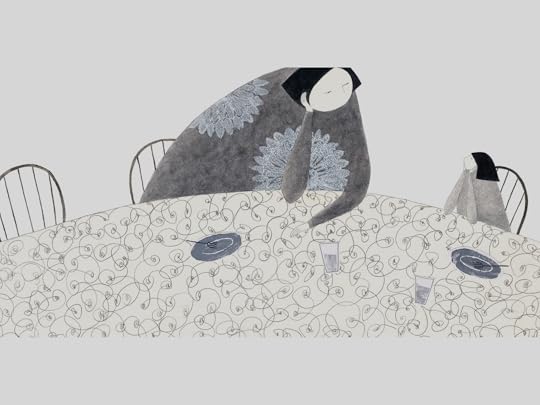
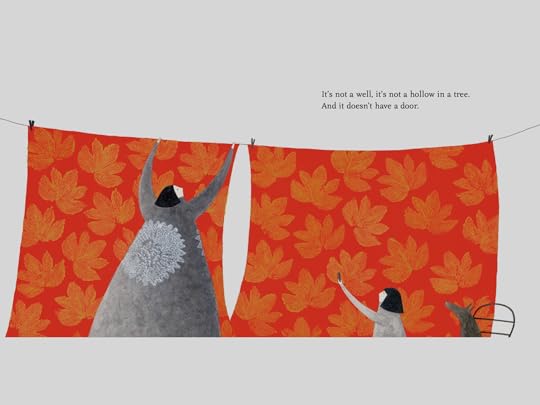
This is a powerful story which tells of a little girl who contemplates the afterlife, and a Daddy whom she is missing. The pictures are colorful and flowing, and depict Mommy and daughter having a meal at a table, and hanging washing outdoors to dry. We are shown the washing neatly "folded and dried" at the end of the story, suggesting that the conversation mother and daughter have had should be part of The Everyday because death and dying are a natural "cycle" of life like doing laundry or having a meal.
The spaces around the pictures give room for the wind to dry the clothes, and space for a meaningful but necessary conversation. The story is filled with love and hope, for the afterlife is somewhere safe, which needs no door or tree hollow as in places "beyond" found only in storybooks. It is somewhere we can go in our mind's eye, somewhere our soul can touch, when we need reassurance, need to know "we loved him" and "he loved us."
As someone who lost a dad early on in life, I recommend this book to comfort and to facilitate those conversations with children about loss that acknowledge pain and grief and love; help them move on in life.
I wasn't a huge fan of this book. This book felt very abstract and short for me to completely grasp the main message of the book. The illustrations were nice though.
Argentinian author María Wernicke is an Astrid Lindgren Memorial Award nominee, so this is probably me, not her. The dust cover blurb mentions missing a loved one; good thing, too, otherwise I would have had no idea what this book was about. Was it about depression? I would have surmised that either the daughter or the mother was depressed — probably the latter. This may be a children’s book, but I don’t think a child would realize what this book’s message was; I’m 62, and I’m not sure I do.
That said, Wernicke’s illustrations are perfect. So let’s go with three stars for that alone.
In the interest of full disclosure, I received this book from Amazon Prime First Reads.
A beautiful book with sort of a melancholy feel to it. I loved the author's illustrations, but I'm still trying to figure out what it all meant. Maybe a child would understand, but I really didn't.
I chose this book as part of "Around the World Reading Challenge". It is written and illustrated by Maria Wernicke and translated by Lawrence Schimel. The simplistic illustrations and few words tell the story of a family, security and loss. A child tells her mother about finding a secret passageway where she can safely be with her father. While helping with the laundry, she tells her mother that sometimes she cannot find it, but she would like the passageway to always be available. The mother holds her child's hand and says, "we can always go looking for it." I believe this book is trying to show us that we should be aware of children's questions about death and the afterlife, and we be ready and willing to talk about it with them. 3.5 stars
This won an translator’s award and I’m not surprised. Shimel is an excellent translator. He is a poet as well and translated the winning Dwarf Stars award poem from 2019. I received this book from Amazon First Reads.
In very few words and an economy of expression in the artwork as well, Wernicke tells a layered story of the longing of a child for a safe place where loved ones dwell. Some days she can go there.
This wonderfully illustrated book is somewhat of an enigma to me. As I read the words of the child to the mother, I felt a child’s yearning for the future to come while never losing the past. I felt her love of loving memories. And that these ebbed and flowed. But I didn’t feel a strong sense of loss. The illustrations showed what had been lost, otherwise I wouldn’t have known that the mother and child shared a loss.
I had hoped to love this book but ended up only liking it because it seems to avoid the grief and loss it is actually about. I wonder if translation contributes to this or if the author intended for the illustrations to tell such a major portion of the story. Would a child understand this or need to have it explaine, I wonder?
I received a copy of this book through the Amazon First Reads program.
An extremely short book with few words about a child missing a loved one. It is beautifully illustrated and could be helpful for very young children who are suffering the loss of a parent.
Скачувала безкоштовно під час World Book Day giveaway на амазоні, що й добре, бо, з одного боку, книжечка дуже красива і, як то кажуть, evocative - навіює якісь емоції - а з іншого, ці емоції такі nebulous, що я не певна, чи воно варте покупки (так, українська значно конкретніша, ніж англійська, мені в ній бракує таких претензійних розмитих прикметників без чіткого сигніфіката :) ) - хіба що заради малюнків варто купувати, так.
Дитяча книжка-картинка: дівчинка розповідає мамі, що інколи в їхньому дворі відкривається портал, і по той бік порталу вона вже вміє плавати, і не сумує, і взагалі все добре. Але інколи не відкривається. Мама каже: нумо шукати той портал разом. Із саммері на амазоні довідуємося, що це про втрату. З тим самим успіхом може бути про страх дорослішати, про страх майбутнього, про депресію, багато про що. Щемко, гарно, але дуже вже розмито.
It could be a transition, but it does seem to skirt the issue of loss a little too much. But perhaps that is the point. To function as a starting point to the harder discussion.
Honestly, this was first children’s book that I didn’t get in first time. I had to read it twice and still wouldn’t have figured out what the book was about if I haven’t read the synopsis.
There were few words, only one line on each page with big illustrations. It was actually illustrations that spoke more about mother and daughter were going through grief, missing loved one they lost and talking about it while doing hanging freshly washed bed sheet.
I can’t think how kid could figure out what’s in the book when I couldn’t as adult. The concept was great but it needed more words, explanations and emotions for kid to understand this hard and heavy topic.
This is a short picture book, by Maria Wernicke, an Argentinian author. It was offered as an Amazon Prime free book. In this book the words are few and the illustrations are simple, yet striking. I read the book slowly three times because I found it thought-provoking. It is a story about a little girl who sometimes, but not always, sees a passageway from her backyard. The passageway seems to bring her to a place of hope, and yearning for a man who provides warmth and safety. This same man is illustrated on the cover with the little girl sitting on his shoulders. I have read several reviews, with different interpretations. I see it as a book about loss, the ups and downs of grief, and the element of hope. It is hard for me to predict how a young child would respond, but I would be willing to read a paper copy to a child. I chose this book as part of an “Around the World Reading Challenge.” It is a translated copy which received awards for the translation. I rate it 4 stars
This book deals with the theme of grief and loss in a gentle and child friendly way. The unique illustrations and wording choice offers up a creative way to look at memories and love. The final pages about forever and looking for this passageway even when you can’t always see it is beautiful. The wording is simple but lovely. The illustrations are beautiful and the limited colour choice supports the meaning and transition down the “pathway”.
Nice illustrations... Still thinking about the meaning...
I am not sure what the story is about, really. I like the way the mom and child twist up in the laundry, sharing in their thoughts and actions. I like the thoughts about a pleasant, hopeful place you can go to in your mind whenever you want to. This is a basis for a discussion between parent and child about spiritual meaning. I would read it to my grandchild for an interesting conversation.
Aku membaca buku ini sebanyak dua kali. Pertama, menikmati cerita dan ilustrasinya. Kedua, mendalami maknanya.
Saat pertama kali membaca, masih ada perasaan yang sedikit mengawang karena masih meraba-raba, apa yang hendak diceritakan si penulis. Kali kedua membaca, tahu-tahu mata berkaca-kaca.
Sama halnya ketika aku menonton tayangan Netflix yang berjudul If Anything Happens I Love You. Sama pilunya.
Bila melihat sampul buku ini, digambarkan sesosok laki-laki yang bisa diinterpretasikan pembaca sebagai seorang Ayah. Namun ketika membalik halaman demi halaman, sosok perempuan (yang bisa dimaknai sebagai seorang Ibu), lebih banyak berperan di dalamnya. Cerita soal keluarga, atau hubungan antara anak dan orangtua, entah kenapa selalu berhasil mendapat tempat di hatiku.
Memang, enggak mudah menulis cerita anak dengan kalimat yang begitu pendek, tapi bisa langsung menghunjam hati setiap pembaca. Some Days seolah ingin menyampaikan bahwa setiap kali bersama orang yang kita sayang, rasanya hidup lebih penuh warna, rasanya hidup baik-baik saja.
Membaca buku ini memang bisa bikin nelangsa, tapi setelahnya aku merasa hatiku hangat.
Entah buku ini cocok dibaca untuk anak-anak atau tidak. Namun jika iya, semoga anak-anak bisa lebih memahami soal betapa berharganya waktu, serta jangan sia-siakan kebersamaan yang dipunya dengan orang-orang tercinta.
This has been a year of loss for so many people, but for children who have lost a parent, it is an especially devastating loss. It may be hard for them to understand fully what has happened, and often wishful thinking can easily move into their thoughts. María Wernicke has used very sparse text supported by spare illustrations to capture the emotional feelings and wishes of one young girl dealing with loss and how her mother responds to her pain.
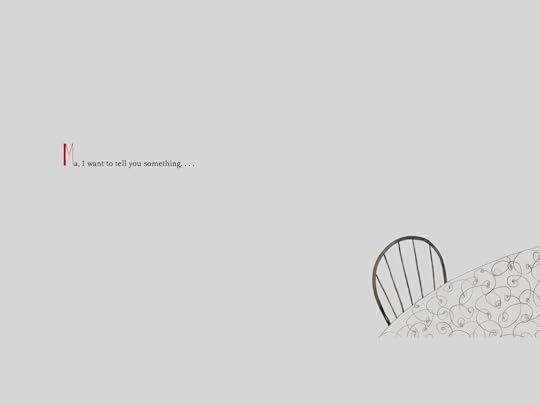
After finishing a meal, a young girl begins telling her mother about a passageway in their backyard. As the two head out to hang up some freshly washed red sheets, the child explains that some days, it's there, other days, it isn't, but she makes it clear that this isn't some kind of fantasy passageway - it's not a well, a hollow in a tree and there is no door that leads to fantastic adventures.
On the other side of the passageway, life is different. The child plays with an unknown man, presumably her father. There, in his presence, "I've already learned how to swim./ And it's not cold,/ and there's no danger./ And nothing, nothing at all, can can happen to you." Yearning for the safe and comforting arms of this man, the little girl wishes that passageway could be there everyday.
After listening to her child tell her about this passageway and what she finds there, her understanding mother tells her daughter that they can always go looking for it together, even if they don't always see it.
Without saying it, but relying on the illustrations, it is clear the this little girl and her mother have just lost their father and husband, indicated only by their grief and the pork pie that plays an important but subtle part of the narrative. There is an interesting use of color throughout the story. The parts of the story that revolves around the girl and her mother are done in shades of gray, reflecting the somber mood of mourning and grief, with the exception of the sheets being hung on the line which serve as the portal to the other side of the passageway. On the other side, the girl is still dressed in gray, but the unnamed man is done in a bold, bright red coat, letting the reader know that he is still very much alive in his daughter's mind, even as she grieves.
This is a gentle, solemn, very poignant story about a child dealing with loss and missing all the things that might have been had the loved one not passed away. But it is also a story that carries a great deal of hope and love and a promise of a future that also includes the memories of the past. This is the kind of book I wish I'd had when my Kiddo's dad suddenly passed away when she was young. It is the kind of book that will start needed conversations. I highly recommend it.
Por conta da minha irmã pequena, eu busco sempre me inteirar na literatura infantil. É parte do que adoro fazer, e o meu jeito de incentivar a pessoa que mais amo a se apaixonar por livros.
Normalmente não marco essas leituras aqui, mas sinto que essa valeu a pena. É breve, pequena, exatamente voltada para uma criança de 5-6 anos.
Mas trata sobre o luto de uma forma delicada, e muito linda, abrindo um diálogo para a família com a criança.
É um livro incrível, sem dúvidas. Principalmente sabendo o quão difícil é dialogar sobre algo tão duro e complexo quanto o luto.
کتاب رو اصلا نفهمیدم دقیقا منظورش چیه. حس میکنم خیلی گنگ بود و برای کودکان هم حس میکنم نامفهموم باشه. ولی دلنشین بود و تصویرسازی های قشنگی داشت. در هر حال خریدنش رو پیشنهاد نمیکنم
Some books feel just right for a given moment. This year, as children return to our classrooms having lived through tremendous loss, anxiety, and loneliness of the pandemic, "Some Days" can be an open-ended bridge to conversations about these tough subjects. Someone is missing from the family of "Some Days" and the sparse illustrations and symbolic use of color help readers to sense the loss without much being divulged in the text. Young children can therefore identify with the child in this story no matter what losses or longings they are personally confronting. It's a story open to interpretation, and will therefore be welcomed by teachers and families who want to encourage conversations about literature amongst younger readers. This book is written and illustrated by Maria Wernicke translated from the Spanish by Lawrence Schimel. It was originally published in Argentina and makes a great addition to classroom libraries looking for more international titles. Kirkus Reviews called Some Days, "A gentle model for living while missing a loved one." (https://www.kirkusreviews.com/book-re...)
Quick story, yet has left me a little emotional and has me thinking
Such a short and simple story, but one that for some reason pulled at my heart strings when I just read it to my niece and has got me thinking about the meaning behind it. Behind the simple story of looking for a door where everything is perfect and everyone is safe.
The illustrations within this were different to your standard children illustrations book and that’s probably what makes it stand out a little more and make it more beautiful. The simple ness to it, with the limited colours and designs, perfect.
It also the perfect quick little read if you’re in a rush and just want to read a quick story before bed.