

What do you think?

Hawksbill Station
A “dark, restrained, and powerful” mirror of current politics from the Science Fiction Grand Master (Science Fiction Ruminations).
In the barren landscape of the late Cambrian period, a penal colony sits high above the ocean on the east coast of what would become the United States. The men—political prisoners—have been sent from the twenty-first century on a one-way ticket to a lifetime of exile. Their lonely existence has taken its toll . . .
Jim Barrett was once the physically imposing leader of an underground movement dedicated to toppling America’s totalitarian government. Now he is nothing but a crippled old man, the camp’s de facto ruler due to his seniority. His mind is still sharp, having yet to succumb to the psychosis that claims more and more men each day. So when a new prisoner is transported to the colony—a startlingly young and suspiciously apolitical man—Barrett’s instincts go on high alert.
As Barrett reminisces about his revolutionary past, he uncovers the new prisoner’s secrets—and faces a shocking revelation that thrusts him into a future he never dreamed possible . . .
“One of the finest writers ever to work in science fiction.” —The Philadelphia Inquirer
In the barren landscape of the late Cambrian period, a penal colony sits high above the ocean on the east coast of what would become the United States. The men—political prisoners—have been sent from the twenty-first century on a one-way ticket to a lifetime of exile. Their lonely existence has taken its toll . . .
Jim Barrett was once the physically imposing leader of an underground movement dedicated to toppling America’s totalitarian government. Now he is nothing but a crippled old man, the camp’s de facto ruler due to his seniority. His mind is still sharp, having yet to succumb to the psychosis that claims more and more men each day. So when a new prisoner is transported to the colony—a startlingly young and suspiciously apolitical man—Barrett’s instincts go on high alert.
As Barrett reminisces about his revolutionary past, he uncovers the new prisoner’s secrets—and faces a shocking revelation that thrusts him into a future he never dreamed possible . . .
“One of the finest writers ever to work in science fiction.” —The Philadelphia Inquirer
97 pages, Kindle Edition
First published January 1, 1967
About the author
Robert Silverberg
2,418 books1,673 followersThere are many authors in the database with this name.
Robert Silverberg is a highly celebrated American science fiction author and editor known for his prolific output and literary range. Over a career spanning decades, he has won multiple Hugo and Nebula Awards and was named a Grand Master by the Science Fiction and Fantasy Writers of America in 2004. Inducted into the Science Fiction and Fantasy Hall of Fame in 1999, Silverberg is recognized for both his immense productivity and his contributions to the genre's evolution.
Born in Brooklyn, he began writing in his teens and won his first Hugo Award in 1956 as the best new writer. Throughout the 1950s, he produced vast amounts of fiction, often under pseudonyms, and was known for writing up to a million words a year. When the market declined, he diversified into other genres, including historical nonfiction and erotica.
Silverberg’s return to science fiction in the 1960s marked a shift toward deeper psychological and literary themes, contributing significantly to the New Wave movement. Acclaimed works from this period include Downward to the Earth, Dying Inside, Nightwings, and The World Inside. In the 1980s, he launched the Majipoor series with Lord Valentine’s Castle, creating one of the most imaginative planetary settings in science fiction.
Though he announced his retirement from writing in the mid-1970s, Silverberg returned with renewed vigor and continued to publish acclaimed fiction into the 1990s. He received further recognition with the Nebula-winning Sailing to Byzantium and the Hugo-winning Gilgamesh in the Outback.
Silverberg has also played a significant role as an editor and anthologist, shaping science fiction literature through both his own work and his influence on others. He lives in the San Francisco Bay Area with his wife, author Karen Haber.
Robert Silverberg is a highly celebrated American science fiction author and editor known for his prolific output and literary range. Over a career spanning decades, he has won multiple Hugo and Nebula Awards and was named a Grand Master by the Science Fiction and Fantasy Writers of America in 2004. Inducted into the Science Fiction and Fantasy Hall of Fame in 1999, Silverberg is recognized for both his immense productivity and his contributions to the genre's evolution.
Born in Brooklyn, he began writing in his teens and won his first Hugo Award in 1956 as the best new writer. Throughout the 1950s, he produced vast amounts of fiction, often under pseudonyms, and was known for writing up to a million words a year. When the market declined, he diversified into other genres, including historical nonfiction and erotica.
Silverberg’s return to science fiction in the 1960s marked a shift toward deeper psychological and literary themes, contributing significantly to the New Wave movement. Acclaimed works from this period include Downward to the Earth, Dying Inside, Nightwings, and The World Inside. In the 1980s, he launched the Majipoor series with Lord Valentine’s Castle, creating one of the most imaginative planetary settings in science fiction.
Though he announced his retirement from writing in the mid-1970s, Silverberg returned with renewed vigor and continued to publish acclaimed fiction into the 1990s. He received further recognition with the Nebula-winning Sailing to Byzantium and the Hugo-winning Gilgamesh in the Outback.
Silverberg has also played a significant role as an editor and anthologist, shaping science fiction literature through both his own work and his influence on others. He lives in the San Francisco Bay Area with his wife, author Karen Haber.
Ratings & Reviews
Friends & Following
Create a free account to discover what your friends think of this book!
Community Reviews
Displaying 1 - 30 of 207 reviews

July 4, 2015
Hawksbill Station was Robert Silverberg’s most Kilgore Troutian concept.
Kilgore Trout was, of course, the recurring fictitious science fiction writer from Kurt Vonnegut’s canon, based loosely upon fellow writer Theodore Sturgeon. According to Vonnegut, Trout would come up with wild ideas, one after another, in a prolific if not profitable career.
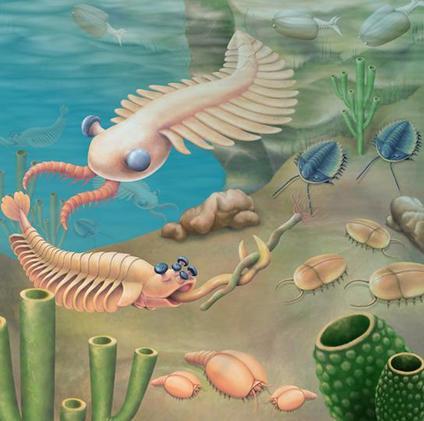
Silverberg, also a prolific but happily profitable writer, describes in Hawksbill Station, first published in 1967, a situation where political prisoners are sent back in time over a BILLION years to serve out their life sentences. That’s right, billion with a B, the late Cambrian period to be exact, where there is no dirt, just rock and water, trilobites to eat and the moon is a fresh young pink in color and without the pockmarked surface of adolescence. A new prisoner is greeted by his new mates with the salutation: “Hope you like seafood.”
This is also one of his most political works. The collection of prisoners who populate the station, named for mathematician Hawksbill who came up with the time travel concept, are all revolutionaries; an odd assortment of Marxists, socialists, anarchists, terrorists, Oakland Raider fans and other undesirable near do wells. Their prehistoric community is one of radical nonconformity amidst the growing and inevitable madness from considering their time wall of exile.
I gave this one 3 stars, I liked it but it was incomplete, oddly scorched with error (Silverberg has usually been fastidious with scientific detail – though I suppose some wider range of latitude can be afforded a time travel story). But I will say that this one, flawed though it is, will be one of my cult favorites; Hawksbill Station has a roguish charm that an old political science major finds endearing.
Kilgore Trout was, of course, the recurring fictitious science fiction writer from Kurt Vonnegut’s canon, based loosely upon fellow writer Theodore Sturgeon. According to Vonnegut, Trout would come up with wild ideas, one after another, in a prolific if not profitable career.
Silverberg, also a prolific but happily profitable writer, describes in Hawksbill Station, first published in 1967, a situation where political prisoners are sent back in time over a BILLION years to serve out their life sentences. That’s right, billion with a B, the late Cambrian period to be exact, where there is no dirt, just rock and water, trilobites to eat and the moon is a fresh young pink in color and without the pockmarked surface of adolescence. A new prisoner is greeted by his new mates with the salutation: “Hope you like seafood.”
This is also one of his most political works. The collection of prisoners who populate the station, named for mathematician Hawksbill who came up with the time travel concept, are all revolutionaries; an odd assortment of Marxists, socialists, anarchists, terrorists, Oakland Raider fans and other undesirable near do wells. Their prehistoric community is one of radical nonconformity amidst the growing and inevitable madness from considering their time wall of exile.
I gave this one 3 stars, I liked it but it was incomplete, oddly scorched with error (Silverberg has usually been fastidious with scientific detail – though I suppose some wider range of latitude can be afforded a time travel story). But I will say that this one, flawed though it is, will be one of my cult favorites; Hawksbill Station has a roguish charm that an old political science major finds endearing.

January 24, 2009
5.0 stars. I have said this before but Robert Silverberg is one of those writers that has never disappointed me and this story is certainly no exception. One of the things that is so impressive about Silverberg is that, other than the Majipoor series, he almost always does stand alone stories and so his stories are always a unique experience. The breadth of his stories are amazing.
This short novel (really a long novella) is about a group of political prisoners from a future United States that have been exiled at a prison called Hawksbill Station set ONE BILLION years in the past. The time travel process that sends them into exile works only in one direction so the prison term is for life and the prisoner's are free to make whatever life they choose (with the help of periodic shipments of supplies from the future). Into this prison comes a new prisoner who is much younger than the others and does not appear to be a political activist. Who this newcomer is and what he is doing at Hawksbill Station is the central mystery of the story.
The writing is superb, the political discussions are very interesting and the plot is fast paced and compelling. Another superb story by one of the best in the business. HIGHLY RECOMMENDED!!!!
Nominee: Hugo Award for Best Novella
Nominee: Nebula Award for Best Novella
This short novel (really a long novella) is about a group of political prisoners from a future United States that have been exiled at a prison called Hawksbill Station set ONE BILLION years in the past. The time travel process that sends them into exile works only in one direction so the prison term is for life and the prisoner's are free to make whatever life they choose (with the help of periodic shipments of supplies from the future). Into this prison comes a new prisoner who is much younger than the others and does not appear to be a political activist. Who this newcomer is and what he is doing at Hawksbill Station is the central mystery of the story.
The writing is superb, the political discussions are very interesting and the plot is fast paced and compelling. Another superb story by one of the best in the business. HIGHLY RECOMMENDED!!!!
Nominee: Hugo Award for Best Novella
Nominee: Nebula Award for Best Novella

February 3, 2014
Although it had been over 45 years since I initially read Robert Silverberg's novella "Hawksbill Station," several scenes were as fresh in my memory as if I had read them just yesterday; such is the power and the vividness of this oft-anthologized classic. Originally appearing in the August '67 issue of "Galaxy" magazine, the novella did not come to my teenaged attention till the following year, when it was reprinted in a collection entitled "World's Best Science Fiction 1968." Silverberg later expanded his 20,000-word story to novel form, which was duly published as a Doubleday hardcover in October '68. (So why then does the author's "Quasi-Official Web Site" list the book as a product of 1970?) It has taken me all these years to finally catch up with Silverberg's fix-up novel, but I am so glad that I did. To my delighted surprise--and I only say "surprise" because the author has long expressed his preference for the shorter of the two creations--I find the novel even better than the beloved original; a work that expands on the scope of the novella while adding character depth and reams of background to its wonderful central plot.
In both works, political prisoners of the near future are dealt with in a startling manner by the totalitarian government that had come to power in the U.S. in, um, 1984. By dint of a new time travel device that can send objects in only one direction--backwards--the government, starting in 2005, has started dumping its hard-core agitators 1 billion years in the past; i.e., the later Cambrian period, when Earth's surface was bare rock, devoid of soil, plants and even primitive insects, and the only life-forms to be found (invertebrates, trilobites) were in the sea. Thus, we meet some of the 140 men marooned in the eponymous Hawksbill Station, on the edge of what will one day be the Atlantic; a group of men slowly going mad, and held together by 60-year-old Jim Barrett, a 20-year veteran of the station. The men's lives are shaken one day by the arrival of a new prisoner, Lew Hahn, a youngish man who seems to oddly have little in the way of revolutionary fervor about him. But Hahn's later actions about the primitive camp leave the other inmates even more puzzled about his presence in their midst....
The novel-length "Hawksbill Station" differs from its antecedent in three main areas: (1) The novel has much more in the way of detail concerning the men and about life at the station; (2) the fate of the character Bruce Valdosto is completely different in the two works; and (3), and most significantly, the novel is three times as long as the novella largely because Silverberg has added numerous chapters showing us Barrett as a teenager, as a young revolutionary in the NYC of 1984, and as a cell leader, leading up to his arrest in 2006 and his "trial" shortly thereafter. These flashbacks on Barrett's part--paradoxically, they are more in the nature of billion-year flash-forwards for the reader--give us a much clearer knowledge of who Barrett is, and it is all fascinating stuff for those who, like me, had only been familiar with the shorter story. I have always been a sucker for novels with strong parallel plots, and Silverberg here gives us two doozies, brilliantly and suspensefully interlarded. Just as we are left with a cliffhanger situation with Barrett back in the Cambrian, the author brings us forward to modern times; just as things are growing tense for Barrett in the scary, dystopian days of 1994, we are back in the Cambrian again. This really is edge-of-your-seat storytelling, the result being a grippingly well-told yarn that is almost impossible to stop reading. Personally, I found the central plot device--political prisoners marooned at the dawn of time--a fascinating one, and Silverberg peppers his novel with any number of wonderful scenes. In my favorite, which I well recalled from 45 years ago, Barrett watches a trilobite crawl out of the sea, wonders if this could be the great ancestor of all future land animals...and then wonders what would happen if he were to stomp on it and kill it. The end of all future life on Earth's surface, perhaps? The author's descriptions of the Earth of a billion years past are quite convincing, and Barrett himself--a man of great inner strength, despite being a cripple due to a recently smashed left foot--is a terrific and likable central character. As usual, the author even manages to give us a prescient peek at some future technology; hence, the phone that Barrett wears on his ear while walking the city streets in the late 20th century! And in one moving section, Barrett tells us "a society has to obey its own morality, even when it's defending itself against possible enemies"; surely, words it would do well for us to remember today!
"Hawksbill Station," great as it is, is not a perfect book, and Silverberg, uncharacteristically, manages to make a few flubs during the course of the novel, and all as regards dates. He infers that "Minus One Billion, Two Thousand Oh Five A.D." is earlier than "A.D. Minus One Billion, Two Thousand Twenty-Nine," whereas it is of course 24 years later. He tells us that Barrett was arrested in 2006, 10 years after his girlfriend Janet had been taken by the authorities; that should be 12 years. And he mentions that Barrett had spoken to Edmond Hawksbill about his time travel invention six years before his own arrest; that should be eight years. Given that Silverberg is usually such a perfectionist with these kinds of little details, these gaffes come as even more surprising; one almost expects them with the notoriously careless Philip K. Dick. Still, these minor slips would in no wise interfere with any reader's enjoyment of this great tale. Be it the more insular and claustrophobic novella or the expanded novel, wonderful entertainment value is guaranteed. And here's another thought: In one section, we learn that all the female agitators of the early 21st century have been sent to a different time era; namely, the Silurian period, when only the most rudimentary plants and insects covered the Earth. Howzabout THAT for a much-belated sequel? The ultimate women-in-prison story! Pretty please, Mr. Silverberg....
In both works, political prisoners of the near future are dealt with in a startling manner by the totalitarian government that had come to power in the U.S. in, um, 1984. By dint of a new time travel device that can send objects in only one direction--backwards--the government, starting in 2005, has started dumping its hard-core agitators 1 billion years in the past; i.e., the later Cambrian period, when Earth's surface was bare rock, devoid of soil, plants and even primitive insects, and the only life-forms to be found (invertebrates, trilobites) were in the sea. Thus, we meet some of the 140 men marooned in the eponymous Hawksbill Station, on the edge of what will one day be the Atlantic; a group of men slowly going mad, and held together by 60-year-old Jim Barrett, a 20-year veteran of the station. The men's lives are shaken one day by the arrival of a new prisoner, Lew Hahn, a youngish man who seems to oddly have little in the way of revolutionary fervor about him. But Hahn's later actions about the primitive camp leave the other inmates even more puzzled about his presence in their midst....
The novel-length "Hawksbill Station" differs from its antecedent in three main areas: (1) The novel has much more in the way of detail concerning the men and about life at the station; (2) the fate of the character Bruce Valdosto is completely different in the two works; and (3), and most significantly, the novel is three times as long as the novella largely because Silverberg has added numerous chapters showing us Barrett as a teenager, as a young revolutionary in the NYC of 1984, and as a cell leader, leading up to his arrest in 2006 and his "trial" shortly thereafter. These flashbacks on Barrett's part--paradoxically, they are more in the nature of billion-year flash-forwards for the reader--give us a much clearer knowledge of who Barrett is, and it is all fascinating stuff for those who, like me, had only been familiar with the shorter story. I have always been a sucker for novels with strong parallel plots, and Silverberg here gives us two doozies, brilliantly and suspensefully interlarded. Just as we are left with a cliffhanger situation with Barrett back in the Cambrian, the author brings us forward to modern times; just as things are growing tense for Barrett in the scary, dystopian days of 1994, we are back in the Cambrian again. This really is edge-of-your-seat storytelling, the result being a grippingly well-told yarn that is almost impossible to stop reading. Personally, I found the central plot device--political prisoners marooned at the dawn of time--a fascinating one, and Silverberg peppers his novel with any number of wonderful scenes. In my favorite, which I well recalled from 45 years ago, Barrett watches a trilobite crawl out of the sea, wonders if this could be the great ancestor of all future land animals...and then wonders what would happen if he were to stomp on it and kill it. The end of all future life on Earth's surface, perhaps? The author's descriptions of the Earth of a billion years past are quite convincing, and Barrett himself--a man of great inner strength, despite being a cripple due to a recently smashed left foot--is a terrific and likable central character. As usual, the author even manages to give us a prescient peek at some future technology; hence, the phone that Barrett wears on his ear while walking the city streets in the late 20th century! And in one moving section, Barrett tells us "a society has to obey its own morality, even when it's defending itself against possible enemies"; surely, words it would do well for us to remember today!
"Hawksbill Station," great as it is, is not a perfect book, and Silverberg, uncharacteristically, manages to make a few flubs during the course of the novel, and all as regards dates. He infers that "Minus One Billion, Two Thousand Oh Five A.D." is earlier than "A.D. Minus One Billion, Two Thousand Twenty-Nine," whereas it is of course 24 years later. He tells us that Barrett was arrested in 2006, 10 years after his girlfriend Janet had been taken by the authorities; that should be 12 years. And he mentions that Barrett had spoken to Edmond Hawksbill about his time travel invention six years before his own arrest; that should be eight years. Given that Silverberg is usually such a perfectionist with these kinds of little details, these gaffes come as even more surprising; one almost expects them with the notoriously careless Philip K. Dick. Still, these minor slips would in no wise interfere with any reader's enjoyment of this great tale. Be it the more insular and claustrophobic novella or the expanded novel, wonderful entertainment value is guaranteed. And here's another thought: In one section, we learn that all the female agitators of the early 21st century have been sent to a different time era; namely, the Silurian period, when only the most rudimentary plants and insects covered the Earth. Howzabout THAT for a much-belated sequel? The ultimate women-in-prison story! Pretty please, Mr. Silverberg....

January 12, 2026
I don't have much to say here. Silverberg is a fine writer. A Time of Changes was one of the first science fiction novels I ever read and I remember it fondly. Hawksbill Station follows Jim Barrett, a failed revolutionary exiled to a penal colony a billion years in the past. He and other ex-revolutionaries were sent to the Cambrian era by time machine, unable to return. The reader follows Barrett's flashbacks as we build up an understanding of what led to the event. We see the claustrophobic, breakdown-inducing conditions of their separation from human civilization.
This is really what you call a "good read." Silverberg is not saying anything particularly deep or artistically visceral. And in this way, it works well. It's a decent novel, didn't blow me away but I didn't need it to. It seemed to do exactly what I asked of it. Aside from some obvious padding here and there, Silverberg is a highly gifted writer whose prose rarely suffers from getting bogged down, lost in translation, or up its own ass. Still looking for his masterpiece, but I can recommend this as a nice weekend getaway.
This is really what you call a "good read." Silverberg is not saying anything particularly deep or artistically visceral. And in this way, it works well. It's a decent novel, didn't blow me away but I didn't need it to. It seemed to do exactly what I asked of it. Aside from some obvious padding here and there, Silverberg is a highly gifted writer whose prose rarely suffers from getting bogged down, lost in translation, or up its own ass. Still looking for his masterpiece, but I can recommend this as a nice weekend getaway.

May 24, 2025
Hawksbill Station was published at novella length in the August issue of Frederik Pohl's Galaxy magazine in 1967. It was on the final best-of-the-year ballots for both the Hugo and Nebula awards, but lost to Philip Jose Farmer's Riders of the Purple Wage and Michael Moorcock's Behold the Man, respectively. (My pick in the category for that year would've been Roger Zelazny's Damnation Alley, so what do I know?) Silverberg expanded it significantly, and Doubleday published the novel version in hardback in August 1968 and an edition from the SF Book Club followed in early 1969. It's very much a product of 1960s, with the government rounding up political dissidents and getting rid of them by sending them back in time to a Cambrian-era penal colony, where they could complain to their hearts' content while munching on trilobites. It's a bunch of manly men sitting around a campfire and bouncing ideas off of one another for too long. I much preferred the shorter iteration, as the expansion expands the character background and philosophy but drags and drags. (One of the characters has a different fate, too, but still...) It's well-written and has a few surprising twists, but this long version is not among my favorite Silverbergs.

December 1, 2019
7/10. Media de los 30 libros leídos del autor : 6/10
Leí mucho a Silverberg de chaval. Junto a joyas como "Tiempo de mutantes" o "El hombre en el laberinto" (o incluso la saga e Majipur) tiene libros normalitos o malos-malos. Este está bien.
Va de una colonia penal situada en el Precámbrico por EEUU. Obviamente hay viajes en el tiempo pero lo importante es el personaje que trata de cambiar el status quo.
Novela de finales de los 60 que refleja el pensamiento de gran parte de la juventud americana. Cambio de ideas, revolución contra lo establecido y esas herencias de Vietnam.
Leí mucho a Silverberg de chaval. Junto a joyas como "Tiempo de mutantes" o "El hombre en el laberinto" (o incluso la saga e Majipur) tiene libros normalitos o malos-malos. Este está bien.
Va de una colonia penal situada en el Precámbrico por EEUU. Obviamente hay viajes en el tiempo pero lo importante es el personaje que trata de cambiar el status quo.
Novela de finales de los 60 que refleja el pensamiento de gran parte de la juventud americana. Cambio de ideas, revolución contra lo establecido y esas herencias de Vietnam.

November 10, 2015
This was a great book. I am surprised to learn it is an expansion from a novella because the parts that were added fit in seamlessly. I couldn't begin to guess what was novella and what was only to be found in the novel.
A book that is now almost fifty years old should be dated. In one respect it is. The Soviet branches of Marxism mentioned in the book are something I can't imagine being of even historical interest any more. No one these days debates them or takes them as a serious foundation upon which to build a society. The ideas in Plato's Republic would be taken more seriously.
Thus Silverberg's characters rebel against something we today deem insignificant. Currently writers are having their characters rebel against the totalitarian forces of corporations. The TV series Continuum, which this book in some ways resembles, is a prime example. In twenty or thirty years perhaps the fear of corporate tyranny will seem equally anachronistic. Will we fear Muslim fanaticism, or third world aggression over resources, more by then? There will always be a leading cause for a revolution, but it changes every few generations. Silverberg completely missed that.
Fortunately, the flaw is not a crucial one for being able to otherwise enjoy his novel. What Silverberg gets right is that no matter what the cause for revolution, eternal human emotions rule motivation. In this novel it's jealousy over girls, protection of intellectual or academic turf, individual human traits of selfishness, born leaders looking after the welfare of others in the group, etc. These motivators upon which the novel really turns are entirely modern, believable, and timeless.
The best thing about the book is its complete lack of predictability. I won't write anything in this review about the many surprises, but the plot always took turns I didn't anticipate, but that make perfect sense. Ten pages towards the end I found myself wondering how Silverberg could possibly wrap up the many threads he had going. If I were writing the book I know what direction I would go in, but that book would need be as many pages more as what had already been written to tell the tale properly. Nevertheless, Silverberg's conclusion, another direction entirely than the one I anticipated, works just as well, even if it is less confrontational.
There is lots of room here for a sequel. For example, we never find out what happened to Janet, the protagonist's love interest, or the women's prison. Janet was a highly complicated, unique individual that greatly intrigued me. Silverberg never lets us anywhere near this character's thoughts or motivations, yet her actions all made sense given what was revealed of her character. Why did she change after she met Jim? Why was she the way she was when Jim found her? Did she have a confrontation with Jack? What exactly happened to her after the government seized her? A sequel is needed for her story and it could be anything! Did the women's prison have a role in bringing down the syndicalist government, for example? The sequel, Janet's story, would be amazing.
In any event, I loved this book. Silverberg should be proud of it. I wish it stood out more as one of the great works in his opus. It deserves to.
A book that is now almost fifty years old should be dated. In one respect it is. The Soviet branches of Marxism mentioned in the book are something I can't imagine being of even historical interest any more. No one these days debates them or takes them as a serious foundation upon which to build a society. The ideas in Plato's Republic would be taken more seriously.
Thus Silverberg's characters rebel against something we today deem insignificant. Currently writers are having their characters rebel against the totalitarian forces of corporations. The TV series Continuum, which this book in some ways resembles, is a prime example. In twenty or thirty years perhaps the fear of corporate tyranny will seem equally anachronistic. Will we fear Muslim fanaticism, or third world aggression over resources, more by then? There will always be a leading cause for a revolution, but it changes every few generations. Silverberg completely missed that.
Fortunately, the flaw is not a crucial one for being able to otherwise enjoy his novel. What Silverberg gets right is that no matter what the cause for revolution, eternal human emotions rule motivation. In this novel it's jealousy over girls, protection of intellectual or academic turf, individual human traits of selfishness, born leaders looking after the welfare of others in the group, etc. These motivators upon which the novel really turns are entirely modern, believable, and timeless.
The best thing about the book is its complete lack of predictability. I won't write anything in this review about the many surprises, but the plot always took turns I didn't anticipate, but that make perfect sense. Ten pages towards the end I found myself wondering how Silverberg could possibly wrap up the many threads he had going. If I were writing the book I know what direction I would go in, but that book would need be as many pages more as what had already been written to tell the tale properly. Nevertheless, Silverberg's conclusion, another direction entirely than the one I anticipated, works just as well, even if it is less confrontational.
There is lots of room here for a sequel. For example, we never find out what happened to Janet, the protagonist's love interest, or the women's prison. Janet was a highly complicated, unique individual that greatly intrigued me. Silverberg never lets us anywhere near this character's thoughts or motivations, yet her actions all made sense given what was revealed of her character. Why did she change after she met Jim? Why was she the way she was when Jim found her? Did she have a confrontation with Jack? What exactly happened to her after the government seized her? A sequel is needed for her story and it could be anything! Did the women's prison have a role in bringing down the syndicalist government, for example? The sequel, Janet's story, would be amazing.
In any event, I loved this book. Silverberg should be proud of it. I wish it stood out more as one of the great works in his opus. It deserves to.

September 8, 2025
Silverberg is the latest in my exploration of old school science fiction authors outside the big four of Asimov, Heinlein, Clarke, and Bradbury. This book was published in 1968, and I am surprised by how much I liked it. It is short, but packs a lot into a small space. The writing is clear and lively, and it avoids a lot of the sexism and racism that were endemic to a lot of early scifi.
This set up is intriguing. The book is set in an alternative future where humans have the ability of time travel. Political dissidents are send 1 billion years back into the past to live in the Cambrian era, a time when only sea creatures exist. Not even plants live on the rock where they make their home.
I think it's a mistake to read books like this as predictions of the future. Such predictions are always off base, as is this book. But thematically, it does capture a number of issues that have plagued the US over the past 50 years, especially in terms of squabbling political ideologies.
In short, this book is about revolution and being a revolutionary. What does revolution actually mean? And how does a revolution take shape? But it's also about power -- how power is obtained and maintained.
Very thought provoking stuff. I will definitely be reading more Silverberg.
This set up is intriguing. The book is set in an alternative future where humans have the ability of time travel. Political dissidents are send 1 billion years back into the past to live in the Cambrian era, a time when only sea creatures exist. Not even plants live on the rock where they make their home.
I think it's a mistake to read books like this as predictions of the future. Such predictions are always off base, as is this book. But thematically, it does capture a number of issues that have plagued the US over the past 50 years, especially in terms of squabbling political ideologies.
In short, this book is about revolution and being a revolutionary. What does revolution actually mean? And how does a revolution take shape? But it's also about power -- how power is obtained and maintained.
Very thought provoking stuff. I will definitely be reading more Silverberg.

April 10, 2015
Look at the covers above. They may not tell you everything about the book, but if the Sad Puppies narrative is to be believed, they'll be a straightforward adventure yarn, instead of harbouring something more subversive. You hear that, Silverberg? You guys didn't write anything more complex than that, right?
Note: The rest of this review has been withdrawn due to the changes in Goodreads policy and enforcement. You can read why I came to this decision here.
In the meantime, you can read the entire review at Smorgasbook
Note: The rest of this review has been withdrawn due to the changes in Goodreads policy and enforcement. You can read why I came to this decision here.
In the meantime, you can read the entire review at Smorgasbook

August 25, 2025
My Thoughts on Hawksbill Station by Robert Silverberg::::::::
In the year 2005, political dissidents aren't executed for treason, they're sent back in time one billion years into the past. The prisoners are stuck there. New physics have been discovered and we can travel backwards through time but not forwards.
The prisoners are all sent to Hawksbill Station. There they can move around freely. They're sent goods from the future, aka UP FRONT. They live on trilobites and squid like creatures. Mammals, lizards, or fish have evolved yet. The scientists in the present think it is a fool proof plan. They think that's there's no way the prisoners can effect the future by existing that far in past.
No women are allowed. The present doesn't want to risk a new civilization being formed in the past.
One day a new prisoner is sent to the station. He's younger than the usual people who are sent back and something's not right with him. Is he there to destroy everything they've built up since the first prisoners were sent back? Or is he just another person that's been driven mad by being forced to live in an epoch we were never meant to?
In my attempt to devour as many books as possible within my lifetime, I am usually listening to an audiobook while reading another hard copy of a book at the same time.
I decided to listen to this one. This version is a collection of both the original novella and the full novel. Ingesting the novella first was interesting because it is the entire framework of the subsequent story and I really enjoyed it. Doing the full version is basically a reread it the novella with additional chapters added in. These chapters tell us the back story of the main character and how he ended up in time travel prison. The extra material speaks on the main character's politics, adds a relationship the main character has into the mix, and shows the progression of authoritarian politics within the US. An idea Silverberg thought would manifest a lot more quickly than in 2025......but here we are.
I enjoyed the bare bones novella more because some of the added back story is a bit jarring put up next to the main story. The additional material also comes packed with misogyny, weak political discourse, and character developments that feel forced into the plot.
I didn't outright hate the added material. It feels not as focused and refined as the main plot. Political prisoners existing one billion years in the past is gold and all the story needed. A very cool idea that Silverberg pulls off brilliantly.
In the year 2005, political dissidents aren't executed for treason, they're sent back in time one billion years into the past. The prisoners are stuck there. New physics have been discovered and we can travel backwards through time but not forwards.
The prisoners are all sent to Hawksbill Station. There they can move around freely. They're sent goods from the future, aka UP FRONT. They live on trilobites and squid like creatures. Mammals, lizards, or fish have evolved yet. The scientists in the present think it is a fool proof plan. They think that's there's no way the prisoners can effect the future by existing that far in past.
No women are allowed. The present doesn't want to risk a new civilization being formed in the past.
One day a new prisoner is sent to the station. He's younger than the usual people who are sent back and something's not right with him. Is he there to destroy everything they've built up since the first prisoners were sent back? Or is he just another person that's been driven mad by being forced to live in an epoch we were never meant to?
In my attempt to devour as many books as possible within my lifetime, I am usually listening to an audiobook while reading another hard copy of a book at the same time.
I decided to listen to this one. This version is a collection of both the original novella and the full novel. Ingesting the novella first was interesting because it is the entire framework of the subsequent story and I really enjoyed it. Doing the full version is basically a reread it the novella with additional chapters added in. These chapters tell us the back story of the main character and how he ended up in time travel prison. The extra material speaks on the main character's politics, adds a relationship the main character has into the mix, and shows the progression of authoritarian politics within the US. An idea Silverberg thought would manifest a lot more quickly than in 2025......but here we are.
I enjoyed the bare bones novella more because some of the added back story is a bit jarring put up next to the main story. The additional material also comes packed with misogyny, weak political discourse, and character developments that feel forced into the plot.
I didn't outright hate the added material. It feels not as focused and refined as the main plot. Political prisoners existing one billion years in the past is gold and all the story needed. A very cool idea that Silverberg pulls off brilliantly.

June 4, 2012
(content note: this review and its subject mention sexual violence.)
I read the novella version of this story, which is available online here.
The premise is that time travel has been discovered, but it only works one way. A totalitarian government creates the camp for political prisoners, Hawksbill Station, that is the setting of this story: the late Cambrian period, when dry land is nothing but bare rock and all life on Earth is marine invertebrates. At this period, there's nothing the prisoners can do to harm the outcome of future events. The government has also taken the precaution of sending only male prisoners to Hawksbill Station; female prisoners are sent to a time 250 million years later.
The protagonist, Barrett, is the oldest surviving prisoner; he's in charge of keeping morale up and organizing expeditions to explore the surrounding areas. But he's worried because an accident has disabled his leg beyond repair of the medical technology sent from the future, and more and more of the older prisoners are showing signs of crumbling mental health.
The story begins when a new prisoner arrives, an enigmatic, suspicious young man named Hahn. I won't spoil the plot by saying who Hahn is and what he does. Instead I want to describe the story I was half afraid that Silverberg was going to tell, but which he doesn't.
One of the most prominent sources of desperation among the prisoners seems to be starvation for sex. Some of the prisoners are said to have consenting sex with each other; another, Altman, is said to have committed rape, and as the story begins he's showing signs of mental collapse by building a woman out of sand and seaweed, which he hopes will be brought to life by lightning. (Altman's occasional homosexuality is treated as part of his mental illness, which bothered me.)
As the landing pad of the time machine glows, the prisoners joke that they hope the new arrival will be a woman. Later we learn that the government will never send a woman to Hawksbill Station, for the reasons I mentioned above, but this got me thinking; and when Hahn is first described as unexpectedly young-looking and slender, though strong, my first guess was that for some reason, Hahn was in fact a woman disguised as a man.
I soon realized that if time travel only works backwards and the women's prison camp is in the future relative to the men's, perhaps it might be possible for the women to re-engineer their own receiving time machine to take them to Hawksbill Station. Why? Perhaps there's some danger 250 million years later that they want to escape; perhaps they believe that joining forces with the male prisoners will improve their chances of survival. They send Hahn back first as their scout, to learn whether the conditions in at Hawksbill Station will meet their needs. To do this, they'll need to have agreed on some means for reporting. Will a message cut deep into a prominent mountaintop or etched on a plate of metal with a slow half-life and buried at exact coordinates survive 250 million years?
This would be a fascinating stratagem to read about, but at the same time, Hahn's individual adventure would be full of suspense and even horror. It's quite clear from Silverberg's description of the male prisoners that most of them would not hesitate to rape any woman who appeared in their midst. If she survived this, she might even have to deal with pregnancy, without any other women around or any obstetric-specific medical equipment. I imagine that in this story, the rest of the women prisoners would come through en masse, heavily armed and ready to enforce their safety and equality among the men; but their lone spy would be in terrible danger and would have to demonstrate extreme bravery and ingenuity to carry out her mission.
... This is not the story of Hawksbill Station. The only women mentioned in it are the family members left behind in the present day, and Altman's pile of sand. I don't know enough about Silverberg to guess whether it would have occurred to him to have an individual or group of female characters with the intelligence and initiative to attempt this scheme, or what would have happened to them if they had. In any case, Hahn remains apparently a man to the end of the story, and the changes he initiates for Hawksbill Station are completely different from the ones I imagined.
But maybe I'll write that other story someday.
I read the novella version of this story, which is available online here.
The premise is that time travel has been discovered, but it only works one way. A totalitarian government creates the camp for political prisoners, Hawksbill Station, that is the setting of this story: the late Cambrian period, when dry land is nothing but bare rock and all life on Earth is marine invertebrates. At this period, there's nothing the prisoners can do to harm the outcome of future events. The government has also taken the precaution of sending only male prisoners to Hawksbill Station; female prisoners are sent to a time 250 million years later.
The protagonist, Barrett, is the oldest surviving prisoner; he's in charge of keeping morale up and organizing expeditions to explore the surrounding areas. But he's worried because an accident has disabled his leg beyond repair of the medical technology sent from the future, and more and more of the older prisoners are showing signs of crumbling mental health.
The story begins when a new prisoner arrives, an enigmatic, suspicious young man named Hahn. I won't spoil the plot by saying who Hahn is and what he does. Instead I want to describe the story I was half afraid that Silverberg was going to tell, but which he doesn't.
One of the most prominent sources of desperation among the prisoners seems to be starvation for sex. Some of the prisoners are said to have consenting sex with each other; another, Altman, is said to have committed rape, and as the story begins he's showing signs of mental collapse by building a woman out of sand and seaweed, which he hopes will be brought to life by lightning. (Altman's occasional homosexuality is treated as part of his mental illness, which bothered me.)
As the landing pad of the time machine glows, the prisoners joke that they hope the new arrival will be a woman. Later we learn that the government will never send a woman to Hawksbill Station, for the reasons I mentioned above, but this got me thinking; and when Hahn is first described as unexpectedly young-looking and slender, though strong, my first guess was that for some reason, Hahn was in fact a woman disguised as a man.
I soon realized that if time travel only works backwards and the women's prison camp is in the future relative to the men's, perhaps it might be possible for the women to re-engineer their own receiving time machine to take them to Hawksbill Station. Why? Perhaps there's some danger 250 million years later that they want to escape; perhaps they believe that joining forces with the male prisoners will improve their chances of survival. They send Hahn back first as their scout, to learn whether the conditions in at Hawksbill Station will meet their needs. To do this, they'll need to have agreed on some means for reporting. Will a message cut deep into a prominent mountaintop or etched on a plate of metal with a slow half-life and buried at exact coordinates survive 250 million years?
This would be a fascinating stratagem to read about, but at the same time, Hahn's individual adventure would be full of suspense and even horror. It's quite clear from Silverberg's description of the male prisoners that most of them would not hesitate to rape any woman who appeared in their midst. If she survived this, she might even have to deal with pregnancy, without any other women around or any obstetric-specific medical equipment. I imagine that in this story, the rest of the women prisoners would come through en masse, heavily armed and ready to enforce their safety and equality among the men; but their lone spy would be in terrible danger and would have to demonstrate extreme bravery and ingenuity to carry out her mission.
... This is not the story of Hawksbill Station. The only women mentioned in it are the family members left behind in the present day, and Altman's pile of sand. I don't know enough about Silverberg to guess whether it would have occurred to him to have an individual or group of female characters with the intelligence and initiative to attempt this scheme, or what would have happened to them if they had. In any case, Hahn remains apparently a man to the end of the story, and the changes he initiates for Hawksbill Station are completely different from the ones I imagined.
But maybe I'll write that other story someday.

January 20, 2010
This short novel started out strong, but never was able to maintain its initial promise. Silverberg is a wonderful writer, and I love how his worlds seem so vast and well-developed, and this book is no exception.
Time travel is a common SF item, so writers strive to develop their own unique system. Silverberg achieves that here .
I was expecting this to be a 5-star read, and unfortunately got a bit bored by the politics, and was definitely disappointed by the ending, but overall this is worth a quick read.
Time travel is a common SF item, so writers strive to develop their own unique system. Silverberg achieves that here .
I was expecting this to be a 5-star read, and unfortunately got a bit bored by the politics, and was definitely disappointed by the ending, but overall this is worth a quick read.

January 25, 2025
Political prisoners are sent back in time a billion years to the Cambrian era, to live out their lives in the distant past at a lonely prison camp called Hawksbill Station. In this time, the world is nothing but a rocky wasteland, with the only other life forms being prehistoric sea creatures like giant trilobites, a smattering of seaweed and some moss. The story follows Barrett, the de facto leader of the ungoverned prisoners who has been in exile in the past for decades, now feeling the weight of his age and suffering from a crippling foot injury.
There are over a hundred prisoners at the camp and a new arrival is rare, so when a new person arrives it is a major event. This is because it allows the prisoners to get some information on the modern world, the political climate and hopefully on their family members. When a younger man than usual shows up in the time travel device, suspicions arise about his true nature.
The plot alternates between Barrett's perspective at the Station and his life before being exiled to the past. We see him reluctantly join an underground anarchist movement and his encounters with the inventor of time travel himself - Edmond Hawksbill.
Since the time travel technology only allows for a one-way trip backwards in time, there is a deep sense of melancholy that pervades this book. Many of the characters are struggling with the idea that they are completely cut off from the lives they once knew or with boredom, resulting in them presenting signs of total delusion or losing their minds completely. Some of the men occupy their time fishing for the primordial sea creatures, undertaking creative pursuits or adopting useful roles within the compound. It is said that there is a separate prison facility for women, set apart from the men's one by a few million years to avoid reproduction in the past that could drastically alter the future.
This is a short novel that's incredibly well-paced and despite its low page count, it manages to establish some compelling characters. The political ideas are a little underbaked but it does add the necessary context for the prison station and its inhabitants. There's a central mystery that strings you along but the descriptions of this desolate world were enough to satisfy me even in the slower moments.
There are over a hundred prisoners at the camp and a new arrival is rare, so when a new person arrives it is a major event. This is because it allows the prisoners to get some information on the modern world, the political climate and hopefully on their family members. When a younger man than usual shows up in the time travel device, suspicions arise about his true nature.
The plot alternates between Barrett's perspective at the Station and his life before being exiled to the past. We see him reluctantly join an underground anarchist movement and his encounters with the inventor of time travel himself - Edmond Hawksbill.
Since the time travel technology only allows for a one-way trip backwards in time, there is a deep sense of melancholy that pervades this book. Many of the characters are struggling with the idea that they are completely cut off from the lives they once knew or with boredom, resulting in them presenting signs of total delusion or losing their minds completely. Some of the men occupy their time fishing for the primordial sea creatures, undertaking creative pursuits or adopting useful roles within the compound. It is said that there is a separate prison facility for women, set apart from the men's one by a few million years to avoid reproduction in the past that could drastically alter the future.
This is a short novel that's incredibly well-paced and despite its low page count, it manages to establish some compelling characters. The political ideas are a little underbaked but it does add the necessary context for the prison station and its inhabitants. There's a central mystery that strings you along but the descriptions of this desolate world were enough to satisfy me even in the slower moments.

August 17, 2022
I read the original short story for book club and then jumped straight into the extended version. I liked the longer version better. It does add a bit of background for the main characters which probably isn't all necessary but it also adds wonderful detail to the imagined world.
"a bright red crustacean that might have been the great-great-grandfather of all boiled lobsters, except that it had no front claws and a wicked-looking triple spike where a tail should have been. It was about two feet long, and ugly."
"Even now, he felt wonder at the sight of it. You never could get used to the sheer alienness of this place, not even after you had lived here twenty years, as Barrett had done. It was Earth, and yet it was not really Earth at all, because it was somber and empty and unreal."
"The government was too civilized to put men to death for subversive activities, and too cowardly to let them remain alive and at large. The compromise was the living death of Hawksbill Station. A billion years of impassable time was suitable insulation even for the most nihilistic ideas."
"to risk imprisonment and exile over them. Now he had come full circle again, back to the political apathy of his adolescence.
It was not that his concern for the sufferings of humanity had waned—merely the degree of his involvement in the political difficulties of the twenty-first century."
"a bright red crustacean that might have been the great-great-grandfather of all boiled lobsters, except that it had no front claws and a wicked-looking triple spike where a tail should have been. It was about two feet long, and ugly."
"Even now, he felt wonder at the sight of it. You never could get used to the sheer alienness of this place, not even after you had lived here twenty years, as Barrett had done. It was Earth, and yet it was not really Earth at all, because it was somber and empty and unreal."
"The government was too civilized to put men to death for subversive activities, and too cowardly to let them remain alive and at large. The compromise was the living death of Hawksbill Station. A billion years of impassable time was suitable insulation even for the most nihilistic ideas."
"to risk imprisonment and exile over them. Now he had come full circle again, back to the political apathy of his adolescence.
It was not that his concern for the sufferings of humanity had waned—merely the degree of his involvement in the political difficulties of the twenty-first century."

November 3, 2023
Hawksbill Station is a very short novel and still so dense, full of information, human tragedies and political (nightmarish) visions! I am very surprised that Silverberg could give me so much pleasure in such few chapters. Highly recommended! (The premise reminded me of Der letzte Tag der Schöpfung by the German SF legend Wolfgang Jeschke)

March 21, 2018
A short, sweet SF gem from master Robert Silverberg. What shines here is the concept itself - the establishment of a prison for political dissidents buried aeons ago in the deep past. Free text and audio available here http://escapepod.org/2012/05/24/ep346...

May 19, 2019
(english below) Una novela corta y decepcionante. Un grupo numeroso de disidentes políticos de un EEUU distópico es desterrado con una máquina del tiempo al periodo Cámbrico en un viaje que sólo funciona de un sentido. No hay posibilidad de regreso. Esperaba un cierto nivel de aventuras con exploraciones de la Tierra Cámbrica pero nada de ello sucede, de hecho, prácticamente no sucede nada. El libro tiene un planteamiento muy psicológico, analizando el impacto emocional del destierro y cómo muchos de los disidentes se hunden en la locura. También vemos trazos de la vida anterior del protagonista como revolucionario, más bien revolucionario de pacotilla porque tampoco llega a hacer nada. Pero nos enteramos de lo bien que lo pasaban los revolucionarios con abundantes aventuras sexuales porque, como se deja claro en el libro, las mujeres jóvenes se rendían ante ellos por el atractivo sexual extra que da el mero hecho de ser un rebelde revolucionario. ¿Suena un pelín machista? Lo es. En esto se nota la época en que fue escrito, también en la continua presencia de discusiones filosóficas sobre el marxismo, el anarquismo y otras ideologías derivadas en la vida de los disidentes.
Hay un fallo gracioso en el libro. Desde el primer momento se deja claro lo aburrido que es el paisaje costero cámbrico. Prácticamente sólo roca pelada. La vida todavía no había conquistado la tierra. Se insiste muchas veces sobre la falta de vegetación, ni tan sólo hay musgo, excepto algo parecido en la línea de costa. Sin embargo, en un momento hablan de las excursiones de varios días que hizo el protagonista con otros al interior continental, donde el paisaje es todavía más aburrido y pobre. Y al recordarlo el protagonista, rememora las veladas alrededor de las fogatas nocturnas. Y ahí es donde me pregunto, si no hay vegetación, si la madera no existe aún en el planeta, ¿cómo pueden hacer fogatas estando de excursión? ¿Qué queman?
Un libro prescindible, lástima, porque la premisa era muy interesante.
ENGLISH:
A short and disappointing novel. A large group of political dissidents from a dystopian USA is banished with a time machine to the Cambrian period on a one-way journey. There is no possibility of return. I expected a certain level of adventures with explorations of the Cambrian Earth but none of it happens, in fact, practically nothing happens. The book has a very psychological approach, analyzing the emotional impact of exile and how many of the dissidents sink into madness. We also see traces of the protagonist's previous life as a revolutionary, more like a joke of revolutionary because he doesn't get to do anything either. But we find out what a good time the revolutionaries had with abundant sexual adventures because, as the book makes clear, young women surrendered to them for the extra sexual appeal of being a revolutionary rebel. Does that sound sexist? It is. In this one notices the time in which it was written, also in the continuous presence of philosophical discussions about Marxism, anarchism and other ideologies derived in the life of dissidents.
There's a funny flaw in the book. From the first moment it becomes clear how boring the Cambrian coastal landscape is. Practically only bare rock. Life had not yet conquered the earth. The lack of vegetation is often insisted upon, not even moss, except for something similar on the coastline. However, at one point they talk about the several-day excursions that the protagonist made with others to the continental interior, where the landscape is even more boring and poorer. And when the protagonist remembers it, he remembers the evenings around the nocturnal bonfires. And that's where I wonder, if there's no vegetation, if wood doesn't yet exist on the planet, how can they make bonfires while hiking? What do they burn?
I cannot recommend it, a pity, because the premise was very interesting.
Hay un fallo gracioso en el libro. Desde el primer momento se deja claro lo aburrido que es el paisaje costero cámbrico. Prácticamente sólo roca pelada. La vida todavía no había conquistado la tierra. Se insiste muchas veces sobre la falta de vegetación, ni tan sólo hay musgo, excepto algo parecido en la línea de costa. Sin embargo, en un momento hablan de las excursiones de varios días que hizo el protagonista con otros al interior continental, donde el paisaje es todavía más aburrido y pobre. Y al recordarlo el protagonista, rememora las veladas alrededor de las fogatas nocturnas. Y ahí es donde me pregunto, si no hay vegetación, si la madera no existe aún en el planeta, ¿cómo pueden hacer fogatas estando de excursión? ¿Qué queman?
Un libro prescindible, lástima, porque la premisa era muy interesante.
ENGLISH:
A short and disappointing novel. A large group of political dissidents from a dystopian USA is banished with a time machine to the Cambrian period on a one-way journey. There is no possibility of return. I expected a certain level of adventures with explorations of the Cambrian Earth but none of it happens, in fact, practically nothing happens. The book has a very psychological approach, analyzing the emotional impact of exile and how many of the dissidents sink into madness. We also see traces of the protagonist's previous life as a revolutionary, more like a joke of revolutionary because he doesn't get to do anything either. But we find out what a good time the revolutionaries had with abundant sexual adventures because, as the book makes clear, young women surrendered to them for the extra sexual appeal of being a revolutionary rebel. Does that sound sexist? It is. In this one notices the time in which it was written, also in the continuous presence of philosophical discussions about Marxism, anarchism and other ideologies derived in the life of dissidents.
There's a funny flaw in the book. From the first moment it becomes clear how boring the Cambrian coastal landscape is. Practically only bare rock. Life had not yet conquered the earth. The lack of vegetation is often insisted upon, not even moss, except for something similar on the coastline. However, at one point they talk about the several-day excursions that the protagonist made with others to the continental interior, where the landscape is even more boring and poorer. And when the protagonist remembers it, he remembers the evenings around the nocturnal bonfires. And that's where I wonder, if there's no vegetation, if wood doesn't yet exist on the planet, how can they make bonfires while hiking? What do they burn?
I cannot recommend it, a pity, because the premise was very interesting.

September 20, 2022
I must admit I was a fan of Robert Silverberg’s science fiction as a young teen. Nevertheless, I haven’t read any of his works since then, and, as fate would have it, randomly grabbed an old, mostly damaged mass market paperback of Hawksbill Station at a used bookstore in Illinois while on a trip.
Well, I wasn’t disappointed. Silverberg presents a future where government has failed due to the inability to elect a president from political stalemates between both parties (surprisingly prescient) and a new provisional government along with a new constitution is formed. This causes an underground movement of rebellion. The solution to stopping revolutionaries? Use a newly invented time machine to exile political prisoners one billion years into the past to Hawksbill Station the Precambrian era.
Silverberg starts with this premise and carries the story very well to the end. I found it an enjoyable read and somewhat uncomfortable considering the current political state of the US - four solid stars.
Well, I wasn’t disappointed. Silverberg presents a future where government has failed due to the inability to elect a president from political stalemates between both parties (surprisingly prescient) and a new provisional government along with a new constitution is formed. This causes an underground movement of rebellion. The solution to stopping revolutionaries? Use a newly invented time machine to exile political prisoners one billion years into the past to Hawksbill Station the Precambrian era.
Silverberg starts with this premise and carries the story very well to the end. I found it an enjoyable read and somewhat uncomfortable considering the current political state of the US - four solid stars.

August 27, 2019
This was a really interesting novella and the first thing I have read by Mr. Silverberg. I really enjoyed the concept of the story. A penal colony set in the past is such an interesting idea. I like how Silverberg explored the psychological effects of the isolation as well as the flashbacks to Barrett’s life before he was sent to Hawksbill Station.

April 27, 2017
This is a relatively original SF novel in three ways,is a prison novel,is temporally located in the cambric period and has a strong rather fuzzy political antifascist charge,also has interesting reflections over a clandestine revolutionary process with recruitment,betrayals and fights for the power.
Also has a accurate description of the anxious,despair,madness and resignation of the mens imprisoned by life hundreds millions of years ago in the strange Earth ,depicted in the ladscapes,of the past.
This novel has two versions ,a short,a tale,and a long ,a novel.
I have read the long version
Also has a accurate description of the anxious,despair,madness and resignation of the mens imprisoned by life hundreds millions of years ago in the strange Earth ,depicted in the ladscapes,of the past.
This novel has two versions ,a short,a tale,and a long ,a novel.
I have read the long version

August 30, 2022
**** 3.9 STARS ****
It's a time-travel book, but not as we know it.
Hawksbill Station is less a time-travel book, and more, a book about a half-assed revolution. I got a strong feeling of George Orwell 's Nineteen Eighty-Four whilst reading Hawksbill Station; Orwell's book was even mentioned at one point.
I really enjoyed Hawksbill Station. The dialogue was crisp and the characters jumped off the page. I do think the story was a little light, I'm usually a story first kind of person, but, Robert Silverberg has a great gift for concepts and character work.
It's a time-travel book, but not as we know it.
Hawksbill Station is less a time-travel book, and more, a book about a half-assed revolution. I got a strong feeling of George Orwell 's Nineteen Eighty-Four whilst reading Hawksbill Station; Orwell's book was even mentioned at one point.
I really enjoyed Hawksbill Station. The dialogue was crisp and the characters jumped off the page. I do think the story was a little light, I'm usually a story first kind of person, but, Robert Silverberg has a great gift for concepts and character work.

January 5, 2025
3.5 🌟 stars..

December 22, 2013
What I’ve read of Robert Silverberg prior to this—not much I admit—I’ve enjoyed; his novel A Time of Changes and his novella Born with the Dead are long-standing favourites. Why I’ve not read more by him I can’t answer. I simply never got round to it. The premise of this one appealed and now I’ve finished it I can say that it was a perfectly decent story but that’s where my problem with it lies; it’s a story and not a novel, not even a short one. I know it started off life as a short story and it should’ve been left as one because there’s really not enough ‘story’ to fill a novel. The setup is fascinating though and kept my interest. I’ve read at least one story like this before—although not Brian Aldiss’s Cryptozoic which came out more or less at the same time and I’ve heard is similar. A bit like Dennis the Menace who had the idea first we will never know.
One of my all-time favourite books is Alexander Solzhenitsyn’s One Day in the Life of Ivan Denisovich which predates both sci-fi novels. Hawksbill Station may not be a concentration camp but it might as well be. It’s filled with men, all political dissidents, all of whom expect to die there; there’s no release from the past. At least that’s what they’ve been told. And then Hahn arrives and he’s not like the rest. Silverberg’s options at this point are limited—he really has backed his story into a corner a billion years in the past—and so when the big reveal came although I wasn’t a hundred percent right I was on the right track. Just because someone tells you something’s true don’t make it true. And even if it was true, things change. Even the laws of physics or at least our understanding of them.
That said the world Silverberg describes is well drawn as are the characters who inhabit it especially the group’s leader and you really had to feel sorry for a few of the inmates especially the poor guy who’d formed what I can only describe as a female golem and was standing around waiting patiently on lightning to animate her. That was sad. So as always with the best science fiction the science bit can often mask something far closer to home. This could’ve been set on an island and the time machine replaced by parachute drops and it would’ve worked. Sartre’s hell made up of other people was located in a locked room and it worked just fine.
Some other reviewers have raised a technical question regarding the availability of oxygen without any plants and it’s a fair point. The only answer I can give—and I’m no scientist, far from it—is the ocean. Scientists believe that phytoplankton currently contribute between 50 to 85 percent of the oxygen in Earth’s atmosphere. As there are trilobites alive in the ocean—and lots of them—they must be eating something. Personally I never gave it a second thought.
A decent read wrapped around a great premise. Makes me wonder now how Aldiss handled it.
One of my all-time favourite books is Alexander Solzhenitsyn’s One Day in the Life of Ivan Denisovich which predates both sci-fi novels. Hawksbill Station may not be a concentration camp but it might as well be. It’s filled with men, all political dissidents, all of whom expect to die there; there’s no release from the past. At least that’s what they’ve been told. And then Hahn arrives and he’s not like the rest. Silverberg’s options at this point are limited—he really has backed his story into a corner a billion years in the past—and so when the big reveal came although I wasn’t a hundred percent right I was on the right track. Just because someone tells you something’s true don’t make it true. And even if it was true, things change. Even the laws of physics or at least our understanding of them.
That said the world Silverberg describes is well drawn as are the characters who inhabit it especially the group’s leader and you really had to feel sorry for a few of the inmates especially the poor guy who’d formed what I can only describe as a female golem and was standing around waiting patiently on lightning to animate her. That was sad. So as always with the best science fiction the science bit can often mask something far closer to home. This could’ve been set on an island and the time machine replaced by parachute drops and it would’ve worked. Sartre’s hell made up of other people was located in a locked room and it worked just fine.
Some other reviewers have raised a technical question regarding the availability of oxygen without any plants and it’s a fair point. The only answer I can give—and I’m no scientist, far from it—is the ocean. Scientists believe that phytoplankton currently contribute between 50 to 85 percent of the oxygen in Earth’s atmosphere. As there are trilobites alive in the ocean—and lots of them—they must be eating something. Personally I never gave it a second thought.
A decent read wrapped around a great premise. Makes me wonder now how Aldiss handled it.

January 24, 2022
(...)
Writing in the political climate of his Cold War age he doesn’t make clear choices : the “syndicalist” new government isn’t left nor right. The counter-revolutionaries seem to be modeled on the Russians, at least in name – some characters are described as “Khrushchevist with trotskyite leanings”, and similar denominations – but what they want doesn’t seem to be much more than reinstalling democracy. So don’t expect deep economical or political analysis – it seems as if Silverberg just picked the default revolutionary thought available to him at the time, and only used them as labels to add a bit of color, because that would be easily recognizable for his readers, and feel ‘contemporary’ too.
While art and literature inherently don’t need to have political intentions, it is neigh impossible to escape ideological undercurrents. I think there is truth in Louis Althusser’s dictum “Ideology represents the imaginary relationship of individuals to their real conditions of existence”, and so that relationship unavoidably has an effect on writing too. As such, and especially given the subject matter of the book, it is a bit of a missed opportunity Silverberg didn’t try to communicate his political thoughts better, but I get it: he tried to write an entertaining book first – that house, you know. So a political manifest this not, even though it isn’t too bad as a short sociological sketch of a fictional case study.
(...)
Full review on Weighing A Pig Doesn't Fatten It
Writing in the political climate of his Cold War age he doesn’t make clear choices : the “syndicalist” new government isn’t left nor right. The counter-revolutionaries seem to be modeled on the Russians, at least in name – some characters are described as “Khrushchevist with trotskyite leanings”, and similar denominations – but what they want doesn’t seem to be much more than reinstalling democracy. So don’t expect deep economical or political analysis – it seems as if Silverberg just picked the default revolutionary thought available to him at the time, and only used them as labels to add a bit of color, because that would be easily recognizable for his readers, and feel ‘contemporary’ too.
While art and literature inherently don’t need to have political intentions, it is neigh impossible to escape ideological undercurrents. I think there is truth in Louis Althusser’s dictum “Ideology represents the imaginary relationship of individuals to their real conditions of existence”, and so that relationship unavoidably has an effect on writing too. As such, and especially given the subject matter of the book, it is a bit of a missed opportunity Silverberg didn’t try to communicate his political thoughts better, but I get it: he tried to write an entertaining book first – that house, you know. So a political manifest this not, even though it isn’t too bad as a short sociological sketch of a fictional case study.
(...)
Full review on Weighing A Pig Doesn't Fatten It

November 15, 2017
I do like Silverberg, for all his flaws.
In Hawksbill Station, one of his best, dangerous political criminals are sent to prison in the past, a billion years back to the Late Cambrian period. That's before the birth of the mammals, before the dinosaurs, even before the evolution of insects.
A stupid idea if ever I heard one, surely taking an unnecessary risk of "more paradoxes (being) created than you could shake a trilobite at," as Jim Barrett says, but a great premise for a science fiction novel.
Barrett is the unofficial leader of the station, not a distinction of much merit considering most of the men exiled there have developed various psychosis or are downright suicidal. His backstory is juxtaposed with the disruption caused by the latest inmate sent to their outpost.
Silverberg didn't really delve too much into the time traveling complications if truth be told. He was more interested in the backstory, the Leftist underground fighting against the ruling syndicalists. 1984 was an obvious influence.
What really helped this novel to be more palatable than some of his other efforts was the thing it lacked - women. Silverberg's make characters are always soured by their unfiltered chauvinism. With so few female characters featuring in the story it was a blessing to be spared all that unpleasantness.
Interestingly though, there was passing reference to a female Hawksbill Station.
I wonder how they got on?
In Hawksbill Station, one of his best, dangerous political criminals are sent to prison in the past, a billion years back to the Late Cambrian period. That's before the birth of the mammals, before the dinosaurs, even before the evolution of insects.
A stupid idea if ever I heard one, surely taking an unnecessary risk of "more paradoxes (being) created than you could shake a trilobite at," as Jim Barrett says, but a great premise for a science fiction novel.
Barrett is the unofficial leader of the station, not a distinction of much merit considering most of the men exiled there have developed various psychosis or are downright suicidal. His backstory is juxtaposed with the disruption caused by the latest inmate sent to their outpost.
Silverberg didn't really delve too much into the time traveling complications if truth be told. He was more interested in the backstory, the Leftist underground fighting against the ruling syndicalists. 1984 was an obvious influence.
What really helped this novel to be more palatable than some of his other efforts was the thing it lacked - women. Silverberg's make characters are always soured by their unfiltered chauvinism. With so few female characters featuring in the story it was a blessing to be spared all that unpleasantness.
Interestingly though, there was passing reference to a female Hawksbill Station.
I wonder how they got on?

January 3, 2019
When I first came across Hawksbill Station I was looking for novels set during Earth’s early geological eras. It was recommended to me because it takes place in the Precambrian period. So I found a copy with cover art that I like. It features and old man squatting on a rock examining a large purple trilobite in front of him, exactly the sort of image I look for on old scifi paperbacks. The cover also features the tagline “Time travel is a one-way trip...and this is the far, far end of the line.”
Hawksbill Station is written by the great Robert Silverberg, and is actually the first book I have read written by him. The novel starts out with a guy name Barrett, holding a crutch for his crippled foot and ruling as the uncrowned king of Hawksbill Station. Hawksbill Station is where criminals from the future get sent one billion years in the past as punishment for their crimes. Silverberg doesn’t waste any time in mentioning prison rape. As you can imagine this made me pause before continuing with the story. After the prison rape, Silverberg’s characters discuss conservatives and Bolsheviks. I can see immediately this isn’t going to be the kind of science fiction novel that I expected. This is a very political novel, where political revolutionaries are branded criminals in the 1980s and are sent to the Precambrian. I expected a novel about the Precambrian, describing early lifeforms, plants, and the environment in detail.
Despite my expectations not being met, Hawksbill Station is an engaging novel. Silverberg’s exploration of political topics is very intriguing. The US government is overthrown in the 1980s and the Constitution is disregarded. The government that takes power is a political faction describing themselves as syndicalist capitalists. The story switches back and forth between Barrett’s life in the 1980s, and his life as a prisoner one billion years in the past. We get taken through Barrett’s rise as a revolutionary, which, oddly, he starts out at 16 years old. In a couple of the chapters it is hard to see Barrett as a 16 year old as his actions seem much older and more sophisticated than a typical teenager. By 19 years old he is seen as a leader of a political movement. A few of the modern day chapters show some sexism, particularly the way Barrett views women. Unfortunately, that is typical of old science fiction stories. Though, I have certainly read much worse, and this is only a minor complaint of the novel.
The main focus of the story is set during what Silverberg calls the Late Cambrian, though the timescale of one billion years ago would actually place it in the Precambrian. The men are sent back in time to the Late Cambrian with a device called the Hammer. It is a one way trip with no way of returning. Barrett is seen as the leader of the group of men and has to keep them from devolving into chaos. A few of the men have gone mad, and several others are close to breaking down and losing their sanity. Barrett does what he can to keep insanity at bay. The book does go into some detail about what the Late Cambrian would look like. The land is all rock with no plants, and only a little soil to be found. The men must “fish” for their food, which consists of snails, cephalopods, and various species of trilobite. The moon has yet to be scarred with craters, and has a pink hue. The atmosphere and oceans are grey, and the land is lifeless. I enjoyed the parts describing the environment, however, they were few and far between. I would have loved to read more about the sea life, the trilobites, and the trials the prisoners went through to survive. I found the novel very lacking in scientific detail.
Hawksbill Station has its flaws, but I still enjoyed it. It is a quick read and easy to follow. The story of Barrett and the other prisoners of Hawksbill Station are just interesting enough to want to keep reading. It is much more of a political novel than one of scientific exploration, so keep that in mind. Overall, I think any science fiction fan should give this a try.
Hawksbill Station is written by the great Robert Silverberg, and is actually the first book I have read written by him. The novel starts out with a guy name Barrett, holding a crutch for his crippled foot and ruling as the uncrowned king of Hawksbill Station. Hawksbill Station is where criminals from the future get sent one billion years in the past as punishment for their crimes. Silverberg doesn’t waste any time in mentioning prison rape. As you can imagine this made me pause before continuing with the story. After the prison rape, Silverberg’s characters discuss conservatives and Bolsheviks. I can see immediately this isn’t going to be the kind of science fiction novel that I expected. This is a very political novel, where political revolutionaries are branded criminals in the 1980s and are sent to the Precambrian. I expected a novel about the Precambrian, describing early lifeforms, plants, and the environment in detail.
Despite my expectations not being met, Hawksbill Station is an engaging novel. Silverberg’s exploration of political topics is very intriguing. The US government is overthrown in the 1980s and the Constitution is disregarded. The government that takes power is a political faction describing themselves as syndicalist capitalists. The story switches back and forth between Barrett’s life in the 1980s, and his life as a prisoner one billion years in the past. We get taken through Barrett’s rise as a revolutionary, which, oddly, he starts out at 16 years old. In a couple of the chapters it is hard to see Barrett as a 16 year old as his actions seem much older and more sophisticated than a typical teenager. By 19 years old he is seen as a leader of a political movement. A few of the modern day chapters show some sexism, particularly the way Barrett views women. Unfortunately, that is typical of old science fiction stories. Though, I have certainly read much worse, and this is only a minor complaint of the novel.
The main focus of the story is set during what Silverberg calls the Late Cambrian, though the timescale of one billion years ago would actually place it in the Precambrian. The men are sent back in time to the Late Cambrian with a device called the Hammer. It is a one way trip with no way of returning. Barrett is seen as the leader of the group of men and has to keep them from devolving into chaos. A few of the men have gone mad, and several others are close to breaking down and losing their sanity. Barrett does what he can to keep insanity at bay. The book does go into some detail about what the Late Cambrian would look like. The land is all rock with no plants, and only a little soil to be found. The men must “fish” for their food, which consists of snails, cephalopods, and various species of trilobite. The moon has yet to be scarred with craters, and has a pink hue. The atmosphere and oceans are grey, and the land is lifeless. I enjoyed the parts describing the environment, however, they were few and far between. I would have loved to read more about the sea life, the trilobites, and the trials the prisoners went through to survive. I found the novel very lacking in scientific detail.
Hawksbill Station has its flaws, but I still enjoyed it. It is a quick read and easy to follow. The story of Barrett and the other prisoners of Hawksbill Station are just interesting enough to want to keep reading. It is much more of a political novel than one of scientific exploration, so keep that in mind. Overall, I think any science fiction fan should give this a try.

April 9, 2021
"Les Déportés du Cambrien" est le deuxième roman que je lis de Robert Silverberg, le premier ("L'oreille Interne") n'ayant pas été une franche réussite : j'avais beaucoup apprécié le concept, mais les commentaires racistes et misogynes de la traduction avaient gâché ma lecture. J'ai plus apprécié "Les Déportés du Cambrien", ce qui est une bonne chose, mais deux/trois détails ont fait que ça restera simplement une lecture en demi-teinte.
Le pitch de ce court roman de sf est assez simple : on va suivre Barrett, un ancien résistant qui s'est fait déporté par le gouvernement dans l'ère primaire de notre Histoire, le Cambrien, avec d'autres exilés politiques. Barrett s'est retrouvé à la tête de ce camp, et il va devoir gérer l'arrivée d'un nouveau prisonnier assez énigmatique. Les chapitres vont alterner entre le "présent" (le Cambrien), et le "passé" de Barrett, pour savoir comment il en est arrivé là (en l'an 2000).
Je vais commencer par les points positifs de cette lecture : j'aime beaucoup la manière qu'a Robert Silverberg de traiter la thématique "sf" dans ce roman. L'auteur développe surtout l'aspect psychologique des événements qu'il crée, et l'impact que cela a sur ces personnages. C'était déjà le cas dans "L'Oreille Interne", où on suivait l'impact psychologique sur le personnage principal de ces pouvoirs télékinésique, et dans "Les Déportés du Cambrien", on découvre également cela sur les personnages du groupe d'exilés politiques, et leurs réactions face au fait de vivre un milliard d'années dans le passé. J'ai beaucoup aimé découvrir tout ces personnages et m'attacher à eux au début du roman, même si à cause de la longueur de celui-ci, je n'y suis pas complètement parvenu jusqu'à la fin, et il m'est arrivé parfois de les confondre.
Le sujet de ce roman fait que l'auteur aborde une thématique qui ne me plaît pas tant que ça : la politique. Elle est surtout abordé dans le passé de Barrett, de manière assez poussée pour recréer un contexte historique crédible, mais on comprend tout de même assez facilement tout ce que l'on lit. Cependant, c'est aussi sûrement ce qui fait que j'ai préféré les événements qui se déroulaient dans le Cambrien plutôt que dans le passé de Barrett.
Papi Robert Silverberg parle aussi d'un autre problème dans ce passé qui, je le sens, va me casser les pieds tout au long de ma découverte de sa bibliographie : la présence des femmes. Il y a très peu de femmes dans ce roman (et c'est logique de par le contexte de l'histoire), mais celles que l'on croise sont toujours hyper sexualisées et reléguées à un statut de ménagère (le narrateur a quand même hâte de retrouver une copine pour qu'elle lui change ses draps (!!!)). C'est pénible à lire, et j'espère vraiment que l'auteur mettra les femmes un peu plus en valeur dans de prochains romans que je lirais de lui (je croise vraiment les doigts pour).
Dernier détail qui m'a gêné : la fin. 10 pages avant la fin, j'ai eu l'impression que l'auteur aurait pu en rajouter 100 de plus, et cela ne m'aurait pas dérangé. Au contraire, j'aurais eu je pense beaucoup moins l'impression que tout se terminait trop vite, sans me convaincre. Au bout de 192 pages, j'ai eu l'impression qu'il refermait son histoire comme si elle n'en faisait que 20...du coup c'est bof.
Au final, ce roman ne me marquera pas, même si certains concepts sont originaux et intéressants. C'est d'ailleurs pour ça que je lis principalement Robert Silverberg : pour ces concepts de roman, et sa sf plus psychologique.
Ma découverte de cet auteur se fait par paliers : je n'ai pas du tout aimé "L'oreille Interne", et les "Déportés du Cambrien" a été une lecture en demi-teinte. Qui sait si je n'aurais pas un coup de cœur pour le prochain que je lirais...
Le pitch de ce court roman de sf est assez simple : on va suivre Barrett, un ancien résistant qui s'est fait déporté par le gouvernement dans l'ère primaire de notre Histoire, le Cambrien, avec d'autres exilés politiques. Barrett s'est retrouvé à la tête de ce camp, et il va devoir gérer l'arrivée d'un nouveau prisonnier assez énigmatique. Les chapitres vont alterner entre le "présent" (le Cambrien), et le "passé" de Barrett, pour savoir comment il en est arrivé là (en l'an 2000).
Je vais commencer par les points positifs de cette lecture : j'aime beaucoup la manière qu'a Robert Silverberg de traiter la thématique "sf" dans ce roman. L'auteur développe surtout l'aspect psychologique des événements qu'il crée, et l'impact que cela a sur ces personnages. C'était déjà le cas dans "L'Oreille Interne", où on suivait l'impact psychologique sur le personnage principal de ces pouvoirs télékinésique, et dans "Les Déportés du Cambrien", on découvre également cela sur les personnages du groupe d'exilés politiques, et leurs réactions face au fait de vivre un milliard d'années dans le passé. J'ai beaucoup aimé découvrir tout ces personnages et m'attacher à eux au début du roman, même si à cause de la longueur de celui-ci, je n'y suis pas complètement parvenu jusqu'à la fin, et il m'est arrivé parfois de les confondre.
Le sujet de ce roman fait que l'auteur aborde une thématique qui ne me plaît pas tant que ça : la politique. Elle est surtout abordé dans le passé de Barrett, de manière assez poussée pour recréer un contexte historique crédible, mais on comprend tout de même assez facilement tout ce que l'on lit. Cependant, c'est aussi sûrement ce qui fait que j'ai préféré les événements qui se déroulaient dans le Cambrien plutôt que dans le passé de Barrett.
Papi Robert Silverberg parle aussi d'un autre problème dans ce passé qui, je le sens, va me casser les pieds tout au long de ma découverte de sa bibliographie : la présence des femmes. Il y a très peu de femmes dans ce roman (et c'est logique de par le contexte de l'histoire), mais celles que l'on croise sont toujours hyper sexualisées et reléguées à un statut de ménagère (le narrateur a quand même hâte de retrouver une copine pour qu'elle lui change ses draps (!!!)). C'est pénible à lire, et j'espère vraiment que l'auteur mettra les femmes un peu plus en valeur dans de prochains romans que je lirais de lui (je croise vraiment les doigts pour).
Dernier détail qui m'a gêné : la fin. 10 pages avant la fin, j'ai eu l'impression que l'auteur aurait pu en rajouter 100 de plus, et cela ne m'aurait pas dérangé. Au contraire, j'aurais eu je pense beaucoup moins l'impression que tout se terminait trop vite, sans me convaincre. Au bout de 192 pages, j'ai eu l'impression qu'il refermait son histoire comme si elle n'en faisait que 20...du coup c'est bof.
Au final, ce roman ne me marquera pas, même si certains concepts sont originaux et intéressants. C'est d'ailleurs pour ça que je lis principalement Robert Silverberg : pour ces concepts de roman, et sa sf plus psychologique.
Ma découverte de cet auteur se fait par paliers : je n'ai pas du tout aimé "L'oreille Interne", et les "Déportés du Cambrien" a été une lecture en demi-teinte. Qui sait si je n'aurais pas un coup de cœur pour le prochain que je lirais...
Read
February 13, 2025-ขอบ่นก่อน goodread ทำไมชอบหาเวอร์ชั่นแปลไทยไม่เจอกันละเนี่ย-
Also spoiled alert !!!
อืม อย่าเรียกนี่ว่ารีวิว เรียกว่า book journal น่าจะดีกว่า ฮ่าาาา ที่นั่งเขียนเพราะความต้องการจะ track การอ่านหนังสือของตัวเองล้วน ๆ ฮ๋าาาาาาาาาาาาาาาาาาาาา
โอเค เล่มนี้หยิบแบบสุ่ม random control trial สุด ๆ คนเราจะมีงานอดิเรกในการเดินเล่นที่ห้องสมุดไม่ได้รึไง (เอ๊ะ ทำไมออกแนว aggressive บ้าน่านี่เขียนด้วยน้ำเสียงอ่อนนุ่ม) เป็นการ shopping (ที่ไม่ได้แปลว่าซื้อ) หนังสือจากชั้นสี่หอกลางด้วยความเมามัน หน้ามืดตามัว เต็มไปด้วยกิเลสตัณหาราคะสุด ๆ และ เล่มนี้คือหนึ่งในผู้เข้ารอบสุดท้าย ถูกเลือกกลับห้องมา (ฮ่าาาาาาาาาาา)
คือ เค้าโปรยข้างหลังมันแบบน่าตื่นเต้นมากคุณน้า เชื่อว่าคนเขียนคำโปรยด้านหลัง อาจจะไม่ใช่นักเขียนเป็นคนเขียนเอง (หมายความว่ายังไงกันนะ..... ไม่ได้จะ insult แต่ว่าคุณพี่ ภาษาต่างอย่างชัดเจน แบบเหมือนอารมณ์หน้าปกอัลบั้มเป็นรูปเจฟ ซาเตอร์ แต่เปิดฟังปุ๊ปเป็น The impossible น่ะ) อ๋อ ละน้องเล่มจิ๋วมาก สายน้ำอ่านแบบเร่งด่วนครึ่งชั่วโมงจบ เป็นอีกสาเหตุที่ทำให้หยิบน้องมา
โอเค เข้าสู่เนื้อหา คือ มันก็ตรงปกกะคำโปรยด้านหลังอ่ะแหละ แต่ด้วยความที่ภาษามันออกแนวนิยายโบราณ (ลืมดูปีที่ออกไปเลยไม่รู้ว่าเก่าจริงหรือแค่ตั้งใจเขียนภาษาเก่า) มันเลยออกแนวอ่านยากนิดนึง
แบบว่ากลุ่มนักโทษคดีการเมืองที่ถูกส่งมาอยู่ในยุค เรียก ยุคอะไรไม่รู้ลืมแล้ว แต่เป็นยุคที่สัตว์อย่างเดียวที่มีคือไทโลไบร์อ่ะ เนื่องจากรัฐบาลกลัวไอ้คนพวกนี้ไปจับตัวอะไรกินแล้วกลายเป็นเปลี่ยนแปลงประวัติศาสตร์มนุษยชาติ แบบตัวอะไรหายไปในอนาคตงี้ โอเค๊ ก็นับว่าฉลาด ช่างคิดวิธีในการลงโทษดีเหลือเกินพี่ (พ้มว่ารัฐบาลไม่เคยศึกษาเรื่อง butterfly effect เอ๊ะ หรือนี่คือศึกษาแล้ว คิดมาแล้วหว่า เอาเถอะ5555555)
ซึ่ง ๆๆๆ นี่ว่ามันสมชื่อเรื่องภาษาไทย แบบ สุด ๆๆๆ "คุกนรกโลกล้านปี" มันแบบ Yepppp this is literally hell อะไรมันจะทรมานมนุษย์ไปได้ดีกว่าความว่างเปล่าเล่า เนื่อเรื่องจะบรรยายเกี่ยวกับนักโทษคนนู้นนิดคนนี้หน่อย อธิบายเหตุผลที่ถูกลงโทษบ้าง (ซึ่งนี้อ่านไม่ค่อยเข้าใจศัพท์รัฐศาสตร์และการเมืองเท่าไหร่ รู้สึกเฟลเล็กน้อย)
บทบรรยายจะบรรยายผ่านคุณลุง คนที่ถูกสถาปนาเป็นหัวหน้าโดยบริยาย เพราะ ฮีอยู่นี่มานานสุด ฮีมีความคิดเป็นยังไง รู้สึกอะไร บลา ๆ จนกระทั่งไอ่หนัุ่มนักโทษคนล่าสุดมาถึง คุณลุงที่ไม่ค่อยเชื่อใจเพื่อนร่วมค่ายก็ไม่เชื่อว่าฮีเป็นสายลับ จนได้เห็นกับตานั้นแหละ สุดท้ายจบเหมือนจะแฮปปี้ เกิดการเปลี่ยนชุดรัฐบาล นักโทษทุกคนจะได้กลับบ้าน ค่ายนี้จะไม่เป็นคุกอีกต่อไป ไอ่หนุ่มนั้นเป็นตำรวจที่มาสำรวจและวิเคราะห์พฤติกรรม ก่อนจะมีการส่งนักจิตมาบำบัดทุกคนก่อนส่งกลับ
ปิดท้ายแบบพอเดาได้ คุณลุงเริ่มหลอนไม่อยากกลับ คิดว่าตัวเองแข็งแรง เดี๋ยวเสียสละดูทุกคนให้เอง ชั้นไม่กลับ ก็คือสุดท้ายคุณลุงอาการหนักสุด เหมือนในใจมันผุพังไปหมดแล้วอ่ะ กลับไปจะอยู่ยังไง จะทำอะไร ไม่กลับเลยดีกว่า จบปิ๊ง สั้นแบบ สั้นนนนนนนนนนนนน จบ อิอิ้
Also spoiled alert !!!
อืม อย่าเรียกนี่ว่ารีวิว เรียกว่า book journal น่าจะดีกว่า ฮ่าาาา ที่นั่งเขียนเพราะความต้องการจะ track การอ่านหนังสือของตัวเองล้วน ๆ ฮ๋าาาาาาาาาาาาาาาาาาาาา
โอเค เล่มนี้หยิบแบบสุ่ม random control trial สุด ๆ คนเราจะมีงานอดิเรกในการเดินเล่นที่ห้องสมุดไม่ได้รึไง (เอ๊ะ ทำไมออกแนว aggressive บ้าน่านี่เขียนด้วยน้ำเสียงอ่อนนุ่ม) เป็นการ shopping (ที่ไม่ได้แปลว่าซื้อ) หนังสือจากชั้นสี่หอกลางด้วยความเมามัน หน้ามืดตามัว เต็มไปด้วยกิเลสตัณหาราคะสุด ๆ และ เล่มนี้คือหนึ่งในผู้เข้ารอบสุดท้าย ถูกเลือกกลับห้องมา (ฮ่าาาาาาาาาาา)
คือ เค้าโปรยข้างหลังมันแบบน่าตื่นเต้นมากคุณน้า เชื่อว่าคนเขียนคำโปรยด้านหลัง อาจจะไม่ใช่นักเขียนเป็นคนเขียนเอง (หมายความว่ายังไงกันนะ..... ไม่ได้จะ insult แต่ว่าคุณพี่ ภาษาต่างอย่างชัดเจน แบบเหมือนอารมณ์หน้าปกอัลบั้มเป็นรูปเจฟ ซาเตอร์ แต่เปิดฟังปุ๊ปเป็น The impossible น่ะ) อ๋อ ละน้องเล่มจิ๋วมาก สายน้ำอ่านแบบเร่งด่วนครึ่งชั่วโมงจบ เป็นอีกสาเหตุที่ทำให้หยิบน้องมา
โอเค เข้าสู่เนื้อหา คือ มันก็ตรงปกกะคำโปรยด้านหลังอ่ะแหละ แต่ด้วยความที่ภาษามันออกแนวนิยายโบราณ (ลืมดูปีที่ออกไปเลยไม่รู้ว่าเก่าจริงหรือแค่ตั้งใจเขียนภาษาเก่า) มันเลยออกแนวอ่านยากนิดนึง
แบบว่ากลุ่มนักโทษคดีการเมืองที่ถูกส่งมาอยู่ในยุค เรียก ยุคอะไรไม่รู้ลืมแล้ว แต่เป็นยุคที่สัตว์อย่างเดียวที่มีคือไทโลไบร์อ่ะ เนื่องจากรัฐบาลกลัวไอ้คนพวกนี้ไปจับตัวอะไรกินแล้วกลายเป็นเปลี่ยนแปลงประวัติศาสตร์มนุษยชาติ แบบตัวอะไรหายไปในอนาคตงี้ โอเค๊ ก็นับว่าฉลาด ช่างคิดวิธีในการลงโทษดีเหลือเกินพี่ (พ้มว่ารัฐบาลไม่เคยศึกษาเรื่อง butterfly effect เอ๊ะ หรือนี่คือศึกษาแล้ว คิดมาแล้วหว่า เอาเถอะ5555555)
ซึ่ง ๆๆๆ นี่ว่ามันสมชื่อเรื่องภาษาไทย แบบ สุด ๆๆๆ "คุกนรกโลกล้านปี" มันแบบ Yepppp this is literally hell อะไรมันจะทรมานมนุษย์ไปได้ดีกว่าความว่างเปล่าเล่า เนื่อเรื่องจะบรรยายเกี่ยวกับนักโทษคนนู้นนิดคนนี้หน่อย อธิบายเหตุผลที่ถูกลงโทษบ้าง (ซึ่งนี้อ่านไม่ค่อยเข้าใจศัพท์รัฐศาสตร์และการเมืองเท่าไหร่ รู้สึกเฟลเล็กน้อย)
บทบรรยายจะบรรยายผ่านคุณลุง คนที่ถูกสถาปนาเป็นหัวหน้าโดยบริยาย เพราะ ฮีอยู่นี่มานานสุด ฮีมีความคิดเป็นยังไง รู้สึกอะไร บลา ๆ จนกระทั่งไอ่หนัุ่มนักโทษคนล่าสุดมาถึง คุณลุงที่ไม่ค่อยเชื่อใจเพื่อนร่วมค่ายก็ไม่เชื่อว่าฮีเป็นสายลับ จนได้เห็นกับตานั้นแหละ สุดท้ายจบเหมือนจะแฮปปี้ เกิดการเปลี่ยนชุดรัฐบาล นักโทษทุกคนจะได้กลับบ้าน ค่ายนี้จะไม่เป็นคุกอีกต่อไป ไอ่หนุ่มนั้นเป็นตำรวจที่มาสำรวจและวิเคราะห์พฤติกรรม ก่อนจะมีการส่งนักจิตมาบำบัดทุกคนก่อนส่งกลับ
ปิดท้ายแบบพอเดาได้ คุณลุงเริ่มหลอนไม่อยากกลับ คิดว่าตัวเองแข็งแรง เดี๋ยวเสียสละดูทุกคนให้เอง ชั้นไม่กลับ ก็คือสุดท้ายคุณลุงอาการหนักสุด เหมือนในใจมันผุพังไปหมดแล้วอ่ะ กลับไปจะอยู่ยังไง จะทำอะไร ไม่กลับเลยดีกว่า จบปิ๊ง สั้นแบบ สั้นนนนนนนนนนนนน จบ อิอิ้
This entire review has been hidden because of spoilers.
April 15, 2020
I first read this story in a shorter form(Novella) in Galaxy Magazine(1967). Fifty-three years later, I'd pretty much forgotten most of what goes on. Silverberg was just returning to science fiction after a short hiatus in non-fiction writing. He'd produced "To Open The Sky", which I also read, and well on his way escaping the pulp era traditions he had used in his early career. I always enjoyed his stuff, so this was a chance to see what my youthful self read. The story involves men being sent back in time for political reasons to Cambrian times almost a billion years ago and how they lived out their lives in this blank slate of a planet. I found it a little too much padded in its book form, but still a fine story.

September 4, 2022
Fascinante novela de ciencia ficción, logró captar mi atención desde la premisa. El hecho de que en "un futuro" distopico se llegó a la resolución de enviar a los prisioneros al pasado remoto, al período cámbrico, es una idea fascinante.
El desarrollo de la historia maneja un equilibrio que te mantiene interesado de saber cuáles fueron los eventos para dicha resolución y cuáles las perspectivas en las que se encuentran los condenados a ese destierro, atrapados mil millones de años en el pasado. El autor relata con impecable habilidad el clima opresor del gobierno, el espíritu humano de la lucha por la libertad y su inagotable capacidad para la adaptación.
Una historia muy original, política, fantástica y bien relatada con un final que no decepciona, al menos a mi no.
El desarrollo de la historia maneja un equilibrio que te mantiene interesado de saber cuáles fueron los eventos para dicha resolución y cuáles las perspectivas en las que se encuentran los condenados a ese destierro, atrapados mil millones de años en el pasado. El autor relata con impecable habilidad el clima opresor del gobierno, el espíritu humano de la lucha por la libertad y su inagotable capacidad para la adaptación.
Una historia muy original, política, fantástica y bien relatada con un final que no decepciona, al menos a mi no.
Displaying 1 - 30 of 207 reviews