

What do you think?
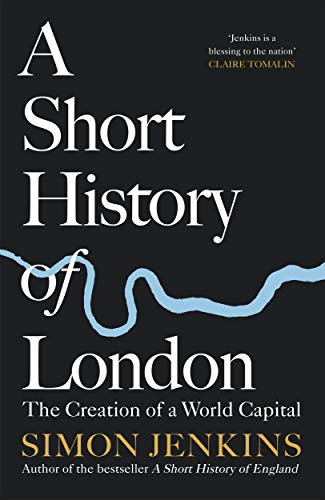
A Short History of London: The Creation of a World Capital
London: a settlement founded by the Romans, occupied by the Saxons, conquered by the Danes and ruled by the Normans. This changeful place became a medieval maze of alleys and courtyards, later to be chequered with grand estates of Georgian splendour. It swelled with industry and became the centre of the largest empire in history. And having risen from the rubble of the Blitz, it is now one of the greatest cities in the world.
From the prehistoric occupants of the Thames Valley to the preoccupied commuters of today, Simon Jenkins brings together the key events, individuals and trends in London's history to create a matchless portrait of the capital. He masterfully explains the battles that determined how London was conceived and built - and especially the perennial conflict between money and power.
Based in part on his experiences of and involvement in the events that shaped the post-war city, and with his trademark colour and authority, Jenkins shows above all how London has taken shape over more than two thousand years. Fascinating for locals and visitors alike, this is narrative history at its finest, from the most ardent protector of our heritage.
From the prehistoric occupants of the Thames Valley to the preoccupied commuters of today, Simon Jenkins brings together the key events, individuals and trends in London's history to create a matchless portrait of the capital. He masterfully explains the battles that determined how London was conceived and built - and especially the perennial conflict between money and power.
Based in part on his experiences of and involvement in the events that shaped the post-war city, and with his trademark colour and authority, Jenkins shows above all how London has taken shape over more than two thousand years. Fascinating for locals and visitors alike, this is narrative history at its finest, from the most ardent protector of our heritage.
405 pages, Kindle Edition
First published October 10, 2019
About the author
Simon Jenkins
105 books119 followersSir Simon David Jenkins, FSA, FRSL is the author of the international bestsellers England’s Thousand Best Churches and England’s Thousand Best Houses, the former editor of The Times and Evening Standard and a columnist for the Guardian. He is chairman of the National Trust.
Ratings & Reviews
Friends & Following
Create a free account to discover what your friends think of this book!
Community Reviews
Displaying 1 - 30 of 104 reviews

February 21, 2020
Capital ideas: hold on, Jenkins, I ought to get trading standards on you. For this is no short history of London, it’s a long polemic on London. And the two are very different things.
If you’re wondering why he whisks so quickly through the first two thousand years, only to spend over half the book on the period since 1800, it’s because it is here he can opine on the things that nark him. Planning, mainly - the lack thereof or its over-application. A Short History of London would better be titled A Long Moan About Stuff. The thoughtless destruction of historic buildings (agreed), the lack of a cohesive approach (agreed), the trouble with London government - all the boroughs’ fault (hmm), wouldn’t Abercrombie have been a dreadful mistake (not sure - and contrary to your earlier grumbles, surely?), the Barbican, the Shard and the Gherkin (disagree).
If that makes it sound terribly disagreeable, it’s far from it. He writes with pace and vigour, and the style reminds me of the history books of a preceding generation: full of moral certainty, the forward march of progress, to the victor the spoils. Jenkins might be forgiven for glossing the first few milennia - there is a shortage of source material after all, except that he tends then to be a tad cavalier with facts and dates. If they don’t fit the narrative drift or are slightly out of sequence, he reorders them or simply brushes them aside. It all reminds me of the Ladybird Book of Kings and Queens I had as a child - this great city story of ours.
The genuine passion of a lifelong Londoner comes through, which is what tends to threaten his journalistic and historian instinct (this is true whenever Jenkins writes on the capital). And his grasp of the BAME contribution to London’s history is thin and weedy indeed - just the dismissal of Sadiq Khan as “His [Johnson’s] successor” on first mention is indicative - demeaning not only to the office of Mayor but also Khan, whatever you think of it or him.
His take on landowners is surer, praising and denouncing in equal measure - such as “the dilatory Grosvenors”. And he has sympathy for the London poor of any stock, describing Henry Fielding’s orphan asylum for deserted girls and his comments that the poor arouse great anger for their misdeeds but little interest in their suffering
I learned also about the extraordinary businesswoman and pioneer Eleanor Coade, whose decorative artificial stone contributed so much to the look of Georgian London. His selection of dramtis personae is as elliptical as the rest of the book.
Fragmentary, fitfully educational and readable, this is to be read alongside Ackroyd, Sinclair and possibly Robert Elms to give a wider lens.
Oh and I got my copy from the library, so relax - I’ll not be calling Trading Standards on this occasion.
If you’re wondering why he whisks so quickly through the first two thousand years, only to spend over half the book on the period since 1800, it’s because it is here he can opine on the things that nark him. Planning, mainly - the lack thereof or its over-application. A Short History of London would better be titled A Long Moan About Stuff. The thoughtless destruction of historic buildings (agreed), the lack of a cohesive approach (agreed), the trouble with London government - all the boroughs’ fault (hmm), wouldn’t Abercrombie have been a dreadful mistake (not sure - and contrary to your earlier grumbles, surely?), the Barbican, the Shard and the Gherkin (disagree).
If that makes it sound terribly disagreeable, it’s far from it. He writes with pace and vigour, and the style reminds me of the history books of a preceding generation: full of moral certainty, the forward march of progress, to the victor the spoils. Jenkins might be forgiven for glossing the first few milennia - there is a shortage of source material after all, except that he tends then to be a tad cavalier with facts and dates. If they don’t fit the narrative drift or are slightly out of sequence, he reorders them or simply brushes them aside. It all reminds me of the Ladybird Book of Kings and Queens I had as a child - this great city story of ours.
The genuine passion of a lifelong Londoner comes through, which is what tends to threaten his journalistic and historian instinct (this is true whenever Jenkins writes on the capital). And his grasp of the BAME contribution to London’s history is thin and weedy indeed - just the dismissal of Sadiq Khan as “His [Johnson’s] successor” on first mention is indicative - demeaning not only to the office of Mayor but also Khan, whatever you think of it or him.
His take on landowners is surer, praising and denouncing in equal measure - such as “the dilatory Grosvenors”. And he has sympathy for the London poor of any stock, describing Henry Fielding’s orphan asylum for deserted girls and his comments that the poor arouse great anger for their misdeeds but little interest in their suffering
I learned also about the extraordinary businesswoman and pioneer Eleanor Coade, whose decorative artificial stone contributed so much to the look of Georgian London. His selection of dramtis personae is as elliptical as the rest of the book.
Fragmentary, fitfully educational and readable, this is to be read alongside Ackroyd, Sinclair and possibly Robert Elms to give a wider lens.
Oh and I got my copy from the library, so relax - I’ll not be calling Trading Standards on this occasion.

May 21, 2021
An interesting and general book looking at the history of London , the majority of the book is based in modern times ie post civil war and goes through the stages of the development of the City.
May 4, 2022
An impressive, albeit at times flawed, piece of writing. The flaws consist mainly of Jenkins tendency to nag on for pages about missmanagements, "government" in general and most of all brutalist architects to the point that it obscures the flow of the narrative. This relates mainly to the time period between 1930 and 2000 however, and does not take away the overall pleasure of the read. The author combines broad historic knowledge with stylistic excellence, and manages to be wildly entertaining througout.
If this was a video game it would consist of Simon Jenkins trying to stop old building from being torn down by corbusian architects and "modernists" who want to replace them with concrete structures. In a future expansion you should also be able to play as the corbusians, and maybe the people who live in the buildings.
If this was a video game it would consist of Simon Jenkins trying to stop old building from being torn down by corbusian architects and "modernists" who want to replace them with concrete structures. In a future expansion you should also be able to play as the corbusians, and maybe the people who live in the buildings.

May 6, 2020
The title pretty much tells you all you need to know about this book. It covers the creation of the city and what happened during every era from Romans to Millenials. Each chapter is fairly short which means the information is easily digestible and you don't get too bogged down in facts. For someone wanting a broad overview of London or who doesn't know much about the city's history, this would be the perfect place to start.
January 21, 2020
A very readable introduction to the history of London with a focus on the built element and governance of the city. It constrains lots of obscure facts which make you want to bore anyone sat next to you about. However, the author loses any pretence of objectivity when talking about the post war years and it all becomes a bit ranty. There is some unseemly point scoring (not a fan of Norman Foster) and the author comes across as a bit of an eeyore. It would have been better to have separated the history book from the polemic on the ills of post war London mismanagement. Some of the points are well made about modern London but there is no overarching argument or consistency to them which just made me confused about the intended message.
October 10, 2020
Jenkins, in this misleadingly titled work, does not offer a "Short History of London" so much as a relentless and scathing critique of its physical development. Focused almost entirely on the built appearance of London, and the process of building it, Jenkins positions himself as the righteous defender of London against centuries of craven architects, developers and planners intent on destroying it out of avarice, negligence, or both. Some of his analysis is certainly correct: mid twentieth century urban development neglected street-level life and experience to the detriment of residents and neighbourhoods; office towers frequently fail to integrate themselves with the surrounds; London parks are treasures to be protected. Yet, on the whole, the book is suffused with a form of development denialism. Whatever exists must be preserved (at least if built before WWII) and attempts at building new, rather than restoring the old, are irredeemable architectural atrocities. The result for the reader is a plodding experience of negation salvaged in part by Jenkins' expansive historical knowledge and interesting anecdotes of the social and political contexts of London's development. The book would have benefitted from elevating these portions and binding them into a more coherent historical narrative, rather than relegating them to secondary support for gripes about craven developers. For example, the strongest portion of the book is the tension and conflict demonstrated in the early portions of the book between "the City" and the developing areas around, particularly Westminster. This frame is curiously abandoned midway through for a series of less interesting and compelling discussions of London council politics.
Jenkins is undoubtedly a brilliant architectural and planning critic, but the book does not provide the survey the title promises and the relative vagueness of his positive program for London - confined mostly to hand way notions of preservation - is a disappointment.
Jenkins is undoubtedly a brilliant architectural and planning critic, but the book does not provide the survey the title promises and the relative vagueness of his positive program for London - confined mostly to hand way notions of preservation - is a disappointment.

June 13, 2020
Too much a historical survey of the architecture of London, particularly over the post-war period. Quite disappointing to take away from a “history” little more than a long list of the author’s gripes about architectural design and city planning.

June 19, 2024
There is some negative criticism of this book on Goodreads (too much rant etc), and I can understand why. However, I’ll give it 5 stars: It gave me a lot of insight on how “urbanism” occurred in “modern” countries, and I had a chance to compare the author’s rant on London’s change with what’s happening at Turkey, at the heyday of its mid-urbanism crisis.
Although the book is on a history of London, acres of the text is allocated with the architecture of the city - even more than the politics. Since I’m very keen on this subject, folding the pages was a delight!
Notlarım (Turkish)
Just like Istanbul, Roman city still lives in London’s city maps.
A cat or dog was to be provided to the city’s first zoo as “pet food”.
Anne Boleyn’le manitası avlanmayı sevmiyor olsalar, şehirde bu kadar park olmayabilirdi.
Kentin kuruluşundan beri “daha fazla büyürse boku yedik” naraları atılıyor
MBW’de özellikle “works” kelimesi geçiyor ki politika yapmaya kalkmasın.
Dostoyevsk’ Londra’nın 1862 sefilliğinden dehşete düşmüş. Anaları tarafından sokak arasında elaleme satılan 12 yaşındaki kızları görünce hayretler içinde kalmış.
Ww1 ile birlikte kadınlar hem iş ortamında hem de sosyal hayatta (gece yalnız metroda otobüste sokakta) rahatsız edilmeden dolaşmaya başladılar, savaştan önce bu imkansızdı.
Council housing müthiş bir gazla başlıyor, 1913’te %6 iken 1020’de yüzde altmış oluyor. Bu işten voliyi müteahitler vuruyorlar !!!!!
Green belt 1934’te ortaya çıkıyor.
Ww2 civarında, inşa konusunda artık ok yaydan çıkıyor. Ne kanunlar dinleniyor ne birşey- piyasa evleri kendi üretiyor. Nothing linked steering wheel to the engine, and the engine was the market place.
Blitz zannedildiği kadar çok paniğe sebep olmuyor, şehirden kaçanların çoğu altıncı ayda geri dönmüş. Yine de ölü sayısı 30bin – az değil!
BM nedense ABD’de :)
Devlet, bombalanan alanlara %10 “kat” veriyor. Silkin: “we didn’t realize it could be abused”.
Yüksek bina çıkmak, verimli değil: en çok insan gene eski nesil az katlı apartmanlarda tıkış tıkış şehir merkezinde yaşıyor.
Barbican’ın geleceğine şüphe ile bakmış ama bence fazla perismist.
Doğum control hapları, (önce sadece evliler için) 1964’te, ve idam da kaldırılıyor. 1967’de eşcinsellik, çok az İskandinav ülkesi ile aynı anda yasallaşıyor. Tiyatronun sansürlenebilmesi kaldırılıyor.
Oy mühendisliği adına, zengin ve fakir muhitlerin sınırları değiştiriliyor, ama ne fayda!
Eğitim işleri hep Labor’un kontrolünde. Hala da öyle sanırım.
Wapping daireleri, Nijerya’dan alıcı buluyor.
Yaşlı ev sahipleri öldükçe, dönüşüm hız kazanıyor.
70’lere doğru göçmenlerle ilgili hırçınlaşma başlıyor.
Fournier Sokak’taki protestan olarak başlayıp, sonra sinagog, şimdi de camii.!
1971’de otlar yasaklanınca, eroin kullanıcıları 6binden 60bine çıkıyor!
Bloomsbury’deki ağaçlar, saplanmış şarapneller yüzünden zar zor kesilebiliyorlar.
BBC ingilizcesi bile değişiyor, “yes” “yeh” oluyor, fuck günlük hayatta iyice yer buluyor.
İşin ilginci, işçi sınıfı sağa kayarken, orta sınıf sola kaymaya başlıyor. Labor, pahalı semtlerde daha çok oy alıyor. Yoksul semtler sağa kayıyor. East end eskiden komünistleri seçerken, sağı seçmeye başlıyor.
Metro önce satılıyor, sonra geri alınıyor (battıktan sonra)
1972’de belediye kuruluyor. Şehrin kendi polisi de oluyor. Ne karmaşa ama!
Yüksek bina yapıldıkça, sonrakini yapmak (emsal davaları ile) kolaylaşıyor.
Çoğu yeni yüksek konut boş duruyor.
3.8 milyon evden 2 milyonunun bahçesi var.
Şunu da google’layın: Planes, trains and boats - Yes Minister - BBC comedy
Although the book is on a history of London, acres of the text is allocated with the architecture of the city - even more than the politics. Since I’m very keen on this subject, folding the pages was a delight!
Notlarım (Turkish)
Just like Istanbul, Roman city still lives in London’s city maps.
A cat or dog was to be provided to the city’s first zoo as “pet food”.
Anne Boleyn’le manitası avlanmayı sevmiyor olsalar, şehirde bu kadar park olmayabilirdi.
Kentin kuruluşundan beri “daha fazla büyürse boku yedik” naraları atılıyor
MBW’de özellikle “works” kelimesi geçiyor ki politika yapmaya kalkmasın.
Dostoyevsk’ Londra’nın 1862 sefilliğinden dehşete düşmüş. Anaları tarafından sokak arasında elaleme satılan 12 yaşındaki kızları görünce hayretler içinde kalmış.
Ww1 ile birlikte kadınlar hem iş ortamında hem de sosyal hayatta (gece yalnız metroda otobüste sokakta) rahatsız edilmeden dolaşmaya başladılar, savaştan önce bu imkansızdı.
Council housing müthiş bir gazla başlıyor, 1913’te %6 iken 1020’de yüzde altmış oluyor. Bu işten voliyi müteahitler vuruyorlar !!!!!
Green belt 1934’te ortaya çıkıyor.
Ww2 civarında, inşa konusunda artık ok yaydan çıkıyor. Ne kanunlar dinleniyor ne birşey- piyasa evleri kendi üretiyor. Nothing linked steering wheel to the engine, and the engine was the market place.
Blitz zannedildiği kadar çok paniğe sebep olmuyor, şehirden kaçanların çoğu altıncı ayda geri dönmüş. Yine de ölü sayısı 30bin – az değil!
BM nedense ABD’de :)
Devlet, bombalanan alanlara %10 “kat” veriyor. Silkin: “we didn’t realize it could be abused”.
Yüksek bina çıkmak, verimli değil: en çok insan gene eski nesil az katlı apartmanlarda tıkış tıkış şehir merkezinde yaşıyor.
Barbican’ın geleceğine şüphe ile bakmış ama bence fazla perismist.
Doğum control hapları, (önce sadece evliler için) 1964’te, ve idam da kaldırılıyor. 1967’de eşcinsellik, çok az İskandinav ülkesi ile aynı anda yasallaşıyor. Tiyatronun sansürlenebilmesi kaldırılıyor.
Oy mühendisliği adına, zengin ve fakir muhitlerin sınırları değiştiriliyor, ama ne fayda!
Eğitim işleri hep Labor’un kontrolünde. Hala da öyle sanırım.
Wapping daireleri, Nijerya’dan alıcı buluyor.
Yaşlı ev sahipleri öldükçe, dönüşüm hız kazanıyor.
70’lere doğru göçmenlerle ilgili hırçınlaşma başlıyor.
Fournier Sokak’taki protestan olarak başlayıp, sonra sinagog, şimdi de camii.!
1971’de otlar yasaklanınca, eroin kullanıcıları 6binden 60bine çıkıyor!
Bloomsbury’deki ağaçlar, saplanmış şarapneller yüzünden zar zor kesilebiliyorlar.
BBC ingilizcesi bile değişiyor, “yes” “yeh” oluyor, fuck günlük hayatta iyice yer buluyor.
İşin ilginci, işçi sınıfı sağa kayarken, orta sınıf sola kaymaya başlıyor. Labor, pahalı semtlerde daha çok oy alıyor. Yoksul semtler sağa kayıyor. East end eskiden komünistleri seçerken, sağı seçmeye başlıyor.
Metro önce satılıyor, sonra geri alınıyor (battıktan sonra)
1972’de belediye kuruluyor. Şehrin kendi polisi de oluyor. Ne karmaşa ama!
Yüksek bina yapıldıkça, sonrakini yapmak (emsal davaları ile) kolaylaşıyor.
Çoğu yeni yüksek konut boş duruyor.
3.8 milyon evden 2 milyonunun bahçesi var.
Şunu da google’layın: Planes, trains and boats - Yes Minister - BBC comedy

January 18, 2023
After reading some of his England’s 1000 Best Houses and 1000 Best Churches while living there, I was delighted by this Christmas gift from Lauren. Turns out Jenkins was also on the board of governors of Bryanston, so plenty more overlap.
While it ranged from pre Roman to present day, at its core this was a book about real estate development and city planning (or lack thereof). Some other themes ran through the book like London’s relative autonomy and friendliness to business, but the core of its focus was real estate, urban planning and architecture. Makes sense for a history of a city.
So many of london’s architectural wonders have been demolished, and some of its new ones are sterile, so said Jenkins. But the dynamism and constant of change makes it vibrant and some of his longings for the architectural wonders of the path came across as slightly NIMBY-istic.
Interesting to see the parallels between NY and Robert Moses and London’s 20th century development. Need to read again when I have a better understanding of the city and its geography.
While it ranged from pre Roman to present day, at its core this was a book about real estate development and city planning (or lack thereof). Some other themes ran through the book like London’s relative autonomy and friendliness to business, but the core of its focus was real estate, urban planning and architecture. Makes sense for a history of a city.
So many of london’s architectural wonders have been demolished, and some of its new ones are sterile, so said Jenkins. But the dynamism and constant of change makes it vibrant and some of his longings for the architectural wonders of the path came across as slightly NIMBY-istic.
Interesting to see the parallels between NY and Robert Moses and London’s 20th century development. Need to read again when I have a better understanding of the city and its geography.
December 26, 2020
~2.5 STARS~
Having finished this book I feel somewhat misled by the title - rather than a history of London as a whole, Jenkins appears to have written a book focusing mainly on planning regulations and the developing physical landscape of London.
It's quite interesting, but not really what I was looking for. Plus, there's too much focus on London in the last couple of centuries (more than half the book), in comparison to lacklustre coverage of London from its founding to the Victorian era. The other irritating thing about this book is that the author obviously has a lot of strong opinions about certain aspects of London's skyline and he rants about them a lot.
We get it, you hate the Barbican...
Having finished this book I feel somewhat misled by the title - rather than a history of London as a whole, Jenkins appears to have written a book focusing mainly on planning regulations and the developing physical landscape of London.
It's quite interesting, but not really what I was looking for. Plus, there's too much focus on London in the last couple of centuries (more than half the book), in comparison to lacklustre coverage of London from its founding to the Victorian era. The other irritating thing about this book is that the author obviously has a lot of strong opinions about certain aspects of London's skyline and he rants about them a lot.
We get it, you hate the Barbican...

May 25, 2024
Interesting but a bit disappointing at the same time. Too much urbanism and naming buildings just for the sake of it.
Read
August 7, 2025I enjoyed the pre-19th century history in the first half of the book the most. The second half of the book details the history of London from the 19th century to the present day. I learned a lot from this and would be interested to read more about some of what was covered in the book.

May 20, 2022
Once you hit the Hanoverian Dawn the author focuses almost solely on architecture and development rather than historical events, which end up being more like side notes for the focus on building. While I enjoyed learning about this too and I understand it affects the fabric of the city, I would’ve much preferred a better detailed narrative of what happened in London and key events through the years, rather than just its building. The London Smog received three sentences, while the Barbican Estate received several paragraphs and detailed the author’s complaints of how terrible it is. The author rants about developments he doesn’t approve of often, and at some points I was struggling to get through it.

April 18, 2020
Simon Jenkins has written a very readable history of the city from Roman times to the present day - which suffers a little from being too focused on the ‘built’ environment. Other reviewers have also noted that the book focuses primarily on the last hundred years and sometimes can read like a long list of buildings and planning disputes. The most enjoyable parts for me were the earlier chapters which explained how the city expanded and developed.

February 6, 2022
Supposedly a short history of London, and the first 1500 years are done pretty briefly, but the past 70 years go into a lot of info, depth and detail about all the development of buildings and other infrastructure in a way that isn't particularly objective. I'm not sure he actually likes anything that's happened in London since WW2 (if not before) and the author's bias and political opinions really come through... bit of a shame for what is presented as a historical overview of a city.

April 11, 2020
Brilliant history of London - wonderful to read and hear of names and places I’m so used to but until now had no knowledge of their history. Truly is the world’s greatest city - sprawling and messy as it is.
April 14, 2020
Good insight into how London has grown into the city it is today. I personally would have liked more detail on the socioeconomic forces at play. Rather, Jenkins labours on the architecture, which was interesting to a point.
March 14, 2022
Several times makes anti Catholic comments which were untrue. And from the 1700's on, it becomes an architectural history which is interesting but rather narrow.

September 10, 2023
З одного боку - все дійсно так: стисла історія розвитку Лондона, мінімум води, все чітко та ясно. Але з іншого - цю книгу можна прописувати замість снодійного, настільки прісно все описано. Це ж Лондон, навіщо ж настільки нудно! Я чекала більшого.
April 23, 2024
This is an interesting history but it is quite unbalanced in its coverage with far too much of the 20th century.
Also minor irritation as a prehistorian that this starts with the Romans. Yes the name is Roman but the geographic area has been settled for much much longer.
Also minor irritation as a prehistorian that this starts with the Romans. Yes the name is Roman but the geographic area has been settled for much much longer.

November 15, 2023
From the Romans to WW2 in 49%, so what happens in the rest of the book? It’s almost as if the fact-filled tour through nearly 2000 years of history (fascinating) is a set up for the real subject: the travesty of post war planning in London. Quite depressing and not overly interesting to me. So have cut my losses. 4 stars for the first half.


June 29, 2025
A very interesting book.....it needs to be updated now!

February 15, 2026
What starts out as a fascinating, five star read slowly drifts into a dull diatribe about architecture. A huge missed opportunity, once we reach the late 18th, early 19th century, almost everything that happens in London other than building or infrastructure development is relegated to a footnote.
Nothing on Windrush bar a passing reference. IRA bombings merit a paragraph. A chapter on the Swinging Sixties swings for a couple of pages before we’re back to complaints about house building again. Popular culture is barely mentioned - absolutely zero reference to the growth of spectator sport, The Stones, The Kinks, Bowie, The Clash and The Pistols didn’t exist in London’s history apparently. And how can you write a book about London and not mention Pearly Kings and Queens?!
Do yourself a favour. Read the first half of this book and enjoy it. Then put it down and spend some time in London instead.
Nothing on Windrush bar a passing reference. IRA bombings merit a paragraph. A chapter on the Swinging Sixties swings for a couple of pages before we’re back to complaints about house building again. Popular culture is barely mentioned - absolutely zero reference to the growth of spectator sport, The Stones, The Kinks, Bowie, The Clash and The Pistols didn’t exist in London’s history apparently. And how can you write a book about London and not mention Pearly Kings and Queens?!
Do yourself a favour. Read the first half of this book and enjoy it. Then put it down and spend some time in London instead.

October 29, 2022
Picked this up at a random roadside bookshop a couple days after I arrived in London and thought it would be a good intro to my new city, but overall wasn't a terribly great read. The author is clearly very knowledgeable about the city, but it reads like an endless list of dates, names and places that I wasn't familiar with and is maybe better suited to someone already well-acquainted with London and English/European history more broadly.
Overall I got the sense that London is a city that happened by accident and changed over the centuries, founded in ancient times, rebuilt in the medieval and completely torn down and rebuilt over and over again amidst dysfunctional kings, governments and businesses.
"He who tires of London, is tired of life, for there is in London all that life can afford. You will find no man that is at all intellectual, who is willing to leave London."
Overall I got the sense that London is a city that happened by accident and changed over the centuries, founded in ancient times, rebuilt in the medieval and completely torn down and rebuilt over and over again amidst dysfunctional kings, governments and businesses.
"He who tires of London, is tired of life, for there is in London all that life can afford. You will find no man that is at all intellectual, who is willing to leave London."
February 14, 2026
This book is advertised as a history of London, but once it covers off up to the Great Fire (in a fine fashion, with some interesting detail) it leaves history behind and devolves into a thinly veiled critic of planning laws and unfavoured architecture, which is clearly his passion, rather than history.
Around halfway through, Jenkins completely loses the initial focus on the tensions between the ancient city and “new London” and embarks on a tirade against the development of London post WWII. At the most jarring points, he steps outside the historical scope entirely, to recount personal spats with councillors, town planners and city mayors. A instance, perhaps, of an author both too close and too far away from his subject matter.
Around halfway through, Jenkins completely loses the initial focus on the tensions between the ancient city and “new London” and embarks on a tirade against the development of London post WWII. At the most jarring points, he steps outside the historical scope entirely, to recount personal spats with councillors, town planners and city mayors. A instance, perhaps, of an author both too close and too far away from his subject matter.
May 10, 2026
Fun to read right after visiting London. "(streets) acquired an almost sacred protection that still endures. Alfred's meandering streets are the sole remaining relics of ancient London acknowledged by city surveyors. Skyscrapers may demolish buildings and deface views but even the mightiest must be shoehorned into ground plans ordained by King Alfred". Ultimately lost a star for having too many dry architecture passages for my taste and another star for being too full of the author's political opinions particularly as events approached present day.

April 3, 2023
A decent and comprehensive history of London but way too preoccupied with building and urban planning. Yes, architecture and planning development is part of the history of any city but surely there's much more to London and its history than the way it was built and expanded - I'd have liked a lot more about the culture, the way the people lived and the important historic events and a LOT less about the property market of the city.

November 13, 2024
I found the first part of this book to be an interesting and a helpful summary of London's deep history. However, the end section of this book about modern London (1950 onward) which I admittedly wasn't as interested in hearing about anyway, was far too long and was let down by the author's jarring, incessant, personal rants about city planning.

January 10, 2026
Definitely not short, has severe pacing issues, glossing over the Roman, Anglo Saxon, Norman and Medieval eras and the majority of the book spent on post-1800 development.
Towards the end it became a list of buildings and a rant about the planning and governmental regulations. Not quite what I had in mind when I picked the book up
Towards the end it became a list of buildings and a rant about the planning and governmental regulations. Not quite what I had in mind when I picked the book up
Displaying 1 - 30 of 104 reviews