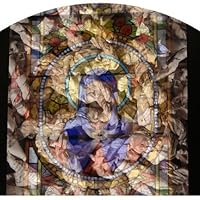
James Castle (1899-1977) never learned to speak, read, or write, nor did he ever leave his native state of Idaho, and yet he created a wide range of extraordinary works that resonate with much of twentieth-century art. This book offers the first critical exploration of the many creative genres of this self-taught artist, who first came to notice in the 1950s and 1960s but has only recently been recognized by major museums.Lavishly illustrated with more than 300 full-colour reproductions and packaged with an original documentary DVD illuminating fascinating aspects of his life and art, this book examines Castle's drawings, colour-wash works, idiosyncratic cardboard and paper constructions, and word, sign, and symbol pieces. As a child he developed his favourite medium and method of working, mixing stove soot with saliva and applying this "ink" with sharpened sticks and cotton wads to such found materials as product packaging and discarded paper. These everyday materials have given his works a singular, immediate, and appealing natural quality.This engaging volume considers Castle's remarkable art from a variety of perspectives, examining his life, modes of depiction, working methods and materials, and the "visual poetry" of his text works.
James Castle is now right up there with Henry Darger, Martin Ramirez, Adolf Wolfli, and Bill Traylor as one of my favorite “outsider” artists, but for an outsider artist he was fairly “normal”. Yes he was born deaf and never learned to speak, refused to work on his family’s farm, preferring instead to sit at his table drawing all day, and when he drew he used soot and spit rather than typical artists' materials; but for all that he was still fairly normal. Unlike the typical outsider artist he lived his entire life with a large family who accepted him for who he was, and though most of them couldn’t really appreciate his art, they at least lived with it daily, as they lived with chickens and cows and silos; his obsessive drawing was just part of the fabric of their daily lives.
His oeuvre consists of fairly small drawings of farmland and barns and houses and interiors, executed in soot and spit and sometimes color (he managed an extraordinary tonal range with such limited materials, and for color he often leached colors out of tissue papers); flat constructions of animals and people and clothing and furniture stitched together with twine; homemade books designed like imaginary photo-albums, some of the people represented with names like "Drwlyl" and "ONHBYD"; imaginary calendars filling page after page of enigmatic homemade books; and he also had the odd tendency to replace people's heads with chairs and boxes in some drawings. All of it is redolent of extreme intimacy with the materials and a powerful aura of tactileness.
I had only seen one or two of his drawings before yesterday, when I went to a big retrospective of his works at the Philadelphia Museum of Art. I left there thinking that it might be unfair to call him an “outsider” artist. He did have little or no training, and he had no contact with the art community per se, but he did traffic in lots of pop culture, magazines and such, through the post office his parents ran, and he did watch TV (he loved the Red Skelton show and even fell off the sofa laughing at him), and like I said he lived in a large supportive family. An understanding nephew even arranged for an exhibit of his work back in the 60’s. And other than his deafness he doesn’t appear to’ve suffered from any other disabilities. Some have suggested that he was autistic, but even with my limited understanding of such things I doubt it. Usually the work of people with autism seems lacking in deep emotional engagement, but his works are saturated with feelings of nostalgia and love for everything he chose to see and represent in soot and spit.
The catalogue is filled with excellent reproductions of his works scattered throughout to illustrate 6 essays, all of which seem well worth reading.
Abundant well-reproduced images of James Castle's artwork accompany a solid description of his life, some speculation of the significance of his life's work, and a brief documentary on DVD that gathers family members' recollections, gallery owners' analysis, and friends/supporters comments. Altogether it seemed wonderful.
The artwork is fascinating - there are many drawings done in soot & saliva that depict the Idaho farm landscape with accurate perspective and varied points of view; cut & sewn cardboard collages of people, animals, & furniture; sheets of alphabet-like exercises; drawings done on top of recycled book pages (reused paper, stitched together in their own little books); many similar drawings done over and over with minor changes - and the guess (by art afficianados) that he was drawing from memory with a precision that most people use when drawing from direct observation.
Castle's life story is also fascinating. It is not nearly as bleak as was presented in the children's book by Allen Say, Silent Days, Silent Dreams, which made it seem like Castle was disregarded, unappreciated, and even tormented by his family. In this book from the Philadelphia Museum of Art, there is evidence that he had the love and support of his family, even if it wasn't perfect and there was a frustration around communication difficulties.
Castle was imaginative, creative, prolific, diligent, methodical, and seemingly playful! His drawings of the interior & exterior views of farm buildings could be used in perspective instruction, they are so finely done and realistic.
This entire review has been hidden because of spoilers.
Castle has entered the canon of American outsider artists. A long biographical essay places Castle in his time and corrects several of the myths that have already accumulated around the artist. An interview with painter Terry Winters provides a special insight into how one artist views another.
Another large format book with pictures and text about Castle and his life. This is a great source of information about this severely handicapped artist who used to live a couple blocks from where I live now.
almost a local artist, this thoughtful book on this outsider artist is inspirational -- as a disabled man with a supportive family, he flourished! comes with a good DVD too