West Africa is a special part of the world. It might be the only piece of the planet where, over the last one hundred years, Muslims as a percentage of the population increased--through conversion, not immigration or disproportionate reproduction. Imagine that. Peoples who want to be Muslim. Maybe you knew that. Maybe you thought that only Christianity was spreading rapidly through Africa, as we often hear on the news. True, but only partly true.
What attracts these diverse peoples to Islam?
Not just that, but West Africa is one of the regions most resistant--for better and for worse--to demographic collapse, featuring high birthrates and, as such, a burgeoning population. By 2100, it is estimated that Nigeria alone will have well over twice as many people as the United States today, and may be the third most populous nation on the planet, lapping countries like Pakistan and Indonesia. It may also be relevant to point out that 50% of that country is Muslim.
This matters more than we might realize.
As Christianity recedes in the West, it is supplanted by Asian and especially African conversion. But Islam, too, is experiencing a similar shift. More and more, Islam will be a (West) African religion, with our religion’s greatest population clusters located not in South or Southeast Asia but in the band of countries that stretch from Senegal to Cameroon. Considering in addition what’s happening to birthrates in the West, that means the future of the West might also be very African.
What I mean to say is, if Western countries seek out immigrants to replace the population we can’t replace on our own, we’ll likely look to West Africa. That also means that, for Western and American Muslims, many of our future co-religionists will be West Africans, dramatically altering the demographics and dynamics of our minority communities. (Christianity, too, as it disappears among white Europeans, will be a globally southern religion--in the West as well!)
Yet there are surprisingly few resources devoted to understanding the promise, potential, and peculiarity of these places. (One exception might be Ross Douthat’s excellent recent work, “The Decadent Society,” [4.5/5] which pointedly contrasts [West] Africa’s vigorous religiousness with the faded pieties of the modern West, and suggests a challenge to the secularization thesis, not from the Middle East or South Asia, but here in the understudied continent.)
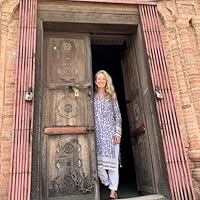
Which is why, when I heard about New York Times’ reporter Dionne Searcey’s memoir of her time as West Africa bureau chief, called “In Pursuit of Disobedient Women: A Memoir of Love, Rebellion, and Family, Far Away,” I was immediately intrigued. There are many ways we can be introduced to a place, one of which includes the attempts, by a well-intentioned outsider, to *have* to make sense of a place, not least because her job depends on it.
For what might be the world’s most prestigious newspaper, Searcey would relocate to Dakar, capital of Senegal, and use this city as her home base as she explored a region and shared it with readers, with a special focus on the viciousness of Boko Haram, its horrific misogyny, and the context in which it emerged and radicalized. She is not only an intrepid journalist, however, but a wife and a mother, balancing these three roles in an unfamiliar environment.
The book opens with Searcey and her husband frustrated by life in New York City until an exit is offered by a promotion at her newspaper. She would become the lead West Africa correspondent for the paper of record, reporting on a region that stretches from the Atlantic coast to deep into the two Congos, which includes a population of some half-a-billion people today. (Yes, you read that correctly: Much of that population, as you might expect, is concentrated in Nigeria.)
As it turns out, this is several very good books in one. Part of it is the story of her attempt to be a bureau chief for an American paper in an African context many of her readers don’t know much about and probably didn’t care too much about, either. Part of it is how she, as a married woman, balances the enormous pressures of family life--including a husband who agrees to work from home (home being Dakar) and then wishes he hadn’t--and the urgent deadlines of journalism.
Part of it is an exploration into sexuality, gender, identity, and piety, in the context of West Africa and, most interestingly to me, West African Islam, as she alternates (very intentionally) between stories of movements that reject Western epistemologies--Boko Haram principally--and those that embrace these, or mine these, for insight and expertise, producing a dynamic, sometimes chaotic, multilayered region thick with complicated attachments.
Her area of focus is very often the paradoxical roles of women in these fast-changing societies, and the ways in which Western culture, Islamic ideals, local practices, economic pressures, and mass media alter how women see themselves and their roles. She never does so unreasonably, exaggeratedly, or in an alarmist or reductivist fashion--there is not a savior complex here, but an attempt at honest observation and appraisal.
What we end up with is a very intimate book about what it’s like to be (in) a family in the modern age--the context is wildly unfamiliar at times, but the urgent questions underneath are common to all of us, as we struggle to figure out how we balance commitments to putting food on the table and the people around the table, even as we are offered nuanced portraits of West Africans in a world shaped by patriarchy, piety, and politics, Islamist and secularist.
Her insights into regional Islam are generous and compassionate, no doubt aided by the fact that she was raised in a pious Christian household and, as such, religion is not unfamiliar to her. (There is the stray error: For example, she confuses Isaac for Ishmael in her recounting of the Eid holiday, but that’s a common confusion coming from a Judeo-Christian perspective.) My briefest take? I am glad I heard of this book and gladder still that I was able to read it.
At times, she’s genuinely funny; at other times, she’s genuinely pained. She inserts a seriousness, ominousness, and honesty into her memoir that sets it apart from an ordinary travelogue, and provides us the context that, as good as reporting from the region might be, simply cannot provide, for lack of space. It’s not always an easy read. It is, instead, sometimes a troubling one. Sometimes an inspiring one. But always a very good one.
West Africa is a place confronting major systemic challenges, not least of which is climate change. But it is also a place possessed of a fierce creative energy, a deep religious impulse, a healthy embrace of postmodern realities, and a dynamism that has seen Nigeria become the continent’s largest economy. In the futures of Islam, Christianity, the West, and the world, be not surprised if West Africa plays a formidable and unmistakable role.
As for why, this title might help you begin to understand.