The author of the award-winning What the Zhang Boys Know ("...utterly beautiful and unforgettable"--Kevin Wilson, author of The Family Fang) now gives us a heart-rending first novel about love, displacement, and the powerful ghosts that haunt so many families.
The Alexanders have farmed the land in Turtle Valley for generations, and their family and its history is tied to this mountainous region of Virginia in ways few others can claim. When Gulf War veteran Aiden Alexander brings home a young and pregnant South Korean bride, he hopes at long last to claim his own place in that complicated history--coming out from behind the shadow of his tragically killed older brother and taking up a new place in his father's affections. However, things do not go according to plan. While he loves his young son, his wife, Soon-hee, can't--or won't-- adjust to life in America. Her behavior growing stranger and stranger to Aiken's eyes every day until the marriage reaches a breaking point.
When Soon-hee disappears with their son, Aiken's life and dreams truly fall apart--he loses his job, is compelled to return to the family home, and falls prey to all his worst impulses. It is at this low point that Aiken's story becomes interwoven with a dubious Alexander family history, one that pitted brother against brother and now cousin against cousin, in a perfect storm of violence and dysfunction.
Drawing on Korean beliefs in spirits and shamanism, how Aiken solves these problems--both corporeal and spiritual--is at the center of this dynamic and beautifully written debut novel.
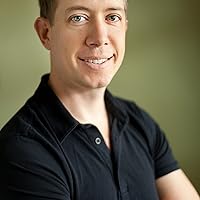
Clifford Garstang is the author of three novels: THE LAST BIRD OF PARADISE (forthcoming, 2024), OLIVER’S TRAVELS, and THE SHAMAN OF TURTLE VALLEY. He is also the author of three story collections: WHAT THE ZHANG BOYS KNOW (winner of the Library of Virginia Literary Award for Fiction), IN AN UNCHARTED COUNTRY, and HOUSE OF THE ANCIENTS AND OTHER STORIES. He is the co-founder and former editor of PRIME NUMBER MAGAZINE and the editor of the three-volume anthology series, EVERYWHERE STORIES: SHORT FICTION FROM A SMALL PLANET. A former international lawyer with a prominent US law firm and the World Bank, Garstang earned a BA from Northwestern University, an MA (English) and a JD from Indiana University, an MPA (International Development) from Harvard University’s Kennedy School of Government, and an MFA (Creative Writing) from Queens University of Charlotte.
This is a gorgeously drawn portrait of a culture clash inside a marriage, and how both the American husband and the South Korean wife are haunted by their past. The husband can't escape his past in the war and the history of his family in Turtle Valley, Virginia, and the wife can't escape her South Korean heritage, culture, and expectations. The writing is panoramic and sweeps you along, the sentences are finely detail and fine-tuned like a pristine train set, and Garstang has created a book with wide, if not universal appeal.
“The Shaman of Turtle Valley” revolves around Aiken Alexander’s attempts to reclaim his footing in his boyhood home of Turtle Valley, Virginia, after returning from a tour of duty in Desert Storm. Aiken’s life is complicated by a number of other characters, most notably his Korean bride (and their son), his aging parents, his morally dubious and problematic cousins, and his high-school sweetheart.
The novel is full of surprising twists and harmoniously blends a portrait of small-town American family life with the foreign, mystical world Aiken’s bride, Soon-hee, brings with her from Korea. Though Aiken is the protagonist, the narrative shifts perspectives, allowing the reader to not only see Aiken more clearly, but appreciate the stories and struggles of other characters as well. These other voices also bring the fantastic, folklorish worlds of both Turtle Valley and Korea to life, which provide a contrast to the simpler, physical world Aiken inhabits.
The strongest themes that emerge from the novel are those of being an outsider and overcoming one’s mistakes. Though Soon-hee is the most obvious outsider, and Aiken’s mistakes are highlighted, all of the characters (like all readers, I suppose) are dealing with these issues and trying to make sense of feelings of doubt and displacement.
Garstang is an award-winning author and the natural rhythms of the prose is evidence of his expert craftsmanship (but you won’t notice this unless you’re looking for it). In the end, “The Shaman of Turtle Valley” fluctuates between the human quest to create a new self and the desire to challenge Thomas Wolfe’s contention that, “You can’t go home again.” The end result is a wonderful novel with memorable characters and stories, evocative descriptions, and emotions that feel genuine and important.
CLIFFORD GARSTANG, best known for his short story collections. has produced a novel worth waiting for. It's poignant. It's sad. It's happy. It's a complex existential tale that moves through folk customs of Korea and Appalachia, finding surprising commonalities. Highly recommended as a new entry into both Appalachian literature and literary fiction. You won't be disappointed with this book.
The Shaman of Turtle Valley was a very enjoyable book by Clifford Garstang. I love to read books about the Korean history and culture and this book gripped me from start to finish. One of those rare books that i may read again one day. I never write what a story is about as i prefer one to read the book for themselves, but i do highly recommend.
My thanks to Netgalley and the Publishers for my copy. This is my honest review.
Seemingly the current trend, The Shaman of Turtle Valley is told from multiple points of view. All but one character are done in first person with no indication of who is speaking next. This is disconcerting but also somewhat effective artistically.
The story’s premise and the trajectory of Aiken, the main character, are timely and relevant. The fragmentation and confusion surrounding a newly returned Veteran are depicted well. In places, the writing doesn’t do justice to the emotional content; I’m left wondering if the storyline itself is overly dramatic. Sometimes I want to feel more than I do.
Ultimately the pieces begin to come together somewhat for Aiken. “A life just happens, it grows over time. One day you wake up, and there it is. Your Life.”
An intricate story and relatable characters. This is a story of family: the lengths we go to in creating them and the lengths we'll go to in preserving them. Intelligent writing and an interesting narrative style makes these characters people you've known or encountered. A wonderful blending as well of the shamanic traditions of two widely diverse cultures. The Ulster Scot "tradition" of holding a grudge for generations is described here in sensitive detail, as is the trauma of being uprooted and dropped into a culture you have no understanding of. A moving read that will leave you thinking about what happened next and hoping for the best.
There is a lot of stuff in this book!. It centers on Gulf War veteran Aiken Alexander, his South Korean wife Soon-hee, and their young son in Virginia. However there are tendrils of the story going back in time to the settlement of the Valley and the Alexander family ancestors, Aiken's youth and time in the military, and his and Soon-hee's meeting in South Korea. Toss in strained family relationships, old flames, and Korean spiritual beliefs and you will be taken on quite an enjoyable journey. Thanks to #NetGalley and the publisher for the advance copy.
Clifford Garstang's poignant telling of this story of loss, superstition, and family secrets, leaves a mark on the soul. He's captured its truth in a way that tends more toward poetry than prose. Not in the way the words are organized on the page. Rather, it is how each element resonates with feeling – whether it is Soon-Hee's communication with the dead, or Aiken's hobby of building birdhouses. Each choice has integrity and power, as though it could only be told this one way. Seldom is a novel written so purely, and I commend Mr. Garstang on his achievement.
When I first read the synopsis for The Shaman of Turtle Valley by Clifford Garstang, I was not sure what to expect. Narrated from several different points of view, this book combines the differences in cultures with a bit of mysticism intertwined. After high school, Aiken enlists in the military. His brother was tragically killed, so when Aiken comes home, he tries to establish a relationship with his father. However, when returning home, he brings with him a South Korean bride and their child. Soon-hee does not fit in. She does not get along with his mother and senses the spirits that lurk over the house. One day, Soon-hee and their son disappear and Aiken is desperate to find them. During this journey he also needs to find himself and where he fits in this life.
This story is absolutely breathtaking! At first glance, I thought this book would be a drag. It is quite the opposite! The pages just flew by. It is gripping from the first chapter to the very last. The characters seem to have so many layers and there is so much that goes into their reactions. There are secrets, rivals, and cultural differences that affect all the characters. There is also a history in Aiken’s family that seems to curse their home and Soon-hee can sense it. Soon-hee and Aiken’s mother is by far the most fascinating characters. But I truly love how their bond develops.
I ultimately had one issue with the book. Every chapter has a new point of view and sometimes the transition is a little rough. I wish there was a name at the beginning of each chapter when the point of view changed. However, I loved the culture and mysticism. You can see the impact that the spirits have on the characters and it is absolutely fascinating. I am quite surprised by how much I enjoyed this book. Definitely check it out! I rate it 4 out of 5 stars!
Thank you, JKS Communications for a copy of the book!
After a military stint in Korea, Afghan War veteran, Aiken Alexander, returns home to Turtle Valley in the foothills of Virginia with a young pregnant wife, Soon-hee. Soon-hee struggles to fit into the small town of Stillwater and to make peace with Aiken’s mother, who sees Soon-hee as a threat. Aiken has struggles of his own. When the novel commences, Aiken is newly separated from Soon-hee and his four-year-old, Henry, and pining for an old girlfriend, He moves into his parents’ barn, where he struggles for a fresh start.
Told in beautiful, clean prose and in alternating POVs, The Shaman of Turtle Valley leaves the reader feeling that despite our differences or where we come from, it is where our humanity intersects that hope lives.
So happy to see him debut his first novel! Love his short stories and he perfectly transitioned into novel writing. The story is extremely captivating and wrestles with what being an interracial family means.
Watching Garstag transition from short stories to fiction has been such a smooth and amazing process. This novel really hits home in the main themes and characters that are struggling to find themselves. Such a beautiful tale filled with amazing characters and plot!
This is a novel of intertwining. Culture, beliefs, and families twist and split like veins of coal and metal through the mountains of Korea and those in the Blue Ridge of Virginia.
It starts as a story you've heard before. A lost young man from a rural area flees to the military, ends up across the world, marries a local girl for the wrong reasons and brings her home. Does she fit into a tight-knit mountain community in the U.S.? Of course she doesn't. This, however, is the point where the author begins to show his skill. From this familiar start, Garstang pushes his characters deeper into their landscapes (current and remembered), weaving in Appalachian folk magic, the complicated spiderwebs of families both Southern and Southern Korean, and the actual shamanism of the title. This complexity lifts the narrative to another level, and makes this an excellent read.
I had minor nitpicks. The multiple viewpoints were necessary due to the external silence of the main characters, but it split too many times and became distracting. We didn't need to be in every head. Also, there was one pothole late in the resolution where the protagonist does not remember a scene from his youth that is crucial to the development of his character. It needed to be a scene we saw, to judge him then, and also now based on his remembrance and reaction to it. The final resolution of the main problem, however, was as perfect as a sunset over the mountains. I highly recommend this book.
Garstang's novel of an American bringing home a S. Korean young war bride in the mid 1990's made me think about how my great Uncle brought home a lovely young wife from Japan many years before, and what it must have been like for my great Aunt Mona. This story had many heartbreaking moments, especially the marriage between Aikan and Soon-hee, as they try to make their life together in Virginia. I also found many beautiful events, such as the love both parents had for their young son, and the career that Aikan found himself in by accident. The ending was great, leaving satisfying resolutions as well as questions or mysteries to ponder. I can't wait for more novels by Garstang.
This book brings several themes together. Coming of Age (at a later age), Cross-cultural understanding (or not understanding), Family, and Folk or traditional "magic." I may have left out a couple. A tale of a family and a young American married (perhaps not by choice or understanding) to a younger Korean girl. Meeting in Korea and returning to the "States." A child has been born and certainly complicates the situation and enhances the plot line. Honestly, I was a bit dissapointed in the ending until I had some time to think about it. Not everything can be understood.
"The Shaman of Turtle Valley" by Clifford Garstang explores what family means despite abuse and the hardships of life. I was immediately swept up into the Alexander family's story and cared for Aiken and Soon-hee deeply. Garstang perfectly balances a sense of Korean history, culture, and spiritualism, with Soon-hee's relationship with the Alexanders. This book is a beautiful tale of humanity and healing.
Such a beautiful book that wrestles with what it means to be a family. Garstang is allowing readers into what a Korean and American family would be like and the struggles of leaving one's culture behind. Perfect book for anyone who enjoyed his short stories and like me wanted more!
I loved The Shaman of Turtle Valley by Clifford Garstang. This book has it all: interesting, well-developed characters, an excellent and moving plot, and a poetic use of words. I recommend it wholeheartedly.
The book is an interesting examination of a culture clash in a marriage. An American husband and his South Korean wife both can't escape their past. He cannot escape his history in the war and his family's in Turtle Valley and she cannot escape South Korean culture and expectations. This novel examines a bit of a roller coaster for the emotions, but it also does a good job of examining the two different cultures and finding similarities between the two. There is something in this book for everyone ranging from Korean spiritual beliefs, strained relationships, an examinations of being an outsider, and of home in general.
This is a wonderfully written novel that holds its readers attention throughout. Aiken’s consistent rises and falls blended with the mystical worlds of his estranged wife and ailing mother provide the reader with a shifting world views that builds in beautiful anticipation. Amazing!
There’s a lot to recommend in Clifford Garstang’s latest book, his best work to date. The characters of Aiken and Soon-hee are fully developed, and the alternating POV ensures good pacing throughout. A deep knowledge of Korean culture provides a firm foundation.