Jump to ratings and reviews
Rate this book

The Best War Ever: America and World War II

Rate this book
Was it really such a "good war"? It was, if popular memory is to be trusted. We knew who the enemy was. We knew what we were fighting for. The war was good for the economy. It was liberating for women. It was a war of tanks and airplanes―a cleaner war than World War I. Americans were united. Soldiers were proud. It was a time of prosperity, sound morality, and power. But according to historian Michael Adams, our memory is distorted, and it has left us with a misleading―even dangerous―legacy. Challenging many of our common assumptions about the period, Adams argues that our experience of World War II was positive but also disturbing, creating problems that continue to plague us today.

208 pages, Paperback

First published November 1, 1993

26 people are currently reading
291 people want to read

About the author

Michael C.C. Adams

10 books4 followers

Ratings & Reviews

What do you think?
Rate this book

Friends & Following

Create a free account to discover what your friends think of this book!

Community Reviews

5 stars
95 (23%)
4 stars
152 (37%)
3 stars
113 (28%)
2 stars
32 (7%)
1 star
9 (2%)
Displaying 1 - 30 of 37 reviews
6 reviews
May 3, 2013
This book is full of factual errors, false analogies, and specious arguments. I can't believe the book was even published, never mind assigned by history teachers in schools. My fear is that not only the young students, but even today's history teachers don't know enough about world war two to spot the glaring errors in this book. I don't mind someone writing a book that attempts to highlight the mistakes made by our country in world war two. There were plenty of them. However the author ignores all the obvious ones (Halsey's typhoons, Slapton Sands, the non rescue of the Indianapolis survivors, etc). I assume because he doesn't know any better. Instead he makes specious arguments out of his own "facts". One quick example. He writes, "Reinhard Heydrich whose crimes included the murder of the citizens of Lidice". The facts are that Lidice was destroyed after Heydrich was already dead. It was destroyed in retribution for his death. How can a book be taken seriously when it contains such weak scholarship? You can't go more than a few pages without coming across something that is either factually wrong, or a revisionist argument based on faulty logic. I think it is sad that what is no more than a poorly written term paper is now presented as history. It is even sadder that it is assigned reading to our young people.
Profile Image for William  Shep.
233 reviews3 followers
January 11, 2009
Should be titled 'The Worst Book Ever.' This is an extreme politically correct polemic masquerading as a history of America and World War II.
Profile Image for Rachel.
404 reviews1 follower
February 13, 2017
Adams' book is geared toward dismantling the myth of World War II that was generated during the end of the 20th century--especially exemplified in the writings of Stephen Ambrose and journalism of Tom Brokaw. The idea of this myth is that the generation that lived through World War II was the greatest generation and that WWII was a just war in which Americans saved the day--alone and virtuously. Each of Adams' chapters takes a common portion of this myth and breaks it down from the causes of the war (it was totally preventable and appeasement is always wrong) to American conduct overseas to the idea that the country was unified and had no problems with race to... well you get the idea.

It feels, at times, that Adams is arguing with a straw man--though my perception of this is undoubtedly colored by having studied US history in graduate school. In his defense I will say that the particularly rosy view of WWII is one that I sort of remember absorbing as a child in the 1990s--certainly its glorification and the emphasis on the Western European front that were dominant then stand out to me.

Its a work of synthesis--so don't come looking for original research here. It's also not probably idea for someone without any working knowledge of WWII--hard to imagine such a person in the USA, but I suppose it's possible. In general, lots of background knowledge is assumed. That being said, I read in the context of its use for a survey of post-1941 history, and students seem to be engaging with it. So, it is potentially useful pedagogically.
Profile Image for Michael Burnam-Fink.
1,725 reviews310 followers
January 18, 2011
If you look for 'revisionist history' in the dictionary, you'll probably find this book. Adams goes at great length to penetrate the mystique of WW2, showing it as an ugly conflict where the average soldier lived in total terror, not knowing what he fought for, that made only half-hearted steps towards integrating American society, and helped destroy the social fabric of rural America. All of this may be true, and it serves as a nice counter-balance to the usual hagiographies, but as a whole this book exaggerates, elides, and is totally American centric. What about Germany, Russia, England, Japan, France, etc? (okay, it says that in the title, but really, those guys fought too). The home front stuff was alright for social history, but you might as well go to the way better primary source for the battles and read Eugene Sledge's With the Old Breed.
Profile Image for B..
92 reviews4 followers
August 29, 2017
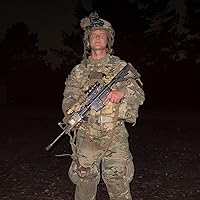
I was prepared to dislike this book because of the romanticized title ("best" war ever?) even though there is a picture of a soldier on the front who, while managing a smile, has haunted eyes.

Within the first page or two, I realized that the book was using this title ironically, and that its mission was to poke holes in the fairytales and myths of World War II. The author does this by providing first-hand accounts of those who lived it and by giving statistics and other information that helps clear out the glassy-eyed patriotism when looking back at this era, and instead look at it more with a level head.

Profile Image for Caleb Lagerwey.
158 reviews18 followers
July 1, 2024
This was a fantastic, accessible read that expands upon the traditional narrative of WWII as "the good war" by including the trauma and mistakes of the US. I appreciated how Adams steers carefully between the ebullient patriotism of a Tom Brokaw The Greatest Generation and the dour critique of a Howard Zinn. I particularly liked his attack on the mythology of Munich and its alleged lesson of always standing up to the bully (at the expense of diplomacy, for example), his examination of the trauma inflicted upon US veterans, and the complication of the homefront and WWII economy. I highly recommend this for anyone interested in a more complete and complicated history of the 20th century US, especially educators.
Profile Image for Michael Maciolek.
53 reviews
January 20, 2023
This review isn't so much a summary of how I found the book, but a defense against the accusations many have thrown at it. I believe a lot of those reading are holding preconceived notions of a political slant to the author, as well as not appreciating the context of when the book was written.

This book is as much a historical work as it is a sociological one. I read the reviews prior to reading, and was expecting to be bombarded with figures and arguments that, as others have pointed out, are incorrect. I did not find that that was my experience. I also did not find the Author to be making a "politically correct", revisionist work as some have accused him of doing so.

This book's aim is to dispel certain myths we may commonly hold about World War 2. Namely, that all GI's were excited to fight on the side of righteousness, that the home front was unified in a sense of purpose, that America was in it's prime - this book did NOT argue that America was wrong for its service, or that we were not fighting a morally justified war, as some reviews have implied it is. It does this by citing a lot of statistics and quoting personal accounts from veterans and those who lived through the war. A major point this book stresses is that our dichotomy of a good war vs a bad war (WW2 vs. Vietnam, mainly) is not entirely true, as the "good war" holds a lot of similarities with the bad war.

To contextualize this book, it was written directly after the First Gulf War, when America's military-industrial might crushed Iraq in a matter of weeks. This war certainly caused some to longingly look bad to the era of the 40's, when this might was first developed. In a post 9/11 world, and especially after involvement in Iraq and Afghanistan became increasingly unpopular, it may be hard to see just the point this book was trying to make, as the realities of what war is became clear to us.

Additionally, this book was written prior to the realistic popular World War II movies and shows such as Saving Private Ryan, the Pacific, Band of Brothers, etc. Though these all have certain elements of glorification and patriotism that the author may front upon (I use the word "realistic" to really mean "as realistic as a popular movie can be"), they do not depict America as always in the morally right, committed to the cause of liberty and freedom for all. The author makes many references to the racism rampant in GI's at the time, the levels of rape and divorce for US troops, and the fact that many of them didn't fight for idealistic reasons such as global democracy or freedom. Their are plenty of characters in the prior mentioned shows and movies who show these traits - in a departure from the John Wayne archetype of the moral and tough American GI.

I particularly enjoyed this book, but I can't say it changed any opinions I had. Rather, it gave me a fuller picture and appreciation of the war which I have read so much about, especially on the home front. I would fully encourage anyone to read it - if after reading, you agree with the other reviews and think that this is a political work full of inaccuracies, then so be it. But I would advise any potential reader to approach this book with an open mind.
Profile Image for Simon Purdue.
27 reviews7 followers
February 12, 2018
Adams’ book stands out as one of the first major attempts to dispel the idea that World War II was a glorious and pristine war- one in which the boundaries of ‘good and evil’ were clear and in which the American soldier fought gallantly and perfectly for freedom and democracy. Contrasting the images of Vietnam as a ‘bad war’ with the ‘good war’ narrative of WWII, Adams argues that the national mythmaking project was ultimately successful in glossing over the more negative aspects of life on the front lines of Europe and Japan, while the mass media exposure of Vietnam made censorship more difficult. Adams argues that in fact WWII was a dirty and violent war, not fought between the caricatures presented by John Wayne and his cold, heel-clicking Nazi opponents, but by real people on both sides who were deeply flawed and were deeply impacted by their time on the frontlines. Adams uses various anecdotes and stories to help dispel the myth of a good, clean war, including harrowing descriptions of the death of an air force gunner who was crushed to death when the landing gear of his B-17 did not deploy and his gunner doors jammed, resulting in his gunning booth being the first part of the plane to hit the runway upon its emergency landing. Adams seeks more broadly to dispel the myths that were perpetuated by propaganda both during and after the war and sadly still stick today. He seeks to complicate even the core ideas surrounding the causes and outbreak of the war, giving more nuance to the ‘bully’ narrative that particularly American and British media perpetuated by outlining their own ‘bullish’ colonial interests that hurried the onset of warfare. Adams further criticizes the allied propaganda machine, reminding the reader that the concentration camp was designed on models used by the British during the Boer war and by the Americans in the Philippines. Furthermore the author seeks to dispel the idea that the US single-handedly won the war with its unstoppable, heroic war machine, nor was that war-machine as cohesive as propaganda would have the public believe. The American war effort was marred by racial and class tensions, and the fundamental contradictions of a war for democracy abroad being fought by those who were subjugated at home was very clear to many. Ultimately Adams’ book leaves the reader understanding that there are ‘no easy answers’ when it comes to WWII. Adams succeeds in dispelling the ‘good war’ mythology that surrounded the conflict by complicating pre-war narratives, de-glorifying the conflict itself and by questioning the intentions of all sides involved. His book raises many more questions than it answers, but it stands as an important work in that it disrupted the allied hagiography that made up WWII history to this point. To sum up Adams’ point of view in one quote, ‘It was necessary for world peace and the future of democracy that the axis be overcome. This should not, however, lead us to glamorize modern technological warfare.’
Profile Image for Robert Marshall.
118 reviews1 follower
August 12, 2023
Michael Adams in The Best War Ever (The American Moment), argues that modern depictions of the Second World War as a struggle of good verses evil, and a time of American unity to defeat a universally hated adversary are oversimplified and often myth. Adams makes this argument by contrasting the positive image of wartime America with that of a greedy, consumption obsessed, selfish population, who sends their soldiers off to fight a war they don’t fully understand. A war where American soldiers will be seen as careless to the destruction they cause and immature as opposed to the soldiers of their allies. Adams makes his arguments with mostly uncited claims and often contradictory statements. Adams also displays an ignorance to military life that often diminishes the sometimes-valid arguments he hopes to make.

Adams ends his argument with a moral statement that the classification of the generation who defeated the Nazis and ended the Japanese imperialism as the “Greatest Generation” is harmful to future generations as it instills a sense that they can never contribute to society in the same way or live up to the generation of the past. This statement is the final contribution of a book that not only seeks diminish the “Greatest Generation”, but also to depict them as morally inferior to current generations. When studying history, the idea of applying modern values to the critique of the past has always been controversial, but Adams seems to have little problems comparing people of the past to his values.
Profile Image for Bexan.
128 reviews1 follower
July 22, 2023
When talking about the homefront of the war, Adams does a fantastic job of challenging the myths that have come to define our nations experience with WWII, however, I think this book often times falls into what I called "vibe based history writing."

Adams, for instance, repeats the infamous false claims that Shermans burned up at outsized rates or that it took 5 Shermans to kill a single panther. He uncritically publishes the astounding claim that German combat fatigue casualties averaged 2-2..7% while American fatalities were as high as 70-80%. Finally, I feel he accepts post war revisionism that gives Nazi military leadership mythological battlefield capacity, which is completely ahistorical and originated in the post war US Army studies on the war that were dominated by former German military leadership.

I think that this book could have been a five star work, it just needs more research. He lightly touches on things that could have fleshed out this work, such as the anti-semitism that festered in the liberating US Army in 1945 or the diverging demands upon working women in 1944-45, but fails to give them a proper analysis. HIs scope is extremely broad, as he attempts to recontextualize the entire history of the American side of WWII, but is constrained by this book being less than 150 pages.
Profile Image for Emma Mckenzie.
161 reviews
October 14, 2024
I think this book is a very interesting one. It provides an interesting insight into the war and how it functioned both on the home front as well as the battlefield. I feel like I've gained additional perspective.

That being said.

I think that this book overall lacked balance. A lot. I'm not saying that the war was good. I mean. It was a war. So....

But I am saying that the author seems to generalize many aspects of the war effort, failing to acknowledge the complexities and nuances of human experiences during that time.

Additionally, there were some blatantly untrue statements scattered throughout the text. For instance, the book presents certain statistics and anecdotes without sufficient context or evidence, leading to an oversimplified view of historical events. It honestly diminishes the overall credibility of the argument.

It also just felt very politically charged , and while I appreciate that in a book about the complexities of war, I think that it could have been toned down a bit.

And yes, I'll admit, part of the reason I'm not a big fan of this book is because I was required to read it for my history class this semester.
7 reviews
May 23, 2019
Now one of my favorite books on WWII, specifically America's involvement and what people and politics felt and believed in the 30's and 40's. Adams does well to inform the reader about the myth that the U.S. was joined together behind a common cause, when it indeed was not the case. Today people are generally unaware of the divisions America was split into because of race, and gender. I hear many time people referring to this time as the greatest generation and Adams doesn't hesitate to remind us that it was not all that it is overly glorified today. Now I'm not a huge military historian so I cannot account for the accuracy, but I do not think the author intended this to be a history book, on fact says that it is not since the conflict of WWII is incredibly vast and it would take millions of pages to cover a fraction of it. I took from it more of a social history and as another window to view world war 2 from.
Profile Image for Brook White.
65 reviews1 follower
October 18, 2021
I really appreciated this novel for the way it dismantled the glorious mysticism surrounding America’s portrayal of American involvement in World War II — certainly, it is a politically motivated piece of literature, but it’s refreshing to be able to step back from the purely heroic narrative and have a reckoning with the reality of what war is.
Profile Image for Jackson.
282 reviews1 follower
September 11, 2023
A history book written in a novel-like fashion that is both very informative and also easy to read considering the way many history books are written. There is tons to be said and that has been written on WWII, but this is a worthy read for what it has to offer in the time it takes to get through. Highly recommend it to any WWII or history buff.
23 reviews
March 3, 2019
Modern view on WW2. Discusses how it is remembered fondly whilst it was actually quite rough. Talks about its effects on society, how corporations took over in the post-war booms, how wars like Iraq were started because people remembered WW2 as being well and fair.
Profile Image for Ben.
89 reviews1 follower
March 13, 2017
I understand the desire to puncture the inflated romanticism around World War II and the phony "Greatest Generation" notions preached by Ambrose et al, but I am not sure this book quite accomplishes that goal. It feels hasty, perhaps rushed out in response to Band of Brothers, which was published a year before. More than anything though, the problem is that Adams really only answers the question of how the reality of WW2 differs from our image -- not what the ramifications of this might be, and not why America alone entertains this fiction out of all the countries in the war. I take this to be a product of haste rather than negligence because the answers to those questions are in the book:
"Only the United States was not both a destroyer and a victim of destruction in the war. Unlike other belligerents, US civilians didn't experience firsthand the awful effects of modern weapons...Living apart from the rest of suffering humanity, Americans were vouchsafed an ignorance of war's reality that allowed them to cherish an innocent belief in the clean and bracing atmosphere of battle."
This is a good observation! And it could have been a central thesis of the book, explaining how Americans were somehow able to lie to themselves about the nature of the greatest conflict in human history. Instead it is used as a throwaway sentence in the middle of a chapter on page 73. A good read, but not an essential one.
Profile Image for Mark Mears.
296 reviews4 followers
January 16, 2018
Mr. Adams brings a different view of the second world war, and gives voice to many of the individuals who did not have a voice before. Worth the read.
Profile Image for livvy.jane33.
113 reviews7 followers
March 16, 2024
3.25 stars. Again falls victim to overgeneralizing and oversimplifying history, but did make a lot of good points I appreciated, especially in the last chapter.
Profile Image for syd.
119 reviews
February 15, 2026
good but not great. did open my eyes quite a bit though its just hard to make a monograph engaging
Profile Image for Candice.
15 reviews1 follower
February 24, 2017
This book exercised my history muscles I haven't used for awhile. It got easier through practice. This is a revisionist history of the war. It debunks overly positive myths and attitudes about it and its repercussions. There are some pretty painful things to read in here-- a lot of damage to soldiers, and to American society.
946 reviews12 followers
January 22, 2015
The Warts, and All the Warts, of WW2 and its’ effect on Vietnam, Gulf War, Iraq and Afghanistan. The best way for me to summarize this books it to paraphrase from the ‘Afterwords’ where Adams hypothesizes “four fundamental convictions that undergird The Best War Ever:

One: WWII was a complex event that had multiple causes and courses. It cannot be reduced to pat value statements such as force must always meet international aggression. Nor did the US alone, save the world at Normandy.

Two: The Allied victory in part, showed the strength of democracy versus authoritarian, militaristic regimes (if you discount the Soviet Union and Nationalist China). Just because the war generated some positive results doesn’t mean there weren’t negative consequences for the future or that the experience of the war was beneficial individually or collectively.

Three: There is nothing wrong with myth-making unless it so significantly diverges from the truth to make us vulnerable ‘to serious errors of judgment based on faulty premises’. In WW2 only 5% of personnel were directly involved in combat, versus over 50% in Iraq. This limited the ‘psychic’ damage to most returning veterans.

Four: That showing the war in an unflattering way is not unpatriotic but is important to ‘keeping faith with those who sacrificed on our behalf, we have an obligation to preserve the complete reality...warts and all…fully appreciate what they achieved.’

During the Vietnam War, I spent a lot of time out on the streets. I felt that that war was not what my father and uncles had fought WW2 over. I also felt that it was patriotic to tell the leaders of your country when they were wrong and not just rubber-stamp whatever they said. I strongly believe that the reason, that there have been no anti-war demonstrations against Iraq and Afghanistan is two-fold:

One: a professional voluntary Army protected the younger generation from having to fight if they didn’t agree with the government’s policies.

Two: our leaders were able to hoodwink the public by characterizing the war that we were fighting as a ‘good war’.
Zeb Kantrowitz zworstblog.blogspot.com
Profile Image for Sharon.
164 reviews23 followers
August 13, 2021
A decent overview of World War II that provides some interesting facts concerning activity on the home front during the war as well as the dissection of myth making about the war (Chapter 7 is an excellent example of this).
This book however suffers from wavering between an academic and narrative writing style. It makes several broad generalizations and statements, and at times dives into very detailed, grotesque, and depictions of war that last for several pages and drag the pace of the book. Some of the book’s topic sentences are also just downright bad.
I would recommend this book to those who do not know that much about World War II and want to learn more about it. I would not recommend this book to those who already have a working knowledge of the war, as this book is a comprehensive background, but doesn’t add anything too enlightening concerning the war, save for parts about the home front and myth making.
Profile Image for Michael- Berry.
19 reviews1 follower
August 9, 2016
Although it makes some good points about the history of World War II and how it is selectively remembered, this is a shoddy piece of historical writing. He includes extensive statistical facts and makes major assertions to support his arguments with no references. If I tried to write something like this in my graduate studies, I would probably not get a passing grade based on basic standards of historical/academic writing. The only citations are direct quotes and few to none are from primary sources. I get the feeling that this could have been a good work had he done the necessary research to substantiate and expand on his points. As it was, it just seemed like one guy's opinions on the subject who has read a lot of books. If he is a university professor, he gives no evidence of that in this work.
Profile Image for Piker7977.
460 reviews27 followers
August 27, 2016
Michael C.C. Adams does a fine job of describing the pitfalls of perpetuating good war histories and narratives. Adams's study culminates into a criticism that contemporary foreign policy is often shaped by citing examples of American prominence during the Second World War. Using World War II as examples of American exceptionalism often omits crucial aspects of historical context such as the uglier side of conflict. There are other arguments in this book such as those involving race relations, gender roles, economic prosperity, and contemporary patriotism.

This short study is not a complete historical analysis but rather an inspiration for considering all aspects of America's involvement in World War II.
Profile Image for Jeff.
34 reviews1 follower
October 15, 2013
This book does an excellent job of showing how common perception of WWII is not always accurate. However, as this is the aim of the author, the book lacks balance, as this would run against the aim of the author. The result is he is about as accurate as the history which he challenges. Still a good book to broaden your perspective.
Displaying 1 - 30 of 37 reviews

Can't find what you're looking for?

Get help and learn more about the design.