When Robert, Patrick, and Irene met in New York, they were all determined to become actors, and it felt as if the city--indeed, the world--could be their oyster. Robert was the good-looking, ambitious one. Patrick was tall, ungainly, but naturally dramatic. And Irene, a former rodeo star out of Kansas, was the beautiful ingenue. They were young, talented, and passionate, and they soon became inseparable.
But as it happens, their careers don't take off together. Patrick becomes too embroiled in dangerous love affairs to stay the course. Irene, sizing up the competition, decides to try and sleep her way to the top. And Robert finds himself suddenly becoming a soap opera star. As their lives change course, their friendships are tested, and the casualties start to Patrick's career, Irene's loyalty, Robert's heart.
Set against the backdrop of New York City in the late 1970s, A Company of Three takes us inside the complex, sometimes brutal world of actors, and the heart-rending choices that threaten to undo them. And with echoes of A Home at the End of the World, Varley O'Connor examines the true value of friendship, love, and the most unlikely forms of family.
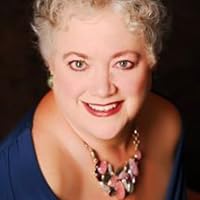
Varley O’Connor’s first novel, Like China, described by the New York Times as “a first novel that soars,” was published by William Morrow in 1991. Her second novel, A Company of Three, about the world of theater and acting, came out from Algonquin Books in 2003. Her third novel, The Cure, was published by the Bellevue Literary Press in 2007. Scribner will release her most recent novel, The Master's Muse, in May 2012.
Her short prose has appeared in Faultline: Journal of Art and Literature, AWP Writer’s Chronicle, Driftwood, Algonkian Magazine, The Sun, and in an anthology, Naming the World and Other Exercises for Creative Writers, edited by Bret Anthony Johnston (Random House, 2008).
After graduating with a BFA in acting from Boston University, O’Connor worked as a stage, film, and television actor before entering the Programs in Writing at the University of California, Irvine. She received her MFA in English with a fiction emphasis in 1989.
She has taught writing and literature at Irvine, Hofstra University, Brooklyn College, Marymount Manhattan College, the North Carolina Writers’ Network, and thrice for the Squaw Valley Community of Writers’ Summer Conference, most recently in August 2007.
In fall 2007 Varley O’Connor joined the faculty at Kent State University, where in addition to undergraduate creative writing, she teaches fiction and creative nonfiction writing in the Northeast Ohio Universities Consortium MFA program.
I feel like this should have been the perfect book for me, but it was so boring and depressing that I struggled to get through it.
This is a realistic (check) slice of life (check) about a group of friends (check) in NYC (check) who love theater (check).
But then all they do is sit around talking about the pointlessness of life and the extent of their past traumas?
This is a book about people going on auditions over and over again but somehow the only suspense comes not from whether or not they land parts (you don't care because they've successfully convinced you it's meaningless) but what exactly happened to each of them in the past to make them so morbid and hopeless.
Sad stuff! The answer is sad stuff.
Some sad stuff happens over the course of the book too, such as (major spoiler but also common trigger if you want a content warning)
Frustratingly, this book is well-written and I highlighted just as many quotes I love as I did quotes I hate. It's the most relatable book about theatre that I've ever read.
“'But an actor—even if you could afford to work without making any money, and for years and years no one knew about you, and you didn’t care—you can’t do it alone. It isn’t like being a writer or a painter. You can’t sit in a room doing monologues forever... We’re so dependent.'"
This is a sentiment that I've struggled to put into words for years, and it really comes across here.
There's a lot of good writing and interesting ideas, but unfortunately, the end result is so depressing and dull that it's painful to read. I read an ebook, and I was shocked when to came to Goodreads to discover this was only 320 pages. I guess the alternating melancholy and rage really stretched out the reading experience.
Overall, this isn't a bad book, but it's not one I can really recommend.
As Michael Chabon says on the cover, this is an "old-fashioned novel." It is slow, it is deep, it invites you to notice nuances in characters that you would never notice in people. It's lovely. But it is not very compelling as there is no driving force--yes, all three characters want to become actors, but that's not enough to move the story forward. It's the kind of book you pick up and put down a lot because it's hard to stay inside. But O'Connor is a brilliant writer and a brilliant professor and I still adore her, so I can't bring myself to give this a rating. But I would say go read her Master's Muse instead.
2.5 stars. Initially this book was very interesting. NYC in the 1970’s, three actors who are trying to make it in the theater world that band together to support and befriend each other. Each character is somewhat broken, Robert is the narrator and the work is from his point of view. Irene is the attractive, wild ingenue and Patrick is the dancer who broke his knee and is acting because he cannot dance anymore. These could be the bones of a great story but the work devolves to melodrama. The characters that were at first interesting became a stereotype. I enjoyed the book but think it could have been great instead of just ok.
I can remember taking a workshop with Varley years ago, and question of world-building came up, especially in first chapters. The writer doesn't want to necessarily become an exposition machine in order to feel authentic or establish the world of the novel itself. Instead, the world should be built through characterization, and in this novel, Varley's second, she succeeds wonderfully in fleshing out late 1970s NYC through the eyes of struggling actors. Although we get far more of a sense of this struggle through Robert and Irene rather than Patrick, their self-destructive gay friend, each character possesses hiddenness and openness with the reader, much like what we'd see onstage. That are they also hiding and revealing bits of themselves throughout their relationships is what sets in motion perpetual cycles of attraction, betrayal, disappointment, and reconciliation.
Robert and Irene's on-again, off-again relationship drives the narrative, but what most interested me was their inner-lives: Robert's with his pretty well-to-do parents, and Irene with her poor Kansas farmer father. The real interest, however, is the world itself, the theater scene, and how one actor's work--and the success he finds--is both liberating and alienating for his friends as he moves from NYC to LA, and as he sells out a bit of his bohemian convictions for better opportunities at TV-soap and film stardom.
Three aspiring actors in the 1970s New York find each other and this story takes the reader from their initial meeting to years later. In between are, of course, ups and downs and what look to be falling outs that will never be mended. Robert and Patrick are already friends when the story starts. Irene is brought in to their aspiring actor group when she lands in New York from Kansas wanting nothing more than to act on stage. The story could go a million ways from here, but takes the reader on a totally believable journey through their friendship. I found the story interesting but more interesting to me was the writing itself. I felt like each of the main 3 characters were written about in such a way that you felt like you really knew them as people-possibly better than you know some of the closest people in your life. Irene, for example, was the female character who knew some times you had to sleep with directors to get parts but, like I imagine reality for aspiring actresses, she struggles with this notion - some of the time. Irene and Robert become the most multi-dimensional, although Patrick does as well but to a lesser extent. Like all of us, each has their foibles and redeeming qualities and we get to witness the struggles with these throughout. At the end, this book is about navigating life, realizing our problems and working to overcome them.
I really liked the first half of this. It’s very well written, but it was diminishing returns for me once it just became about Robert’s obsession with Irene. And since Robert is our point of view character, it becomes very tedious living inside his jealous head every time Irene looks at another guy. Also, minor detail, but I would like everyone to know that Musso & Franks is NOT in West Hollywood where the author has placed it. It’s just in plain old regular Hollywood.
For a really great melancholy/funny book about struggles and friendship in 1970s NYC theatre, try “Emma Who Saved My Life” by Wilton Bernhardt instead.
I kept going with this book because I wanted to know what happened but I wouldn't say I enjoyed it. It took me so long to read as there was no driving enthusiasm to pick it up. The story is rather depressing, nothing really substantial happens until the last few pages. The story is a reflection of how hard the lives of actors can be.
I was quite impressed with this author's writing. I had never heard of her before. She has only written 2 or 3 books, but this particular one was very good. The main characters are 3 wanna=be actors in NYC trying "to make it." The characters are very real, the story very plausible and details are just enough. Nice job Varley O'Connor!
The blurb on the cover of the book from Michael Chabon is the best thing I could say about this: "An old-fashioned novel...elegantly wrought, hard-headed and tenderhearted about the world of actors and theater." And I completely agree with that - it *is* an old-fashioned novel, in the best way possible. It's reminiscent to me of Fitzgerald. I thought I might be annoyed by the fact that it very much is all about acting and the theater (having worked closely with actors in college, I have a preconceived notion of them as an entirely different species - interesting and bizarre and flighty and really, really hard to actually like in person in the long term). However, I really got involved with the characters and their convoluted relationships. It's really a story about two characters trying to figure out whether or not they're in love and how their mutual self-destructive gay best friend fits into their life. It was a great read - highly recommended!
A nice light but intelligent read. Passages of beautiful bordering-on-flowery writing interrupted by contrived but page-turner-y plot points. I found the most tedious passages to be about the actual plays the characters were putting on. Patrick is an annoying character whose self-destruction felt too tacked-on, not authentic. The Kansas chapter is the best.
I graduated with a degree in theater and was fascinated by this story of three friends struggling to make it in theater in New York's Hells Kitchen and keep their friendships together. Big personalities mix with big dreams and often big egos masking bigger secrets. Very enjoyable, not always very deep, fairly moving. Made me want to act again.
A very good quick-read. I would recommend it for actors...I'm not sure how anyone else would feel about it. It's a great portrait of an earlier, pre-Giuliani New York. Not the most inventive story ever, and I felt that some loose ends were not tied up, but I read it quickly, so obviously it kept me entertained. :)
Honestly - I wish I read this book before "Master's Muse" - I would have liked it more then. A little bit too long, too complicated, too much. In "Master's Muse", O'Connor is able to do more with less.