From a bestselling memoirist, a thoughtful and provocative story of changing identity, complex sexuality, and enduring family relationships
At age 36, while serving on a jury, author Molly Wizenberg found herself drawn to a female attorney she hardly knew. Married to a man for nearly a decade and mother to a toddler, Wizenberg tried to return to her life as she knew it, but something inside her had changed irredeemably. Instead, she would discover that the trajectory of our lives is rarely as smooth or as logical as we’d like to believe.
Like many of us, Wizenberg had long understood sexual orientation as a stable part of ourselves: we’re “born this way.” Suddenly she realized that her story was more complicated. Who was she, she wondered, if something at her very core could change so radically? The Fixed Stars is a taut, electrifying memoir exploring timely and timeless questions about desire, identity, and the limits and possibilities of family. In honest and searing prose, Wizenberg forges a new path: through the murk of separation and divorce, coming out to family and friends, learning to co-parent a young child, and realizing a new vision of love. The result is a frank and moving story about letting go of rigid definitions and ideals that no longer fit, and learning instead who we really are.
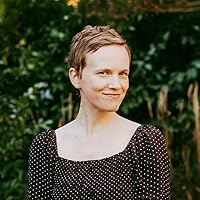
I started out as a food writer focused on home cooking, using food as a lens for peering into everyday life and relationships. I was interested in people, in how we find and make meaning for ourselves. I still am. My latest book, The Fixed Stars, is a memoir about sexuality, divorce, and motherhood. I wrote it because, in my mid-thirties, nearly a decade into marriage and newly a mother, I lost track of who I was. I wrote because I wanted an answer; in the process, I came to find that I liked the company of questions. The Fixed Stars will be published by Abrams Press on May 12, 2020.
I am also the author of A Homemade Life (Simon & Schuster, 2009) and Delancey (Simon & Schuster, 2014). Both were New York Times bestsellers. Before all that, I got my start in 2004 with a blog called Orangette, which won a number of awards, including a James Beard Foundation Journalism Award in 2015. The blog is now dormant-ish. Can’t decide what to do with it. I have written for Bon Appétit, The Washington Post, and Saveur, and in a previous lifetime, I co-founded (with chef Brandon Pettit) the award-winning Seattle restaurants Delancey and Essex. Last but not at all least: I co-host (with my friend Matthew Amster-Burton) the food-and-comedy podcast Spilled Milk, specializing in dumb jokes and chewing noises since 2010.
2.5 stars. There are two questions I always consider first and foremost when reading memoir. The first is whether the writer has enough distance from the thing they are writing about. It is possible to write about a recent time in your life, but it is extremely rare to do it well. (And when you do it well you have to make the recency of it work for you, to make it more visceral, more focused and fine-tuned.) The second is whether the writer has enough to write about at all. This is a trickier question because it may seem like a large event should be plenty. But somehow the biggest things in life, the things that are giant from your own perspective, can feel boring on the page. All of literature is marriage and breakups and motherhood. It is not so easy to take something people have read thousands of times before and make it feel new and urgent and unique. Again, it is possible to write about something small and specific, but you have to open it up and make the reader feel it or see it in a way that feels new.
For me, this book fails on both counts. Wizenberg feels far too close to everything that happened to have much perspective on it. It feels more like she is in the act of working through it and figuring it out, more therapy session than book. It seems likely that she could write another memoir about the exact same series of events ten years from now and it would be an entirely different book (and I suspect a better one). Not every story, no matter how deeply you feel it, is ready to be a memoir. Love is overwhelming. Being a mother, going through a divorce, they are such big things. But they can also be quite boring on the page. They can feel lifeless without the right perspective and the right prose.
Memoir can be an act of emotional violence to other people in your life. Good memoir about painful topics and difficult relationships requires the ability to be as honest about the other people in your life as you are about yourself. This book is not. She is kind to her ex-husband, kind to her current partner, and these relationships feel empty. In contrast, her first relationship with a woman is shown with much more clarity and spark. Which makes the other two only more limp by comparison. And because that relationship happens in tandem with her marriage and separation, it is immediately uneven. With her first girlfriend, we get the best parts of the book. We get details, we get frustrations. We follow Wizenberg as she charges into a new kind of sex, and then when she has made only a little progress, the story ends. We get almost nothing about sexual exploration with her next partner and we have almost nothing about her sexual history with her husband. We don't get enough context for the story, there is no beginning and no end, just this middle without introduction or resolution.
I am not the audience for this book. I realized this after a while, realized that part of why I had trouble connecting to it is that it is not for me. Who is it for? Straight women and folks questioning their sexuality, I think. It feels almost like an apology, an explanation, an attempt to lay out why she was once one of them and no longer is. It spends an awful lot of time defining and explaining. For much of the story she writes about queer people as if we are another species, tells stories of when and how she has seen us in the wild, wants to lay out the boundaries of what we are. Some of this is an attempt to explain herself, to try to figure out why she did not see herself as one of us before. That I can understand. I was not the kind of queer who knew it when I was 6. But there is still a remove that stays in place for the entire book where she does not ever see herself as joining a community as much as staking out some other territory altogether. You would think that I, a queer woman who has also gone through a divorce from a man that led to me getting to explore my queerness more fully, would find much to relate to here but instead I found almost nothing at all. At the end of the day, it does not matter to me if you have explained sexual fluidity as a thing that exists and has been documented. It matters whether you have showed me how it feels, and I never got to that point.
The style here is, I admit, not my preference. It is loose and little of it is rooted in actual moments, instead it is more rooting around bigger, vaguer feelings. Wizenberg is working through these big, difficult changes while also figuring out her own identity. But the times when she stops her own story to quote someone else, to summarize someone's research in sexuality or gender, it doesn't lift the story. Perhaps it is helpful to her to see herself clearly, but it does not help the reader. It is also troubling to have yet another book where a cis woman explains to us how her trans partner defines themself. (Similarly there are times when she explains to us how divorce generally penalizes women financially more than men, but her privilege means it wasn't like that for her, etc.)
As much as it may not sound like it here, I like reading about queer experiences that are different from mine. I like exploring the breadth of our community and the way our other identities intersect with our queerness. But I never felt like I saw anything more clearly in this book. I did not understand Wizenberg any better when it was over. And to be quite honest I'm not sure I would have finished it if I didn't already know who she was from reading her blog decades ago. The queer community has been hesitant to accept fluidity and a lack of labels, it is not always willing to expand boundaries, but this book doesn't do much to open up that conversation.
You know how when someone you sort of know has a really unexpected breakup, and you desperately want to ask them for all the details but that would be rude? This book is like if that person showed up on your doorstep with a LARGE bottle of whiskey and proceeded to tell you exactly what went down.
I just finished the audiobook, and this was a really interesting memoir discussing sexuality and how complicated it can be to really know yourself. In this memoir, the author talks about how she was 36 years old when she discovered she could be attracted to women, and she’s been married for ten years at this point, and has a young daughter. This memoir explores the idea of sexuality and open relationships and how figuring yourself out can be one of the most challenging things. I really enjoyed this audiobook, I found it to be very thought provoking and interesting!
I rarely read memoirs, but this one called to me. The Fixed Stars is a very frank and absorbing account of Ms. Wizenberg’s painful yet steadfast journey to find herself at the age of 37.
After ten years of marriage to her best friend and father (Brandon) of her only child (June), Molly is awakened by a very unexpected draw towards a lesbian attorney while serving jury duty. Over the next year, Molly and Brandon try valiantly to make things work within new parameters. Unfortunately for Brandon, he is at a disadvantage as Molly, for the most part, has put aside her dreams in order to help Brandon achieve his and is more than ready to change course.
I was really impressed with Molly. She puts her heart and soul, sweat and tears into discovering who she is, what her goals are and how to achieve them. She takes Brandon to therapy and tries everything in her power to see if they can do this together and makes sure Brandon is as okay as possible throughout her trek to explore her own needs. I especially liked how she made sure her small daughter understands the basics of what is happening and remains an essentially well-adjusted kid.
Molly is willing to open herself up to many people during her journey and just lays it all out there. How many of us can do that? She deeply researched her issues and includes many excellent references in a bibliography at the back of the book.
Molly’s story is intimate, brave and inspiring. She is also an author by trade, and her writing style is excellent. Though it is nonfiction, it reads easily as if it were a novel. And for other avid readers similar to me who like to be educated while reading for pleasure, there is opportunity to learn much about gender fluidity.
I highly recommend this memoir to all interested in reading about a fascinating journey in self-discovery and also those who want to learn more about gender identity.
Beautiful job, Ms. Wizenberg!
I’d like to thank Net Galley, Abrams Press, and Ms. Molly Wizenberg for an ARC of this book. Opinions are mine alone and are not biased in any way.
I LOVE reading memoirs, and I love listening to them, especially when they are read by the author. I had the best of both worlds because I both read and listened to The Fixed Stars.
Molly Wizenberg shares her story that begins when she’s 36 and serving on a jury. She is attracted to a female attorney. This is a dilemma of sorts because she is married with a small child at home. That moment of attraction is a turning point for Wizenberg, something shifts in her sexual orientation, making her question all she thinks she knows about herself. She openly shares her new path, along with co-parenting and coming out to friends and family.
Overall, I found Molly Wizenberg’s story to be brave, powerful, and intimately told. It’s apparent she put her whole heart into writing her story.
I received a gifted copy. All opinions are my own.
I wanted to love this book as someone who also realized she was queer later in life and as a fan of Orangette. Wizenberg's writing is thoughtful, emotionally honest, and poetic as ever. But though this is billed as a queer memoir, it's really one about divorce that interrogates queerness through a very heteronormative lens. I kept waiting for the queer joy and the expansiveness that coming out can bring, but mostly Wizenberg is mired in the misery of dissolving her marriage and figuring out where her identity fits into her sense of self. It grew heavy to read and the constellation metaphor heavy handed.
Really mixed feelings about this one. I think part of the issue may be what another reviewer said- when people write memoir it helps if they’re distanced enough from the time period they’re writing about to really be able to see it clearly and I kept finding that this wasn’t the case for Wizenberg. I also frankly found a few things downright offensive and while it did seem like the author grows from there I was struck by the fact those offensive things were included at all and for all the things she did reflect and grow on, I never was sure she’d really internalized it or connected personally to those things. It’s one thing to discuss privilege and biases and another thing entirely if you fail to see your own bias in the process.
So perhaps I’ll dive right into what deeply bothered me. Because I think this needs to be said- she has some deeply screwy views at least until she meets her current partner, about gender identity and frankly about lesbians in general. I was screaming on the inside and ready to throw my Kindle when again and again she kept talking about women who “look like men” and was so obsessed with this gender binary and could make a remark or two about butch women but failed to honor that butch women are very much women (unless they personally tell you otherwise) and they’re not trying to look or be like men. She talks about “queering gender” yet can’t get past that binary. And if that isn’t awful enough (and the first half to two-thirds if the book is heavy in this), at one point someone else refers to her as a femme and she absolutely gets wildly offended. So uh pot meet kettle. If you’re so up in arms about being called femme maybe give some thought to your own judgements, yeah?
And while I was reading this- as a femme and the queerest kind of femme (something I don’t think Molly Wizenberg remotely understands. Femme lesbians “queer gender” every bit as much as butch or androgynous lesbians do, thank you very much!) I started feeling some femme invisibility rage. And I still wonder why it is Molly was so deeply offended by being called a femme. She never really explained and towards the end seemed to vaguely suggest a few things about her own gender identity but it seems to me she still hasn’t even begun to contend with that and so to bring these specific things up in the book at all kind of confuses me. Hey Molly, what’s so offensive about femmes? But oh wait- she kind of tells us. She talks about being TWENTY FOUR and meeting her first femme lesbian (again I find it hilarious- okay just offensive- that she can be so pissed about someone else labeling her but freely labels every queer woman she meets...). And how it had never occurred to her that lesbians could look like “the rest of us”. Yikes already. But oh it gets worse. She literally compares it to a Martian landing. It’s the absurd and astounding to her. Wow. I’m sorry maybe this is rude of me to say (but I think I’m allowed when you attack MY identity and when you flipping write a book look you’re some kind of authority on the queer experience...) but I am unsure I’ve ever wanted to slap an author more.
And hey maybe I’d allow the shock and awe if she didn’t spend a lot of the early part of the book explaining how open her family is and discussing her gay uncle who died of AIDS and how deeply involved in AIDs work her family became after his passing. She kind of pulls this whole “I have gay friends” thing. So I just can’t grasp how she could be that flipping surprised about the wide variety of queer people who exist. And at 24?! And it’s notable she never ever compares any variety of or specific gay men to being or looking like women. Why is she so obsessed with doing so for queer women?
What really sucked was that the first 30% or so I was loving this book. It really felt like a modern take on the coming out as at an older age narrative. I’ve read other books, probably more than most, about women who marry men and then discover they’re into other women. Early into this book Molly writes so openly about desire of all kinds, about growing up and crushes and sex and I totally loved it. It was making me reflect on my own life even though my story is radically different and I knew at an extremely early age that I was a lesbian and have never wavered on that- in fact my whole existence seems at odds with Molly is preaching here. She was somewhat more careful to not claim all women are sexually fluid. But given all the ways she’d been judgmental and demeaning previously just ugh.
If I’m willing to read and learn from your story, Molly- I would love to meet you for coffee and tell you about my own experiences and identity. Truly. Because I’m willing to give the benefit of the doubt. So much of this is simply ignorance. Which circles ya back around to my first sentence or two- I wish she had taken more time to grow and experience and learn before writing this. What this starts off as is really promising. But Molly has so much more to learn. And it’s cool and fine that she’s attracted to who she’s attracted to. But maybe make some femme friends? I’m completely and totally serious on my own offer. Because this book isn’t totally awful and I’m giving it 2.5-3ish stars because it did give me a lot to reflect on with regards to my own identity and my own experiences with gender and sexuality and sexual orientation.
It seems almost that in Molly’s fight to understand herself she tried too hard to simplify things and I really wondered if she ever did make queer women friends beyond the people she’s dated. I don’t think her experience is quite as universal as she maybe thinks or tried to make it be. Though that isn’t to say that it’s uncommon either. Mostly, I couldn’t help but think the words “baby queer” when I read much of this. I’m not sure she was in the right space yet to write this book. At least not this specific one. Maybe there was a different way to write and keep it more personal and tone down some of the judgements? Or pontifications about female sexuality in general? I don’t know. Strong start. The ending isn’t bad either and I do believe she learns a lot from her current partner but then why include all those problematic parts in the rest of the book?
So I’m troubled and frustrated by parts of this. Bummed out a bit too given the strong start and how much I genuinely did appreciate the early parts. I don’t know that I can recommend this book to anyone. I worry most of all about heterosexual people who read it. Given the problematic parts and even just how much Molly has yet to learn (and that by writing the book it gives the idea she’s more of an authority than she is.) I also worry about other queer women, nonbinary, and trans folks reading it and being hurt and offended as well.
"I wonder what she wears when she's not wearing a suit, on the weekends or after work. I wonder what her friends call her. I wonder what she would look like next to me in a photo." -- on page 7
Author Wizenberg was a successful writer (with two bestsellers under her belt), a co-owner - with her chef husband - of a profitable Seattle restaurant, and the mother of a young daughter. So life in her mid-30's was moving along fairly comfortably, if not predictably in a upper middle-class sense, until one spring day when she was routinely chosen for jury duty. Across the courtroom she notices - and her thoughts become increasingly preoccupied by - a female attorney representing one of the involved parties. Although Wizenberg had been living her life as a straight woman, she feels a very obvious shift in her orientation. (Or, as Hugh Grant's character commented in Love, Actually about newly realized romantic feelings - "Oh no, that is so inconvenient.") Thus begins The Fixed Stars.
Wizenberg's brisk memoir was a very readable book, often constructed in brief and punchy sections / chapters. I especially liked that her concern for her daughter's well-being amidst this lifestyle change (which fortunately included an extremely amicable divorce from husband Brandon, who she takes care of to present as a good guy) was a priority for her. I may not have agreed with all of her opinions, but Wizenberg presented a rather illuminating and compassionate portrait about breaking free from expectations, and about how life can throw a curveball or two when it is least expected.
In The Fixed Stars, Molly is taken by surprise by her attraction to the prosecutor in a case where she is serving as a juror. She can’t shake the feelings she has toward Nora, and ultimately decides to explore them.
Molly and her husband Brandon explore having an open relationship, and eventually separate, then divorce. This memoir is about Molly trying to identify who she really is, versus who she thought she always was.
I did not care for multiple comments Molly made throughout the book about Brandon — Early on, she casually mentions doubt of his pursuit as a restauranteur, which was in fact their primary source of income for several years. After they separated, Molly recalls incidents where she felt almost indignant when family and friends asked about him. Given the circumstances of their split and the length of time they were together as a couple, I could not sympathize with her annoyance over this.
The Fixed Stars is pretty heavy on quotes from other writers and articles. This is something I don’t dislike generally, but the volume felt excessive here. The book is loosely organized in chronological order and wasn’t hard to follow, but felt piece-y at times. I certainly support the right to change your mind about what you want and to evolve and grow as a person, this book just didn’t resonate much with me.
A lovely memoir about a woman who unexpectedly experiences queer desire in her mid thirties after a decade of marriage to a man and a lifetime of believing she was straight. There's a lot in here about the knowability of the self, about balancing motherhood with following your own path, and about marriage (despite the fact that her marriage ends in divorce).
I always love to read about different queer stories, especially women's, that deviate from the "I always knew" category. It's so affirming for someone like me who also has what's considered an atypical queer narrative, despite the fact that there are so many of us!
I appreciate that she told her journey of discovering her queerness and first queer relationships with a fierce honesty, even when it made her look ignorant about the queer community. The book is about this nefarious period in which she's come out as "not straight" but is still an outsider who doesn't know where she fits in with other LGBTQ people and doesn't "know how" to be queer.
Some beautiful little nuggets of writing in here too. It was one of those books that I constantly wanted to keep underlining.
This book really felt like it was written from a defensive posture. I am a queer woman and an academic, and I love Maggie Nelson and Sarah Manguso as much as the next person (actually MUCH MORE but not the point), but it felt like she was quoting from these texts so she could show she'd done her homework. The way she actually talked about other queer people, particularly in sexual contexts, felt alienating. From the book jacket, I thought I would love and relate to parts of this narrative, but I wound up feeling like the only people who would benefit from reading this are straight.
By contrast with her other two memoirs (especially A Homemade Life, one of my favorite books), this was an uncomfortable read. For one thing, it unpicks the fairy tale of what looked like a pretty ideal marriage and entrepreneurial partnership in Delancey. In the summer of 2015, Wizenberg was summoned for jury duty and found herself fascinated by one of the defense attorneys, a woman named Nora who wore a man’s suit and a butch haircut. The author had always considered herself straight, had never been attracted to a woman before, but this crush wouldn’t go away. She and her husband Brandon tried an open marriage so that she could date Nora and he could see other people, too, but it didn’t work out. Brandon didn’t want her to fall in love with anyone else, but that was just what was happening.
Wizenberg announced her coming-out and her separation from Brandon on her blog, so I was aware of all this for the last few years and via Instagram followed what came next. So I knew that her new spouse is a non-binary person named Ash Choi who was born female but had top surgery to remove their breasts. (At first I was assumed Nora was an alias for Ash, but they are actually different characters. After things broke down with Nora, a mutual friend set her up with Ash.) The other source of discomfort for me here was the explicit descriptions of her lovemaking with Nora – her initiation into lesbian sex – though she draws a veil over this with Ash.
I’m not sure if the intimate details were strictly necessary, but I reminded myself that a memoir is a person’s impressions of what they’ve done and what has happened to them, molded into a meaningful shape. Wizenberg clearly felt a need to dig for the why of her transformation, and her answers range from her early knowledge of homosexuality (an uncle who died of AIDS) to her frustrations about her life with Brandon (theirs really was a happy enough marriage, and a markedly amicable divorce, but had its niggles, like any partnership).
I appreciated that, ultimately, Wizenberg leaves her experience unlabeled. She acknowledges that hers is a messy story, but an honest one. While she entertains several possibilities – Was she a closeted lesbian all along? Or was she bisexual? Can sexual orientation change? – she finds out that sexual fluidity is common in women, and that all queer families are unique. An obvious comparison is with Maggie Nelson’s The Argonauts, which is a bit more profound and original. But the mourning for her marriage and the anguish over what she was doing to her daughter are strong elements alongside the examination of sexuality. The overarching metaphor of star maps is effective and reminded me of Constellations by Sinéad Gleeson.
There were points in the narrative where I was afraid the author would resort to pat answers about what was ‘meant to be’ or to depicting villains versus heroic actions, but instead she treats this all just as something that happened and that all involved coped with as best they could, hopefully making something better in the end. It’s sensitively told and, while inevitably different from her other work and perhaps a bit troubling for some, well worth reading for anyone who’s been surprised where life has led.
I’d have to do some serious math to remember when I started reading Orangette, @molly.wizenberg’s blog, but a dozen years? I definitely read her memoir A Homemade Life while living in Harlem (2009) as I have vivid memories of reading it in my corner laundromat and I remember reading an ARC of Delancey at Sit and Wonder the very month that I got married. This preamble is just to say that I’ve been invested in her storytelling for a while. I was so excited to read her latest memoir which is, in broad strokes, a departure from her previous works which centered around food. That said, Wizenberg is always circling the self, family, friends, loved ones—everyone with whom you share a drink or meal. Her voice is so warm that the reader always feels like a confidant. Rather than provide much in the way of plot summary, I’ll just say that at age 36, married for many years and a mother for several years, Wizenberg found that her sexual orientation had shifted. This awareness was the first of many shifts that lead to a thorough re-evaluation of her history and what she thought of as her self. When I first learned that Wizenberg had gone through this experience (which I read about on her blog; I miss it still), I thought to myself, “Thank goodness Maggie Nelson wrote THE ARGONAUTS so that Molly could read it!” And now I can say thank goodness Molly wrote THE FIXED STARS which is a rigorous and passionate investigation into the real marrow of how we know ourselves and how we weather the inevitable changes of our lives. Changes in desire, in identity, in companionship, needs (small and expansive). This book was an avid reminder to me that conversation is vital to the health of any relationship and that we don’t make mistakes as long as we are clear about our needs—even when we’re not entirely sure what they are. The talking will help us get there, together. If you see me, I’m sure we’ll be talking about this.
If you enjoy Dani Shapiro's memoirs, then this book is for you! I do not, so I am definitely not the target audience. I had no idea that Wizenberg has written two previous memoirs. If I had known that, I likely would not have read this one. That said, I went into this reading experience assuming the book would be interesting since the blurb looked so compelling. I tried to enjoy the book and respect Wizenberg's position. I did not succeed.
Memoir is an inherently self-indulgent form. When done well, memoir can speak to wider themes and provide powerful personalization of larger social narratives. Sadly, The Fixed Stars is little more than a navel-gazing diatribe for someone to whom many in the queer community cannot relate: a financially secure, cisgender white woman with access to professional therapy and a great deal of support from affirming family and friends.
Full disclosure: I am openly trans and use they/them pronouns.
I was really frustrated by Wizenberg's language. Even as she dates a non-binary person, Wizenberg still refers to Ash as a woman. Not to mention the really troubling "but I like your breasts" rhetoric when Ash opens up about top surgery. It is not for me to say whether Ash is comfortable or not with those terms. Why the term person was not used, I do not know?! Wizenberg's language does reinforce for me how stringently she views men and women. This book drips with essentialism even as she attempts to write about fluidity. There were so many examples of "men do this, women do that" logic which is outdated at best and ignorant at worst. Wizenberg writes within a binary framework of sex, gender, sexuality, and identity throughout the book. At times, I really thought I was reading a 1970s second-wave feminist pamphlet. The current intersectional inclusive feminism that welcomes fluidity and acknowledges the many different ways a person can face oppression is clearly not a framework she employs.
Wizenberg mentions her privilege as though it is a crutch, something to be endured rather than acknowledged with authenticity. Every time she tried to speak about her privilege I cringed because it just seemed to be such a hollow statement. Wizenberg makes sweeping generalizations about what the queer community is and is not and seems to place herself as an authority figure even though she is newly exploring her position outside of a heterosexual norm.
Ultimately, The Fixed Stars reads like a long list of complaints. I cannot recommend this book and I will not be reading more from this author.
I try to read a wide range of queer experiences. I gravitate towards wlw narratives because that is what I identify with the most, but I really want to be well-rounded. I picked up Molly Wizenberg's memoir and it sounded right up my alley. I haven't read a lot about adults realizing their non-heteroness later in life, so I recognized I needed to fill that gap. Negatively reviewing someone's memoir leaves a bad taste in my mouth but overall, I think this says some really harmful things about polyamory, non-monogamous relationships, and queer identities that seem to be flying under most everyone's radar.
Firstly, the author used an open relationship as an excuse to explore her sexuality. Less-than-clear boundaries were defined, but there were still some boundaries. It seemed like she went out of her way to break these specific rules. She talked at length about communication and therapy while in the same sentence bashing her husband for not understanding every facet of her identity that she herself had not explained. Don't get me wrong, I think that marriage should have ended. It did not seem mutually healthy. But ending a marriage under the guise of an open relationship invalidates polyamory.
Secondly, some progressive and positive things were said about non-monogamy but it was done so inappropriately. Rather than actually exploring why they both would have benefited from this option, it was just excuse after excuse for her to openly cheat with a woman. It is possible for people to have open marriages and to share experiences and have love/feelings for multiple partners, but yeesh. This memoir did the exact opposite of validating that identity.
And lastly, oooooh I had a huge issue with the invalidation of Nora's sexual identity and the disregard for gay identifiers. Spoiler I guess and, in my opinion, sexual assault trigger warning This also ties into the invalidation of queer identifiers. If you don't want to label yourself, don't. Reject all labels, reject what it stands for, reclaim your *own* identity however and whatever that means to you. BUT just because you don't agree with something doesn't mean that you get to openly talk about how stupid and archaic that is. It isn't if that's how you feel. I will not call you anything you don't want to be called, but no one will dictate the terms I use to describe myself. This topic is incredibly important in the queer community at large and to blow it off without understanding the nuances or implications of what those labels mean is just out of line.
Wizenberg has a huge problem with essentialism. She clearly has one idea in her mind of what certain people, identities, and institutions are and it is harmful. She has one idea of a lesbian. When Nora and Ash deviate from that, she makes it about HERSELF. She talks about how gay people should act while identifying as straight from the majority of her life. She sees herself as a pinnacle of wokeness while espousing archaic garbage (speaking about those sections about her uncle dying of AIDS and that *maybe* she really didn't want to be gay because she saw that people treated you differently). She talks about how hard privilege makes her life without actually recognizing what that privilege has gotten her. It's...mind boggling that things could be so close to hitting the nail on the head but be so wrong at the same time.
Blow up your marriage, talk about having sex with women (preferably not in the EXACT SAME SENTENCE as stuff about your toddler daughter imo), reject the heteropatriarchy, figure out how you do or do not identify. Whatever. Just...don't be gross and say harmful things about already marginalized groups of people. And don't invalidate people's sexual identities. I didn't expect to write that sentence in my review when I picked up this book.
On the one hand, I think Molly's story is very relatable, a woman who after marriage and a child realizes she is attracted to other women and can't just let it go. I think this happens to a lot of people, and it's nice to have a narrative to find resonance in. On the other hand, I did not think the writing was that spectacular (there are some beautifully written moments - all where she is quoting other people like Maggie Nelson or Cheryl Strayed or Alison Bechdel,) the narrator (herself) is impossibly naive about queer culture to the extent that her first forays into new relationships are excruciatingly painful (she spends a lot of time reading about open marriage but no time about the topic that matters more to her?), and there are these weird moments where she declares her privilege in the middle of talking about something else (it's important to recognize privilege, but I actually suspect the reason her divorce was so easy had nothing to do with privilege and everything to do with neither party really being into it....) So it depends on why you want to read the book.
I was so frustrated and annoyed at the author reading her memoir. At times, it was just too much info and unprocessed thoughts and then at other times, it felt like therapy psychobabble. I left the book thinking that perhaps she should have done some more thinking and therapy before writing a memoir. I felt like I ended the story more confused than when it began.
2,5 stars; I received an ARC of this book from net galley
I read Orangette for years; Molly’s short but tender blog posts,photos shot on strange angles or with odd focus, simple home cooking recipes. It’s one of those things where you don’t know the writer, but you’ve read through a decade of blog archives and double-tapped a bunch of instagram posts and they feel like at least a friend of a friend. So reading this memoir felt a little strange, almost intrusive.
And honestly, not that great. I think it could have been better suited to a long article, or maybe just waiting five more years to write. Blog posts can be written in the midst of something but memoirs, not so much. It just feels a bit half-finished. Even the references throughout feel almost like she skimmed through the works used in The Argonauts.
And the people she writes about aren’t characters, they’re people who are still in her life right now. Which is obviously a difficulty of memoir, but it feels like she only wanted to write good and kind things about everyone, because they still have relationships that would be jeopardised by harsh words in a memoir. Maybe it’s time to try fiction; as much as it might be a lightly fictionalised version of her life, at least it would allow people to be complicated characters.
I feel bad giving this a bad review. I think Molly’s a good writer! I just don’t think this is a good book. Reread the Orangette archives instead!
The Fixed Stars is about a woman struggling with her identity and sexual orientation. She is married and has a child but realizes something in her has changed. I found it hard to connect with the writing, and it was a little boring at times. I felt there were some unnecessary details about her marriage and the restaurant so I did skim towards the middle to the end of it. I probably am not the target audience for this book. 2.5 rating overall.
Thank you to the publisher and Netgalley for the advanced copy!
When Molly Wizenberg was 36, she discovered something new about herself - an intense, undeniable desire to love and be loved by another woman after a lifetime of relationships with men. Her marriage of almost ten years crumble as she explores this new discovery of who she really is.
I thought this was a very powerful memoir. The writing was beautiful, poignant, easy to read and extremely thoughtful as she describes her relationships and family life. With honesty, candor and strength she gave it all in this beautifully intimate and revealing memoir.
I really enjoyed this! The narration by Erin Malin was lovely and I enjoyed listening to her tell Wizenberg’s story.
Don’t let that cover confuse you. To me, the cover conjures chick lit or romance, but this is non-fiction, a memoir. This memoir tackled interesting themes – understanding sexual orientation, gender and the potential for people to change in these respects as they grow and age. The author, Molly was in her 30s, married and a mother, when she went from feeling 100% straight to a different position.
This memoir was the unravelling of the status quo of her life and her process of working out who she was as a person, a woman, as a sexual being. Molly’s journey was incredibly interesting as was her self examination and discovery. However, the narrative style wasn’t particularly one that appealed to me. This story was told from the present time, then it would jump back into the past with lengthy descriptive periods that just lost my interest. Added to that, the timeline continually jumped back and forth in time but not staying with consistent time periods, if that makes sense. I found that approach jarring and confusing. I also wasn’t particuarly interested in her childhood or college years but I get that they had some foundational relevance.
I liked how the author used other texts and quotes to support her position, how she felt and that her experience was one that others had trodden. I do think it was a brave, exposing memoir.
The narrator is one known to me and not a narrator I favour, so I guess that might have slightly affected my listening experience too.
Overall, I think this is the kind of memoir that will appeal to those interested in a personal lgbtqia+ experience and also those trying to find answers to their own questioning. I generally found this anthropologically engaging and I think many others would too.
Thank you to Libro FM for the #gifted advanced listening copy.
Oh God, how do I rate / review this memoir? Molly’s writing is beautiful. Soulful and raw, bold and honest but I’m not sure necessary. This book felt like Molly needed to unburden her heavy load, to ease her conscience, maybe tell her “side” of the story. I think Molly is a loving mother, but I question how her daughter June will receive this book in the coming years. Not my favorite memoir even though I LOVED her first book A Homemade Life. 4 stars for writing 2.5 content #MoreMehThanYeah Narration was very good 🎧
This was the first memoir I have read and it was definitely interesting at parts, but also a bit boring for me at other times. It was still a good read about the challenges of marriage, motherhood and sexuality so I’d give it 3.5 stars 🌟
I have never felt so ashamed of my attraction to butch women. The author is essentially "mansplaining" queerness and queer spaces, and the majority of people who are reading this are queer. She seems in denial of her queerness, almost refusing to name it and justifying her attraction by saying she's attracted to "hard women.”
I'm embarassed and ashamed of my attraction to women thanks to this book. I will never pick this up again. I'm going to go read a happy queer novel and try to forget this horrible memoir. (Also, her treatment of Ash and her continued refusal to stop referring to them as a women within her own thoughts and during the majority of the book- even after acknowledging their pronouns- is actually kind of gross.)
You and a friend that you haven’t seen in a while get together to discuss how life has changed since you last saw each other. You listen intently to her story, unable to break from her words. You listen to your friend confess her most personal discretions, confuse her sexual orientation, change her identity, shatter her marriage, challenge the restrictions of love and attempt to keep her daughter neutral and aloof.
You do nothing but listen.
This was how my day seemed to unfold reading cover to cover of The Fixed Stars. It was mesmerizing, absorbing and thoughtful. It needed a bottle of wine.
My work wife and I joke all of the time about androgynous TikTok thirst traps making us question ourselves. We both are attracted to "masculinity" (for lack of a better word to describe a specific type of presentation) and both of us find that that continues to be true when women present as masculine, too. The Fixed Stars interested me as an exploration of that in-between, the space we used to call "bi-curious" given a more accurate label of "fluid."
Molly Wizenberg was in her late 30s, married to a man and mom to one, when she developed a debilitating crush on a female attorney she met through jury duty. She found herself unable to stop thinking about this woman, and came clean to her husband, who gave her the allowance to explore her sexuality while dreading that she would fall in love on the way. Eventually, opening up their relationship to other people gave Wizenberg the clarity to see the multitude of ways that her marriage wasn't meeting her needs. This book is in part the exploration of sexual fluidity mentioned above but also in part a divorce story, where love and best friendship is not enough.
The reference to "fixed stars" in the title is a metaphor for the way that, like the constellations that reliably keep the same shape in the sky, we get ourselves set in the thought that there is one fixed "story" to our lives. But the constellations too shift in microscopic ways; hundreds or thousands of years in the future, they will also be changed. The self is ever shifting and these new understandings of ourselves should be embraced.
I absolutely loved this view as applied to human sexuality, as it is fairly new to me. Like many, my brain automatically works to categorize and understand the type of experience Wizenberg describes: a married woman divorces her husband later in life and then has a relationship with/eventually marries another woman (in Wizenberg's specific case, her current spouse is non-binary). I have personally known a few women who've lived this. My brain gets anxious about whether it is appropriate to refer to these women as lesbian, bisexual, pansexual. It assigns to this experience a sort of "awakening," a transition of identity based on the partner that has been chosen.
Thankfully, this book showed me a new way: leave the idea of any past or future self out of it, because sexuality is fluid. Let other people tell you about their experiences and hear what they tell you.
As I said above, another significant part of this book is Wizenberg's divorce from her now ex-husband, Brandon, who she is still friends with. I cheer Wizenberg's honesty in telling her side of the story, because there will always be people who villainize a woman for choosing herself over her marriage to a man, and Brandon is kind on top of it. I did find I was less interested in watching them hash out the details of their divorce & child-rearing than I was in other parts of the book, so that is why I gave this a four star rating instead of five.
I was really disappointed by this, honestly. I am not sure what the actual message of this memoir was, and I don't think Wizenberg knew either. For a book about queer identity and fluidity, there was a whole lot of strict binaries and stereotypes that were never dropped. I felt uncomfortable reading the way she pigeon-holed WLW. I think 50% of the word count is just Wizenberg describing "women who look like men."
The writing style is dry, and the story disjointed. With the exception of Brandon, every other person in the memoir is just a bland silhouette. We know next to nothing about Nora or Ash (apart from their jobs and their being "women who look like men"). She goes into detail about mundane aspects of her marriage with Brandon but fails to write about their decision to separate and how that occurred. One minute they're in an open marriage - the next they're separated. Last we hear, Brandon is supportive of her dating women, then the next time its brought up she says he called her crazy and yelled that she wasn't gay.
It was also jarring to realize the events of this book only occurred a few years ago (she brings up Beyonce's Lemonade and the 2016 election) and I find it very odd that someone would write a memoir about something that really only just happened. This book makes it clear that the author has a lot to learn about the LGBTQ+ community and I think it would've been more fitting to write this another 5 years down the road.
While perusing goodreads reviews of this book before I started it, I found a review that compared this book to a friend showing up to your house with a bottle of whisky, ready to spill all the dirt on how and why her marriage ended. And in a way, I completely agree. Molly writes in a way that is totally candid, and feels as though I'm listening to my best friend fill me in on her life and her emotions. It felt deeply personal and raw and trusting - Molly held nothing back, not the good, not the bad, and definitely not the ugly. And for that I appreciated her.
But at the same time, that review of the book does it a disservice, because this was so much more than a steamy tell all brimming with salacious and gossipy details. It was an exploration of gender and sex and sexuality and how we express these things and what they mean, and how they differ from person to person. It was filled with snippets from writers who have written about these topics and from scientists who have studied it, And it opened up my eyes to the fluidity of feminine sexuality and how, regardless of how you "categorize" yourself, it is a deeply personal endeavor and there are no wrong answers.