

What do you think?

Personal Writings
The Nobel Prize winner's most influential and enduring personal writings, newly curated and introduced by acclaimed Camus scholar Alice Kaplan.
Albert Camus (1913-1960) is unsurpassed among writers for a body of work that animates the wonder and absurdity of existence. Personal Writings brings together, for the first time, thematically-linked essays from across Camus's writing career that reflect the scope and depth of his interior life. Grappling with an indifferent mother and an impoverished childhood in Algeria, an ever-present sense of exile, and an ongoing search for equilibrium, Camus's personal essays shed new light on the emotional and experiential foundations of his philosophical thought and humanize his most celebrated works.
Albert Camus (1913-1960) is unsurpassed among writers for a body of work that animates the wonder and absurdity of existence. Personal Writings brings together, for the first time, thematically-linked essays from across Camus's writing career that reflect the scope and depth of his interior life. Grappling with an indifferent mother and an impoverished childhood in Algeria, an ever-present sense of exile, and an ongoing search for equilibrium, Camus's personal essays shed new light on the emotional and experiential foundations of his philosophical thought and humanize his most celebrated works.
224 pages, Paperback
Published August 4, 2020
About the author
Albert Camus
986 books40.4k followersWorks, such as the novels
The Stranger
(1942) and
The Plague
(1947), of Algerian-born French writer and philosopher Albert Camus concern the absurdity of the human condition; he won the Nobel Prize of 1957 for literature.
Origin and his experiences of this representative of non-metropolitan literature in the 1930s dominated influences in his thought and work.
He also adapted plays of Pedro Calderón de la Barca, Lope de Vega, Dino Buzzati, and Requiem for a Nun of William Faulkner. One may trace his enjoyment of the theater back to his membership in l'Equipe, an Algerian group, whose "collective creation" Révolte dans les Asturies (1934) was banned for political reasons.
Of semi-proletarian parents, early attached to intellectual circles of strongly revolutionary tendencies, with a deep interest, he came at the age of 25 years in 1938; only chance prevented him from pursuing a university career in that field. The man and the times met: Camus joined the resistance movement during the occupation and after the liberation served as a columnist for the newspaper Combat.
The essay Le Mythe de Sisyphe (The Myth of Sisyphus), 1942, expounds notion of acceptance of the absurd of Camus with "the total absence of hope, which has nothing to do with despair, a continual refusal, which must not be confused with renouncement - and a conscious dissatisfaction."
Meursault, central character of L'Étranger (The Stranger), 1942, illustrates much of this essay: man as the nauseated victim of the absurd orthodoxy of habit, later - when the young killer faces execution - tempted by despair, hope, and salvation.
Besides his fiction and essays, Camus very actively produced plays in the theater (e.g., Caligula, 1944).
The time demanded his response, chiefly in his activities, but in 1947, Camus retired from political journalism.
Doctor Rieux of La Peste (The Plague), 1947, who tirelessly attends the plague-stricken citizens of Oran, enacts the revolt against a world of the absurd and of injustice, and confirms words: "We refuse to despair of mankind. Without having the unreasonable ambition to save men, we still want to serve them."
People also well know La Chute (The Fall), work of Camus in 1956.
Camus authored L'Exil et le royaume (Exile and the Kingdom) in 1957. His austere search for moral order found its aesthetic correlative in the classicism of his art. He styled of great purity, intense concentration, and rationality.
Camus died at the age of 46 years in a car accident near Sens in le Grand Fossard in the small town of Villeblevin.
Chinese 阿尔贝·加缪
Origin and his experiences of this representative of non-metropolitan literature in the 1930s dominated influences in his thought and work.
He also adapted plays of Pedro Calderón de la Barca, Lope de Vega, Dino Buzzati, and Requiem for a Nun of William Faulkner. One may trace his enjoyment of the theater back to his membership in l'Equipe, an Algerian group, whose "collective creation" Révolte dans les Asturies (1934) was banned for political reasons.
Of semi-proletarian parents, early attached to intellectual circles of strongly revolutionary tendencies, with a deep interest, he came at the age of 25 years in 1938; only chance prevented him from pursuing a university career in that field. The man and the times met: Camus joined the resistance movement during the occupation and after the liberation served as a columnist for the newspaper Combat.
The essay Le Mythe de Sisyphe (The Myth of Sisyphus), 1942, expounds notion of acceptance of the absurd of Camus with "the total absence of hope, which has nothing to do with despair, a continual refusal, which must not be confused with renouncement - and a conscious dissatisfaction."
Meursault, central character of L'Étranger (The Stranger), 1942, illustrates much of this essay: man as the nauseated victim of the absurd orthodoxy of habit, later - when the young killer faces execution - tempted by despair, hope, and salvation.
Besides his fiction and essays, Camus very actively produced plays in the theater (e.g., Caligula, 1944).
The time demanded his response, chiefly in his activities, but in 1947, Camus retired from political journalism.
Doctor Rieux of La Peste (The Plague), 1947, who tirelessly attends the plague-stricken citizens of Oran, enacts the revolt against a world of the absurd and of injustice, and confirms words: "We refuse to despair of mankind. Without having the unreasonable ambition to save men, we still want to serve them."
People also well know La Chute (The Fall), work of Camus in 1956.
Camus authored L'Exil et le royaume (Exile and the Kingdom) in 1957. His austere search for moral order found its aesthetic correlative in the classicism of his art. He styled of great purity, intense concentration, and rationality.
Camus died at the age of 46 years in a car accident near Sens in le Grand Fossard in the small town of Villeblevin.
Chinese 阿尔贝·加缪
Ratings & Reviews
Friends & Following
Create a free account to discover what your friends think of this book!
Community Reviews
Displaying 1 - 30 of 120 reviews
November 26, 2020
— "In the depths of winter, I finally learned that within me there lay an invincible summer."

July 17, 2025
The Mediterranean has a solar tragedy that has nothing to do with mists. There are evenings, at the foot of mountains by the sea, when night falls on the perfect curve of a little bay and an anguished fullness rises from the silent waters. Such moments make one realize that if the Greeks knew despair, they experienced it always through beauty and its oppressive quality. In this golden sadness, tragedy reaches its highest point. But the despair of our world—quite the opposite—has fed on ugliness and upheavals.
*
No man can say what he is. But sometimes he can say what he is not.
Everyone wants the man who is still searching to have already reached his conclusions. A thousand voices are already telling him what he has found, and yet he knows that he hasn’t found anything. Should he search on and let them talk? Of course. But, from time to time, one must defend himself. I do not know what I am looking for, cautiously I give it a name, I withdraw what I said, I repeat myself, I go backward and forward. Yet people insist I identify my term or terms, once and for all. Then I object; when things have
a label aren’t they lost already? Here, at least, is what I can try to say.
*
In the depths of winter, I finally learned that within me there lay an invincible summer.
*
No man can say what he is. But sometimes he can say what he is not.
Everyone wants the man who is still searching to have already reached his conclusions. A thousand voices are already telling him what he has found, and yet he knows that he hasn’t found anything. Should he search on and let them talk? Of course. But, from time to time, one must defend himself. I do not know what I am looking for, cautiously I give it a name, I withdraw what I said, I repeat myself, I go backward and forward. Yet people insist I identify my term or terms, once and for all. Then I object; when things have
a label aren’t they lost already? Here, at least, is what I can try to say.
*
In the depths of winter, I finally learned that within me there lay an invincible summer.

July 30, 2023
I just liked the way this fella writes

Read
July 17, 2023You get exactly what you expect, and perhaps a touch more. Beautiful proses, poetically argued conclusions that linger in your thoughts, and the sweet melancholic dose of life you didn't know you needed but now find solace in.
Read
May 15, 2026ᝰ ⋆ ── preread ✶
i can hardly contain my excitement to dive into my king's personal writings ong he's my favorite philosopher, and getting to know him more through his letters and essays feels like a dream come true! his thoughts on life and existence are just so captivating, and i can’t wait to see the more intimate side of him. i’m ready to fall in love with his words all over again, this collection is definitely going to be a treasure for me. gng i might be obsessed but who tf cares lmfao
thank you so much jonathan for the gift, ilysm 🫶🏻
⤿ start date: 05.16.26
i can hardly contain my excitement to dive into my king's personal writings ong he's my favorite philosopher, and getting to know him more through his letters and essays feels like a dream come true! his thoughts on life and existence are just so captivating, and i can’t wait to see the more intimate side of him. i’m ready to fall in love with his words all over again, this collection is definitely going to be a treasure for me. gng i might be obsessed but who tf cares lmfao
thank you so much jonathan for the gift, ilysm 🫶🏻
⤿ start date: 05.16.26

June 22, 2025
Ik ken het leven en werk van Camus nog te weinig om in deze vroege notities de voorbodes te ontwaren van zijn literaire en filosofische oeuvre. Dat werd gelukkig ruimschoots geduid in het voorwoord van deze editie.
Uiteraard las ik, vele jaren geleden alweer, De pest en De vreemdeling, maar behalve de Algerijnse setting van die romans, blijft het moeilijk om linken te leggen naar deze beschouwende herinneringen aan een jeugd die ondergedompeld was in zon en zee, armoede en de sensualiteit van Noord-Afrikaanse steden en landschappen.
Camus zelf heeft zich een tijdje willen distantiëren van deze vele kanten op filosoferende, al te jeugdige geschriften, maar vermits de oorspronkelijk uitgaven zeldzaam waren en ze in de antiquariaten als dure collector items werden verkocht nadat Camus een gerenomeerd auteur was geworden, besloot hij ze heruit te geven.
Eerder dan van de filosofische beschouwingen waarmee de jonge Camus zijn jeugdherinneringen hier doorspekt, heb ik genoten van de betoverend mooi beschreven Algerijnse landschappen en haar 'geschiedenisloze' steden. Het is de begeesterende stem en de rijke taal van de schrijver die charmeert, die je meeneemt naar een verloren tijd en deze probeert tastbaar te maken.
Het zonlicht is alomtegenwoordig en de zee voelt altijd nabij. Camus lijkt niet echt herinneringen op te halen, maar een gevoel, een sfeer na te jagen die hem door de vingers lijkt te glippen. Hij schrijft het op vol tegenstrijdige gevoelens: frustratie en vrijheid, liefde en revolte, maar altijd met een moedige levenslust die zowel de zegeningen als de vloeken van het bestaan wil beleven en ondergaan. Dat voel je het sterkst in 'Nuptials in Tipasa' en 'Return to Tipasa', voor Camus wellicht zijn meest geliefde stad, voor mij als lezer zijn mooiste hoofdstukken.
En zoals dat altijd gaat, wil ik het werk van Albert Camus nu verder ontdekken, misschien te beginnen met zijn biografie Albert Camus: A Life.
Uiteraard las ik, vele jaren geleden alweer, De pest en De vreemdeling, maar behalve de Algerijnse setting van die romans, blijft het moeilijk om linken te leggen naar deze beschouwende herinneringen aan een jeugd die ondergedompeld was in zon en zee, armoede en de sensualiteit van Noord-Afrikaanse steden en landschappen.
Camus zelf heeft zich een tijdje willen distantiëren van deze vele kanten op filosoferende, al te jeugdige geschriften, maar vermits de oorspronkelijk uitgaven zeldzaam waren en ze in de antiquariaten als dure collector items werden verkocht nadat Camus een gerenomeerd auteur was geworden, besloot hij ze heruit te geven.
Eerder dan van de filosofische beschouwingen waarmee de jonge Camus zijn jeugdherinneringen hier doorspekt, heb ik genoten van de betoverend mooi beschreven Algerijnse landschappen en haar 'geschiedenisloze' steden. Het is de begeesterende stem en de rijke taal van de schrijver die charmeert, die je meeneemt naar een verloren tijd en deze probeert tastbaar te maken.
Het zonlicht is alomtegenwoordig en de zee voelt altijd nabij. Camus lijkt niet echt herinneringen op te halen, maar een gevoel, een sfeer na te jagen die hem door de vingers lijkt te glippen. Hij schrijft het op vol tegenstrijdige gevoelens: frustratie en vrijheid, liefde en revolte, maar altijd met een moedige levenslust die zowel de zegeningen als de vloeken van het bestaan wil beleven en ondergaan. Dat voel je het sterkst in 'Nuptials in Tipasa' en 'Return to Tipasa', voor Camus wellicht zijn meest geliefde stad, voor mij als lezer zijn mooiste hoofdstukken.
En zoals dat altijd gaat, wil ik het werk van Albert Camus nu verder ontdekken, misschien te beginnen met zijn biografie Albert Camus: A Life.

October 13, 2023
Because I read L’été quite recently, this felt like a re-read but in English (translation (which is fantastically done, in my opinion, but what do I know); and I wasn’t particularly ‘craving’ for this literary experience, hence a 3* (even though it’s clearly a 4 or even 5 if/when read at the ‘right’ time). A mistake on my part, but still a brilliant collection of Camus’ ‘essays’, just not the ‘right’ time for me. I complained that it was too ‘summery’/’sunny’ (vibes) for my liking in my review of ‘L’ete’, and this was just doubly so. In any case, I thought it was interesting that the translators of this one/edition translated the line below the way they did.
I thought that that was pretty glorious. Literary translators deserve more ‘credit’ and ‘love’, really. The translators’ names aren’t even on the cover (like why not, what the fuck)? This was translated by Ellen Conroy Kennedy and Justin O’Brien. Whatever they did (for the most part anyway) elevated the whole thing (in my opinion, etc.). From a rather simple/bland form of ‘cringe’ to something with so much more (lingering) ‘substance’. Also, the ever so fitting alliteration (for context, Camus was describing a ‘boxing’ match), no?
‘C’est la romance avant la meurtre.’
‘Ballads before butchery.’
I thought that that was pretty glorious. Literary translators deserve more ‘credit’ and ‘love’, really. The translators’ names aren’t even on the cover (like why not, what the fuck)? This was translated by Ellen Conroy Kennedy and Justin O’Brien. Whatever they did (for the most part anyway) elevated the whole thing (in my opinion, etc.). From a rather simple/bland form of ‘cringe’ to something with so much more (lingering) ‘substance’. Also, the ever so fitting alliteration (for context, Camus was describing a ‘boxing’ match), no?
October 12, 2023
Aliveness pours from these pages, fantastic, at times electrifying reading.

July 29, 2021
Cool to indulge into the more personal side of one of my favorite artists. However, I agree with Camus: this book does not contain his best work.
Quotes:
- "I cling like a miser to the freedom that disappears as soon as there is an excess of things. For me, the greatest luxury has always coincided with a certain bareness." (p. 7)
- "Everything I am offered seeks to deliver man from the weight of his own life. But as I watch the great birds flying heavily through the sky at Djemila, it is precisely a certain weight of life that I ask for and obtain. If I am at one with this passive passion, the rest ceases to concern me." (p. 81-82)
- "[W]hat is happiness except the simple harmony between a man and the life he leads? And what more legitimate harmony can unite a man with life than the dual consciousness of his longing to endure and his awareness of death?" (p. 109)
- "Once you have had the chance to love intensely, your life is spent in search of the same light and the same ardor."
- "A day comes when, because we have been inflexible, nothing amazes us anymore, every thing is known, and our life is spent in starting again." (p. 178)
- "I gazed at the sea, gently rising and falling as if exhausted, and quenched two thirsts that cannot be long neglected if all one's being is not to dry up, the thirst to love and the thirst to admire. For there is only misfortune in not being loved; there is misery in not loving. All of us, today, are dying of this misery." (p. 182)
Quotes:
- "I cling like a miser to the freedom that disappears as soon as there is an excess of things. For me, the greatest luxury has always coincided with a certain bareness." (p. 7)
- "Everything I am offered seeks to deliver man from the weight of his own life. But as I watch the great birds flying heavily through the sky at Djemila, it is precisely a certain weight of life that I ask for and obtain. If I am at one with this passive passion, the rest ceases to concern me." (p. 81-82)
- "[W]hat is happiness except the simple harmony between a man and the life he leads? And what more legitimate harmony can unite a man with life than the dual consciousness of his longing to endure and his awareness of death?" (p. 109)
- "Once you have had the chance to love intensely, your life is spent in search of the same light and the same ardor."
- "A day comes when, because we have been inflexible, nothing amazes us anymore, every thing is known, and our life is spent in starting again." (p. 178)
- "I gazed at the sea, gently rising and falling as if exhausted, and quenched two thirsts that cannot be long neglected if all one's being is not to dry up, the thirst to love and the thirst to admire. For there is only misfortune in not being loved; there is misery in not loving. All of us, today, are dying of this misery." (p. 182)

January 15, 2024
Reject despair, search for the light, look within and without, love the world and live!
Some favorite quotes:
“doing homework and accepting manhood leads to nothing but old age.”
“I don’t know any longer whether I’m loving or remembering.”
“There is a time for a living, and a time for giving expression to life. There is also a time for creating, which is less natural. For me, it is enough to live with my whole body and bear witness with my whole heart. Live Tipaza, manifest it’s lessons, and the work of art will come later. Here in lies freedom”
“Mountains, the sky, the sea are like faces, who is barenness or splendor, we discover by looking rather than seeing. But in order to be eloquent, every face must be seen a new. One complains of growing tired, too quickly, when one ought to be surprised that the world seems new only because we have forgotten it.”
“In the depths of winter I finally learned that within me there lay an invincible summer”
Some favorite quotes:
“doing homework and accepting manhood leads to nothing but old age.”
“I don’t know any longer whether I’m loving or remembering.”
“There is a time for a living, and a time for giving expression to life. There is also a time for creating, which is less natural. For me, it is enough to live with my whole body and bear witness with my whole heart. Live Tipaza, manifest it’s lessons, and the work of art will come later. Here in lies freedom”
“Mountains, the sky, the sea are like faces, who is barenness or splendor, we discover by looking rather than seeing. But in order to be eloquent, every face must be seen a new. One complains of growing tired, too quickly, when one ought to be surprised that the world seems new only because we have forgotten it.”
“In the depths of winter I finally learned that within me there lay an invincible summer”

December 18, 2020
“At the centre of our universe, we find not fleshless nonsense but an enigma, that is to say, a meaning which is difficult to decipher because it dazzles us. In the centre of our work, dark though it may be, shines an inexhaustible sun, the same sun that shouts today across the hills and plains.”
I love these essays especially the ones in the third part written in 1950s rich in the themes of mortality, human values and the human condition in the midst of despair. I also particularly loved his raw and breezy prose of his travels to different European countries.
I love these essays especially the ones in the third part written in 1950s rich in the themes of mortality, human values and the human condition in the midst of despair. I also particularly loved his raw and breezy prose of his travels to different European countries.
August 6, 2024
(4.5) Piękne. Dla zagorzałych Camusowiczów wartościowe.

February 9, 2024
Following, I made some condensed notes and quotes from throughout Camus' personal Writings.
Honestly, much of this speaks to me. While we live in different contexts, I not in poverty, nor with any sense of the despair and anxiety that those living through the great wars in Europe would have felt. I feel there is much that rings true and of value today. For those in actual war stricken or otherwise impoverished and oppressed environments, there is value in finding the strength of character, perseverance, persistence in living despite the surrounding darkness they may experience. Finding light and meaning in nature, the Earth and love for others on this journey together.
I see meaningful parallels for us to work toward and find a way to regain our respect for our environment and nature that we depend on for life on this planet. There is a strange connection in what Camus is saying, likely referring to war and politics at the time that reverberate today in terms of the care our environment now demands.
I picked this book up, and other books of Camus' writing (in the queue) to gain a more clear understanding of his perspective and philosophy. I think these Personal writings, being many of his earliest works represent his core of being and the foundation of much of his later writing. I think, coming soon to a theatre near me, I will have a far better understanding of The Stranger and other works. Looking forward to it....
--------
Excerpts from Personal Writings
(One giant set of intermingled quotation marks, missing some ellipses, sometimes connecting distant passages, and others re-organized toward some common thoughts together from different essays... but surely not fully organized by topic nor theme.... I kind of like how it all flows together somewhat seamlessly in a sense.)
My source is in the world of poverty and sunlight I lived in for so long. I was placed halfway between poverty and the sun. I lived in almost nothing, but also in a kind of rapture. I was too absorbed in feeling to dream of things. I cling like a miser to the freedom that disappears as soon as there is an excess of things. The greatest luxury has always coincided with a certain bareness. Bourgeois happiness bores and terrifies me. Poverty taught me not resentment but a certain fidelity and silent tenacity.
Everyone has a rendezvous with himself and will be keeping it soon. Immediately he seems like a brother once more; solitude Unites those society separates.
There is no love of life without despair of life. I longed to lived as people long to cry. I felt like every hour I slept would be an hour stolen from my life.
In this dream of life here is man who finds his truths and loses them in this mortal earth.
A man’s work is nothing but this slow trek to rediscover those two or three great and simple images in whose presence his heart first opened.
The light overwhelmed me. It was authentic, a real light, signifying life, the story of life that makes one aware of living.
I needed grandeur. I found it in the confrontation between my deep despair and the secret indifference of one of the most beautiful landscapes in the world.
I find it hard to separate my love of light and life from my secret attachment to the experience I’d despair.
What gives value to travel is fear. It breaks down a kind of inner structure we have. One can no longer cheat- hide behind the hours spent at the office … which protect us so well from the pain of being alone. Travel robs us of such refuge. … deprived of our masks, we are completely on the surface of ourselves.
Being active is still wasting one’s time, if in doing one loses oneself. (Consciousness, lost in thought).
What counts is to be human and simple. No, what counts is to be true, and then everything fits in, humanity and simplicity.
What I wish for now is no longer happiness, but simply awareness.
For an hour a day, once in a while, you are compelled to take an interest in something that is not important. The mind can profit from such moments of calm.
The great courage is still to gaze as squarely at the light as at death.
My whole horror of death lies in my anxiety to live.
There is no truth that does not also carry bitterness.
Those who need myths are indeed poor.
Myths have no life of their own. They wait for us to give them flesh.
(I think in context, critiquing life of those in Algeria) Life follows the curve of the great passions, sudden, demanding, generous. It is not meant to be built, but to be burned up. So reflection or self improvement are quite irrelevant. This race is indifferent to the mind. It worships and admires the body.
Anything that exalts life at the same time increases its absurdity.
I learn that only one thing is more tragic than suffering and that is the life of a happy man. But this can also be a path to greater life since it can teach us not to cheat. Many people affect a love of life in order to avoid love itself.
If there is a sin against life it lies perhaps less in despairing of it than in hoping for another life and evading the implacable grandeur of the one we have. … hope, contrary to popular belief, is tantamount to resignation.
Everything wishes to endure. Man’s works have no other meaning.
To move things around is man’s work: he must choose between doing that or doing nothing at all.
Every man has a deep instinct that is neither for destruction nor creation. Simply the longing to resemble nothing. To be nothing! This cry has inspired millions of men to revolt against desires and suffering. Nothingness lies within our grasp no more than does the absolute. … let us not reject the rare invitation to sleep the earth offers.
The almond trees
There are only Two powers in the world: the sword and the mind. In the end, the sword is always conquered by the mind. (let us hope so)
And what we want is never again to bow beneath the sword, never again to count force as being in the right unless it is serving the mind.
I do not have enough faith in reason to subscribe to a belief in progress or to any philosophy of history. We have not overcome our condition,… we live in a contradiction… We must refuse this contradiction. Or task is to find the few principals that will calm the infinite anguish of free souls. Make Justice imaginable again in a world so obviously unjust, give happiness a meaning once more. … a superhuman task… but superhuman is the term for tasks men take a long time to accomplish.
Our world is poisoned by its misery, what Nietzsche called the spirit of heaviness. It is futile to weep over the mind, it is enough to Labor for it. The conquering virtues of the mind (per Nietzsche): strength of character, taste, the world, classical happiness, severe pride, the cold frugality of the wise,…, let no-one forget, strength of character, the kind that stands up to all the winds that blow in from the sea. Such is the strength of character that in the winter of the world will prepare the fruit. (metaphor for how trees survive the winter winds and produce buds and flowers come spring)
Modern man indeed endures a multitude of suffering. For the man deprived of food and warmth, Liberty is merely a luxury that can wait.
Salvation lies in our own hands.
I sometimes doubt whether men can be saved today. But it is still possible to save their children, both body and mind. It is possible to offer them at the same time the chance for Happiness and Beauty.
Promethean men, without flinching from their difficult calling will keep watch over the earth.
If the Greeks knew despair , they experienced it always through beauty and its oppressive quality.
Greek thought was always based on limits. Nothing was carried to extremes. But the Europe we know, eager for the conquest of totality, is the daughter of excess.
We extol one thing: a future world in which reason will reign supreme.
Nemesis, goddess of moderation, not of vengeance, is watching.
Heraclitus already conceived Justice as setting limits. Limits exist, and we know it. In our wildest madness we dream of an equilibrium we have lost.
Alone at last we build an empire in a desert. We turn our back on nature, we are ashamed of beauty.
We are marching toward theocracy.
The world has been deliberately cut off from what gives it permanence: nature, the sea, hills, evening meditations.
It was Christianity that began to replace the contemplation of the world with the tragedy of the soul. Now that god is dead, all that remains are history and power.
Nature is still there, nevertheless. Her calm skies and her rain oppose the folly of men. Until the atom too bursts into flame, and history ends in the triumph of reason and the death agony of the species. (referring to the atomic bomb, I believe)
All those who struggle today for liberty are in the final analysis fighting for beauty. We seek to transfigure the world before having exhausted it.
…. We are turning our backs on this world.
It is by acknowledging our ignorance, refusing to be fanatics, recognizing the worlds limits and man’s, through the faces of those we love, in short, by means of beauty — this is how we may rejoin the Greeks.
The meaning of tomorrow’s history… Is in the struggle between creation and the inquisition. … The philosophy of darkness will dissolve above the dazzling sea.
Just as there is no absolute materialism… there is likewise no total nihilism. The moment you say that everything is nonsense you express something meaningful. Refusing the world all meaning amounts to abolishing all value judgements.
I grew up to the drums of the First World War, and our history since that time has remained murder, injustice, or violence. I hate only the cruel. I have sought only reasons to transcend our darkest nihilism.
Men have learned to welcome life even in suffering. We find not fleshless nonsense but an enigma, that is to say, a meaning which is difficult to decipher because it dazzles us. … they (we) endure it in the last analysis because we want to understand.
There is a light behind us that we must turn around and cast off our chains in order to face it directly, And that our task before we die is to seek through any words to identify it.
We had to come to terms with night: the beauty of daytime was only a memory.
In the days of innocence, I did not know morality existed. Now I knew it did, and could not live up to it.
There is misfortune in not being loved; there is misery in not loving. All of us today are dying of this misery.
In the depth of winter I finally learned that within me there last an invincible summer.
I have not been able to deny the light into which I was born and yet I have not wished to reject the responsibility of our time.
If we give up a part of what exists, we must ourselves give up being. Thus, there is a will to live without refusing anything life offers.
Honestly, much of this speaks to me. While we live in different contexts, I not in poverty, nor with any sense of the despair and anxiety that those living through the great wars in Europe would have felt. I feel there is much that rings true and of value today. For those in actual war stricken or otherwise impoverished and oppressed environments, there is value in finding the strength of character, perseverance, persistence in living despite the surrounding darkness they may experience. Finding light and meaning in nature, the Earth and love for others on this journey together.
I see meaningful parallels for us to work toward and find a way to regain our respect for our environment and nature that we depend on for life on this planet. There is a strange connection in what Camus is saying, likely referring to war and politics at the time that reverberate today in terms of the care our environment now demands.
I picked this book up, and other books of Camus' writing (in the queue) to gain a more clear understanding of his perspective and philosophy. I think these Personal writings, being many of his earliest works represent his core of being and the foundation of much of his later writing. I think, coming soon to a theatre near me, I will have a far better understanding of The Stranger and other works. Looking forward to it....
--------
Excerpts from Personal Writings
(One giant set of intermingled quotation marks, missing some ellipses, sometimes connecting distant passages, and others re-organized toward some common thoughts together from different essays... but surely not fully organized by topic nor theme.... I kind of like how it all flows together somewhat seamlessly in a sense.)
My source is in the world of poverty and sunlight I lived in for so long. I was placed halfway between poverty and the sun. I lived in almost nothing, but also in a kind of rapture. I was too absorbed in feeling to dream of things. I cling like a miser to the freedom that disappears as soon as there is an excess of things. The greatest luxury has always coincided with a certain bareness. Bourgeois happiness bores and terrifies me. Poverty taught me not resentment but a certain fidelity and silent tenacity.
Everyone has a rendezvous with himself and will be keeping it soon. Immediately he seems like a brother once more; solitude Unites those society separates.
There is no love of life without despair of life. I longed to lived as people long to cry. I felt like every hour I slept would be an hour stolen from my life.
In this dream of life here is man who finds his truths and loses them in this mortal earth.
A man’s work is nothing but this slow trek to rediscover those two or three great and simple images in whose presence his heart first opened.
The light overwhelmed me. It was authentic, a real light, signifying life, the story of life that makes one aware of living.
I needed grandeur. I found it in the confrontation between my deep despair and the secret indifference of one of the most beautiful landscapes in the world.
I find it hard to separate my love of light and life from my secret attachment to the experience I’d despair.
What gives value to travel is fear. It breaks down a kind of inner structure we have. One can no longer cheat- hide behind the hours spent at the office … which protect us so well from the pain of being alone. Travel robs us of such refuge. … deprived of our masks, we are completely on the surface of ourselves.
Being active is still wasting one’s time, if in doing one loses oneself. (Consciousness, lost in thought).
What counts is to be human and simple. No, what counts is to be true, and then everything fits in, humanity and simplicity.
What I wish for now is no longer happiness, but simply awareness.
For an hour a day, once in a while, you are compelled to take an interest in something that is not important. The mind can profit from such moments of calm.
The great courage is still to gaze as squarely at the light as at death.
My whole horror of death lies in my anxiety to live.
There is no truth that does not also carry bitterness.
Those who need myths are indeed poor.
Myths have no life of their own. They wait for us to give them flesh.
(I think in context, critiquing life of those in Algeria) Life follows the curve of the great passions, sudden, demanding, generous. It is not meant to be built, but to be burned up. So reflection or self improvement are quite irrelevant. This race is indifferent to the mind. It worships and admires the body.
Anything that exalts life at the same time increases its absurdity.
I learn that only one thing is more tragic than suffering and that is the life of a happy man. But this can also be a path to greater life since it can teach us not to cheat. Many people affect a love of life in order to avoid love itself.
If there is a sin against life it lies perhaps less in despairing of it than in hoping for another life and evading the implacable grandeur of the one we have. … hope, contrary to popular belief, is tantamount to resignation.
Everything wishes to endure. Man’s works have no other meaning.
To move things around is man’s work: he must choose between doing that or doing nothing at all.
Every man has a deep instinct that is neither for destruction nor creation. Simply the longing to resemble nothing. To be nothing! This cry has inspired millions of men to revolt against desires and suffering. Nothingness lies within our grasp no more than does the absolute. … let us not reject the rare invitation to sleep the earth offers.
The almond trees
There are only Two powers in the world: the sword and the mind. In the end, the sword is always conquered by the mind. (let us hope so)
And what we want is never again to bow beneath the sword, never again to count force as being in the right unless it is serving the mind.
I do not have enough faith in reason to subscribe to a belief in progress or to any philosophy of history. We have not overcome our condition,… we live in a contradiction… We must refuse this contradiction. Or task is to find the few principals that will calm the infinite anguish of free souls. Make Justice imaginable again in a world so obviously unjust, give happiness a meaning once more. … a superhuman task… but superhuman is the term for tasks men take a long time to accomplish.
Our world is poisoned by its misery, what Nietzsche called the spirit of heaviness. It is futile to weep over the mind, it is enough to Labor for it. The conquering virtues of the mind (per Nietzsche): strength of character, taste, the world, classical happiness, severe pride, the cold frugality of the wise,…, let no-one forget, strength of character, the kind that stands up to all the winds that blow in from the sea. Such is the strength of character that in the winter of the world will prepare the fruit. (metaphor for how trees survive the winter winds and produce buds and flowers come spring)
Modern man indeed endures a multitude of suffering. For the man deprived of food and warmth, Liberty is merely a luxury that can wait.
Salvation lies in our own hands.
I sometimes doubt whether men can be saved today. But it is still possible to save their children, both body and mind. It is possible to offer them at the same time the chance for Happiness and Beauty.
Promethean men, without flinching from their difficult calling will keep watch over the earth.
If the Greeks knew despair , they experienced it always through beauty and its oppressive quality.
Greek thought was always based on limits. Nothing was carried to extremes. But the Europe we know, eager for the conquest of totality, is the daughter of excess.
We extol one thing: a future world in which reason will reign supreme.
Nemesis, goddess of moderation, not of vengeance, is watching.
Heraclitus already conceived Justice as setting limits. Limits exist, and we know it. In our wildest madness we dream of an equilibrium we have lost.
Alone at last we build an empire in a desert. We turn our back on nature, we are ashamed of beauty.
We are marching toward theocracy.
The world has been deliberately cut off from what gives it permanence: nature, the sea, hills, evening meditations.
It was Christianity that began to replace the contemplation of the world with the tragedy of the soul. Now that god is dead, all that remains are history and power.
Nature is still there, nevertheless. Her calm skies and her rain oppose the folly of men. Until the atom too bursts into flame, and history ends in the triumph of reason and the death agony of the species. (referring to the atomic bomb, I believe)
All those who struggle today for liberty are in the final analysis fighting for beauty. We seek to transfigure the world before having exhausted it.
…. We are turning our backs on this world.
It is by acknowledging our ignorance, refusing to be fanatics, recognizing the worlds limits and man’s, through the faces of those we love, in short, by means of beauty — this is how we may rejoin the Greeks.
The meaning of tomorrow’s history… Is in the struggle between creation and the inquisition. … The philosophy of darkness will dissolve above the dazzling sea.
Just as there is no absolute materialism… there is likewise no total nihilism. The moment you say that everything is nonsense you express something meaningful. Refusing the world all meaning amounts to abolishing all value judgements.
I grew up to the drums of the First World War, and our history since that time has remained murder, injustice, or violence. I hate only the cruel. I have sought only reasons to transcend our darkest nihilism.
Men have learned to welcome life even in suffering. We find not fleshless nonsense but an enigma, that is to say, a meaning which is difficult to decipher because it dazzles us. … they (we) endure it in the last analysis because we want to understand.
There is a light behind us that we must turn around and cast off our chains in order to face it directly, And that our task before we die is to seek through any words to identify it.
We had to come to terms with night: the beauty of daytime was only a memory.
In the days of innocence, I did not know morality existed. Now I knew it did, and could not live up to it.
There is misfortune in not being loved; there is misery in not loving. All of us today are dying of this misery.
In the depth of winter I finally learned that within me there last an invincible summer.
I have not been able to deny the light into which I was born and yet I have not wished to reject the responsibility of our time.
If we give up a part of what exists, we must ourselves give up being. Thus, there is a will to live without refusing anything life offers.

July 21, 2024
Sooooooooo boring i honestly believe the boring men that claim to love Camus must have not ever had an original thought ever and that is why they are so amazed.

May 1, 2025
..dīvaini, bet šis ir pats pirmais pilnībā izlasītais (noklausītais) Kamī darbs. lasījums poētiski labs un skaists savā mierā un dvēseliskumā. tikpat ļoti kā šīs piezīmes.
August 2, 2024
tantalizing meditations on equilibrium, liberty, beauty, and home for those in revolt who, from time to time or all the time, find themselves oscillating between noon and midnight.
4.5
4.5
September 26, 2021
i love how he sees the world; choosing the beauty with a grain of the absurd
“in the depths of winter, i finally learned that within me there lay an invincible summer”
“in the depths of winter, i finally learned that within me there lay an invincible summer”
July 31, 2023
this is one of the more private collection of Camus' writing i've ever read, it's full of the travel diaries of Camus, which is surely amusing in terms of how diverged they are from how we view travelling today, or more actually it's just tourism. the first part deals with a series of stories, may or may not be fictional, but they employ the quality of Camus' absurdity, which is a long-missed feeling for me. comparing to the other collection named speaking out, this is far more sentimental, and exhibits Camus' inner world very explicitly, it demonstrates his humanitarian spirit in various essays, alongside with his idealism and his longing to make the world better. but afterward the last passage on the sea is so beautiful, the imagery is insanely touching, (and god forbid why was i listening to u2's every breaking wave though? which gives the same vibe with the passage). i think the biggest takeaway, except from how Camus came from his young standpoint on life, the absurdity, and then slowly progressing to his love to mankind, to eradicate all the bloodshed, the vile, the injustice from the planet. alongside his views on life, which actually left me to question is it that we often simply take existentialism for granted, we overuse the term so much, almost in every crisis, without giving context for the birthplace of it. camus' writing includes this distinct sharpness in his observation of the cities, people, human nature, and perhaps the sea, which he loves the most that he wish to wed it, which is very romanticist and i can say for sure the last few writings in the section called Summer, are so gripping that i think i can drown in them as well. at times i will try to revisit this, and see the beauty still prevails...and let's not ignore the fact that Camus is probably one of the best interception point between philosophy and literature. i have all my respect for this man.

November 20, 2024
Camus is always a banger! I like reading philosophical stuff like this, but I feel like I don't get half of it lol!
Here are some of the beautiful lines I picked out:
"'Are you bored? I don't talk much.' 'Oh, you've never talked much.' But did he ever need to? When one keeps quiet, the situation becomes clear" (37).
"I don't know any longer whether I'm living or remembering... Yes, everything is simple. It's men who complicate things" (39).
"I drew it from the strength to be at one and the same time both courageous and aware" (51).
"For what gives value to travel is fear" (55).
"There is no love of life without despair of life" (58).
"Life is short, and it is sinful to waste one's time. But being active is still wasting one's time, if in doing one loses oneself" (62).
"What counts is to be true, and then everything fits in, humanity and simplicity" (63).
"I understand what is meant by glory: the right to love without limits" (73).
"For me it is enough to live with my whole body and bear witness with my whole heart" (75).
"There are places where the ind dies so that a truth which is its very denial may be born" (78).
"And I know of times and places where happiness can seem so bitter that we prefer the promise of it" (109).
"There is no love without a little innocence" (178).
"To give up beauty and the sensual happiness that comes with it and devotes one's self exclusively to unhappiness requires a nobility I lack" (178).
"I listened to an almost forgotten sound within myself, as if my heart had long been stopped and now gently being to beat again" (181).
"For there is only misfortune in not being loved; there is misery in not loving" (182).
"Finally they summon me to tell hem who I am. 'Nothing yet, nothing yet...'" (187).
"Those who love and are separated can live in grief, but this is not despair: they know that love exists" (188).
Here are some of the beautiful lines I picked out:
"'Are you bored? I don't talk much.' 'Oh, you've never talked much.' But did he ever need to? When one keeps quiet, the situation becomes clear" (37).
"I don't know any longer whether I'm living or remembering... Yes, everything is simple. It's men who complicate things" (39).
"I drew it from the strength to be at one and the same time both courageous and aware" (51).
"For what gives value to travel is fear" (55).
"There is no love of life without despair of life" (58).
"Life is short, and it is sinful to waste one's time. But being active is still wasting one's time, if in doing one loses oneself" (62).
"What counts is to be true, and then everything fits in, humanity and simplicity" (63).
"I understand what is meant by glory: the right to love without limits" (73).
"For me it is enough to live with my whole body and bear witness with my whole heart" (75).
"There are places where the ind dies so that a truth which is its very denial may be born" (78).
"And I know of times and places where happiness can seem so bitter that we prefer the promise of it" (109).
"There is no love without a little innocence" (178).
"To give up beauty and the sensual happiness that comes with it and devotes one's self exclusively to unhappiness requires a nobility I lack" (178).
"I listened to an almost forgotten sound within myself, as if my heart had long been stopped and now gently being to beat again" (181).
"For there is only misfortune in not being loved; there is misery in not loving" (182).
"Finally they summon me to tell hem who I am. 'Nothing yet, nothing yet...'" (187).
"Those who love and are separated can live in grief, but this is not despair: they know that love exists" (188).
May 11, 2023
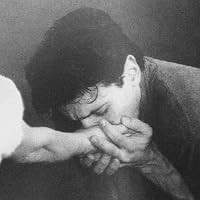
I know that I am wrong, that we cannot give ourselves completely. Otherwise, we could not create. But there are no limits to loving and what does it matter to me if I hold things badly if I can embrace everything? There are women in Genoa whose smile I loved for a whole morning. I shall never see them again and certainly nothing is simpler. But words will never smother the flame of my regret. I watched the pigeons flying past the little well at the cloister in San Francisco, and forgot my thirst. But a moment always came when I was thirsty again.

January 14, 2022
While the individual essays are great, the collection as a whole is unfocused. Camus' prose is always beautiful and poignant; the conclusions he makes are convincingly argued. This specific collection of his work feels like it doesn't have a main theme or topic except for the fact that it is all written by Camus. Committed Writings was compiled by the same person as Personal Writings, and it is much more focused.

December 21, 2021
No matter how many times I read, or reread Camus, he never fails to inspire and fill me with a sense of awe.

April 9, 2023
Love love love i think his essays are much better than his fiction
January 19, 2025
A light rain in Sevilla wets cobbled streets and I mourn three artists this morning. I mourn the diffusion of three great lights, local sources burning out but waves of their brilliance expanding, propagating out and out to meet me here. I fold time and bring each into entanglement with my own knotted node on the great net spanning all ways, a moment or a lightyear depending how you lay it out. I gathered these distant strands to exist simultaneously within me this morning and their distinct forms convolute and form a chord as joyful to the ear as it is sorrowful to the soul. They ring of deep, aching pain and a grand, celestial beauty that exists for all to enjoy if one only takes the time to gaze into a ceiling of velveteen darkness which is held, tacked aloft by pins of ancient light.
Each of their deaths feels tragic. Like we hadn't learned everything we stood to learn from them yet. They hadn't given all that they hoped to share with us. But I am thankful that their works live on and, in some way, I feel I can know them through what they left behind. Their voices rush through with startling momentum and my eyes and ears strain to hold on while they charge past. I want to contain them in circuits networked between the lobes of my brain as long as I can sustain it.
I'm trying to be more diaristic (almost said "diaretic"/diuretic! hopefully not pee inducing) with my writing. I want to capture something true then move on. I want to be less self-conscious about making things that are good so I can spend more time making things exist. I keep drawing people and buildings though they mock me flatly from the page. I haven't learned how to make them stand up yet. A candle burning all night in a broken whisky bottle left drips and towers of wax on a cellar table made from the thick slab of an old tree. It is rendered as a mass of black scribbles. It doesn't flicker and bleed as I know it did then. I keep writing though I usually find I haven't said anything, only left marks. Mostly jotted observations in my pocket notebooks and thoughts about what I'm reading or watching. With time, maybe, I'll be able to make out the message.
Certain folks and the art they shared with the world make me feel like I can make beautiful things too. They speak to desires and fears and dreams whose writhing I can detect sometimes emanating from deep down, somewhere near the core, but which haven't found their paths to expression yet. Believe me that I'm seeking a way in toward these hidden caverns constantly. If I can find a way down to the shrouded center I suspect I can pass through to something else entirely. I'll bring back as much as I can carry.
Malcolm James McCormick (1992–2018)
David Keith Lynch (1946–2025)
Albert Camus (1913–1960)
Mac
"Yeah, somebody died today, I
I saw his picture in the funny papers
Didn't think anybody died on a Friday
Some angry banker, some kind of money trader
Recently divorced, was drunk drivin' down the highway
And drove off the bridge to his wedding song
Blew out the bass in his speakers, you can still hear the treble goin'"
"The moon's wide awake, with a smile on his face
As he smuggle constellations in his suitcase"
"Let's go and travel through the unknown"
Honorable mention: “If you sleeping on my shit then ima dookie on your mattress” lol
Lynch
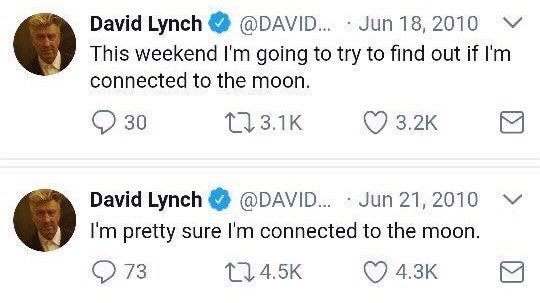
"This weekend I'm going to try to find out if I'm connected to the moon."
"I'm pretty sure I'm connected to the moon"
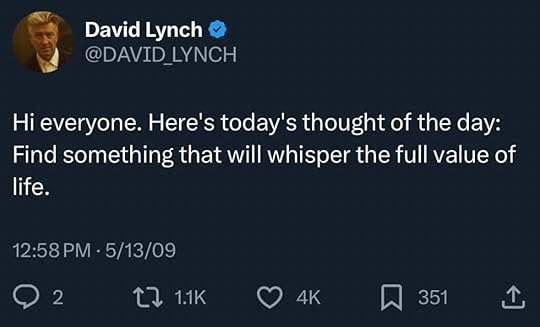
"Find something that will whisper the full value of life."
“Everything I learned in my life, I learned because I decided to try something new.”
Camus
"... I cling like a miser to the freedom that disappears as soon as there is an excess of things."
"...it seems to me that the very act of caressing and describing my delight will ensure that it has no end. There is a time for living and a time for giving expression to life."
“In the depth of winter, I finally learned that within me there lay an invincible summer.”
Each of their deaths feels tragic. Like we hadn't learned everything we stood to learn from them yet. They hadn't given all that they hoped to share with us. But I am thankful that their works live on and, in some way, I feel I can know them through what they left behind. Their voices rush through with startling momentum and my eyes and ears strain to hold on while they charge past. I want to contain them in circuits networked between the lobes of my brain as long as I can sustain it.
I'm trying to be more diaristic (almost said "diaretic"/diuretic! hopefully not pee inducing) with my writing. I want to capture something true then move on. I want to be less self-conscious about making things that are good so I can spend more time making things exist. I keep drawing people and buildings though they mock me flatly from the page. I haven't learned how to make them stand up yet. A candle burning all night in a broken whisky bottle left drips and towers of wax on a cellar table made from the thick slab of an old tree. It is rendered as a mass of black scribbles. It doesn't flicker and bleed as I know it did then. I keep writing though I usually find I haven't said anything, only left marks. Mostly jotted observations in my pocket notebooks and thoughts about what I'm reading or watching. With time, maybe, I'll be able to make out the message.
Certain folks and the art they shared with the world make me feel like I can make beautiful things too. They speak to desires and fears and dreams whose writhing I can detect sometimes emanating from deep down, somewhere near the core, but which haven't found their paths to expression yet. Believe me that I'm seeking a way in toward these hidden caverns constantly. If I can find a way down to the shrouded center I suspect I can pass through to something else entirely. I'll bring back as much as I can carry.
Malcolm James McCormick (1992–2018)
David Keith Lynch (1946–2025)
Albert Camus (1913–1960)
Mac
"Yeah, somebody died today, I
I saw his picture in the funny papers
Didn't think anybody died on a Friday
Some angry banker, some kind of money trader
Recently divorced, was drunk drivin' down the highway
And drove off the bridge to his wedding song
Blew out the bass in his speakers, you can still hear the treble goin'"
"The moon's wide awake, with a smile on his face
As he smuggle constellations in his suitcase"
"Let's go and travel through the unknown"
Honorable mention: “If you sleeping on my shit then ima dookie on your mattress” lol
Lynch
"This weekend I'm going to try to find out if I'm connected to the moon."
"I'm pretty sure I'm connected to the moon"
"Find something that will whisper the full value of life."
“Everything I learned in my life, I learned because I decided to try something new.”
Camus
"... I cling like a miser to the freedom that disappears as soon as there is an excess of things."
"...it seems to me that the very act of caressing and describing my delight will ensure that it has no end. There is a time for living and a time for giving expression to life."
“In the depth of winter, I finally learned that within me there lay an invincible summer.”
February 7, 2025
[...] I do not know what I am looking for, cautiously I give it a name, I withdraw what I said, I repeat myself, I go backward and forward. Yet people insist i identify my term or terms, once and for all. Then I object; when things have a label aren't they lost already?
This collection of essays, written by possibly one of the few writers who I feel truly peer into my soul, years after their death, with hands clutching at my heart, emerging from the grainy paper, has introduced me to The Enigma.
The Enigma, which has now become something of a personal religious text, a code I follow and feel so deeply within me. I read it out loud, as with all the other essays, feel the words billowing out my lips and back inside through my nose, it captivates me, my eyes widen, I laugh, not believing the absurdity of all this...
Once again, a happy enigma helps me to understand everything.
This collection of essays, written by possibly one of the few writers who I feel truly peer into my soul, years after their death, with hands clutching at my heart, emerging from the grainy paper, has introduced me to The Enigma.
The Enigma, which has now become something of a personal religious text, a code I follow and feel so deeply within me. I read it out loud, as with all the other essays, feel the words billowing out my lips and back inside through my nose, it captivates me, my eyes widen, I laugh, not believing the absurdity of all this...
Once again, a happy enigma helps me to understand everything.

August 9, 2025
I feel kind of ignorant now that I was not aware of this author in the literary world...but I am so fascinated because wow, what a depressing man whom I disagree with so much and pretty much dislike (?), but his mind and the way he articulates his thoughts and views are truly fascinating. This is the first time that I genuinely want to read the works of someone whom I disagree with on most things lol and I don't know what that might mean for me or others, so make of that what you will lol *shrug*
May 18, 2023
I always love his writing style, technics and thought process. In "The wrong side and The right side" Camus depictures his childhood and mother-child relationship very deeply and beautifully - sad at times. But I could really relate to some of those quotes. His describtion of nature and human behaviour in "Summer" is outstanding - adored that part.
Only thing i couldn't stand was the role that women play in his storys and how they are described - really hated reading those parts to be honest.
Only thing i couldn't stand was the role that women play in his storys and how they are described - really hated reading those parts to be honest.
November 14, 2024
Reading the last pages of this book in Torrevieja, Spain, I’m realizing that the places described in Algeria, like Algiers and Oran, are just 250 km away. I feel a certain closeness to Camus as I sit on La Mata beach, looking across the vast ocean, imagining his home town, the people and landscapes he wrote about.
There are of course an extensive amount of memorable quotes but here is one that lingered:
“On certain mornings, as we turn a corner, an exquisite dew falls on our heart and then vanishes. But the freshness lingers, and this, always, is what the heart needs”
There are of course an extensive amount of memorable quotes but here is one that lingered:
“On certain mornings, as we turn a corner, an exquisite dew falls on our heart and then vanishes. But the freshness lingers, and this, always, is what the heart needs”

April 14, 2021
Exatamente aquilo que queria e quero ler. Fez-me admirar o Camus ainda mais e parece que me fez ter uma interpretação diferente de O Estrangeiro e de A Peste. Espero agora conseguir aproveitar melhor todos os livros que ler do Camus e sentir a mesma realização que senti depois de ler estes textos autobiográficos.
Displaying 1 - 30 of 120 reviews