Jump to ratings and reviews
Rate this book

Human Diversity: The Biology of Gender, Race, and Class

Rate this book
All people are equal but, as Human Diversity explores, all groups of people are not the same -- a fascinating investigation of the genetics and neuroscience of human differences.

The thesis of Human Diversity is that advances in genetics and neuroscience are overthrowing an intellectual orthodoxy that has ruled the social sciences for decades. The core of the orthodoxy consists of three dogmas:

- Gender is a social construct.

- Race is a social construct.

- Class is a function of privilege.

The problem is that all three dogmas are half-truths. They have stifled progress in understanding the rich texture that biology adds to our understanding of the social, political, and economic worlds we live in.

It is not a story to be feared. "There are no monsters in the closet," Murray writes, "no dread doors we must fear opening." But it is a story that needs telling. Human Diversity does so without sensationalism, drawing on the most authoritative scientific findings, celebrating both our many differences and our common humanity.

528 pages, Hardcover

First published January 28, 2020

527 people are currently reading
3500 people want to read

About the author

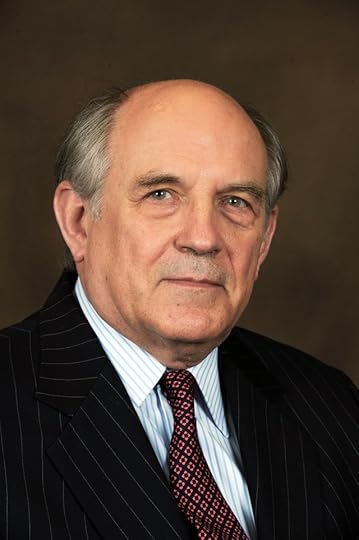
Charles Murray

85 books572 followers
Charles Alan Murray is an American libertarian conservative political scientist, author, and columnist. His book Losing Ground: American Social Policy 1950–1980 (1984), which discussed the American welfare system, was widely read and discussed, and influenced subsequent government policy. He became well-known for his controversial book The Bell Curve (1994), written with Richard Herrnstein, in which he argues that intelligence is a better predictor than parental socio-economic status or education level of many individual outcomes including income, job performance, pregnancy out of wedlock, and crime, and that social welfare programs and education efforts to improve social outcomes for the disadvantaged are largely wasted.

Ratings & Reviews

What do you think?
Rate this book

Friends & Following

Create a free account to discover what your friends think of this book!

Community Reviews

5 stars
332 (37%)
4 stars
344 (39%)
3 stars
129 (14%)
2 stars
37 (4%)
1 star
32 (3%)
Displaying 1 - 30 of 130 reviews
Profile Image for Lois .
2,373 reviews617 followers
December 12, 2021
Current books which deal with this subject matter and the rise of racist pseudo science are: Superior: The Return of Race Science by Angela Saini, How to Argue With a Racist: History, Science, Race and Reality by Adam Rutherford and The Genetic Lottery: Why DNA Matters for Social Equality by Kathryn Paige Harden. It explains the history of this unscientific viewpoint.


Racism and transphobia passing as science.

No surprise since this is the same racist that brought us The Bell Curve.

This author is a conservative racist and white supremacist.🤷🏽‍♀️

This author's real fear and the real fear of all white supremacists is that if we level the playing field white folks will not be able to keep up.
Profile Image for Amora.
215 reviews190 followers
July 19, 2021
The Orthodoxy, as Murray calls it, tells us a few things: gender is a social construct, race is a social construct, and class is a function of privilege. The problem with the Orthodoxy is that it’s only partially true. Biology largely plays a role in gender differences and class is largely determined by genetic variation. Race is also effected by geographical differences as well. For those in academia, mentioning these facts is heresy

Just as a warning, this book has a lot of technical jargon that might be confusing to some readers. However, Murray does guide to reader as to what each word used in the literature means. In my opinion, this is the best of Murray
Profile Image for Roger John Jones.
159 reviews4 followers
January 29, 2020
It ain't what you know...

It's what you know that just ain't so.

"The debate about nature versus nurture is not just one of many issues in social science. It is fundamental for everything involving human behavior."

I assume you have read the book description above so I will not regurgitate. My best description is that this is a very dense, fact packed meta analysis of decades of meta analyses. It is not for the faint of heart. I expect to read it at least twice more before it sinks in. (Thank goodness I will not be tested.)

Dr. Murray explodes the PC myths about human diversity. But this is neither a "black and white" book nor "settled" science but an interim report.

The most telling comment to me was about meritocracy. Dr. Murray points out that some people are just better equipped (primarily by high "g") than others. So a pure meritocracy is impossible.

A worthwhile read... I recommend it.
1 review2 followers
February 10, 2020
Ok so this is a response to a person called Lois who wrote a very wrong and dishonest review. This person is also deleting every single response to her review in order to just insult the person and misrepresent his statement.

So let's rewrite this response
- Not any proof of this cheating thing, btw you can't cheat on an iq test and there are many other test are showing the same gap (SAT, LSAT, ACT).

- False concensus fallacy, Intelligence can be measured the first dimensions (the g factor) account for 40% of the variance.

- Tests aren't biased, I they were biased there wouldn't be strict measurements invariance see :
https://www.sciencedirect.com/science...
There is also a study were item judged as the least biased against blacks shows the biggest gap.

Raising your iq is possible via training but this gains aren't on the latent factor (g) see : https://www.sciencedirect.com/science...

These gains would create measurement variance because their effect isn't on the latent factor.

- nice anti-white stuff and misconception about medieval Europe, as an European I find this funny (Have you ever heard of antiquity, The Roman Empire, the Greeks, Charlemagne, the holy Roman Empire, the Byzantine Empire, the Venitians and the entire Renaissance which is the rediscovery of the antique Greco-Roman culture in northern Italy). Btw every single advanced culture at that time recognized 2 gender ex: Arabs, Mongols, Chinese, Persian, etc..

The existence of intersex people (genetic defect btw) doesn't falsify the existence of only 2 genders.

You have no proof POC as you say (more like 50 shades of brown lmao) are not treated fairly see more about it here https://ideasanddata.wordpress.com/20...

Or here for economic inequality
https://psyarxiv.com/qty3n/
https://infoproc.blogspot.com/2015/04...

- Most terrorist in WEIRD country are Muslims :) As a French I find you somewhat offending.

The only racist thing is what I call the equalitarian syllogism :

The equalitarian syllogism.
P1:Race differs in outcome
P2:Race differences in phenotype that causes these outcomes are environmental
C1:Some race are environmentally privileged
C1:it's right to discriminate against certain race to ensure equal environment and therefore equal outcome

The response : https://pastebin.com/6ZBDx2pB
Profile Image for Steve Stanton.
Author 15 books30 followers
February 3, 2020
This revolutionary book is structured around ten empirical Propositions which are rigorously defended by veteran political scientist and sociologist, Charles Murray. He argues that the social sciences are about to be transformed by individual genetic data known as “polygenic scores” that will replace traditional IQ measures. Decades ago, when I was a university student, the debate between Nurture vs. Nature was lively. But now the results are in: It's all nature! Human children are preordained by their DNA blueprint. According to Murray's exhaustive study, no matter what parents or educators do (apart from wilful abuse), children will exhibit their predetermined genetic destiny. The “Enlightenment” idea of a tabula rasa at birth is simply not true. Personality traits, abilities, and social behavior have been proven to vary by sex, ethnicity, and class. Even political and ideological views have been found to be substantially heritable. Despite the anger and revulsion we feel about it, the genetic lottery is real and final and easily measured by a cheek swab.

In my own field of science-fiction literature, authors used to dream about designer babies created in CRISPR labs, but the reality is far more complex. There are hundreds of DNA markers for different traits, and some markers are shared by different traits. The best we can do is create genetic probability maps for individuals, which, of course, are fixed at birth. Analysis of the voluminous data is already underway for groups and individuals, and Charles Murray warns us that dramatic changes are on the horizon. Polygenic testing will soon be routine in medicine, education, and psychology. Indeed, the author suggests that the lack of genetic background checks will soon be regarded as professional malpractice. For example, babies with 70 out of 100 markers for schizophrenia should be channelled for special care and early treatment. No one would argue against that. But what about babies with 70 out of 100 markers for white supremacy, or violent crime? These are the questions society will soon face as science-fiction becomes fact.

In general, Charles Murray does not seem optimistic. He notes that the cookie-cutter approach to social manipulation has failed miserably. Economic disparity has accelerated despite the removal of barriers to education in the previous century. No amount of tutoring is going to increase a person's cognitive potential, all the books in the world cannot change a culture that eschews reading, and no wage increase is going to help a family that is unable to manage monetary assets. Charles Murray unfolds numerous speculations about the future and builds on some of the ideas in his previous books, but he offers no panacea, no pathway to utopia beyond some general statements such as “the first step is to reconstruct a moral vocabulary for discussing human difference.” At issue is the definition of success in society. How can humans find fulfillment and actualize their genetic potential across a wide spectrum of diverse interests and abilities, and what role should those with influence have in the formation of new strategies?
Profile Image for Fred Grün.
31 reviews3 followers
February 20, 2020
Before writing my review, I would like to quickly address a question you might ask yourself about this book if you haven't read it: is it a racist, white supremacist pseudo-scientific book?
I think a few quotes from the book itself may help you form a more informed opinion on this matter than anyone's wild speculations, so here we go:

"For the United States, founded on ideals of liberty and equality, that record (colonisation, slavery and segregation) was a fatal flaw that in my view ensured the eventual unraveling of the American project."

"Historically, it is incontestably true that the word 'race' has been freighted with cultural baggage that has nothing to do with biological differences. The word carries with it the legacy of nineteenth-century scientific racism combined with Europe's colonialism and America's history of slavery and its aftermath. Scientifically, it is an error to think of races as primordial."

"Franz Boas and Ashley Montagu were right to say that many nineteenth-century conceptions of race were caricatures divorced from biological reality. Richard Lewontin was right that race differences account for only a small fraction of the biological variation existing among humans. (...) We have before us an exercise in modifying our understanding of race, not resurrecting nineteenth-century conceptions."

"Nothing we are going to learn will diminish our common humanity. Nothing we learn will justify rank-ordering human groups from superior to inferior—the bundles of qualities that make us human are far too complicated for that. Nothing we learn will lend itself to genetic determinism. We live our lives with an abundance of unpredictability, both genetic and environmental. Above all, nothing we learn will threaten human equality properly understood. I like the way Steven Pinker put it: 'Equality is not the empirical claim that all groups of humans are interchangeable; it is the moral principle that individuals should not be judged or constrained by the average properties of their group.' "

"The more kinds of people you know and the better you know them, the easier it is to recognize that 'equality of human worth' isn't just rhetoric. You will also find it easy to talk about the reality of human differences if you know in your gut how unimportant those differences are in deciding whether the person next to you is someone you respect."

I shall now let you be the judge of whether those quotes sounded like they came from a bigoted white supremacist.

MY REVIEW
"Human Diversity" is well written, clear and cleverly organised. Most importantly, it is extremely informative. Charles Murray provides countless references for every single assertion he makes and there are a lot of very detailed notes (some of them full-fledged essays) at the end of the book as well as an appendix containing, among other things, useful explanations for people who struggle with statistics. There are also many suggestions for further reading, including articles and books that contradict Charles Murray's views as he frequently encourages readers to do their research and form their own informed opinion.
Unlike some other books criticising and contradicting today's academic orthodoxy (in the humanities...), "Human Diversity" is extremely satisfying in that it provides very robust arguments. It elaborates on everything that needs to be elaborated on and gives you all the references you need should you want to investigate the validity of any claim. It does not feel like Charles Murray is preaching to the choir, but rather conversing with an open-minded and potentially adversarial readership, especially in the chapter on race, as Murray is aware that even among the most open-minded readers in 2020, any discussion of race as a biological concept remains an extremely sensitive matter that most people approach with a fair deal of justified scepticism.

I learned a lot about ongoing developments in genetics and neuropsychology while reading this book, which made me feel excited about the future of the social sciences which Charles Murray thinks will soon have to integrate those new findings as the present-day orthodoxy is slowly fading in the face of an accumulation of contradictions that will soon become insurmountable. Those new developments should be welcomed with interest and curiosity, not with dread, as Murray argues very convincingly.
My favourite part of the book, however, is its concluding chapters. I think Murray really hit the nail on the head when he argued that our current problem with average differences between various human groups is our moral approach to those findings, fostered by an intellectual elite ("the new upper-class") that has made intellectual ability the ultimate gauge of human worth. He argues that we need a new, secular version of "all equal before God" that brings back humility with regard to unearned talents and intellectual abilities and allows everyone to feel truly valued.

I strongly recommend this book.
Profile Image for Ryan.
1,396 reviews199 followers
February 1, 2020
This is probably the book Charles Murray should have written, instead of The Bell Curve. It was basically a pretty reasonable introduction to modern genetics, combined with 10 basically uncontroversial assertions supported by evidence that there are sex and ancestral-population differences, and then reaffirmation that differences don't mean superiority, and that humans have value independent of their test scores, skin color, etc. If it had been written by anyone without the rather controversial background Murray now has, it would probably not get the same level of readership, but also wouldn't be hated.
Profile Image for Vagabond of Letters, DLitt.
593 reviews411 followers
March 14, 2020
7.5/10

Not as good as 'The Bell Curve', but less theoretical and more irrefutable. No one with an iota of openness to the evidence could read this book and its references and consider race or gender to be social constructs; however, Murray at times backs off of his earlier hereditarianism and leaves the door open to environmentalism/constructivism - even when his evidence doesn't - likely in a bid to avoid the firestorm of controversy the publication of his earlier work occasioned. He goes to extreme lengths to defend himself from accusations of determinism, racism, or sexism and weakens his argument in the process, turning what could have been a magnum opus of truth in to a pink-pilled primer.

Nevertheless, this book is a worthwhile read and is a welcome and needed update and extension to the science contained in Levin's 'Why Race Matters', and provides the best - though rather too irenic and gentle - demonstration in print of the absolute essentialism of sex differences.

Recommended alongside for the biological determinist starter pack are the aforementioned books, Sarraf, Feltham, and Woodley of Menie's 'Modernity and Cultural Decline', Rushton's 'Race, Evolution, Behavior', Devlin's 'Sexual Utopia in Power', and Hertler, Figueredo, Peñaherrera-Aguirre, et al's 'Life History Evolution: A Biological Metatheory for the Social Sciences'.
Profile Image for Jonathan David.
20 reviews1 follower
February 16, 2020
This was a tough review to write. I don’t review every book I read, but after reading some of the reviews posted here the reviews posted here I thought some may find it helpful to see a review that wasn’t pushing pushing a political agenda (either left or right). I don’t agree with all the author’s political beliefs, some of which one could call left wing (universal basic income) and some could be called right wing (affirmative action in any form is bad). But I do believe that most of the 1 and 5 start reviews of this book may be from people that began reading with a pre-formed opinion what this book was about.

The Goodreads summary is a fair overall summary of what is encountered in Human Diversity. This is a very dense book filled with lots of facts, science and math. Because of all the science and math it can be a slow read at times. The book is broken into four parts: Gender, Race, Class and Appendix (which should really be called opinions). The first 3 sections are fact-based, although (like all authors) Murray tends to pick facts that support some of his opinions which he presents in the Appendix. I’ll try to summarize some of the takeaways.

Gender: The author explains some of the genetic and physiological differences between male and female sexes (and those qualifying as intersexual). It’s important to note here that NO WHERE does the author say that one sex is better than the other, and in fact states that despite their differences they have more in common than they do not. He talks mostly of “average” men and women, but does get into the men and women at the extremes of abilities. The point that I took away was that no matter how equally treat people there are always going to be some differences between men and women. He says some “typically” male or female characteristics are a social construct but some are biological, and until we understand that we are approaching bringing about gender equality in a way that will never bring about that goal.

Race: Here the author tackles the genetic differences between races. Again NO WHERE does the author say and/or imply that people of one race or from one part of the globe are any better than others. In fact, he states many times that he does not believe that one race is any better than any other. The real takeaway for me from this section is there in more that we all have in common than separates us.

Class: If there’s one section of the book that challenges the general orthodoxies (on both the right and left) and is a little uncomfortable to read it is this one. This section of book states that SOME, but not ALL aspects of an individual that lead their station in life. The premise is mostly things like IQ and certain abilities are inherited. One idea I thought was interesting was Mozart would be a genius in any time period, but nowadays he would likely not be writing classical music. The author uses various twin studies to illustrate this point. In this section the author seems to focus more on the extremes (genius, extremely upper class, extremely lower class). He is quick to point out that genetics does not play a 100% role in class, and that it’s near impossible to tell the amount of roll it plays.

Appendix: In this section the author spends much of his time presenting his opinions on the statistics and facts from earlier in the book. He also talks about what he believes are the best ways to solve the problems that occur due to differences between gender/race/class in individuals. It’s striking that some of his ideas/opinions come from the far left and others come from the far right. Once again the author states that there’s more that all humans have in common than separates them.

My opinion on the overall book: Human Diversity is an interesting read. Sometimes it’s a bit dense and gets bogged down. Several times the author repeats himself from chapter to chapter, which made me wonder if I lost my place by accident. I give it 4 stars on subject matter, but if I could rate the quality of the writing separately I’d give it 3 stars. The subject is something that is worth talking about without calling anyone sexist, racist, white suprematists, inferior, morons, hippies, idiots, or whatever. Personally, I found nothing in this book offensive, even when I disagreed with it.
Profile Image for Dora Milaje Crochet.
11 reviews
February 10, 2020
This is not as racist as The Bell Curve.
Because of The Bell Curve I went into this book with the knowledge that this author is a racist white supremacist, he has softened his stance but it is clearly still the driver of his work and 'science'.

Mostly a white supremacists wet dream as evidenced in the reviews that give 5 stars.
Profile Image for Cav.
907 reviews206 followers
June 24, 2020
The amount of leftist screeching over this one is hilarious. Which should make a decent enough reason to read it alone...
This is my third from author Charles Murray, after his 1984 book Losing Ground: American Social Policy, 1950-1980, and his 1994 book, The Bell Curve: Intelligence and Class Structure in American Life.
Author Charles Murray:
img-murray-charles-hr-101703740559

Human Diversity is a pretty dense book; it is literally chock full of endless data, and dozens of studies are cited here.
Murray lays out the thesis of the book early-on, with what he calls The 10 Propositions:
1. Sex differences in personality are consistent worldwide and tend to widen in more gender-egalitarian cultures.
2. On average, females worldwide have advantages in verbal ability and social cognition while males have advantages in visuospatial abilities and the extremes of mathematical ability.
3. On average, women worldwide are more attracted to vocations centered on people and men to vocations centered on things.
4. Many sex differences in the brain are coordinate with sex differences in personality, abilities, and social behavior.
5. Human populations are genetically distinctive in ways that correspond to self-identified race and ethnicity.
6. Evolutionary selection pressure since humans left Africa has been extensive and mostly local.
7. Continental population differences in variants associated with personality, abilities, and social behavior are common.
8. The shared environment usually plays a minor role in explaining personality, abilities, and social behavior.
9. Class structure is importantly based on differences in abilities that have a substantial genetic component.
10. Outside interventions are inherently constrained in the effects they can have on personality, abilities, and social behavior."

...Much of which might otherwise have been referred to by many, or most people as recently as ~10-15 years ago as common sense.
That any of these points are at all controversial in the political climate of 2020 should serve as a barometer of how far things have slid into the realm of the absurd...
Murray identifies an orthodoxy that has swept through most of academia, including the sciences:
"The core doctrine of the orthodoxy in the social sciences is a particular understanding of human equality. I don’t mean equality in the sense of America’s traditional ideal—all are equal in the eyes of God, have equal inherent dignity, and should be treated equally under the law—but equality in the sense of sameness. Call it the sameness premise: In a properly run society, people of all human groupings will have similar life outcomes. Individuals might have differences in abilities, the orthodoxy (usually) acknowledges, but groups do not have inborn differences in the distributions of those abilities, except for undeniable ones such as height, upper body strength, and skin color.
Inside the cranium, all groups are the same.
The sameness premise theoretically applies to any method of grouping people, but three of them have dominated the discussion for a long time: gender, race, and socioeconomic class. Rephrased in terms of those groups, the sameness premise holds that whatever their gender, race, or the class they are born into, people in every group should become electrical engineers, nurture toddlers, win chess tournaments, and write sci-fi novels in roughly equal proportions.
They should have similar distributions of family income, mental health, and life expectancy. Large group differences in these life outcomes are prima facie evidence of social, cultural, and governmental defects that can be corrected by appropriate public policy."
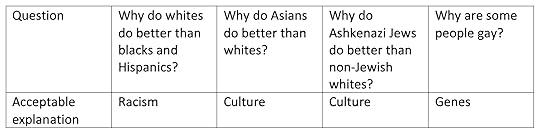
The book unpacks each of the 10 propositions, heavily supported by large data-sets and citations.
Murray also threw in a bit of genetics 101; educating the reader about genes, DNA, clustering, analysis, epigenetics, and some other interesting tidbits.
Human Diversity is actually a very measured and carefully-worded book, despite what the top review here, and others would have you believe. Those searching for the ever-elusive "White supremacist" boogeyman won't find him in these pages...
Murray has been slandered by many on the left for nothing more than having the audacity to counter their religious orthodoxy, and report on what the data show.
While I did find this book to be extremely interesting and informative, my main criticism of it is its tone. The writing here is somewhat dry and arduous. At times it is shotgunning factoids and data-points at the reader in a machine-gun fashion.
While this makes for good reference material, it makes the reading experience less enjoyable.
Overall, I would still definitely recommend this one to anyone interested.
4 stars.
Profile Image for Mansoor.
708 reviews30 followers
October 29, 2021


اگر منتسکیو-فیلسوف بزرگ فرانسوی و از اصحاب روشنگری-در نیمه‌ی قرن بیستم به آمریکا سفر کرده بود، این کشور را بهترین تجسم آرمان‌های روشنگری می‌یافت. اما اگر امروز سفر می‌کرد، چنین نظری نمی‌داشت. مگر در این فاصله چه اتفاقی افتاده؟ می‌توان با این شروع کرد که پرزیدنت کنونی ایالات متحده تکامل، یکی از قرص و محکم‌ترین تئوری‌های علمی بشر، را انکار می‌کند. با این حال قضیه ریشه‌دارتر از اینهاست. شمار روزافزونی از آمریکایی‌ها-شامل اساتید نامدار دانشگاهی، ژورنالیست‌ها و سیاستمداران-ارزش‌هایی چون علم، دانش، حقیقت و پیشرفت را وامی‌زنند یا دست‌کم شدیدا بهشان مشکوک‌اند. بعضی معتقدند علم از مختصه‌های جوامع غربی است و در تبیین جهان بر پیش‌گویی‌های فلان قبیله‌ی بومی آمازون برتری ندارد. دیگرانی باور دارند دانش و حقیقت توهمات خطرناکی هستند که تصویری کج و معوج از واقعیت بازمی‌تابانند. پیشرفت صرفا مفهومی است که غربی‌ها به واسطه‌اش جوامع دیگر را مقهور و استعمار کردند. در کل علم، دانش، حقیقت و پیشرفت ابزارهایی هستند در اختیار سلطه‌گران تا بر مظلومان چیره شوند و کنترل و استثمارشان کنند. روشن است که این جماعت هرگز سراغ کتابی از این دست نخواهند آمد. از نظر آنها همین که نویسنده‌ی کتاب یک مرد سفید دگرجنسگراست، برای بی‌اعتباری کتاب کافی است. ولی اگر از این قماش نیستید و واهمه‌ای از رویارویی با حقیقت ندارید، کتاب چارلز موری منبعی عالی است. خلاصه‌ی به‌روز و موثقی از ادبیات علمی در زمینه‌ی تفاوت‌های گروهی انسان‌ها؛ تصویر شگفت‌انگیزی از گونه‌گونی بشر
Profile Image for Silvia.
270 reviews19 followers
April 25, 2020
I appreciated the detailed attention to science in this potentially divisive book. Murray is almost obsessively careful to document his sources at every step of the book instead of just lumping them in a bibliography. He frequently refers to notes. He presents alternative viewpoints. He points out where the science is settled and where it's still in progress.

In summary, this book is the polar opposite of a screed, a diatribe, or a one-sided politically motivated polemic. You can choose to disagree with his conclusions (I don't) but you will find it difficult to argue with the science.
1 review
February 9, 2020
VERY clear. Touchy subject but VERY good. Reality and facts are painful at times but are necessary for progress for if you live your life making excuses for your short comings instead of admitting they are at least possible, you will eventually be delusional and distant from reality. Much like the leaders of a certain political party that refuses to celebrate anything other than change.. All things do not require change but one must recognize truth and Face facts. Denial is very unhealthy.
Profile Image for Mark.
Author 2 books12 followers
May 12, 2023
The author is a famous political scientist and sociologist. If you are unfamiliar with his book, The Bell Curve, the Middlebury riot, etc. then you should probably read the 1-star reviews here, the vitriolic biographical entry at the Southern Poverty Law Center's web site, or his Wikipedia article.
As a politically liberal person, someone who thinks that it is wrong to beat-up those who think differently than you do, and a life scientist with some knowledge and interest in statistical analysis, genetics, and neuroscience, I don't see any problem with this book. It is an excellent survey of the data and it is punctuated by several very well done brief introductions to the terminology and basic ideas necessary to understand the discussions with statistics, genetics, and neuroanatomy in them. There is a short appendix that is an introduction to very basic statistical concepts. The author is even-handed and goes out of his way to include alternate points of view when he moves away from the data to their policy implications. He indicates the many areas where our knowledge is imperfect. He mentions his belief that any evaluation of human worth should be completely independent of the traits whose variance the book explicates and his support for universal basic income.
=====
[By the way, if you want to read another view of this kind of thing check: The Genetic Lottery by Kathryn Paige Harden. I gave it 5 stars.]
Profile Image for Otto Lehto.
475 reviews237 followers
May 14, 2020
Socioeconomic inequalities remain burning problems. Some claim that gender, race, and class inequalities are determined by genes. Others believe that they are determined by culture. Neither extreme view seems supported by evidence. Human Diversity comes with an aura of danger, but those looking for a scandal will be disappointed. Instead, the book offers a cautious and balanced survey of the biological literature on race, class, and gender. It highlights the complex role of genetic factors in determining social inequalities. It constitutes a useful examination of the balance of forces, including genetic and cultural factors, that affect human performance, flourishing, and misery. It admittedly leans conservative but only modestly; the analysis is about as value neutral as you can expect from social science. I disagree with some of the conclusions of the book, but the analysis is admirably clear and intellectually honest. This means that it is possible to trace back any possible errors to their source and, if possible, correct them. So, there is no need to avoid reading this book just because you happen to disagree with Murray. The book's survey of the current science is valuable in and of itself. In fact, the more you disagree with Murray's conservative leanings, the more you will benefit from reading this book.

The book ends up recommending rather conservative and libertarian conclusions, but with government support to the poor in the form of Universal Basic Income. These conclusions, however, are only suggestive. The science is foregrounded in a way that allows all readers - whether more conservative or left-leaning - to make up their own minds. There is nothing particularly scandalous about this book or its conclusions. It represents a moderate, middle of the road position between genetic determinism and social constructivism. Thankfully, Murray is upfront about the policy positions that he advocates but also aware of the various indeterminacies in the literature.

As a progressive, I tend to more optimistic about the power of social relations in empowering individuals than Murray is. Nor do I think that critical theory is worthless, as Murray seems to think. But ultimately it a matter of following the science wherever it leads. The emerging literature on the genetic roots of socioeconomic inequalities poses a challenge to established wisdom. The power of social interventions to solve social problems is real but limited by genetic as well as cultural factors. We have every reason to be full of hope and optimism in our struggle to eradicate prejudice and oppression. And we have every reason to work even harder at it. At the same time, we need to be aware of genetic constrains in our ability to use "nurturing" techniques to solve social problems and reshape humanity. Otherwise we will keep on failing. Whatever unwelcome social prejudices the scientific investigation of race, gender, and class may contribute to, it is vital for a) understanding the causes of inequality and b) coming up with lasting remedies for them.
Profile Image for Mike.
49 reviews21 followers
March 17, 2020
Far too technical for the lay reader. Large portions of this thick volume are devoted to P-values, significance levels, correlation co-efficients, etc. It reads like a very long methods section in a technical academic paper.

This is especially ironic since Murray alludes to his desire to make this material accessible to a wide audience in the introduction. He fails at this miserably.

A bad case of what Steven Pinker calls “the curse of knowledge.”
Profile Image for Nelson Zagalo.
Author 15 books466 followers
April 4, 2020
Perhaps it will be Charles Murray's last book (77), showing an immensely careful and calculated tone in the introduction of his ideas, as if he wanted to redeem himself from past sins and leave a legacy of his best. With some pity, I cannot say that he achieved it. Murray is not as offensive as he was before, but he was unable to detach himself from the methodologies that led him to the previous alley. He continues to be obsessed with universal biological categories, and he doesn't seem to be able to get away from there. He defined ten crucial points to debate in the book, but none adds anything new to current knowledge, and even less seems to contribute to the affirmation of the book's own title, "Human Diversity" (2020).
...

The full review can be read at my blog, only in Portuguese:
https://virtual-illusion.blogspot.com...
Profile Image for Harald G..
190 reviews42 followers
December 30, 2020
Well sourced and well researched critique of the prevailing dogma within social sciences, namely variation on the theme "..... is a social construct" and "..... is entirely due to socialization".

Murray describes the left wing/social science orthodoxy as:
— "Call it the sameness premise: In a properly run society, people of all human groupings will have similar life outcomes. Individuals might have differences in abilities, the orthodoxy (usually) acknowledges, but groups do not have inborn differences in the distributions of those abilities, except for undeniable ones such as height, upper body strength, and skin color. Inside the cranium, all groups are the same."

Well aware that his opponents are hostile to evolutionary psychology and will do anything to find any errors or obvious cherry picking, Murray has done a huge effort in finding the best data sets, meta-analysis and review articles covering the biology of gender, race, and class.


"The conversation today within the new upper class seems always to be about the ways in which individual differences are created by environmental conditions that we must fix. It is seldom about how to deal with differences that can’t be fixed."
Profile Image for Eric.
4,184 reviews33 followers
February 10, 2020
The Goodreads blurb does an excellent job in giving an overview, although the part that claims the orthodoxy of race as a social construct should probably be that it is mostly a lie rather than a half-truth. I've not looked for the barbs that have likely been hurled at his work yet, but that will keep. I think Murray has done this brilliantly. The closing blur paragraph, "It is not a story to be feared. "There are no monsters in the closet," Murray writes, "no dread doors we must fear opening." But it is a story that needs telling. Human Diversity does so without sensationalism, drawing on the most authoritative scientific findings, celebrating both our many differences and our common humanity," recaps my reaction pretty much perfectly.
Profile Image for Elizabeth.
266 reviews18 followers
March 28, 2021
I've never read a Charles Murray book before, but felt compelled to pick up Human Diversity because I do follow with great interest the recent research into ancient and archaic human DNA. I found David Reich's Who We Are and How We Got Here: Ancient DNA and the New Science of the Human Past a fascinating read, but I was a bit concerned about how others might use his work to focus on division between human groups. And that's basically Murray's thesis here in a nutshell -- human populations (male vs. female, Africans vs. Asians, etc.) are meaningfully different. Murray fails, however, because while I don't know enough to quibble on the science he presents as to how different populations actually are, he left me completely unconvinced that these differences are significant for purposes of crafting social policy.

Murray builds his book on what strike me as two shockingly naive assumptions. The first is that racism and sexism no longer play a significant role in society, meaning that any remaining differences between men/women and different races must be genetic. (Murray attempts to eschew the word "race," but his avoidance isn't fooling anyone.) This is completely bonkers. Yes, we have made great strides towards legal and social equality in the past few decades, but we still have plenty of work to do. As an example of hidden legal inequality, one need only look at something like the mortgage interest tax deduction, which greatly benefits wealthy homeowners over renters. And as minorities are more likely to be renters and whites more likely to be homeowners, it contributes to continuing wealth disparities.

His second assumption is that focusing on population differences somehow won't be used for nefarious means. Several times, he writes something along the lines of, "There's nothing to fear here. I'm not racist/misogynist! Just curious!" This is such bullshit. We have an ample, detailed, and ongoing record of all the ways human groups try to oppress each other. And I'll be generous here -- no, it's not just white people. It's everyone, worldwide. Sadly, I look at how populations such as the Uighyurs, Palestinians, and Rohingya are treated and must conclude that humans are still quite likely to treat "others" poorly based on perceived differences. In such a world, I consider books like this unhelpful at best, and dangerous at worst.

Further, Murray is very unclear about what he thinks this meaningful difference among populations means for society. The clearest points I could discern him making is that people were mean to Larry Summers and we shouldn't spend money on social programs? But I'm pretty sure Larry Summers is doing just fine. And as for social programs that help poor minorities that have historically been oppressed, even Murray himself admits that programs like Headstart provide a tangible good in that the provide a safe place for kids, and even if there were no long term academic gains, this alone would be enough to justify them. Oh, he talks about polygenic scores and how they may be useful, but outside the context of identifying potential genetic health risks, I didn't see anything here they would be really good for. Especially when it comes to things like intelligence and what profession an individual should choose, I suspect "chaos theory" is going to limit how useful polygenic scores are going to be. Yes, theoretically we should be able to predict intelligence and professional success with genes, but the systems are so complicated, I suspect that the outcomes will still retain a strong element of unpredictability.

Murray is also sometimes eyerollingly oblivious as to how insincere or obtuse he sounds. One example that stuck with me is when he mentioned that Watson and Crick discovered the double helix nature of DNA, while only mentioning the "important contributions" of Rosalind Franklin in an endnote. An ENDNOTE. We know so much nowadays about how important Franklin's work was, and Murray, while paying her "important contributions" lip service, still sticks her in an ENDNOTE. Literally, not even a footnote to the two men. It's baffling.

But the funniest was when he tries to argue that wealth doesn't play a meaningful role in SES. Here's an excerpt from the paragraph itself, so you can laugh along with me:

"Can you use your money to make your children professionally more successful than they would otherwise have been? It depends on the profession. [...] Parental wealth and influence can help a child get the appropriate degree and help obtain the first job. It's not so easy for parental influence to get the child promoted. The more competitive the industry and the more cognitively demanding the job, the less influence family wealth has."

In other words, sure, your parents might enroll you in Dalton and gain you legacy admission to Harvard -- they may even have their friend get you in as a junior associate at McKinsey! But pooh, you'll never make partner. And I'm sure that partner position will go to a person who did not have those advantages growing up. Someone who grew up in the inner city and went to a state college.
Right, right?

This is not how the world works. We all know getting your foot in the door of that first job is the bulk of the battle. And also, not many people overall get these types of elite jobs. The corollary of Murray's argument would be, that yes, parental influence can help a child in less cognitively demanding jobs. But since most jobs ARE less cognitively demanding, his argument that parental wealth doesn't have much influence on socio-economic success completely falls apart.

In conclusion, I will say that I had started this book thinking I was likely going to find it a 2-star read. I admit to being skeptical about Murray's approach from the get-go, but having heard so much about him, I did expect that the book would at least be well-written and entertaining. I honestly expected writing that sounded good, and thought I would give him an extra star based on that alone. But it's really not that compelling a read. Murray himself says he thinks it will be boring in many parts. And he was right. It was boring, particularly whenever he talked about statistics. I skimmed most of those sections -- partly because I knew much of it already, but also because he hadn't convinced me to care about it. As I said, he never convinced me that these differences he identified were meaningful in a way that mattered for how society functions, and as he didn't convince me of that, I didn't really care whether they were "statistically" meaningful or not.

I have always vaguely thought that I would read The Bell Curve one day, if only because of the controversy. But after finding Human Diversity so underwhelming, I no longer see the point in it, and suspect this will be my first and last Murray.
Profile Image for Ciro.
121 reviews44 followers
May 9, 2020
A very challenging read. Very dense and exceedingly dry. If you are a geneticist that loves talking about standard deviation, this is a great book for you. If you aren't, then you will struggle to finish this.
Profile Image for Markus.
218 reviews11 followers
September 10, 2022
Lots of hard cold facts and no-nonsense statistical analyses. Not anything groundbreaking like The Bell Curve was, this book is more of a rational overview of the current scientific knowledge about IQ, gender differences and how genes influence our lives. Still great to read work from a legendary political scientist.

Among other things he is quite certain that polygenic scores will become mainstream in social sciences and thus the science about IQ, race and gender also will be forced into the mainstream. It will become too hard for activists to deny studies about these topics since they will be backed by genetic data. This will be a good thing since collectively striving towards the truth and a more accurate understanding of the world will make the world a better place. It might feel nice to repeat ad nauseam that everyone is the same and call everyone a nazi who tries to argue with that but at some point it will become a delusion with the intent of denying reality. Genetics explains a large amount of the variance of most of human traits and its influence is the largest on the brain. G factor is among the most impactful human traits in a person’s life and IQ doesn’t just show how well people can solve IQ tests. Our whole life is and endless series of complex tests and IQ measures how well a person can navigate these tests. Different races and populations have clear genetic differences which becomes evident in cluster analyses of genetic data. This data stems from the Human Genome Diversity Project where the genetic data of about a 1000 people from 52 populations around the world was gathered for analyses. Looking at the genetic data in a graph, we see clear divide between populations of the world, with the widest differences between European, East-Asian and African populations with the fewest overlaps between them. The point being that race is not a social construct that people have created and if we want to improve the world, we better start accepting facts and not delusions that sound nice.
Profile Image for Nigel.
227 reviews
Read
December 29, 2025

I dropped this book Charles Murray did a good part on the bell curve

But it’s the reason I picked the book 📕 up…

New or old thought 💭

I did pick it up as a postmodern book

But I think it’s more of a pre-modern book

It goes back to hyperspace

Or simulating/simulation theory

They are all being subjective
As is

The book 📕 could best describe it as


Human diversity….
I think could be best explained with this quote.


Why do you think it’s so difficult to publicly advocate for problems of men and boys?

Because victimhood doesn’t work For Men as it does for women we don’t feel sorry for men rightfully so …

Biological men are disposable the way women are not for obvious reasons men women in tribalism ten women go to war you’re screwed, ten men go to war one comes back you can regrow and tribalism replenish

So that we don’t feel sorry for men in the same way and not advocating to feel sorry for men because I don’t think that’s a solution to men’s problem. Solution for men’s problems is a solution to be better.

How do you mean?

How do you mean, you know what I mean your entire life is made induced into being a better version of yourself emotionally psychiatry, psychology, financially mentally you’re obsessed with performance you’re obsessed with being better you’re obsessed to being more happier, more fulfilled, and all of these things, it’s a pursuit in your own happiness

-Konstantin Kisen
Profile Image for Mark O'mara.
227 reviews5 followers
February 15, 2020
An accomplished work of social science for the general reader. Very much informed and driven by the widely accepted conclusions within the disciplines researching the influence genetics and environments have on human diversity, outcomes and behaviour. The book is structured around ten propositions (truths) about human nature put forward by the author and then supported by a lot of data. The data part can get a little tedious at times but I think it was necessary to support the propositions.

Murray is a conservative of sorts but is not especially driven by this in this book. Murrays’ humanity was clearly evident throughout the book. Murray has suggestions on how both conservatives and liberals should reflect on the evidence and act in the world. Murray’s reflections, toward the end of the book, on the influence and condescending and/or bigoted attitudes of (what he terms) the new upper class I found of particular interest.

I found some unifying themes here that well meaning liberals and conservatives have no need to fear.

Great social science.
Profile Image for Stephanie’s Libby Antics.
948 reviews6 followers
March 8, 2022
Aw man, this is why sometimes you read what a book is about 😂 got so burned here!

This is some racist and sexist bullshit 👎

I went in actually open minded too for this dude to change my mind, but he… can’t because he doesn’t understand science 😂

Not ONCE did he mention the glaring issues with diversity research: the lack of any control group.

You cannot claim differences between men and women are biological and not societal unless you’re studying a bunch of adults raised outside our society. Oh what’s that? That’s impossible and inhumane? Great, then it’s not definitive science!

I don’t even want to keep arguing his points, though I did in my head the whole time, this is just not based in facts, science, reality in general.

About halfway I looked up the author and went oh 🤦🏻‍♀️ he’s just some old conservative pundit 😂 what a waste of 8 hours!
Profile Image for Ben Madsen.
8 reviews2 followers
March 25, 2020
Extremely well done. Murray’s extreme caution leads him to nearly overwork himself in making his points clear. His effort pays off for the reader, who is now armed to analyze every step in his logical approach towards the issues he analyzes.

This book ends up feeling like a capstone to all of his work, especially in the final chapter, where he brings together the policy suggestions and the research behind them to drive home his main points from “Coming Apart.”
Profile Image for Mike Horne.
662 reviews19 followers
February 27, 2020
As an educated, science interested reader who has no clue of the current scientific consensus, I would be interested in what the journals say. I read the NYT review. The author willfully misreads Murray. The New Republic wrote a review without reading it. I listened to this book and am now going back to reread it. Nothing that shocking. But I am a huge "nature" not nurture person.
1 review
April 7, 2020
Tried to post a positive review on Amazon and they would not post it (sigh).

Book is very challenging and well-researched. I cannot say I didn't enjoy a single chapter. I rarely read books this dense with information but I finished this one in a week.

Would highly recommend even if you have a passing interest int eh subject matter.
Profile Image for Jurij Fedorov.
587 reviews85 followers
December 15, 2020
Introduction
6/10

There is not much concrete info here, it's just an intro to the topic of the book. There are a lot of hesitant points and Murray even promises to avoid evolutionary psychology, not because it's not good science, but because ideological groups have succeeded in making it controversial - according to him. I disagree. I think EP can be presented in a way so most people will accept it. Most EP psychologists are left-wingers at any rate and won't cancel themselves.

As always I feel like Murray is a bit too careful in how he phrases things and what evidence he dares to use. I'm someone who just uses any and all evidence no matter what emotional valence it has, but most social scientists try to make it as inoffensive as possible. It also means you can't quite reach the full and brutal truth. It would be like writing a book about Kanye West and then try to avoid all his controversial statements. It would lack some of the truth.

Part I - “Gender Is a Social Construct”
6/10

I was waiting for evidence and studies yet again, but this is still a slow intro. It's good for laymen willing to take the time to slowly ease into the topic, but I've read many thousands of pages on this stuff and kinda am ready to just get the facts.

I think the main issue is avoiding evolutionary psychology here. You can't really answer 80% of the attacks if you can't use EP to explain why gender differences exist and how they work. But yet Murray uses EP a bit here and there in a gist-like fashion but the experiments are not really mentioned. So it becomes hazy.

I think it could be wise to mark the chapters by level of info so that people who already know EP can skip some of them. This one is a great intro to the topic, but yet an easy skip for many.

1. A Framework for Thinking About Sex Differences
6,5/10

Pretty fine chapter if you want to understand why a lot of small sex differences should not be dismissed as "small differences", but rather be seen as a big difference between the sexes as they add up.

I do feel like it rushes past the math and formulas. He presents as lot of formulas, and we understand what they are, but not how they work. Personally I consider how they work to be more essential as it would tell us if the math is proper for this stuff or not. Murray either didn't want to go into it or didn't have an easy way to describe this stuff which is a shame as some of this is very fascinating.

Besides that the chapter point is very basic. So you both have a lot of complicated formulas presented, but on the other side get no explanation for the math and only a singular point. I think this is an essential chapter to understand for any reader, but the level seems to switch between very high to very basic from page to page which is a bit weird and yet again doesn't make it ideal for any one specific group.

2. Sex Differences in Personality
6,5/10

I'm not a fan of the level of the book. It's a bit too complicated for the audiobook format, but it's not just it. It feels like it's super complicated when talking about studies and numbers and then becomes a bit too simplified when some overall hypothesis is explained. And the various points only get a few pages each so we never really fully dig into a topic.

But it's essential info and there are actually quite a few good studies presented here. I strongly recommend getting the text book too if you want to understand the audiobook. It has some lists and tables you may want to check out and reading the text at your own pace makes it all easier to digest.

3. Sex Differences in Neurocognitive Functioning
9/10

Now we're cooking. This is a very strong chapter on sex differences. I have read a lot of different psychology and sociology textbooks to get concentrated info dumps. And there wasn't a single textbook with this much concentrated info on sex differences. I could find a few charts and tables in most books, but nothing like this. Which tells you that textbooks are not yet ideal in 2020 as they have 700 pages to make their point yet overlook some of the most replicated results in all of social science. Maybe $100 textbooks ought to have websites with just a ton of results summarized?

While reading this chapter I did look into sources and some of the studies had only a couple of hundred participants, but you could just find other sources for similar claims. I guess I just don't trust social science anymore so I mostly search for meta studies. Murray just uses single studies by themselves.

Anyhow, I hope the book remains at this level.

4. Sex Differences in Educational and Vocational Choices
7/10

Different interests and skill sets mean men and women pick different educations, jobs and career paths. Wealthier nations allow women to choose more freely instead of based on income which increases the sex differences.

It's basic stuff we already know. Yet it's research and data you won't really find in any textbook and have to seek out yourself. So it's nice it's here.

Unfortunately the chapter is awfully dry on audiobook format. I was bored much of the time and confused about the research and studies because it's all very academic and focused on using proper sourcing and carefully structured arguments. There is a lot of great research and data here. You can study each page for 10 minutes. But then the conclusions feel hesitant and vague in a way that makes them dry and not fully illuminating. I think it's a great intro for the clueless liberal or post-modernistic student, but it could have gone a bit further and I think maybe it would work better with colorful charts and pictures instead of the audiobook? It reads like a very good academic paper, but have you ever wanted to get a paper on audiobook? Not me.

5. Sex Differences in the Brain
7/10

Full on biological psychology. I miss this so much. I haven't really found a reason to read much of it after I got my degree as it's mostly for people working with brain scans, but it's fascinating stuff.

Unfortunately the chapter is yet again not really ideal for audiobook format as there is no story to tell here. It's just findings presented one after another. It's hard to get into and I constantly lost focus here because it often got too complicated.

I still got some great enjoyment out of this book for being so damn packed with great science. It surpasses even psychology textbooks in this aspect. I'd for sure recommend this chapter to anyone wanting to learn about brain sex differences. But there are so many single details here that you are bound to lose the overview at times. It's data and findings.

Part II - “Race Is a Social Construct”
8/10

Very good intro but it's just 4 pages so it's not really much of anything.

6. A Framework for Thinking About Race Differences
6/10

Short basic intro to DNA and snips. It's stuff you can read in other books, but here it's made relevant to races. It's actually pretty much explains why races do exist in some way.

7. Genetic Distinctiveness Among Ancestral Populations
7/10

Still not ideal for audiobook format. But these technical jargon chapters are not really for me in any format. The K cluster analysis is not that interesting to me unless the method is explained too or I get to interact with cluster data on some website. Just an intro of "there is a method called cluster analysis" is not that illuminating. Though I do think Murray has a great simple intro to it here and for people interested in race groups, I'm not that much, I think this chapter will be great. Yet again I feel like I need to reread the chapter to get it all because the minor points slip by me.

8. Evolution Since Humans Left Africa
7/10

As all the chapters I rate 7 it's just a 6 in audiobook format. It's way too complicated to understand if you listen to audiobooks while you play chess, solve Android puzzle games or fix some Excel spreadsheet data and are not fully focused. Numbers and definitions fly at you at a rapid pace. It's for sure a fascinating chapter, but just like all the other chapters I'll have to reread it if I want to fully get it. It's a bunch of studies collected into one chapter.

9. The Landscape of Ancestral Population Differences
6/10

Snippets in DNA. More of the same really. More proof that races exist presented in the same structured way by using actual studies and findings to show everything. I think anyone interested in race should for sure read these chapters, but they are not simple or exciting.

Part III - “Class Is a Function of Privilege”
7/10

Too short, but good intro to how to look into unfair outcomes for classes, races and sexes. Basically if people/groups with the same level of education and IQ end up with similar status then society likely doesn't hinder progress of any one group. And indeed basically everything seems fair in USA. I do wish Murray would at times take a step further and look into racist programs like affirmative action to see if it hurts Asian Americans or Whites in specific areas.

10. A Framework for Thinking About Heritability and Class
6/10

Basic intro to twin studies. Not bad at all, but it's short so it leaves you with quite a few open questions. I would rather it had been more simple but longer. For me it's not super new or interesting, but I think that for a new reader this could be a new world. So it's hard to rate it. I guess I can say that at right this moment in my life I don't feel like I need to read it. 10 years ago I would have needed such an intro.

11. The Ubiquity of Heritability and the Small Role of the Shared Environment
8/10

Great intro to heritability of human traits. This is easy to understand and fits the audiobook format very well.

In the other chapters the "extra info" boxes just made the chapters really hard to follow at times as the main argument would often be ignored for a while as the extra info was read to us. In this chapter it works more fluently and you feel like the chapter is 1 long point. The other chapters feel like dry textbook intros without photos or charts.

12. Abilities, Personality, and Success
7/10

Short chapter on success in work and education and why IQ is such a strong predictive force in psychology. Very important chapter, but does use a bit too much data and numbers to be considered ideal for audiobook format.

13. Constraints and Potentials
9/10

This is easier to understand, less technical, and gives the reader a very basic overview which is a huge plus for learning. It's still not exciting or expansive though. He kinda describes the very basics without going into many details which is frustrating as I for example really want to learn more about why epigenetics in mammals may or may not be an actual thing.

The reason I really like this chapter is that it's an essential overview of partly pseudoscientific topics like: the self-esteem movement, stereotype threat, epigenetics in mammals, early childhood interventions. These things are not fully pseudoscience, but none of these areas have even a 10th of the effect sizes the proponents claim. It's all vague areas with thousands of studies done every year yet nothing is conclusive and many studies show no effect. This could very well become a chapter that will be required reading at many intro psychology courses. I think it will be for sure because in the psychology textbooks I've read none of these areas are looked at critically so you get a basic overview of the points without these clear rebuttal points too. But maybe now that Murray has written this book psychology textbooks will have to up their game and make sure they remain relevant? One can only hope. These areas have been studied since the start of psychology, but textbooks and intro lectures are yet to catch up with this research.

Part IV - Looking Ahead
5/10

Intro to the next part of the book. Half a page long.

14. The Shape of the Revolution
6/10

A philosophical overview over how to tackle the issue of heritability. Interesting ideas but I feel like they could have been presented in a simpler way. I guess as he is guessing about what will or can happen it's harder to review it as I can't know if the future will prove him right or wrong. You can judge for yourself. But it's not as essential a chapter as the former chapters about current evidence.

15. Reflections and Speculations
5/10

Not the strongest of chapters. It feels toothless. Finally Murray mentions evolutionary psychology and says good things about it, but at the same time the chapter is also used to pull the book ideologically to the left as he finally can add his own ideas instead of following the research. In some ways he praises feminism and cultural progress and it's all done with very little to no evidence. I'm not sure if he tries to appease left-wing readers here and show that he is one of them or if he just felt the need to have a pro cultural influence chapter? It's just weird and the least scientific chapter of the book. Murray does have a tendency to appease the left and you see the same thing in The Bell Curve, but here it's complicated points and less accessible writing so it feels even more out of place. In The Bell Curve you could at least understand the basic cultural arguments and why one would propose them in 1994 before a lot of the new heritability studies appeared and dismissed most of those cultural influence claims.

Anyhow, the chapter also makes the book sorta inconsistent. In The Bell Curve the philosophical arguments are very clear and direct. Here it feels hazy and unspecific. This is not an ideal writing style for personal ideas. Make it clear or don't write it.

Besides the EP mention the chapter also has a fairly fine point about changing people. As of now we can only change people in short intervals. I feel like this idea needs to be explored more instead of just mentioned. How do we increase these intervals? Can we go from changing a person for 1 day to 2 days? Sure it won't ever last even half a year, but an extra day can be used practically. Imagine you have 1000 workers working 1 extra day a year.
Displaying 1 - 30 of 130 reviews

Can't find what you're looking for?

Get help and learn more about the design.