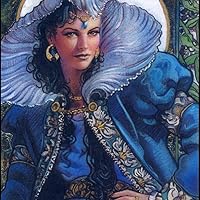
This course presents the lives, based on the latest scholarly interpretations, of four medieval women who still shimmer in the modern Heloise, the abbess and mistress of Abelard; the prophet Hildegard of Bingen; the legendary Queen Eleanor of Aquitaine; and the woman-warrior and saint, Joan of Arc. In Medieval Heroines in History and Legend, Professor Bonnie Wheeler discusses these four remarkable women in the light of the present golden age of medieval scholarship. Almost daily, researchers are recovering lost information that corrects our picture of what had been a misunderstood era. As a result, we know more than ever about the roles women played in medieval life. What did it mean to be a heroine in the medieval world? As the four subjects of this course make clear, it meant shaping and changing that world. In the monasteries and churches where people prayed, the universities where they wrote and thought, and even on the political map of Europe itself, these women made differences perceived not only in our time, but in theirs.
Women of Intellect, Words, and Passion These lectures are an extraordinary opportunity to study great women of the past in their own words. Professor Wheeler bases her discussions on recently discovered or recovered written records they left behind, from Hildegard's prodigious scholarship to the personal letters of Heloise and detailed transcripts of Joan of Arc's trial. With these documents as a basis, you will see Heloise (1101-1163) as a forerunner of Europe's new day. Her letters passionately overflow with the new knowledge of her day. With her star-crossed love, Abelard, she invented a new mode of philosophic thought. Only now are scholars recovering the long, important second half of the story of Heloise as a woman of power after Abelard's death. Her letters show her to be well versed on such topics as Cicero, classical philosophy, Latin poetry, and rhetoric. She saw the institution of marriage in her day as little more than a commercial transaction, and its duties burdensome, noisy, costly, and dirty. Her letters reveal her desire to be Abelard's "meretrix" (prostitute) rather than his "imperatrix" (empress). In her discussions on Heloise, Professor Wheeler also covers the long debate as to whether Abelard and Heloise's letters to one anotherthe first, first-person record of a love affair in human history are genuine or not. Hildegard of Bingen, like Heloise a 12th-century abbess, is revealed as the last flowering of antique learning. She lived a dramatic life as a mystic, voluminous writer, and preacher. She was a personal advisor to Emperor Frederick Barbarossa, and her political involvement and passion as an advocate for clerical and imperial reform give her special interest in our day. Only in the last generation have scholars rediscovered this amazing medieval intellect. Based on her letters, at least four popes and 10 archbishops corresponded with her, not to mention some 100 other individuals notable to history. Among her many writings, her Book of Simple Medicine was an impressive mini-encyclopedia on what we today would call the natural sciences. But Hildegard is also known as the "holy hypochondriac," subject to disabling migraines. Were her visions delusions, a result of brainstorms caused by chemical imbalances?
Women of Action and Legend Eleanor of Aquitaine (1124-1204), Queen of France and then England, mother of at least 10 children, scandalized her contemporaries and has fascinated us ever since. She accompanied her husband, Louis VII, on the second Crusade, and her exploits are a reminder that women were crusaders not merely camp followers in numbers that rivaled those of men. You will learnbased on as-yet-unpublished research by Professor Andrew Lewis that Eleanor was probably born in 1124, not 1122 as normally thought. As a physically hearty woman of courage, she provides a way for historians to explore the diverse roles that women played in enabling or resisting the Crusades. This is exciting work that will allow us to understand medieval women outside the context of home and family as agents of sometimes-radical change. Eleanor's life is so amazing that it is easy to see why she has become the staple of legends. Among those you will consider are whether she passionately adored, then fought endlessly with, her second husband, Henry II of England (all too true); whether she poisoned Henry's mistress, Rosamund (no proof); and whether she held "courts of love" to encourage and engage in amatory liaisons (again, unproven). Joan of Arc (1412-1431) was the illiterate French peasant girl whom Mark Twain described as the "youngest person of either sex to lead her nation's arm...
Bonnie Wheeler is associate professor and Director of Medieval Studies at the Southern Methodist University, Dedman College of Humanities & Sciences (Dallas, Texas).
A fascinating work. I 'read' this on audio, though the sets come with a handy-dandy outline in pamphlet form. Professor Bonnie Wheeler definitely proves an adept and interesting lecturer, though admittedly she a) sticks closely to just the facts and b) plugs the books she's edited as she goes along. (Neither are problematic; in fact, sticking closely to facts while still conveying a clear picture is a mark of a good historian.) She packs in plenty of vivid description and catches the imagination of her audience.
The best thing about this, however, is that it not only gives a background on the 12th century in medieval Europe (3 of the 4 heroes are 12th century) but it then compares those three powerful women and their place in their time and history. I really feel I have a clearer grasp not only of the life of Eleanor of Aquitane (who I have been interested in since reading A Proud Taste for Scarlet and Miniver) but Hildegarde, who I knew only through her Physica, and Eloise-- who I knew not at all. Nor did I have a clear picture of the story of Jeanne D'arc before listening to this.
Now, I would say I do. I don't have a full picture of course, because for that I would have to read a much larger scale of scholarly sources, but I have enough to understand how these powerful women, whose lives were both like and unlike those of other women in their period, lived and were part of history.
My only regret is that Christine de Pisan, one of a small handful of professional writers of the period, was not given more time or even equal billing. Contrasts between the lives of these 4 women and Christine's would have been illuminating, I believe.
I loved Bonnie Wheeler as the instructor for this Great Course. She obviously has such passion for the subject matter. I felt that she was able to raise legitimate questions about how these women have been portrayed, and the potential misrepresentations of women throughout history, without speculation or malice.
I loved learning about these women, and I look forward to reading more of her books.
I didn’t expect to enjoy this as much as I did! Although Bonnie Wheeler leans toward theatrics in her presentation, she is a passionate and organized speaker, and putting the speed on 1.75 helped me look past the sometimes overdramatic shouting and drama 😂😂
I was also pleasantly surprised by how detailed she was about the time period that each woman came from, helping me see a better snapshot of the cultural context they were living in. I really enjoyed learning more about these famous women and what made them so important to history.
This was a great lecture series she examination of the lives of 4 medieval women. Apart from their lives, I found it fascinating to learn about how they were seen and understood by their contemporaries and later generations. Prof. Wheeler is highly engaging and does an amazing job at making this examination of history intellectually stimulating and memorable.
Quite interesting and in depth look at the lives and work of Eleanor of Aquitaine, Heloise, Hildegard von Bingen and Jean d'Arc. A modern and less sexist view than generations of historians had before on them and always critical about the sources, yet pretty lively.
September brings a different type of life - it's back to crafting and, to the fore, books that enliven the mind under the title of 'edu-tainment'.
Oh My! but her voice grates so this may take some time; here is the general outline:
1 - Eleanor of Aquitaine (1124—1204), Queen of France and then England, mother of at least 10 children, scandalized her contemporaries and has fascinated us ever since. She accompanied her husband, Louis VII, on the second Crusade, and her exploits are a reminder that women were crusaders—not merely camp followers—in numbers that rivaled those of men.
2 - Joan of Arc (1412—1431) was the illiterate French peasant girl whom Mark Twain described as the "youngest person of either sex to lead her nation's army before the age of 19." Known as "La Pucelle" (the "maid" or "virgin"), she lacked any kind of military training, yet her military instincts seemed impeccable. Although she carried a sword in battle, she never used it to kill a man, and seems never to have become used to the sight of dead or dying men.
3 - Hildegard of Bingen (1098—1179), like Heloise a 12th-century abbess, is revealed as the last flowering of antique learning. She lived a dramatic life as a mystic, voluminous writer, and preacher. She was a personal advisor to Emperor Frederick Barbarossa, and her political involvement and passion as an advocate for clerical and imperial reform give her special interest in our day.
4 - Heloise (1101—1163) was a forerunner of Europe's new day. Her letters passionately overflow with the new knowledge of her day. With her star-crossed love, Abelard, she invented a new mode of philosophic thought. Only now are scholars recovering the long, important second half of the story of Heloise as a woman of power after Abelard's death. Her letters show her to be well versed on such topics as Cicero, classical philosophy, Latin poetry, and rhetoric.
Professor Bonnie Wheeler of SMU tells the story of four women in this Great Course. From the twelfth century she describes the life and impact of French Heloise, Hildegard of Bingen and Eleanor of Aquitaine. Then she jumps to the fourteenth century to discuss Joan of Arc. These women all made an impact during their lifetime. Heloise was a French writer and abbess and Abelard’s lover. Hildegard was an abbess and Christian mystic. Eleanor, a rich and powerful duchess on her own, was the wife of two kings (Louis VII of France and Henry II of England) and the mother John, the king of England. Joan of Arc was a French heroine of the Hundred Years War who later became a saint and was burned at the stake when just nineteen years old.
Eleanor is the only one of these four women that I really knew from other readings. Wheeler is a scholar of this period and told Eleanor’s story from a different perspective than I knew, but I tend to trust Wheeler more. Now that I have this added historical background it will be fun to read some of the historical fiction that has been written about Eleanor and see how far they go from what Wheeler says is true.
These twenty four, 30 minute, lectures were somewhat drier than I expected. Wheeler’s voice is a little harsh and she tends to yell. So this series was not as interesting as I expected. However, the information she shared adds to my growing knowledge and interest in this time period.
There was a lot of interesting information in this book. I had never heard of Héloïse before getting this book, and I knew very little of Eleanor of Aquitaine. But there was also a lot of jumping back and forth in time, and a lot of repetition, and it made it more difficult to get a sense of the history. It felt more like a jumble of factoids than a proper lesson. Also, one of the chapters about Hildegard of Bingen was titled "Hildegard, Holy Hypochondriac". Professor Wheeler, you can't call one of the great spoonies of history a hypochondriac, especially if you can't offer anything to back it up, which in this case you can't. You even said, specifically, in that very lecture that Hildegard suffered from debilitating migraines from early childhood all throughout her life. That is the very opposite of a hypochondriac! What the hell! (If you were just going for the alliteration... well, though. Accuracy should come first.) So yeah, not a bad book, but also not the best book.
In this Great Course, we learn about four extraordinary women who lived during the Middle Ages: Heloise, Hildegard of Bingen, Eleanor of Aquitaine, and Joan of Arc. Professor Wheeler refers to these four women as heroines, but in my opinion, the only one of them who can be called a heroine. In the final lecture, Wheeler refers to them as “extraordinary Medieval women” and perhaps that should have been a better title for this Great Course.
Professor Wheeler paints all these women as raging feminists, and if they weren’t, they should have been. To the professor’s credit, she came across as enthusiastic and knowledgeable, but it was overshadowed by her feminist preaching. At the end of the final lecture on Joan, she was so preachy that I wanted to hit the fast forward button on the Audible app.
Wheeler is a captivating lecturer, but with what ends up being less than 3 hours dedicated to each of the 4 figures there really isn't much content here. One could easily have devoted an entire 12 hour course to covering just Eleanor of Aquitaine or Joan of Arc alone. Despite my disappointment I'd still say that these lectures would be worthwhile to anyone unfamiliar with these women.
Perhaps my favorite GC download so far, aided no doubt by the fact that three of the four women discussed here are from 12th century Western Europe, when the High Middle Ages were getting into full swing. I did my dissertation of Eleanor of Aquitaine and pillaged the fairly limited books that were available on the subject at that time (20+ years ago) inevitably meeting Hildegard and Heloise, not to mention Bernard of Clairveaux to boot. It's fascinating seeing the advances in scholarship within that time. You can see the 12th Century coming that little bit more, tantalizingly, into view New material still comes to light constantly, and new consensuses are being formed. Bonnie Wheeler makes a spirited and enthusiastic lecturer. I could quibble with some of the minor details of pronunciation and strict semantics but these are more than compensated for by the useful and creative insights revealed here. I loved the light shed on Eleanor of Aquitaine's family background, and how she may have inhabited her role as mother and wife. I also found the discussion of Hildegard's attitude to virginity interesting (we tend to see it as dry and sterile but she saw it as far more vital and empowering, almost Pagan). It's interesting also to note that monasticism generally was at the cutting edge of culture. Something that was a conscious and respectable choice. As for women in particular it offered special freedoms. Again, we now tend to think of nunneries as places of stultifying routine and pedantic tedium, but Hildegard's life and works were alive with passion and creativity. Virginity was next to virility for Hildegard. Heloïse was, for me, the least interesting of the pack. Although a dazzling intellectual of the time in her own right, the scholasticism which she helped form has not aged well over the centuries. At the time people felt this was a way of making headway into the mechanics of the mind of God as revealed in scripture, Aristotelian philosophy, and by using the dialectical method of reasoning. I feel it must have been a great relief indeed when the Renaissance finally came along to shake it all up and breath life into philosophy once again! I don't wish to ignore our fourth heroine - actually the chapters concerning Jeanne 'la pucelle' are as surprising and as informative as any of the others. We have the most source material extant here, and so the portrait is much more complete than for Heloise, Eleanor or Hildegard. Jeanne does sit at some two hundred years remove from the other women being discussed here, and to my mind she shares the least in common with any of the other heroines, being actually of peasant extraction as well as living the other side of the Black Death, with all of that plague's attendant changes and innovations. I almost feel a whole book could be written just about her, separately from the rest. Still as Bonnie Wheeler notes, none of the women here were very typical, and this necessarily limits how much one can generalise from their lives. But these lectures certainly do shed light, and are full of ideas, and are why I still keep in touch with academic readings on the Mediaeval world so many years after graduation. Stimulating and lively, a joy to listen to.
This entire review has been hidden because of spoilers.
24 lectures from SMU professor Bonnie Wheeler on Heloise (and Abelard) goes into more depth than I every knew before; Hildegarde of Bingen (I knew very little about her); Eleanor of Aquitaine (My favorite medieval heroine-wife of two kings, mother of two kings, and arguably the post powerful woman of the middle ages; and finally Joan of Arc. Joan was very controversial in many respects... Growing up a Catholic I was certainly very aware of her "voices" and mission for God up to her canonization as a Saint, but learned a bit more about her and found there is more known about her than almost anyone who ever lived! MOstly due to the 5 or so trials concerning her even up to the 20th Century! I was taken aback a few years ago while reading Shakespeare as he demonized her in Henry VI part one. She was hated by the English because she was very involved in their defeat at the end of the 100 Years War bringing about a united France for the first time under one French King.
Ekki oft sem maður kemst yfir umfjöllun um konur á miðöldum bæði vegna skorts á heimildum en einnig vegna þess hve staða þeirra var oft ósýnileg í karlægum valdavettvangi. Þetta er ágætis umfjöllun um örfáar konur sem vöktu verðskuldaða athygli á þessum tímum. Jóhanna af Örk (1412-1431), Eleanor frá Aquitaine (1124-1204), Hildegard af Bingen (1098–1179) og heimspekinginn og nunnuna Heloise (1101-1163). Allt mjög ólíkar konur en orð þeirra og gjörðir höfðu mikil áhrif.
Professor Wheeler presents as if from the fire & brimstone pulpit. She must be electric in person. It's a performance, elegant, sometimes poetic, and always delivered with great energy. The subject matter was also fascinating.
Eleanor of Aquitaine, Hildegard of Bingen, and Joan of Arc are three of my favourite historical ladies, and I think Héloïse is interesting too, so of course I had to listen to this Great Courses offering. While I personally wanted more, I recommend this look at four fascinating women of The Middle Ages, and the world they lived in.