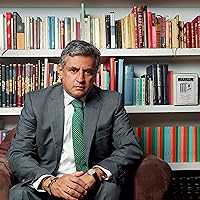
From start up to world leader in two decades...With over 170,000 employees in more than 170 countries and regions, serving more than one-third of the world's population, how does Ren Zhengfei manage a giant called Huawei? In 1987, a 44-year-old man founded a telecom equipment-trading firm in Shenzhen, China, with start-up capital of $5,000. In 29 years, it grew to become the largest telecom company in the world. This book explores the story of what Ren Zhengfei did differently, how the company he founded reached the top spot, and why Huawei is known as a "collective" and not a private company. 14 years of meticulous research and 136 senior management and employee interviews reveal how Huawei's success lies in its ability to transform the intellectual elite into a band of soldiers with the same set of values and resolve, while at the same time preventing a culture of subservience. This fascinating case study provides a unique glimpse into the machinations of one of the world's most powerful companies.
I wanted to have a view from the other side of the coin, someone inside Huawei. The book disappointed me in the sense that it could have been written in 100 pages instead of almost 400. The ideas are repeated all over the book; what a great person Ren is, how dedicated are Huawei employees, the values the company praises for and so on. I expected to have a more realistic overview of Huawei's history but the book is too biased to consider it as a good source.
This entire review has been hidden because of spoilers.
Huawei is not only the most internationalized and iconic Chinese company, but also represents the Western conflict for technological leadership that China has been acquiring. The book, despite its propagandistic tone in some parts that makes it repetitive and adds length without adding insight, shows well the evolution of the company since its founding in 1987. But above all it gives us useful information to understand that Huawei did not grow because of an alleged nexus with the Chinese Communist Party. There are facts I personally did not know: Its founder was rejected as a member of the communist youth, the company had to face government investigations when it made a massive employee layoff, its legal dispute with CISCO became a catalyst for its self-transformation, and its most important procedural design and management was contracted with IBM to which it paid a huge sum in consulting fees. Thus it is clearer that Huawei is an autonomous business development that has faced multiple challenges. If I were to pick one part of the book, the Appendix analysis at the end is brilliant and anticipates Chinese performance in global technology. Very interesting.
Huawei tells the story of how it grew from a small telecom startup in Shenzhen into a large global technology company. It focuses on the company’s leadership approaches, the culture of customer centricity, and the management that helped Huawei compete internationally.
My favourite character is Ren Zhengfei, because he is the founder, and without his guidance and assistance, Huawei wouldn’t exist in the present day. During the book, he explains the cultural problems and philosophy of his decisions.
I found the book engaging because it explains why Huawei operates the way it does. The writing often blends big ideas (values, culture, leadership) with examples, which makes it easier to understand. The book also mentions not just the success, but also the failures, which I find some books lacking.
I would recommend this book to readers who enjoy learning about how a business can be made and how they can scale up. I rate this book 5 stars as it offers a bit of company history and leadership, and also gives readers a clear sense of how culture and management can help companies succeed.
Its a good read! Very interesting facts about the Industrial Internet, Industry 4.0 and China positioning itself to influence the world economy and technology. I also like how Huawei adopted the Western culture in order to compete with the giants in the Telecoms industry. Very fascinating!
Hiếm có tập đoàn nào như Huawei, ít có nhà lãnh đạo kỳ tài như ông Nhậm Chính Phi. Đây quả thực là xu hướng thời đại của các công ty công nghệ hàng đầu toàn cầu. Mong ông và các thành viên công ty vượt bão thành công!
Sadly this books tells nothing in a lot of words. It circles around and around the Huawei philosophy without telling anything. Is a boring text about a great company that -i'm sure- has a lot to offer.
Excelente libro, derriba varios mitos no solo sobre Huawei, sino también sobre la cultura China en general. Me gustó mucho el cierre del mismo el cual está divido en tres partes en donde se realiza un completo resumen de la mirada China hacia el futuro. Muy interesante lectura.