

What do you think?
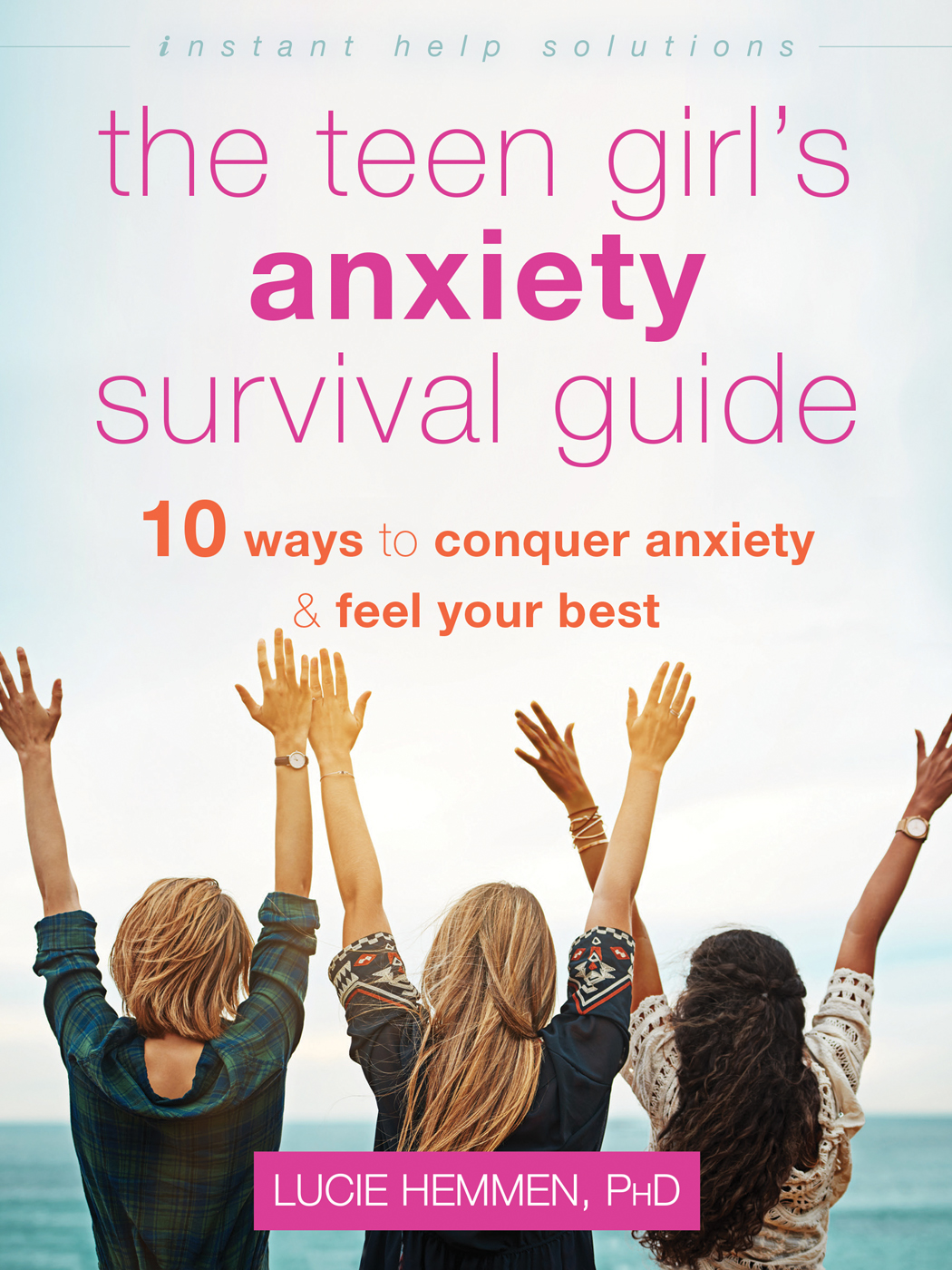
The Teen Girl's Anxiety Survival Guide: Ten Ways to Conquer Anxiety and Feel Your Best
“A thoroughly researched and comprehensive guide for teenagers to manage their anxiety and learn to love themselves.”
—Kirkus Reviews 10 powerful skills to help you deal with anxious thoughts and feelings—so you can get back to being a teen! In a world where you face academic pressure, social media stress, and countless expectations from every direction, it's easy to feel overwhelmed. No wonder anxiety in teen girls is at an all-time high! Luckily, there are proven strategies you can learn to feel better, cope better, and live your life with more confidence. In The Teen Girl’s Anxiety Survival Guide , you’ll find 10 strategies to help you cope with anxious thoughts and feelings in healthy ways. You’ll learn all about how anxiety works, and why you feel it; how to overcome negative thinking; mindfulness skills for calming your mind and body; and how self-compassion can help you cultivate a more positive outlook on life. You’ll also discover how to balance screen time and social media use; and strengthen relationships with family and friends, so you can get the support you need to be your best. As a teen girl, sometimes you just need a space to breathe and be yourself. With this fun and friendly guide, you’ll learn to find that space within yourself—a place of your own where you can go anytime life feels a little too extra .
—Kirkus Reviews 10 powerful skills to help you deal with anxious thoughts and feelings—so you can get back to being a teen! In a world where you face academic pressure, social media stress, and countless expectations from every direction, it's easy to feel overwhelmed. No wonder anxiety in teen girls is at an all-time high! Luckily, there are proven strategies you can learn to feel better, cope better, and live your life with more confidence. In The Teen Girl’s Anxiety Survival Guide , you’ll find 10 strategies to help you cope with anxious thoughts and feelings in healthy ways. You’ll learn all about how anxiety works, and why you feel it; how to overcome negative thinking; mindfulness skills for calming your mind and body; and how self-compassion can help you cultivate a more positive outlook on life. You’ll also discover how to balance screen time and social media use; and strengthen relationships with family and friends, so you can get the support you need to be your best. As a teen girl, sometimes you just need a space to breathe and be yourself. With this fun and friendly guide, you’ll learn to find that space within yourself—a place of your own where you can go anytime life feels a little too extra .
200 pages, Paperback
Published February 1, 2021
About the author
Lucie Hemmen
10 books25 followersLucie Hemmen, Ph.D. is a licensed clinical psychologist with a private practice in Santa Cruz, California.
For over 20 years, Lucie has worked with individuals of all ages as well as couples and families. In addition to working with issues such as depression, stress, anxiety, trauma, and grief, Lucie is committed to promoting healthy teen development by working with teens, their parents, and their communities.
For over 20 years, Lucie has worked with individuals of all ages as well as couples and families. In addition to working with issues such as depression, stress, anxiety, trauma, and grief, Lucie is committed to promoting healthy teen development by working with teens, their parents, and their communities.
Ratings & Reviews
Friends & Following
Create a free account to discover what your friends think of this book!
Community Reviews
Displaying 1 - 24 of 24 reviews

February 23, 2021
I received a copy of this book from Netgalley in exchange for an honest review. And I'm gonna be real honest with this one. I hated this book.
I am so far beyond DONE with people saying anxiety is a gift or a helpful survival mechanism or a good thing because yes, NORMAL LEVELS of anxiety is all fine and good, but the type of anxiety that's talked about in this book, the type of girls who are going to reach for a book for help with their anxiety- this kind of anxiety is not a 'gift.' It's painful and it causes so much stress and can very literally destroy your life. Especially for young girls who don't understand what they're going through or don't know how to handle or manage their anxiety.
Trying to make something that young girls are suffering from seem less bad by calling it a gift is not, in any way, helpful. Not to the teens, not to their families, and not to their educators and friends. It minimizes the very real damage that anxiety causes and contributes even more to those suffering feeling like they're not being heard. And I'm speaking from first-hand knowledge on this one.
I wanted to read this book because I wish I had access to books on anxiety and learning to understand myself when I was a teen, but these types of materials weren't accessible to me at that time. I was hoping that I would find good, solid advice in this book. And some things were helpful. I particularly appreciated laying the book out into different steps and options, so that the author can reach a wider audience. Even if one thing doesn't apply to you, then maybe something else will. Other things can help.
However, the author's explanation of anxiety just felt tone deaf to me, and this isn't an issue I've found to be exclusive to this author, but to therapists and psychiatrists as a whole. I have never once met a mental health professional who didn't try to tell me that my anxiety was a good thing because it was a survival mechanism for the stone ages.
I get that. I really do, and in some ways this explanation can be interesting from an outsider perspective, but it's not what someone wants to hear when they're asking for help managing their anxiety. No amount of sunshine or glitter is going to make anxiety stop wrecking my life. Eventually I did learn ways of managing my anxiety. It took a lot of trial and error on my own, but eventually I found some things that work for me. I really truly wish I'd had access to more resources that would have helped me sort that out much sooner.
What I think a lot of mental health professionals don't understand is that many of us have tried other solutions before coming to get professional help. We've talked to friends and family and we've exhausted a lot of other options before resorting to spending money to talk to someone. By the time we reach them, we're so used to being gaslit and having our problems minimized that it's really easy to cause someone, especially someone with anxiety, to completely shut down and/or discontinue services if we feel like we're being spoken down to or like our problems aren't that big of a deal. And that's what this book did to me. Minimized the effects of anxiety.
Another thing that really grated on my nerves with this book was the slang. The author seemed like she was trying to be cool or something and use slang, but she undershot by about a decade and ended up using a lot of outdated terms and language, which gave the book a juvenile, condescending tone. Again, not really helpful for people with anxiety.
This felt like a book written more for pre-teens who are struggling with managing normal stress levels than a book for teens who are actually struggling with managing clinical anxiety. I cannot recommend this book, and would even go so far as to say, depending on the person, this book could actually cause more harm than help.
I am so far beyond DONE with people saying anxiety is a gift or a helpful survival mechanism or a good thing because yes, NORMAL LEVELS of anxiety is all fine and good, but the type of anxiety that's talked about in this book, the type of girls who are going to reach for a book for help with their anxiety- this kind of anxiety is not a 'gift.' It's painful and it causes so much stress and can very literally destroy your life. Especially for young girls who don't understand what they're going through or don't know how to handle or manage their anxiety.
Trying to make something that young girls are suffering from seem less bad by calling it a gift is not, in any way, helpful. Not to the teens, not to their families, and not to their educators and friends. It minimizes the very real damage that anxiety causes and contributes even more to those suffering feeling like they're not being heard. And I'm speaking from first-hand knowledge on this one.
I wanted to read this book because I wish I had access to books on anxiety and learning to understand myself when I was a teen, but these types of materials weren't accessible to me at that time. I was hoping that I would find good, solid advice in this book. And some things were helpful. I particularly appreciated laying the book out into different steps and options, so that the author can reach a wider audience. Even if one thing doesn't apply to you, then maybe something else will. Other things can help.
However, the author's explanation of anxiety just felt tone deaf to me, and this isn't an issue I've found to be exclusive to this author, but to therapists and psychiatrists as a whole. I have never once met a mental health professional who didn't try to tell me that my anxiety was a good thing because it was a survival mechanism for the stone ages.
I get that. I really do, and in some ways this explanation can be interesting from an outsider perspective, but it's not what someone wants to hear when they're asking for help managing their anxiety. No amount of sunshine or glitter is going to make anxiety stop wrecking my life. Eventually I did learn ways of managing my anxiety. It took a lot of trial and error on my own, but eventually I found some things that work for me. I really truly wish I'd had access to more resources that would have helped me sort that out much sooner.
What I think a lot of mental health professionals don't understand is that many of us have tried other solutions before coming to get professional help. We've talked to friends and family and we've exhausted a lot of other options before resorting to spending money to talk to someone. By the time we reach them, we're so used to being gaslit and having our problems minimized that it's really easy to cause someone, especially someone with anxiety, to completely shut down and/or discontinue services if we feel like we're being spoken down to or like our problems aren't that big of a deal. And that's what this book did to me. Minimized the effects of anxiety.
Another thing that really grated on my nerves with this book was the slang. The author seemed like she was trying to be cool or something and use slang, but she undershot by about a decade and ended up using a lot of outdated terms and language, which gave the book a juvenile, condescending tone. Again, not really helpful for people with anxiety.
This felt like a book written more for pre-teens who are struggling with managing normal stress levels than a book for teens who are actually struggling with managing clinical anxiety. I cannot recommend this book, and would even go so far as to say, depending on the person, this book could actually cause more harm than help.

June 7, 2021
Eh. This book was fine, I guess, but I was looking for more from it. This guide dealt with more surface-level anxiety, such as stress caused by academic overload, stress from friend drama, etc., which are all very valid forms of anxiety, but like I said, it just wasn’t what I was looking for. And some of the solutions were very bland, I guess, like “get off your phone” or “go out and exercise”. Lately I’ve been dealing with a lot of intrusive, incessant thoughts that cause me to become depressed and extremely anxious. I wanted tips to help me deal with these thoughts that go beyond day-to-day stress. There was one chapter, however, (I think it was either 3 or 4) that gave me some good tips for how to care for yourself despite having anxious thoughts. I also liked the last chapter.
I wanted this book to dive more into the psychological aspects of anxiety, like how sometimes it isn’t caused by outside factors. I’m talking about things like Generalized Anxiety Disorder (GAD), Obsessive Compulsive Disorder (OCD), and Depression, all of which I have suffered from in some point of my life. These mental illnesses are long ingrained into my head and are very difficult to unlearn, so I think I needed something that was more than just a guide to literally just being a teenager in the 21st century.
If you want a good book with fantastic tips to combat mental illness, I recommend checking out “Your Brain Needs a Hug” by Rae Earl. It’s filled with information about all types of mental illnesses, provide tips that help you really make the first step towards jumping that hurdle, and it’s also really funny. The author experienced mental illness herself so I know that the information is credible, reliable, and sensitive, whereas all I know about this author is that she has a PhD in psychology (I think? Maybe not I don’t really remember) and works with teenagers in private practice. I don’t know if she has gone through significant anxiety herself, so maybe some connection and empathy between author and reader was lost.
☞ 2 stars (it was ok)
I wanted this book to dive more into the psychological aspects of anxiety, like how sometimes it isn’t caused by outside factors. I’m talking about things like Generalized Anxiety Disorder (GAD), Obsessive Compulsive Disorder (OCD), and Depression, all of which I have suffered from in some point of my life. These mental illnesses are long ingrained into my head and are very difficult to unlearn, so I think I needed something that was more than just a guide to literally just being a teenager in the 21st century.
If you want a good book with fantastic tips to combat mental illness, I recommend checking out “Your Brain Needs a Hug” by Rae Earl. It’s filled with information about all types of mental illnesses, provide tips that help you really make the first step towards jumping that hurdle, and it’s also really funny. The author experienced mental illness herself so I know that the information is credible, reliable, and sensitive, whereas all I know about this author is that she has a PhD in psychology (I think? Maybe not I don’t really remember) and works with teenagers in private practice. I don’t know if she has gone through significant anxiety herself, so maybe some connection and empathy between author and reader was lost.
☞ 2 stars (it was ok)

November 27, 2020
Its a very good book to learn about anxiety by teenage girls. But also just anxiety it self. I learned a few thing about this and om sure i will use some of the stuff later when i have a teenage girl.
January 27, 2023
4.5 :))

January 31, 2021
Thank you to NetGalley for providing an e-copy of this book in exchange for an honest review.
Title: The Teen Girl’s Anxiety Survival Guide: Ten Ways to Conquer Anxiety and Feel Your Best
Author: Lucie Hemmen
Publication Date: February 1, 2021
Rating: 2 out of 5 stars
Review: The Teen Girl’s Anxiety Survival Guide is a simple book that breaks down basic anxiety struggles. One thing I loved was the input from teens who struggle with anxiety in real life.
I’m going to be breaking this down into multiple things I disliked about it, read on if you’d please.
This book made anxiety seem like a little spider that could be squashed if you put enough glitter on it. The author described having anxiety as a gift, multiple times. Anxiety is not a gift, if you don’t struggle with anxiety, then I see how you can see the mental illness that way, but as someone with severe anxiety it felt like I was being gaslighted. The tips were simple things like “going outside” and “taking a bubble bath.” Anxiety isn’t solved by that, unless it’s surface level anxiety.
This book also made anxiety just seem like regular phobias. One interviewee said her anxiety stemmed from planes and another was her friends not liking her. I’m not ignoring that these are real anxieties but many people suffer from anxieties that are more complicated and invisible from basic descriptions. I don’t know what my anxiety stems from, but I suffer from it almost every day without fault, I don’t just ‘recover‘ by doing square breathing.
Another thing I didn’t like was how the author tried to act like she was down with the times. Using things like “tbh” or “when your crush doesn’t Snap (Snapchat) you back.”
The final thing I have to say is I strongly disliked how gendered it was. It made it seem like only teen girls have anxiety and theirs is the only one that is valid. As a teen girl, this is not true and only stems to the patriarchy we’re all trying to smash. Boys get anxiety, non-binary folks get anxiety, trans people get anxiety. Everyone who suffers with anxiety has anxiety.
Overall, I would not recommend this book. Unless it’s for a 10-12 year old girl (because of how gendered it is) who doesn’t have anxiety but gets stressed out often.
Title: The Teen Girl’s Anxiety Survival Guide: Ten Ways to Conquer Anxiety and Feel Your Best
Author: Lucie Hemmen
Publication Date: February 1, 2021
Rating: 2 out of 5 stars
Review: The Teen Girl’s Anxiety Survival Guide is a simple book that breaks down basic anxiety struggles. One thing I loved was the input from teens who struggle with anxiety in real life.
I’m going to be breaking this down into multiple things I disliked about it, read on if you’d please.
This book made anxiety seem like a little spider that could be squashed if you put enough glitter on it. The author described having anxiety as a gift, multiple times. Anxiety is not a gift, if you don’t struggle with anxiety, then I see how you can see the mental illness that way, but as someone with severe anxiety it felt like I was being gaslighted. The tips were simple things like “going outside” and “taking a bubble bath.” Anxiety isn’t solved by that, unless it’s surface level anxiety.
This book also made anxiety just seem like regular phobias. One interviewee said her anxiety stemmed from planes and another was her friends not liking her. I’m not ignoring that these are real anxieties but many people suffer from anxieties that are more complicated and invisible from basic descriptions. I don’t know what my anxiety stems from, but I suffer from it almost every day without fault, I don’t just ‘recover‘ by doing square breathing.
Another thing I didn’t like was how the author tried to act like she was down with the times. Using things like “tbh” or “when your crush doesn’t Snap (Snapchat) you back.”
The final thing I have to say is I strongly disliked how gendered it was. It made it seem like only teen girls have anxiety and theirs is the only one that is valid. As a teen girl, this is not true and only stems to the patriarchy we’re all trying to smash. Boys get anxiety, non-binary folks get anxiety, trans people get anxiety. Everyone who suffers with anxiety has anxiety.
Overall, I would not recommend this book. Unless it’s for a 10-12 year old girl (because of how gendered it is) who doesn’t have anxiety but gets stressed out often.
February 1, 2021
After purchasing this book for a young teen girl in our family, but before actually giving it to her, I decided to just speed-read this book. Well, I did not speed-read this book because I was so thrilled with it's content! As a middle age woman all I could think was "how would my teen years have been different if I had this book to read?" and "how would I have parented my teen girl differently?". Buy this book for the teen girl in your life but also read it for yourself because it's never too late to identify with the teen girls of today and for us women to check in with the teen girls we once were.

January 4, 2022
This book describes anxiety as a faulty alarm system. We should all know about Fight, Flight or Freeze when it comes to things that scare us. We all normally have a response to scary situations and it takes the form of Fighting off the big scary, Running away, or freezing in place until the big bad is gone. This alarm system was helpful to cavemen, not so much to the modern teen . One in four girls have a faulty alarm system, that when presented with something that shouldn't be as scary as a t-rex in our face, but is more like a small dog chasing a skateboard yapping, we get the same response as we would for both, even when there is no actual danger. This book helps to reset the alarm system by practicing new habits.
There are way more than 10 ways in this book, so the subtitle makes little sense to me. It gives all kinds of good advice and explains anxiety in a way that can make sense to most people. Some of their suggestions to help conquer anxiety are hard to imagine that they will work, but they give multiple things to think about and do for the different kinds of situations that can occur. Some of the advice can be a bit much to swallow, but a lot of it makes sense and will help, even if at times I felt like I was at a self help seminar while reading. From this book I learned that I’m a freezer with latent reactor tendencies. I never had a name for my anxiety issues, but I try to be a navigator instead and this book gave me some insights in how to help with that, even as an adult.
There are way more than 10 ways in this book, so the subtitle makes little sense to me. It gives all kinds of good advice and explains anxiety in a way that can make sense to most people. Some of their suggestions to help conquer anxiety are hard to imagine that they will work, but they give multiple things to think about and do for the different kinds of situations that can occur. Some of the advice can be a bit much to swallow, but a lot of it makes sense and will help, even if at times I felt like I was at a self help seminar while reading. From this book I learned that I’m a freezer with latent reactor tendencies. I never had a name for my anxiety issues, but I try to be a navigator instead and this book gave me some insights in how to help with that, even as an adult.
Read
February 20, 2021Recently I was reminded by a colleague of Lucie Hemmen’s excellent books on being or parenting a teenage girl. On returning to them I discovered that Dr. Hemmen has a new book for girls (and any of their allies) on dealing with anxiety.
What a timely and important resource! The book strongly emphasizes self-care as a means of neutralizing the thoughts and feelings which underlie anxiety. It is both reassuring and practical.
Although the survival guide is entered through the portal of anxiety it’s ultimate effect is in helping the reader construct a healthy self image and life. Core ideas (“what you care for, you value” “Observer mode = paying attention to objective facts”) are presented to the reader and then unpacked in lucid explanation and clear steps for action. I am already using some of these steps in my clinical practice.
Anxiety in general and especially in teens is a particularly difficult issue to deal with in psychotherapy. Clients are often unable to “sit still” in order to take in ideas. Hemmen‘s book provides for both macro - lifestyle changes and micro - specific simple actions and allows a reader to prepare the ground for more focused interventions.
I cannot more highly recommend The Girl’s Anxiety Survival Guide.
What a timely and important resource! The book strongly emphasizes self-care as a means of neutralizing the thoughts and feelings which underlie anxiety. It is both reassuring and practical.
Although the survival guide is entered through the portal of anxiety it’s ultimate effect is in helping the reader construct a healthy self image and life. Core ideas (“what you care for, you value” “Observer mode = paying attention to objective facts”) are presented to the reader and then unpacked in lucid explanation and clear steps for action. I am already using some of these steps in my clinical practice.
Anxiety in general and especially in teens is a particularly difficult issue to deal with in psychotherapy. Clients are often unable to “sit still” in order to take in ideas. Hemmen‘s book provides for both macro - lifestyle changes and micro - specific simple actions and allows a reader to prepare the ground for more focused interventions.
I cannot more highly recommend The Girl’s Anxiety Survival Guide.

November 29, 2020
I received an ARC of this book provided by NetGalley.
The Teen Girl's Anxiety Survival Guid (later TTGASG) is a book about anxiety and teens. It contains 10 tips about feeling anxious. First of all, I want to say that it could definetly help a lot of teenagers. There are definitely some useful tips that even I found helpful. Still, I had some issues with it. During first two chapters I felt like the author was forcing self care on us. Yes, I know self care is something we should practice more, but Lucie was making it seem like it was the easiest thing ever. Secondly, I felt like there was more talking about conflict than about grades, which I personally consider the biggest anxiety trigger. Even though I had this issues, I found some aspects of TTGASG really good. I loved the inserts of teenagers who suffer(ed) from anxiety. Those were my favorite parts to read because you are hearing this from a person that knows what anxiety feels like. They aren't using any professional language. They are just a group of teenagers talking about a problem they had. Overall this has been really good read and I am glad I read it.
4/5
The Teen Girl's Anxiety Survival Guid (later TTGASG) is a book about anxiety and teens. It contains 10 tips about feeling anxious. First of all, I want to say that it could definetly help a lot of teenagers. There are definitely some useful tips that even I found helpful. Still, I had some issues with it. During first two chapters I felt like the author was forcing self care on us. Yes, I know self care is something we should practice more, but Lucie was making it seem like it was the easiest thing ever. Secondly, I felt like there was more talking about conflict than about grades, which I personally consider the biggest anxiety trigger. Even though I had this issues, I found some aspects of TTGASG really good. I loved the inserts of teenagers who suffer(ed) from anxiety. Those were my favorite parts to read because you are hearing this from a person that knows what anxiety feels like. They aren't using any professional language. They are just a group of teenagers talking about a problem they had. Overall this has been really good read and I am glad I read it.
4/5

January 22, 2021
As someone in their early 20s who deals with a lot of stress, I was curious to see if this book was able to provide some insights.
Overall, I thought this book had a lot of the understandings that teenagers usually are very self-aware of these issues that feed into their anxiety. The interviews with teenagers were a nice touch. I liked the small "Nerd Alert" and "Noodle This" sections, especially when they recommended TED talks or other interesting resources that could be explored if the reader wanted to.
However, what bothered me was how the word-choice of the book sometimes felt a bit too much like the authors were trying to be relatable to teenagers but overshot into a bit of a condescending tone. I cringed while reading the sentence "Can you just see the fat boo‑boo in that kind of thinking?", and I'm the kind of person who wouldn't hesitate to use the type of casual slang that most of the book has. This happened a few times in the first half of the book, which is enough to be memorable, so one star off for that. Otherwise, a pretty good book.
A thank you to New Harbinger Publications and NetGalley for this ARC!
Overall, I thought this book had a lot of the understandings that teenagers usually are very self-aware of these issues that feed into their anxiety. The interviews with teenagers were a nice touch. I liked the small "Nerd Alert" and "Noodle This" sections, especially when they recommended TED talks or other interesting resources that could be explored if the reader wanted to.
However, what bothered me was how the word-choice of the book sometimes felt a bit too much like the authors were trying to be relatable to teenagers but overshot into a bit of a condescending tone. I cringed while reading the sentence "Can you just see the fat boo‑boo in that kind of thinking?", and I'm the kind of person who wouldn't hesitate to use the type of casual slang that most of the book has. This happened a few times in the first half of the book, which is enough to be memorable, so one star off for that. Otherwise, a pretty good book.
A thank you to New Harbinger Publications and NetGalley for this ARC!

December 30, 2020
This a great supportive text for teenage girls who want to learn more about managing anxiety, either independently or in tandem with therapy. The Teen Girl's Anxiety Survival Guide is written in a conversational style which will likely most appeal to younger teens, but older teens and young adults would likely also benefit from this guide.
This guide does a great job of providing accessible and developmentally appropriate psychoeducation about anxiety including the role of the brain and the body, and blends techniques from lots of different modalities. Where this book really shines is through normalizing and validating with voices of teen girls, and in its discussion of academic and social anxiety.
As a therapist who works with adolescents, I could think of at least a half dozen girls that I'll be discussing this book with once it's published. I can't wait to add a finished copy of this to my bookshelf.
One note: this is very much a guide rather than a workbook, and likely won't appeal to teens who don't like to read or prefer a more hands-on approach to learning.
Thanks to Netgalley and the publisher for an advanced copy of this book to review.
This guide does a great job of providing accessible and developmentally appropriate psychoeducation about anxiety including the role of the brain and the body, and blends techniques from lots of different modalities. Where this book really shines is through normalizing and validating with voices of teen girls, and in its discussion of academic and social anxiety.
As a therapist who works with adolescents, I could think of at least a half dozen girls that I'll be discussing this book with once it's published. I can't wait to add a finished copy of this to my bookshelf.
One note: this is very much a guide rather than a workbook, and likely won't appeal to teens who don't like to read or prefer a more hands-on approach to learning.
Thanks to Netgalley and the publisher for an advanced copy of this book to review.
Read
March 30, 2021some thoughts on this book so when i see my therapist, i have some talking points
i don't agree with social media being toxic. social media has pretty much always made my life better. i've been involved in so many fandom and i have met so many amazing internet friends. also, i love having the world at my fingertips. i also get a lot good recomendation for books and youtube videos.
i don't exactly remember the exact context but there was a point where it talked about not just taking photos. but i love taking photos with my friends and dressing up nice. that stuff is fun and makes me feel good about myself.
something i do really agree with is that you need to say yes to being happy and saying yes to things. i was miserable for so long because i didn't want to say yes to things. but i've noticed that pre-covid i was the happiest i've ever been because i was doing stuff like football games
i don't agree with social media being toxic. social media has pretty much always made my life better. i've been involved in so many fandom and i have met so many amazing internet friends. also, i love having the world at my fingertips. i also get a lot good recomendation for books and youtube videos.
i don't exactly remember the exact context but there was a point where it talked about not just taking photos. but i love taking photos with my friends and dressing up nice. that stuff is fun and makes me feel good about myself.
something i do really agree with is that you need to say yes to being happy and saying yes to things. i was miserable for so long because i didn't want to say yes to things. but i've noticed that pre-covid i was the happiest i've ever been because i was doing stuff like football games
February 11, 2021
Dr. Hemmen has done it again! In her first book (Parenting a Teen Girl), she writes an excellent, easy to read, and psychologically informed guide for parents.
In her latest book (The Teen Girl's Anxiety Survival Guide), Dr. Hemmen does the same for teenage girls. She utilizes empirically proven concepts and treatments for anxiety and makes them applicable to the developmental stages of teens. An impressive accomplishment.
I am writing this as both a practicing psychologist and a father of two girls. Both my 17 and 12 year old daughters found relevant and enjoyable material in this book.
This has fast become one of my "go to" books for clients requesting bibliotherapy.
In her latest book (The Teen Girl's Anxiety Survival Guide), Dr. Hemmen does the same for teenage girls. She utilizes empirically proven concepts and treatments for anxiety and makes them applicable to the developmental stages of teens. An impressive accomplishment.
I am writing this as both a practicing psychologist and a father of two girls. Both my 17 and 12 year old daughters found relevant and enjoyable material in this book.
This has fast become one of my "go to" books for clients requesting bibliotherapy.
February 20, 2021
I was looking for a book to help my daughters who are having a very hard time with anxiety. Like a lot of teens during quarantine, they've been going through a lot of anxiety and I often feel overwhelmed with trying to help them through it all. My 17 year old really liked the "nerd alert" sections that focuses readers in building psychological knowledge. She shared a few things she learned with me that I'm glad to know! My 14 year old daughter is reading it now and I'm very grateful and relieved that she's sticking with it. She's not a big reader but says it's comforting and interesting. Fingers crossed and thank you Teen Girl Anxiety Survival Guide.

March 23, 2021
As a mother of a teenage daughter and someone who has always struggled with anxiety I absolutely loved this book. It's broken down in terms that teens can easily understand and filled with tons of real life examples. There are so many useful tip and tricks to help manage and avoid anxiety. There are also sections that prompt the reader to think and write about their anxiety. I can see where this will be extremely helpful to teen girls with anxiety. There were even a few things I found myself wanting to try out to help reduce my anxiety as well. I think this book is a must read for teen girls or anyone who suffers from anxiety.

June 24, 2025
It focuses mainly on Cognitive Behavioral Therapy. Which focuses on how our unconscious negative thoughts cause us anxiety.
The book gives many examples of anxiety inducing thoughts we have. You may/ will relate to some examples and thoughts, and others not so much.
It is very informative and enlightening.
The examples given help you realize that some thoughts are not normal and may be causing stress and anxiety unintentionally. By bringing them to your attention you can address them how you see best.
The book gives many examples of anxiety inducing thoughts we have. You may/ will relate to some examples and thoughts, and others not so much.
It is very informative and enlightening.
The examples given help you realize that some thoughts are not normal and may be causing stress and anxiety unintentionally. By bringing them to your attention you can address them how you see best.
March 1, 2021
This workbook provides good recommendations with solid descriptions of how to put them into practice. I love the chapter on self-care as I think this is something that is so often over looked in society as a whole. Elements of CBT are described well and in simple enough language that teens will easily understand the concepts and be able to put them into practice on their own. This is a good workbook for counselors to add to their libraries.
March 1, 2021
I read this with my teenage daughter and we both loved it. I liked that it’s a guide to help teen girls sort through their anxiety and find ways to get through it. As someone who has suffered from anxiety for ,most of my life I found that there were tips that I could also incorporate to help me as well. My daughter said she liked it because it was easy to understand and not confusing at all. She also loved the examples from real girls and said their stories made her not feel so alone. There are quite a few ideas that she’s eager to try out. We both feel like this is a great book for teen girls or anyone who suffers from anxiety.
June 11, 2021
The Teen Girl’s Anxiety Survival Guide by Lucie Hemmen is another great mental health resource from New Harbinger. This guide provides useful information for therapists to incorporate into their practices when working with teenagers or for teenagers benefit from if they are struggling with anxiety. #TheTeenGirlsAnxietySurvivalGuide #NetGalley

June 22, 2021
This is for the girl dealing with basic teenage anxiety. It is a great look at how many young girls experience similar thoughts and feelings. It is not for a girl with a serious anxiety issue. There are some practical tips but the best part of the book was reading the stories of the girls themselves.

January 6, 2021
Conversation, practical, and right to the point. I’ve been recommending titles in this series since the pandemic began, and this latest teen mental health guide is hitting all the right notes. The short length and quotes from teens make a this book approachable for young adults who are struggling.
February 27, 2021
Bought Lucie Hemmen’s last book for my teenager and so when we saw this one come out, bought it right away. Not disappointed! Very straightforward and easy to read. My daughter likes it a lot and I learned a few new things as well!

November 7, 2023
I was only really able to get through half cause of how busy I am & though it did have some good tips, it just wasn't as helpful as I thought it'd be.

August 2, 2021
Geared to teen girls, and contains useful advice to people of all ages in an easy to read format. Good, practical advice with tips and implementation strategies.
Displaying 1 - 24 of 24 reviews