Winner of the Grawemeyer Award for Ideas Improving World Order 1992, Named New Options Best Political Book
Economist Herman Daly and theologian John Cobb, Jr., demonstrate how conventional economics and a growth-oriented industrial economy have led us to the brink of environmental disaster, and show the possibility of a different future.
Named as one of the Top 50 Sustainability Books by University of Cambridges Programme for Sustainability Leadership and Greenleaf Publishing.
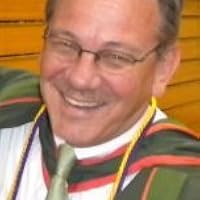
Dr. Herman Edward Daly is an American ecological economist and professor at the School of Public Policy of University of Maryland, College Park in the United States. He was Senior Economist in the Environment Department of the World Bank, where he helped to develop policy guidelines related to sustainable development. While there, he was engaged in environmental operations work in Latin America. He is closely associated with theories of a Steady state economy.
Before joining the World Bank, Daly was Alumni Professor of Economics at Louisiana State University. He was a co-founder and associate editor of the journal, Ecological Economics.
He is also a recipient of an Honorary Right Livelihood Award, the Heineken Prize for Environmental Science from the Royal Netherlands Academy of Arts and Sciences, the Sophie Prize (Norway), the Leontief Prize from the Global Development and Environment Institute and was chosen as Man of the Year 2008 by Adbusters magazine.
He is widely credited with having originated the idea of uneconomic growth, though some credit this to Marilyn Waring who developed it more completely in her study of the UN System of National Accounts.
One of Cambridge Sustainability's Top 50 Books for Sustainability, as voted for by our alumni network of over 3,000 senior leaders from around the world. To find out more, click here.
For the Common Good is a wide-ranging critique of contemporary economic policies, covering international trade, population, land use, agriculture, industry, labour, taxation and national security. Although it sets out to challenge conventional economics, it is written in an accessible style and largely avoids speaking in economic jargon and theoretical abstractions.
The authors challenge the two assumptions that support the economic theory of human nature ('homo economicus'): that human wants are insatiable; and the law-like status of the principle of dimishing marginal utility. This view of humans tends to equate gains in society as a whole with the increases in goods and services acquired by its individual members, but it says nothing about the changes in the quality of the relationships that constitute that society. The authors therefore propose a shift from economics conceived as 'crematistics' (maximisation of short-term monetary gain) to the sort of economics Aristotle called 'oikonomia' (management of a household aimed at increasing its use value over the long run for the community).
The main argument throughout is the need to realign government and social structures towards smaller social and economic units.
Daly provides a ‘blueprint’ for a decentralized economy built around small communities and makes specific proposals, including a tax on industrial polluters, worker participation in management and ownership, reduced military spending and a more self-sufficient national economy, with a lower volume of imports. Intended mainly for economists, the book essentially deconstructs neoclassical economic theory and creates a more ‘holistic’ model that pulls together the idea of the individual, the community and the natural world. Daly discusses the problems with contemporary economic thought as well as suggested policy changes that would lead to an economic society based on community and ecology. Reviews note that Daly provides a crucial “theoretical edge to the tenets of environmental faith.” (Scott London) The book serves as a strong leader in a new way of thinking about economics that pays special tribute to the community, environment and future generations.
It is funny that academicians are ready to make bizzare unreal assumptions to prove their mathematical models correct. They do not care whether these assumptions are driving the model and its predictions far away from real world situations. It is funnier to see policy makers then refer to such models to bring out policies that would govern a nation. The book points out how with advancement of technology, and the market, humans have alienated themselves from the bigger picture and are targeting short term individual goals, trying to meet a rational (though apocalyptic) ideal.
The authors want to present a picture of a sustainable market. A market not solely guided by the rational economic thought but also by values and emotions that form an integral part of humanity. The book brings forth the losses human socities have suffered because of our heightened interest in generating more materialistic goods than investing in a better human condition and a better environment. We may fly a car in a few years time but we surely would have lost our ability to run a mile.
There are beautiful explanations of basic market concepts and interrelations between individuals, communities and capital. The writing is lucid and clarifies the concepts well. The book becomes a little theistic in the end and may peeve a few radical atheists.
I read this as part of an environmentalist reading group started by some people in Terra, a Chicago organization. I hated this book because it's the standard kind of outline of how we can fix the economy by making it more moral. See my comments on Bill McKibben's Deep Economy: The Wealth of Communities and the Durable Future.
An older book that I got on to through a Lenten study I took. Great in the day and generalizable to the future, but it would seem though it told a good story ahead of its time, there are better books now on this subject since the common good seems so gone, and today's books can give a much better analysis since we didn't heed the warnings in books such as this.
This book is huge, because it covers darn near everything wrong with society and economy in recent history. But as the old man without a seat in an Ancient Greek amphitheater said, "you young Athenians know what is right, but it takes a Spartan to do it".
Unfortunately, I had to put this one down. While I was very excited to read this book based on it's premise, the writing was just too academic for someone like myself with little understanding of economics.
I read the first version of this. Great explanations of economics, what economist mean when they say things, and how people misinterpret. Good ideas on how to change things as well.
What can I say about this book besides that it was probably my favorite that I have read this semester! The authors challenge and critically examine modern economic thought and discourse, offer strategic solutions that can turn the economy away from focus on capital, but towards community and sustainability. The solutions offered in this book are practical and doable, rooted in Biblical principles. While there were some topics and solutions I did not entirely agree with, I found this book to be insightful and revolutionary in the context of modern economics and community development.
I use this for my class Economic Development of Developing Countries - as a dialogue partner with more standard development economics texts. It is a bit dated now, but the first half especially is iconoclastic and provocative.