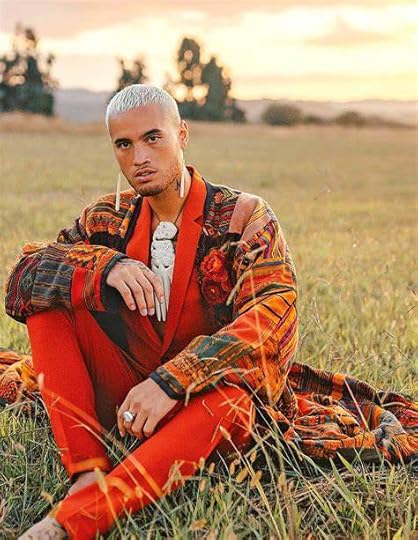
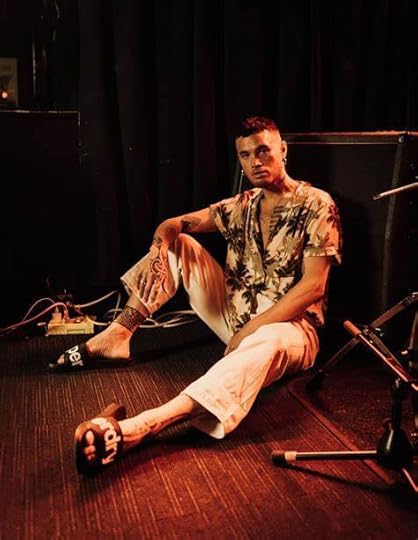
I just finished reading this memoir yesterday night. All I can say is...wow. Wow. What a powerful testimony that's really moved and resonated with me in indescribable ways.
I discovered Stan Walker's music, firstly with his song I Am for Ava Duvernay's Origin (inspired by Isabel Wilkerson's Caste: The Origins of Our Discontent) and I was blown away by how incredible Stan's powerful, soulful voice is. Since then I've gone down the figurative rabbit hole of Stan's other songs--New Takeover, Give, Thank You, Human, Māori Ki Te Ao, Find You, Bigger, Matemateāone and I Surrender (which I listened to during a particularly dark moment of emotional and psychological pain and had me crying and sobbing, and this song means a lot to me which I'll explain later in this review)--and Stan's now one of my top male vocalists next to Donny Hathaway, Luke James, David Ruffin, Sam Cooke, Park Hyo-shin, etc.
Anyways, after getting into Stan's musical catalogue and then watching his equally inspiring documentary chronicling his journey of dealing with and surviving stomach cancer, then I watched Stan's 1News special where he told his entire life story of also surviving a horrific upbringing and surviving domestic violence, physical, mental, emotional, verbal, psychological and sexual abuse, rape and molestation which was heavy enough on its own. But then reading Stan's memoir and reading him tell it all in full detail with an unfiltered bluntness was something else--it's equal parts shocking without being sensationalist and heartbreaking, though not hopeless. Stan's raw honesty, openness, frankness and vulnerability is a sight to behold and it's something that I truly admire and respect. This man has been through some stuff and it's only by the grace of God that Stan's still here. Because dealing with all that and also becoming famous so fast so young and then having to also deal with an industry that's extremely racist along with deep mental, emotional, psychological and psychic scars from trauma would literally have anybody else either be strung out on the streets, in jail, in a mental institution or dead.
I also appreciate that Stan acknowledged his own flaws and took accountability for his own actions and behavior, and this is another part of the memoir that shined too: I also got a lot of deep insight into Stan not just as an artist but also as a human being and the many complexities to him, especially with regard to Stan being very much self aware of how his own reckless behaviors, compounded with growing up in a rough and abusive environment, negatively affected not just himself but others. And more so in context of how any of us that have had to grow up in toxic and abusive environments and carry trauma from those upbringings can internalize toxic and pathologically dysfunctional behaviors we've learned and inherited from our parents, and the journey of Stan and his father Ross (RIP) gradually mending and reconciling their relationship and Ross atoning for his vicious and abusive behavior after Jesus changed Ross' heart was moving, compelling and inspiring, and so was Stan's transformation after Jesus changed his heart as well as the heart of his family. And it's something that I empathize with Stan on deeply, as I've survived many of the very same traumas that Stan's survived: I grew up in an environment that was in the dark and oppressive grip of domestic violence as my dad was mentally, verbally, emotionally and psychologically abusive (with one instance of physical abuse) and was very controlling and domineering; my mom and I's relationship was also very fractured and complicated as Stan and his mother April's; I grew up dealing with bullying and I'm a survivor of sexual abuse; I've been dealing with mental illness and mental health problems my entire life, and I've survived back to back nervous breakdowns and psychotic breaks; I've suffered from eating disorders and an addiction to pain relief pills that I'm just now recovering from; both of my families on each of my parents' sides (though more so my mom's side) are very fractured and dysfunctional, rife with a cycle of addiction, brokenness, mental illness, dysfunction and intergenerational trauma; we've also faced a lot of repeated situations of death and the loss of many loved ones in our family. In summary, reading Stan describe his own life story and the story of his family was like reading my own life story and the story of my family. So when I say I empathize with Stan, I'm being serious. And, as Stan and I are both believers in Christ, I ultimately empathize with and am reminded of the encouragement and inspiration I find in how Jesus has had me endure and survive and make it through some of the darkest, most painful moments of my life and mend and heal the silent cracks within my own immediate family. Hence why the song I Surrender had me sobbing and in tears when I first listened to it and still moves me deeply whenever I listen to the song. Stan's openness about his wrestling with God was also interesting; now to be very very very very frank, it was wincing and at times uncomfortable reading descriptions of old Stan's not always great responses to God, but I had to remind myself that Stan was describing his old self when he was still lost. Then seeing God slowly yet powerfully remove the anger in Stan's heart and then Stan coming to know Christ and Stan fully humbling himself and surrending to Christ was beautiful.
And Stan's honesty in discussing taking one day at a time to unlearn toxic pathological behaviors, heal from his traumas and hurt and break the cycle of abuse and toxicity and to move forward with love, forgiveness (both forgiveness of others and forgiving yourself) and reconciliation was refreshingly realistic as that's my life story. It's a gradual change that takes one step at a time. Everybody expects others' stories of trauma and overcoming trauma to be automatically wrapped up in a nice neat bow with everything being hunky dory and all sunshine and that's not how that works. Sometimes God changes people and situations instantaneously and other times God changes people and situations though with a change that takes people's continual work and effort as well as cooperation with God. Especially if people need deliverance from various dysfunctional and pathological behaviors that they're used to. And that's how it was with Russ, April, Stan and the rest of his family--a gradual change. (And Russ and April's stories of growing up abandoned and abused were heartbreaking too.)
(And, a side note: I won't put any armchair labels on Stan. That said, reading his descriptions of struggling with depression, anxiety, severe anger and rage issues, severe low self esteem, mood swings, fractured self image, deep feelings of indescribable fear, paranoia, pain and hurt from facing rejection and abandonment, suicidal ideation, severe self hatred, impulsivity, self harm, suicidal thoughts and feelings, dependency on substances namely alcohol and alcoholism, promiscuity and reckless sex, patterns of intense and unstable relationships, binge eating, reckless spending of money, etc. all sound like a textbook description of borderline personality disorder (BPD). I myself suffer from borderline personality disorder and, sans alcoholism and promiscuity, literally every single thing else that Stan described are BPD symptoms that I suffer from and deal with. And while anybody from any background can suffer from it, people that have BPD are always those that have extremely traumatic upbringings that suffer from it, and many of these characteristics are a mixture of BPD symptoms and trauma responses (due to trauma or traumas faced early on in life that can be catalysts to and amplify these behaviors), especially in regards to some survivors of rape and sexual abuse dealing with hyper-promiscuity as a trauma response later in life. And, in some cases, borderline personality disorder can be comorbid with bipolar disorder, another mental illness I also deal with comorbidly. So that was another aspect of Stan's testimony and overall discussion of mental health that was like me looking at my own mental health journey.)
Another thing that stood out is Stan describing his Māori indigenous heritage and roots + Māori indigenous people, culture, heritage, history, traditions and community and all of its richness and complex beauty. I'm mixed race Afro-Indigenous/Native/First Nations/Aboriginal (with a lot of other ethnic groups lol) and I recently discovered my own extensive Māori and Afro-Māori roots and heritage on both of my families' sides, which I found surprising and interesting as I've always felt a deep unspoken connection to the Māori indigenous people of Aotearoa but couldn't explain why. Then I found the Māori indigenous ancestral roots/whakapapa my family surnames are connected to (on my mom's side: Jones/Honē and Hoani, and Wilson/Wiremu and Wirahana; on my dad's side: Lee, Jackson and Adams/Rī, Hakihona and Ātama), and from there I did more research and found my whakapapa (ancestry), iwi (tribe), hāpu (sub-tribe), awa (river), roto (stream), maunga (mountain), rohe (region), waka (canoes), and I located my marae (meeting grounds)--all of which warmed my heart and I was relieved to find them as I live in America and for a brief moment I wondered if I would find any of them. And thankfully I found them, and now I'm on my own journey of connecting to my Māori indigenous roots and Māoritanga and Māoridom, studying te reo Māori and te ao Māori. Which is why I also really appreciated Stan's use of te reo Māori throughout the book, the glossary translation of te reo Māori words and terms, explaining the many facets of Māoridom, te ao Māori, Māori culture and traditions, addressing the affects of colonization, colonialism, racism and racial discrimination on Māori people and how that coincides with both the fight to preserve and protect Māori indigenous land, culture, traditions, community and people against the very real threat of re colonization at the hands of New Zealand's right wing white supremacist government trying to undo the legal Te Tiriti o Waitangi and basically re colonize Aotearoa and erase Māori indigenous culture--all of which I've been keeping up with and get heated about--and the personal fight to end the cycle of personal trauma and intergenerational trauma.
In conclusion, this was a deep, haunting, powerful, refreshing, inspiring and profound memoir and Stan bares his heart and the deepest recesses of his soul along with the nitty gritty details of his testimony and his life--the good, the bad and the ugly--with an admirable bravery and vulnerability that can't be ignored, and it's the way Jesus has used Stan's testimony to show His great and amazing power to change people's hearts from hearts of stone to hearts of flesh and bring a family out of the cycle of darkness, brokenness, anger, hatred, rage, abuse and dysfunction and into the light of love, respect, forgiveness, accountability, humility, peace, redemption and reconciliation is what truly shines and has left me forever changed in the best way.
Ngā mihi nui, Stan.