

What do you think?

The Friendship Poems of Rumi
Translated by renowned Rumi expert Nader Khalili, over 120 poems on friendship from the Persian mystic poet and Sufi master have been carefully collected and curated in this beautifully illustrated edition.
For more than eight centuries, Jalaluddin Muhammad Balkhi Rumi—commonly referred to simply as Rumi—has enchanted and enthralled readers from every faith and background with his universal themes of love, friendship, and spirituality, which he seamlessly wove into resplendent poetry .
The verses perfectly express the universal importance of friendship in its many forms. A perfect gift to celebrate a special friendship, allow Rumi to exquisitely express the deeper meanings of being, and having, a friend in your life.
With intricately designed and richly colored covers that mirror the beauty of the words within, the Timeless Rumi series presents themed collections of poems from the great Sufi mystic Jalaluddin Muhammad Balkhi Rumi that serve as cherished tools for self-reflection.
Find Yourself a Friend
find yourself a friend
who is willing to
tolerated you with patience
put to the test the essence
of the best incense
by putting it in fire
drink a cup of poison
if handed to you by a friend
when filled with love and grace
step into the fire
like the chosen prophet
the secret love will change
hot flames to a garden
covered with blossoms
roses and hyacinths and willow
spinning and throwing you
a true friend can hold you
like God and his universe
For more than eight centuries, Jalaluddin Muhammad Balkhi Rumi—commonly referred to simply as Rumi—has enchanted and enthralled readers from every faith and background with his universal themes of love, friendship, and spirituality, which he seamlessly wove into resplendent poetry .
The verses perfectly express the universal importance of friendship in its many forms. A perfect gift to celebrate a special friendship, allow Rumi to exquisitely express the deeper meanings of being, and having, a friend in your life.
With intricately designed and richly colored covers that mirror the beauty of the words within, the Timeless Rumi series presents themed collections of poems from the great Sufi mystic Jalaluddin Muhammad Balkhi Rumi that serve as cherished tools for self-reflection.
Find Yourself a Friend
find yourself a friend
who is willing to
tolerated you with patience
put to the test the essence
of the best incense
by putting it in fire
drink a cup of poison
if handed to you by a friend
when filled with love and grace
step into the fire
like the chosen prophet
the secret love will change
hot flames to a garden
covered with blossoms
roses and hyacinths and willow
spinning and throwing you
a true friend can hold you
like God and his universe
128 pages, Hardcover
Published September 15, 2020
About the author
Jalal ad-Din Muhammad ar-Rumi
1,147 books16k followersSufism inspired writings of Persian poet and mystic Jalal ad-Din Muhammad ar-Rumi; these writings express the longing of the soul for union with the divine.
Jalāl ad-Dīn Muhammad Rūmī - also known as Jalāl ad-Dīn Muhammad Balkhī, Mevlânâ/Mawlānā (مولانا, "our master"), Mevlevî/Mawlawī (مولوی, "my master") and more popularly simply as Rumi - was a 13th-century Persian poet, jurist, Islamic scholar, theologian and Sufi mystic who lived in Konya, a city of Ottoman Empire (Today's Turkey). His poems have been widely translated into many of the world's languages, and he has been described as the most popular poet and the best-selling poet in the United States.
His poetry has influenced Persian literature, but also Turkish, Ottoman Turkish, Azerbaijani, Punjabi, Hindi, and Urdu, as well as the literature of some other Turkic, Iranian, and Indo-Aryan languages including Chagatai, Pashto, and Bengali.
Due to quarrels between different dynasties in Khorāṣān, opposition to the Khwarizmid Shahs who were considered devious by his father, Bahā ud-Dīn Wālad or fear of the impending Mongol cataclysm, his father decided to migrate westwards, eventually settling in the Anatolian city Konya, where he lived most of his life, composed one of the crowning glories of Persian literature, and profoundly affected the culture of the area.
When his father died, Rumi, aged 25, inherited his position as the head of an Islamic school. One of Baha' ud-Din's students, Sayyed Burhan ud-Din Muhaqqiq Termazi, continued to train Rumi in the Shariah as well as the Tariqa, especially that of Rumi's father. For nine years, Rumi practised Sufism as a disciple of Burhan ud-Din until the latter died in 1240 or 1241. Rumi's public life then began: he became an Islamic Jurist, issuing fatwas and giving sermons in the mosques of Konya. He also served as a Molvi (Islamic teacher) and taught his adherents in the madrassa. During this period, Rumi also travelled to Damascus and is said to have spent four years there.
It was his meeting with the dervish Shams-e Tabrizi on 15 November 1244 that completely changed his life. From an accomplished teacher and jurist, Rumi was transformed into an ascetic.
On the night of 5 December 1248, as Rumi and Shams were talking, Shams was called to the back door. He went out, never to be seen again. Rumi's love for, and his bereavement at the death of, Shams found their expression in an outpouring of lyric poems, Divan-e Shams-e Tabrizi. He himself went out searching for Shams and journeyed again to Damascus.
Rumi found another companion in Salaḥ ud-Din-e Zarkub, a goldsmith. After Salah ud-Din's death, Rumi's scribe and favourite student, Hussam-e Chalabi, assumed the role of Rumi's companion. Hussam implored Rumi to write more. Rumi spent the next 12 years of his life in Anatolia dictating the six volumes of this masterwork, the Masnavi, to Hussam.
In December 1273, Rumi fell ill and died on the 17th of December in Konya.
Jalāl ad-Dīn Muhammad Rūmī - also known as Jalāl ad-Dīn Muhammad Balkhī, Mevlânâ/Mawlānā (مولانا, "our master"), Mevlevî/Mawlawī (مولوی, "my master") and more popularly simply as Rumi - was a 13th-century Persian poet, jurist, Islamic scholar, theologian and Sufi mystic who lived in Konya, a city of Ottoman Empire (Today's Turkey). His poems have been widely translated into many of the world's languages, and he has been described as the most popular poet and the best-selling poet in the United States.
His poetry has influenced Persian literature, but also Turkish, Ottoman Turkish, Azerbaijani, Punjabi, Hindi, and Urdu, as well as the literature of some other Turkic, Iranian, and Indo-Aryan languages including Chagatai, Pashto, and Bengali.
Due to quarrels between different dynasties in Khorāṣān, opposition to the Khwarizmid Shahs who were considered devious by his father, Bahā ud-Dīn Wālad or fear of the impending Mongol cataclysm, his father decided to migrate westwards, eventually settling in the Anatolian city Konya, where he lived most of his life, composed one of the crowning glories of Persian literature, and profoundly affected the culture of the area.
When his father died, Rumi, aged 25, inherited his position as the head of an Islamic school. One of Baha' ud-Din's students, Sayyed Burhan ud-Din Muhaqqiq Termazi, continued to train Rumi in the Shariah as well as the Tariqa, especially that of Rumi's father. For nine years, Rumi practised Sufism as a disciple of Burhan ud-Din until the latter died in 1240 or 1241. Rumi's public life then began: he became an Islamic Jurist, issuing fatwas and giving sermons in the mosques of Konya. He also served as a Molvi (Islamic teacher) and taught his adherents in the madrassa. During this period, Rumi also travelled to Damascus and is said to have spent four years there.
It was his meeting with the dervish Shams-e Tabrizi on 15 November 1244 that completely changed his life. From an accomplished teacher and jurist, Rumi was transformed into an ascetic.
On the night of 5 December 1248, as Rumi and Shams were talking, Shams was called to the back door. He went out, never to be seen again. Rumi's love for, and his bereavement at the death of, Shams found their expression in an outpouring of lyric poems, Divan-e Shams-e Tabrizi. He himself went out searching for Shams and journeyed again to Damascus.
Rumi found another companion in Salaḥ ud-Din-e Zarkub, a goldsmith. After Salah ud-Din's death, Rumi's scribe and favourite student, Hussam-e Chalabi, assumed the role of Rumi's companion. Hussam implored Rumi to write more. Rumi spent the next 12 years of his life in Anatolia dictating the six volumes of this masterwork, the Masnavi, to Hussam.
In December 1273, Rumi fell ill and died on the 17th of December in Konya.
Ratings & Reviews
Friends & Following
Create a free account to discover what your friends think of this book!
Community Reviews
Displaying 1 - 30 of 52 reviews

October 26, 2021
What an absolutely spectacular wordsmith. It’s incredible how his poetry effortlessly transcends the ages, even almost 1000 years later.

December 26, 2025
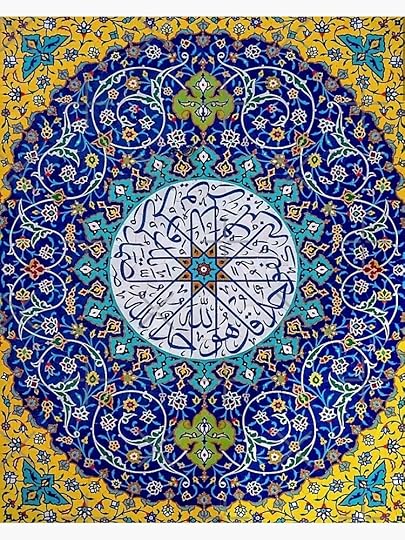
Руми - вечният, състрадателният, търсещият, мистикът, пребиваващият вътре и вън, горе и долу, навсякъде и никъде. Пътешественикът в царството на загадките, където всичко е ясно.
Прекрасно оформен сборник с превод (и съответно интерпретация) от персийски на английски, където строфите някак естествено се търкулват в ума и на роден език (за съжаление през английската интерпретация.)
————————<•> ————————<•>—————————
🍷
моята същност е същността
на рубинено вино
каращо бокала ми
да ридае през времето
чаша след чаша
вино след вино
вино вляло се в главата ми
и аз влял се във виното
***
🧿
думи се отронват
от езика ми
без мен
някой се разпорежда
не зная кой
копнея за мед
или отрова но
кой какъв дял заслужава
никой не знае
***
🌊
аз съм цялото море
не просто капка
не съм заслепен с
предразсъдъци и гордост
изразявам същността си
и всяко мое зрънце
крещи високо
аз не съм просто частица
***
🥀
оня ден
сладкопоен славей
кацнал до потока
пееше тази песен
можеш да
сътвориш цвете
от смарагд рубин
кимион и злато
но то няма да има
свое собствено ухание
***
🍷
пиян съм от виното
чийто бокал е душата
пиян съм заради онзи
поробил ума ми
донесоха свещ
и тя ме възпламени
свещ в чиято орбита
се върти могъщото слънце
***
🐝
защо си така огорчен
не носиш ли
товар с мед
или си
натоварен с мед
но няма купувач
или пък
си неумел
затова
изглеждаш объркан
или си умел но
нищо няма стойност
на този пазар

October 14, 2020
I received an advance reader copy of this book to read in exchange for an honest review via netgalley and the publishers.
The friendship poems of Rumi is a beautifully designed, eye catching and resonating book of poems translated by Nader Khalili.
This is a book from the recent collection of poetry books written by Rumi but put together and translated by Nader Khalili.
I have loved every poem I've come across online of Rumi's over the past few years and jumped at the chance to read and review his entire collection.
This book is beautiful and each poem is about friendship, relationships and Rumi's life experiences.
I can't wait to read the other books in this collection very soon.
The friendship poems of Rumi is a beautifully designed, eye catching and resonating book of poems translated by Nader Khalili.
This is a book from the recent collection of poetry books written by Rumi but put together and translated by Nader Khalili.
I have loved every poem I've come across online of Rumi's over the past few years and jumped at the chance to read and review his entire collection.
This book is beautiful and each poem is about friendship, relationships and Rumi's life experiences.
I can't wait to read the other books in this collection very soon.

January 6, 2023
he likes wine and god i think.

Read
September 22, 2026I'm reluctant to rate poetry because it's so subjective, but here's my favourite:
if for the span of one breath
you're allowed a glimpse
of life's secret
you'll let go of
everything at once
but as long as you're
intoxicated with yourself
forever you're fuzzy
fall for the beloved
to be aware and clear
if for the span of one breath
you're allowed a glimpse
of life's secret
you'll let go of
everything at once
but as long as you're
intoxicated with yourself
forever you're fuzzy
fall for the beloved
to be aware and clear

October 19, 2020
First, thanks to Netgalley for this arc.
I really wanted to read Rumi for years. Hence I tried this one. The book design itself deserves 5 special stars. Whereas I can't say the same for the poetry. The translations were too blunt. Poetry is supposed to stir up our feelings. This one did nothing. Hence very disappointed with the translations.
I really wanted to read Rumi for years. Hence I tried this one. The book design itself deserves 5 special stars. Whereas I can't say the same for the poetry. The translations were too blunt. Poetry is supposed to stir up our feelings. This one did nothing. Hence very disappointed with the translations.

Read
December 11, 2020Pure magic!

April 5, 2022
I’m not typically a huge poetry fan, but these poems were beautiful!
I feel like I didn’t do them justice reading the book all in one sitting. Will definitely have to revisit my favorites!
I feel like I didn’t do them justice reading the book all in one sitting. Will definitely have to revisit my favorites!

February 7, 2024
A birthday present from a few students that went to Boston for a competition and thought of me 😭 I could cry! How sweet! Just for that, this will always be special. Poetry was nice: a straightforward style that was about love and god and, obviously friendship. Beautiful edition too - every page is a stunner! 🩷

October 14, 2020
Seriously in love with everything Rumi writes. They can do absolutely no wrong. Beautiful insightful page turning. Highly recommend. I received an advance review copy for free, and I am leaving this review voluntarily.

January 14, 2024
Poetry of love and sleepless writer
So beautiful how Rumi express his humanity love and sleepless movement of life. I love to read every book Rumi wrote he is an awesome author.
So beautiful how Rumi express his humanity love and sleepless movement of life. I love to read every book Rumi wrote he is an awesome author.

September 25, 2020
I have previously read 'the spiritual poems of rumi' and the 'love poems of rumi' within this book series.
This book follows the same format, and exactly the same introduction.
In the introduction of this book the author explains that Rumi's poems are from the 1200's.
I just can't believe that words written so long ago can still be so relevant and beautiful today! It's amazing!
The main thing I didn't like was the imagery and illustrations. They were far too bright for me, and actually made it quite difficult to read the text at times because they were so distracting and lary!
I found it far too 'busy' and very generic. I would have liked more variety in the images, as they became quite repetitive. I felt that with such powerful imagery within the writing, it would have been easy to draw upon this to create some beautiful illustrations to go with them.
So far, this has been my least favourite of the Rumi books I have read. The writing was still powerful, but just didn't feel as connected to these as I did with the other books.
Just like the previous book I have read, I found the actual words of Rumi incredibly fascinating and really heartfelt. I could relate to so many
This book follows the same format, and exactly the same introduction.
In the introduction of this book the author explains that Rumi's poems are from the 1200's.
I just can't believe that words written so long ago can still be so relevant and beautiful today! It's amazing!
The main thing I didn't like was the imagery and illustrations. They were far too bright for me, and actually made it quite difficult to read the text at times because they were so distracting and lary!
I found it far too 'busy' and very generic. I would have liked more variety in the images, as they became quite repetitive. I felt that with such powerful imagery within the writing, it would have been easy to draw upon this to create some beautiful illustrations to go with them.
So far, this has been my least favourite of the Rumi books I have read. The writing was still powerful, but just didn't feel as connected to these as I did with the other books.
Just like the previous book I have read, I found the actual words of Rumi incredibly fascinating and really heartfelt. I could relate to so many
September 28, 2020
If you are not familiar with Rumi, you may want to get to know his writings. Rumi lived in the 1200s but so much of what he wrote resonates today.
In this collection, readers can find Rumi’s views on life, friendship and relationships. The book is illustrated with patterned borders, perhaps reflecting Rumi’s religious beliefs.
I recommend the writings of Rumi. It may take a minute to acclimate to his voice but readers will be left with something to ponder.
Many thanks to NetGalley and the publisher for this title. All opinions are my own.
In this collection, readers can find Rumi’s views on life, friendship and relationships. The book is illustrated with patterned borders, perhaps reflecting Rumi’s religious beliefs.
I recommend the writings of Rumi. It may take a minute to acclimate to his voice but readers will be left with something to ponder.
Many thanks to NetGalley and the publisher for this title. All opinions are my own.

October 29, 2020
The Friendship Poems of Rumi is a collection of poetry translated by Nader Khalili. This lovely volume is translated into easily readable, enjoyable phrases. Although the title is confusing, as many of these poems do not seem particularly connected to the theme of friendship, the artwork is simply stunning, with beautiful patterns in vibrant colors throughout the text, accenting the text nicely. Slightly distracting are the titles, which are simply the first line of each poem — it makes one feel as though one is reading the first line twice, rather than a real, considered poem title. Regardless, the artwork and formatting, font included, is beautiful.
This is a lovely addition to any poetry lover's collection.
Thank you to Quarto Publishing Group and NetGalley for the ARC!
This is a lovely addition to any poetry lover's collection.
Thank you to Quarto Publishing Group and NetGalley for the ARC!

Read
March 28, 2023these poems were very beautiful and Rumi himself is incredibly interesting 🫵he wrote poems about gay rights in the 1200s, little does he know they’re not so great even 800 years later 😉
it is interesting reading translated poetry because some of the cadence changes in an odd way
i read this because of my the last hours series and the stationery shop 😎😎
it is interesting reading translated poetry because some of the cadence changes in an odd way
i read this because of my the last hours series and the stationery shop 😎😎

September 24, 2020
Very flowery, cheesy writing. Many of the poems didn’t have anything to do with friendship. I guess Rumi’s poetry isn’t for me in general.
[I received a free copy from the publisher in exchange for an honest review.]
[I received a free copy from the publisher in exchange for an honest review.]

September 25, 2020
Beautiful design. Great poems but some very strange language choices within the translation.
Full review pending
Full review pending

November 24, 2024
I picked this up at a used bookstore in Seattle in the basement of Pike's Place after chatting with the cashier in the hopes of scoring a book rec. This purchase was not exactly endorsed but was respected. This translation clearly drummed up the presentation since all the page illustrations and the cover is gorgeous, which I do think helped me enjoy the poem's message that much more. I was frequently reflecting on how precise one's message must be to be resonant even through change in language and for that, I was moved by the collection. Alas, it is hard to enjoy a translated collection as much as one in a language you speak and know, so one inevitably spends much of the time wondering what layers Rumi was able to hide in his original tongue.
////
p78
A Wise Man’s Wealth
a wise man’s wealth
is his madness
the madness in love
is his wisdom
the man who knows
his own heart through pains
is a total stranger
to himself
p79
"There Is a Passage Connecting"
there is a passage connecting
our tongue and heart
sustaining the secrets
of the world and soul
as long as our tongue is locked
the channel is open
the moment our tongue unlocks
the passage will close
p104
the one who has
a pain but can express
right from the heart
shall rest at ease
but look at this
rare flower blossoming
right within me
i can describe
neither its color nor scent
p123
blessed is the gambler
who has lost everything
except the desire
to gamble
once more
////
p78
A Wise Man’s Wealth
a wise man’s wealth
is his madness
the madness in love
is his wisdom
the man who knows
his own heart through pains
is a total stranger
to himself
p79
"There Is a Passage Connecting"
there is a passage connecting
our tongue and heart
sustaining the secrets
of the world and soul
as long as our tongue is locked
the channel is open
the moment our tongue unlocks
the passage will close
p104
the one who has
a pain but can express
right from the heart
shall rest at ease
but look at this
rare flower blossoming
right within me
i can describe
neither its color nor scent
p123
blessed is the gambler
who has lost everything
except the desire
to gamble
once more

August 28, 2023
2.5 stars. I find it a pleasant surprise how accessible Rumi’s poems are. They read very much like a modern poet — even complete with a few corny and cringy advice poems!
Most of the poems are pretty middle-of-the-road in terms of content, although there is some really good insight to be had in some. However, there are a lot of poems about how god is the answer to all problems, which obviously isn’t the best, but makes sense for the poet. I’m a little confused why they were in this collection, though.
The translation felt a little odd to me. Firstly, why is everything in lowercase? Is that authentic to how he wrote? And why is there no punctuation? I get that sometimes it can be ambiguous, but no punctuation at all? There are also a couple modern phrases that seem out of place, like “i’m a stranger to be or not to be” and “you’re gone with the wind.” I get the impression that Rumi wrote phrases with similar enough meanings to these, and the translator translated them to make them appeal more to a modern audience. It feels sloppy.
Overall, it was very meh. I found many of the poems void of substance, and the good ones weren’t all that great. I hope this isn’t indicative of his overall work.
Most of the poems are pretty middle-of-the-road in terms of content, although there is some really good insight to be had in some. However, there are a lot of poems about how god is the answer to all problems, which obviously isn’t the best, but makes sense for the poet. I’m a little confused why they were in this collection, though.
The translation felt a little odd to me. Firstly, why is everything in lowercase? Is that authentic to how he wrote? And why is there no punctuation? I get that sometimes it can be ambiguous, but no punctuation at all? There are also a couple modern phrases that seem out of place, like “i’m a stranger to be or not to be” and “you’re gone with the wind.” I get the impression that Rumi wrote phrases with similar enough meanings to these, and the translator translated them to make them appeal more to a modern audience. It feels sloppy.
Overall, it was very meh. I found many of the poems void of substance, and the good ones weren’t all that great. I hope this isn’t indicative of his overall work.

September 1, 2024
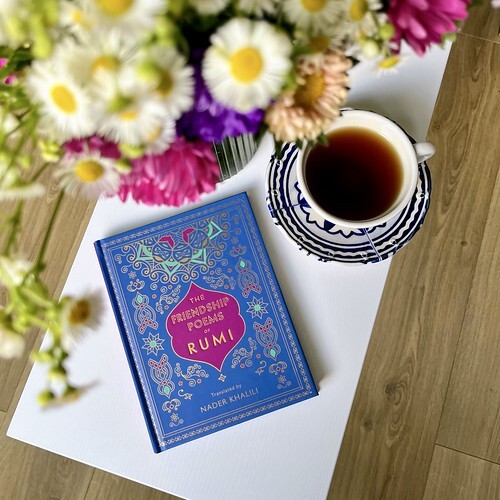
I own all 3 of these beautiful Rumi editions. I read 1 before, and I have 1 more to read. This one gave me much the same impression as The Spiritual Poems of Rumi:
- It's a stunning hardcover edition with a shiny ornate cover and ornamental color illustrations throughout
- The poems themselves aren't really my vibe - not sure if it's a matter of the translation, or it's just that I have a hard time connecting to 13-century Persian poetry (which would be not at all surprising)
- Still, I found the reading experience gratifying and worthwhile, and I'm glad I ventured outside my typical reading tastes.
I'd say this collection can be called "friendship poems" somewhat loosely, as many of them were more about spirituality than literal friendships between people.

October 18, 2020
Aunque fue interesante y atrapante, casi todos los poemas se sentían más espirituales que relacionados a la amistad. La primera parte fue excelente, evocadora y llena de magia, pero la segunda fue mucho más ambigua, más aún porque los temas que se trataban eran muy diferentes entre sí. Si el título hubiese sido distinto, puede que no hubiese pasado nada, pero sentí que me estaba perdiendo algo. Fue una lectura muy bonita y reflexiva, pero errática en cuanto a la temática.
Although it was interesting and engaging, almost all of the poems felt more spiritual than friendship related. The first part was excellent, evocative and full of magic, but the second was much more ambiguous, even more so because the topics that were covered were very different from each other. If the title had been different, nothing might have happened, but I felt like I was missing something. It was a very nice and thoughtful read, but erratic in terms of subject matter.
Although it was interesting and engaging, almost all of the poems felt more spiritual than friendship related. The first part was excellent, evocative and full of magic, but the second was much more ambiguous, even more so because the topics that were covered were very different from each other. If the title had been different, nothing might have happened, but I felt like I was missing something. It was a very nice and thoughtful read, but erratic in terms of subject matter.

March 2, 2023
This is the third and last book I read that had poems translated from Rumi translated by Nader Khalili, but I must say by far this was the weakest book of them all for me, as it has some duplicate poems from both "The Spiritual Poems of Rumi" and "The Love Poems of Rumi" as well as having poems that would probably be better suited for the spiritual poems book.
However, there were two poems that struck out to me, the one that did so the most was the following:
"it is a waste to play
tambourine to the deaf
or lock up a beauty idol
in the house of the blind
it is a waste to push honey
into lips quivering with fever
or force the marriage
of a gay man with a beauty queen".
In my view, this poem tries to say that we cannot please everyone, that even if we force our own ideals onto people or try to bend ourselves so that our ideals match theirs, it is pointless, since we would not have an authentic connection with them, but rather one built upon lies and compromises.
However, there were two poems that struck out to me, the one that did so the most was the following:
"it is a waste to play
tambourine to the deaf
or lock up a beauty idol
in the house of the blind
it is a waste to push honey
into lips quivering with fever
or force the marriage
of a gay man with a beauty queen".
In my view, this poem tries to say that we cannot please everyone, that even if we force our own ideals onto people or try to bend ourselves so that our ideals match theirs, it is pointless, since we would not have an authentic connection with them, but rather one built upon lies and compromises.
This entire review has been hidden because of spoilers.

August 2, 2026
I was excited to get into Rumi's poetry because I heard it recommended to me and have been wanting to give it a shot for a long time. This is the first poetry collection I tried out, I believe, and the first one I read that was translated. I really liked a lot of the poems in here. Rumi's poetry style seems simple at first glance, but it really can pack a punch when you think back on it. Not all of the poems hit as hard as I wanted them to, but I don't know if it's because of the translation or the work itself. Still, Rumi's work is inspiring to me, and makes me want to write more of my own poetry. I will definitely be checking out more of his work in the future. 4 out of 5 stars.
February 21, 2022
In much the same way as the other book in this series I have read (Love Poems), this book is visual spectacle and varying levels of poetry. In the edition I read there are some (2 or 3) unfortunate typing errors that are noticeable, particularly given the scant text in these books. If you like to have perfect typography, this edition is not for you.
ind of Rumi.
I found many to be insightful or profound; I found many that seemed rather plain (for a work of this age, though, who is to say?)
All in all, it helps to flesh out the m
ind of Rumi.
I found many to be insightful or profound; I found many that seemed rather plain (for a work of this age, though, who is to say?)
All in all, it helps to flesh out the m

November 16, 2020
I have always been enchanted by Rumi. His poems are soulful and bliss to read. I've devoured his works in the past. So, this book isn't much of a surprise.
The translation is done very well and the essence of Rumi's poems stays intact. The beautiful bond of friendship is portrayed poignantly through the works. I don't think I need to review this book much. It's nice to read.
Disclaimer: Thanks for the advance reader copy provided by NetGalley. All opinions are of my own.
The translation is done very well and the essence of Rumi's poems stays intact. The beautiful bond of friendship is portrayed poignantly through the works. I don't think I need to review this book much. It's nice to read.
Disclaimer: Thanks for the advance reader copy provided by NetGalley. All opinions are of my own.

July 10, 2023
I think the particular book I got wasn't translated entirely correctly, because a lot of poems didn't make sense- some were missing words or spelt wrong or whatever it was. I liked some of the poems, but overall not particularly my cup of tea. I think what I'm learning about myself and poetry is that I'm very picky. And It's hard to articulate because I don't exactly know what poetry I like- I know it when I read it. I think that's true about art in general.
January 25, 2026
I've never read Rumi before. I can deduce from this anthology that he was 1) an insomniac 2) loved wine and 3) may have been a bit of a pyromaniac?
It's amazing to think that the poems come from the 1200s. Much of them are still relatable, though the translations make much of the language stuttery and I suspect some meaning is lost altogether. The illustrations in this anthology are literally gorgeous however and it would make a good coffee-table book.
It's amazing to think that the poems come from the 1200s. Much of them are still relatable, though the translations make much of the language stuttery and I suspect some meaning is lost altogether. The illustrations in this anthology are literally gorgeous however and it would make a good coffee-table book.

December 21, 2020
This edition is lovely, as are the others in the series, with beautiful Islamic geometric art throughout. My quibble is that the title doesn't seem to reflect the subject matter, as the poems don't seem to be about friendship entirely, rather they're about different types of relationships. But the poetry is nice, as one would expect from Rumi.
#TheFriendshipPoemsofRumi #NetGalley
#TheFriendshipPoemsofRumi #NetGalley

December 31, 2021
Beautifully designed book. I really like Rumi's poetry. At one point, I had to flip back to the introduction to double check what years Rumi lived, because sometimes the poems are so incredibly relevant that they feel modern. I'm still not sure what many of the poems in this volume had to do with friendship, but I enjoyed reading them all the same.

July 19, 2024
Wasn’t that good in my opinion, I don’t know if it was the selection or the translation but it really didn’t really hit my heart and tickle my brain like poetry usually does. The poems at the end got heavy, deep and introspective. Overall, it was nothing spectacular maybe I’ll read more Rumi with a different translator.
Displaying 1 - 30 of 52 reviews