Jump to ratings and reviews
Rate this book

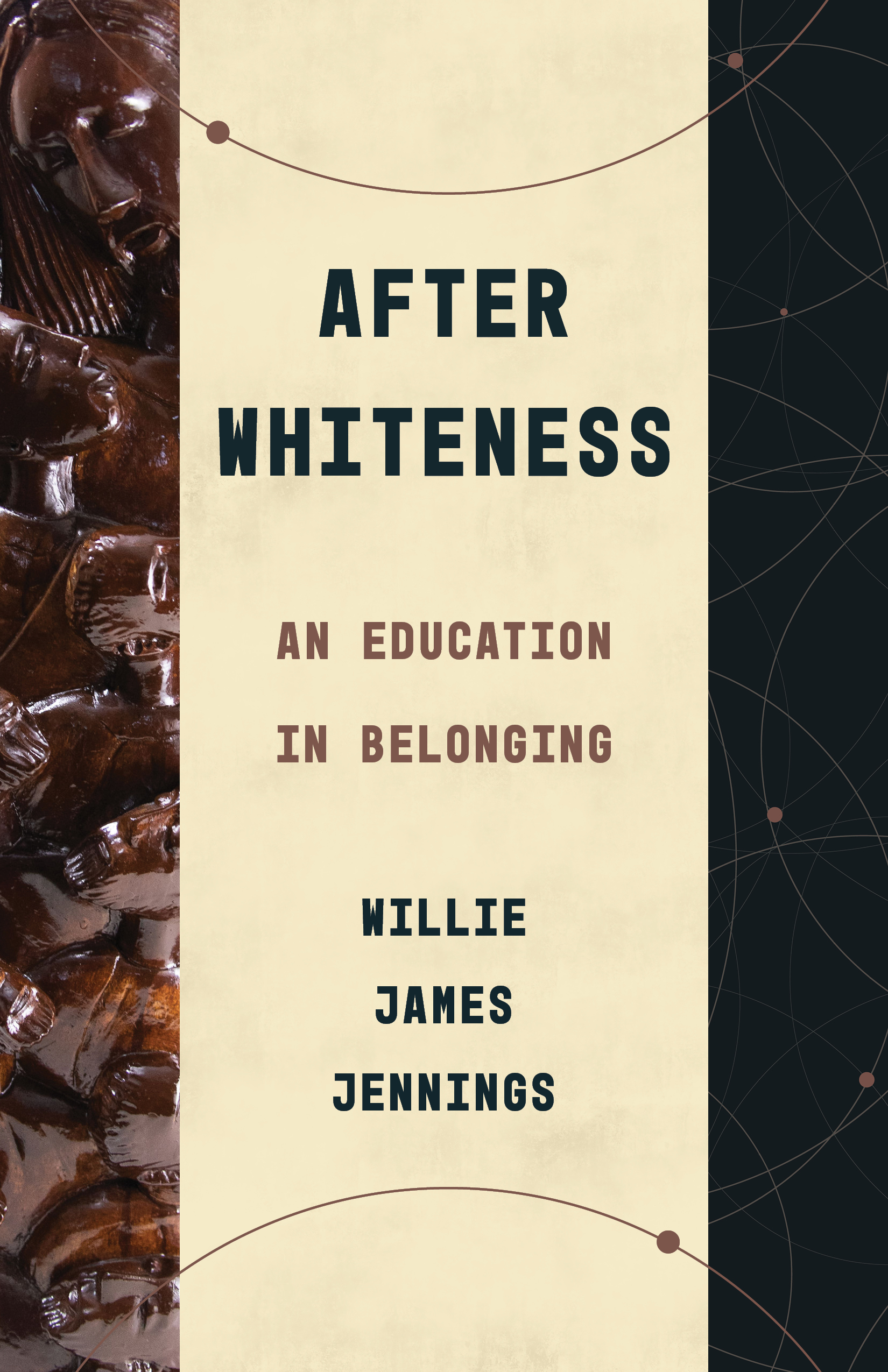
After Whiteness: An Education in Belonging

Rate this book
On forming people who form communion   Theological education has always been about first of people, then of communities, then of the world. If we continue to promote whiteness and its related ideas of masculinity and individualism in our educational work, it will remain diseased and thwart our efforts to heal the church and the world. But if theological education aims to form people who can gather others together through border-crossing pluralism and God-drenched communion, we can begin to cultivate the radical belonging that is at the heart of God’s transformative work. In this inaugural volume of the Theological Education between the Times series, Willie James Jennings shares the insights gained from his extensive experience in theological education, most notably as the dean of a major university’s divinity school—where he remains one of the only African Americans to have ever served in that role. He reflects on the distortions hidden in plain sight within the world of education but holds onto abundant hope for what theological education can be and how it can position itself at the front of a massive cultural shift away from white, Western cultural hegemony. This must happen through the formation of what Jennings calls  erotic souls  within ourselves—erotic in the sense that denotes the power and energy of authentic connection with God and our fellow human beings. After Whiteness  is for anyone who has ever questioned why theological education still matters. It is a call for Christian intellectuals to exchange isolation for intimacy and embrace their place in the crowd—just like the crowd that followed Jesus and experienced his miracles. It is part memoir, part decolonial analysis, and part poetry—a multimodal discourse that deliberately transgresses boundaries, as Jennings hopes theological education will do, too.

175 pages, Paperback

First published September 1, 2020

121 people are currently reading
1225 people want to read

About the author

Willie James Jennings

31 books90 followers
Dr. Jennings is Associate Professor of Systematic Theology and Africana Studies at Yale Divinity School. A Calvin College graduate, Jennings received his M.Div. from Fuller Theological Seminary and his Ph.D. in religion and ethics from Duke.

Writing in the areas of liberation theologies, cultural identities, and anthropology, Jennings has authored more than 40 scholarly essays and nearly two-dozen reviews, as well as essays on academic administration and blog posts for Religion Dispatches.

Jennings is an ordained Baptist minister and has served as interim pastor for several North Carolina churches. He is in high demand as a speaker and is widely recognized as a major figure in theological education across North America.

Jennings is now working on a major monograph provisionally entitled Unfolding the World: Recasting a Christian Doctrine of Creation as well as a finishing a book of poetry entitled The Time of Possession.

Ratings & Reviews

What do you think?
Rate this book

Friends & Following

Create a free account to discover what your friends think of this book!

Community Reviews

5 stars
305 (61%)
4 stars
148 (30%)
3 stars
30 (6%)
2 stars
8 (1%)
1 star
2 (<1%)
Displaying 1 - 30 of 95 reviews
Profile Image for Sophfronia Scott.
Author 13 books379 followers
September 3, 2020
A mind-blowing examination of the current state of theological education. Dr. Jennings's observations, however, are applicable to all of academia today and not only the study of religion and theology. He uses the full range of his voice, speaking in tones academic and poetic with notes of creative nonfiction, to express the problems of a fully entrenched archaic system as well as the hope and love of a heart that believes deep change is possible. It is his hope that will stay with me as I take on new endeavors. Thank you, Dr. Jennings, for this brave and beautiful work.
Profile Image for Carmen Imes.
Author 15 books738 followers
Read
January 25, 2021
It's going to take me a while to process this book, so I'll have more to say later. Jennings unveils the subtle but powerful ways that systemic racism operates in theological education. Our vision of what is and what ought to be takes shape in ways that perpetuate the hiring and formation of people who look like us. Jennings' book is laced with poetry and personal reflection. At times I strained to see what he was showing me as though looking through a glass darkly -- not because I am unconvinced of his claims, but I think perhaps because the poetic cadence of his reflections danced around the edges on purpose. But already the blur is clearing as I re-think my own education and the way it shaped me. Now to undertake the more difficult work of rethinking my own role in education as a professor . . .
Profile Image for Daniel Rempel.
84 reviews10 followers
January 29, 2023
“An education” is right. Never have I read a book like this. Leaving challenged, inspired, encouraged, terrified.
Profile Image for Alex Strohschein.
821 reviews150 followers
March 14, 2025
During the mid-2010s, a series of high-profile killings of black men, women, and youth at the hands of American police sparked righteous anger and unrest that engulfed not only the United States but much of the Western world, most notably seen in the Black Lives Matter movement. Thereafter followed a flood of publications aimed at raising black and other minority voices and cultivating an antiracist spirit, including works by the likes of Ta-Nehisi Coates, Ibram Kendi, Robin DiAngelo, Austin Channing Brown, and Canada's Desmond Cole. After Whiteness: An Education in Belonging is theologian Willie James Jennings’ contribution to this discourse. It is a unique - often poignant - mixture of memoir, poetry, and pedagogical, historical, and spiritual reflection.

Jennings has already been acclaimed as one of the most insightful theologians today through his earlier book The Christian Imagination: Theology and the Origins of Race and After Whiteness continues many of the same themes. Jennings is insistent that European colonialism, operating in foreign lands for centuries, has structured society so as to privilege and embody “whiteness.” Whiteness for Jennings is not an inherently Euro-American biological trait but rather an ideology marked by control, self-sufficiency, and hierarchy that can be practiced and proclaimed by anyone regardless of skin colour or ethnicity (pp. 8-9). Jennings writes:

It is a way of organizing life with ideas and forming a persona that distorts identity and strangles the possibility of a dense life together. In this regard, my use of the term ‘whiteness’ does not refer to people of European descent but to a way of being in the world and seeing the world that forms cognitive and affective structures able to seduce people into its habitation and its meaning making (9).


To me the very term “whiteness” is therefore rather problematic; I imagine that Jennings uses this term because it is already a colloquial concept in public discourse but I find inveighing against “whiteness” as jarring as, I’d think, a black man would find someone critiquing “blackness." If language is important and if our culture encourages us to find a major source of our identity in our skin colour and ethnicity, using "whiteness" as a term seems to me to be an inherently contentious choice of word.

Jennings further claims that much of Western theological education is dedicated to and built around the quest to produce “self-sufficient white men” who are equipped for ministry by “self-sufficiency defined by possession, control, and mastery” (p. 6). What compounds the problem for me is that there is some virtue in these qualities. A pastor at a small, rural church will hopefully have a cadre of dedicated volunteers and not take on too much work (both for the sake of avoiding burnout and also to avoid overstepping particular expertise like mental health and therapy) but might indeed have to be more self-sufficient than an urban megachurch pastor who can have the luxury of directing a new convert to the pastor of discipleship and a curious youth to the youth pastor. I do hope a pastor has some mastery of exegetical skills so that s/he isn't leading a congregation into heresy (and, if one wants to take "whiteness" outside the walls of the seminary, I hope, for instance, that a surgeon has mastery over the correct procedure for open-heart surgery). It's almost as if Jennings joins Marx (economy/politics), Nietzsche (philosophy), and Freud (psychology) in a hermeneutics of suspicion in that he approaches the interpretation of everything through the lens of race.

Jennings is perceptive in his earnest attempts to see matters from both sides. In many of his anecdotes he deconstructs the motivations that animate competing students, faculty, etc…He grieves a burgeoning, progressive black church's decision to hire a charismatic male preacher completely unqualified (educationally) for a lead pastor position over a confident, academically-gifted female student who Jennings believed would be ideal for the role (pp. 93-95). I have witnessed some of the same theological moves and mutations that Jennings has observed over the years, such as the pair of students who, disillusioned with their original denominations, find refuge in rigorously liturgical traditions that become weapons in their hands that they wield in skirmishes with their peers who have not "found the light" of liturgy (pp. 44-45). Jennings' desire is for theological education to foster an inclusiveness that ultimately culminates in communion. Near the end of the book he rebukes instructors who sharply delineate their teaching from any possibility of cultivating friendships with their students.

Sometimes I found myself perplexed by Jennings. He recalls a white student of his who was confrontational, so much so that this white student attempted to school Jennings in the nature and culture of the black church/community (pp. 108-09). Elsewhere in the book, he chides teachers who lord their expertise and experience over their students without having the humility to accept their students’ insights. I imagine that in the former case the white student offered his commentary in an arrogant - even racist - spirit but this showcases the struggle of wanting student-teacher educational engagement in a respectful posture, though certainly, as Christians who acknowledge each other as made in the image of God and possessing fundamental dignity, we ought to have all our interactions nurtured by the fruits of the Spirit.

My own perspective of theological education is formed from being a student and being on staff, not on faculty. The theological graduate school I attended is also quite diverse in terms of its student body (one of its great attractions!), though there always seem to be calls to hire a more diverse faculty (I'd add that what is often forgotten or neglected is denominational diversity; there is distinctness and difference between a Mennonite and a Methodist, a Pentecostal and a Presbyterian, an Anglican and an Adventist). I don't think any school is perfect this side of the eschaton but Regent College, situated in a multicultural metropolis on Canada's west coast, has a strong degree of diversity and pluralism. That's not to invalidate Jennings' claims (he has visited far more seminaries than I have), but to posit that there are more examples of progressive, inclusive schools than his book suggests.

But Jennings' assessment of Western theological education seems largely negative because it is tainted by whiteness, as if whiteness is the form that total depravity has taken in theological education. If this is so, should there perhaps be a more radical reformation of theological education than staying within the halls of the seminary and academia? In this regard, Jennings' position as professor at Yale Divinity School is of note. Obtaining a faculty position at an Ivy League seminary is an incredibly prestigious position in the world of theological education but by its very nature it seems to me to be a community that fosters a certain kind of exclusion. Yale Divinity School won’t let just anyone in. Like Beth Allison Barr in The Making of Biblical Womanhood, I gently suggest there is some disconnect between those lecturing readers on inclusion (and in Barr’s case, critiquing conservative women who desire to be housewives) when authors operate out of a place of immense privilege (Barr likely enjoys her job a lot more than most women working menial positions outside the home). If one is intent and desirous of the greatest possible inclusion, is the path to achieve this working at one of the USA’s most elite universities or is it in choosing the Christlike path of downward mobility and, say, working at a community college (where tuition is far cheaper and acceptance rates far higher, than Yale’s requirements for acceptance)? This remark can come across as snarky and antagonistic, condemning rather than congratulating a dynamic theologian and scholar whose work has earned him an enviable position, but the remark on my part is largely born out of working at a theological institution for about a decade (again, not in a teaching role) and wrestling with the fact that even a discipline like “marketplace theology” caters more to educating white-collar professionals rather than baristas, taxi drivers, and grocery store cashiers. Any institution is inherently diverse but I think it’s the church more than the academy where membership is more rigorously stratified; no one is forced to tithe whereas every student must pay tuition (though admittedly, some congregations are more homogenous and genteel and well-heeled than others; an Anglican church in West Vancouver has a very different demographic than a street church in the Downtown Eastside and a Chinese Baptist church in Richmond). I think about how many of the early church fathers weren't confined to ivory towers but instead operated and instructed in the church (one thinks about the conversations around the "pastor-scholar" that began in the mid-2010s among Protestants). If theological education is so inherently tainted by colonialism, whiteness, masculine self-sufficiency, etc...why remain? Can one completely avoid the taint of whiteness or does one become complicit? Why not follow the Spirit of God who is "doing a new thing" (Isaiah 43:18-19)! Why not work to establish schools within churches? And yet, I also admire those who seek to renew and reform from within institutions.

Me, I find Jennings’ colonialist critique more convincing in his earlier book than here. Some of the leading evangelical theological schools are newer than Duke and Yale where Jennings has served (e.g. Fuller: 1947, Regent: 1968, Beeson: 1988) and so they haven't been as calcified by colonialism to the same degree as colleges and universities that have existed for centuries. I also wished that for a book that makes such a strident case about Western theological education's shortcomings and vices, that there was more history and assessment of how Western theological education has changed over the years. This is where I see limitations to how anecdotes and rich personal, theological reflection, can mount a convincing enough case for the kind of grand claim(s) Jennings makes here.

Theological education isn't perfect. I think Willie James Jennings' passionate calls for a pedagogy that fosters inclusion - communion - is a good and worthy goal. I am more optimistic the theological academy is already, in many cases, on its way towards this goal, sometimes because we take things for granted (Augustine of Hippo, arguably the greatest theologian since St. Paul, was African after all, and how many theological curriculums contain his works?), but more can always be done. After all, what Christian would not want to enjoy greater communion in the Body of Christ?
Profile Image for Tiffany.
Author 4 books74 followers
Read
October 29, 2020
Oh my gosh. If you are in Christian higher education or theological education, read this RIGHT NOW. Especially if you have been in it for a while. It will help.
Profile Image for Christopher Gow.
98 reviews3 followers
December 31, 2020
Brilliant. I’ll definitely read this again.

Jennings uses many formats: prose, memoir, poetry, etc. to demonstrate the effects of white supremacy (and what he calls “white masculinity”) on the way that institutions in general - and theological educational institutions specifically - train students, understand themselves, generate syllabi, evaluate goals/growth, and imagine community.

He poses important questions really powerfully:
How do we navigate and subvert this pressure toward whiteness?

What resources does Christian theology have for that work?

What do white christians/theological students do?


Profile Image for Cienna Rianne.
129 reviews2 followers
January 3, 2024
I heard the basic premise of this book during a lecture Jennings gave at my undergrad. That lecture solidified YDS as my dream school and now I’m taking a class with Jennings in the spring. The ideas in this book will change your goddamn life.
Profile Image for Ryan Ebling.
127 reviews4 followers
December 26, 2020
A fantastically insightful look at education (theological education specifically, but much applies to all education) and the way the colonialist mindset prevails and kills the unique parts of all parties involved. By holding up "mastery" that is, training students to become masters (the "pedagogy of the plantation") we destroy the possibility for educational institutions to become places of communion. A lot to think about in this short book.
Profile Image for Daniel Kleven.
721 reviews27 followers
October 31, 2021
Relatively brief (I mean, compared to The Christian Imagination), creative--including striking poetry, stories, interludes--and raw honest to the core. This book felt healing and restorative to read, as someone who spent almost 7 years in a white theological educational institution. I appreciated this book very much. I am still searching for the belonging.
Profile Image for Helen.
105 reviews
February 19, 2022
There is much to reflect on in this book which challenges how we might re-think theological education in ways that seek to free it from the controlling narratives and structures of colonialism and whiteness. This challenge is particularly emphasised by Jenning’s use of stories which root the issues he wishes to address in situations which are uncomfortably familiar.
Profile Image for JD Tyler.
110 reviews6 followers
February 5, 2021
I’m going to be in conversation with this book for a VERY long time. Jennings labors to expand categories and capture hearts for what theological education can be as well as how it’s been shaped to be all the ways it isn’t. A must read for anyone in higher ed as a student or faculty member.
Profile Image for Glenn Wishnew III.
145 reviews13 followers
October 11, 2020
Ambitious. Spirit-forged. Brilliantly executed. One of the best thinkers and writers of theology in our time.
Profile Image for Jon Coutts.
Author 3 books36 followers
September 27, 2020
"Theological education institutions ... [are] a building up inside a crumbling. We are inside the Spirit's crumbling of world orders ... and although we have formed our educational institutions inside that world order, we yet carry the contradictions." This book is full of practical wisdom and challenging vision for those willing to rethink academia from within the commodifying strangleholds of white modernity.
Profile Image for Stephen Stapleton.
9 reviews2 followers
November 13, 2022
I once said that The Christian Imagination was the most impactful book I’ve ever read. Dr. Jennings dwarfs that statement with his book After Whiteness.

After Whiteness is the living embodiment of stories told within a theological pedagogy not aimed at discovery but mastery. It pains me to read this book not because it is bad, but because it is so incredibly personal and real.

This is a must read for anyone in theological higher education or pastoral ministry. To understand the Church in America, this book or others like it are VITAL.
Profile Image for Adam Shields.
1,859 reviews121 followers
March 3, 2021
Summary: An exploration of theological education as spiritual formation emphasizing its need to create belonging and explore how it has historically promoted white male normativity and individualism.

I have read several articles and a couple of books by Dr. Willie James Jennings, but I was not sure this book was really for me. On its face, it is a book about theological education. I am not in theological education, and I do not anticipate ever being a professor or teacher. I decided to finally pick it up after someone on Twitter talked about it as a discussion of spiritual formation, whether in or outside the academy. I am interested in spiritual formation. I commend listening to Dr. Jennings' interview with Tyler Burns on Pass the Mic podcast or Wabash Center's Dialogue on Teaching Podcast, which have very different interviews but are helpful to get at what the book is doing.


Jennings posits that Western education in general, but theological education has a model that emphasizes three virtue: possession, control, and mastery. These three virtues are generally assumed to be 'masculine' virtues, and as Jennings discussed in his previous book, Christian Imagination, these virtues are also identified with the colonization project. Because we are an individualized culture, these values are about asserting the individual as the one who is master and self-sufficient. To counter this image of the self-sufficient master of educational knowledge, Jennings takes the image of Jesus, who gathers together many who would not choose to be together if it were not for the desire of all of them to be near Jesus. Jennings' corrected imagination rooted in Jesus' ability to gather people together suggests that the point of theological education in particular, but western education in general, should be rooted in belonging, not exclusion, hence his subtitle, An Education in Belonging.


Part of what Jennings is addressing here is that the soul is not formed primarily through information. We are not, as James KA Smith suggests, 'Brains on a stick'. Theological education, while it does include information, must have as a primary focus spiritual formation. And that spiritual formation, because it is a significant aspect of theological educators' work must be concerned not only with the theological education of its students but also of its faculty and staff and the institutional aspects of its community.


Like many, this is a book that I should read again.  Spiritual formation matters. But so do the institutions that help form the pastors that lead the congregations that spiritually form the future generations. What keeps being emphasized in my reading on racial issues is how long these issues stick around. Again, my grandfather was born a year before Harriet Tubman died.  She escaped slavery in 1849 but lived until 1913. My grandfather, born in 1912 lived until 2005. If I, not yet 50, have a grandparent that overlapped with people that were adults in slavery, it is likely that there are ongoing implications for historic racial realities. My mother was born three weeks after Ruby Bridges. The school my mother would have gone to for kindergarten did not integrate until the year before I was born. Ruby Bridges and others of her generation that were the first to go to integrated schools are just now starting to retire. Our senior seminary professors, who are teaching the new generation of pastors were likely early in the integration process and some probably did not go to integrated schools. It would be odd to think that all theological education has been 'fixed' to solve the historical issues within those that are currently teaching.


My seminary education included a systemic theology professor that was a liberation theologian. But there are not a few seminaries that have not done much if any work to addresses their curriculum. It is only a couple of years ago that Masters Seminary made news because it was possible to have gone the whole way through without having a book assigned by any authors that were not White. And I think that is more common than many believe. I am in a 2.5-year part-time graduate-level certificate program. Up until this point the only book I have been assigned that by a non-White author is a Brazilian theologian writing about the Lord's Prayer in an elective class. I am planning on taking a class about Mary Shawn Copeland, again an elective, and presumably, we will read at least part of one of her books. But that is probably 2-3 books out of all of the books I have been assigned over the past 2 years. The problem of theological formation orienting toward white experience as normative is still a very present problem.

Profile Image for Chris Riley.
9 reviews
February 2, 2024
Wow. What an incredible and substantial in-depth piece on the effects of Colonialism within our history. Jennings discusses the importance of the crowd, the gathering, the communion of people and how "the master" (earlier Eurocentric colonialism) has created in itself a performance of "the white man." This gathering is a gathering of builders, building for the settler-colonialist purposes and not building for their own selves or their own purpose. Jennings talks about the fragments that are lost in this. A Christian theological approach that is perpetuated by a master-class (self-sufficiency) to be the best, the most right, and the true speakers (the exact spirit of colonialism and assimilation that led to the colonization and annexation of many physical tribes and cultures). The fragments are the builder wanting to find a theological framework on their lost heritage, on their skin color, on their lost traditions- but the deep ghost that haunts the halls of the education AND theological institutions in the West disappears their desire to build into communion, and reappears to create a structured desire for them to conform or colonize to what the "master" is in fact building. This ghost of colonialism and the horrors of it is referred to by Jennings in this piece as "the master," "whiteness," and "the old man."

For those not familiar with Jennings, it did take me some time to adjust to his writing style. Beautiful and advanced- not sloppy or half-hearted. However, once you adjust to the way the piece is wrote- it'll all click and you will adjust fast.

This piece was absolutely needed, yet terrifying, to see the colonialist ghost of European hegemony so grossly in the subtle details, and sometimes not so subtle, of our theological foundations and our education institutions. The voices and fragments of generational victims exposed to the trauma of assimilation and early-colonization, forever their voices lost- into a silence that was designed for them.

You'll sit with this book for a while. A "quick" 120 pages will feel more like a 400 page book.

*Highlights:*

"They imagined they could see the peoples of the world better than the peoples of the world could see themselves, and that their insight was key to forming institutionalizing processes that were crucial to global well-being. They were as indispensable as God. Western education and modern theological education were formed in this condition without entering into lament over its harmful effects; indeed, we became the means through which untold generations were shaped to think inside these troubled forms of gathering and the facilitating obsession of whiteness with its relentless need to perform its indispensability."

"It was the crowd that wanted Jesus crucified, but Jesus yet wanted the crowd."

"This centeredness sickened by whiteness grew from the pedagogical imperialism of the Euro-colonialists who imagined the whole world as their students, expanded as their reformatting of the world expanded, took definitive shape as they formed educational projects across the planet, networked through their imperial languages and the formation..."

"There is a form of evaluation, born of colonialism, born of whiteness, that permeates Western education, distorting both a mind at work and the perception of a mind at work. The European colonial settlers formed horror in this evaluative form. The horror is that they showed us how to look for and at something called intelligence and intellectual ability, and, in the process, they took something from us, the desire to pay attention, constant full attention to one another."
Profile Image for Robert D. Cornwall.
Author 35 books126 followers
October 13, 2020
I am a product of theological education in America. I have a bachelor's degree in Bible and Ministry. I have a Masters of Divinity and a Ph.D. in Historical Theology. I've taught church history at a seminary and theology in a college. For the past twenty-two years, I've been a pastor. Over the course of the years, I have thought a lot about theological education. For the most part, I've been satisfied with my experiences. But, I have to confess that I'm a white male, and the system that I participated in, the system that formed me as a historian, theologian, and pastor, was designed with me in mind. That is, it was designed to form white men. But what if you are not white or male. How might you experience the system that seemed to fit me like a glove?

Willie James Jennings is a theologian and a teacher. He's served as an academic dean at a major university divinity school. He continues teaching at a different divinity school. While we are both graduates of the same seminary (Fuller Theological Seminary--Jennings began his tenure as an M.Div. student at Fuller during my final year as an M.Div. student), what makes us different is that I'm white and he is black. Thus, while both of us appreciate our tenures at Fuller, we also experienced it differently. What also makes him different is that he served for a decade as an administrator at a seminary. Thus, he has experienced theological education as a student, as a professor, and as an administrator.

"After Whiteness" is subtitled "An Education in Belonging." That is an apt description of the book, for the core question has to do with belonging. He writes in the prologue that the most important word that he considers in the books is that of "formation." That is the goal of all education, and "especially theological education." (p. 4). While this is true, and expected, unfortunately, it has been distorted by white colonialist ideology. His goal here, in this brief book, which includes his poetry and stories drawn from his experience as a teacher, dean, and student, is to point us beyond this distortion. There is much discussion about what theological education should look like. Some of that conversation takes a rather commodified vocational perspective. We go to seminary to get tools so we can do ministry. James sees things a bit differently since he is concerned about the formation of persons, but formation that is not distorted. That requires recognizing that this system is designed to form the "white self-sufficient man, his self-sufficiency defined by possession, control, and mastery." (p. 6). That's true even of progressive seminaries. It's deeply rooted in the ethos of theological education.

The book is composed of five chapters: Fragments, Designs, Buildings, Motions, Eros. Regarding fragments, the first chapter, James suggests that this is the starting point and that there are three kinds of fragments that are present in the academy. The first fragment is the faith itself. It's all the stuff we work within theological education. The Bible and theology and such. The second fragment is the one formed by the colonial power. This is the fragment experienced and understood by people of color. The pieces of life that are too often excised by the colonial power. The third fragment is the "work of reduction" or the "commodity fragment." This is something that is possessed and even stolen. If, like me, you are white, you will start to become uncomfortable here, but that is the point. The goal here, however, is not to leave us in fragments, but to find communion.

The second chapter is titled "Designs," and has to do with the way that theological education is designed. Things like curriculum. Design hee has to do with organizing things around attention, affection, and resistance. The problem here is that theological education is designed in such a way that it distorts creativity. he writes that the "deepest desire that should drive our educational designs is to cultivate people who serve, but that requires us forming them in a vision of people being formed to a people. Such a vision articulates servant leadership through the desire to be a place of communion and in doing so to follow our savior informing Jesus space." (pp. 75-76).

From here we move to buildings, to institutions, and the way they are formed. While there is a place for institutions, the question is how are they designed and operated? How might they be designed and operated in a way that serves white men, but not people of color? Part of the problem is that the institution is not set up in ways that one can recognize understand the racial components of the system. That blinds those involved to the persons who enter the buildings.

Chapter four is titled "Motions." Here he talks about the need to transform the way those engaged in theological education can reshape and reframe the operations of the school "inside a new vision of edification," that "builds people toward each other." (p. 105). This involves assimilation, but in such a way that people are healed and not harmed. This leads to chapter 5, "Eros." Here the focus is on desire. He writes that the "urgent work calling us in theological education is to touch the divine reality of longing, to enter into its power and newness as the logic inside the work of gathering and inside the formation that should be at the heart of theological education." (p. 143). The problem is that this goal is thwarted by whiteness and a form of greed that destroys the communal metaphysic. Thus, we come to the point of the book, belonging. If the system is designed to form white male pastors who are self-sufficient, then those who do not fit do not belong. Truth be told, none of us is self-sufficient and all of us wish to belong. Unfortunately, the system isn't always designed for that.

This is a compelling book that is written for the Academy, but I think it also speaks to those who have gone through the system. It may speak to one's own situation. It may challenge one's self-understanding. As I read it, having gone through the system and taught in it, I recognized how that system was designed with me in mind. My teachers were mostly white men. I went through Fuller in the 1980s, and everyone I studied with was white. I think the only person of color who has been my professor was my Korean Old Testament professor in college. We read white theologians and white commentators. I did take a class in Latin American Theology so I could read Liberation theology, but my professor was a white man. I enjoyed seminary. I learned a lot, but it's apparent that not everyone likely fared as well as did I!
Profile Image for Tyler Lund-Hansen.
45 reviews4 followers
July 31, 2021
Every time I read something by Jennings, I'm moved. This was no different.

Jennings argues that much of the Western theological academy forms (or more accurately, deforms) the student in to a self-sufficient, masterful, man. This is a theological nightmare. According to Christian theology, human beings are dependent, servants, both male and female. Jennings traces the colonialist history that undergirds theological education today.

But this book isn't only a lament. Jennings posits an alternative formation for the theological academy, one that forms students to learn to belong to one another and to the God who desires our communion. He had such a helpful image to illustrate this education in belonging. The crowds who desired Jesus, in their attempt to touch Mary's son, also touched one another. As students of theology specifically (or simply disciples in general) our formation should be aimed toward a desire to touch God, and to see those around us who also long to commune with God not as impediments to God, but as precious.
Profile Image for Joel.
58 reviews10 followers
February 7, 2021
this is definitely not a book for everyone - and probably not for the reasons you might think haha - Jennings shares wisdom for teaching theology in colleges and universities.


It’s a direct and insightful read wherein he identifies parts of the theological academic tradition(s) that have enjoyed prominence and elite status, and then challenges that we are in a good space to rethink some of them.


For example, the elitism of the “scholarly languages,” or the modelling of “self-sufficiency” that has been used in the teaching philosophies of the global West to generate “greatness” but often at the cost of alienation and “whiteness formation.” (I.E. he uses this latter language to discuss how removed engagement with textual traditions [often as abstractions] is preferred to students/professors actually embodying and experiencing those traditions.)


As I said it’s not for everyone, but as one who teaches in those spaces I am grateful for the insight that Jennings provides.
Profile Image for Chase Lucas.
29 reviews
October 17, 2025
Required reading!!! I needed this reorientation like water and pray that this vision of togetherness will sustain me throughout seminary. My thoughts are lingering on many many of the conversations, questions, and stories in this book. The poem in chapter 4 on self sufficiency broke me open. So much pain and goodness in this book.

“The mountain is a place where we can linger in a surprising desire for one another, where stories and hopes bound up in dreams might be shared and we have time— that precious gift— to learn more deeply of a God who dreams a mountain for us all to make a home together. It is the mountain that orients our work and heals our souls, because there on the mountain, according to the prophet Isaiah, a stream of people from every tribe and clan will finally reach our destiny in God, and the education we have anticipated with all our institutions and all our teaching and learning will begin.”
Profile Image for James Wheeler.
207 reviews20 followers
May 27, 2021
"If we are willing to yield to the Spirit of God, God will draw us and our work of building into the building of God. But sometimes we must abandon what has been built in order to enter God's building work, and sometimes we must tear down what we have built in order to follow God in building toward life, and sometimes God can take what we have built toward death and turn it toward life." 77

"The lie is that in order to know the world, one must know the European world. The truth is that in order to know the world that has come to be, one must know the European world. The calamity is that coming to know the world should never have been put in this way." 120

Part autobiography, part poetry, part criticism of american theological education, part a critique of racism as it is experienced by black bodies.
Profile Image for Borris Larton.
5 reviews
Read
May 24, 2025
"Jane and Jack became good teachers—thoughtful, considerate, and careful—but each was a Minotaur who lived in a labyrinth created for them and by them where all the paths of their students would always lead back to them. The journeys of their students dissolved in their labyrinths, becoming marks and carvings on their corridors. Jane and Jack each formed their world not through narcissism or ignorance, but something worse, a carefully orchestrated self-formation that they imagined was finished and now served as the home to which the students were invited to aim and enter... they had been schooled in a sickness—had learned a distorted way of gathering inside a distorted way of thinking, a distorted way of thinking inside a distorted way of gathering."
Profile Image for Tom Greentree.
Author 1 book9 followers
January 20, 2021
A deeply perceptive book with which I will continue to process and ponder and discuss. Jennings speaks from within the theological academy (fairly if not completely foreign to most of us) and yet he frames the struggle in a provocative and more broadly applicable way that helps us grapple with the way our world has been formed by self-sufficient whiteness. Not only is it an academically focused book, but also quite poetic — I confess to missing some of what he was getting at, not only because I’m white but also because I found myself at times lost in his lyrical fragments. Though maybe this was part of the point.
140 reviews1 follower
December 1, 2022
This was much more about academia than I was anticipating (in fact it's primarily about academia), but as someone who's been a graduate for a year and a half, I kind of welcomed that. Jennings has such a vision not just for academia but community as a whole, he has a deep love and belief in the potential of these structures we've let rot. There's an enate refusal in Jennings to become cynical, to let the imagination and forces of Whiteness win out when it seems to choke out everything. There is a surety of voice and faith that is captivating and engrossing, giving hope that maybe we can actually rebuild these infected systems after all.
Profile Image for Kara Martin.
8 reviews
April 25, 2024
It will take a few re-readings for all the wisdom in this book to sink deep enough to take root, and so it is added to my annual read list. An important book for anyone involved in the work of education, but especially important for those of us in Christian education. From deep pain and anger for what is comes such a beautiful vision for what could be. I am grateful for this book and hope it causes a redemptive disruption to the system as it exists.
Profile Image for Lainey.
47 reviews2 followers
February 22, 2025
The first and last chapters were worth their weight in gold. The poetry lost me in the middle. (But this is a me-issue. I prefer the book of Romans to the Psalms, and Malcolm Gladwell has too many stories for me too).

The questions that this book rises and the vision of the crowd pressing forward, upward and against each other to hear the words of Jesus is brilliant.

I wondered, in the last pages, if his vision is interreligious or if he remains bound to the Christian tradition, albeit global and pluralistic Christian tradition (as it should be). And I suppose that's my question, a question of whiteness, I'm sure. How do we walk the narrow path while widening the people walking it?
Profile Image for Brian.
184 reviews5 followers
January 3, 2021
This book is very academic. There are some great stories in this book. The main idea I will remember from the book is that institutions are designed for and designed to create the white man.
Profile Image for Erin.
492 reviews125 followers
June 3, 2021
One of the most important books I’ve read during my PhD program.
Profile Image for MaryAnne.
64 reviews1 follower
Read
October 1, 2022
After Whiteness: An Education in Belonging
By Willie James Jennings

On the surface this book is analysis, an analysis of theological education in the United States. Jenning’s guiding metaphor for theological education is the relationship between Jesus and the crowd, not as I would have expected, the relationship of Jesus and the disciples.
He says Jesus created the condition of crowd, reflecting God’s desire for the gathering. The crowd was not his disciples, but it was the condition for discipleship. It is the grounds to which all discipleship will return, always aiming at the crowd that is the gathering of hurting and hungry people who need God. The crowd--people who would not under normal circumstances want to be near each other—never listening together to anything except a Roman centurion, now a listening together to the words of Jesus. The crowd is not a temporary condition on the way to something else. Theological education must be formed to glory in the crowd, think the crowd, and be a good crowd, and then move as a crowd into a discipleship that is the formation of desiring souls, always enabling and facilitating the gathering, the longing, the reaching and attaching. Educational settings needed to aim at forming souls who are cultivated in an art that joins people bone to the bone, and that announces a contrast life aimed at communion.
His book Is analysis and it is so much more. This book is storytelling. Jenning’s tells story after story after story from his role as academic dean at Duke University Divinity School. Most of his stories are about two or more people interacting--students, faculty, administration, others. Even his storytelling embodies the gathering, the communion, that he aims for.
This book is poetry. The poems scattered throughout every single chapter sing and weep the feelings and questions of his heart that go beyond words. Sample:
He blessed and broke open his dream, one part in each hand.
To those on his left and those on his right, he said the same thing
as he handed them his dream, “Eat this dream,
and it will kill the dream that kills.”
Hands trembling, they wondered which of their dreams
would die and which would grow stronger.

This book is personal and vulnerable sharing; it is the story of Jenning’s discovery of his voice as a black man in a white man’s institution, in an institutional context that has unknowingly adopted the white male European colonial dream as its own. He shares, I felt the anger, the old anger that has been with me from the beginning. What beginning? I don’t know when it started. It has always seemed to have been with me, formed at the site of my blackness. And I felt the struggle, the old struggle to keep the anger from touching hatred. My faith -- no, Jesus himself -- was the wall that kept the anger safe from hatred. Anger yes, hatred no, because if anger touched hatred I would be poisoned by death himself and become trapped in an addition that few have been able to escape.

This book is challenge. As I read it my eyes begin to see the ghosts of the master-slave understanding of the world that permeates the American educational system, or in Canadian context, the ghosts of white settlers who feel their understanding and organizing the world are far superior to the First Nations who were here first.
His book is organized into five chapters that build on one another.
1. Fragments
We primarily inhabit fragments, not complete traditions. We are fragment workers aiming at patterns of belonging. Our work is always in between 1. the fragments of faith, 2. colonial fragments, 3. commodity fragments.
2. Designs
Education needs 3 things: attention, affection, resistance. These are designs that design.
• European settlers raped attention. They narrowed intellectual excellence down to one kind of performance, a white body. We should work toward a design that aims at an attention that forms deeper habits of attending to one another and to the world around.
• Affections cannot be formed on top of affections that have been forced. In the academy, affections are feared (i.e. rational-good, emotional-bad) because they have been forced, away from a non-white flesh toward the European. Theological Education begins with our decision to make our way to the crowd listening to the Jewish rabbi, aiming toward a new reality of affection and learning God’s love for people we did not believe we can love or beloved by.
• Theological education is also about resistance; imagine a form of resistance that builds community.
3. Buildings
• The racial paterfamilias spirit (i.e. belief that everyone has their ordained place with whites as masters and coloureds as slaves) haunts all Western institutions; it was born of Christianity in its colonialist form moving in power to dream a world well organized, where bodies are organic machines and profit begets more profit.
• That being reconciled to the way the world is can become sick wisdom, one that imprisons us even as it allows us to function.
• The colonial plantation was never just a place or a moment long past. It revealed to us the spirit of the racial paterfamilias, a seducing power that invites us into a form of cultivation aimed at building masters who desire to build, embodying self-sufficient masculinist form, and who carry a relentless vision of people as essential tools necessary for the work of building. Those who inculcate this masculine this persona are prepared to lead.
• Racial paterfamilias wants to be wherever it needs to be to form the feeling and thinking of institutional completeness. Nexus of feeling and thinking is the institutional unconscious. Racial paterfamilias wove itself into the institutional unconscious of educational institutions inviting us to sense through the cultivation logics of the plantation and whiteness the way the world actually is and to imagine how we could function efficiently and effectively in it.
• Strong men must lead, must become masters, must guide institutional unconscious into the bad practice of assimilation where your voice is gone and you sound like the master.
4. Motions
• We need an assimilation that heals, not arms. To assimilate is to be placed inside someone else’s way of life and to follow in that way.
• On the plantation there were two kinds of education, master formation and emancipatory formation. Both kinds silence the sound of a door opening to life together. Education is more than a calculation of exchange. Education is a deeper reality of entanglement.
• In the master’s house it was believed that slaves had deficiencies that needed to be fixed. In a similar way, in the education system, the image of “the finished man” creates inadequacies that need to be fixed.
• Not-knowing can create wonder that hosts knowledge. What happens when not-knowing is turned into a weakness?
• Alienation is distance where there should be none. Alienation is denial of the deep connection that is the birthright of living creatures. Alienation is denial of living prosperously as creatures together.
• God demands that we ask this question: what do we share?
• We already live in a process of gathering, a global gathering that does not cultivate life, but pulls us toward a bondage and death found in a managed diversity and a stupefying docility. This is not the “crowd” but the crowd in chains. Only “holy desire” that forms in us for one another can break those chains and guide us to a place where we meet each other in ways that announce eternity.
5. Eros
• Ancient powers, whether pharaohs, shamans, merchants, or priests, always a gathered people together. There is nothing inherently good about gathering people together, but there is something inherently powerful. Greed has always haunted gathering. Our gathered to harm us their collective energy.
• Colonial gathering makes whiteness, not a journey, but a destination for all. Educational gathering sees that we are all on a journey together and turns us away from limited colonial options for knowing and living with each other.
• In some white educational systems, professors are like minotaur in a labyrinth where all the paths lead back to them, (and their self information they imagine as finished) where they now serve as home to which students are invited to aim and enter.
• Euro-colonists refused to release themselves to the crowd.
• Why do we gather? The crowd wanted Jesus crucified. Still Jesus wanted the crowd. As king of the crowd just as God comes for the creature.
• The purpose of theological of education is to give witness to God’s embrace of the creature and the desire of God to make embrace the vocation of creatures that have yielded to the spirit. The urgent work calling us in theological indication is to touch the divine reality of belonging, to enter into its power and newness as the logic inside the work of gathering and inside the formation that should be at the heart of theological education.
• Fear is the crowd’s failing. Violence is the crowd’s addiction. Ignorance is the crowd’s stubborn habit of collective mind.
• The first goal of the colonists is to reduce the many to the one as a point of negotiation, management, conversion, and profit.
• The second goal of the colonists is to move people from group thinking about their wants and needs to thinking like an individual who could enter into the exchange of goods and services guided by a rationality freed from communal obligation except at the level of volition. Such people would form connection from capital and perform a relationality woven first and foremost in utility aiming at profit.
• Exchange networks (as opposed to gathering) need not be personal, need not be communal, need not be storied, need not suggest long-term obligation of our relationship, need not even require names or identities. They only require items and money, that is, commodities.
• Exchange networks can form friendships, a strange kind of friendship, governed by an individualism that makes sustaining and cultivating the friendship a singular endeavour built on the strength the desire of the one for the other one.
• Crowd is itself a destination and not a means to an end. The goal of cultivating those who can gather people centers in theological of education in its are audited, desiring, power. The earth Christ is divine during. This is power we enter through participation. The crowd surrounding Jesus gathers in the desire of god. The crowd gathers, and this is already on the way to being good news. The crowds non-Christian, but the gathering is in Christ. The crowd forming gives witness to one who has yielded his life to divine desire. Jesus gathers in god, divine desire permeating his life and work, and is now in Jesus we see what god wants: communion
• Western education has offered us a distorted vision of what an educated person should look like, seeking possession, control, and mastery as fundamental characteristics of being the finished man, resting in an educated state of self-sufficiency. We theological educators have accepted this vision. The true horror is that this vision never comes, but you live your life always aiming at it, dreaming the old man’s dreaming.
• Theological Education could mark a new path for Western education, one that builds a vision of the education that cultivates the new belonging that this world longs to inhabit. Be involved in theological education is too long for eternity and the end of death. Is to seek the western state where our words start to do new work by first and joining the chorus of words of those who live forever the lord and sound healing and redeeming voice of living God. Then are words will heal. Then our words will build up. Then our world which will help form life together.
• Talking together is a practice aimed at eternity and it matters more than we often realize for bringing our hope into focus.
• The goal of this book is to bring hope into focus.

Displaying 1 - 30 of 95 reviews

Can't find what you're looking for?

Get help and learn more about the design.