

What do you think?

青のフラッグ [Ao no Flag] #4
Blue Flag, Tome 4
Fin, drôle et pudique, Blue Flag est une fenêtre sur la tolérance.
Des feux d'artifice scintillent dans le ciel d'un soir d'été.
Seiya demande à Taichi de sonder Tôma pour savoir ce qu'il a l'intention de faire après le lycée. Cependant, le temps passe et le jour de sortie de l'hôpital de Tôma arrive, sans que Taichi ait trouvé l'occasion d'aborder le sujet. De son côté, en apprenant que l'anniversaire de Taichi approche, Futaba décide de le fêter à quatre, le soir du feu d'artifice qui tombe le même jour.
Des feux d'artifice scintillent dans le ciel d'un soir d'été.
Seiya demande à Taichi de sonder Tôma pour savoir ce qu'il a l'intention de faire après le lycée. Cependant, le temps passe et le jour de sortie de l'hôpital de Tôma arrive, sans que Taichi ait trouvé l'occasion d'aborder le sujet. De son côté, en apprenant que l'anniversaire de Taichi approche, Futaba décide de le fêter à quatre, le soir du feu d'artifice qui tombe le même jour.
208 pages, Mass Market Paperback
First published May 2, 2018
Ratings & Reviews
Friends & Following
Create a free account to discover what your friends think of this book!
Community Reviews
Displaying 1 - 30 of 641 reviews

Read
August 6, 2021THIS SERIES IS SO GOOD!!!!

September 10, 2022
Ahhhhh, this series really has me in a chokehold right now, I love it so much. I loved the conversation with Toma in this volume about how he doesn’t know what he wants in his future, he just wants to be free. I really related to that and felt so much for him. Also the scenes at the end with the fireworks on Taichi’s birthday AJDHDJSJAJA the tension is so intense I am dying, I need things to start happening NOW
April 21, 2021
Blue Flag is like a dear friend to me. I can go months between volumes, and still find myself welcomed back into the story with open arms. It’s rare for me to rate a manga series 5 stars consistently, but this one easily tops my list for its emotional impact and relatability.
Something I really appreciate about Blue Flag is that friendships are handled with the same importance as romance. Platonic love is often overlooked in an authors hurry to develop a romantic relationship, but Kaito spends time highlighting the unbreakable friendships between these high schoolers (something I cherish in books).
It should be impossible that I grow more attached Taichi, Toma and Futaba with each volume, but its true. Toma encouraging Futaba to be more confident about herself was so heartwarming; I can’t wait for more of their friendship. (And the cliffhanger—damn). Amazing as always.
Something I really appreciate about Blue Flag is that friendships are handled with the same importance as romance. Platonic love is often overlooked in an authors hurry to develop a romantic relationship, but Kaito spends time highlighting the unbreakable friendships between these high schoolers (something I cherish in books).
It should be impossible that I grow more attached Taichi, Toma and Futaba with each volume, but its true. Toma encouraging Futaba to be more confident about herself was so heartwarming; I can’t wait for more of their friendship. (And the cliffhanger—damn). Amazing as always.

July 13, 2022
«Quiero vivir con libertad. Quiero ser capaz de decir te amo a lo que ame.»
Este tomo me pega fuerte porque yo he sido un Touma en esta vida. Al menos en lo concerniente a callar tantas cosas y no ser sincero con mis sentimientos del todo. Por eso esa frase que le dice a Taichi cuando están en su habitación es la definición perfecta de lo que ya he logrado hoy en día y que me ha hecho sentir bien conmigo mismo. El verbo "querer" ya no existe en mí, porque ya soy libre y me acepto en su totalidad.
«¿Por qué tengo que tener miedo de que las personas me vean como soy?»
E Itachi no está lejos de pasar por el mismo proceso terrible que atraviesa Touma. Es que los quiero mucho a los dos y solo puedo desear que sean felices.
Este tomo me pega fuerte porque yo he sido un Touma en esta vida. Al menos en lo concerniente a callar tantas cosas y no ser sincero con mis sentimientos del todo. Por eso esa frase que le dice a Taichi cuando están en su habitación es la definición perfecta de lo que ya he logrado hoy en día y que me ha hecho sentir bien conmigo mismo. El verbo "querer" ya no existe en mí, porque ya soy libre y me acepto en su totalidad.
«¿Por qué tengo que tener miedo de que las personas me vean como soy?»
E Itachi no está lejos de pasar por el mismo proceso terrible que atraviesa Touma. Es que los quiero mucho a los dos y solo puedo desear que sean felices.

August 19, 2021
A criminally underrated manga series that everybody needs to read once in their life.❤️

This one was so touching and expressing. We saw Touma opening to Futuba. Touma still keeps the childhood memories what else taichi needs to realise that he is special to touma.

That fireworks day gave me major family vibes like daddy touma and mommy masumi with their kids Futuba and Taichi tailing behind them. Omg they are so short and cute.
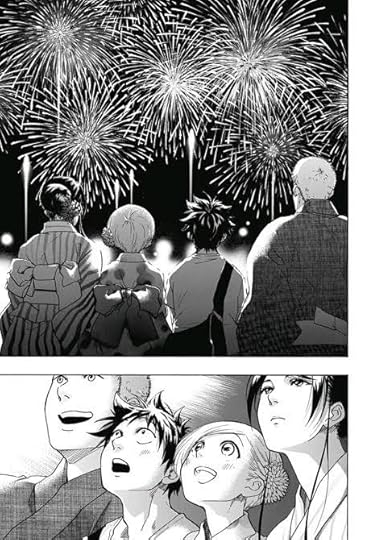
And that confession scene at the end. Touma confessing to Masumi and at the same time Futuba to Taichi with fireworks and all was so freaking beautiful.❤️👐
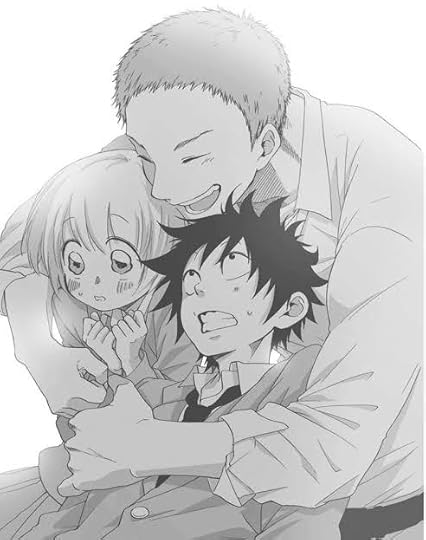
This one was so touching and expressing. We saw Touma opening to Futuba. Touma still keeps the childhood memories what else taichi needs to realise that he is special to touma.
That fireworks day gave me major family vibes like daddy touma and mommy masumi with their kids Futuba and Taichi tailing behind them. Omg they are so short and cute.
And that confession scene at the end. Touma confessing to Masumi and at the same time Futuba to Taichi with fireworks and all was so freaking beautiful.❤️👐

July 27, 2022
"When she smiles, I want to be there by her side, smiling with her. When she cries...I want to rush up to her give her a hug. I had no confidence in myself. No courage to act. Fearing rejection, I always averted my eyes and ran. Yet despite that, I still had the gall to tell myself...that I wanted nothing more than to see her happy."
THE TENSION IS GETTING SO INTENSE! I NEED THEM TO BE A QUADRUPLE ALREADY! PLEASE SAVE MY SOUL!
THE TENSION IS GETTING SO INTENSE! I NEED THEM TO BE A QUADRUPLE ALREADY! PLEASE SAVE MY SOUL!

April 30, 2020
[ Re-read in 2022, mexican edition. ]
"I want to live with freedom. I want to be able to say I love what I love. Be happy when I'm happy and sad when I'm sad. Not be told what to do. To not hurt anyone or be hurt by anyone."
When I was in high-school I often wondered what I would do with my life. I didn’t know what I was good at career-wise but I was only sure of one thing: I didn’t want to waste my life hating my job and paying bills. What I wanted was simple: I wanted to be happy. Problem was, I didn’t know how to achieve that. I didn’t know what it meant to be truly happy because I’ve always been the kid who questions everything and who over-thinks quite often.
Still, I had to make a choice and after all these years, I’ve learned that life has a funny way of showing you that even if you make big plans, you probably won’t succeed at the first try. Hell, you may even change your dreams once or twice because as we grow older, so do our priorities. Truth is, you’re gonna go through bumps and rough roads, and you’ll have to get stronger if you want to stay alive. You’ll get hurt and beaten down again and again. Perhaps, you’ll end up losing yourself too.
But you know what? We might feel like broken humans, like we’ll never be whole again, and that’s OK. There’s no one tougher as you, after you survive everything you thought it could kill you. There’s no one that knows your struggle but you, and so, what can you do?
Learning to love yourself, to be kind to yourself is a slow process, but once you’re there, nobody can mess with your power. Nobody can take that away from you.
And so, slowly but surely, you start seeing things and looking after people who share the same vibe as you. Their love and support might come off as simple, but oh, how wrong we are. Love, as cheesy as it sounds, is the only thing that keep us alive. Whether that is towards a lover, a friend or a relative, even to yourself, it is the feeling we crave and what we ultimately need to feel alive.
This volume really hit me close home and I’m so glad it reminded me the important things in life: love towards my friends, my dreams and goals but most importantly, that we are not alone. That we are not a sad, broken toy whose dreams got in the trash can. That we are humans, and we can always get better. We can always be better.
PREVIOUS REVIEWS:
Volume 1 | Volume 2 | Volume 3
"I want to live with freedom. I want to be able to say I love what I love. Be happy when I'm happy and sad when I'm sad. Not be told what to do. To not hurt anyone or be hurt by anyone."
When I was in high-school I often wondered what I would do with my life. I didn’t know what I was good at career-wise but I was only sure of one thing: I didn’t want to waste my life hating my job and paying bills. What I wanted was simple: I wanted to be happy. Problem was, I didn’t know how to achieve that. I didn’t know what it meant to be truly happy because I’ve always been the kid who questions everything and who over-thinks quite often.
Still, I had to make a choice and after all these years, I’ve learned that life has a funny way of showing you that even if you make big plans, you probably won’t succeed at the first try. Hell, you may even change your dreams once or twice because as we grow older, so do our priorities. Truth is, you’re gonna go through bumps and rough roads, and you’ll have to get stronger if you want to stay alive. You’ll get hurt and beaten down again and again. Perhaps, you’ll end up losing yourself too.
But you know what? We might feel like broken humans, like we’ll never be whole again, and that’s OK. There’s no one tougher as you, after you survive everything you thought it could kill you. There’s no one that knows your struggle but you, and so, what can you do?
Learning to love yourself, to be kind to yourself is a slow process, but once you’re there, nobody can mess with your power. Nobody can take that away from you.
And so, slowly but surely, you start seeing things and looking after people who share the same vibe as you. Their love and support might come off as simple, but oh, how wrong we are. Love, as cheesy as it sounds, is the only thing that keep us alive. Whether that is towards a lover, a friend or a relative, even to yourself, it is the feeling we crave and what we ultimately need to feel alive.
This volume really hit me close home and I’m so glad it reminded me the important things in life: love towards my friends, my dreams and goals but most importantly, that we are not alone. That we are not a sad, broken toy whose dreams got in the trash can. That we are humans, and we can always get better. We can always be better.
PREVIOUS REVIEWS:
Volume 1 | Volume 2 | Volume 3

November 20, 2021
So, I thought from the first volume that this series was principally a romantic comedy, where a quadrangle of straight and gay friends work out who they want to be with, but now, in this volume, it is clear that the story is about other, more foundational things first. Which is to say it may indeed become a romance--those feelings of attraction are in there--but is now about beginning with the need to love yourself, and then friendship, before romance can even successfully be established.
This volume features three key conversations--1) between Futaba and Toma, where they both realize they don't want to be themselves, they want to be someone else. Can they accept themselves and be better, more honest friends? And yet the thing they are not talking about is Taichi, their mutual friend, who may be more than a friend for each of them; 2) between Toma and Taichi, which establishes even more that Toma "likes" Taichi, though Taichi can hardly believe it: Toma is a big, accomplsihed baseball player. They also avoid talking about the complications of their friendship with Futaba and what that means, and 3) between Toma and Masumi, a kind of confession that he has always just wanted to feel normal:
"I want to live with freedom. I want to be able to say I love what I love. Be happy when I'm happy and sad when I'm sad. Not be told what to do. To not hurt anyone or be hurt by anyone."
An aching admission from what appears to be a sweet yet still closeted gay boy that will seem sadly all too familiar. And we are approaching what needs to happen, an actual open revelation among friends about what they all really feel. This all may seem simple and common and light on the surface--kids trying to figure out about self.friendship and love, could have been played for comedy, but it goes deeper than that, with careful pacing.
This volume features three key conversations--1) between Futaba and Toma, where they both realize they don't want to be themselves, they want to be someone else. Can they accept themselves and be better, more honest friends? And yet the thing they are not talking about is Taichi, their mutual friend, who may be more than a friend for each of them; 2) between Toma and Taichi, which establishes even more that Toma "likes" Taichi, though Taichi can hardly believe it: Toma is a big, accomplsihed baseball player. They also avoid talking about the complications of their friendship with Futaba and what that means, and 3) between Toma and Masumi, a kind of confession that he has always just wanted to feel normal:
"I want to live with freedom. I want to be able to say I love what I love. Be happy when I'm happy and sad when I'm sad. Not be told what to do. To not hurt anyone or be hurt by anyone."
An aching admission from what appears to be a sweet yet still closeted gay boy that will seem sadly all too familiar. And we are approaching what needs to happen, an actual open revelation among friends about what they all really feel. This all may seem simple and common and light on the surface--kids trying to figure out about self.friendship and love, could have been played for comedy, but it goes deeper than that, with careful pacing.

December 24, 2024
quien me mandó a leer esto odiando los triángulos amorosos, la estoy pasando mal

September 15, 2020
I have never read a story with a romance plot that has made me more conflicted about the outcome. I don't love Taichi and Futaba as a couple, and I'm not sold on the idea that they actually like each other romantically, but even if Toma moves on his feelings, there's no guarantee that Taichi will reciprocate them, although in all honesty I don't think he's ever thought much beyond what's billed as "normal."
On that note, the conversation Toma has with Masami at the end of the book is heartbreaking. What is "normal" and what's it like to have that be an everyday performance? How long can Toma keep it up? Even without Futaba's fluttery shyness (which in no way should irritate me as much as it does), could Taichi bear the burden of helping Toma with his feelings of abnormality?
These are questions the series asks with ever-increasing insistence. I'm not sure we'll end up liking the answers.
On that note, the conversation Toma has with Masami at the end of the book is heartbreaking. What is "normal" and what's it like to have that be an everyday performance? How long can Toma keep it up? Even without Futaba's fluttery shyness (which in no way should irritate me as much as it does), could Taichi bear the burden of helping Toma with his feelings of abnormality?
These are questions the series asks with ever-increasing insistence. I'm not sure we'll end up liking the answers.
January 2, 2022
No sé, pero me duele unu

November 25, 2021
Trop cool ce tome <3 les persos sont tous super attachants rolala 🥲 par contre j’ai peur de la manière dont ça va se goupiller ensuite !! Y en a qui vont être blessés jpp je veux pas

December 30, 2019
this one's my favorite so far.......and yes, we have reached the 5 star territory. i didn't even notice how this story started meaning so much to me but......it does
i love how all the characters have massive self esteem issues but they clearly think the world of each other, and there are so many beautiful scenes of emotional support......the power of friendship......all of this is just so good for the heart. also the way it goes into different types of love (and takes them all equally seriously!), and the whole 'i have no idea what to do with my life and i'm way too insecure to even imagine it' panic that's the essential feeling at the end of high school. i remember it all too well, but i've never actually seen it represented this accurately in fiction.
i particularly loved the ending with the fireworks, and once again, the last scene was perfect.
and now i want more!! genuinely can't wait for next one to be released.
i love how all the characters have massive self esteem issues but they clearly think the world of each other, and there are so many beautiful scenes of emotional support......the power of friendship......all of this is just so good for the heart. also the way it goes into different types of love (and takes them all equally seriously!), and the whole 'i have no idea what to do with my life and i'm way too insecure to even imagine it' panic that's the essential feeling at the end of high school. i remember it all too well, but i've never actually seen it represented this accurately in fiction.
i particularly loved the ending with the fireworks, and once again, the last scene was perfect.
and now i want more!! genuinely can't wait for next one to be released.

March 10, 2021
So we continue the "I wanna say what I mean but can't" story but here it actually makes sense.
See when someone is trying to be okay with themselves it's not so easy to come out and admit their feelings. It isn't like Touma can just come out and say how he feels to Taichi. Maybe he could even, if he felt okay in his own skin. As he says here, he isn't even sure how to love or like himself. And it feels impossible. On the flipside you have Futaba who is finally coming to terms of who she is and how she can better improve herself. And their heart to heart really helps both grow that by the end someone actually confesses and we're hitting the good spot.
While it is beginning to feel like it is stretched out a bit the humor still works really well, the funny faces is perfect, the serious art is wonderful, and the tender moments mostly hit. I can see this being a huge anime hit (If they haven't already made it)
A 4 out of 5.
See when someone is trying to be okay with themselves it's not so easy to come out and admit their feelings. It isn't like Touma can just come out and say how he feels to Taichi. Maybe he could even, if he felt okay in his own skin. As he says here, he isn't even sure how to love or like himself. And it feels impossible. On the flipside you have Futaba who is finally coming to terms of who she is and how she can better improve herself. And their heart to heart really helps both grow that by the end someone actually confesses and we're hitting the good spot.
While it is beginning to feel like it is stretched out a bit the humor still works really well, the funny faces is perfect, the serious art is wonderful, and the tender moments mostly hit. I can see this being a huge anime hit (If they haven't already made it)
A 4 out of 5.

September 18, 2021
Inching toward revelation and devastation as the swirling feelings of love begin to blow up a storm. If all the pent-up emotions in the characters don't explode soon, I just might.

August 16, 2022
GOD DAMN. i hate the firework chapters😭😭

April 13, 2020
Another excellent volume.
I appreciate the conversation Taichi and Touma had, Touma's desire to move out and be free is relatable for many closeted queer kids. The conversation between Kuze and Touma was important as well. The message to be kind to yourself and that your best friend is yourself is nothing new but it's important nevertheless. Especially for teen audience.
Besides all the important touching conversation, this volume has been plenty fun. I love my four kids.
I appreciate the conversation Taichi and Touma had, Touma's desire to move out and be free is relatable for many closeted queer kids. The conversation between Kuze and Touma was important as well. The message to be kind to yourself and that your best friend is yourself is nothing new but it's important nevertheless. Especially for teen audience.
Besides all the important touching conversation, this volume has been plenty fun. I love my four kids.

June 29, 2021
this story means so much to me already and i get so emotional reading it...happy to see all my babies being happy and together.


March 20, 2025
4.75/5 estrellas.
Este ha sido un tomo muy cargado de emociones y suspenso, lleno de escenas preciosas.
Creo que voy a atesorarlo más que volúmenes anteriores, a pesar de que por momentos se me apriete el corazón 😭
Es una historia bellísima que se cocina lento y me encanta. Me lleva con ella y me hace sentir de todo en el proceso, eso lo aprecio un montón realmente, porque cuesta encontrar buenas lecturas que a uno le lleguen.
Amo mucho a estos chicos, solo quiero protegerlos y ocuparme de que sean felices.
¡Ansioso por leer el siguiente tomo porque no puede terminar así! 😱💘
"Quiero vivir... con libertad. Quiero poder decir a los cuatro vientos... lo mucho que me gustan las cosas que me gustan... Estar contento en momentos felices, ponerme triste en momentos tristes... sin que nadie me diga que estoy equivocado."
Este ha sido un tomo muy cargado de emociones y suspenso, lleno de escenas preciosas.
Creo que voy a atesorarlo más que volúmenes anteriores, a pesar de que por momentos se me apriete el corazón 😭
Es una historia bellísima que se cocina lento y me encanta. Me lleva con ella y me hace sentir de todo en el proceso, eso lo aprecio un montón realmente, porque cuesta encontrar buenas lecturas que a uno le lleguen.
Amo mucho a estos chicos, solo quiero protegerlos y ocuparme de que sean felices.
¡Ansioso por leer el siguiente tomo porque no puede terminar así! 😱💘

June 9, 2021
4.5 estrellas.
ESTOY ENAMORADA DE ESTE MANGA CTM
Único contra: los personajes tienen las mismas crisis existenciales que yo, con la diferencia que ellos tienen 17 y yo 26, lo que solo está consiguiendo agravar mi crisis existencial propia. Aparte de eso, esto es un deleite.
ESTOY ENAMORADA DE ESTE MANGA CTM
Único contra: los personajes tienen las mismas crisis existenciales que yo, con la diferencia que ellos tienen 17 y yo 26, lo que solo está consiguiendo agravar mi crisis existencial propia. Aparte de eso, esto es un deleite.

September 26, 2021
volume semplicemente stupendo.

June 9, 2023
GOOOOSSSHHHHHH 😭😭😭😭😭😭😭😭😭😭😭😭😭😭😭😭😭😭😭😭😭😭😭😭😭😭😭

January 27, 2023
Manga beaucoup trop mignon.
ET qui semble aborder des thématiques pas si légères finalement.
ET qui semble aborder des thématiques pas si légères finalement.

November 3, 2025
The plot thickens. Each of the foursome is admitting tidbits to each other, but no seriously big reveal has occurred. Futaba has admitted the most, in that she is not really in a love-pursuit for Toma.
We hear Toma really describing his inner pressure:
Free to say that I like what I like...
Whenever I want. To whoever I want.
I want to get to be happy when I'm happy, and sad when I'm sad...
without anybody telling me I'm wrong or weird.
Without hurting anyone...
...or being hurt.
As a teacher, I am currently taking a required 'suicide prevention' course. The amount of anxiety expressed by Toma, Taichi and Futyaba would all warrant immediate time with a counselor.
Part of the therapy can be to have close friends that you can talk to. While these characters are all spending a lot of time with each other, they still cannot express their true feelings openly very well.
I'm kinda 3.5* on this one as I wanted more advancement in this storyline, but it is S-L-O-W in being revealed.
On to book 5.
We hear Toma really describing his inner pressure:
Free to say that I like what I like...
Whenever I want. To whoever I want.
I want to get to be happy when I'm happy, and sad when I'm sad...
without anybody telling me I'm wrong or weird.
Without hurting anyone...
...or being hurt.
As a teacher, I am currently taking a required 'suicide prevention' course. The amount of anxiety expressed by Toma, Taichi and Futyaba would all warrant immediate time with a counselor.
Part of the therapy can be to have close friends that you can talk to. While these characters are all spending a lot of time with each other, they still cannot express their true feelings openly very well.
I'm kinda 3.5* on this one as I wanted more advancement in this storyline, but it is S-L-O-W in being revealed.
On to book 5.

August 6, 2025
The artwork is good and Futaba Does get at least a little time to shine though I wish there was more of her in the series I just feel like she’s not really a flushed out character it’s interesting to see where the main romance goes and how the same sex best friends are dealing with their feelings towards her friends and how it gets complicated for them all in all I have to say this is a pretty good story I can’t wait to read the next volume.
January 10, 2021
"I want to live with freedom. I want to be able to say I love what I love. Be happy when I'm happy and sad when I'm sad. Not be told what to do. To not hurt anyone or be hurt by anyone."
Reading till vol. 4 finally I figured out what the story really. This volume full of roller coaster feeling, The ending in last panel really painful and hurt, tbh.
Reading till vol. 4 finally I figured out what the story really. This volume full of roller coaster feeling, The ending in last panel really painful and hurt, tbh.

June 2, 2021
One of the things I love most about this series is that romantic relationships are not rushed and are not the main focus. But the friendships are and it’s just so good to see because they are building each other up to be more confident and outgoing. This volume might have been the most heartwarming for there is emotion in both the art and words that have a strong impact on the story. And with being able to feel the characters emotions and their continued development it helps connect you to the characters. Also, each volume has had a great and impactful ending but this might be my favorite due in part to the fireworks. Overall, this is an amazing volume and I look forward to seeing the relationships continue growing.

December 8, 2022
The ending ughh.. I need vol 5 right now

Displaying 1 - 30 of 641 reviews