

What do you think?

Fugitive Atlas: Poems
Khaled Mattawa’s poetry contains “the complexity of a transnational identity” (MacArthur Fellowship citation)
Fugitive Atlas is a sweeping, impassioned account of refugee crises, military occupations, and ecological degradation, an acute and probing journey through a world in upheaval. Khaled Mattawa’s chorus of speakers finds moments of profound solace in searching for those lost―in elegy and prayer―even when the power of poetry and faith seems incapable of providing salvation.
With extraordinary formal virtuosity and global scope, these poems turn not to lament for those regions charted as theaters of exploitation and environmental malpractice but to a poignant amplification of the lives, dreams, and families that exist within them. In this exquisite collection, Mattawa asks how we are expected to endure our times, how we inherit the journeys of our ancestors, and how we let loose those we love into an unpredictable world.
Fugitive Atlas is a sweeping, impassioned account of refugee crises, military occupations, and ecological degradation, an acute and probing journey through a world in upheaval. Khaled Mattawa’s chorus of speakers finds moments of profound solace in searching for those lost―in elegy and prayer―even when the power of poetry and faith seems incapable of providing salvation.
With extraordinary formal virtuosity and global scope, these poems turn not to lament for those regions charted as theaters of exploitation and environmental malpractice but to a poignant amplification of the lives, dreams, and families that exist within them. In this exquisite collection, Mattawa asks how we are expected to endure our times, how we inherit the journeys of our ancestors, and how we let loose those we love into an unpredictable world.
- GenresPoetry
112 pages, Paperback
First published October 20, 2020
About the author
Khaled Mattawa
35 books39 followersKhaled Mattawa currently teaches in the graduate creative writing program at the University of Michigan. He is the author of four books of poetry, the latest of which, Tocqueville, won the San Francisco Poetry Center’s Book Award. Mattawa has translated eleven volumes of contemporary Arabic poetry, including Adonis: Selected Poems and Concerto Al-Quds. His book Mahmoud Darwish: The Poet’s Art and His Nation was a finalist for the Pegasus Prize. A MacArthur fellow, Mattawa’s awards include an Academy of American Poets Fellowship and the PEN Award for Poetry in Translation. He is the current Editor of Michigan Quarterly Review.
Ratings & Reviews
Friends & Following
Create a free account to discover what your friends think of this book!
Community Reviews
Displaying 1 - 17 of 17 reviews

October 12, 2024
In the backyard, I see him standing among the trees, bow in hand, a stone axe strapped to his waist. He is exploring a land no one owned yet, feeling emotions that had not been felt for a long time here. He does not see me, and I can only see him through the eyes of a word that started out moving slowly, reaching for something far away, then seizing it in a fist. Linger, long, belong, so goes the history of dispossession.

October 26, 2020
Fugitive Atlas is a collection of poems that might be difficult to read in one go. Many of Khaled Mattawa’s poems required some time to contemplate political events that took place in the United States, various parts of Africa, and the Arab world. This collection is not meant to be easy— It rests heavy with numerous poems feeling like an elegy, or a prayer for a devastated world.
Mattawa does a phenomenal job striking a balance between humans and deities (or, alternatively, earth and heaven), life and death, freedom and suppression (and in these poems, often colonization). It’s an intimate—even uncomfortable—exploration of these themes, brought to life with flowing words that provide a multisensory experience.
While solemn, there are glimmering moments of promise within these poems, one notable one being “Now That We Have Tasted Hope.” Mattawa still highlights love, beauty, and desire that is still very much a part of this complex world that we’ve mapped.
I found the collection’s title, Fugitive Atlas, fascinating. I feel Mattawa wanted “atlas” to mean two things: the Greek mythological figure who holds the world up on his shoulders, but also what we conventionally know as maps. Adding “fugitive” colors many of his politically-charged poems. Part V in particular focused on the migrant crisis these last several years. I don’t think there is a better way to describe the situation like Mattawa did in one of his poems: “they labor to / translate their traumas into EU legalese.”
I loved the way Mattawa played with form. While most of them followed a relatively conventional structure, he subverted them multiple times, almost akin to resisting Western colonization in language. I especially liked the ‘alams which, while brief, were standouts to me. Speaking of, I strongly recommend keeping the “Notes” section tabbed to have a more nuanced understanding of these poems.
With regard to the collection in general, I wasn’t entirely sure why the poems and sections were in the order that they were. I will say ending with Part V certainly left a lasting impact, especially with a beatitude. It didn’t take away from the reading experience, since you could still parse out the similarities between poems in each section.
Note: I received a copy of Fugitive Atlas from NetGalley and Graywolf Press in exchange for an honest review.
Mattawa does a phenomenal job striking a balance between humans and deities (or, alternatively, earth and heaven), life and death, freedom and suppression (and in these poems, often colonization). It’s an intimate—even uncomfortable—exploration of these themes, brought to life with flowing words that provide a multisensory experience.
While solemn, there are glimmering moments of promise within these poems, one notable one being “Now That We Have Tasted Hope.” Mattawa still highlights love, beauty, and desire that is still very much a part of this complex world that we’ve mapped.
I found the collection’s title, Fugitive Atlas, fascinating. I feel Mattawa wanted “atlas” to mean two things: the Greek mythological figure who holds the world up on his shoulders, but also what we conventionally know as maps. Adding “fugitive” colors many of his politically-charged poems. Part V in particular focused on the migrant crisis these last several years. I don’t think there is a better way to describe the situation like Mattawa did in one of his poems: “they labor to / translate their traumas into EU legalese.”
I loved the way Mattawa played with form. While most of them followed a relatively conventional structure, he subverted them multiple times, almost akin to resisting Western colonization in language. I especially liked the ‘alams which, while brief, were standouts to me. Speaking of, I strongly recommend keeping the “Notes” section tabbed to have a more nuanced understanding of these poems.
With regard to the collection in general, I wasn’t entirely sure why the poems and sections were in the order that they were. I will say ending with Part V certainly left a lasting impact, especially with a beatitude. It didn’t take away from the reading experience, since you could still parse out the similarities between poems in each section.
Note: I received a copy of Fugitive Atlas from NetGalley and Graywolf Press in exchange for an honest review.

September 8, 2022
Excerpts:
What will you do, dear God, without us? How
will you fare, alone again in the empty vast, in the dark
of your creation, without us giving you your name?
(from “Shikwah”)
—
Don’t close your eyes,
or the stories you’ve told
will swallow you.
(from “Procreation”)
—
everywhere
a hemorrhage
of dread
(from “‘Alams for Sun on Shuttered Windows”)
What will you do, dear God, without us? How
will you fare, alone again in the empty vast, in the dark
of your creation, without us giving you your name?
(from “Shikwah”)
—
Don’t close your eyes,
or the stories you’ve told
will swallow you.
(from “Procreation”)
—
everywhere
a hemorrhage
of dread
(from “‘Alams for Sun on Shuttered Windows”)

October 23, 2020
This book is doing such interesting formal and political work, writing at intersections of ecopoetics and colonialism. The threads of elegy and parenthood as well are stunning and heart-shattering. I have marked so many poems to return to upon subsequent reads - absolutely a book I am going to be thinking about, teaching, and returning to for years to come.

February 23, 2021
I found this book because someone tweeted about it--another poet, the only way to consume twitter, imo, is by following poets--and I was both deeply impressed with the poem they tweeted and in between books of poetry. So I bought it, and I'm glad I did! This book is intense and complicated. Its themes are political and full of personal struggle against forces that are so large that they feel cataclysmic, more like bad storms at sea than choices made by humans.
Structurally, the poems in this collection are very diverse. One set of poems uses paragraphs of prose before ending with a couple short stanzas of poetry. E.g. "Plume" begins: "Deep under the affluent college town where I live, an hour from Flint, Michigan, there is a moving plume of groundwater contaminated with 1.4-dioxane." and concludes; "Angels, crimson, blue, / and gold, draped in poisoned quills, / ghosting the dusk below // the hours, let not your / fiery water / inflict upon us."
Another type of poem in the book is the 'alams, which are either a poetic form I don't know enough about to recognize or are something Mattawa has invented himself. I found them hard to read; three columns of many very short triplets, they seemed to me in a sense to be meant for every stanza to be read at once by a different voice, or perhaps to be rung out like bells. I would like very much to hear them aloud, performed by the poet himself or by his chosen performers.
My favorite poem is the final poem in the book, one of several "Beatitude" poems, which I think are all about the poet's daughter.
Beatitude
"Let's walk through the woods," she tells me.
"Let's walk by the rocky shore at sunrise."
"Let's walk through the clover fields at noon."
In the rainforest she is silent, mesmerized.
She's never prayed--we never taught her--
but she seemed to then, eyes alert with joy.
She points to a chameleon the size of a beetle,
teaches me the names of flowers and trees,
insects we can eat if we're ever lost here.
"I'm teaching you how to entrust the world
to me," she says. "You don't have to live
forever to shield me from it."
Structurally, the poems in this collection are very diverse. One set of poems uses paragraphs of prose before ending with a couple short stanzas of poetry. E.g. "Plume" begins: "Deep under the affluent college town where I live, an hour from Flint, Michigan, there is a moving plume of groundwater contaminated with 1.4-dioxane." and concludes; "Angels, crimson, blue, / and gold, draped in poisoned quills, / ghosting the dusk below // the hours, let not your / fiery water / inflict upon us."
Another type of poem in the book is the 'alams, which are either a poetic form I don't know enough about to recognize or are something Mattawa has invented himself. I found them hard to read; three columns of many very short triplets, they seemed to me in a sense to be meant for every stanza to be read at once by a different voice, or perhaps to be rung out like bells. I would like very much to hear them aloud, performed by the poet himself or by his chosen performers.
My favorite poem is the final poem in the book, one of several "Beatitude" poems, which I think are all about the poet's daughter.
Beatitude
"Let's walk through the woods," she tells me.
"Let's walk by the rocky shore at sunrise."
"Let's walk through the clover fields at noon."
In the rainforest she is silent, mesmerized.
She's never prayed--we never taught her--
but she seemed to then, eyes alert with joy.
She points to a chameleon the size of a beetle,
teaches me the names of flowers and trees,
insects we can eat if we're ever lost here.
"I'm teaching you how to entrust the world
to me," she says. "You don't have to live
forever to shield me from it."

July 28, 2021
Fugitive Atlas by Khaled Mattawa
Rating 4/5 Stars
Published by Graywolf Press
Published On 20th October 2020
Thank you to Netgalley, Graywolf Press, and of course, Khaled Mattawa, for an ARC in exchange for an honest review.
Fugitive Atlas is a beautifully devastating account of the current refugee crisis, military occupations, and havoc being wrecked across the globe. The poems describe lives, dreams and families - the everyday folks that are at the center of these uneven grounds. It discusses how the globe shapes us as humans and what we can take to become better people. It also covers what we inherit from ancestors and how we love in a world so unpredictable. At its core, the transnational identity is investigated, and truly gets the reader to question - what does it mean to belong in these times?
This collection of poems is BEAUTIFUL. I actually found myself having to take breaks from the book, hence why my review took so long. Each poem is magnificent and needs to be understood in its own time. The poems are authentic and powerful and I believe this is a must read for anyone looking to understand the everyday deals of someone in the unpredictable.
May 22, 2021
This book took me a long time to absorb but that is because it is incredibly full and ambitious. It attempts to write on the most harrowing and evil aspects of human society, political oppression, and physical and psychological and spiritual dispossession. I think Mattawa is a brilliant poet, both for his use of language and imagery and for mastering the gorgeousness of what can only be captured in poetry, but also for his acute understanding of politics and the psychology of the oppressed. He is deeply empathetic, deeply humanistic. And the experimentation with forms is so impressive! I also really loved all the Beautitudes, which were dialogues with his daughter. Those always hit me. This isn’t the type of poetry that I would normally read, but Mattawa is an absolutely brilliant poet. I don’t regret spending months on this collection— it deserves careful time and close attention.

November 22, 2020
Thank you to Graywolf Press and Netgalley for the Reader's Copy!
Now available on Amazon, Barnes & Noble and Indie Bookstore.
Spanning time and land, Mattawa's Fugitive Atlas takes on a transcontinental identity much like the author himself. With a blend of long and short form poetry, Mattawa's eclectic collection takes a modern spin on contemporary and 20th century poetry in memorable, innovative ways. The jump between the present and past lends itself to capturing the complex experiences of a transnational, translational and boundless existence, and perhaps lays a blueprint for the world that we can strive to create.
Now available on Amazon, Barnes & Noble and Indie Bookstore.
Spanning time and land, Mattawa's Fugitive Atlas takes on a transcontinental identity much like the author himself. With a blend of long and short form poetry, Mattawa's eclectic collection takes a modern spin on contemporary and 20th century poetry in memorable, innovative ways. The jump between the present and past lends itself to capturing the complex experiences of a transnational, translational and boundless existence, and perhaps lays a blueprint for the world that we can strive to create.
February 9, 2021
A study of environmental and societal forces that force the displacement of people, as well as the tenuous hold that those same people have on those "native" lands, Mattawa introduces me to forms that I hadn't consciously come across before. His best work--and there's at least 10 or so magnificent works in this collection--all focus on the ways that people hold to memories and beliefs in the midst of catastrophic change.
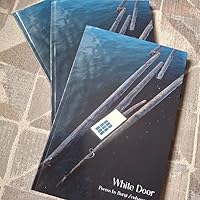
December 13, 2025
As cutting as they are devastating and as poignantly the poems in Fugitive Atlas are amazing! In hymns, prayers, beatitudes, haibuns, and many other forms they sing and lament of flight and impossible refuge, of the evil brutality engenders—the bitterness and despair—as they keep asking how is it possible to speak of such horrors, to know of them and what comes of them and to still go on saying yes to living. But they do, most beautifully and powerfully so.

May 12, 2021
perfect slow read for winter
July 24, 2021
Authentic and prayerful. A really special collection focusing on the refugee crisis, but also speaking to other local and global conditions, and life itself.
December 5, 2022
One to reread
This was challenging with all the literary and political references but a very satisfying read and I definitely hope to return to it again.
This was challenging with all the literary and political references but a very satisfying read and I definitely hope to return to it again.

April 4, 2024
Alams for Cairo Nights is my fav poem from this collection for sure.
May 28, 2024
Like its book title it remains as true as entirely with this body of work.

March 21, 2025
4.5 an incredibly powerful collection that toes the line between poetry, memoir, and journalism
January 12, 2022
This is one of the most unique poetry books I have read that blends Eastern and Western cultural forms to create hybrid poetry such as the traditional Bedouin Alams or Japanese Haibuns; calls upon poetic ancestry and lineages; and employs themes of loss, forced migration, identity, and bittersweet homecoming. Though this ties together experiences from Libyan exiles, Iraqis, and Palestinians, it also invites the reader to think about their place in the world. Living in the diaspora and as a daughter of Pakistan immigrants, I was pushed to think about what legacy I would leave behind; how I negotiate my own double identity in terms of what gets lost and gained as a result; and my poetic and cultural ancestries. I would recommend this to anyone who wants to read about displacement, occupation, and loss. I would recommend this to anyone who wants to see versatility and poetry being performed on the page. Lastly, I'd like to add that I enjoyed the nod to Iqbal in the beginning.
Displaying 1 - 17 of 17 reviews