Jump to ratings and reviews
Rate this book

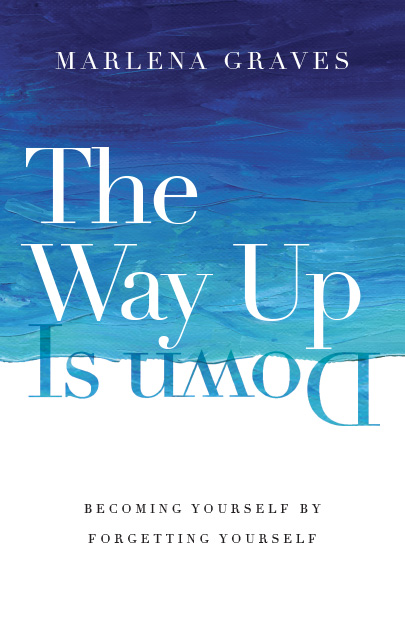
The Way Up Is Down: Becoming Yourself by Forgetting Yourself

Rate this book
"Now, with God's help, I shall become myself."

These words from Danish philosopher Søren Kierkegaard resonate deeply with Marlena Graves, a Puerto Rican writer, pastor, and activist. In these pages she describes the process of emptying herself that allows her to move upward toward God and become the true self that God calls her to. Drawing on the rich traditions of Orthodox and Christian saints, she shares stories and insights that have enlivened her transformation. For Marlena, formation and justice always intertwine on the path to a balanced life of both action and contemplation.

If you long for more of God, this book offers a time-honored path to deeper life.

192 pages, Hardcover

Published July 14, 2020

36 people are currently reading
664 people want to read

About the author

Marlena Graves

16 books29 followers
Marlena Graves is a writer and adjunct professor. She has also worked at Farm Labor Organizing Committee (FLOC). Marlena holds an MDiv from Northeastern Seminary in Rochester, New York, and is a graduate of the Renovaré Institute. She has been a bylined writer for Christianity Today, (in)courage, womenleaders.com, and Our Daily Bread, and she is also the author of A Beautiful Disaster. She lives with her husband and three daughters in Toledo, Ohio.

Ratings & Reviews

What do you think?
Rate this book

Friends & Following

Create a free account to discover what your friends think of this book!

Community Reviews

5 stars
99 (45%)
4 stars
72 (33%)
3 stars
40 (18%)
2 stars
3 (1%)
1 star
3 (1%)
Displaying 1 - 30 of 66 reviews
Profile Image for Charlotte Donlon.
Author 1 book35 followers
June 10, 2020
This book is a gift to all of us--especially during this particular time/moment in history.

One thing I love about all of Marlena's writing and this book, in particular, is how she writes about the Trinity. The language and tone she uses while writing about God, Jesus, and the Holy Spirit are full of love and adoration in ways that are authentic and intimate. It is striking and so refreshing compared to other books written by Christians about issues related to justice. The intimacy she has with our Triune Lord helps me trust her and listen to her.

Marlena's book has also helped me see some of my sins and how I want to hate white Christians who dismiss systemic racism. I want power, too. I want power so they will listen to me and agree with me. Her words have helped move me toward repentance.
Profile Image for Daniel.
154 reviews5 followers
April 4, 2020
The absolute beauty of this book is IVP published a book talking about humility from someone NOT a megachurch pastor and coming from the perspective of a person of color. Marlena brings all the grit and reality of her upbringing, her imperfections, and her anxieties to this work and shows that "having it all together" is not the only time one needs humbling.

Graves also shows that one need not be "sitting well" economically to truly be a giver. She gives heart-felt stories of those who have given out of their poverty to help others along.

The one story that meant the most to me came from "The Great Divorce." It was the story of Sarah Smith of Golders Green. This story sent me into tears as the Holy Spirit worked on me yet again about this word: OBSCURITY. I want "fame." I want to be "noticed." I want to feel like my life "counted", but that really means someone I admire noticed me.

The lesson taught in "The Great Divorce" is there are two kinds of fame. The fame of the Kingdom of God is quite different than the fame sought on earth. So, while heaven was applauding Sarah Smith of Golders Green, the observers from earth had no idea who she was! Sarah was famous in the eyes of God and with those who have eyes to see.

This book is deeply moving spiritually and practically. The author challenges us with very practical issues of our day. Politics. Immigration. The poor. What are we doing to keep our focus on "the least of these"?

This is a touching book worth holding on to and visiting on a regular basis.
Profile Image for Traci Rhoades.
Author 3 books102 followers
June 28, 2020
I admire the author's passion and consistent message, if you're going to be a Christ-follower, it's going to cost you something. In page after page of this book, she reminds us, through personal narrative, the stories of others and scripture passages, what we have to gain. This book is inspiring.
Profile Image for Dan.
182 reviews38 followers
April 11, 2020
THE WAY UP is DOWN, by Marlena Graves, is absolutely beautiful in its composition, thought-process, insight and wisdom.

The whole premise of Graves’ book is servant living, rooted in deep love of and trust in God.

She continually slips in pearls of wisdom, almost discreetly.

Like this: “Could it be that Jesus learned the habit of voluntary self-emptying and renunciation of self-will by observing his mother? Graves asks us to recall the words of Mary’s response to the angel Gabriel [what we call the Magnificat… “I am the Lord’s servant… May your word in me be fulfilled.”]

“Jesus didn’t cling to his rights,” Graves writes, “He repeatedly gave them up.”

She goes on, “To choose emptiness entails a deep trust in God as we take the downward descent into servanthood and humility… It’s the way of his mama. But it makes absolutely no sense from the human perspective.”

Graves points out that Jesus was born “at the bottom of society’s pecking order… The first time God opened his eyes, he gazed into the face of his mother. Had Mary not been able to feed him from her own body, Jesus would have perished. Holy vulnerability.”

How do we begin to achieve such a level of servanthood? Graves advises that “If I am to be like Jesus, a saint, I am going to have to walk away from what this world calls status...”

In discussing other aspects of servanthood, Graves offers a take on a piece of the American version of Christianity that most would ignore. “Back in the day when there was prayer in school, there was slavery, lynching, and the genocide of the indigenous too. Our abuse, torture, and killing of others betray our prayerlessness and lack of love for sister and brother. God would rather have our life of prayer manifest itself in love for our neighbors, which demonstrates our love for him, over perfunctory prayer in school any day.”

“Any Christianity that justifies the hatred, mistreatment, or abuse of another is not the way of Jesus.”

After making this point, Graves concludes: “How then do we become the kind of people who are not akin to the Ku Klux Klansmen pastors and laypeople of our time, but those who are living answers to prayer for others? We begin first, I think, by praying for our enemies and moving in the direction of love.”

She backs up this idea by quoting Dallas Willard, who wrote “To understand Jesus’ teachings, we must realize that deep in our orientations of our spirit we cannot have one posture toward God and a different one toward other people.”

A few chapters later, in discussing the true, humble saints of the earth who will have a huge inheritance in heaven, Graves refers to C.S. Lewis’ THE GREAT DIVORCE. Quickly she then refers to Paul’s reference of “incomparably great power,” mentioned in Ephesians 1:19-21.

Paul prayed that the members of the Ephesian church would have their eyes opened to receive such power. Eyes opened by living close to the ground, away from status, success and the world.

“The posture of a servant is of one of bent knees. Washing soiled feet. It is a close-to-the-earth, face-to-the-ground posture. Vulnerable. It is only in this lowly position, a servant’s posture, that glory is revealed and that we have the possibility of glimpsing the grandeur and glory about us. We are able to truly see when we see the earth from below rather than from above.”

Farther on in THE WAY UP IS DOWN, Graves discusses people, who like the beggar Lazarus, are ignored by those around them. “We isolate them through unjust laws and behaviors. And we segregate ourselves from them. We find new and improved ways to separate ourselves from them and them from us… There are many ways to trample on our Lazaruses. Many ways to unsee them… We falsely believe we have no responsibility for them! We hate them while singing our worship songs and convincing ourselves that we are safe from wrongdoing. We fail to realize that we are heretics because of the content of our action or inaction, which reveals the content of our character.”

“I worry about us as a church when we ignore and bad mouth the immigrant, undocumented or not, the refugee, the poor, the physically or mentally sick, the elderly, disabled, imprisoned, and other vulnerable and marginalized people, including children…Ignoring also entails supporting and voting for bad laws, that is, unjust laws that worsen their plight. I really do worry when we railroad the very people Jesus made a beeline for.”

Graves suggests that her worldview is counterintuitive. It becomes possible only through memento mori (remembering that we will all die), which opens the door to living life purposefully; which she defines as Kairos (Greek for the right, critical or opportune moment).

She quotes McKinley Valentine to further define the term. “In Christian theology, Kairos is referred to extensively. It has the sense of ‘ripeness.’ It can be a small moment in one person’s life that is ripe, and full, and perfect.”

For Graves, the goal of a Christian life looks like this: “I don’t want anything else. Not when it comes to possessions. All I want to do is be able to pay my bills and not live paycheck to paycheck. There are very few things I want or need.”

On the flip side of this, here’s a very unique view of hell. “Hell is laser focusing on what you don’t have, refusing to take our eyes off of our deprivations.”

Towards the end of her book Graves provides a treasure trove of wisdom. Beginning with this: “When we’ve made our requests to God and done our part and accept the given until God shows us otherwise, if he ever does, we become grounded. We fix our eyes on Jesus and practice gratitude so we can learn gratitude. We live simply… We pray… We do the next thing given to us. We learn a healthy detachment. We learn to listen for God’s quiet voice and spot God’s hands in the midst of the dizzying noise and glittering neon lights of our consumer culture…”

She references James 5:16-18 concerning the effective prayer of a righteous person. “James connects a holy life, a righteous life, with powerful and effective prayer. We can’t miss or dismiss the connection between holiness and a powerful presence (and effective prayer!)… I am not talking about people who claim to be holy but people who are so much like Jesus that they take our breath away.”

To Graves’ way of thinking, this is where true power comes from. “This is the fruit of Jesus’ heart becoming our heart. It is a life full of the Holy Spirit. Our mere presence can usher in shalom and healing.”

Marlena Graves proved herself to be an uncommonly insightful writer with her first book, A BEAUTIFUL DISASTER. And THE WAY UP IS DOWN is additional, ample evidence of this fact.
Profile Image for Joy Matteson.
648 reviews67 followers
March 18, 2020
This book is so wise. Every time I picked it up the last few days it has been a source of peace and a reminder that God is within me, working all the time, even when everything around me is uncertain. Graves's writing is beautiful, vulnerable, and raw at times. Highly recommended.
Profile Image for Dorothy Greco.
Author 5 books83 followers
August 8, 2020
Marlena Graves is a deep thinker, human rights activist, and Christian author. Her words always either challenge or encourage me. This book did both. Graves resists the common American Christian narrative that promotes onward and upward and instead encourages readers to pour themselves out on behalf of others so that they can find deeper intimacy with Christ. By sharing her personal journey as well as the journeys of saints and Scripture, Marlena offers a compelling vision for how to live out the gospel. "No place is too low for Jesus to stoop in order to serve others." May the same be said of me at the end of my life.
Profile Image for Michelle Kidwell.
Author 36 books84 followers
June 3, 2020
The Way Up Is Down
Becoming Yourself by Forgetting Yourself
by Marlena Graves

InterVarsity Press

InterVarsity Press

IVP
Christian
Pub Date 14 Jul 2020


I am reviewing a copy of The Way Up is Down through InterVarsity Press and Netgalley:


In The Way Up Is Down Marlena Graves describes the process of emptying herself in order to become closer to God. She draws on the rich traditions of Eastern and Western Christian saints.


Marlena Graves describes her daily and desperate need for a relationship with him as a physical hunger.


Marlena shares stories and insights that have enlivened her transformation. For Marlena, formation and justice always intertwine on the path to a balanced life of both action and contemplation. If you long for more of God, this book offers a time-honored path to deeper life.


I give The Way Up is Down five out of five stars!


Happy Reading!


Profile Image for Debora Smith.
47 reviews
July 2, 2020
In The Way Up Is Down, Marlena Graves challenges evangelicals to rethink postures and allegiances and calls all Christians to repentance, individually and corporately. She is direct, provocative, intent on revealing hypocrisy, astute, informed, involved, prayerful, and passionate about God. Her prophetic voice burns through the chaff of our excuses and two-faced lives. She boldly reveals sin that besets American Christianity, but she does it with vulnerability and humility, artfully weaving personal stories throughout.

Graves focuses on kenosis and what it looks like in our daily lives. She beckons readers to humility, generosity, justice, and total surrender of our whole selves to God. It is not a new message but one that has been lost, or at least muted, not only in our society at large, but also in our churches, where individual salvation is more important than communal salvation, where my freedom and rights as an American are more important than the good of the community, where people at the highest levels of civic and religious institutions hide and minimize sin and abuse in order to maintain power, and where the weak and marginalized are exploited and dehumanized. Graves woos us back to the gospel, to kingdom-of-God living. She does this from an intellect trained in theology and church history and from a bodily presence with the poor and disenfranchised rendering her voice both authentic and compelling. She expresses her views candidly, no question as to what she believes when she speaks of government policies that hurt the poor and religious abuse that flies in the face of the gospel. She calls it like she sees it and won’t let people hide behind their piety. Truth-telling from a heart drenched in love is her calling. She is Christ-oriented, disenamored with position and power. There’s nothing wishy washy in these pages, no beating around the bushes. However, her words do not alienate, but instead provoke thoughtful reevaluation and analysis, pushing us all closer to the heart of God.

This book is not for the casual Christian. The Way Up Is Down is for readers with a passionate desire to move past “business as usual,” confront veiled sin and hypocrisy, and humbly follow their Shepherd into gospel living. Graves demonstrates the vital wedding of action and contemplation in her approach to embodying a life of love, and she promises new vision if we are courageous enough to empty ourselves of our own agendas. “If we catch the vision, if God is our vision, if you and I follow hard after Christ, if we renounce the world and the devil and remember our baptisms, if we love God and love our neighbors by serving them--if our presence is present in the form of a kenotic life, a self-giving life--then dynamite Pentecost power will come. It will come whether or not we are conscious of it, and at times it will come in disguise.” (p. 147)
Profile Image for Gina Brenna.
Author 2 books32 followers
July 14, 2020
Marlena Graves is a needed voice for the church right now. She writes with passion and conviction in such an inviting and gracious way that you can't help but say, "Amen, sister-lead on." This book is so timely-as people all around us clamor for our own rights and seek to serve themselves, Marlena reminds us of the scriptural call to become less as He becomes more. It challenged and humbled me to consider where God is asking me to lay down my rights for the sake of others in the manner of Christ.
Profile Image for Alexiana Fry.
17 reviews5 followers
June 10, 2020
The Lord gave. This book is truly, genuinely, all about embodying Jesus, emptying out, giving all. It's almost a text where she invites you to feel some FOMO, a picture of what you're missing out on when you hoard, when you hate, when you self-protect and insulate. Through different virtues and situations, Marlena does an amazing job of bringing you along her own personal journey to invite you on your own.
Profile Image for David Zimmerman.
84 reviews12 followers
July 4, 2020
Reading Marlena is kind of like listening to jazz. At first pass you merely enjoy it, taking in the sense of the person and the craft she brings to her work. The more you attend to the work the more you get what she’s doing, the more impressed you are by her craft. Eventually you arrive at the far side of complexity and allow yourself to be blessed by the craft, by the person.
Profile Image for Adam Shields.
1,862 reviews121 followers
July 27, 2020
Summary: An exploration of Kenosis, voluntary self-emptying, a renunciation of my will in favor of God's.

Kenosis has a long history. Biblically it is rooted in Philippians 2 with Jesus 'giving up' his divine being and 'adopting' a human form. The language has always been challenging because it is inadequate to represent what is going on fully. Jesus did not cease to be divine when he became human. And the adoption metaphor has weaknesses because there is history with its use as a means of denying that Jesus was entirely God, or that he was created not eternal.  But despite the inadequacy of the language around Kenosis,  the concepts underneath it, are important. Jesus' prayer, 'not my will, but yours be done' was not a denial of his divinity but the fulfillment of it. If Jesus could empty himself of his will in a biblically appropriate way, then we, as fully created, should also think about how we appropriately give up our own will.

Part of the problem of discussing Kenosis isn't just the inadequacy of the language, but the history of abuse. Kenosis has been used to justify abuse and oppression throughout Christian history. It has been used to tell slaves to submit to masters, or to perpetuate economic or cultural inequity. It has been used to support gnostic leaning beliefs around the sinfulness of the body or patriachal attitudes toward women. It has been used to deny people the rights of justice in regard to sexual and others forms of abuse inside the church.

It is in part because of this misuse of the concept that I am reluctant to read white males talk about Kenosis, and why despite a bit of reluctance to initially pick up The Way Up Is Down, it is important that this book is written by a Puerto Rican woman. As I have said frequently, I am midway through my training to become a Spiritual Director. The literature of spiritual direction and spiritual formation is overwhelmingly from a White male perspective. Most of my non-assigned reading has been an attempt to make up for the weaknesses of my assigned reading. Marlena Graves is a pastor and professor of spiritual formation. She is not a spiritual director as far as I am aware (it is not explicitly mentioned in the book that I remember), but the type of spiritual wisdom that is throughout the book is in that vein.

The history of Christianity is replete with language that invokes Kenosis. Christianity's spiritual writers are continually talking about "offering ourselves out of love for God, others and creation" and the tension of "[not wanting] to do what God calls us to do." Marlena Graves' quote from Stephen Freeman, an Eastern Orthodox priest, gets at this as well:
If we are to be transformed 'from one degree of glory to another' then it it is toward the 'glory' of the crucified, self-emptying Christ that we are beign transformed...[F]or there is no other kind of life revealed to us in Christ."

The history of Christianity is covered to show that resistance to Kenosis isn't new. But also that we have particular problems with giving up our will in our current individualistic, consumeristic, utilitarian, power-rich, world. The problems of showing, not just talking about or praying for, tangible justice is important. And engaging those who have previously called us toward service and visible justice can help remind us of why that is important. In a discussion of Frederick Douglass, Graves says:
"Christianity lived out in mental abstraction, in our heads alone, isn't Christianity. Douglass nailed it when he declared, "I love the pure, peaceable, and impartial Christianity of Christ; I therefore hate the corrupt, slave-holding, women-whipping, cradle-plundering, partial and hypocritical Christianity of this land. Indeed, I can see no reason but the most deceitful one for calling the religion of this land Christianity."

Much of the book is about the way that spiritual disciplines of prayer, fasting, repentance, attention to the oppressed, remembering the shortness of life (memento mori), etc, are essential to the Christian life and the tension of Kenosis. Like many books of spiritual wisdom, the importance of the book is not in its originality, but in its calling the reader back to the historical wisdom of the church that has always affirmed. We do, however, need to continually process how these historic beliefs and practices related to the modern world and so well written books like this will always be required to refocus us back again to the issues of first importance.
Profile Image for Chase Andre.
5 reviews1 follower
July 15, 2020
We're kidding ourselves if we think our cultural aspirations don't push us away from the life of Christ. Success, power, *influence* all seek to pull us away from the God who was crucified on our behalf—and who calls us to follow in his footsteps.

What to do about that?

Graves offers a beautiful, compelling practice in this book. She surveys the breadth of church history, speaks persuasively from her life experience as a Latina, and offers rhythms to embody in this pursuit. Its an invitation into the practices that could turn this upside-down world right-side-up again.

This book would work well as a guide for a group looking to embody these practices together. The book offers helpful conversation starters, where to look for deeper study, and the author models well how each rhythm works (and how it hasn't!) in her own life. If you are in a group looking for a book like this, buy a copy for each member and put these practices to work.
16 reviews3 followers
January 4, 2021
Marlena Graves writes with vulnerability and uses a wide range of Christian traditions to quote from. I expected this book to resonate with me more than it did. I absolutely appreciated (and agree with!) the concepts she put forth, however, it read, for me, more like the conclusions of conversations had with someone else. I wanted to be brought into the conversation and brought along too!!
Profile Image for L.L. Martin.
Author 1 book30 followers
August 10, 2020
This review originally appeared on my blog, Enough Light through wordpress dot com.

This newly released book (July 14) caught my attention because the general theme is the same as my own book, but it has a totally different approach and writing style. The 20th century was taken by storm by a focus on the self: self-empowerment, self-esteem, self-fulfillment. We’ve become trapped by ourselves. Essential features of Christianity, such as humility and servanthood, have been neglected, even abandoned, leading to a weak and powerless Christianity. Marlena Graves’ book is a much needed one, that I heartily recommend to you.

The book combines personal stories from the author’s life, thoughtful contemplation of biblical passages, along with interaction with those from the Eastern Orthodox tradition. Graves is not Eastern Orthodox, but highlights current and ancient wisdom from this tradition that speaks powerfully, especially to those of us from an evangelical, Protestant background. We can become spiritually malnourished when we only listen to those from within our own denomination or corner of Christianity.

We can be blind to our self-focused approach to life. Each chapter has challenging content to heighten our awareness of our sin and lack of humility in various areas of life, but also encouraging us to look to Christ and His profound path of humility for us and for our salvation. Marlena Graves is bold, saying things that need to be said, but in no way comes across as judgmental or browbeating – just the opposite actually! She is bold yet gentle at the same time. I think this is because she is so authentic, sincere, and honest about her own sin and shortcomings that you are simply encouraged to join her on the paradoxical path of Christian living where the way up is down. We are sinners on this road together.

Graves’ ethnicity is Puerto Rican. She was raised in poverty in the US, and her background allows her to see and perceive things that those of us raised in a position of privilege can fail to see. She has overcome obstacles, and both her and her husband have advanced educational degrees, yet their life remains humble and simple. She isn’t just writing about a way to live, but is actually living it.

The book points us to marginalized folks – immigrants, refugees, the disabled, the homeless, farm workers, those shut away in nursing homes, other vulnerable folks – and how much we can learn from them, as well as heightening our awareness of injustices they can suffer while we look away or simply forget they exist. Graves has worked for the Farm Labor Organizing Committee. It is from the twitter feed of Marlena Graves that I became more aware of those who pick the crops that end up for sale at our local grocery and on our table. It is backbreaking work, often in excessively hot weather, for low pay. I’ve seen video clips of these folks, and I could not do this work for more than 30 minutes to an hour, let alone for an entire day, and day after day!

I recommend this book to you, and will end by sharing excerpts from it. I’ll share more challenging ones. Remember the way up, is down! In another place, Graves says the ladder of Christian success is inverted…

“Back in the day when there was prayer in school, there was slavery, lynching, and the genocide of the indigenous too…God would rather have our life of prayer manifest itself in love for our neighbors, which demonstrates our love for him, over perfunctory prayer in school any day.” (page 29-30)

“I seldom think of myself as pharisaical. But who does? We are blind to our own sins and like to think we are unbiased, righteous judges when it comes to the sins of others. But there at the YMCA [an experience she shared] my thoughts revealed wickedly pharisaic tendencies lodged inside my heart…I came face-to-face with reality, with myself….The Lord was like ‘Marlena, why don’t you deal with the log in your own eye instead of pointing out the speck of sawdust in his?’ ….Walking around with a log in my eye? I’m definitely dangerous and function as a menace to society.” (page 47)

– I really liked that visual, taking Matthew 7 literally, and thinking of an actual log sticking out of my eye!

“The need, my need, for repentance isn’t theoretical, or a notion conjured up by an institutional church to shame us and keep us guilt-ridden under its thumb. The need to repent is not a false narrative that needs to be deconstructed. Whether we are an individual, family group, organization, church, or nation, it does no good to ignore our sins or dismiss the notion of sin as antiquated, outdated, and out of step with the modern world. John the Baptist is still calling out to us, to me, ‘Repent…for the Kingdom of Heaven is near!’ (Matthew 3:2). Repentance is a life-and-death matter. Repentance is the pathway to Christ, the kingdom.” (page 50, bold added)

Lest you think this sounds too hard and heavy, she also emphasizes that:
“we are not to be unhealthily obsessed with our sins, rehearsing them to ourselves day and night and tumbling into despair” (page 53, bold added)
“awareness is the first step toward freedom.” (page 54)
“When I meet him, I have a hunch Jesus will welcome me, eyes full of joy and cheer, singing my name.” (page 65)

“Jesus did the work of a servant because no one else wanted to do it. God himself showed us that he is not too great to humble himself. Behold divine humiliation, the love of God! … Once more I think of Charles de Foucauld’s words: ‘Jesus has so diligently searched for the lowest place that it would be very difficult for anyone to tear it from him.'” (page 145)
Profile Image for Anna Howard.
Author 5 books68 followers
August 19, 2020
In the Way Up is Down, Graves masterfully weaves personal narrative with theological concepts and challenges the assumptions of society that more is always better, that those with riches have more merit, or that just because we call ourselves Christians (or label our society thus) doesn’t mean we have created a nation that resembles Christ. “Back in the day when there was prayer in school, there was slavery, lynching, and the genocide of the indigenous too,” Graves writes in chapter three, reminding us that all too often our society has perpetuated atrocities in the name of Christ and called it good. Graves calls us to follow Christ in the example of emptying ourselves in order to find a future together where all God’s children can thrive.

Envisioning a future where we find ourselves “Rich towards God,” Graves invites us to stand in the knowledge of our own mortality and rather than be frozen by fear, use the knowledge of our brief span here on this earth to leave it better than we found it. For we are the keepers of our fellow humans as well as the care-givers of this planet.

This book reads like a labyrinth in the spiritual exercise sense. Graves brings us along her journey inward, unpacking the assumptions of our time, and then leading us back out into the world with renewed purpose and goals that will foster the thriving of everyone, and not just ourselves.
Profile Image for Quantrilla  Ard, The PhD Mamma.
19 reviews3 followers
August 31, 2020
When journeying through life, it can be hard to know just how to make it to your next step, let alone your next milestone. The author gives wisdom and insight on changing how we view our journey and what it takes to move forward.

I loved the introspective nature of this book. So often we don’t slow down to just do the work. Seeing who we really are is critical to overcoming the barriers and successfully navigating our journey.
Profile Image for Elise.
1,756 reviews
February 19, 2023
What a lovely, challenging, hopeful book! If we want to be transformed in our Christian journey, we MUST follow Christ’s example. This frequently means getting out of our comfort zone and seeing Christ in the people around us, ALL the people.

Read this and be prepared to be humbled. But, let that propel you to do good in your community.
Profile Image for Gena Thomas.
Author 3 books57 followers
July 14, 2020
The Way Up Is Down feels in many ways like a conversation with the author: a beautiful telling of what the upside down life that Jesus set as an example for us can look like in today's world. Marlena is an activist & theologian, so whether the reader meets God first in mind or in actions, Marlena meets the reader where they are while challenging us all to find balance in how we see the world and how the world sees us. Her exposition on the story of the rich man & Lazarus will stay with me, deep in me. It is wrecking me, this idea of who I am unseeing. Powerful, important & impactful.
Profile Image for Lori Neff.
Author 5 books33 followers
July 19, 2020
Powerful, thoughtful, important.
Profile Image for Kerri Thorn.
190 reviews2 followers
March 8, 2022
Perfect book to read heading into the season of Lent. Graves’ writing is highly convicting, but she is as likely to point the finger at herself as at the reader. She challenges each of us to truly live out the teachings of Christ and, in so doing, become most fully ourselves.
Profile Image for Ian.
Author 4 books50 followers
July 10, 2020
This is a very timely book from the perspective that so much of what we see in the modern church is to promote ourselves and make ourselves prominent for whatever reason, to sell books, music, number of followers, etc. Further, the Covid-19 pandemic has forced all of us into a season of wilderness where so much has been taken away from us and we're being given an opportunity to seek more of Jesus. And then there's all the issues of prejudice and race that have risen to the surface forcing each one of us to take a long hard look at our ourselves and the muck we might or might not have in our hearts.

Marlena Graves isn't from a megachurch and is Puerto Rican so has a great perspective on justice and prejudice within both the church and society. In this book, Graves seeks to demonstrate our need to let go of our own agendas, like Jesus did, and uses the Biblical term kenosis throughout to describe this lifestyle of self-emptying and reliance upon God. And for the most part she does a really good job of articling the why's and the how's of doing this with lots of good references to both the Bible and to lesser known mystics in the Eastern Orthodox Church.

I particularly appreciated the chapter on Repentance ("Daily Returning Home") and it's criticality to this lifestyle of self-emptying. As Graves points out: "In repentance I turn my face back and lock eyes with Jesus. I stop looking at myself and others. My life then moves in the direction of my gaze. Toward Jesus." This chapter alone makes the book worth reading.

But some of the chapters in the second half of the book I found less useful and also felt at times there was a tough tone being used in referring to some of the church culture which grated a little on me for some reason.

Overall, it puts forward a good roadmap for discovering a self-emptying lifestyle without delivering the complete picture.

I received an early release e-book version from IVP via NetGalley without any expectation of a positive review.
Profile Image for Tomigirl44.
139 reviews1 follower
July 15, 2020
Reading this book is so timely, it's hard to believe that it was written months before its release. Marlena is a compassionate and bold prophetic voice for us today, challenging us to look to the heart of Jesus as we navigate our way through the many challenges we face. She begins each chapter with a thought-provoking quotation (often a Christian mystic), and anchors her message with her life experiences, connecting our current Christian faith with the rich heritage of the past. Graves encourages us to empty ourselves so there is more room for God's compassion, but she also lives that way of life and invites us to join her in following God in service to others.

A quotation that has stayed with me from this book is, "With God, we become healers and repairers of the broken even as we ourselves are being healed and repaired. God uses us to make all things new" (p. 20). This is the good news of the gospel - redemption and hope - that God brings us out of our brokenness and invites us to share that redemption with others, even from our imperfect lives.

You'll be challenged as you read this book, and you'll want to discuss it with others. Marlena is open in sharing some of her life experiences as illustrations, and you'll find yourself thinking of past and current situations and wonder how God wants to work through you to make all things new.

Blessings upon your reading.
Profile Image for Nicole Walters.
Author 0 books11 followers
July 16, 2020
Marlena Graves is a prophetic voice for the church today. She weaves her life experience, insightful theology, the voice of an activist, and a depth of diverse voices of the saints of the ages in this challenging book that is needed for our times. In a culture that teaches us to pull ourselves up and climb over anyone it takes in the process, Graves shows us the radical gospel that asks us to forget ourselves and serve others. She delivers the message of self-emptying with both passion and conviction and gentleness and grace.
Profile Image for Amy Crawford.
29 reviews1 follower
September 1, 2020
Convicting, inspiring, profound and vulnerable. This book answered so many questions I had about ambition, challenged my notions of success, and shifted the way I view the world. I couldn’t possibly recommend this more highly.
Profile Image for Marie Griffith.
8 reviews2 followers
July 14, 2020
The newest book by Marlena Graves, The Way Up is Down: Becoming Yourself by Forgetting Yourself is a beautiful call to a life of seeing and serving, and growing closer to Jesus. It’s a beautiful call, but not an easy one. From the beginning, the author lets us in on what it will cost us to follow Jesus.

She writes, "Each day of our lives God asks us to relinquish our rights in favor of his will – that our will and his will may become one. To choose emptiness entails a deep trust in God as we take the downward descent into servanthood and humility. We give up the endeavor of propping up ourselves. This ladder of success is inverted. This is the path of Jesus and of his disciples."

The downward descent is radically different than the American Christianity some of us know. The author writes this about the path of Jesus, “….It makes absolutely no sense from the human perspective.” This path to a deeper trust in God is a journey to becoming a people who love, not in word, but in deed. “Love is never mere talk,” Marlena writes. And this love, changes everything.

Marlena has a way of getting to the heart of the matter by sharing personal stories of her journey to learning that the way up is down. It’s like listening to a good friend and like a good friend, she doesn’t shy away from telling the truth, even when it’s hard to hear. The truth is received because her love for Jesus and her brothers and sisters is evident. She cares deeply and prays for solidarity as we move forward to make necessary changes in our communities.

Marlena takes us on a journey of deeper love for God and others, and into a deeper trust of Him. She reminds us that there are unlikely teachers all around us, so we’re more mindful to see them. More importantly, she reminds us, there is no more beautiful life than the one who is becoming “more real” by surrendering to what God has called us to.

"Crucifixion and self-emptying – there is no other kind of Christian life. This is the life God calls us to. And it takes practice. It takes God’s strength.”

Profile Image for Kait.
833 reviews55 followers
July 2, 2020
I've used the word "winsome" to describe some writers of books I've recently read; and although I'm not trying to wear the word out, it certainly applies to Marlena. She is truly "attractive or appealing in character," and this comes across in her writing. She is here to have a conversation with you; she cares about you because she cares about Jesus. Don't misunderstand me: caring does not mean she's going to say everything you want to hear; she has no interest in tickling your ears. But she is interested in us, the readers, becoming more like Jesus: "[He] didn’t cling to his rights. He repeatedly gave them up. His posture was ‘Not my will, but yours be done’ (Luke 22:42). Similarly, each day of our lives God asks us to relinquish our rights in favor of his will—that our will and his will may become one. To choose emptiness entails a deep trust in God as we take the downward descent into servanthood and humility." For me, this book was both tough and beautiful to read! I have so much to think about in regards to upward mobility; the "least of these" in our society; what poverty really means; and above all, how to persistently seek God's face and trust His responses (or lack thereof). In particular, read chapter nine on gratitude and contentment; I know I'm not done processing all of the nuggets of wisdom in there. So please, do your faith a favor: read this book and mull over its words.
Profile Image for Michele Morin.
712 reviews43 followers
November 8, 2020
Some writers speak for justice from the outside of a circle. Their heart is in the right place, but their story is far afield from the lives of those they hope to represent and for whom they aspire to advocate.

Born into a poor immigrant family, Marlena Graves knows about poverty's embarrassment and the claustrophobia that comes with limited access to opportunity. The Way Up Is Down employs the rich stories of Christianity's historical saints alongside Graves's compelling witness that those who see and walk Jesus's way know a fullness borne out of emptiness.

Jesus also "lived at the bottom of society's barrel and grew up on the wrong side of the tracks." (17) Despised and rejected, he comforts the lowly and empowers us, his followers, to disregard public opinion as we allow God to reshape and reorder our categories.

Graves stands five feet and three inches tall in her small Puerto Rican body, but her voice is large and fiery as she calls the church to repentance of our indifference, of our selfish and apathetic response to the needs of the world. I was challenged particularly to ponder God's goodness as it is demonstrated in his open-handed generosity. All he has given to us is ours to enjoy--and to share! "Modest living" in its truest sense flows from humility as we follow our giving God into lives of obedient sacrifice.
Profile Image for Leslie.
296 reviews4 followers
July 26, 2020
The title The Way Up Is Down: Becoming Yourself by Forgetting Yourself caught my attention on Twitter and sounded interesting. In 10 chapters, author Marlena Graves digs into the Bible and spirituality and particularly focuses on kenosis or voluntary self-emptying. She returns to this word and concept throughout the book and spends a most of the first chapter unpacking its meaning.

While reading this book, I enjoyed Graves' honesty and openness. She does not hesitate to share stories from her own life. I felt almost like I was reading someone's journal as you are allowed to experience raw anger and grief alongside the author as well as joy. However, she quickly moves to share biblical and spiritual truths that arose from those moments. Graves also pulls in examples from other lives to illustrate her points. I found this is not a book to read quickly. It needs to be savored and thought about in order to truly grasp and apply the concepts presented. Reading the book in community with others would provide opportunity to discuss and apply these truths.

I received a complementary copy from InterVarsity Press via NetGalley. All opinions are my own and I am not required to provide a positive review.
Displaying 1 - 30 of 66 reviews

Can't find what you're looking for?

Get help and learn more about the design.